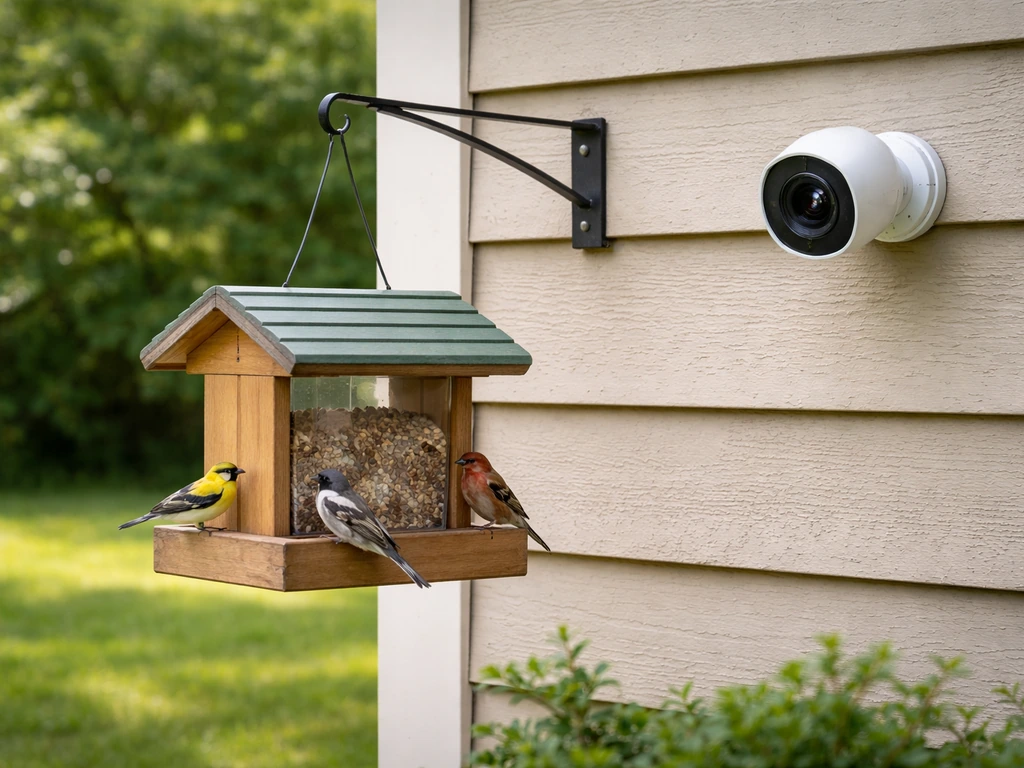
The best bird feeder setup pairs the right feeder type and seed to the birds you actually want, mounts the feeder 5 to 8 feet off the ground at least 10 feet from climbable structures, uses a pole-mounted baffle to stop squirrels, and keeps things clean enough that seed never sits long enough to clump or mold. Get those four basics right and you will have reliable bird activity. Everything else, from smart cameras to specialty trays, layers on top of that foundation.
Best Bird Feeder Setup: Placement, Predator Proofing, and Tech
Marcus Holloway
17 May 2026
Choosing the right feeder type for the birds you want
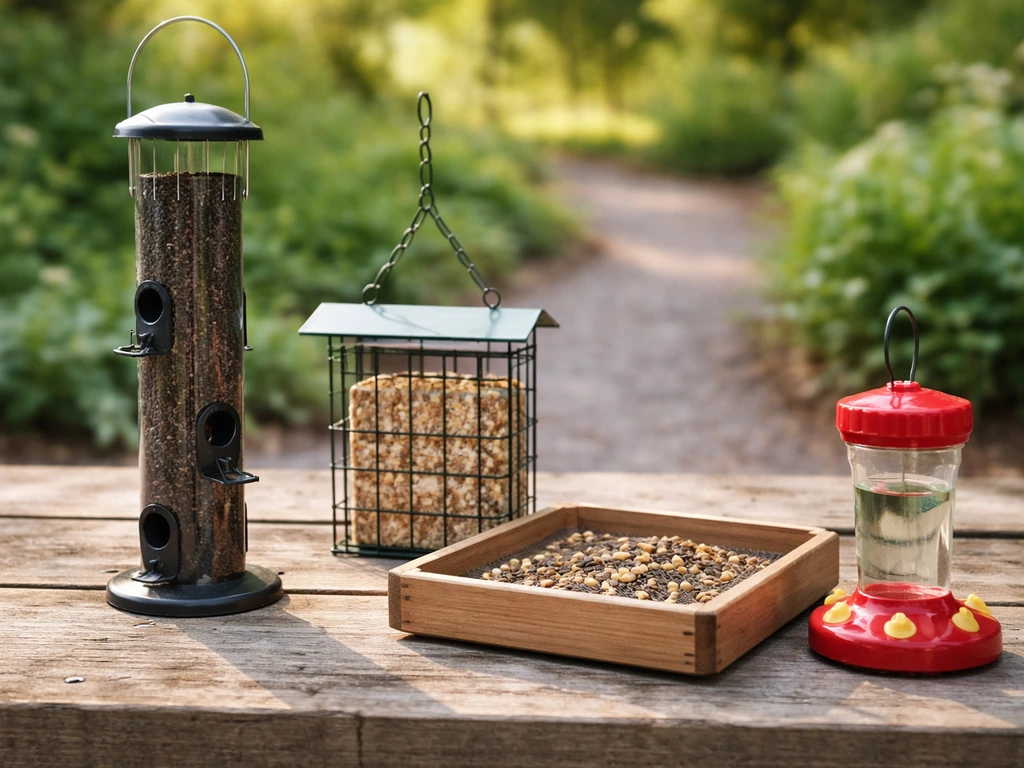
The single biggest mistake I see is people buying a generic hopper feeder and then wondering why they only get house sparrows and grackles. Feeder shape, port size, and seed type are what actually determine which species show up. Here is how to match them up.
| Target Bird(s) | Best Feeder Type | Best Seed/Food |
|---|---|---|
| Finches (goldfinch, house finch) | Small tube or sock feeder with narrow ports | Nyjer (thistle) or fine sunflower chips |
| Cardinals | Hopper or platform feeder with wide perch | Black oil sunflower seeds |
| Hummingbirds | Nectar/tube feeder with red ports | Fresh 4:1 water-to-sugar nectar |
| Woodpeckers, nuthatches, chickadees | Suet cage or cylinder feeder | Suet cakes, peanuts |
| General seed-eaters (juncos, sparrows) | Tray/platform feeder or ground scatter | Millet, sunflower blend |
| Broad mix (most backyard species) | Tube feeder with metal-reinforced ports | Black oil sunflower or quality blend |
Tube feeders are genuinely versatile. Fill one with black oil sunflower seeds and you will pull in chickadees, nuthatches, finches, and even the occasional cardinal. The key detail: look for metal ports around the seed dispensers. Squirrels will chew through plastic ports in a single afternoon, and the metal reinforcement also keeps the openings from cracking and jamming with debris. Suet feeders should hang well off the ground (more on height below) because woodpeckers and nuthatches are comfortable clinging at height while most bully birds are not. For finches specifically, a dedicated nyjer tube or sock feeder with narrow ports is worth adding as a second feeder. Goldfinches almost ignore sunflower feeders once a nyjer option is available. Hummingbird feeders are their own category entirely and need to be cleaned every two to three days in warm weather since nectar ferments fast.
If you want to attract ground-feeding birds like towhees, juncos, and doves, a low tray or platform feeder with a screen bottom is better than scattering seed on the ground. Audubon recommends screen-bottomed tray designs that sit several inches off the soil so droppings and grain debris don't pile up together, which keeps the seed cleaner and reduces disease risk. Audubon also recommends feeder setups that match the birds you want, including low tray or platform feeders for ground-feeding birds and hopper or tube feeders for shrub and treetop feeders low tray or platform feeder with a screen bottom.
Placement and mounting basics: height, spacing, and shade
Height matters more than most people realize. The West Virginia DNR recommends 5 to 8 feet off the ground as the practical sweet spot. High enough to reduce cat access and squirrel reach from the ground, low enough that you can actually refill and clean the feeder without a ladder. That makes it easier to nail the best position for a bird feeder: safe height with enough clearance so birds feel secure refill and clean the feeder. I settled on 6 feet for my main pole setup and it has worked reliably for years.
Distance from trees and structures is just as important. Place the feeder at least 10 feet from the nearest branch, fence, or roofline that a squirrel could use as a launch pad. A squirrel can clear about 10 feet in a running jump, so that 10-foot buffer is the real minimum, not a comfortable guideline.
Window proximity is a genuine safety issue. Cornell Lab's All About Birds notes that about 10 feet from a window is a reasonable compromise for visibility, but the U.S. Fish and Wildlife Service takes a firmer position: feeders within 3 feet of a window are actually safer because birds cannot build enough momentum to fatally injure themselves in a collision. So the safest options are either very close (under 3 feet) or more than 10 feet away. Avoid the 4 to 9 foot range if you can.
Shade and sightlines both affect how often birds actually land. A feeder in full baking sun dries out nectar faster, accelerates seed spoilage, and can make birds reluctant to stop in the middle of an exposed area. Partial shade through the middle of the day is ideal. More importantly, birds want clear sightlines from nearby cover: place the feeder 8 to 12 feet from a shrub or small tree so birds can stage and watch for predators before committing to land. That staging cover dramatically increases visitation compared to a feeder hung in the open center of a lawn.
If you run multiple feeders, space them at least 5 to 6 feet apart. Crowding feeders together creates competition and bully dynamics where dominant species (house sparrows, grackles, starlings) can control every food source at once. Spreading them out lets smaller, shyer birds find a feeding spot without constant harassment.
Weather resistance and materials that actually hold up
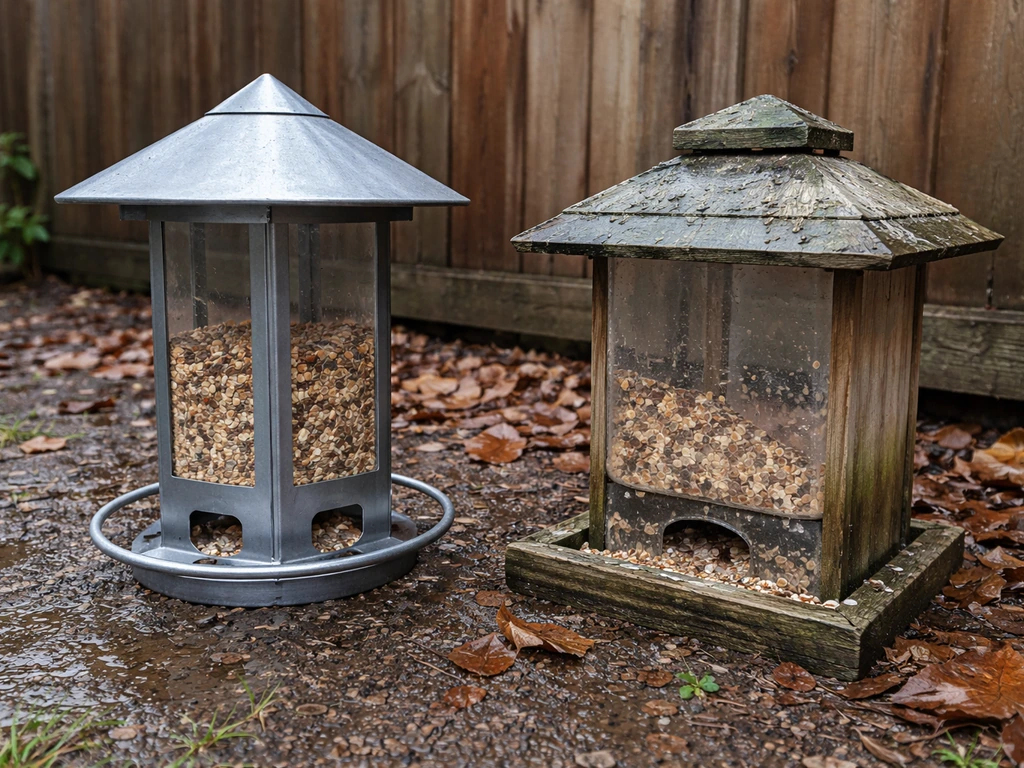
I have gone through cheap plastic feeders that cracked after one winter and cheap wood feeders that warped and grew mold by spring. After enough of that, the material question gets simple: metal and high-grade recycled plastic outlast everything else.
- Powder-coated steel or aluminum: virtually immune to UV degradation, doesn't crack in freezing temperatures, and easy to clean. Best for pole hardware, cages, and suet holders.
- Thick recycled plastic (polycarbonate or HDPE): resists UV, doesn't warp, won't rot when wet. Many top-rated tube feeders use this. Avoid thin injection-molded plastic from bargain feeders.
- Cedar and cypress wood: natural oils make them more rot-resistant than pine or pressure-treated lumber. Decent for hopper feeders but needs annual sealing or oiling.
- Avoid: untreated pine, thin acrylic, and any feeder with metal parts that aren't stainless or powder-coated. Rust degrades the seed and can harm birds.
Tube feeders have a practical weather advantage: the seed stays inside the tube and stays fairly dry even in rain. Project FeederWatch specifically highlights this as a reason tube feeders reduce seed waste and spoilage compared to open tray or hopper designs. If you live somewhere with heavy rain or snow, a domed roof over any open feeder style (hopper, platform) is not optional. Without it, soaked seed clumps and molds within 24 to 48 hours. The dome also doubles as a squirrel deterrent, which we will get to in the next section.
Predator-proofing: stopping squirrels and dealing with bully birds
Squirrel-proofing that actually works
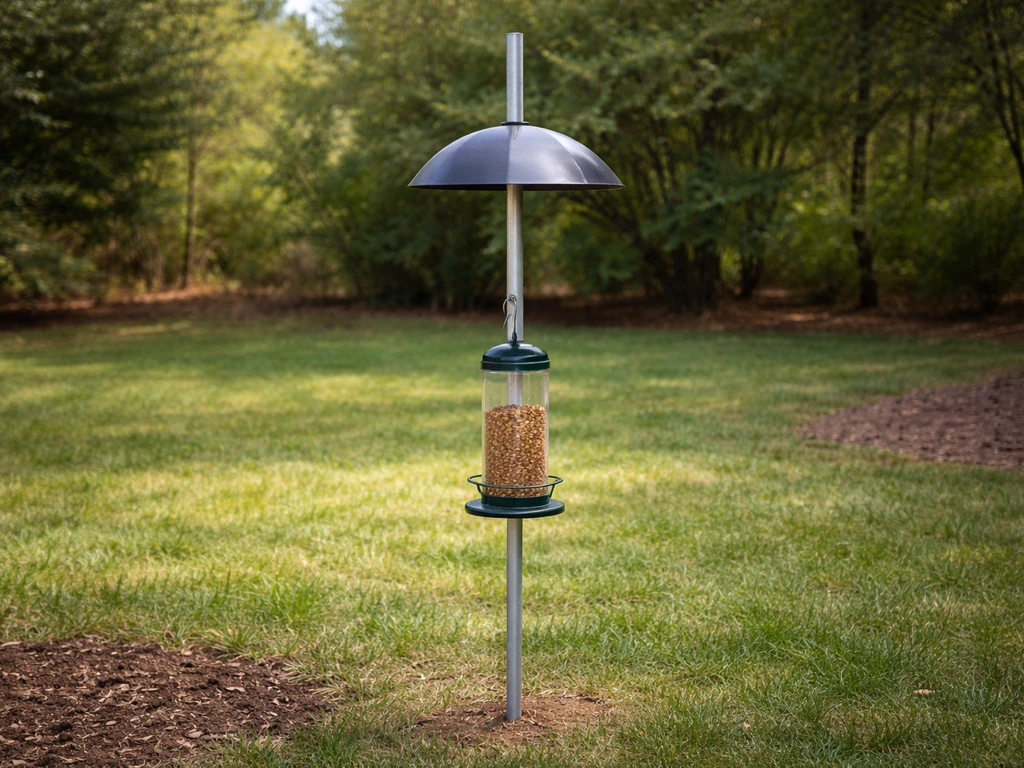
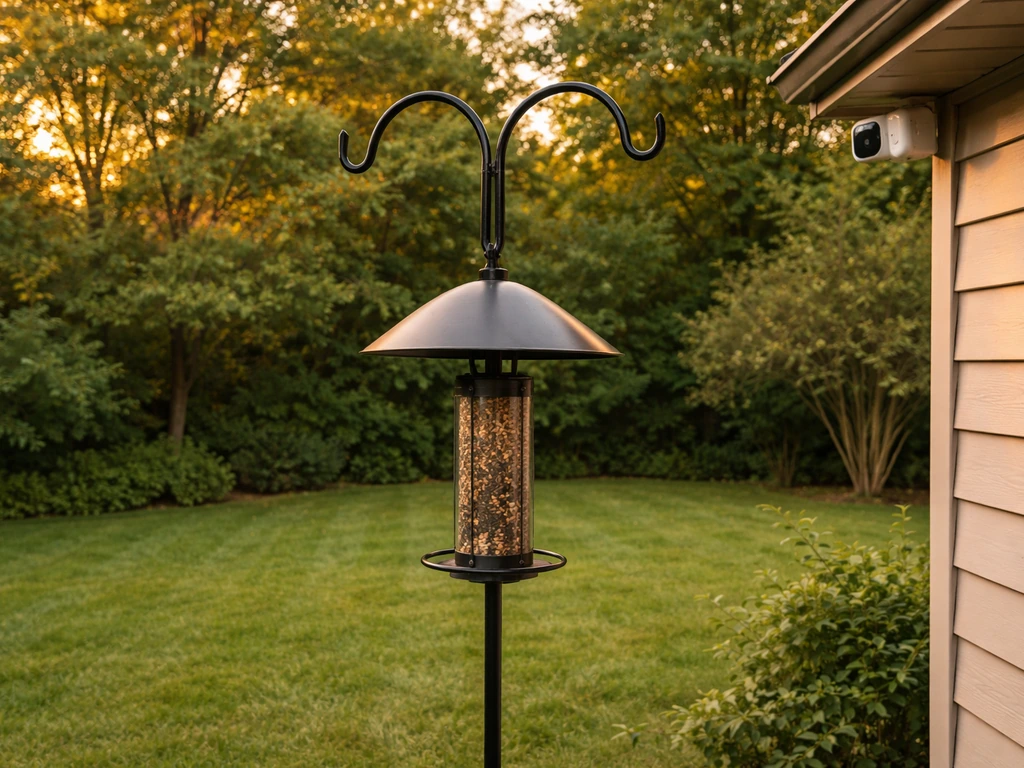
Audubon puts it plainly: the closest you can get to squirrel-proof is a smooth metal pole driven into the ground with a baffle mounted on it, with the feeder hanging far enough from any surface that squirrels can't jump to it. That combination, a pole plus a baffle plus 10 feet of clearance from structures, stops the vast majority of squirrel raids. The baffle needs to be at least 17 inches in diameter and positioned about 4 to 5 feet up the pole to prevent squirrels from climbing past it.
If you can't achieve the necessary spacing (say, your yard is small or the feeder has to hang from a branch), a weight-activated feeder is the next-best option. These feeders close their ports when a squirrel's weight lands on the perch ring, and they do it reliably. They cost more upfront, somewhere between $40 and $80 for a decent one, but they pay for themselves quickly in saved seed. Squirrels typically try a few times and give up within a day or two.
Managing grackles and other bully birds
Grackles, starlings, and house sparrows are the most common problem birds at backyard feeders, and the approach is different from squirrel control. You can't really physically block them the same way. Instead, the strategy is to make your feeder setup less appealing to them while staying attractive to the birds you want.
- Switch to tube feeders: grackles prefer open feeding surfaces. A tube feeder with small ports makes it physically awkward for large birds to feed efficiently, while small-bodied birds handle it fine.
- Use weight-activated feeders: these work on grackles just like squirrels. If the feeder closes under their weight, they move on.
- Offer nyjer seed: grackles almost never eat nyjer, so a nyjer feeder becomes a grackle-free zone by default.
- Remove platform feeders temporarily: if grackle pressure is severe during migration (usually spring), taking open feeders down for two to three weeks often breaks the habit since grackles are passing through.
- Avoid cracked corn and millet mixes in open feeders: these are grackle magnets. Switch to straight sunflower or nyjer until the pressure eases.
Feeder accessories that are actually worth getting
A few accessories make a real difference. Others are just clutter. Here is what I actually keep on my feeders year-round.
Baffles are the most important accessory in the entire setup, both above and below the feeder. An above-feeder dome baffle keeps rain and snow off seed (reducing mold and spoilage) and stops squirrels from dropping down from overhead. A below-feeder pole baffle stops climbing squirrels. If you only buy one accessory, make it a good baffle.
Seed trays or seed catchers attach below the main feeder and catch hulls and dropped seed before they hit the ground. This cuts down on the ground mess that attracts rats and raccoons. Look for trays with drainage holes or screen bottoms so water doesn't pool and turn the caught seed into a mold pile. Audubon's recommendation for screen-bottomed tray designs applies here: the screen keeps grain and droppings from mixing together and sitting in standing water.
Seed selection is the most underrated part of setup. Black oil sunflower is the single best all-purpose seed: it attracts the widest variety of birds, has a thinner shell that small birds can crack easily, and has a high fat content that's attractive year-round. Nyjer (thistle) is essential if you want finches. Avoid generic wild bird mixes with a lot of milo, wheat, or oats. Those fillers get kicked onto the ground by most birds and mostly just attract house sparrows and doves. Spending more on quality seed dramatically reduces waste and keeps the area under the feeder cleaner.
Cleaning brushes, a dedicated feeder bucket, and a dilute bleach solution (roughly one part bleach to nine parts water) are maintenance essentials. Cornell Lab recommends cleaning feeders at least once a week. The routine is straightforward: empty remaining seed, scrub all surfaces including ports and perches with a stiff brush and hot soapy water, rinse with the dilute bleach solution, and let it dry completely before refilling. A wet feeder refilled immediately is how you get mold and clogged ports.
Smart and AI-powered bird feeder camera setups
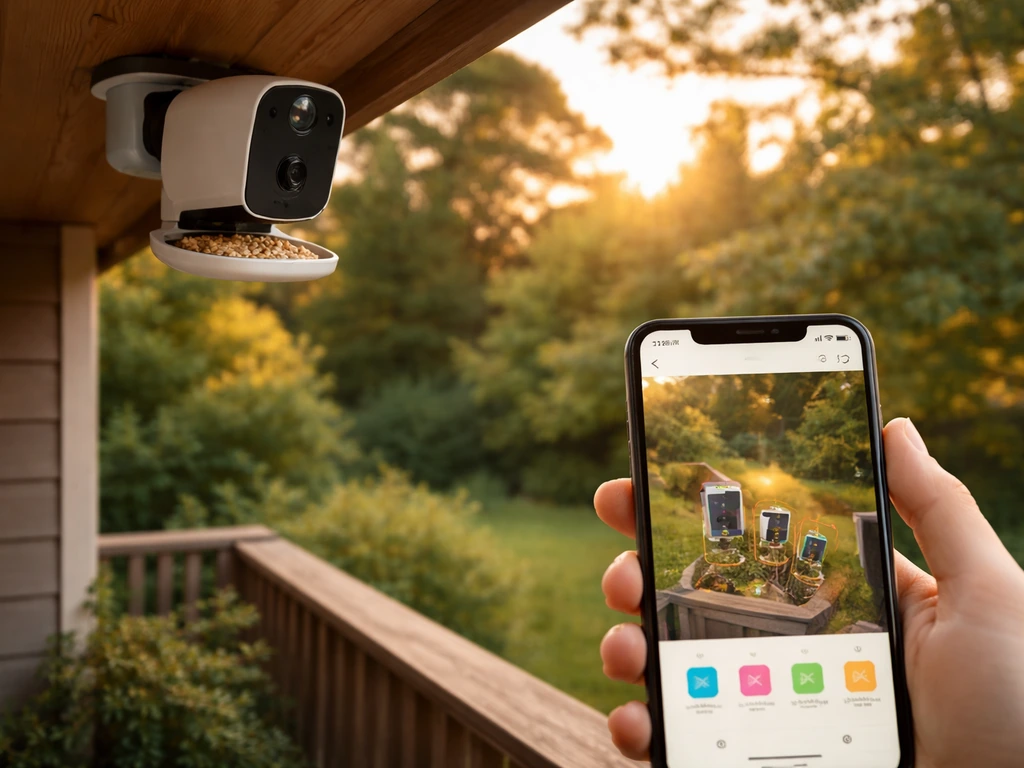
Smart feeders with built-in cameras and AI bird identification have genuinely gotten good over the last few years. If you want to know exactly which species are visiting (and when), they are worth considering. But they add real complexity to setup that you need to plan for before you buy.
Placement considerations for camera feeders
Camera feeders need the same placement basics as standard feeders plus a few extras. Birdbuddy's own placement guidance emphasizes that the camera needs a clear, unobstructed view of the perch area for AI recognition to work reliably. That means avoiding positions where branches constantly move through frame or where the feeder swings significantly in wind. A solid pole mount is almost always better than a hanging cord for camera feeders. BirdSnap recommends mounting at 5 to 6.5 feet off the ground, which aligns with the general height guidance, and importantly, positioning the feeder so the camera lens is not pointed directly into the sun at peak bird activity times (usually morning). A lens facing east will be backlit all morning.
Power and connectivity requirements
Power is the biggest practical hurdle. Bird Buddy's camera module uses a USB-C power cable, which means you either need a nearby outdoor outlet, a long weatherproof extension cord run, or a compatible solar panel accessory. Plan the cable run before you set the pole. Birdbuddy also requires an active internet connection to function since there is no local storage on the device. The app recommends 2.4GHz Wi-Fi for outdoor signal reach, which is worth checking against your router's outdoor signal before you buy. A 5GHz-only network or weak outdoor coverage will cause the camera to miss captures or fail to sync.
The Netvue Birdfy takes a different approach. It records full HD (1920x1080) video to a microSD card locally, so it keeps working and saves footage even if your internet goes down. That local storage option makes the Birdfy more reliable in areas with spotty Wi-Fi. The trade-off is that you need to manage the card and manually check recordings more often. Bird Buddy's cloud-connected model is more convenient when connectivity is solid. Placement considerations for photography-focused setups overlap significantly with camera feeder placement, which is a topic worth exploring separately if shooting bird photos is a major goal. If photography is your goal, choosing the best bird feeder for photography also means thinking about sightlines, distance from clutter, and how often birds pause in the frame Placement considerations for photography-focused setups overlap significantly with camera feeder placement. If you are aiming for a bird feeder setup for photography, prioritize consistent lighting, stable placement, and clear sightlines so birds feel comfortable landing where your camera can capture them shooting bird photos. If capturing great bird photos matters to you, choose the best photo bird feeder for clear sightlines and reliable viewing.
A quick comparison of smart feeder approaches
| Feature | Bird Buddy | Netvue Birdfy |
|---|---|---|
| Storage | Cloud only (no local storage) | MicroSD local storage |
| Connectivity required | Yes, 2.4GHz Wi-Fi required | Wi-Fi optional for remote viewing |
| Power method | USB-C cable (solar accessory available) | USB or solar panel |
| Video quality | HD photos/video | 1080p Full HD video |
| AI bird ID | Yes, in-app | Yes, in-app |
| Best for | Always-on Wi-Fi, convenience focus | Reliability, offline use, local review |
Troubleshooting the most common backyard feeder problems
Birds aren't coming to the feeder
This is the most common complaint, and it almost always comes down to one of three things: wrong seed for local species, feeder positioned too exposed with no nearby staging cover, or the feeder is brand new in a location where birds haven't discovered it yet. New feeders in new locations can take 1 to 3 weeks to get consistent visits. Be patient and make sure there is a shrub or small tree within about 10 feet. If visits don't pick up after three weeks, try switching to black oil sunflower and moving the feeder 10 to 15 feet closer to natural cover.
Seed clogs and wet, moldy seed
Clogged ports and moldy seed are a cleaning and weather-proofing problem. If you are finding wet clumps blocking ports, add a dome baffle above the feeder and reduce how much seed you fill at once. Filling only enough seed for 2 to 3 days means nothing sits long enough to absorb moisture and stick. Clean the ports and perches weekly with a stiff brush. Mold in seed trays usually means drainage is inadequate. Switch to a screen-bottomed tray or drill additional drainage holes in what you have.
Seed waste piling up on the ground
Ground waste is almost always a seed quality issue. Birds shell sunflower seeds and drop the hulls, which is normal, but if you see whole seeds piling up it means birds are kicking out seeds they don't want. That is a sign your seed mix has too many fillers. Switch to straight black oil sunflower, nyjer, or a no-waste blend (hulled sunflower chips and shelled peanuts). Add a seed-catching tray below the feeder and clean it every few days. The ground waste that does fall also needs raking regularly since old hulls and seed create a damp mat that grows mold and can harbor bacteria.
Squirrels keep getting through
If squirrels are still reaching the feeder after you added a baffle, check two things. First, measure the clearance from every nearby structure: fence posts, garden furniture, low branches. Even a 9-foot jump from a fence top can get a motivated squirrel to the feeder. Second, check that the baffle is positioned high enough on the pole. It should sit at least 4 feet off the ground. If spacing is genuinely unavailable, a weight-activated feeder is your most reliable fallback. Also check that the squirrels aren't climbing down from above. If the feeder hangs from a line or overhead structure, an overhead baffle or a dome above the feeder is essential in addition to the pole baffle.
Birds hitting windows
Move the feeder to within 3 feet of the window or further than 10 feet away. The 4 to 9 foot range gives birds enough flight distance to build fatal speed. The under-3-foot placement sounds counterintuitive but it works because birds flush off the feeder at slow speed and can't build momentum in that short gap. If you can't move the feeder, apply window collision tape, a film, or external screens to break up the reflection on the glass.
Your setup checklist
- Pick feeder type based on your target species: tube for general use, nyjer tube for finches, suet cage for woodpeckers, platform for ground-feeders, nectar tube for hummingbirds.
- Mount at 5 to 8 feet high on a smooth metal pole, at least 10 feet from any structure a squirrel can climb.
- Install a pole baffle (4 to 5 feet up the pole) and an overhead dome baffle to block climbing and jumping squirrels and shed rain.
- Position the feeder 8 to 12 feet from a shrub or small tree for bird staging cover, in partial shade.
- Check window distance: stay under 3 feet or over 10 feet from any large glass pane.
- Fill with quality seed: black oil sunflower for most feeders, nyjer for finches, fresh nectar for hummingbirds.
- Add a screen-bottomed seed tray below the feeder to catch hulls and reduce ground mess.
- Clean the feeder weekly: scrub all surfaces and ports, rinse with dilute bleach solution, dry completely before refilling.
- If adding a smart camera feeder, plan your power cable route, confirm 2.4GHz Wi-Fi reaches the location, and orient the camera away from direct morning or evening sun.
- Give new feeders up to three weeks before evaluating results, and troubleshoot seed type and cover proximity first.
FAQ
How do I choose the best feeder type if I do not know which birds will visit my yard?
Start with a tube feeder loaded with black oil sunflower, placed at the right height and near staging cover. Add a second targeted feeder for what you see first (nyjer tube for finches, suet for woodpeckers). Avoid putting out a mixed “one feeder fits all” hopper with generic mix, because port size and seed fillers often bias toward bully species.
Is it okay to put multiple seed types in one hopper or tray to attract more birds?
Usually no. Mixing seeds can lead to one seed dominating and the others getting kicked out, increasing hull waste and clutter. If you want variety, use separate feeders by seed type (sunflower in one, nyjer in a narrow-port feeder, suet on a dedicated suet holder) so ports match the birds you want and spoiled seed stays limited to one location.
What is the safest way to adjust height if I have cats, small children, or mobility limits?
Aim for 5 to 8 feet for most households, but pick the highest option that still lets you clean without a ladder. If you must go higher for cat safety, compensate by ensuring the baffle and spacing from structures are correct, and choose a feeder you can still reach comfortably with a stable step stool. If ladder access is risky, consider a pole setup with lower maintenance points and a tray system that simplifies cleaning.
If birds stop visiting after I change seed or feeders, how long should I wait?
Give it 1 to 3 weeks when you switch products or relocate the feeder. Birds need time to discover the new setup, especially if the feeder moved farther from familiar staging cover. If visits do not pick up by then, switch to black oil sunflower, confirm the feeder is within about 10 feet of shrubs or small trees, and verify that ports are not clogged from rain or debris.
How can I tell whether my issue is the seed, the ports, or weather?
Look at the specific failure pattern. Clogged ports and wet clumps point to insufficient shelter, overfilling, or poor drainage. Large amounts of whole seeds on the ground usually means the seed mix is wrong for your visitors (too many fillers, not enough sunflower chips or hulled options). If birds appear healthy but feed briefly then avoid the feeder, reassess exposure and sightlines, because they may not feel safe in the open.
What should I do if the seed tray collects water or grows mold?
Use a screen-bottom tray or a tray with drainage holes, and reduce how much you fill so debris does not sit wet. Clean caught seed more often than the main feeder, because hulls and droppings absorb moisture. If mold keeps returning, reduce shade extremes, add a dome or cover over any open feeder, and verify the tray is pitched or drained so water cannot pool.
How do I prevent rats and raccoons if I’m using a seed catch tray?
A seed catch tray helps, but it only works if you clean it regularly. Remove hulls and spilled seed every few days, and rake the area under the feeder so old hulls do not form a damp mat. Also keep feeder height and seed flow in check, avoid overfilling, and do not let spilled seed accumulate under the staging cover where animals feel protected.
What is the best baffle height and size for squirrel-proofing?
Mount the baffle high enough that squirrels cannot climb past it, typically around 4 to 5 feet up the pole, and plan it so there is vertical clearance over the baffle as squirrels attempt the jump. If you still see activity after adding a baffle, recheck that the feeder is far enough from every climbable surface and that the baffle is not placed too low to block the squirrel’s approach path.
What should I check if squirrels reach the feeder from above (trees or roof edges)?
Inspect overhead routes. If the feeder is hung from a line, beam, or near branches, squirrels can enter from above and bypass a simple pole baffle. Use an overhead dome or baffle to cover the top approach, and add extra clearance from any roofline or branch that can be used as a launching platform.
Do smart camera feeders require different placement than standard feeders?
Yes. For AI identification, keep the camera’s view clear and stable, avoid constant branch movement, and prefer a solid pole mount over a hanging cord. Also think about backlighting, if possible aim so the lens is not facing directly into peak morning sun, because glare can reduce recognition accuracy.
If I want the camera to record reliably during internet outages, which design should I prefer?
Prefer systems that store footage on local media (like a microSD card) when connectivity is unreliable. That way, the feeder still records even if Wi-Fi drops. The trade-off is more hands-on maintenance, you will need to check and manage the storage card more often.
How far apart should multiple feeders be if I want shy birds to keep coming?
Space feeders at least 5 to 6 feet apart to reduce bully dominance across multiple food sources. If your yard is small, prioritize separate feeder types with different seed choices so the same bully species cannot monopolize everything at once. Keep each feeder near its own nearby staging cover so smaller birds have a safe approach path.
My window rule conflicts with my yard layout, what are practical alternatives?
If you cannot place the feeder more than 10 feet from the window, use the safest alternative: either bring it within 3 feet or use the 4 to 9 foot range only if you can add visual deterrents. Apply window collision tape, films, or external screens to reduce reflections. If birds still collide, revisit placement immediately because repeated collisions can be fatal.
Next Article
Best Place to Put a Bird Feeder With a Camera in Your Yard
Find the best spot to mount a bird feeder camera: ideal height, distance, lighting, and squirrel-proof placement.