Flickers are quirky birds to feed because they don't behave like most woodpeckers. While their cousins spend most of their time clinging to tree bark, flickers spend the majority of their foraging time on the ground, digging through soil and leaf litter for ants and beetle larvae. That one fact changes everything about which feeders and which foods will actually work for them. The short answer: a sturdy ground tray feeder or a large platform feeder loaded with suet, sunflower chips, or dried mealworms is your best starting point. Everything below tells you exactly how to build that setup.
Best Bird Feeders for Flickers: Buying Guide and Setup Tips
Marcus Holloway
23 Mar 2026
How flickers actually feed (and why it matters for your setup)
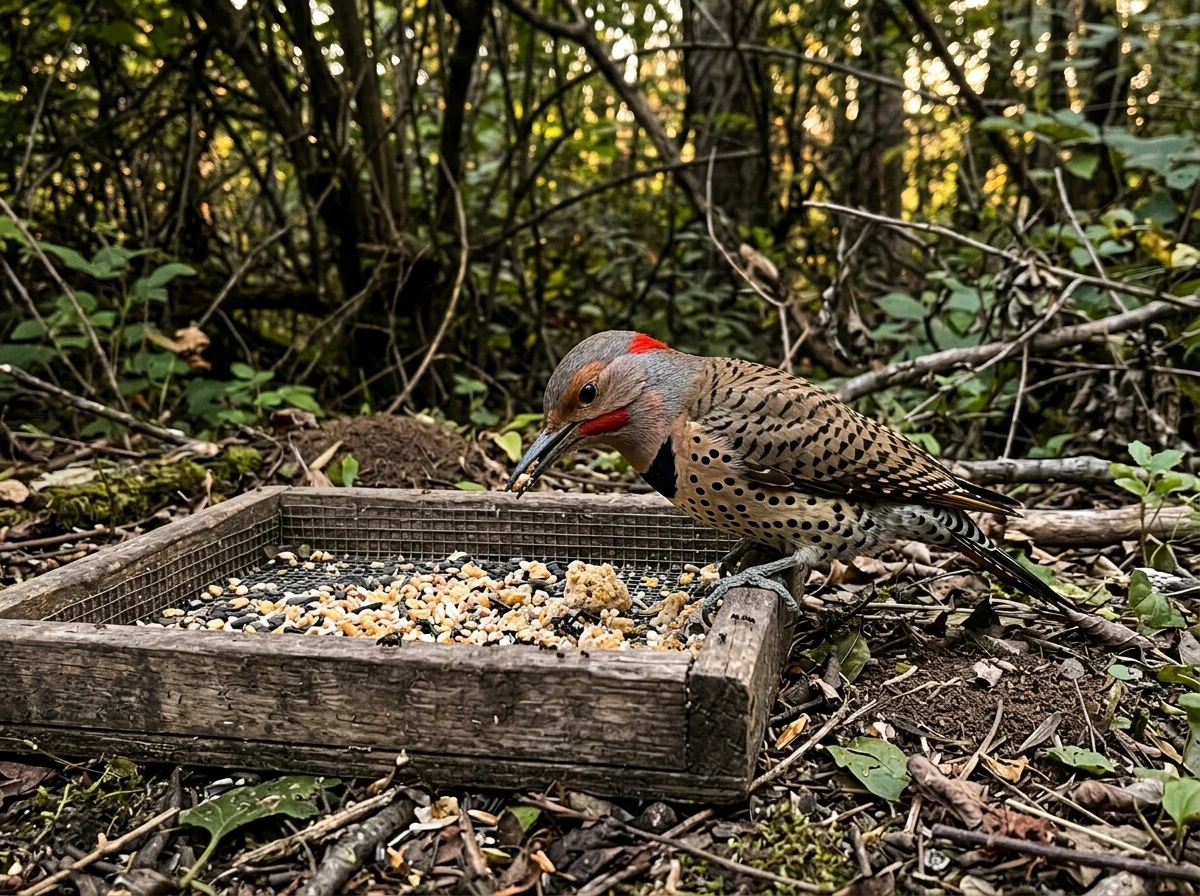
Northern Flickers eat ants more than almost any other North American bird species. They don't just pick at them casually. They actively excavate the ground, hammering and probing with their bills to reach ant colonies and beetle larvae below the surface. They also eat grasshoppers, wasps, and other ground-dwelling insects. In fall and winter, when the insect supply shrinks, they shift toward fruits, berries, and occasionally seeds and nuts. That seasonal swing matters because what you put in your feeder should change throughout the year.
Unlike a downy or hairy woodpecker that will cling comfortably to a hanging tube feeder, flickers are awkward on small perches and usually won't bother. Their bodies are large, roughly 11 to 14 inches long, and they're built to land flat and walk. A hanging tube feeder with a 1-inch perch is essentially useless for a flicker. What they need is a flat, stable surface with enough room to stand and eat comfortably. Keep that in mind as you evaluate every feeder on the market.
Feeder types that actually work for flickers
There are really three feeder styles worth considering if flickers are your target. Each has tradeoffs depending on your yard, your tolerance for maintenance, and whether you also want to attract other species.
Ground tray feeders
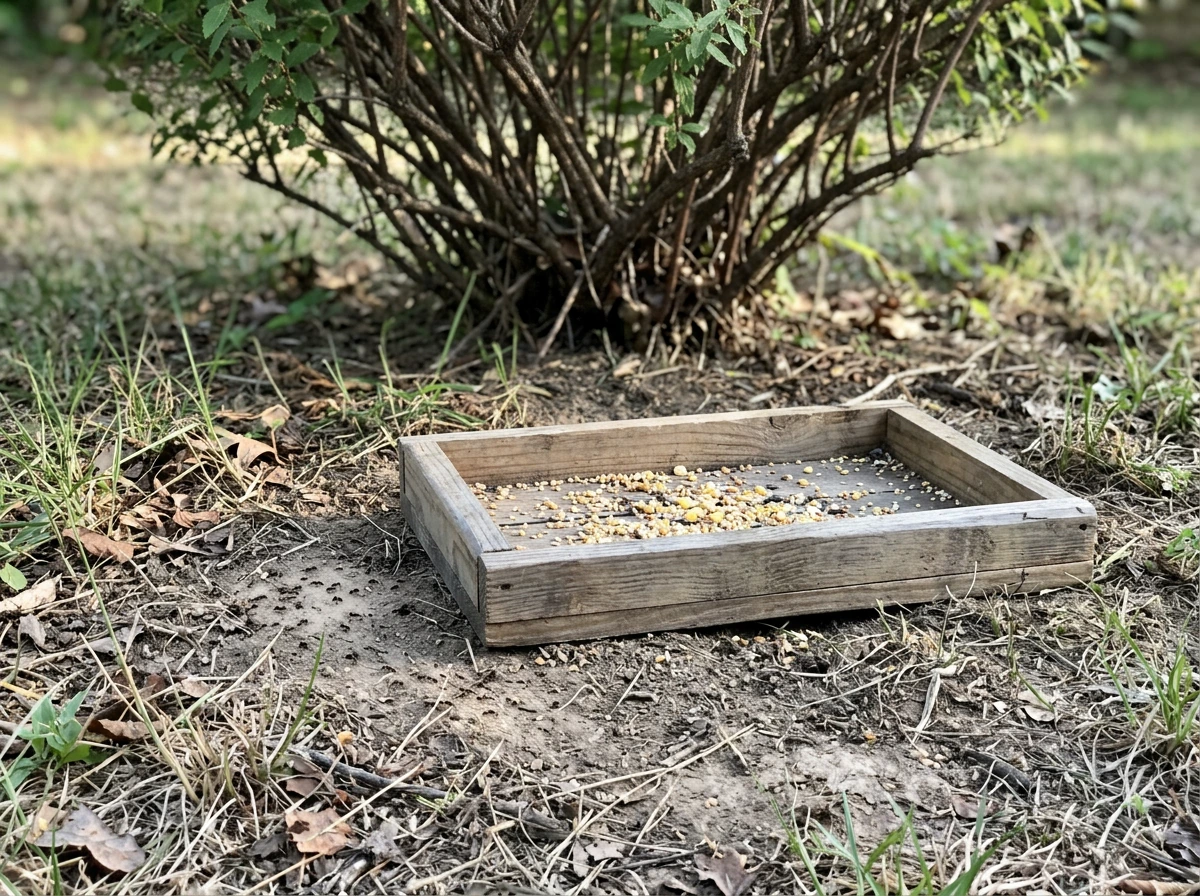
This is the closest thing to replicating how flickers naturally eat. A ground tray feeder is essentially a low, flat tray placed directly on the ground or raised just a few inches. Flickers will land on them, walk around, and eat in a posture that feels natural to them. Look for trays with drainage holes in the base so food doesn't rot after rain. The downside is that ground feeders are extremely accessible to squirrels, cats, and rodents, so placement and pest management (covered below) become especially important.
Platform and tray feeders on a post
A large platform feeder mounted on a post at roughly 18 to 24 inches off the ground is the best compromise between flicker comfort and pest management. The flat surface gives flickers the landing space they need, and the low height keeps them close enough to the ground that they're comfortable. You can add a baffle to the post to block squirrels. Look for platforms with at least a 12-inch by 12-inch feeding surface, though bigger is better. Some platform feeders come with a roof, which helps keep food dry and reduces the frequency of refills.
Suet log and cage feeders
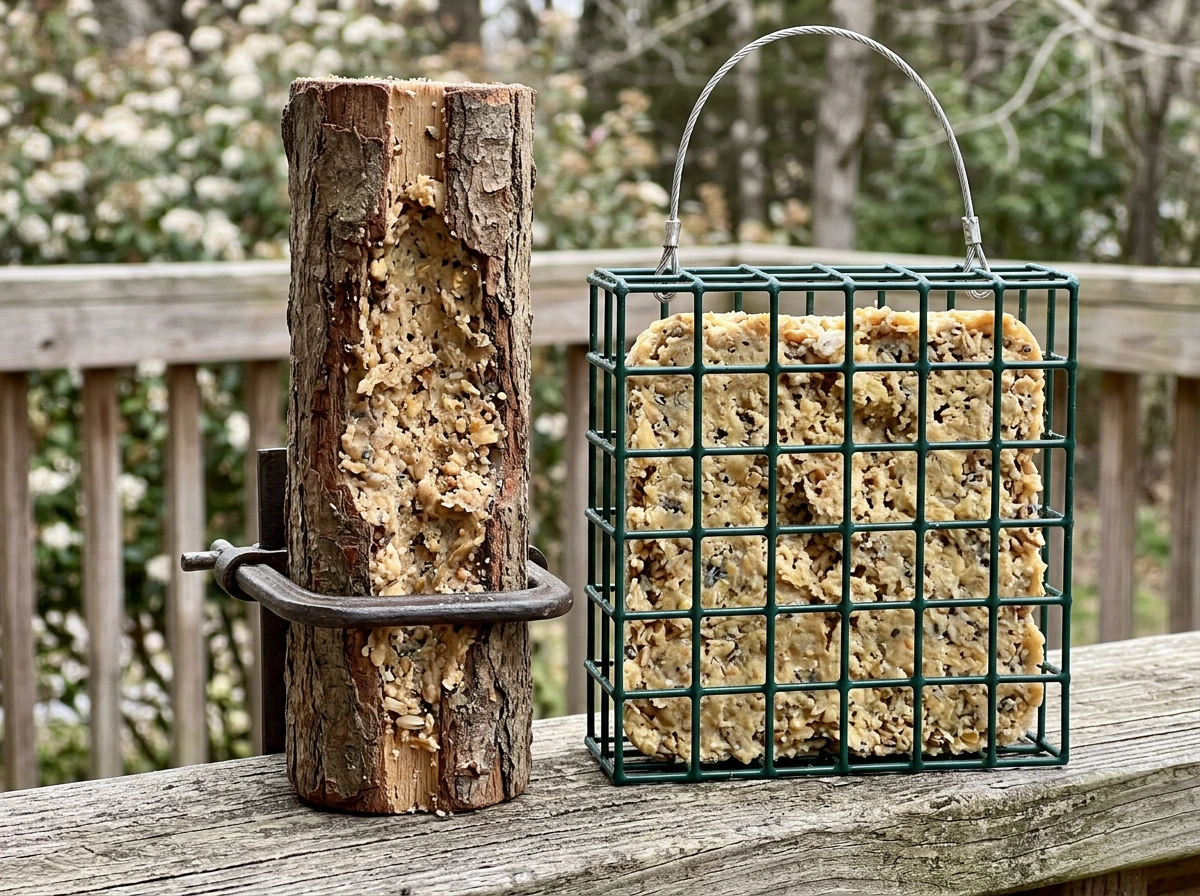
Flickers will use suet feeders, especially in winter, but the design matters a lot. Standard hanging cage suet feeders with a small metal grid work, but flickers prefer feeders where they can get a solid footing. Suet log feeders, which are wooden logs or cylinders with drilled holes packed with suet or suet plugs, work well because the bird can grip the wood naturally. If you use a flat cage suet feeder, choose models with a tail-prop extension below the cage. Woodpeckers and flickers use that extension to brace their body, making them much more comfortable feeding from a vertical surface.
Features to look for in a flicker feeder
Once you've picked a feeder type, these are the specific features worth paying attention to before you buy.
- Size: Feeding surface of at least 12 by 12 inches for platform feeders. Flickers are large birds and they need room to stand without crowding.
- Drainage: Any tray or platform should have holes or a mesh bottom so water doesn't pool and spoil food. Standing water leads to mold and bacteria that can harm birds.
- Sturdy construction: Flickers are heavier than most songbirds. Lightweight plastic feeders can flex or tip when a flicker lands. Cedar, recycled poly lumber, and heavy-gauge metal all hold up better.
- Weather resistance: Cedar naturally resists rot. Recycled poly lumber is essentially weatherproof. Avoid thin plywood or MDF which will degrade within one season in wet climates.
- Easy cleaning: You should be able to break the feeder down and scrub it. Tray feeders with removable inserts or mesh bottoms are far easier to clean than one-piece units.
- Tail-prop extensions on suet feeders: Look for at least a 4-inch extension below the suet cage. This single feature dramatically increases how often larger woodpeckers, including flickers, will use the feeder.
- No small tube openings: Any feeder that only dispenses food through a small port or tube is not going to work. Flickers need open-access feeding surfaces.
Best feeder picks for different backyard setups
There's no single best feeder for every situation. Here's how to think about it based on your specific yard and goals.
| Setup | Best Feeder Type | Key Feature to Prioritize | Food to Load |
|---|---|---|---|
| Small yard, limited space | Mounted platform feeder (12x12 in min) | Post-mounted with squirrel baffle | Suet nuggets, sunflower chips, dried mealworms |
| Large yard with open ground | Ground tray feeder | Drainage holes, low profile | Dried mealworms, fruit pieces, sunflower chips |
| Prefer to also feed other species | Large hopper or platform feeder with roof | Wide roof overhang, 14x14 in surface | Mixed seed blend with sunflower hearts |
| Primarily want flicker in winter | Suet log or cage with tail-prop | Tail-prop extension of 4+ inches | High-fat suet, peanut butter suet blend |
| Flicker plus squirrel pressure | Weight-sensitive platform feeder | Motorized or spring-tension excluder | Sunflower chips, suet nuggets |
If you're working with a smaller yard or already have feeders set up for other species, a mounted platform feeder is the most versatile choice for finding the best bird feeders for cardinals, too. If you have open space and are specifically trying to attract flickers, a ground tray feeder placed near the edge of a lawn or garden bed will be the most appealing to them because it mirrors their natural foraging environment, this is also one of the best bird feeders for robins. Some birders run both at the same time, which lets them serve flickers on the ground while smaller birds use elevated feeders. best bird feeders for bluebirds. best ground bird feeder
Where and how to mount your feeder
Placement is probably the most overlooked factor when people try to attract flickers. A perfect feeder in the wrong spot will sit empty. Flickers are naturally wary birds. They don't like feeling exposed when they eat, but they also won't land where branches or shrubs are so dense that escape routes are limited.
Place your ground or platform feeder within 10 to 15 feet of a large tree or woody shrub. This gives flickers a quick escape route if they're startled, and flickers will feel safer approaching. Avoid placing feeders directly under dense canopy, though. Flickers prefer some visibility overhead. A feeder at the edge of a tree line or near a single large tree works better than one buried in a thicket.
For ground tray feeders, placing them directly on bare earth or short grass works better than placing them on pavement or gravel. best bird feeders for cats Flickers associate feeding on the ground with natural foraging, and a natural surface reinforces that behavior. If your yard has a lawn area where you've spotted flickers walking and probing before, that's the exact spot to put a ground tray.
For mounted platform feeders, a post height of 18 to 24 inches is ideal for flickers. This is lower than the 4 to 5 feet recommended for most songbird feeders. The lower height keeps flickers comfortable while still giving you room to add a squirrel baffle to the post. Keep the feeder at least 10 feet from any fence, rooftop, or horizontal structure that a squirrel could jump from.
One more placement note: keep feeders at least 10 feet from windows, or very close (within 3 feet) if you want to avoid window strikes. Flickers are large birds, and a collision with a window at full flight speed can be fatal. At 10 feet or more, birds have room to maneuver. At under 3 feet, they don't have enough speed built up to be seriously injured if they do tap the glass.
Keeping squirrels, grackles, and other pests away
This is where a lot of backyard birders get frustrated, and it's especially tricky with flicker-friendly feeders because the open, low designs that attract flickers are also attractive to every other creature in your yard. You can manage this without giving up the feeder style, but you need a layered approach.
Squirrel control
For mounted platform feeders, a pole-mounted squirrel baffle is non-negotiable. A torpedo or dome-shaped baffle placed about 4 feet up the post will block most squirrels from climbing. Make sure the pole is at least 10 feet from any jumping-off point: fences, trees, rooftops, and even dense shrubs. Squirrels can clear 8 feet horizontally and drop from above, so overhead clearance matters as much as horizontal distance.
Ground tray feeders are harder to squirrel-proof. The most practical approach is to use foods that squirrels find less appealing, like straight safflower seed or hot pepper-coated suet and sunflower chips. Birds cannot detect capsaicin (the compound that makes peppers hot) but squirrels strongly dislike it. Hot pepper suet products are widely available and work well in ground trays. You can also try a motion-activated sprinkler nearby, which discourages squirrels (and cats) without harming them.
Grackles and aggressive birds
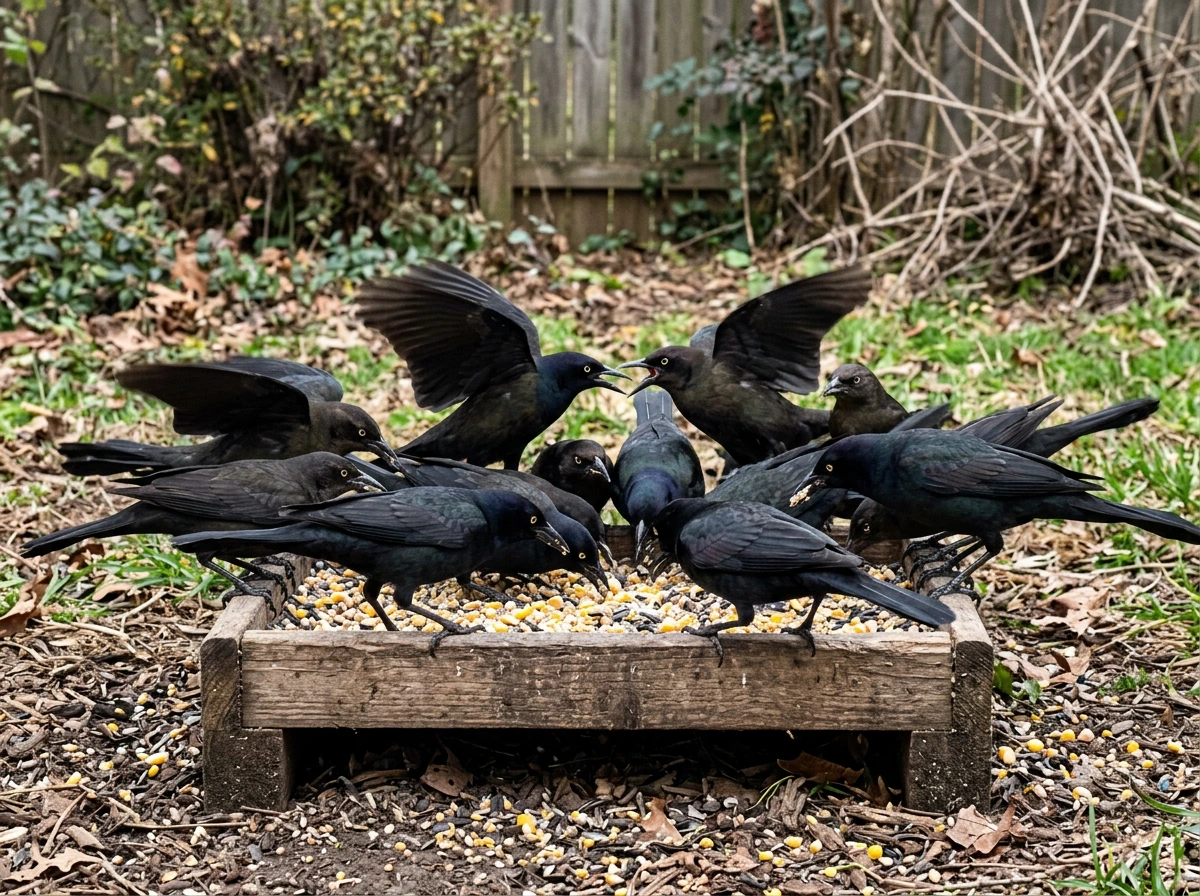
Grackles are a real problem at open platform and ground feeders because they flock in large numbers and can empty a feeder in minutes. If grackles are a persistent problem in your yard, a few strategies help. First, avoid cracked corn and mixed seed blends with millet, which grackles love. Switch to sunflower hearts or suet plugs, which grackles find less appealing. Second, a feeder with a roof or a cage-style surround sized for medium birds will let flickers and woodpeckers access food while blocking the larger-bodied grackles. Flickers themselves, at roughly 11 to 14 inches, can be excluded by cages sized for small to medium birds, so make sure any cage or excluder you add has openings of at least 3 by 3 inches.
Ants and insects at feeders
Here's a fun irony with flicker feeders: ants are actually a food source for flickers, not just a pest. However, ants in large numbers can contaminate suet and make other food unpalatable. If you're using a hanging suet feeder, an ant moat placed above the feeder (a water-filled cup through which the hanger passes) prevents ants from crawling down to the suet. For ground and platform feeders, keeping food fresh and cleaning up spills promptly is usually sufficient. Don't use petroleum jelly or other sticky substances on feeder poles, as they can stick to bird feathers.
Setting up a routine that keeps flickers coming back
Flickers are creatures of habit, but they need a few days to a few weeks to discover a new feeder and get comfortable with it. Here's a practical routine for the first week and beyond.
- Start with a ground tray or platform feeder placed near an area where you've already seen flickers walking or foraging. If you haven't spotted them yet, place the feeder near the largest tree in your yard.
- Load the feeder with dried mealworms and suet nuggets for the first week. These are high-value, high-fat foods that stand out to birds scouting a new area.
- Keep the feeder topped off every day for at least the first two weeks. An empty feeder early in the process teaches birds not to bother checking.
- If you see flickers in your yard but they're ignoring the feeder, try moving it 5 to 10 feet closer to where you've spotted them foraging on the ground.
- Once flickers are visiting regularly, you can refill every 2 to 3 days rather than daily, but don't let the feeder go empty for more than a day during peak visiting times.
- Clean the feeder thoroughly every 1 to 2 weeks. Scrub with a 10 percent bleach solution (1 part bleach to 9 parts water), rinse completely, and let it dry before refilling. This prevents mold and bacteria that can make birds sick.
- In fall and winter, supplement or swap dried mealworms for fruit (like sliced apples or raisins soaked in water) alongside suet. Flickers shift toward fruit and fat when insects are scarce.
- If flickers stop showing up after a period of regular visits, check whether a new pest pressure (squirrels dominating the feeder, a neighborhood cat, or a predatory bird like a Cooper's hawk staking out the area) has changed the dynamic. Adjust placement or add a baffle before assuming the feeder itself is the problem.
A suet log or dedicated woodpecker feeder is a great addition once you've established a regular flicker presence. Think of the ground or platform feeder as your primary attractor and the suet log as a secondary offering that keeps flickers engaged throughout the day. Many birders who specialize in woodpecker species run a similar layered setup, pairing open feeding surfaces with more specialized woodpecker feeders nearby.
Patience matters more than perfection here. Flickers have established foraging territories and don't always discover new food sources overnight. If you've had the feeder up for three weeks and haven't seen any action, try adding a birdbath nearby. Flickers drink and bathe regularly, and a water source is sometimes the thing that draws them into a new part of the yard. From there, they tend to notice the food. The combination of food and water in the same area is consistently more effective than food alone.
FAQ
Can I use the same feeder setup for flickers and other woodpeckers?
Yes, but the feeder design has to match flicker behavior. Use a flat platform or ground tray at the low heights described in the article, then keep suet or sunflower chips as the main foods. Tube feeders with small perches usually won’t get visits because flickers prefer to stand and walk rather than cling.
How long can I leave suet or sunflower chips in a ground or platform feeder before refilling?
Start with a smaller amount and refresh quickly. Suet and sunflower chips can become stale faster on open trays, especially after hot days, so aim for shorter refill cycles (more frequent in summer, less in winter). If you see ants gathering, remove remaining food and wipe the tray, because ant activity can make the next portion less attractive.
What should I look for to prevent food from spoiling in a ground tray feeder?
Prefer drainage and easy-to-clean surfaces. Look for ground trays with drainage holes and smooth, non-porous materials, then empty and rinse after heavy rain. If food sits in water, it can spoil and flickers may stop returning even if the location is otherwise perfect.
Ants are showing up immediately, will that ruin a flicker feeder?
If your area has ants, plan for contamination. Flickers can eat ants, but large ant crowds can ruin the appeal of suet and other foods. For open trays, prompt cleanup of spills and partially used food helps more than relying on sweet or oily deterrents, and you may need to switch to drier options like sunflower chips when ant pressure is high.
Do flickers prefer ground trays on soil, or can I use pavement?
Avoid placing the tray directly on slick pavement or bare gravel if you can. Flickers generally prefer feeding on earth or short grass, and a natural surface also reduces the tendency for food to slide into puddles. If you must use pavement, raise the tray slightly and keep it under partial shelter to limit water pooling.
Will a motion-activated sprinkler work for squirrels around a ground tray feeder?
Not always. A motion sprinkler can help, but set it so it targets the feeder zone and won’t wet you every time you step outside to check it. Also expect some variation in effectiveness by time of day, because squirrels may test the area when the motion pattern is least disruptive.
How do I use a cage or excluder without blocking flickers?
Yes, but choose the right cage opening size. If you add an excluder cage to limit grackles, keep the openings large enough for flickers and woodpeckers as described in the article (at least 3 by 3 inches). Too-small openings can exclude the species you’re trying to attract.
Is a squirrel baffle enough, or do I also need to change where the feeder sits?
A baffle is mainly about squirrels climbing, but you still need to manage the “launch points.” Keep the post away from fences, trees, rooftops, and dense shrubs that squirrels can jump from. Even a great baffle fails if the pole is too close to a high nearby surface.
How should I adjust foods for flickers across seasons?
Change food seasonally but don’t switch everything at once. When insects are available, suet and insect-focused offerings often work, then in fall and winter emphasize suet, sunflower chips, and fruit or berries if you already have them in your yard feeding plan. If you abruptly switch, give the birds a few days to relearn the new menu.
My flicker feeder hasn’t been visited yet, how long should I wait before making changes?
Usually you should try a short acclimation window rather than assuming it’s a failure. Flickers can take days to a few weeks to investigate a new low, open feeder, especially if your yard is already busy. If there’s still no activity after a couple of weeks, improve two variables first, placement within 10 to 15 feet of cover and adding a nearby water source.
What are the most common reasons flickers ignore a feeder even when it’s the right type?
If the feeder is being ignored, check food quality and competition at the entrance to the feeding area. Replace old or messy food, then reduce the types of seed mixes that big birds crowd in on (especially cracked corn and millet). Also consider adding a roof on platforms, since dry food is more consistently attractive to flickers and less likely to sour.
What’s the best way to prevent window strikes if I can’t move the feeder far from the house?
Window placement matters, and the article’s distance guidance is a key decision tool. If you can’t keep the feeder at least 10 feet away, use the close-distance option (within 3 feet) rather than guessing with an intermediate distance. The goal is to prevent fast, full-flight impacts.
Does adding a birdbath actually increase flicker visits, or is it just a nice extra?
Yes, but use it as a supporting feature, not a replacement for open feeding space. Put the water source near the ground or platform feeder zone so flickers can connect drinking with foraging. Too much distance between food and water can make the water irrelevant as an attraction cue.
Can I use petroleum jelly or sticky tape on the feeder pole to stop squirrels?
Don’t coat poles with sticky substances. Sticky products can mat feathers and harm birds when they contact the surface. If you need extra squirrel control, rely on pole-mounted baffles and correct placement instead.
Next Articles
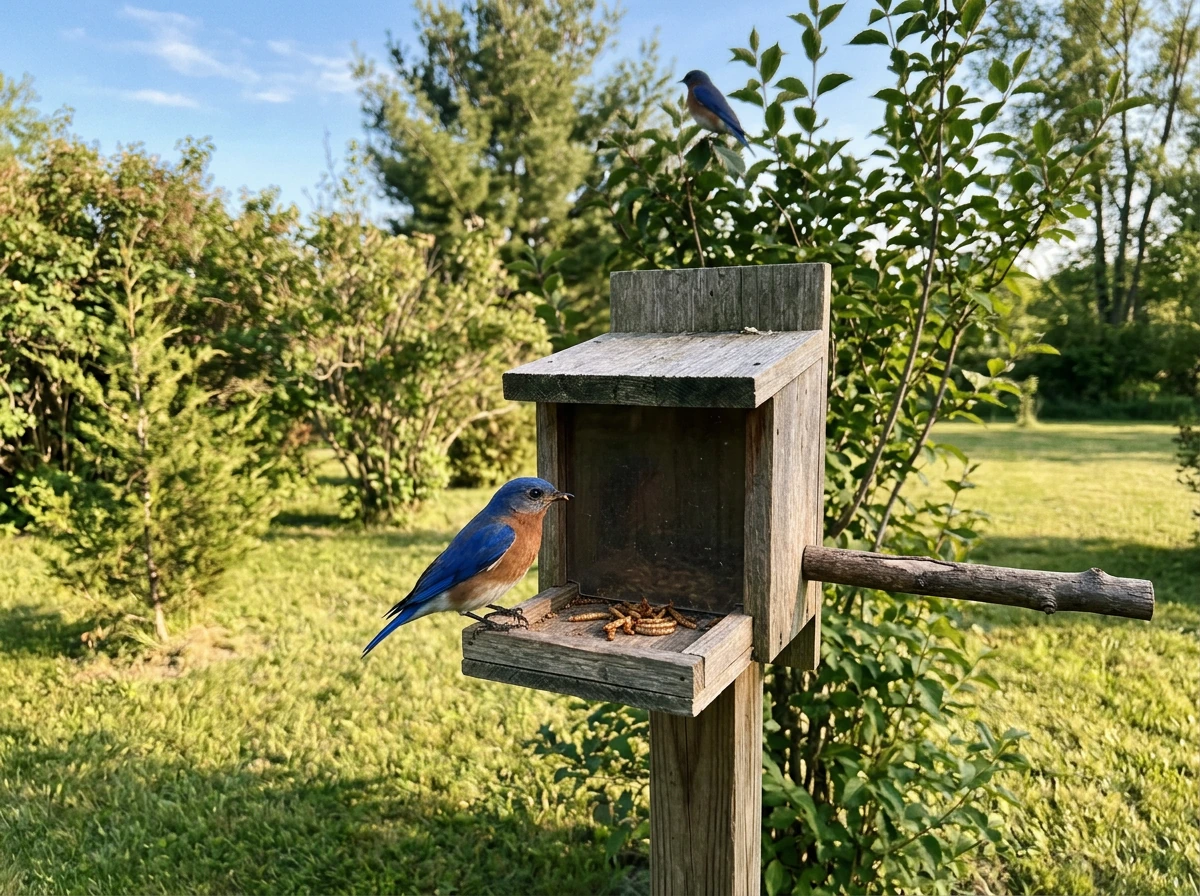
Best Bird Feeders for Bluebirds: What to Buy and Feed
Find the best bird feeders for bluebirds plus exact food and placement tips to attract and protect them.
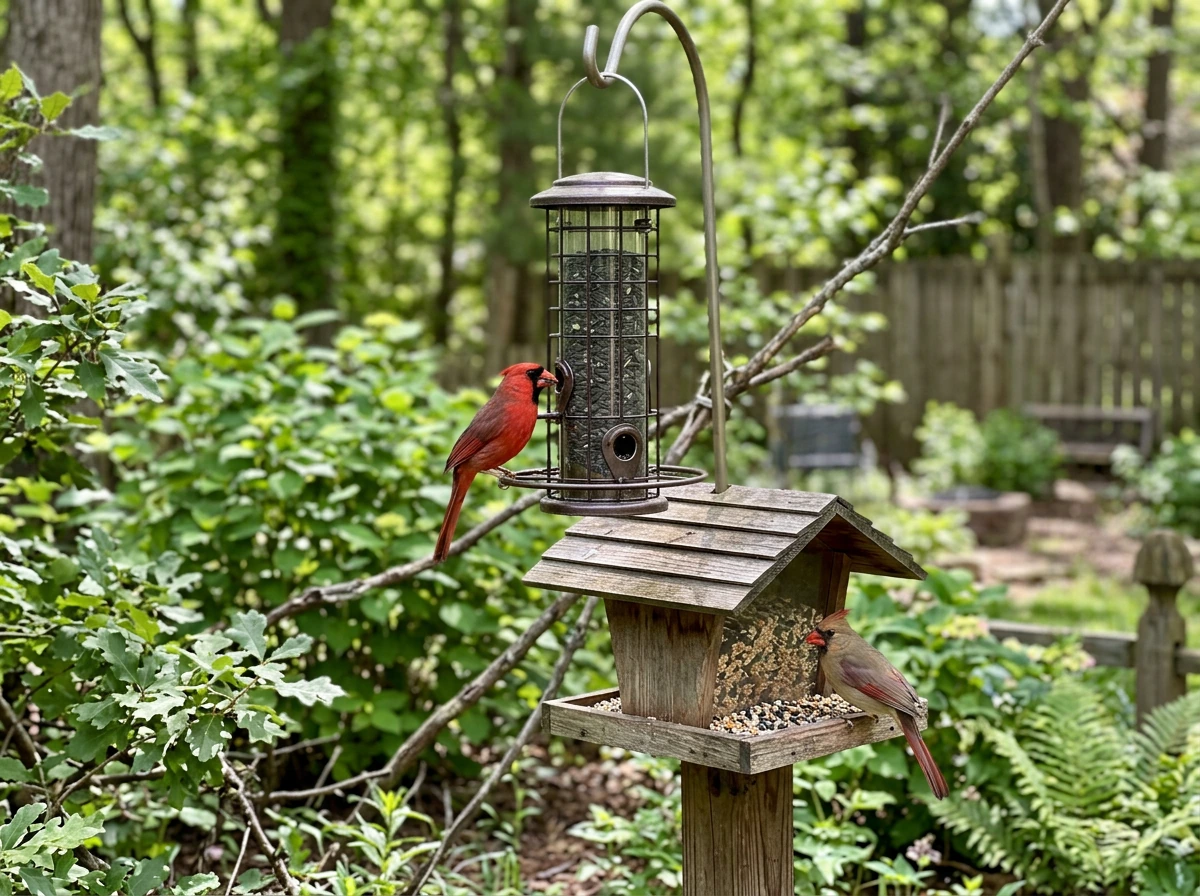
Best Bird Feeders for Cardinals: Types, Setup, and Tips
Best bird feeders for cardinals: tube and outdoor setups, ideal seed, placement, and squirrel and pest-proofing tips.
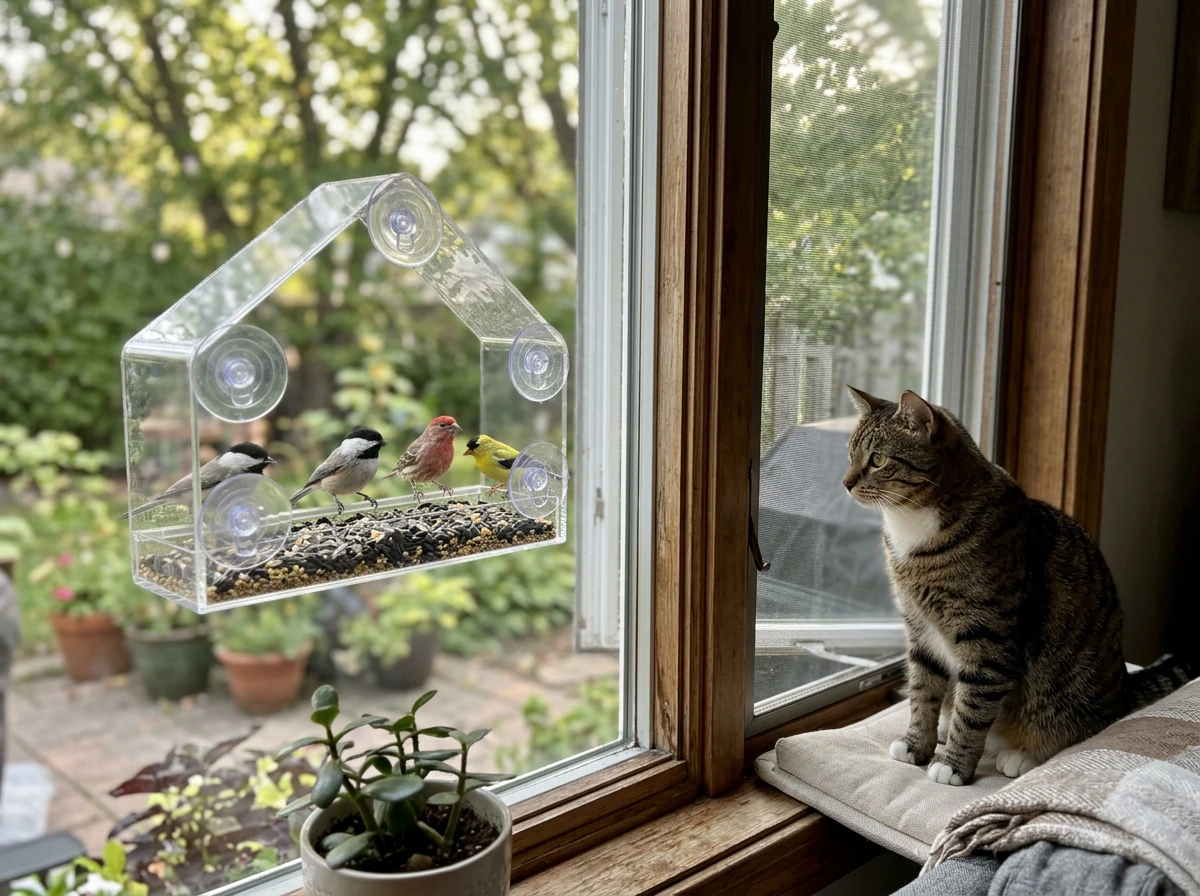
Best Bird Feeders for Cats to Watch Birds Safely
Best bird feeders for cats: safe, predator-resistant options and smart feeders with mounting tips to watch birds from a