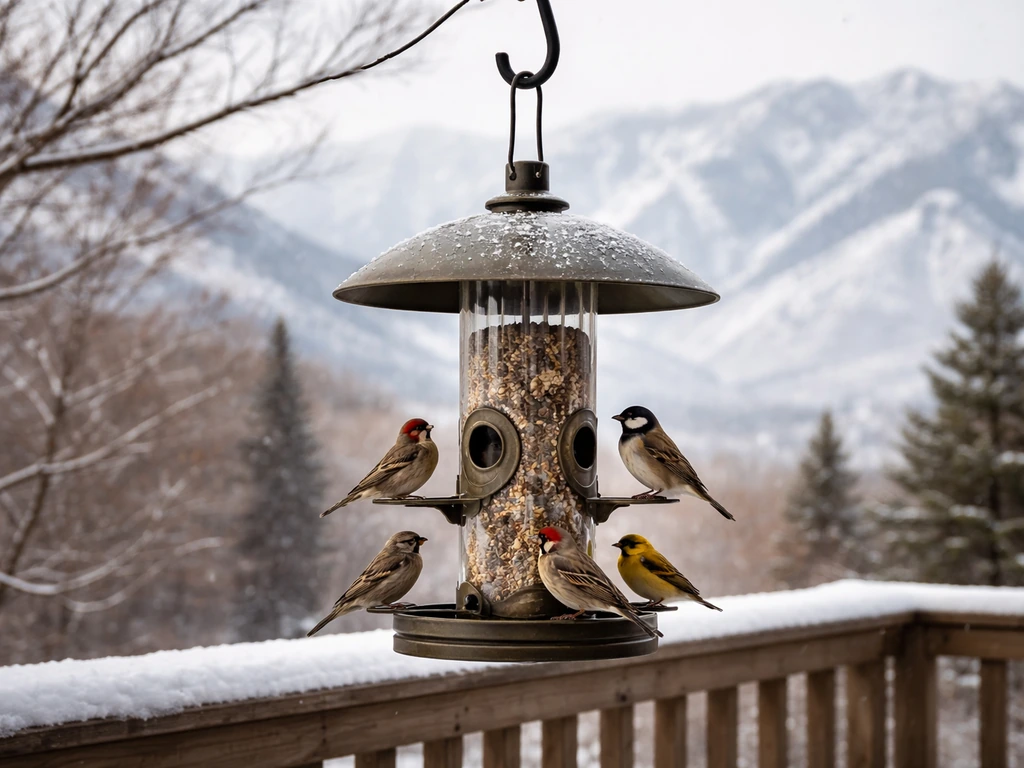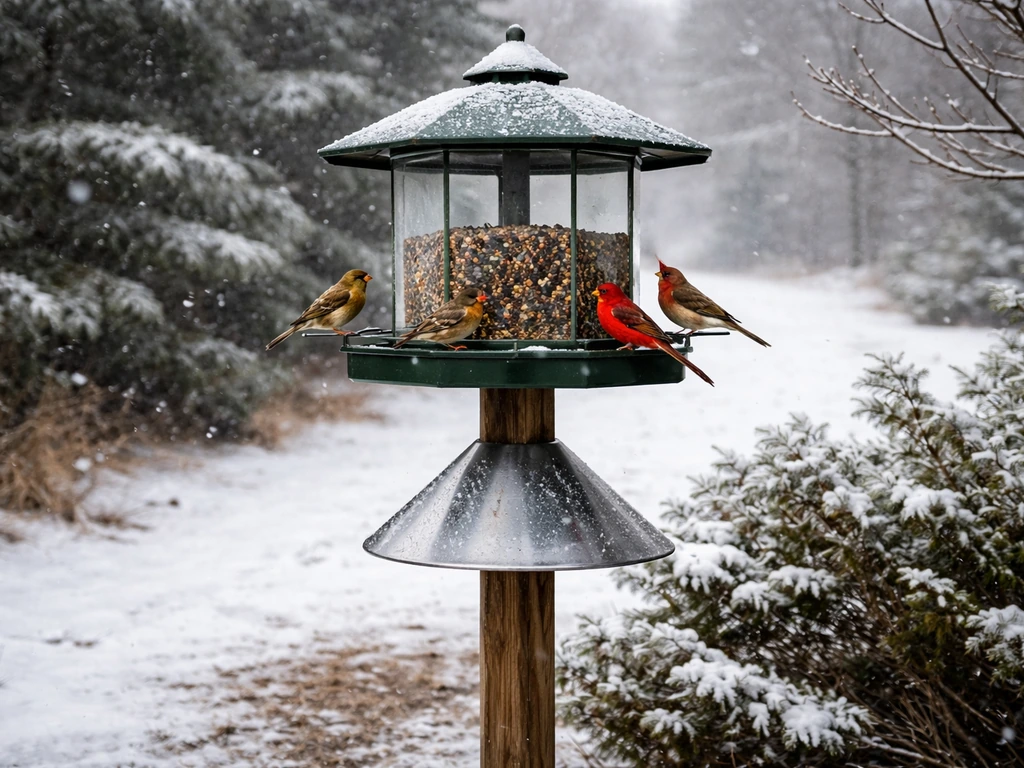
For a Georgia backyard, you want tube feeders with drainage ports and UV-stabilized plastic or powder-coated steel for cardinals and finches, a dedicated hummingbird feeder with a wide mouth for easy cleaning (nectar spoils fast in Georgia heat), a suet cage with a tail prop for woodpeckers, and either a weight-activated squirrel-proof feeder or a cage-wrapped tube to deal with the inevitable squirrel pressure. Material durability and mold prevention matter more here than almost anywhere else in the country because of the heat, humidity, and summer rainstorms that turn seed into a soggy mess if you're not careful.
Best Bird Feeders for Georgia: Buying Guide by Bird Type
Marcus Holloway
11 Jul 2026
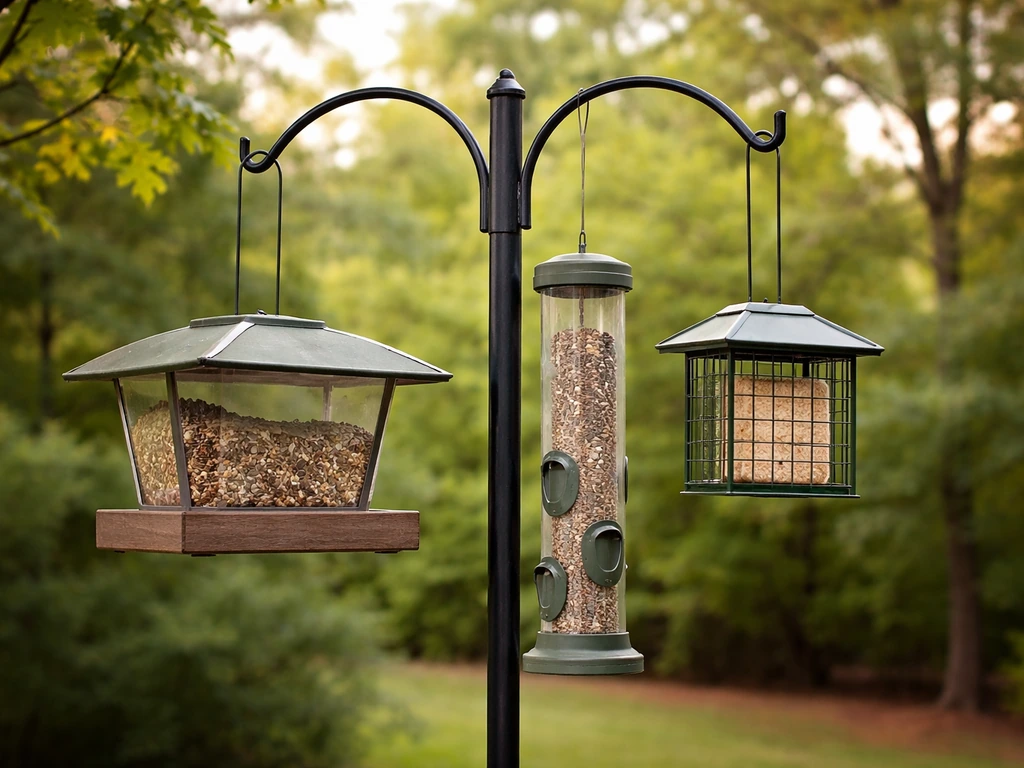
The birds you'll actually see in Georgia (and what they want)
Georgia is genuinely great for backyard birding year-round. You're in the overlap zone between southeastern woodland birds and migratory species that push through on the Atlantic Flyway, so the variety is real. The birds that will show up most consistently at feeders, and the ones worth designing your setup around, include: When you start comparing feeder setups, it helps to look at guides like the best bird feeders for utah to choose models that match the birds you actually see and the feeder style you can maintain.
- Northern Cardinals: year-round residents everywhere in Georgia, one of the most common feeder birds in the state
- Carolina Chickadees and Tufted Titmice: small, bold, and constant visitors at tube and platform feeders
- American Goldfinches and House Finches: goldfinches peak in winter, house finches are present all year
- Ruby-throated Hummingbirds: present from roughly late March through October; the only breeding hummingbird species in Georgia
- Downy and Red-bellied Woodpeckers: extremely common; Pileated Woodpeckers show up in more wooded suburban yards
- Brown-headed Nuthatches: a Georgia specialty that prefers sunflower and suet
- Carolina Wrens: year-round, will visit platform feeders for mealworms or peanut pieces
- Dark-eyed Juncos and White-throated Sparrows: winter ground feeders, mid-October through March
- Common Grackles and European Starlings: the nuisance species that will take over a poorly designed setup
The grackle and starling problem is real and worth addressing upfront. Grackles prefer open platform feeders and large hopper trays. Starlings dominate suet feeders. If you're getting overrun, the feeder type you choose matters more than any repellent or trick. Weight-activated feeders and upside-down suet cages are your best tools, covered more below.
Georgia weather will test your gear (here's what holds up)
Georgia summers are brutal for bird feeders. The combination of 90-plus-degree heat, high humidity, afternoon thunderstorms, and thick spring pollen creates conditions that destroy cheap feeders and spoil seed faster than most people expect. I've had plastic tube feeders crack and fade within a single summer when they weren't UV-stabilized, and I've seen hoppers fill with water after a thunderstorm and turn into a moldy mess within 48 hours.
Material choices that actually last
| Material | Pros | Cons | Best For |
|---|---|---|---|
| UV-stabilized polycarbonate or Tritan plastic | Lightweight, clear so you can see seed levels, resists fading | Can crack in extreme cold (less of a Georgia issue) | Tube feeders for finches, chickadees |
| Powder-coated steel | Very durable, rust-resistant with intact coating, chew-proof for squirrels | Heavier, coating can chip over time exposing bare metal | Squirrel-proof cages, weight-activated feeders |
| Stainless steel ports and hardware | Won't rust in humidity, easy to sanitize | More expensive | Port fittings, perch rods, mounting hardware |
| Cedar or recycled poly lumber | Attractive, rot-resistant, weathers well | Requires more cleaning effort on rough surfaces | Platform and hopper feeders |
| Cheap acrylic or thin ABS plastic | Inexpensive upfront | Yellows, cracks, and warps quickly in Georgia UV and heat | Avoid for outdoor use in the South |
Drainage is non-negotiable. If you want the best results in Colorado, focus on feeders that handle snow and temperature swings while also preventing water buildup best bird feeders for colorado. Look for tube feeders with seed ports that have drainage holes at the bottom so water doesn't pool. Hopper feeders should have a sloped floor and drainage gaps, not a flat sealed bottom. Seed spoils alarmingly fast in standing water: Georgia DNR specifically calls out fungal disease (aspergillosis) linked to wet seed hull buildup, and recommends raking up seed debris and droppings at least twice a week. Hot, humid summer weather can increase the risk of mold and salmonellosis for birds and people, especially when seed hulls and droppings build up under feeders blank" rel="noopener noreferrer">salmonellosis risk for birds and people. That's not overkill in Georgia, that's just reality.
Cleaning and maintenance schedule for Georgia conditions
At minimum, clean all feeders once a month with a 10% bleach solution (one part bleach to nine parts water), rinse thoroughly, and let dry completely before refilling. In summer, bump that to every two weeks for seed feeders. For hummingbird feeders, Georgia DNR recommends changing the nectar every two to three days in warm weather, or sooner if it turns cloudy. Bacteria and mold grow fast in heat, and cloudy or fermented nectar can make hummingbirds sick. Only fill feeders with as much seed as birds can eat in one to two days so you're not leaving stale or damp seed sitting out.
The right feeder for each bird you want to attract
Cardinals: hopper or large tube with wide ports
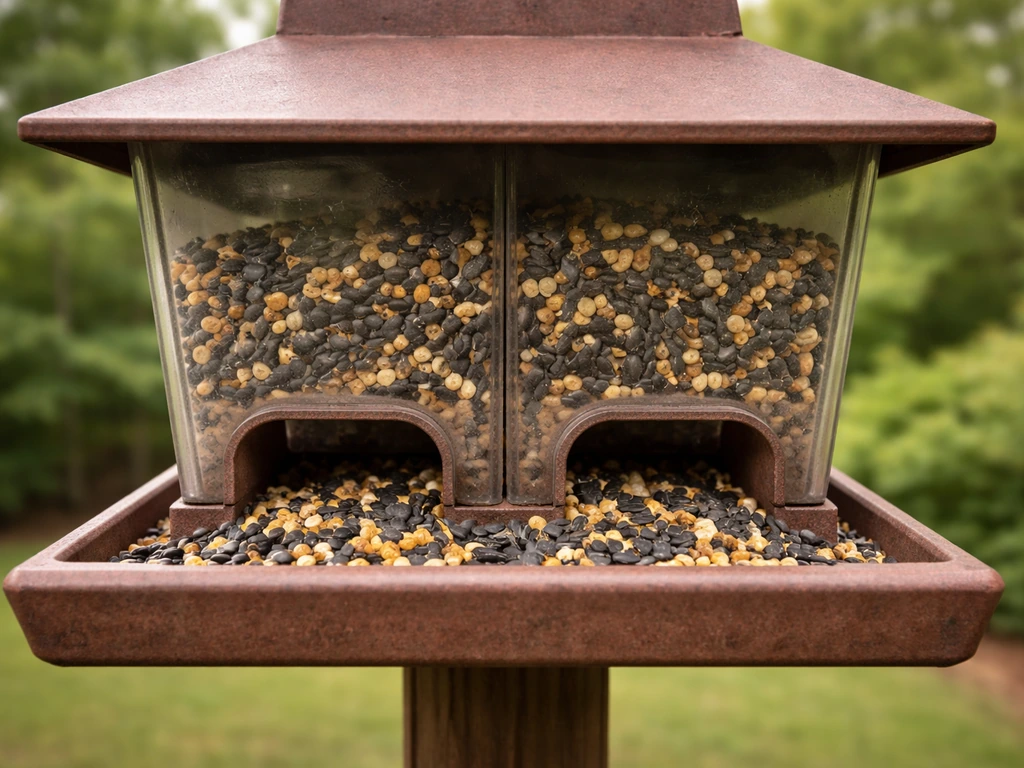
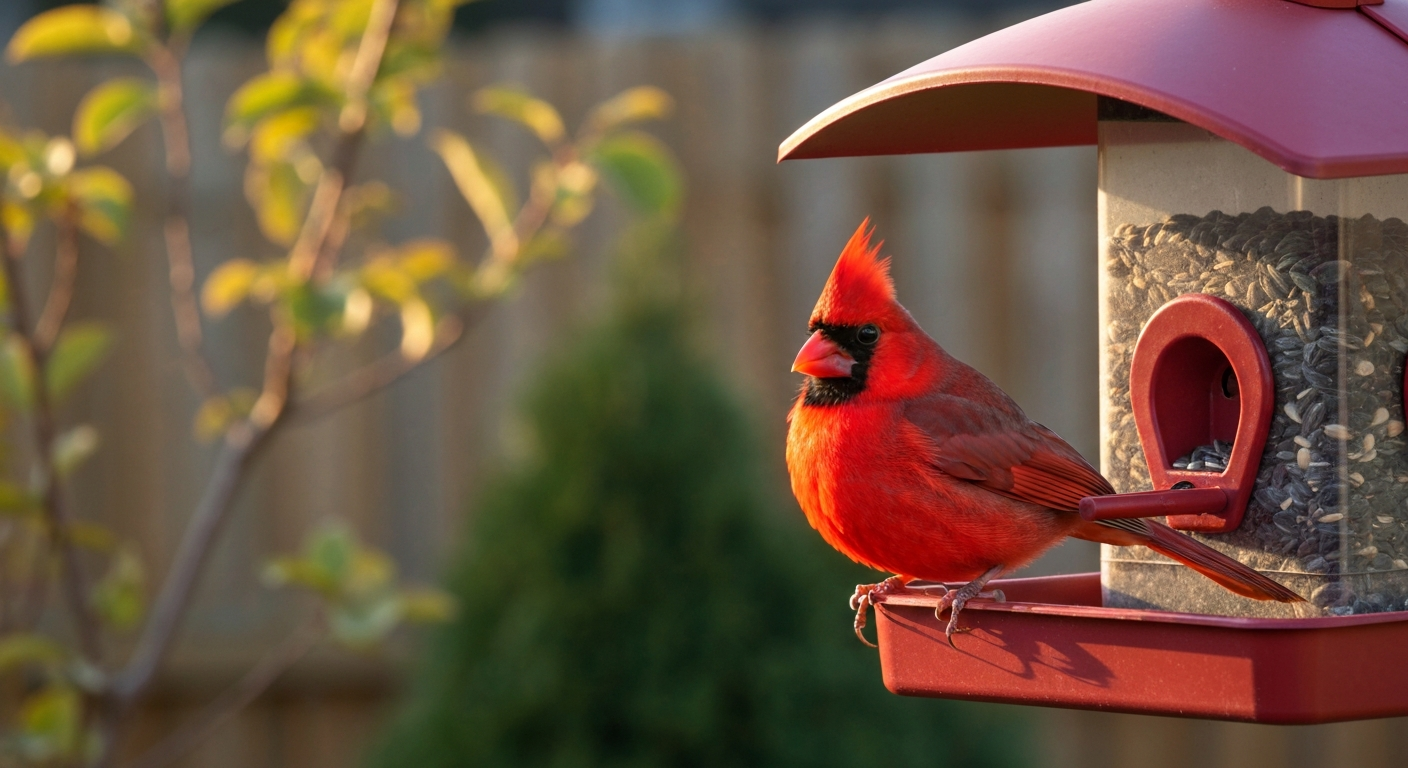
Cardinals are big birds with a bill designed for cracking hard seeds, and they prefer to eat with their feet flat rather than clinging sideways. A hopper feeder with a wide tray or platform, or a tube feeder with large elongated ports and a substantial perch, works well. Fill it with black-oil sunflower seeds, which are the single best all-purpose seed for Georgia feeder birds. Cardinals will also eat safflower seeds, which is useful because squirrels, grackles, and most starlings dislike safflower, so switching to a safflower-only fill can cut nuisance visitor traffic significantly.
Finches: nyjer tube feeders with sock or small ports
American Goldfinches want nyjer (thistle) seed from a feeder with small ports they can cling to. A dedicated nyjer tube feeder or a nyjer sock is the right call. House Finches and Purple Finches will also use nyjer feeders but are more adaptable to sunflower chips in a standard tube feeder. One thing to watch in Georgia humidity: nyjer seed clumps and goes rancid faster than sunflower. Buy it in smaller quantities and rotate it out every few weeks in summer.
Hummingbirds: easy-clean glass or BPA-free plastic feeders
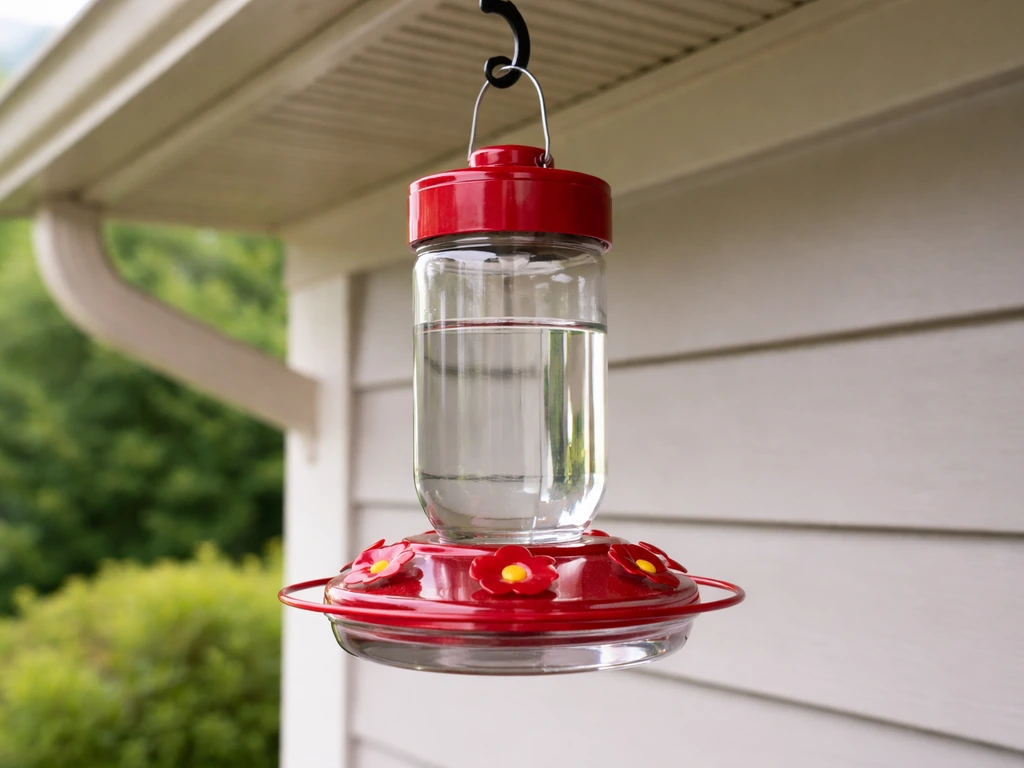
Ruby-throated Hummingbirds arrive in Georgia in late March and most leave by late October, though a few linger into November in the southern part of the state. The nectar recipe is simple: one part white granulated sugar to four parts water, boiled briefly to dissolve and then cooled. All About Birds (Cornell Lab) recommends a 1/4 cup sugar to 1 cup water hummingbird nectar mixture one part white granulated sugar to four parts water. Skip red dye entirely, it's unnecessary and potentially harmful. Extra nectar stores in the refrigerator for up to a week.
For feeder choice, prioritize easy disassembly and cleaning over everything else. A feeder you can fully open and scrub with a bottle brush is far better than a decorative one with sealed chambers where mold hides. Saucer-style feeders (like the HummZinger series) are particularly good in Georgia because they're shallow, mold less quickly, and disassemble into just two or three pieces. If you want to attract more hummingbirds, hang multiple single-port feeders spread around your yard rather than one large multi-port feeder. Hummingbirds are territorial and one dominant bird will guard and chase others away from a single feeder, but can't control multiple spread-out stations.
Woodpeckers: suet cages with tail props
Downy, Hairy, and Red-bellied Woodpeckers all visit suet feeders reliably. A basic wire suet cage works, but a cage with a tail-prop extension (a flat board below the cage that the bird braces its tail against) makes it easier for larger woodpeckers and increases visits. For starling control, an upside-down suet feeder is one of the better tricks available: woodpeckers and nuthatches will hang upside down to feed, but most starlings won't bother. In summer, use no-melt suet cakes formulated for warm weather. Regular suet cakes will turn rancid and greasy in Georgia heat within days.
Chickadees, titmice, and nuthatches: small tube feeders with sunflower or peanut pieces
These birds are regulars at any tube feeder with sunflower seeds, but they also love peanut pieces (shelled peanuts broken into smaller bits) in a mesh peanut feeder. Mesh peanut feeders are one of the best ways to attract Carolina Chickadees, Tufted Titmice, and Brown-headed Nuthatches together. They're inexpensive, easy to clean, and hold up well.
Ground feeders and sparrows: low platform or tray feeders
Dark-eyed Juncos and White-throated Sparrows don't really use hanging tube feeders. They want to eat low, either from a low platform feeder a few inches off the ground or directly from seed scattered on the ground. Millet is their preferred seed. A ground tray feeder with drainage holes works well, but keep it in an open area where cats can't sneak up on feeding birds.
Dealing with squirrels, grackles, and other feeder raiders
Squirrels are aggressive and relentless in Georgia, and if you've ever watched a squirrel dismantle a feeder in under a minute, you know the problem is real. There's no single fix, but combining a good mounting strategy with the right feeder type gets you most of the way there.
Weight-activated feeders
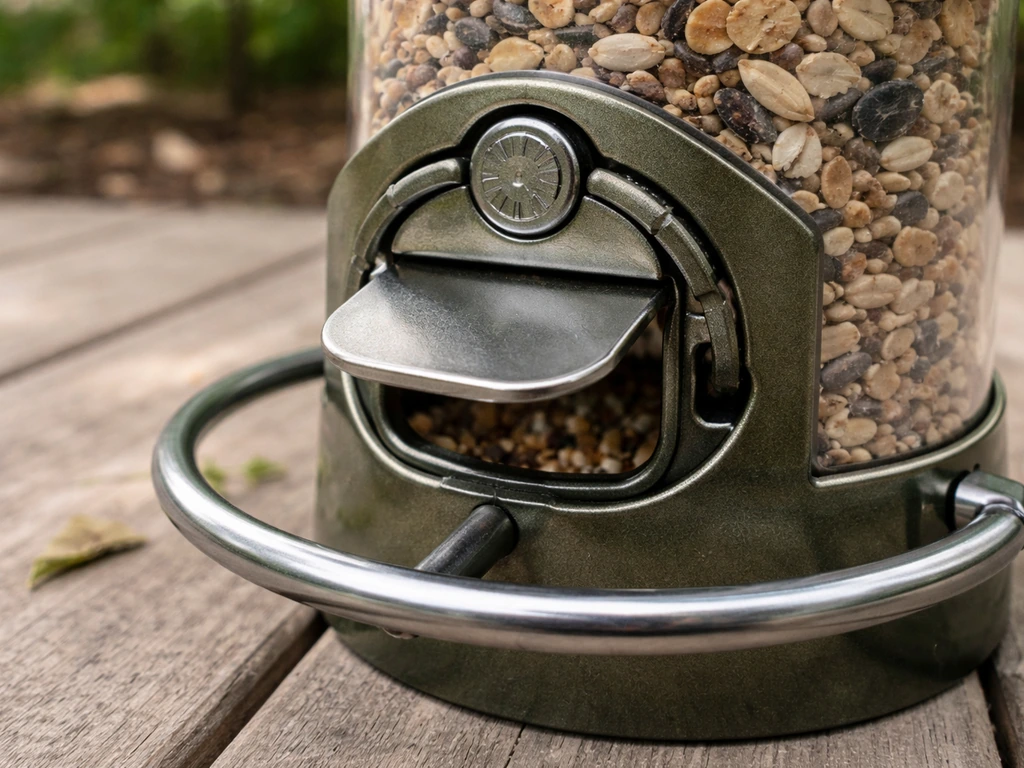
Weight-activated feeders like the Squirrel Buster series or the Brome feeders close off the seed ports when a squirrel's weight is on the perch ring. They're calibrated to stay open for birds but close for heavier animals. These work well as long as the feeder is mounted correctly (more on that below), and they're my first recommendation for anyone dealing with persistent squirrel pressure. The downside is cost, they run $40 to $80 or more, but a well-made one lasts years.
Cage feeders
A wire cage surrounding a tube or hopper feeder blocks squirrels and larger birds while letting smaller birds pass through the openings. This is also one of the best tools against grackles and starlings, which are too big to fit through standard cage gaps. If grackles are your main problem, a caged tube feeder filled with safflower is extremely effective. Grackles dislike safflower and can't fit through the cage anyway.
Baffles
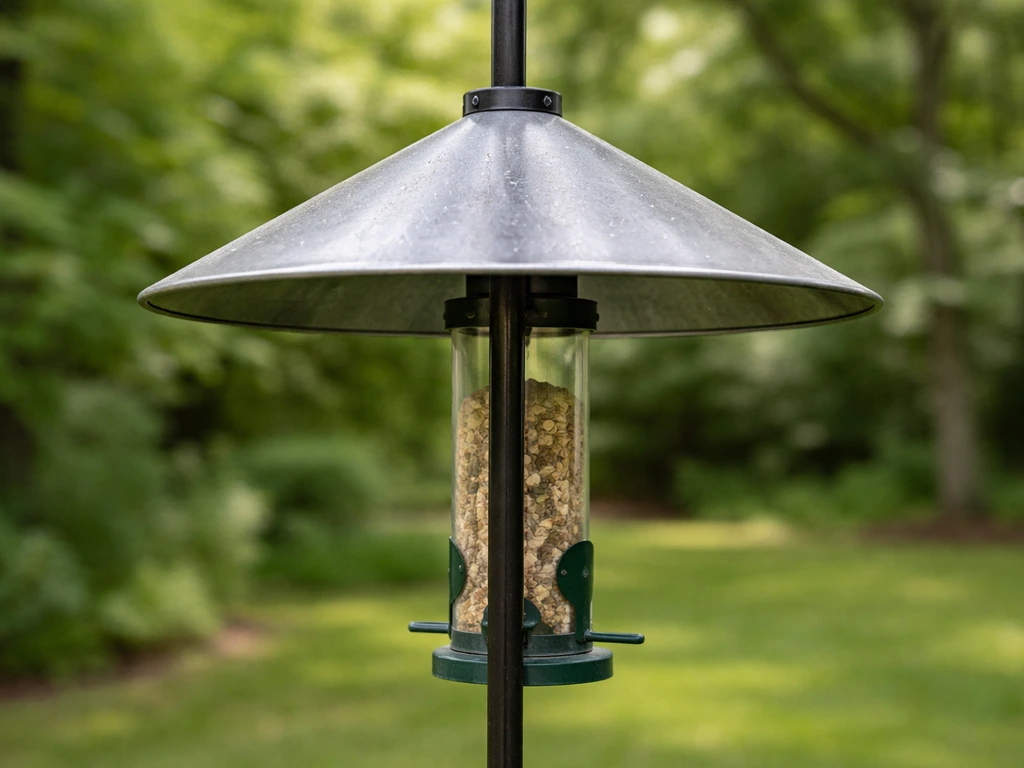
A baffle is a dome or cylinder that physically blocks squirrels from climbing a pole or dropping onto a feeder from above. A pole-mounted cylindrical baffle below the feeder stops ground-approach squirrels. An overhead dome baffle stops squirrels from dropping down from trees or structures above. Both are cheap (usually $15 to $30) and highly effective when the feeder is properly positioned away from jumping-distance surfaces. Without correct positioning, even the best baffle fails.
Nuisance birds: grackles and starlings
Grackles and starlings are harder to deal with than squirrels because they're birds and you can't just block them with a weight-activated mechanism calibrated for mammals. The most effective approach is a combination of feeder style and food choice. Use caged feeders (they can't fit through), switch to safflower seeds (they generally avoid it), use upside-down suet feeders (starlings won't use them), and avoid platform feeders or open trays that give large birds an easy landing zone. If you eliminate the easy food sources, grackles and starlings tend to move on.
Where to mount your feeders in a Georgia yard
Placement affects bird safety, squirrel resistance, and how much you'll actually enjoy watching the feeders. Here are the practical rules that matter most:
- Keep feeders either within 3 feet of a window or more than 30 feet away. This sounds counterintuitive, but birds hit windows most often at medium distances where they've built up flight speed. Close feeders mean low-speed impacts that rarely injure; far feeders mean birds identify the building as a structure, not a flight path.
- Mount pole feeders at least 10 feet from any tree, fence, roof edge, or structure a squirrel can leap from. Eastern gray squirrels can jump roughly 8 to 10 feet horizontally from a standing position, so 10 feet is a safe minimum.
- Use a shepherd's hook or dedicated feeder pole with a pole baffle rather than hanging from a tree branch. Tree-hung feeders are almost impossible to squirrel-proof.
- In Georgia's afternoon thunderstorm season, face any hopper feeder's seed opening away from the prevailing storm direction (generally southwest) to reduce rain entry.
- Place hummingbird feeders in partial shade, especially afternoon shade. Full sun in a Georgia July heats the nectar quickly and speeds fermentation, requiring more frequent changes.
- Ground-level trays for sparrows and juncos should be in an open area with at least 6 feet of clear space around them so birds can spot approaching cats or hawks.
- If you're in a wooded or suburban Atlanta or Savannah-area yard with dense tree cover, a multi-station setup on a single dedicated pole system keeps feeders organized and easier to baffle than multiple scattered hanging points.
Smart feeders and AI bird cameras: are they worth it in Georgia?
Smart bird feeder cameras have gotten genuinely useful in the last couple of years. The Bird Buddy and Netvue Birdfy are the two most popular options, and both combine a camera-equipped feeder with an app that uses AI to identify species from photos. For Georgia, where you can have 20 or more feeder species across a year, the identification feature is legitimately helpful if you're learning or just enjoy the logging aspect.
The Bird Buddy is solar-optional, has a well-reviewed app with solid species ID accuracy, and the feeder itself holds sunflower seeds in a reasonable-sized hopper. The Netvue Birdfy has better video quality in its higher-end models and a wider field of view, which matters if you want good footage. Both run in the $100 to $200 range. The honest trade-off: they're not as durable or weather-resistant as a dedicated metal feeder, and the electronics need some care in Georgia's humidity. Keep the camera housing clean, clear of spider webs (which show up constantly in humid Southern yards), and check that drainage isn't blocked after heavy rain.
If you already have good feeders and just want the camera and ID function, Netvue and others sell camera attachments that clip to your existing feeder setup. That's a lower-cost entry point if you're not ready to replace a feeder you already like. For a Georgia setup specifically, the species identification is most fun from October through March when migratory sparrows, warblers passing through, and winter finch irruptions can bring genuinely surprising visitors to a yard that looked ordinary all summer.
How to pick your setup: checklist and top picks by budget
Before you buy anything, run through this quick assessment of your yard so you're not buying gear that doesn't fit your situation:
- Which birds do you actually want to attract? Cardinals and finches need different feeders than woodpeckers or hummingbirds.
- What's your squirrel and nuisance bird pressure? If squirrels are already a problem, a weight-activated feeder or full cage setup is worth the extra cost upfront.
- How much shade does your yard have? Shaded placement reduces nectar spoilage and seed degradation in Georgia heat.
- Do you have a good mounting point? If not, budget for a shepherd's hook or pole system with a baffle.
- How often are you realistically willing to clean and refill? Honest answer shapes whether a large hopper or small daily-fill tube works better for your routine.
- Do you want smart/camera features, or are you focused purely on attracting more birds?
Budget setup under $50: solid basics that work
- Perky-Pet Squirrel-Be-Gone feeder (~$25): weight-activated, holds sunflower or safflower, covers cardinals and most songbirds
- Basic wire suet cage with tail prop (~$8): handles woodpeckers, nuthatches, chickadees; fill with no-melt suet in summer
- Aspects HummZinger Mini (~$17): best-value hummingbird feeder for easy cleaning; saucer style, two ports
- Shepherd's hook pole (~$15, bought separately): required for proper squirrel-baffling placement
Mid-range setup $50 to $150: better durability and variety
- Brome Squirrel Buster Plus (~$55): best-in-class weight-activated tube feeder, fully disassembles for cleaning, calibration adjustable for different bird sizes
- Woodlink Caged Tube Feeder (~$30): adds cage protection for finches and chickadees, blocks grackles and starlings
- Aspects HummZinger Excel 16 oz (~$28): larger capacity saucer feeder for yards with active hummingbird traffic
- Upside-Down Suet Feeder (~$15): eliminates most starling competition at the suet station
- Mesh peanut feeder (~$12): excellent for titmice, nuthatches, and chickadees; rotate peanut pieces frequently in summer humidity
Full setup over $150: smart features and maximum coverage
- Bird Buddy Smart Feeder with solar lid (~$199): AI species ID, app integration, decent hopper size, solar charging for the camera
- Netvue Birdfy Feeder Cam Pro (~$160): better video quality than Bird Buddy, good for recording footage of uncommon visitors
- Brome Squirrel Buster Legacy (~$80): larger capacity version of the Squirrel Buster line, good for high-traffic yards
- Droll Yankees Yankee Flipper (~$130): motorized spinning perch that launches squirrels off; entertaining and genuinely effective, though requires hanging from a strong mount
- Multi-hook shepherd's pole system with pole baffle (~$35 to $50): lets you run three to four feeders from one baffled pole for a complete station setup
The recommended path from assessment to setup
- Decide your target birds first, then match feeder types to species rather than buying a generic assortment
- Buy a pole and baffle before or at the same time as your feeders; it's the most skipped step and it makes all the other gear work better
- Start with sunflower seeds and safflower as your core fills; both work for cardinals and most songbirds, and safflower actively discourages grackles
- Add a hummingbird saucer feeder before late March and hang it in afternoon shade; make the 1:4 sugar-to-water nectar yourself and change it every two to three days in summer
- Add suet and a peanut feeder once the main station is running; these bring in woodpeckers and nuthatches without much extra effort
- If you want a smart camera, add it to an already-functioning setup rather than as your first purchase; the ID features are most useful once you know what birds are visiting and want to track them
- Set a cleaning calendar: feeders monthly at minimum, hummingbird feeders every 2 to 3 days in summer, seed checked and rotated every 1 to 2 days in hot humid weather, ground debris raked twice a week
Georgia is one of the better states in the country for consistent backyard birding across all four seasons, and unlike setups in drier western states like Arizona or Utah where you're working around desert heat and arid conditions, the challenge here is mostly managing moisture, mold, and aggressive wildlife pressure. Get the material choices and maintenance routine right, and your feeders will pull in birds year-round with minimal frustration. If you're shopping specifically for Oklahoma, compare these feeder types against Oklahoma's weather patterns and choose models built for durability and easy cleaning best bird feeders for oklahoma.
FAQ
What’s the single best feeder type for Georgia if I want one setup to cover the most species?
Start with UV-stabilized tube feeders with drainage ports, paired with black-oil sunflower seed. This combination tends to attract the broadest mix of common visitors in Georgia (including finches and many regulars), and the drainage design helps prevent soggy seed after frequent summer storms.
How much seed should I put out in Georgia to avoid mold or fungus?
Aim to refill only what birds can finish in 24 to 48 hours, then clean and top up based on weather. In humid weeks with afternoon thunderstorms, smaller, more frequent refills reduce the amount of seed sitting damp or partially flooded.
Can I use regular suet year-round in Georgia, or do I need special cakes?
Use no-melt suet in summer and switch back to standard suet when temperatures drop. Regular suet can go greasy and rancid within days in Georgia heat, and a dirty, greasy cage also increases the mess that other birds have to step through.
Do I really need to rinse feeders with bleach every time, or are there safer options?
Monthly bleach cleaning is the baseline, but in between you can do spot cleaning (scraping, rinsing hot water, and letting it fully dry) for feeders that stay dry. If you see cloudy buildup, black residue, or you live in a consistently rainy area, keep bleach deeper cleans on schedule because mold spores persist even after quick rinses.
What’s the best way to keep hummingbird nectar from spoiling in Georgia heat?
Change nectar every two to three days in warm weather, and reduce to every 1 to 2 days if the feeder is in direct sun. Also wash with hot water and a dedicated brush, because sugar film can seed new bacterial growth even after you swap nectar.
How do I prevent bees or ants from taking over my hummingbird or seed feeders?
For hummingbird feeders, keep nectar ports shaded from direct ground-level insect traffic and rinse promptly after weather events. For seed feeders, use clean, dry seed, avoid overfilling, and check that drainage and roofline placement do not create a hidden ant access route to the ports.
If grackles are swarming, should I switch seed or change feeder style first?
Change the feeder style and food together, but food is often the fastest lever. Caged feeders plus safflower tends to reduce grackle access quickly because grackles generally avoid safflower and still cannot fit through cage openings.
Will safflower also help with starlings, or are they mainly a suet problem?
Safflower can reduce visits to some seed feeders, but starlings are still strongly drawn to suet. If starlings are the main issue, keep suet in upside-down style cages and be careful with open platform designs that provide an easy landing spot.
How should I mount a squirrel-proof feeder so it actually works?
Follow the manufacturer’s height and clearance guidance and keep it away from launch points like branches, fences, and nearby structures. Even the best weight-activated feeder can fail if a squirrel can jump onto the top or get a running start that bypasses the calibrated closing area.
Are baffles worth it if I’m already using a squirrel-proof feeder?
Yes, especially in Georgia where squirrels jump well and approach from multiple angles. A pole-mounted cylindrical baffle plus an overhead dome baffle gives you coverage against both climbing squirrels and those dropping from above, reducing “escape routes” that cause repeated feeder damage.
What’s the best feeder approach for ground-feeding sparrows in yards with cats?
Use a low platform feeder or a ground tray with drainage holes, but position it in an open area with clear sightlines for birds. Avoid spots near cover where cats can ambush, and consider using a placement that lets you visually monitor the area from indoors.
How do I choose between a tube feeder and a hopper feeder in Georgia’s rainy season?
If storms are frequent near your home, prioritize feeders designed with true drainage paths (tube ports with bottom drainage, or hopper designs with sloped floors and drainage gaps). Hopper feeders with flat, sealed bottoms can trap water and create an ongoing wet-seed problem after the first heavy downpour.
What should I look for in feeder materials to reduce cracking and mold?
Prioritize UV-stabilized plastics or powder-coated steel, and favor designs that let you scrub every surface that touches seed. The material helps with cracking, but the cleanability matters for mold prevention because biofilm buildup can remain even if the feeder body doesn’t deteriorate.
Are camera feeder attachments worth it in Georgia if I just want to identify birds?
They can be, especially during October through March when migratory sparrows and winter visitors appear. If you already have durable feeders, clip-on camera modules can lower cost, but you still need routine checks after storms, since humidity can interfere with optics and you must clear spider webs from the housing.