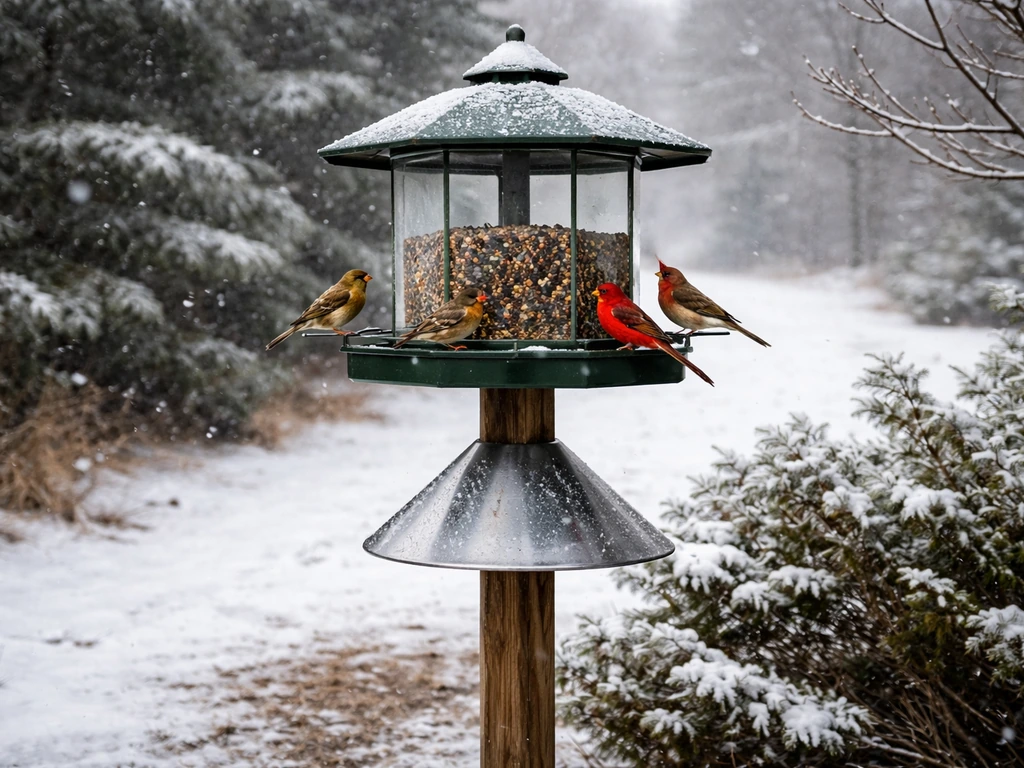
For most Utah backyards, a weight-activated squirrel-proof tube feeder filled with black-oil sunflower seed is the single best starting point. Add a suet cage for woodpeckers and nuthatches, a platform tray near the ground for dark-eyed juncos, and a shaded hummingbird feeder from late April through September, and you've covered the majority of species you'll realistically see. The rest of this guide breaks down exactly why those choices work in Utah's specific climate, which feeders hold up through temperature swings from sub-zero winters to 94°F July days, and how to keep squirrels and nuisance birds from making the whole setup pointless.
Best Bird Feeders for Utah: Types, Setup, and Picks
Marcus Holloway
2 Jun 2026
What makes Utah different for backyard feeding
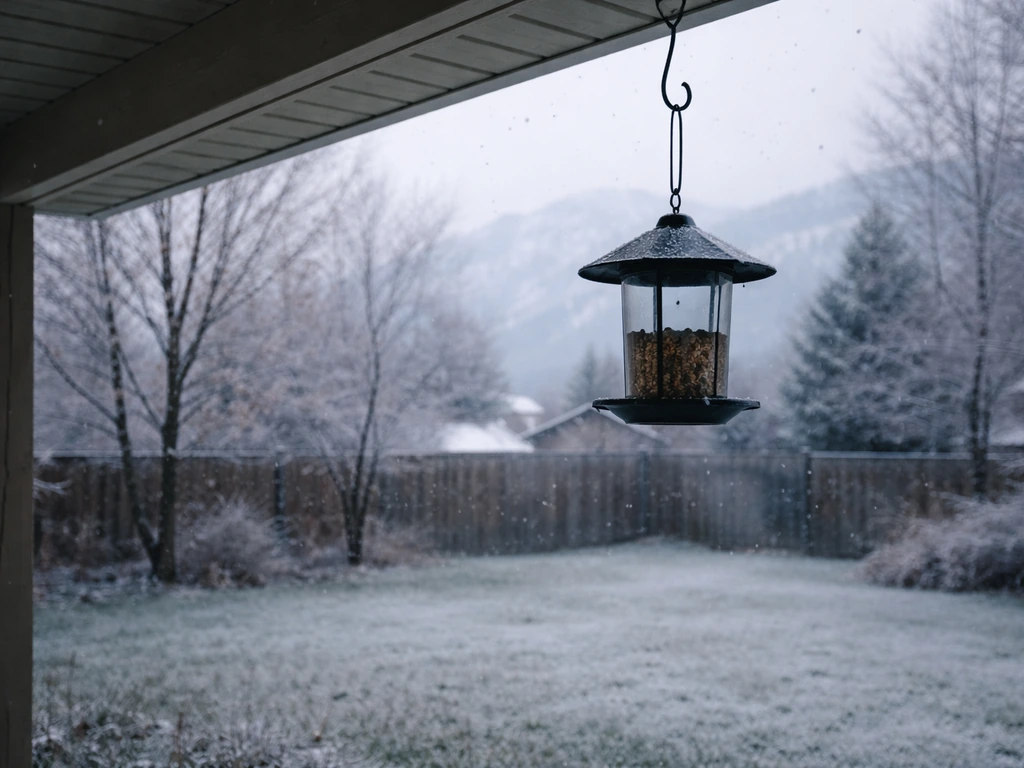
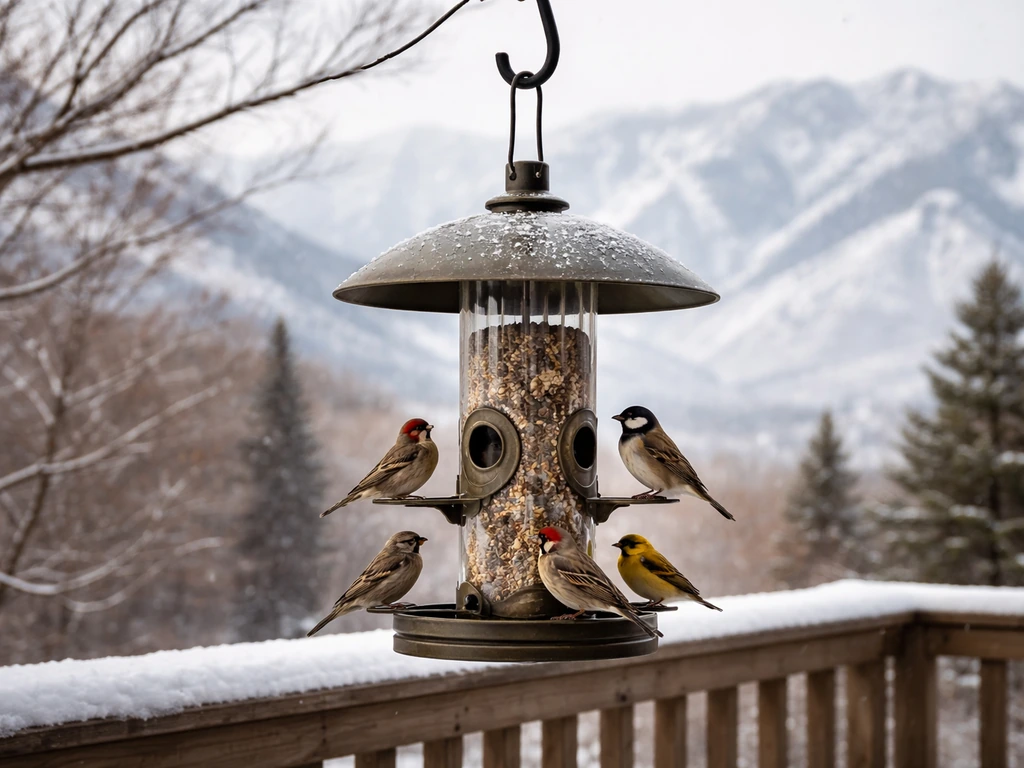
Utah isn't just one climate. The Wasatch Front gets genuine cold and snow, with Salt Lake City recording sub-zero temperatures in winter and an average July high around 94°F. Southern Utah runs even hotter. Elevation matters too: a feeder setup that works fine in a Salt Lake City suburb needs to handle -10°F nights in Park City or Cedar City. Wind is persistent and drying across most of the state. That combination of cold winters, hot dry summers, and constant wind creates real problems for plastic feeders, sugar-water setups, and moist seed that goes rancid faster than you'd expect.
The seasonal timing of bird feeding also works a little differently here. Utah's harsh winters are when feeders actually earn their keep. When snow covers natural food sources, species like dark-eyed juncos, black-capped chickadees, and white-breasted nuthatches rely on supplemental feeding in ways that can genuinely affect their survival. Project FeederWatch’s Winter Bird Highlights PDF likewise provides evidence-based winter feeder target data, including ranks or percent of sites for chickadees, juncos, and nuthatches dark-eyed juncos, black-capped chickadees, and white-breasted nuthatches. Feeder traffic tends to be lighter in fall and early summer when natural food is abundant, so don't be discouraged if your feeders go quiet in September. By November, you'll have regulars showing up daily.
The bird mix itself is worth knowing before you buy anything. Utah's consistent winter feeder visitors include dark-eyed juncos, black-capped chickadees, house finches, American goldfinches, white-breasted nuthatches, and downy woodpeckers. In warmer months, broad-tailed hummingbirds are common at elevation, and rufous hummingbirds pass through on migration. Understanding that list shapes every feeder and seed decision you make.
Choosing feeder type by your target birds
Different birds feed in genuinely different ways, and matching feeder style to feeding behavior is the fastest way to get results. A dark-eyed junco almost never climbs a tube feeder, but a chickadee or house finch will use one happily all winter. If you try to run a single feeder and wonder why you're only getting one or two species, the feeder type is usually the first thing to fix.
| Feeder Type | Best For | What to Fill It With | Notes |
|---|---|---|---|
| Tube feeder | Chickadees, house finches, goldfinches, pine siskins | Black-oil sunflower, nyjer/thistle | Multiple ports; good for perching birds; squirrel-proof versions available |
| Hopper/house feeder | Chickadees, nuthatches, house sparrows, juncos | Sunflower seed, mixed seed | Holds more seed; good through winter; needs weather protection |
| Platform/tray feeder | Dark-eyed juncos, mourning doves, towhees, sparrows | Millet, cracked corn, sunflower | Ground or low mount; scatter seed below for ground feeders |
| Suet cage | Woodpeckers, nuthatches, chickadees, starlings (unfortunately) | Suet cakes, suet blocks | Upside-down cage design deters starlings while letting clinging birds in |
| Hummingbird feeder | Broad-tailed, black-chinned, rufous hummingbirds | 1:4 sugar-to-water nectar | Shade placement critical in Utah summer heat |
| Nyjer/finch sock or feeder | American goldfinches, lesser goldfinches, pine siskins | Nyjer (thistle) seed | Mesh or tube style; attracts finches that ignore sunflower feeders |
For most Utah setups, I'd run at least three feeder types simultaneously: a tube feeder, a suet cage, and either a platform tray or a scatter of seed on a low surface. That combination covers the widest range of species without overcomplicating things. If hummingbirds are a priority, add a fourth dedicated nectar feeder.
Seed and food setup that cuts mess and waste
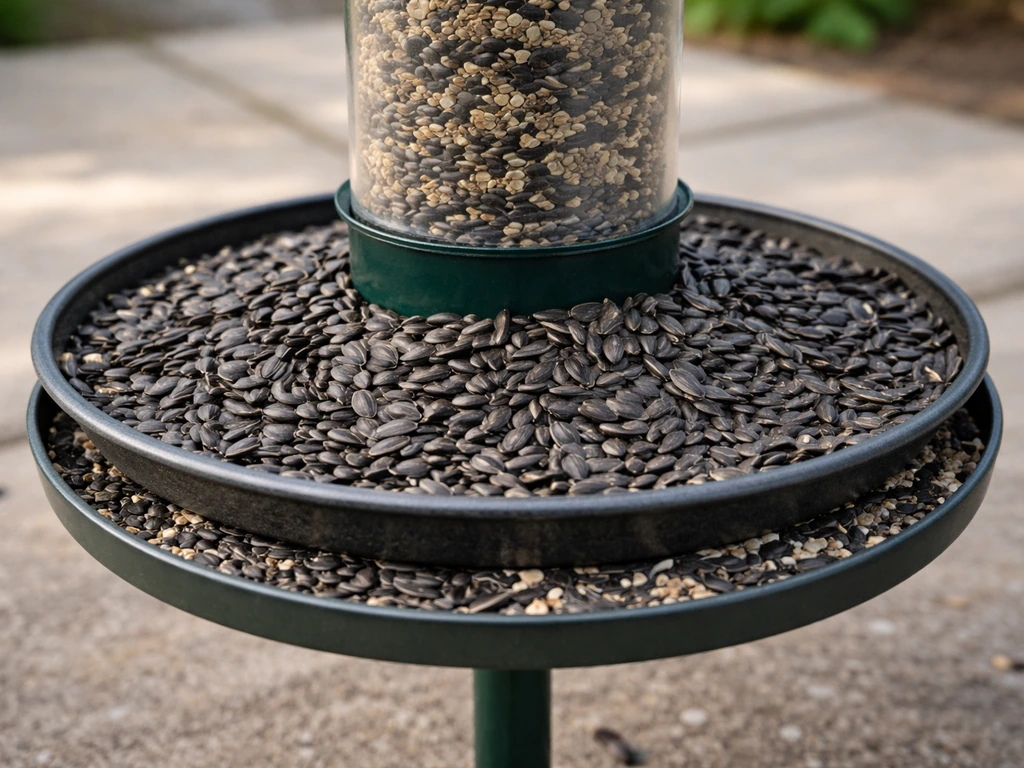
Black-oil sunflower seed is the foundation of almost any Utah feeder setup. It's accepted by more species than anything else, has a higher fat content that matters in cold winters, and works in tube, hopper, and platform feeders. Audubon also recommends completely drying feeders before refilling, and says cleaning should increase in humid or hotter weather. The Utah Division of Wildlife Resources recommends it specifically, alongside white millet for ground-feeding birds and cracked corn for doves and juncos. Skip the cheap 'wild bird mix' bags full of milo and filler grains. Most Utah birds reject those seeds and push them onto the ground where they rot, attract rodents, and create cleanup work.
The mess problem mostly comes down to hulls and waste seed falling below the feeder. Two practical fixes: switch to hulled sunflower chips (no shell, no mess, no germination), or add a tray catch below your tube or hopper feeder. The second option turns fallen seed into a secondary feeding station for ground feeders like juncos, which actually prefer eating from the ground or a low tray. Suet cakes are another low-mess option because the birds eat the whole block with almost nothing left behind.
In summer, nyjer seed can go rancid fast in Utah heat. Check finch feeders every week in July and August and dump seed that smells off or looks dark and clumped. Same goes for sunflower seed in direct sun exposure. Rotating smaller quantities more frequently beats filling a large feeder and letting seed sit for two weeks in 94°F heat.
Weather durability and smart placement
Materials that survive Utah conditions
Cheap plastic feeders crack in UV-heavy Utah sun or become brittle in hard freeze cycles. Look for UV-stabilized polycarbonate, powder-coated metal, or stainless steel components at port openings. Wooden hopper feeders can work beautifully but need a weather roof with good overhang and occasional sealing to prevent moisture damage from spring snowmelt. Metal-top tube feeders from brands like Droll Yankees are built to handle this kind of long-term exposure without warping or yellowing.
One underrated feature for Utah summers: ventilation. Brome's Squirrel Buster Plus has a Seed Tube Ventilation system that lets humid air escape through top vents and pulls in fresh air from below, which actively slows seed spoilage inside the tube. That's not marketing fluff; it's a genuine engineering difference that matters when your feeder is sitting in full sun at 90-plus degrees.
Placement for heat, cold, and wind
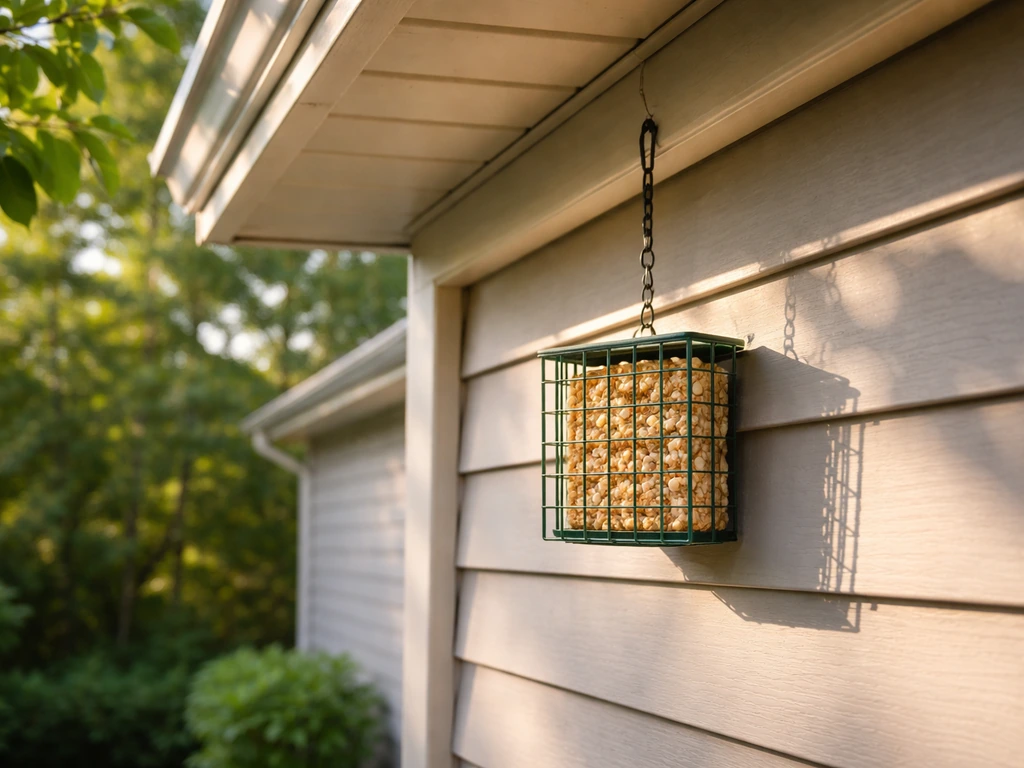
For winter feeding, a feeder placed on the southeast or south side of your home benefits from morning sun warmth and some wind block from the structure itself. Avoid exposed ridge lines or corners where wind accelerates. For summer and hummingbird feeders, the opposite applies: morning sun is fine, but afternoon shade (especially from 2pm onward) dramatically slows nectar fermentation. Faunalist's guidance that all-day sun accelerates spoilage is very relevant for Utah, where afternoon temps regularly exceed 90°F through July and August. A spot that gets dappled afternoon shade from a tree or eave is ideal.
Suet feeders need a shaded spot in summer because suet melts and goes rancid above about 80-85°F. Switch to no-melt or high-melt suet formulations from June through September if you want to keep feeding woodpeckers year-round. In winter, shade matters less, but wind exposure dries suet out fast, so a semi-sheltered spot keeps it fresher longer.
Squirrel, raccoon, and predator-proofing for Utah yards
Squirrels are the number one feeder problem across Utah, and the answer isn't a single product or trick. It's a system. Audubon is direct about this: a properly installed pole with a baffle gets you 'pretty darn close' to squirrel-proof, but the installation has to be done right. Wild Birds Unlimited notes that squirrels can jump over nine feet horizontally, which means your pole needs to be at least 11 feet from any launch point: trees, fence rails, roofs, and even large plant containers. Most people place feeders way too close to jump-off points and then blame the baffle when it fails.
The baffle itself should sit at least 4 to 5 feet off the ground to block climbing access from below. Nature Niche recommends 8 to 10 feet of clear space between the feeder pole and any climbable surface. Those measurements aren't suggestions, they're the actual minimum clearances that make the system work. Get both right and a good pole-mounted baffle (cylinder or dome style) stops virtually all squirrel access.
For the feeder itself, a weight-activated model like the Brome Squirrel Buster Plus adds a second layer of protection. When a squirrel or large bird lands on the feeder, its weight closes the seed ports via a spring-loaded shroud mechanism. Small birds like chickadees and finches don't trigger it. This is worth having even if your baffle setup is solid, because it also blocks starlings and larger nuisance birds that a baffle won't stop.
Raccoons are a nighttime problem in many Utah neighborhoods, especially near foothills and canyon areas. The most effective solution is to bring feeders inside at night or use a raccoon-specific baffle (wider diameter than squirrel baffles) on your pole. Raccoons are strong enough to defeat smaller squirrel baffles, so check the weight rating and diameter of any baffle you buy if raccoons are a known issue in your area.
- Place pole at least 11 feet from any squirrel launch point (trees, fences, roof overhangs)
- Mount baffle minimum 4 to 5 feet off the ground on a smooth metal pole
- Use a weight-activated feeder like the Squirrel Buster Plus for double protection
- For starlings at suet cages, use an upside-down suet feeder design (accessible only from below)
- Bring feeders in overnight or use wide-diameter raccoon baffles if raccoons are active in your area
- Keep ground clear of fallen seed at night to avoid attracting rodents
Smart bird feeder cameras and AI identification
Smart feeders with built-in cameras and AI species identification have gotten genuinely useful in the last couple of years. The Birdfy Feeder 2 (with lifetime free AI identification included on the device) and the Bird Buddy 2 Mini (which adds a microphone for birdsong-based ID alongside visual recognition) are the two most practical options available right now as of mid-2026. Both can identify species automatically, send photo or video notifications to your phone, and log visits over time. The Birdfy model also identifies bird sex for sexually dimorphic species, which is a nice detail for people tracking house finch or goldfinch visits.
The honest case for a smart feeder in Utah is straightforward: if you want to know exactly which species are visiting when you're not watching, or if you're interested in building a species log of your yard over time, these feeders deliver that with minimal effort. They're also genuinely fun if you're newer to birding and want help putting names to faces.
The trade-offs are real though. Most smart feeders need consistent WiFi signal at your feeder location, which can be a problem if your best feeder spot is at the back of a large yard or a rural property. Battery models handle power more flexibly but need regular charging, especially in winter when cold temps drain batteries faster. Birdfy's app shows last-known status when the device is offline, but you lose real-time notifications. In Utah's cold months, plan to check battery levels more often than the manual suggests.
For someone primarily focused on feeding rather than photography or logging, a smart feeder is an optional upgrade rather than a necessity. A high-quality traditional feeder with a good baffle setup will attract more birds and require less troubleshooting than a smart feeder with connectivity problems. But if tech is your thing and you want to get more engaged with identifying what's visiting, the current generation of AI feeders is capable enough to be worth it.
Best feeder picks by bird species in Utah
Here's how to match your target species to a specific feeder setup. These are the birds you're most likely to see at a typical Utah backyard feeder, organized by what they need.
| Target Bird | Feeder Type | Food | Key Feature to Look For |
|---|---|---|---|
| Black-capped chickadee | Tube feeder or hopper | Black-oil sunflower seed | Multiple ports; weight-activated squirrel deterrent |
| Dark-eyed junco | Platform tray or ground scatter | White millet, cracked corn, sunflower chips | Low mount or ground-level; drainage holes in tray |
| House finch / goldfinch | Tube feeder or nyjer sock | Black-oil sunflower, nyjer seed | Fine mesh ports for nyjer; UV-stable tube body |
| White-breasted nuthatch | Tube feeder or suet cage | Sunflower seed, suet | Smooth vertical surface access; works with upside-down suet cage |
| Downy / hairy woodpecker | Suet cage (upside-down style) | Suet cake or block, no-melt formula in summer | Upside-down design blocks starlings; tail-prop space below cage |
| Broad-tailed / black-chinned hummingbird | Glass or BPA-free plastic nectar feeder | 1:4 sugar-to-water (no dye) | Easy-clean wide-mouth basin; ant moat; afternoon shade placement |
| Pine siskin | Nyjer tube or finch mesh feeder | Nyjer seed | Small ports to reduce waste; watch for salmonella; clean frequently |
| Mourning dove | Platform tray or ground scatter | Cracked corn, millet, sunflower | Wide open landing surface; low placement |
| Steller's jay / scrub jay | Hopper feeder or platform | Sunflower seed, peanuts in shell | Sturdy perch; jays will dominate smaller feeders if not managed |
If you're starting from scratch today, here's the practical sequence: buy the Squirrel Buster Plus tube feeder first, fill it with black-oil sunflower seed, and mount it on a smooth metal pole with a baffle at least 11 feet from your nearest tree or fence. That one setup will attract chickadees, house finches, nuthatches, and goldfinches within a few days in most Utah neighborhoods. Then add a suet cage in a semi-shaded spot for woodpeckers, and put a tray feeder or scatter white millet near the ground for juncos and sparrows. If you want hummingbirds, hang a glass nectar feeder with an ant moat on the east or north side of your porch starting in late April.
Utah shares a lot of its winter feeder species with neighboring states. If you're also feeding in Colorado's high-country conditions or the desert heat of Arizona, the feeder priorities shift somewhat, particularly around heat tolerance, cold-weather seed spoilage, and which hummingbird species are present. For the desert climate and hot summers, the best bird feeders for Arizona often prioritize UV-stable, heat-resistant feeders and careful nectar or seed placement.
If you're in Colorado, the same matching principles still apply, but you'll want to prioritize feeders that can handle your local cold snaps, wind, and seed spoilage risks Colorado's high-country conditions. The core principles of feeder matching, predator-proofing, and seed quality apply everywhere, but Utah's combination of both cold winters and hot summers means you need feeders and food choices that genuinely handle both extremes rather than just one.
The biggest mistake most people make is buying one feeder, putting it in a convenient spot, and wondering why it isn't working. Placement, seed quality, feeder type for the right bird, and squirrel management all have to work together. Get those four things right and you'll have a consistently active Utah backyard setup that runs through every season. If you're shopping around for the best bird feeders for oklahoma, the same basics about feeder type and seed choice still apply, even though Oklahoma weather differs.
FAQ
How much should I fill my Utah feeders in summer to prevent seed spoilage?
In July and August, use smaller refills (enough for about 3 to 7 days) instead of topping off a large reservoir. Hot, drying wind speeds up rancid odors, especially for nyjer and sunflower in direct sun. If you notice clumping, darkening, or an off smell, dump the batch and rinse the feeder before reloading.
What’s the best way to handle feeder cleaning during Utah winter versus summer?
Clean more aggressively in summer because heat accelerates spoilage. For winter, focus on removing hull piles and scrubbing away old residue, since snowmelt and freezing cycles can trap moisture and mold near ports. If you switch seed types (like from sunflower to millet), clean first to avoid cross-contamination and mold start-up.
Do I need different seed blends for different parts of Utah (Wasatch Front versus Southern Utah)?
Usually you keep the same core seed (black-oil sunflower), but you may reduce how long seed sits between refills in Southern Utah because heat spikes are stronger. Southern Utah also tends to be more rodent-prone around ground scatter, so using hulled sunflower chips or a tray catch can reduce cleanup and waste.
Can I use suet year-round, or does it require seasonal changes in Utah?
You can feed year-round, but you should change the formulation. In Utah summer temperatures, standard suet can melt and turn rancid, so switch from June through September to no-melt or high-melt suet. In winter, you can return to regular suet but keep the feeder in a semi-sheltered spot to prevent wind-drying.
If I’m getting mostly one or two bird species, what should I troubleshoot first?
Start with feeder type and access, not just seed. A tube feeder will often exclude species that prefer ground or low trays, and many small birds will avoid cluttered or partially blocked entrances. Then confirm squirrels are not taking the prime access, since squirrel activity can “train” birds away from a feeder even if the seed is fresh.
Is a baffle alone enough for squirrels, or should I use both a baffle and a weight feeder?
A properly installed baffle can get you very close, but Utah’s squirrels still find ways through installation mistakes and jump-off points. Using both increases reliability, especially if you cannot guarantee the minimum clearances from trees, roofs, fence rails, or containers. The weight-activated feeder adds a second trigger that helps with nuisance birds that a baffle might not stop.
How far from trees or fences should my pole-mounted feeder be in Utah?
Plan for the clearance that prevents squirrel launch and climbing, not just “space around the feeder.” A practical rule from the article’s measurements is to mount the pole so it is at least 11 feet from any likely jump-off point (trees, fence rails, roofs) and keep the baffle 4 to 5 feet off the ground or higher clearance if climb access exists.
What nectar feeder setup works best for hummingbirds in Utah heat?
Use a dedicated hummingbird feeder with afternoon shading and start hanging it in late April. Afternoon shade (from about 2pm onward) slows fermentation, which is the main reason nectar turns quickly in Utah. Also plan for frequent nectar swaps during hot spells rather than letting it ride for a full week.
Should I place hummingbird feeders on the east side, north side, or somewhere else?
For most homes, aim for east or north exposure so you get morning warmth but avoid peak afternoon sun. If your only option is full sun, reduce the time between nectar changes and consider a location with dappled afternoon shade from a nearby tree or eave.
What’s the lowest-mess approach for ground-feeding birds like juncos in Utah yards?
Use a tray feeder designed for seed collection or a controlled scatter using hulled sunflower chips. Hulled seed reduces hull waste and also lowers the chance of germination sprouts. Adding a tray catch under tube or hopper feeders turns fallen seed into secondary feeding without creating a large rodent-attracting scatter zone.
Do smart bird feeders work in Utah if my WiFi signal is weak?
They can be unreliable if the feeder is far from your router or shielded by the house or garage. If you choose a smart feeder, test signal strength at the exact mounting spot first. Battery life and offline behavior matter too, in winter the battery may need more frequent checks than you expect.
What should I do if starlings or larger birds dominate my feeders?
Match feeder style to target birds. Weight-activated ports help block larger nuisance birds without closing for small ones, and seed choice matters because some blends are less attractive to bigger competitors. If you’re using a platform tray, consider switching that station to hulled sunflower or millet and place it where squirrels cannot easily monopolize it.
How do I prevent freezer cracking and warping on feeders during Utah freezes?
Look for UV-stabilized polycarbonate, powder-coated metal, or stainless components at openings, and avoid brittle cheap plastics. If you use wooden feeders, add a weather roof with solid overhang and seal exposed seams periodically to handle spring melt and refreeze. Metal-top tube feeders generally tolerate long exposure better in Utah cycles.
Next Article
Best Bird Feeders for Colorado: Picks for Winter and Wind
Top bird feeders for Colorado winters and wind, with squirrel-proof, easy-clean picks for finches, cardinals, woodpecker