A baffle is a physical barrier, usually a dome or cylinder made of metal or plastic, that you attach to a feeder pole or hang above a feeder to stop squirrels, raccoons, and other climbing pests from reaching the seed. It works by creating a surface they can't grip, climb over, or jump past. If you've watched a squirrel shimmy straight up a pole and help itself to your feeder, a properly sized and correctly placed baffle is the fix.
What Is a Baffle for a Bird Feeder? Types and Setup

Marcus Holloway
3 May 2026
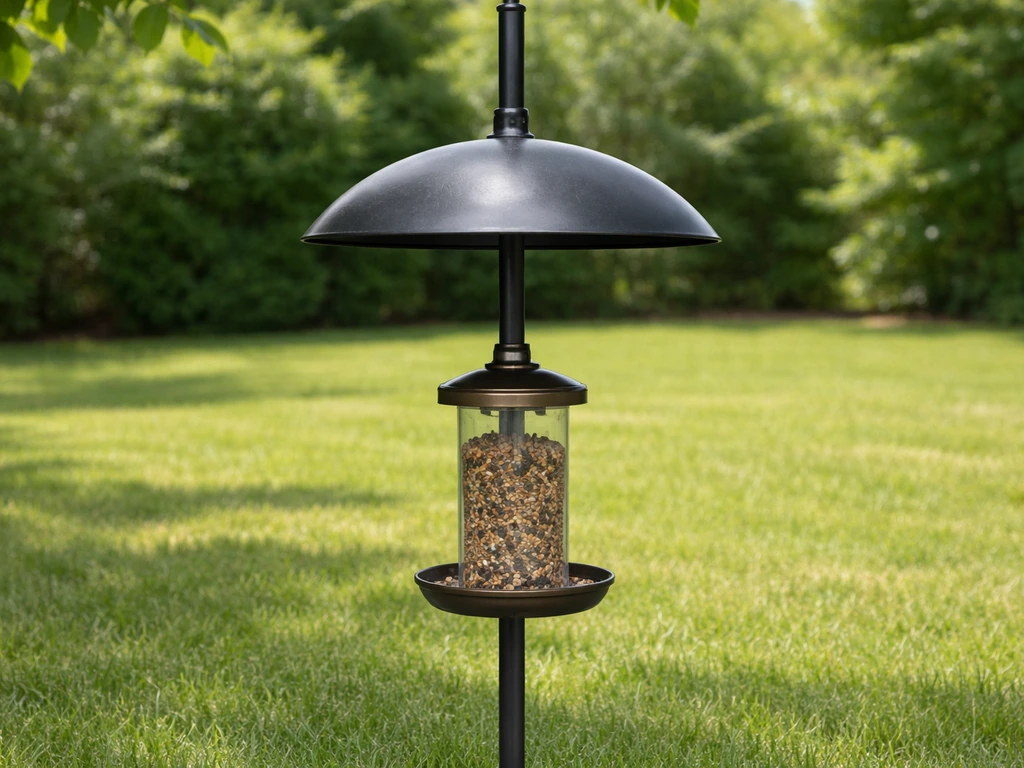
What a baffle actually is on a bird feeder
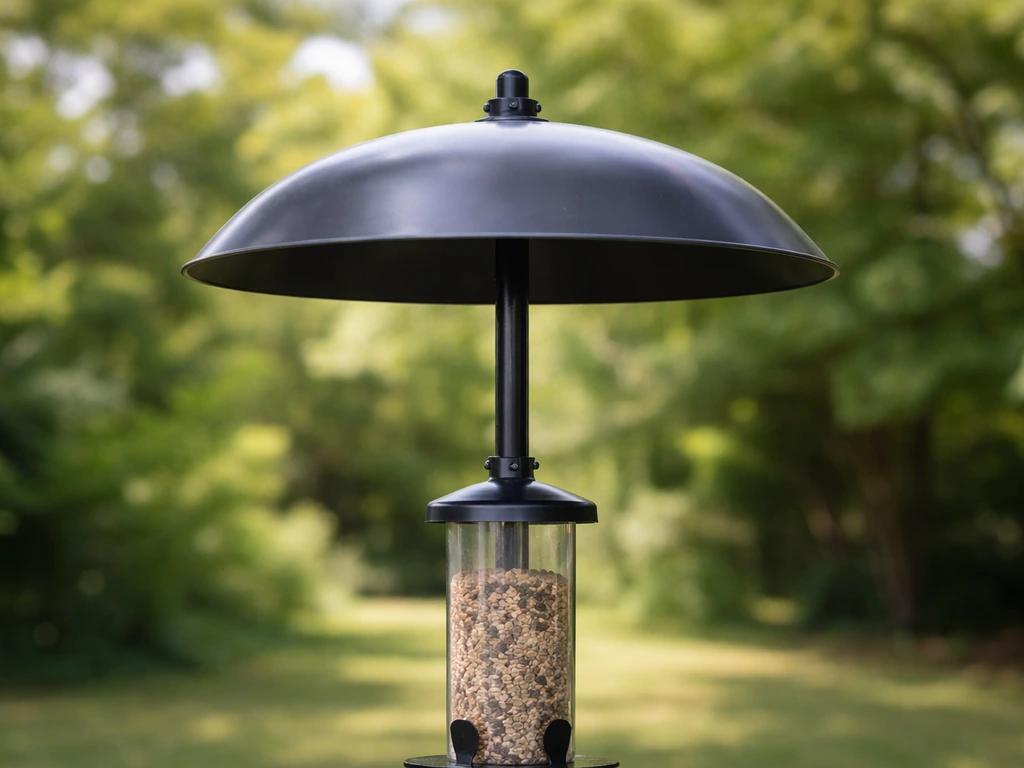
The word "baffle" just means something that blocks or deflects. On a bird feeder setup, it's a physical shield, typically dome-shaped or tube-shaped, designed to interrupt a squirrel's climbing path up a pole or its descent down a hanging line. Metal is the material that actually works long-term. Plastic baffles exist and cost less, but determined squirrels will chew through them. A good metal baffle is a one-time purchase; a plastic one is often a temporary delay.
Baffles serve one primary purpose: create a surface or overhang that a climbing animal physically cannot get past. They're not electric, they don't use repellents, and they don't need batteries. They just sit in the path between the squirrel and your seed and make the climb geometrically impossible.
How baffles stop squirrels and other predators
Squirrels are genuinely impressive climbers, but they have limits. A wide dome baffle mounted on a pole tilts and spins when a squirrel tries to hold onto the edge, dumping them off before they can reach the top. A tube or wrap-around baffle is too smooth and too wide for them to grip and shimmy past. Raccoons face the same problem: they're heavier, so the physics work even more in your favor when the baffle is robust.
For hanging feeders, the logic flips. Instead of blocking the climb up, you hang a dome baffle above the feeder so squirrels can't descend down the line to reach it. The dome creates an overhang they can't get around from above. Either way, the concept is the same: interrupt the path, make the footing impossible, and let gravity do the rest.
Baffles also help with predators like cats and, in some setups, snakes that can climb poles. If you're dealing with nest box predation rather than feeder theft, the same dome-on-a-pole principle applies. The baffle doesn't care what's trying to climb it.
The main types of baffles and how they mount
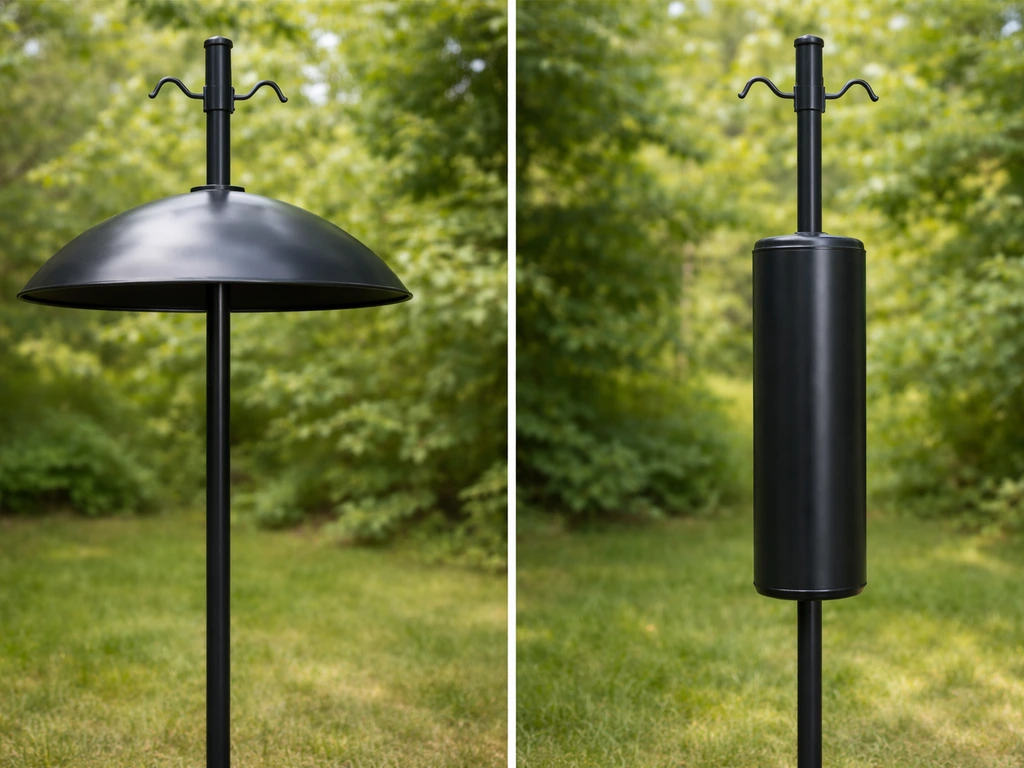
Pole-mounted dome baffles
This is the most common and most effective setup for a standard feeder pole. A wide dome, usually 15 to 18 inches across, slides onto the pole and sits below the feeder. The squirrel climbs the pole, hits the underside of the dome, tries to reach around it, and falls off. Perky-Pet notes that the traditional dome-shaped baffle is the most effective type and describes it as a guard that fits over the pole to block squirrels from climbing up Keep Squirrels Away from Bird Feeders With Squirrel Baffles. The dome tilts and wobbles on the pole, which makes the whole thing even harder to navigate. These mount with a set screw or spring-loaded clamp directly on the pole shaft, so they're easy to adjust. This is what I'd recommend as the default starting point for most backyard setups.
Torpedo or tube baffles
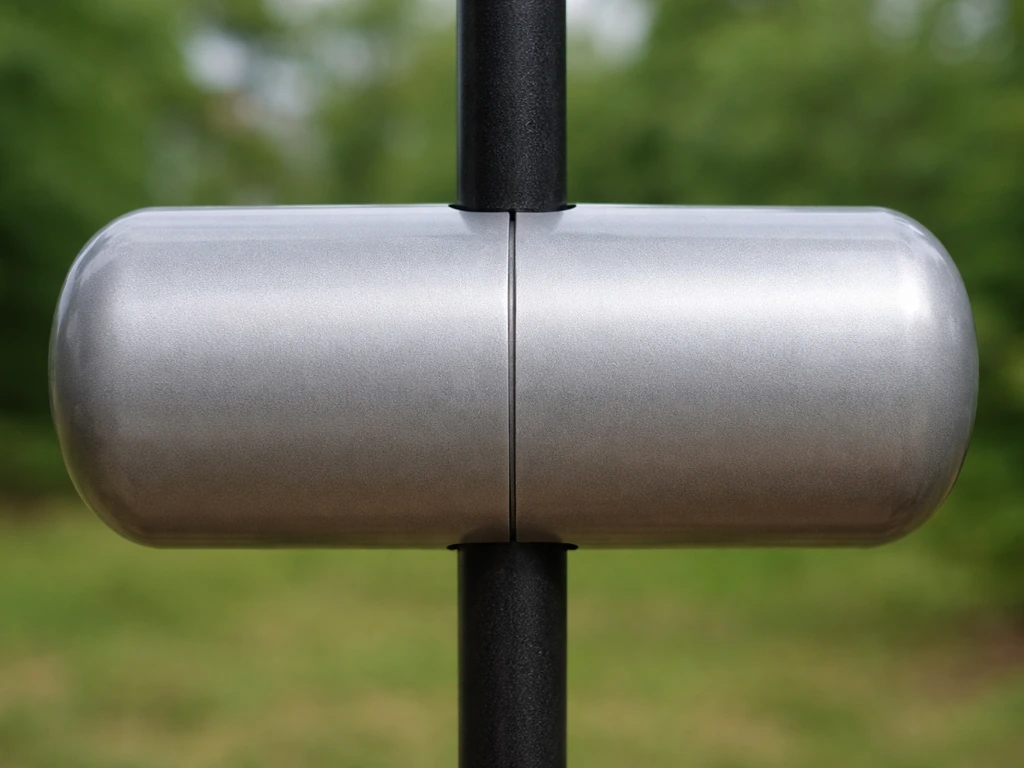
Torpedo baffles are long cylinders, often 18 to 24 inches tall, that wrap around the pole below the feeder. They're smooth, wide, and give squirrels nothing to grip. They tend to work better on thinner poles where a dome's clamp doesn't seat well, and they're especially useful when you need a baffle that stays in place on a pole in a windy spot. They're less flashy than domes but plenty effective.
Above-feeder (hanging) dome baffles
If you're hanging a feeder from a tree branch, a hook, or a shepard's hook arm rather than running it up a dedicated pole, this is your option. You hang the dome above the feeder on the same line or hook so it creates a ceiling the squirrel can't get past when descending. Perky-Pet and similar brands make these as combo units where the feeder and baffle hang as a single assembly. The key measurement here is line length: use at least 8 feet of hanging line and keep the feeder at least 4 feet off the ground or snow level.
Lantern or wrap-around cage baffles
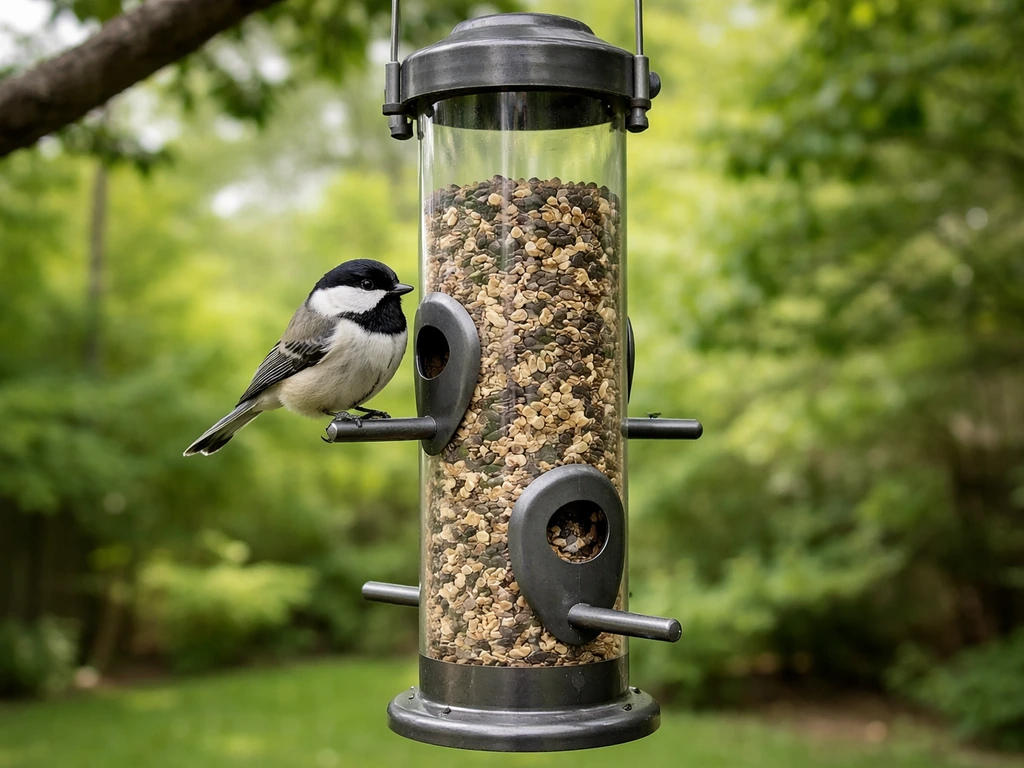
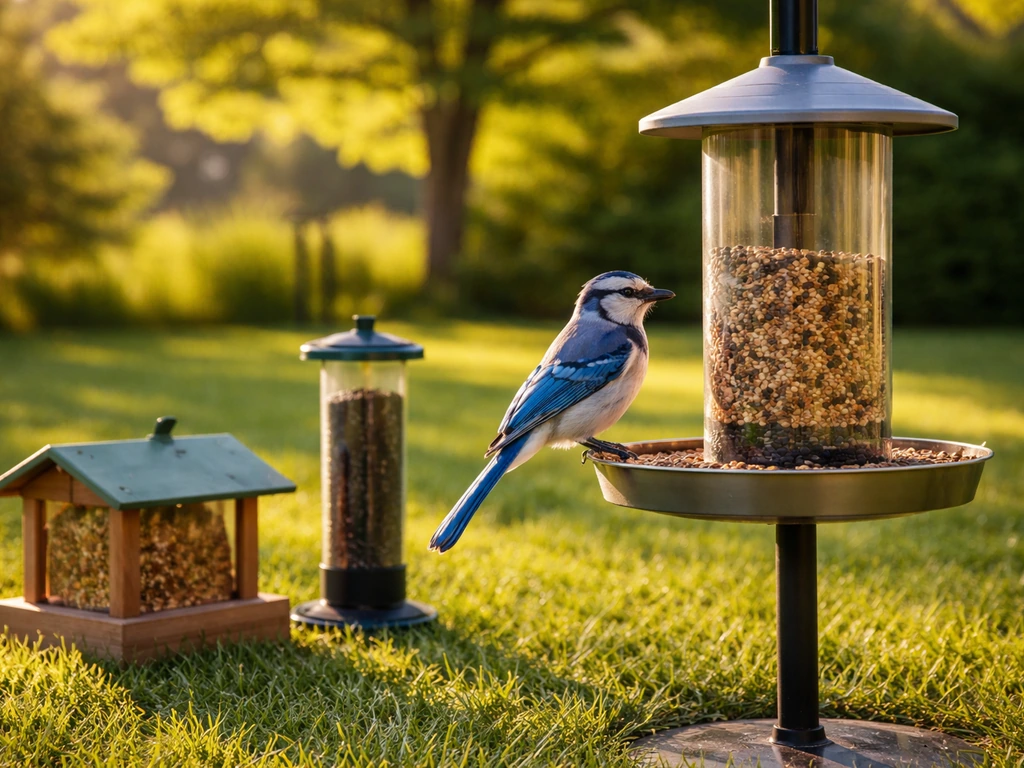
Less common but worth knowing about: some setups use a cage or lantern-style enclosure around the feeder itself rather than a separate pole-mounted baffle. These let small birds like chickadees, finches, and wrens squeeze through the bars while keeping squirrels and larger birds like blue jays locked out. Technically this is more of a feeder cage than a baffle, but you'll often see them marketed together. They're worth considering if you're specifically feeding small species and want double protection.
Choosing the right baffle for your specific setup
The "best" baffle depends entirely on your pole type, feeder style, and yard layout. Here's how to think through it.
| Setup | Best Baffle Type | Key Consideration |
|---|---|---|
| Dedicated feeder pole (1" to 1.5" diameter) | Pole-mounted dome baffle | Match clamp size to pole diameter; 15-18" dome width |
| Shepard's hook or hanging arm | Above-feeder hanging dome | Need 8+ ft of line; feeder 4+ ft above ground |
| Thick wooden post (4x4 or larger) | Torpedo/tube baffle | Dome clamps often don't fit; tube wraps around post |
| Tree branch hang | Above-feeder hanging dome | Distance from trunk matters; 8-10 ft from the tree itself |
| Multi-arm pole station | Pole-mounted dome below arm cluster | Dome must be wide enough to cover all arms |
The single biggest mistake people make is buying a baffle without checking whether it fits their pole diameter. Most pole-mounted baffles are designed for poles in the 0.75 to 1.5 inch range. If you have a beefy 4x4 wooden post, a standard dome won't clamp on properly, and you'll need either a torpedo-style baffle or a retrofit solution. Measure your pole before you buy.
Material also matters more than most product listings let on. Metal baffles, especially powder-coated steel or aluminum, will outlast plastic by years. If you're in a wet climate, check that any exposed hardware is stainless or galvanized. I've seen painted metal baffles rust at the clamp point and seize onto the pole within a couple of seasons.
Height and placement rules that actually work
This is where most baffle setups fail even when the baffle itself is fine. The measurements below aren't suggestions, they're the minimums that make the system work.
- Mount the top of the baffle at least 4 feet off the ground. Squirrels can jump from a standing position, so anything lower is reachable without even climbing.
- The baffle should extend out at least 2 feet from the pole surface in all directions. A dome narrower than about 15 inches gives squirrels enough room to grip the edge and pull themselves over.
- Place the entire pole at least 8 to 10 feet from anything a squirrel could use as a launch pad: trees, fences, deck railings, garden walls, sheds, stumps, or your house.
- For hanging feeders, use at least 8 feet of line and keep the feeder itself at least 4 feet above the ground or current snow depth.
- Position the pole-mounted dome directly under the lowest feeder or feeding arm, not halfway down the pole. If the dome is too low, a squirrel can climb past it and still reach the feeder.
The 8 to 10 foot clearance from structures is the rule most people ignore because it forces them to move the feeder away from where they like to watch it. The University of Nebraska, Lincoln extension recommends using squirrel baffles and placing them away from structures, such as about 7, 8 feet from fences or decks, and using overhead baffles when feeders are suspended from tree branches or other overhead structures blank" rel="noopener noreferrer">7–8 feet from fences or decks. But squirrels routinely clear 8 feet horizontally from a running jump off a fence or tree branch. In one r/BirdBuddy thread, commenters discuss how squirrel baffles should be placed (including a “minimum 5 ft” expectation) and note squirrels can still defeat baffles by jumping or dropping from nearby surfaces. If your feeder pole is within that range, no baffle in the world will reliably stop them.
Common baffle problems and how to fix them
Squirrels are still getting through
If squirrels are still reaching the feeder with a baffle installed, run through this checklist before you blame the baffle. First, check the distance from nearby structures. This is the cause in the majority of cases. Second, confirm the baffle's top is at least 4 feet off the ground. Third, check that the baffle isn't spinning freely to the point where it's fallen slightly and left a gap between it and the pole that a squirrel can use. Tighten the set screw or clamp. Fourth, look for whether squirrels are going over the top of a pole-mounted dome rather than around it, which means the feeder itself is too close to the baffle and they're leaping from the feeder to the pole above the dome.
The baffle is too wobbly and birds won't land near it
Some wobble in a pole-mounted dome is intentional and actually helps deter squirrels. But if it's swinging dramatically in the wind and spooking birds away from the feeder, tighten the clamp slightly so it's stable but still tilts under weight. You want it secure enough to not swing freely but loose enough to dump a squirrel. Birds are smart: they'll return to the feeder once they realize the baffle itself isn't a threat. Give them a few days.
Birds can't land on the feeder comfortably
This is rarely the baffle's fault directly, but if you've placed a dome baffle very close to the feeder's perches, the dome's edge can physically interfere with landing approach angles. Slide the baffle down the pole a few inches to give more clearance between the dome's rim and the feeder's lowest perch. For species like painted buntings or finches that prefer to hover and land cautiously, a little extra space makes a real difference in whether they'll commit to using the feeder. For a guide to choosing the best option for painted buntings, see our recommendations for the best bird feeder for painted bunting.
Raccoons are getting past the baffle
Raccoons are heavier and stronger than squirrels, and a lightweight plastic dome won't stop them. If you're dealing with raccoons, you need a heavier-gauge metal baffle, at least 18 inches across, securely clamped. Raccoons also operate mostly at night, so if you're seeing damage but not catching the culprit, set up a camera or check in the first hour after dark. In serious cases, bringing the feeder in at night and putting it back out in the morning is the only fully reliable solution, but a solid metal baffle will deter the majority of nighttime raccoon activity.
A quick note on feeders and species compatibility
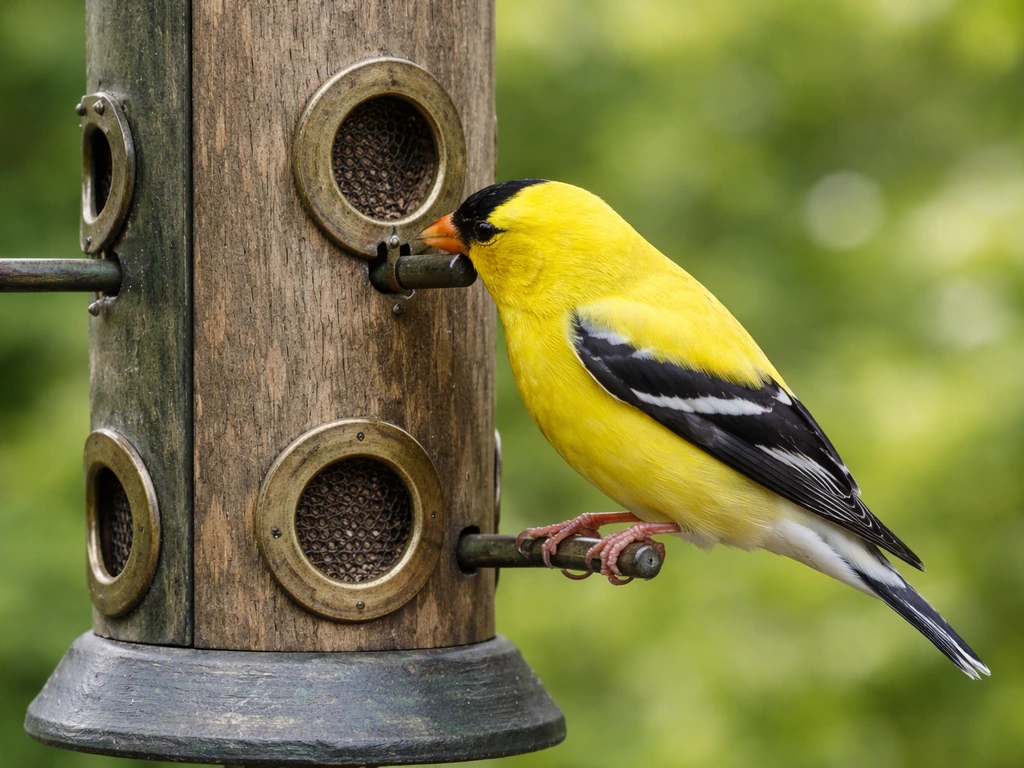
Adding a baffle to your pole setup doesn't change which birds can use the feeder, but it does change the dynamics of your backyard station. Once squirrels are genuinely locked out, you'll often see a more relaxed mix of birds using the feeder since there's less competition and disturbance. Smaller species like chickadees, wrens, and finches that tend to scatter when squirrels show up will stick around longer. If you want the best bird feeder for wrens, pair your baffle setup with a wren-friendly feeder design and placement that supports their small landing habits. If you're running a dedicated feeder for a specific species, getting the baffle right is actually one of the most impactful steps you can take, not just for pest control, but for actually attracting the birds you want. If you want the best bird feeder for chickadees, pair the right baffle setup with a feeder that suits their small size and feeding style. Getting the best bird feeder for blue jays usually comes down to pairing the right baffle with the right feeder style and food so they can feed comfortably.
FAQ
How do I know if my baffle is the right size for my pole-mounted feeder?
After measuring your pole diameter, also check the baffle’s internal clamping range or intended fit range (many are designed for narrow 0.75 to 1.5 inch poles). If the clamp sits on only a small section of the pole, the baffle can shift and leave a usable gap, so choose a model meant for your pole thickness rather than forcing a fit.
Can I use a baffle on a shepherd’s hook or decorative pole?
Yes, but the baffle still needs a stable mounting surface, not just a random attachment point. For curved or tapered decorative arms, look for a torpedo-style unit or a baffle designed for that arm geometry, otherwise the baffle may not stay centered and squirrels can approach from a side angle.
What’s the minimum distance from the feeder to a nearby branch or roof edge?
Don’t rely on the feeder being “far enough” by general yard intuition. Use the most conservative interpretation of the 8 foot rule by accounting for real jumping lines from the nearest perch, and include any branches, fences, low decks, or lattice that a squirrel could use as a launch point.
Will a baffle stop squirrels if they try to jump directly from the ground?
Sometimes, but not reliably. A baffle blocks climbing paths, it does not prevent a squirrel from launching upward in open space. If a squirrel can reach the pole or feeder from a nearby surface or from sufficient height, you’ll need to adjust placement (move away from structures) or switch to a configuration that increases the “ceiling” distance, such as a hanging baffle with adequate line length.
My dome baffle wobbles a lot. Is that good or bad?
Some controlled wobble can help, but dramatic swinging usually means it’s either loose or too far from the feeder’s intended position. Tighten until it does not flop in wind, while still allowing it to tilt under weight without leaving a permanent gap against the pole.
How can I tell if squirrels are going over the top of the dome versus around it?
If they’re reaching above the dome or climbing to a point where they can attack from the upper side, the feeder is likely too close to the baffle’s rim. If they’re attacking from the side at the clamp area, the baffle may not be sealed tightly to the pole or it may be rotating so an opening forms.
Do I need a baffle for every feeder, or only the one getting attacked?
If you run multiple feeders on the same station, treat the whole setup as one system. One baffle can leave other perching routes open if feeders are at different heights or positions, so either baffle the attacked feeder or standardize the station layout so squirrels cannot use an unshielded approach path to any of them.
Can small birds get blocked by the baffle or lose their landing access?
They can, especially if the dome sits too high or too close to perches so the rim interferes with approach angles. Adjust by sliding the baffle down a few inches to improve clearance, and confirm the feeder remains reachable from typical bird landing paths in your yard.
What should I do if a plastic baffle was chewed through quickly?
Switch to metal for long-term control, and double-check the clamp hardware so the baffle stays tight. Even a metal baffle can fail if it’s not secured well, so inspect the clamp point for rust or looseness after wet weather and re-tighten seasonally if needed.
Will a baffle protect against raccoons reliably?
It helps, but raccoons usually require a sturdier setup. Use a heavier-gauge metal baffle with a larger diameter and ensure the attachment is secure, then consider night monitoring (they often operate after dark). If raccoons persist, you may need to bring the feeder in overnight during peak activity.
Should I choose a torpedo baffle or a dome baffle for a thin metal pole?
Thin poles often benefit from torpedo-style units because the clamp and seating can be more reliable on narrow diameters. If your dome clamp cannot grip securely, you’re better off choosing a torpedo baffle built for thinner poles rather than relying on an imperfect fit that can rotate.