The best bird feeder for blue jays is a platform or tray feeder, full stop. Blue jays are big, bold birds with a dominant personality at the feeder, and they need space to land, turn around, and sometimes cache a peanut or two before they fly off. A cramped tube feeder with tiny ports just does not work for them. That said, hopper feeders and dedicated peanut feeders are strong runners-up depending on your yard setup. This guide walks through exactly what to buy, how to set it up, and what to fill it with so you are actually attracting blue jays rather than just feeding squirrels.
Best Bird Feeder for Blue Jays: Types, Setup, Picks
Marcus Holloway
12 Apr 2026
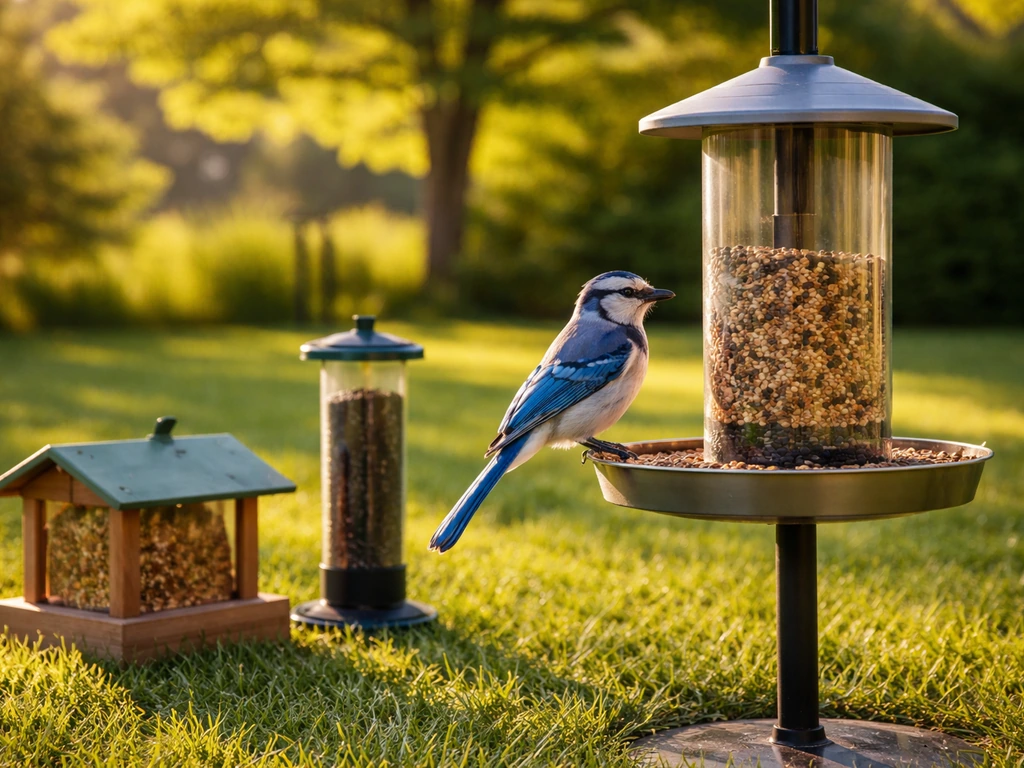
How blue jays actually behave at feeders
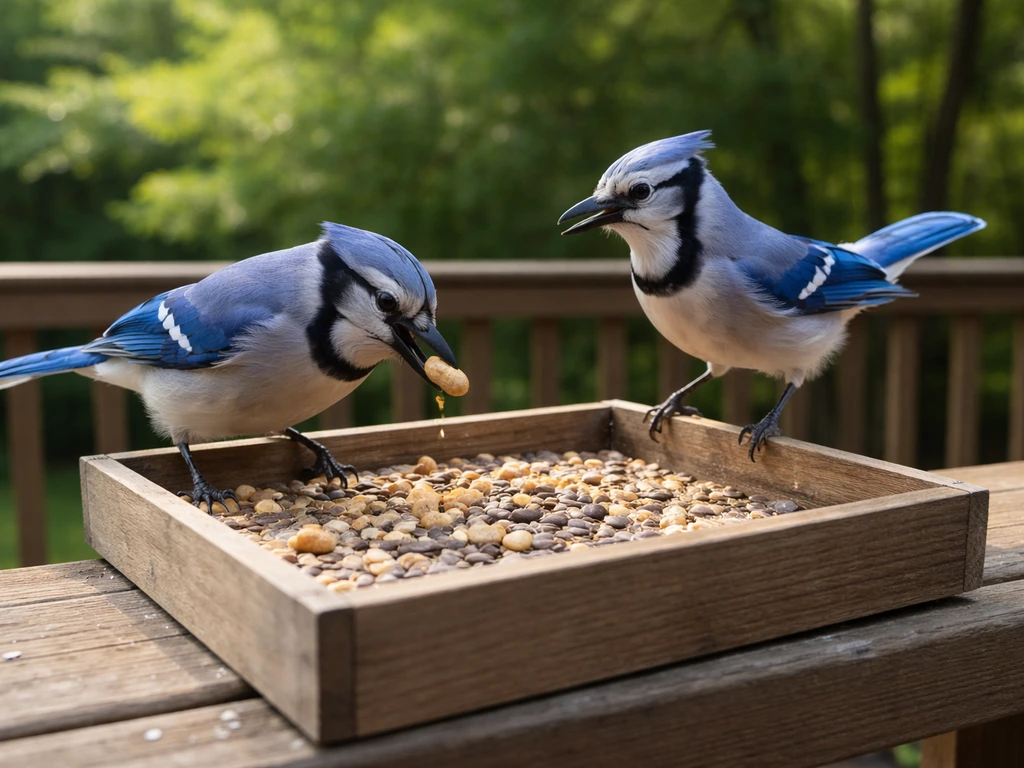
Blue jays eat a diet that is roughly three-quarters vegetable matter for most of the year, leaning even heavier on plant-based foods in winter. Acorns and other nuts are their staple, which is why peanuts are such a powerful draw at feeders. They also eat seeds, cracked corn, berries, and the occasional insect, caterpillar, or beetle when available. Understanding that diet tells you a lot about what feeder design they actually prefer.
At the feeder itself, blue jays are assertive. Research tracking dominance patterns among blue jays found that feeder access is heavily influenced by social rank, and dominant birds will displace or intimidate subordinates. In practice, that means a jay will often land on a platform, scan the area aggressively, grab several seeds or a peanut, and fly off to bury it nearby for winter storage. They rarely sit and shell seeds slowly the way a finch would. This caching behavior means they visit repeatedly in short bursts rather than camping on the feeder for long stretches.
The takeaway for feeder design: blue jays need a wide, stable landing platform, large access ports (or open tray access), and enough capacity to handle multiple visits per day from several birds. They will also displace smaller birds temporarily, so if you are running a mixed-species setup, keep that in mind when planning your feeder layout.
Feeder types that actually work for blue jays
Platform and tray feeders
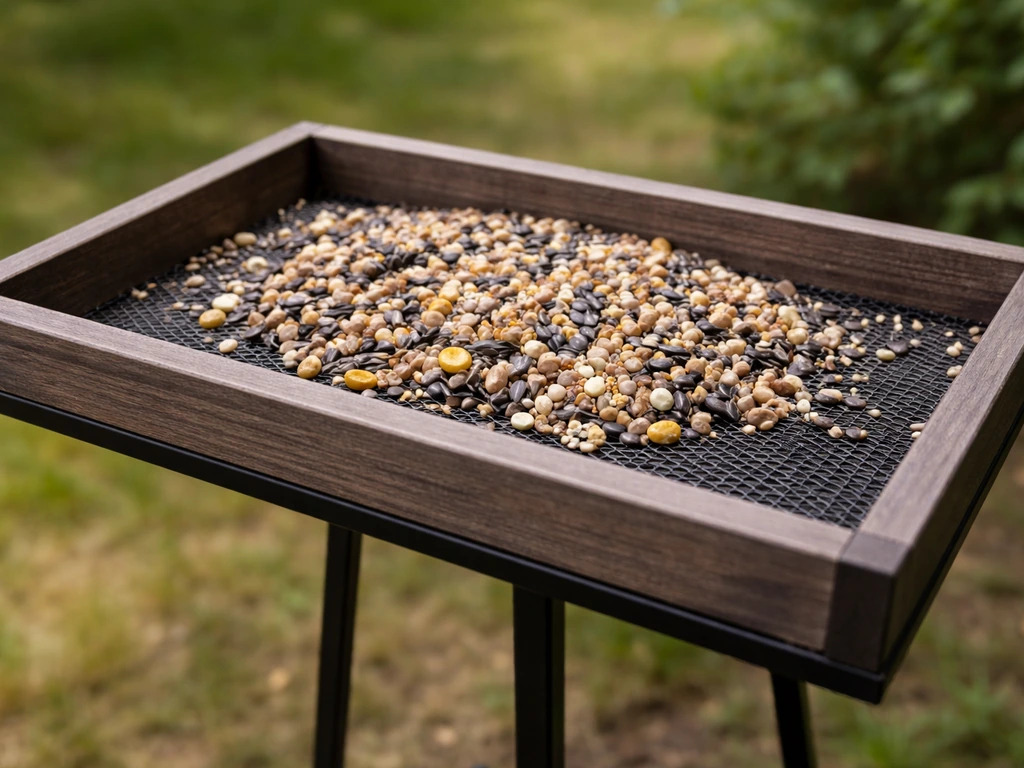
Platform feeders are the top pick for blue jays. An open tray with mesh or slatted drainage gives jays the room they need to land comfortably, and they can easily see and grab large seeds, peanuts, or cracked corn without fighting a narrow port. The downside is exposure: platform feeders collect rain and droppings quickly, which increases disease risk if you skip cleanings. A mesh-bottom platform with good drainage helps a lot here, and cleaning it once or twice a week with a brush and mild bleach solution keeps things safe. You can hang these or mount them on a pole, and the pole-mount option makes squirrel-proofing much easier.
Hopper feeders
A hopper feeder with a wide base tray is the next best option. The covered hopper protects seed from rain and gives you more capacity, while the tray perch around the base gives jays a landing zone. Look for a hopper with a tray that is at least 10 to 12 inches wide so a jay has room to maneuver. Smaller hopper bases will work, but you will notice jays awkwardly hovering or bumping into the roof overhang. Hoppers also hold more seed than most platforms, which means less refilling if you get heavy traffic.
Peanut and nut feeders
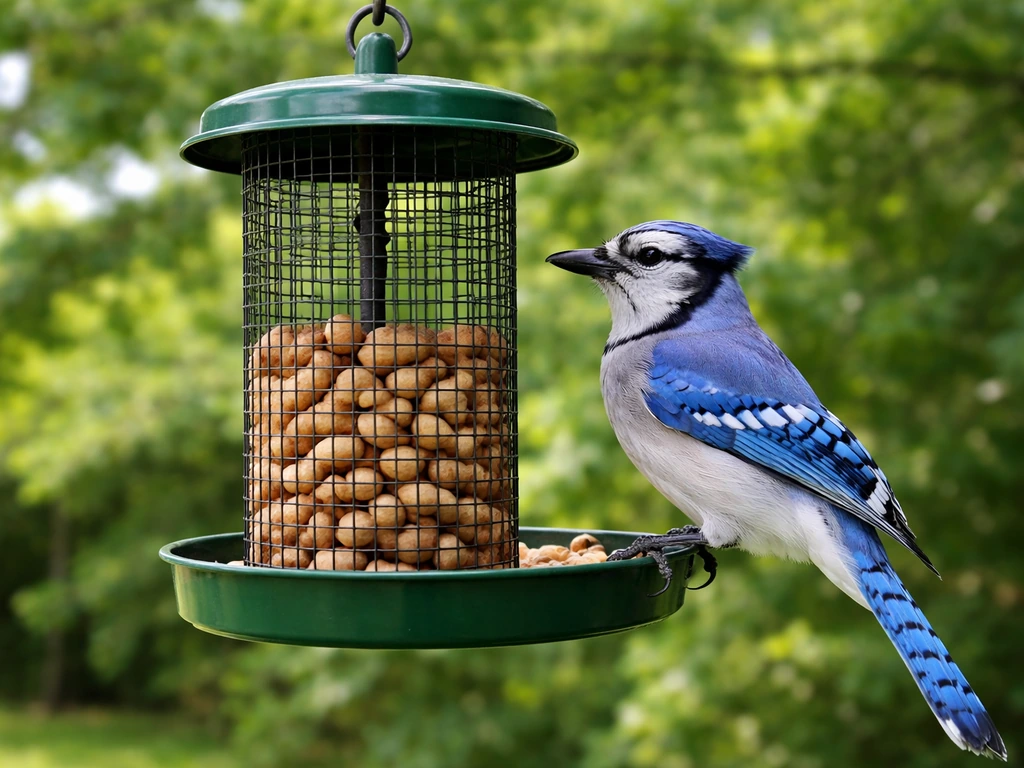
A dedicated peanut feeder is honestly one of the best blue jay attractors you can add to your yard. Mesh-style peanut feeders like the Brome Squirrel Buster Nut Feeder are designed specifically for shelled peanuts and nuts, using interchangeable mesh sizes for different food sizes, with a 1.3 lb capacity. The blue jay's strong beak can work peanuts out of the mesh ports easily, and the squirrel-resistant design is a real plus. One caveat from my own experience: immature red squirrels are small enough to sometimes access these even with squirrel-proof designs, so the feeder's squirrel resistance is not absolute.
Tube feeders
Standard tube feeders are mostly a mismatch for blue jays. The ports are too small, the perches are too short, and the whole feeder is too narrow for a bird that can reach 12 inches in length with a wingspan to match. However, larger tube feeders built for sunflower seed, like the Aspects Quick Clean Big Tube Feeder (which uses a heavy die-cast metal cap and base, stainless-steel hardware, and a UV-stabilized polycarbonate tube with a removable base for cleaning), can work if you pair them with an attached tray accessory. Without that tray, blue jays will often awkwardly cling to the side and spill more seed than they eat.
Suet feeders
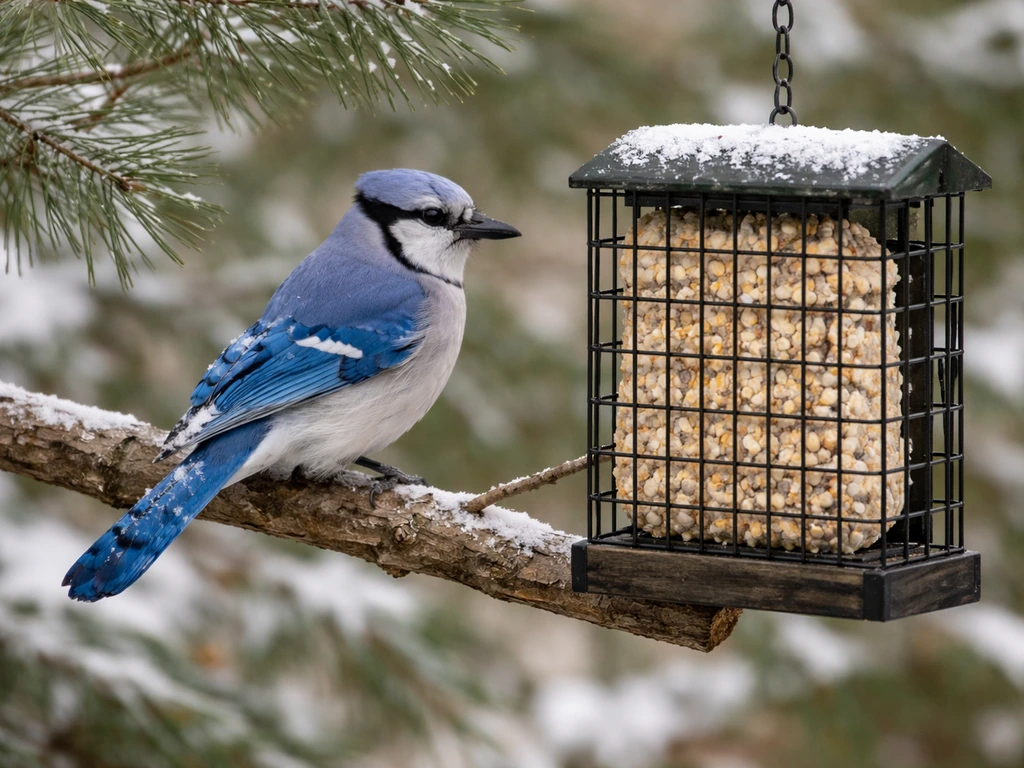
Blue jays will visit suet feeders, especially in cold weather when they need high-energy food. A standard suet cage works, but a larger suet feeder with a tail-prop extension (designed for woodpeckers and bigger birds) is more comfortable for jays. A double suet cage with a wide backing board gives them something to grip while working the suet. Suet is a winter staple, and pairing a suet feeder with a platform or hopper gives you a well-rounded jay station.
What to look for when buying
Not every feeder marketed as "large bird" is actually designed with jays in mind. Here are the features that matter most in practice.
- Port size and opening: For seed, you want ports at least 1 inch wide or open tray access. For peanuts, a mesh opening of roughly 1 inch or larger lets jays extract the nuts without struggling.
- Perch length and width: Short pegs designed for finches do not work. Look for perches at least 3 to 4 inches long, or a full tray perimeter the bird can grip.
- Capacity: Blue jays visit frequently and take large food items. A hopper or platform that holds at least 3 to 5 lbs of seed will reduce how often you are refilling.
- Material and durability: Powder-coated steel, UV-stabilized polycarbonate, and recycled plastic all hold up well outdoors. Avoid plain wood feeders without a sealant or finish, they warp and mold fast. Stainless-steel hardware resists rust far better than zinc-plated screws.
- Weather resistance: A roof or overhang on a hopper feeder keeps seed dry. Platform feeders need mesh or slotted drainage to shed rain quickly.
- Ease of cleaning: A removable base or hinged roof is worth paying extra for. Blue jays eat messy food like peanuts and cracked corn, and platforms get dirty fast.
Squirrel-proofing and keeping other raiders out
Squirrels are the main headache with any blue jay feeder setup, partly because blue jays eat the same foods squirrels love: peanuts, sunflower seeds, and cracked corn. The good news is that the same squirrel-proofing strategies that protect feeders for other species work just as well here. The bad news is that platform feeders (the best design for blue jays) are also the easiest for squirrels to raid, so you have to be more deliberate about your setup.
The two-part formula that actually works is distance plus a baffle. Squirrels can jump about five feet vertically and eight to ten feet horizontally between objects. That means your feeder pole needs to be at least ten feet from any tree, fence, building, or shrub they could launch from. A baffle mounted on the pole at least five feet above the ground handles climbing access. Understanding what a baffle does and how it works is genuinely useful before you buy one, because not all baffles are equally effective and the placement is just as important as the design.
For squirrels jumping down from above (common when you have tree branches overhead), a tilting or dome baffle placed above the feeder is the right call. Audubon recommends keeping feeders at least 8 to 10 feet from structures squirrels can use as a launch point, and combining that distance with a baffle positioned between four and five feet off the ground on a pole mount. A cylinder baffle on the pole at five feet or higher, with the feeder pole placed ten feet from the nearest tree, is the gold-standard setup.
Raccoons and cats are secondary concerns. Raccoons can access platform feeders at night, which is another reason to use a pole mount with a baffle rather than a hanging platform. For cats, keep the area around your feeder clear of low shrubs or dense cover within about ten feet, since cats use that concealment to stalk birds on the ground below the feeder.
Placement and setup that gets results
Height matters more than most people realize. Blue jays are woodland edge birds and feel comfortable at feeder heights ranging from about four feet off the ground up to roughly eight feet. I have had the best results with platform feeders mounted on a pole at about five to six feet, which puts them in the jay's comfort zone while keeping the feeder accessible for refilling without a ladder.
Distance from cover is a balance. Blue jays, like most birds, want trees or shrubs nearby as escape cover if a hawk shows up. Wild Birds Unlimited recommends placing feeders about ten feet from low shrubs or concealment areas where cats can hide, but you want taller cover like trees at a moderate distance, say fifteen to twenty feet away, so birds feel safe but cats and ground predators cannot easily ambush them.
Running multiple feeders is genuinely worth it if you have the space. Blue jays are dominant and will push smaller birds off shared feeders, so separating species by feeder type solves a lot of friction. A dedicated peanut feeder or platform for jays, a tube feeder with small perches for finches and chickadees, and a suet feeder for woodpeckers covers most of the species you will realistically attract. If you are already thinking about which feeder works best for finches, running that alongside a jay-specific platform is a clean way to serve both species without one dominating the other.
Spacing feeders at least ten to fifteen feet apart helps because blue jays will often patrol and defend the area around a feeder they consider "theirs." Giving smaller birds a dedicated feeder out of that patrol zone reduces the aggression. Similarly, if you are already feeding chickadees with a species-appropriate feeder, keeping that feeder on a separate pole away from the jay platform keeps the peace.
The right food paired with the right feeder
Peanuts, either in-shell or shelled, are the single best food for attracting blue jays. They are high in fat and protein, match what jays naturally cache in the wild, and blue jays will travel farther and more reliably to a peanut feeder than almost any other food source. Shelled peanuts work in a mesh peanut feeder or on a platform. In-shell peanuts go on an open platform or a feeder with large-opening mesh.
Black-oil sunflower seed is the next best option and is practical as a bulk filler for hopper or platform feeders. Blue jays can crack the shells easily, and sunflower attracts a wide range of other species too, which adds to the overall activity in your yard. Cracked corn is a good cheap supplement, especially on platform feeders, and fits the "three-quarters vegetable matter" profile of the jay's diet well. Audubon's winter feeding guidance also recommends suet as a high-energy winter food for jays, paired with a seed mix containing sunflower and cracked corn.
What to avoid: fine millet and nyjer (thistle) seed. For example, Audubon recommends offering sunflower seeds, nyjer (thistle) seeds, and peanuts in separate feeders rather than relying on blends blank" rel="noopener noreferrer">separate feeders for sunflower seeds, nyjer (thistle) seeds, and peanuts. These are tiny seeds optimized for finches and small birds, and blue jays will ignore them. Safflower seed is a middle-ground option that jays will occasionally eat but cardinals and chickadees prefer more. If you are putting together a multi-species yard and want to understand how food choices shift for different birds, the way wren feeders use small-scale food offerings illustrates how different the needs can be across species.
| Food | Best Feeder Type | Notes |
|---|---|---|
| Shelled peanuts | Mesh peanut feeder, platform | Top blue jay attractant; easy to extract from mesh |
| In-shell peanuts | Open platform, large hopper tray | Jays love carrying these off to cache |
| Black-oil sunflower | Hopper, platform, large tube with tray | Reliable all-season staple |
| Cracked corn | Platform or ground tray | Budget-friendly filler; jays and other species eat it |
| Suet | Suet cage, tail-prop feeder | High-value winter food; use larger suet designs |
| Mixed seed with peanut hearts | Hopper or platform | Audubon-recommended winter mix for jays |
Best picks by backyard situation
Small yards or limited space
Go with a single pole-mounted platform feeder in the most open spot you have. Keep it filled with shelled peanuts and black-oil sunflower. A small yard makes the ten-foot squirrel-jump rule harder to follow, so a baffle on the pole becomes non-negotiable rather than optional. A compact mesh peanut feeder hung from a shepherd's hook with a dome baffle above it is a tight but effective setup when space is tight. Even in a yard where you might otherwise focus on feeders for painted buntings or other specialty species, a pole-mounted peanut feeder can be integrated without taking up much real estate.
Heavy squirrel or wildlife pressure
This is where the Brome Squirrel Buster Nut Feeder earns its price tag. The weight-sensitive squirrel-proof mechanism is effective against most adult squirrels, the mesh sizes are adjustable for peanuts, and the 1.3 lb capacity is reasonable for daily feeding. Pair it with a pole ten feet from any structure and a cylinder baffle at five feet. If you are dealing with raccoons in addition to squirrels, use a pole-mount setup rather than a hanging feeder, since raccoons can pull down hanging feeders easily.
Budget-friendly setup
A basic wooden or recycled-plastic platform feeder on a metal pole with a cone baffle is the most affordable path to a functional blue jay station. Expect to pay under twenty-five dollars for the feeder and another ten to fifteen for a decent baffle. The trade-off is more frequent cleaning (wood platforms hold moisture) and shorter lifespan. Fill it with cracked corn and black-oil sunflower to keep food costs low while still drawing jays consistently.
Premium setup for serious backyard birders
A metal or powder-coated steel platform feeder on a dedicated squirrel-proof pole system, paired with a Brome Squirrel Buster Nut Feeder for peanuts and a quality suet feeder for winter, gives you a complete blue jay station that will last years with minimal maintenance. Feeders built with UV-stabilized polycarbonate tubes, die-cast metal hardware, and stainless-steel screws hold up through multiple seasons without cracking, warping, or rusting. The upfront cost is higher, but you stop replacing cheaper feeders every year or two, and the squirrel-resistant designs mean you are actually feeding jays rather than subsidizing your local squirrel population.
| Situation | Feeder Type | Top Food | Key Accessory |
|---|---|---|---|
| Small yard | Pole-mounted platform or mesh peanut feeder | Shelled peanuts | Dome baffle on shepherd's hook |
| Heavy squirrel pressure | Squirrel Buster Nut Feeder (Brome) | Shelled peanuts | Cylinder baffle + 10-ft pole placement |
| Budget setup | Basic wood or recycled plastic platform | Cracked corn + black-oil sunflower | Cone baffle on metal pole |
| Premium / multi-species yard | Metal platform + peanut feeder + suet cage | Peanuts, sunflower, suet | Full squirrel-proof pole system |
A few things to keep in mind long-term
Blue jays are year-round residents across most of their range, so once you establish your feeder as a reliable food source, you can expect consistent visits through all four seasons. In winter they become especially motivated to cache food, so peanut feeder visits will spike. In spring and summer you may notice they bring their juveniles to the feeder, which is one of the genuinely rewarding parts of running a consistent jay station.
Keep an eye on the platform or tray feeder cleanliness. Because droppings can collect and mix with food on open platforms, disease transmission is a real risk if you let it go too long. A quick brush-down and rinse every few days during high-use periods is not excessive. If you notice birds acting lethargic around the feeder or see obvious fecal buildup, take the feeder down, scrub it with a dilute bleach solution, rinse thoroughly, and let it dry before refilling. It is a small habit that makes a meaningful difference. Just like wren feeders, keeping things clean is what separates a feeder that attracts healthy birds from one that becomes a liability.
The bottom line: buy a platform or hopper feeder with a wide tray, mount it on a pole with a baffle, keep it ten feet from anything a squirrel can jump from, fill it with peanuts and sunflower, and you will have blue jays showing up reliably within a week or two. Everything else in this guide is about optimizing that foundation for your specific yard situation.
FAQ
How long should I wait before I know my feeder setup is working for blue jays?
If the feeder is properly placed and you use strong attractants like in-shell peanuts or black-oil sunflower, you often see visits within 3 to 10 days. If there is no activity after about two weeks, the most common causes are insufficient squirrel control, feeder being too close to cover, or the food choice not matching what the local jays currently target.
What’s the best way to place the feeder if my yard has trees directly overhead?
Overhead branches are a major squirrel and predator launch risk, so avoid positioning under thick canopy. If you cannot change the location, use a dome or tilting baffle above the feeder and keep the feeder pole at least 10 feet from the nearest branch that could serve as a launch point.
Can I put a blue jay platform feeder on a hanging hook instead of a pole?
It is not ideal. Hanging platforms are easier for raccoons to pull down and for squirrels to access via climbing. A pole mount with a baffle is more reliable, and it also makes it easier to keep the feeder height consistent for jays.
Will blue jays eat shelled peanuts every time, or should I switch between shelled and in-shell?
They will take either, but mixing strategies can help. Shelled peanuts are faster for repeat visits, while in-shell peanuts better match caching behavior and can slow down squirrel takeovers. If squirrels dominate, switch temporarily to in-shell or use a dedicated peanut feeder with mesh designed for nuts.
What should I do if squirrels are still getting most of the food even with a baffle?
First, re-check placement. The baffle helps climbing from the side, but squirrels can still succeed if the pole is too close to a reachable tree, fence, or roof edge. Increase distance to at least 10 feet from launch points, and consider switching to a cone or dome baffle type that matches your overhead conditions.
How often should I refill peanuts and sunflower on a platform to prevent waste and mess?
Refill based on how quickly it empties, then remove wet, moldy clumps promptly. During heavy use or rainy weather, check at least every day or two. On platforms, stale food and mixed droppings accumulate faster, so more frequent top-ups usually reduce long-term cleanup compared with letting food sit.
Is cracked corn okay for blue jays, or does it mainly attract other birds and squirrels?
Cracked corn can work for blue jays and aligns with their winter seed and plant-based diet, but it also attracts many other species and some squirrels. If your goal is maximum blue jay focus, prioritize peanuts and black-oil sunflower, then use cracked corn only as a supplement.
Do blue jays need a perch, or is an open tray enough?
An open tray is usually enough because blue jays land on the surface, grab food, and leave quickly. What matters most is landing space and access width, so a wide tray or hopper base is better than narrow ports designed for smaller birds.
What feeder height works best if I do not want to use a ladder?
A common practical target is about 5 to 6 feet off the ground for pole-mounted platforms. This sits within the comfort zone for jays and keeps the feeder reachable for refilling and cleaning without specialized tools.
Should I stop feeding during hot weather because of disease risk?
You do not necessarily need to stop, but you must be more strict about cleaning. In hot or humid conditions, remove any wet debris and scrub more often, because droppings and damp food can increase contamination risk. If birds look unwell or activity suddenly drops, take the feeder down, clean thoroughly, and restart with fresh food.
How can I reduce blue jay aggression toward smaller birds when using multiple feeders?
Separate species by mounting type and distance. Place the jay feeder on its own pole and keep it at least 10 to 15 feet from finch or chickadee feeders if possible, because blue jays often patrol and defend nearby space.
Do blue jays visit suet year-round, or only in winter?
Suet is especially useful in cold weather when birds need high-energy food, but blue jays can use it in other seasons too. If you are running a mixed feeder setup, consider a larger suet cage with a tail-prop style extension for better jay access, and pair suet availability with peanuts or sunflower to keep visits consistent.