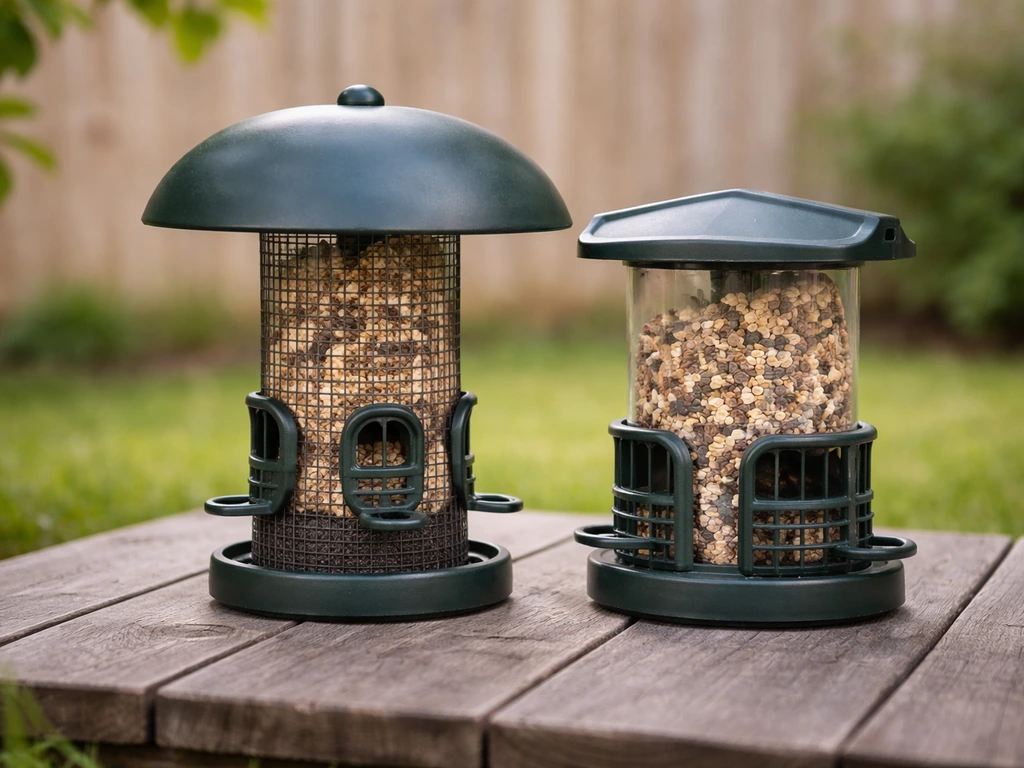
The best all-around bird feeder for most backyards in 2026 is a squirrel-resistant hopper or tube feeder paired with a dedicated specialty option for the birds you most want to attract. That combination handles the widest range of songbirds, keeps pests under control, and gives you a real feeding station rather than just a single pole in the ground. Below I've broken down 10 strong picks across every major feeder category, plus the practical guidance you need to choose the right one, set it up correctly, and actually keep it working through the seasons.
Top 10 Bird Feeders: Best Picks for Your Backyard Birds
Marcus Holloway
24 Jun 2026
How to choose a bird feeder (species, location, and budget)
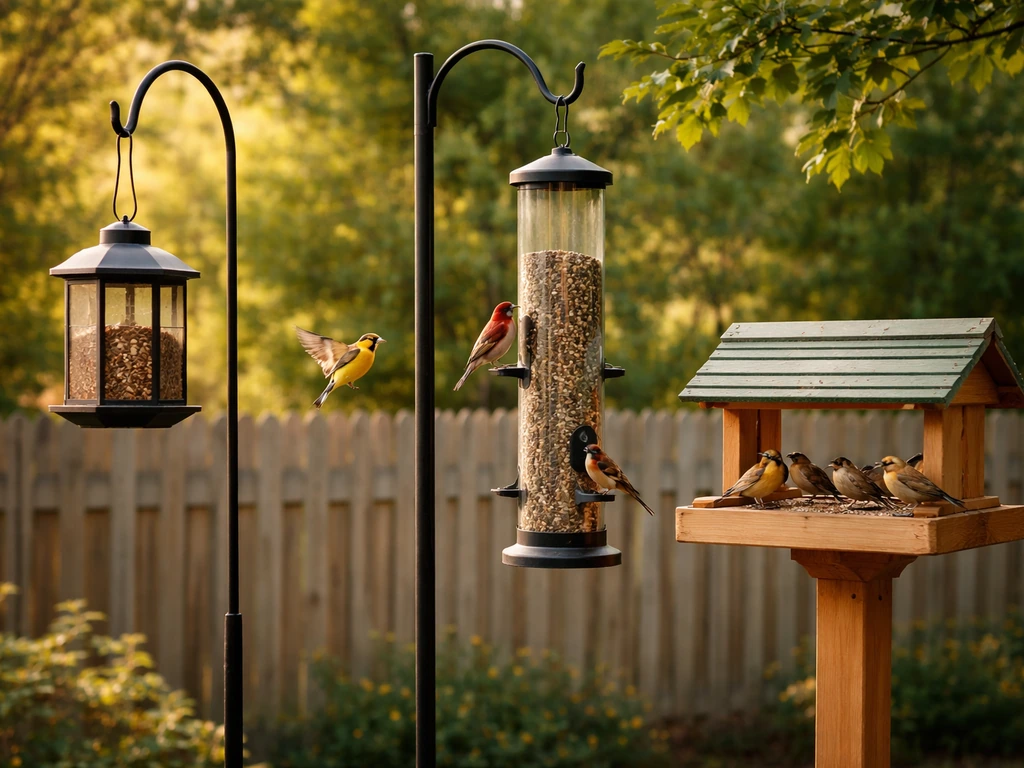
Before you look at any specific feeder, nail down three things: which birds visit your yard, where you plan to put the feeder, and how much you want to spend upfront versus on ongoing seed and maintenance. These three factors eliminate most bad purchases before you make them.
Species drive design more than anything else. blank" rel="noopener noreferrer">Hopper feeders (roofed house-style feeders with open seed trays) attract the broadest mix, including larger birds like cardinals, mourning doves, and yes, grackles. Tube feeders with small ports and short perches tend to favor smaller seed-eaters like chickadees, house finches, and nuthatches, and they're inherently less friendly to big birds that can't grab a foothold. Platform feeders lay food out flat and open, which works great for ground-feeding species like juncos and sparrows but offers zero protection from rain or pests. Suet cage feeders are for the woodpecker crowd and clinging birds like nuthatches. Nectar feeders are a separate category entirely, built specifically for hummingbirds and orioles. Know your target birds first.
Location shapes which feeder type is even practical. A small urban balcony points you toward a compact window-mount or clamp-on tube feeder. A suburban backyard with mature trees and a fence line can support a full pole-mounted station with multiple feeder types. Wide-open rural yards with raccoon and squirrel pressure need feeders on baffled poles, period. Think about sun exposure too: nectar feeders placed in direct afternoon sun spoil sugar water fast, which means more cleaning and more hummingbird health risk.
Budget breaks into two layers: the feeder itself and the ongoing seed cost. A cheap plastic feeder that warps, cracks, or rusts out in one season is never actually cheap. On the other hand, a $150 smart feeder with a built-in camera is overkill if you just want to watch house sparrows. A solid mid-range hopper or tube feeder in the $25 to $60 range, made from metal or UV-stabilized polycarbonate, is where most backyard birders get the best return.
For the best price bird feeders, focus on the model that gives you good seed value over time, not just a low sticker cost. Bump up to $60 to $120 for premium squirrel-proof mechanisms or heavy-gauge steel. Smart/AI feeders run $99 to $250 or more and are best treated as a separate hobby upgrade rather than a replacement for a good traditional setup.
Top 10 bird feeder picks by type and use case
These 10 picks cover the full range of feeder types, bird targets, and backyard scenarios. I've organized them by use case so you can jump straight to the one that fits your situation rather than reading a straight ranked list that may not apply to you.
1. Best all-around: Squirrel-resistant hopper feeder (e.g., Brome Bird Care Squirrel Buster Plus)
If I had to recommend one feeder to someone starting from scratch, this is it. If you want a straightforward option that’s consistently popular with buyers, an amazon best seller bird feeder can be a good starting point. Weight-activated tube-and-hopper hybrids like the Squirrel Buster Plus close off seed ports when anything heavier than a songbird lands on them. That solves squirrel access without a separate baffle on every pole. Birds attracted: cardinals, chickadees, house finches, nuthatches, mourning doves. Best for: suburban yards with heavy squirrel pressure. The mechanism is reliable over multiple seasons, and the parts are dishwasher-safe, which makes the cleaning routine painless.
2. Best hopper feeder for variety: Classic cedar or recycled-plastic hopper
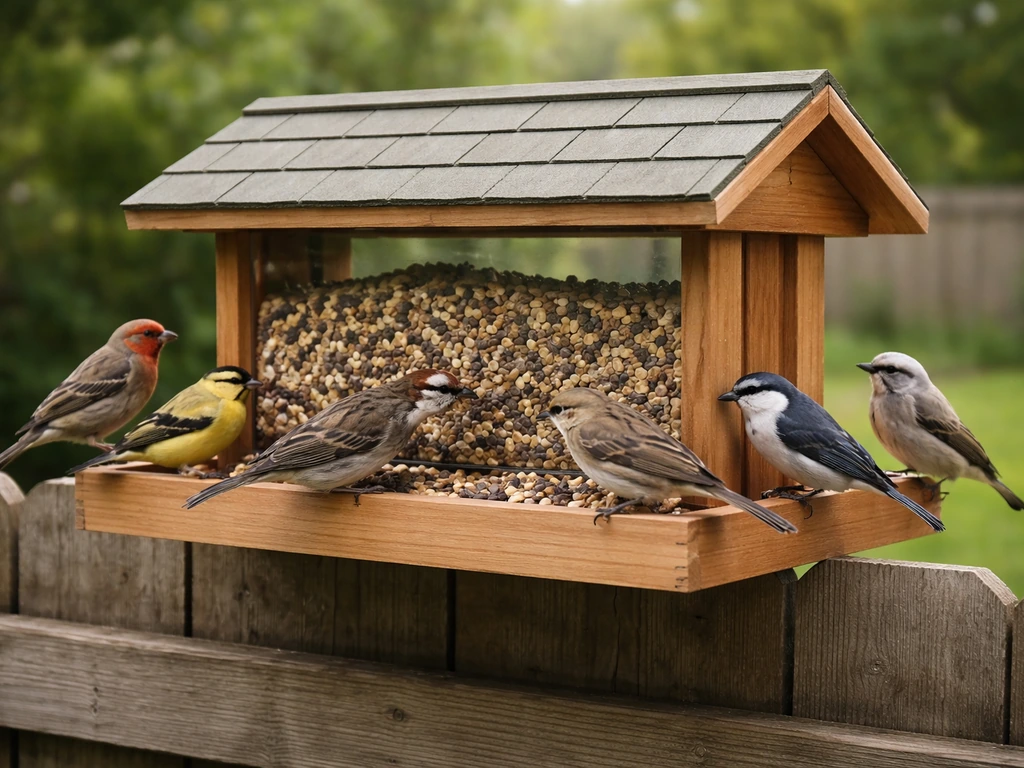
A traditional hopper feeder with a roofed seed compartment and open tray sides attracts the widest species mix of any feeder type. Cedar hoppers look great but need annual sealing. Recycled-plastic versions (like those from Perky-Pet or Woodlink) mimic the look, hold up in rain and freeze-thaw cycles without cracking, and never need refinishing. Seed capacity is usually 3 to 6 pounds, which is enough for a few days between refills. Best for: yards where you want cardinals, blue jays, doves, house sparrows, and the general songbird crowd without fighting squirrels every day (pair with a pole baffle if squirrels are present).
3. Best tube feeder for small birds: Droll Yankees Yankee Flipper or similar motorized tube
Tube feeders are the right call when you want finches, chickadees, and nuthatches and fewer large nuisance birds. The Yankee Flipper adds a motor that spins the perch ring when a squirrel grabs on, sending it off without harming it. It does require 4 D batteries, and the motor is the one component that can fail after two or three seasons, so keep that in mind. For a simpler (and cheaper) tube option, any heavy-gauge metal tube feeder with small ports and short perches does most of the work just by design.
4. Best nyjer/thistle feeder for finches: Stokes Select or Kaytee mesh tube
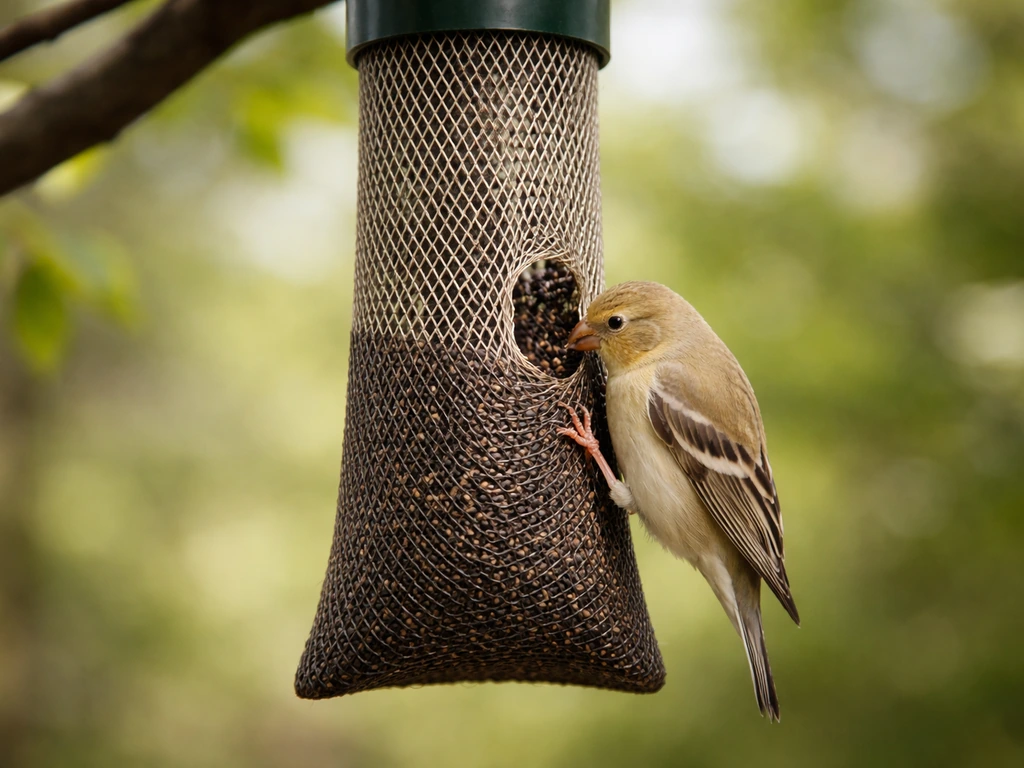
American goldfinches, purple finches, and pine siskins love nyjer (thistle) seed, and they prefer a mesh or sock-style feeder where they can cling and feed from multiple angles. A metal mesh tube feeder holds up to weather far better than nylon socks, which degrade in UV and tear easily. Look for stainless steel mesh ports and a drainage hole at the bottom to prevent wet seed from molding. Capacity around 1 to 2 pounds is typical; nyjer is pricier than sunflower seed, so smaller capacity keeps waste low.
5. Best hummingbird feeder: First Nature 3051 or Aspects HummZinger
Hummingbird feeders live or die on how easy they are to clean. Nectar (a 4:1 water-to-sugar solution) spoils in as little as 2 to 3 days in hot weather, and mold inside a feeder can sicken birds. The First Nature 3051 has a wide-mouth base that comes apart completely for easy scrubbing. The HummZinger's saucer design prevents dripping and is simpler to disassemble than most bottle-style feeders. Both are under $25. Avoid placing either in full afternoon sun: shaded placement slows spoilage and cuts how often you need to swap out nectar. Keep sugar water in the refrigerator for up to one week if you're batching it.
6. Best suet feeder for woodpeckers: Kettle Moraine upside-down suet cage
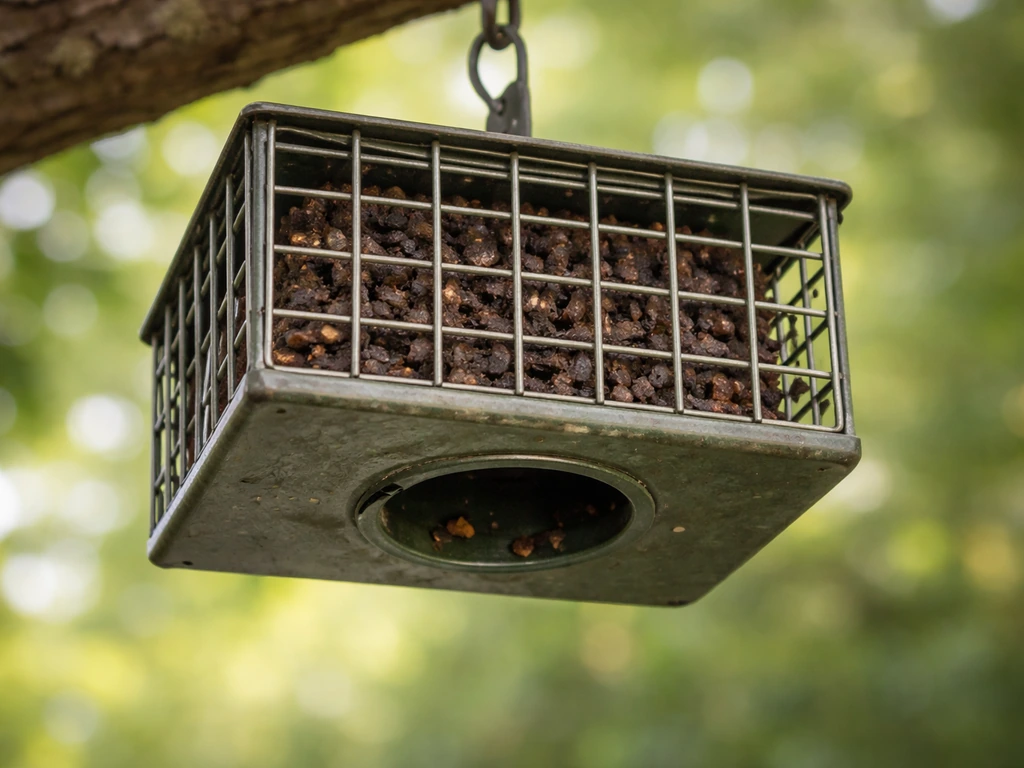
Standard suet cages work fine, but an upside-down design is a clever upgrade. Woodpeckers, nuthatches, and brown creepers are comfortable feeding from below; starlings and grackles generally are not, so the design naturally filters the bird mix. The Kettle Moraine cage is heavy-gauge coated wire that resists rust and holds a standard-size suet cake. In summer, switch to no-melt suet formulas, because regular suet goes rancid fast above 80°F and can damage feathers.
7. Best platform feeder for ground-feeding birds: Woodlink Go Garden platform
Platform feeders are open trays that attract juncos, native sparrows, mourning doves, and towhees. They're also the easiest design for birds that prefer to feed at or near ground level. The tradeoff is exposure: seed gets wet, hulls pile up fast, and squirrels treat it like a buffet. A platform feeder works best as a complement to a hopper or tube feeder rather than a standalone setup. The Woodlink Go Garden has a screen bottom that lets water drain and debris fall through, which cuts down on seed mold.
8. Best window feeder: Nature's Hangout Window Bird Feeder
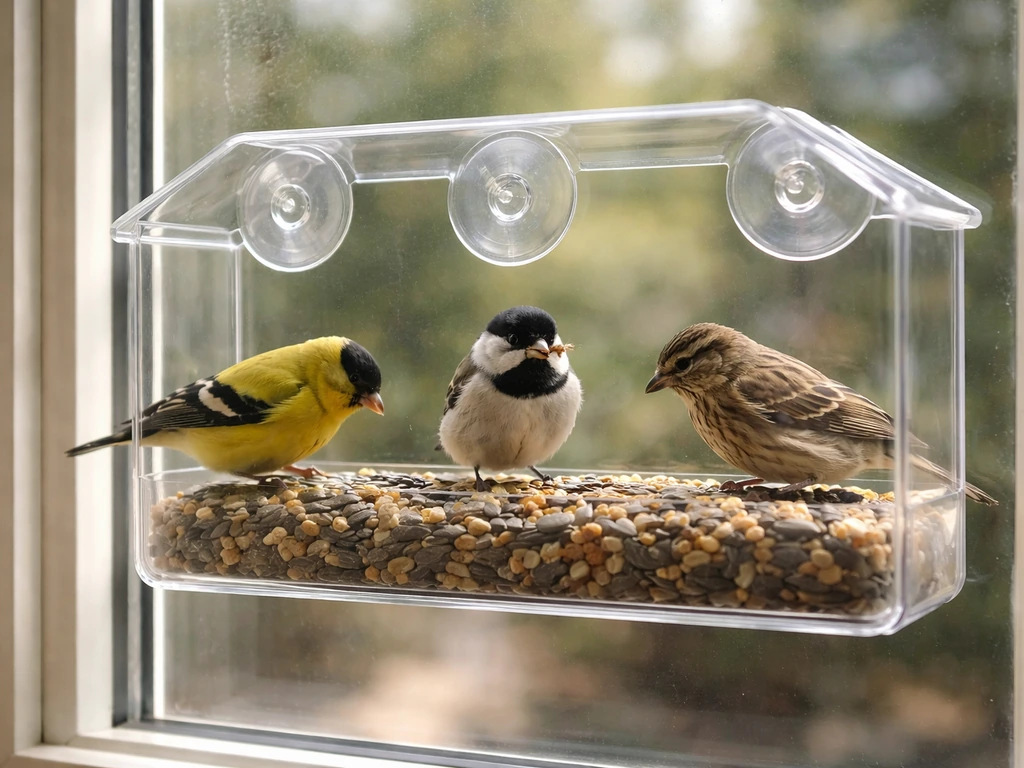
Window feeders suction directly to glass and let you watch birds from inches away. They're the right call for apartment dwellers, renters, or anyone without yard space. The Nature's Hangout model has a clear acrylic body with a seed tray and drainage holes, and the suction cups are industrial-strength enough to hold on for a full season without sliding. Best birds: house sparrows, house finches, chickadees, and the occasional nuthatch. Squirrels rarely access window feeders on upper floors, but on ground-level windows you'll want to think about that.
9. Best smart/AI bird feeder with camera: Bird Buddy or Netvue Birdfy
These feeders have built-in cameras and AI species recognition that identifies birds in real time and sends photos to your phone. They're genuinely fun and add a new dimension to backyard birding. The Bird Buddy requires a subscription for some features and needs a strong Wi-Fi signal near the feeder location. The Netvue Birdfy is a bit more forgiving on connectivity. Both run $99 to $200 depending on the model. I'd classify them as a hobby upgrade rather than a core feeder recommendation, but if you want to log species, share sightings, or just get notified when something interesting shows up, they deliver on that promise. More on the full smart feeder tradeoffs below.
10. Best budget pick: Perky-Pet Panorama feeder
If your budget is under $20 and you want a solid starting feeder, the Perky-Pet Panorama is a circular tube with 360-degree feeding access and a covered top to keep seed dry. It's not squirrel-proof and it's polypropylene plastic rather than metal, so it won't outlast a metal feeder. But it's a legitimately good entry point for someone who wants to test whether feeding birds is something they'll stick with before spending more. Attracts: cardinals, house finches, chickadees, mourning doves.
Material durability and weather performance
The feeder material question matters more than most buyers expect, especially if you live somewhere with harsh winters, humid summers, or salt air. Here's how the main materials stack up in real outdoor conditions.
| Material | Weather resistance | Durability | Cleaning ease | Typical lifespan |
|---|---|---|---|---|
| Powder-coated steel | Excellent (watch for chips that rust) | Very high | Easy | 5-10+ years |
| Heavy-gauge aluminum | Excellent (won't rust) | High | Easy | 5-10+ years |
| UV-stabilized polycarbonate | Good | Medium-high | Very easy | 3-6 years |
| Standard polypropylene plastic | Fair (fades, cracks in freeze-thaw) | Low-medium | Easy | 1-3 years |
| Cedar wood | Good if sealed | Medium (needs maintenance) | Moderate | 3-7 years with care |
| Recycled plastic lumber | Very good (no warping, no rot) | High | Easy | 7+ years |
Rust is the main failure mode for metal feeders. Powder-coat chips at attachment points, hinges, and seed ports let moisture in. Inspect those spots every spring and touch up with rust-inhibiting paint if needed. For tube feeders specifically, check the bottom cap seal, because pooled water at the base is where rot and mold start in both wood and plastic models. Recycled-plastic feeders are genuinely underrated for longevity: they don't absorb moisture, they don't need painting, and they hold up to cleaning chemicals without degrading.
Seed protection from weather is equally important. A hopper feeder with a good roof overhang keeps seed dry for days in light rain. Platform feeders with mesh or screen floors at least allow drainage. Tube feeders with weather guards (add-on dome accessories) shed rain and snow from ports. Without some form of weather protection, wet seed clumps, molds, and becomes a bird health risk within 24 to 48 hours in wet conditions.
Bird access vs. predator and pest control
Squirrels, raccoons, and grackles are the three most common problems I hear about, and they each need a slightly different response.
Squirrels
The only truly reliable squirrel solution is a combination approach: a weight-activated feeder on a pole with a baffle. Weight-activated feeders close ports when something heavy grabs on. A pole baffle (a smooth conical or tube-style barrier at least 4 to 5 feet up) stops squirrels from climbing. Either alone can be defeated by a determined squirrel. Both together almost always win. Keep feeders at least 10 feet from any jumping-off point like a fence, tree branch, or deck railing, because squirrels can clear that distance from a standing jump.
Raccoons
Raccoons are nocturnal and strong. They'll tip, pull apart, or outright steal lightweight feeders overnight. The most effective countermeasure is bringing feeders inside at night, which is the simplest solution and works every time. If that's not practical, use a feeder with locking mechanisms on seed compartments and pair it with a raccoon-specific baffle (wider diameter and longer than standard squirrel baffles, since raccoons can reach around smaller ones).
Grackles and large pest birds
Grackles are smart, aggressive, and will dominate any open feeder. The practical solutions: use a tube feeder with short perches that can't support a grackle's body length, switch to safflower seed (grackles largely ignore it; cardinals love it), use a caged feeder with wire mesh sized to exclude large birds, or use the upside-down suet cage design described above. Hopper feeders are grackle magnets, which is worth knowing if you have a grackle problem and are considering a hopper as your primary feeder.
Caged feeder designs
A caged feeder surrounds a tube or hopper with a wire cage sized to let small songbirds pass through while physically blocking larger birds and squirrels. Brands like Gardman and Perky-Pet make these in several sizes. They're effective but reduce the visual appeal and can frustrate larger target birds like cardinals if the cage spacing is too tight. Look for cages with 1.5-inch spacing as a good balance.
Smart and AI bird feeders: what's actually worth it
Smart feeders with built-in cameras and AI identification have gotten genuinely good in the last two years. The Bird Buddy and Netvue Birdfy both use on-device or cloud AI to identify species and log sightings automatically, and the accuracy on common backyard species is solid. Where they still fall short is unusual lighting conditions, less common species, and anything that moves too fast through the frame.
The real tradeoffs to know before buying: These feeders need a power source (most run on a rechargeable battery that lasts 1 to 3 weeks depending on traffic and temperature, or you can run a cable) and a Wi-Fi signal within range of your feeder location, which can be a problem for a pole-mounted feeder far from your router. If your signal is weak, the camera goes offline and you lose the whole point. A Wi-Fi extender or mesh network node near the feeder usually fixes this. Also worth knowing: some features, particularly cloud storage of photos and video, require a paid subscription after the first year.
Privacy is a minor but real consideration. These feeders upload images to cloud servers for species identification processing. If your feeder has any angle toward a neighbor's yard or a public area, think about the camera's field of view. Most can be angled to focus on the feeding tray itself, which keeps the frame tight and avoids that issue.
My honest take: smart feeders are worth the cost if you're genuinely interested in species logging, photography, or the tech side of birding. They're not worth it if your primary goal is just feeding birds well. A $200 smart feeder doesn't attract more birds than a $40 hopper. If you're on a budget, spend that money on a better traditional feeder, a proper pole and baffle setup, and quality seed, then add a smart feeder later as an upgrade.
Mounting and placement: height, distance, shade, and safety
Placement makes or breaks a feeder's success. Even the best feeder in the wrong spot will sit ignored or get raided constantly.
- Mount pole feeders at 5 to 6 feet off the ground for most songbirds. Ground-feeding species like juncos and sparrows prefer a platform at 2 to 3 feet or seed scattered directly on the ground.
- Keep feeders at least 10 feet from any fence, tree branch, deck, or other launch point that squirrels can use. This is the single most important squirrel-prevention placement rule.
- Place feeders either very close to windows (within 3 feet) or more than 30 feet away. Close feeders mean birds can't build up enough speed to injure themselves if they do fly toward glass. Feeders in the 5 to 30 foot range produce the most dangerous window collision zone.
- Shade matters most for nectar feeders. Put hummingbird and oriole feeders in dappled shade or morning sun with afternoon shade to slow nectar spoilage.
- Leave a clear flight path. Birds need an easy approach and escape route. Feeders tucked into dense shrubs with no clear exit line make birds nervous and reduce visits.
- If you're using multiple feeders, space them far enough apart (at least 6 to 8 feet) that dominant birds can't guard all of them at once.
- Consider sightlines from inside your house. A feeder you can see from where you eat breakfast or work gets more enjoyment value than one hidden around the corner.
Maintenance, cleaning, and seed handling
A dirty feeder is worse than no feeder. Wet, moldy seed causes aspergillosis and other fungal infections in birds, and a neglected feeder can spread salmonella through feces buildup. The cleaning schedule isn't complicated, but it needs to actually happen.
- Clean tube feeders and hoppers every 2 weeks in dry weather, weekly in rain or humidity. Use a 10% bleach solution (1 part bleach, 9 parts water), scrub all surfaces, rinse thoroughly, and let the feeder air-dry completely before refilling. Residual moisture plus seed equals mold.
- Clean nectar feeders every 3 to 5 days in summer (every 1 to 2 days in hot weather above 85°F). Rinse with hot water, scrub the ports with a small brush, and skip soap since residue is hard to fully rinse and can harm hummingbirds.
- Clean suet cages monthly or whenever you replace the suet cake. Wire cages are easy: a stiff brush and hot water is enough.
- Rake or clear seed hulls from below feeders weekly. Piled hulls harbor bacteria, attract rodents, and can kill grass or ground cover.
- Store seed in a sealed, airtight container (metal bins resist rodents better than plastic). Keep seed cool and dry. Nyjer seed has a shorter shelf life than sunflower, so buy it in smaller quantities.
- Inspect feeders each spring for rust spots, cracked plastic, loose ports, and damaged perches. Catching small damage early extends feeder life significantly.
- If you see sick or dead birds near a feeder, take the feeder down immediately, clean and disinfect it thoroughly, and leave it down for at least a week before returning it.
One maintenance upgrade worth making early: buy a dedicated feeder cleaning kit (a set of small brushes in different sizes for ports and tubes) rather than improvising with kitchen brushes. It makes the cleaning routine fast enough that you'll actually do it on schedule rather than putting it off.
For seed selection, black oil sunflower seed is the single best all-purpose choice. It attracts the widest range of birds, has a thinner shell that small birds can crack, and holds up to weather better than mixes heavy in millet or milo. If you want to add variety, nyjer for finches, safflower for cardinals (and to deter grackles), and suet cakes for woodpeckers round out a complete feeding station.
Avoid cheap mixed birdseed bags heavy in filler seeds like red millet or oats: most birds pick around them, they pile up uneaten on the ground, and they attract rodents. Top flight bird feeders also focus on durable build quality and bird-safe design features that keep feeding consistent through changing weather feeding station.
If you're comparing options across budget tiers, it's worth knowing that the top 5 feeders list of products often includes many of the same picks you'd find in a broader top 10 list, just with a tighter focus on universal appeal. The difference when you expand to 10 is that you can cover specialty use cases: the nyjer feeder for goldfinch fans, the smart camera feeder for tech-oriented birders, and the window feeder for apartment birders who don't have a yard at all. Start with one or two feeders that fit your target birds and location, get those dialed in, and add specialty feeders once you know what's actually showing up.
FAQ
What’s the simplest way to choose among the top 10 bird feeders if I don’t know which birds are coming yet?
Start with one hopper or tube feeder that uses black oil sunflower, place it where you can observe for a week, and keep notes on what lands. Once you identify 2 to 3 repeat visitors, add a second feeder that matches their feeding style (sock for finches, suet for woodpeckers, nectar feeder only if hummingbirds appear).
How far apart should I space multiple feeders so birds don’t bully each other?
For most backyards, keep feeders at least 10 to 15 feet apart, especially if you’re running a hopper plus a tube. This reduces dominance by larger birds and gives ground-feeding species (like juncos and sparrows) a safer corridor to approach platform or tray setups.
Will squirrels still get in even with a weight-activated feeder or a baffle?
They can, if the baffle is too low or the feeder is too close to a launch point. Use a baffle height of at least 4 to 5 feet, mount the feeder on a pole that has no nearby rails or branches within about 10 feet, and consider combining both a pole baffle with a weight-activated mechanism for heavy squirrel areas.
Where should I put a feeder in cold winters to prevent seed from freezing into unusable clumps?
Aim for partial shade and avoid spots where snow drifts or ice forms directly over the feeder ports. In very snowy areas, use a roofed hopper or tube with weather guards so rain and meltwater don’t refreeze inside the tray, then check more often during thaw cycles.
How often should I clean feeders, and what’s the safest approach for removing mold or old seed?
At minimum, clean feeders whenever seed looks damp, clumped, or visibly old, which is often more frequent in humid months. Disassemble and scrub with a feeder-safe brush kit, rinse thoroughly, and dry completely before refilling to avoid trapping moisture and restarting mold.
Can I use any nectar sugar for hummingbirds, and how do I avoid causing harm?
Use plain white sugar only (the standard 4:1 water-to-sugar ratio), avoid honey and artificial sweeteners, and clean immediately if you see any cloudy residue. If you can’t clean every 2 to 3 days in heat, place the nectar feeder deeper in shade so it spoils more slowly.
What’s the best seed to switch to if grackles are taking over my setup?
Safflower is the easiest lever to pull, since many grackles largely ignore it while cardinals still feed readily. Pair that with a tube feeder and short perches, because open hoppers tend to invite grackles and other dominant birds.
Are platform feeders ever worth it, or do they always lead to a messy yard?
They can be worth it as a targeted complement, not your only feeder, especially for juncos and ground sparrows. Choose a platform design with drainage (screen or mesh bottom), plan for more frequent seed clearing, and expect higher squirrel traffic compared with tube or hopper setups.
What’s the quickest way to stop rodents without immediately giving up on feeder variety?
Avoid mixes with a lot of filler seeds (millet or oats) because birds leave them behind, and remove fallen seed under feeders. If rodents are persistent, temporarily narrow your feeding to black oil sunflower and one or two targeted seeds while you improve placement and cleanup.
Do smart bird feeders attract more birds than traditional feeders?
Usually no. Smart features do not replace good feeder design, food quality, and pest protection, so you’ll typically get similar bird counts if you match feeder type and seed. Treat smart feeders as an add-on if you want logging and notifications, and ensure you have reliable power and Wi-Fi at the exact mounting location.
What’s the biggest mistake new birders make with top 10 bird feeders?
Overbuying before you know your visitors and local pest pressure. Pick one core feeder type that matches likely species and put it in a practical location, then add specialty feeders based on what actually shows up after a short observation period.
How can I reduce neighbor or public-facing camera privacy concerns with a smart feeder?
Angle the feeder so the camera frame centers tightly on the feeding tray, not a wider backyard or walkway. If your device allows it, adjust app settings for motion zones or privacy features (when available) so captured footage stays focused where you want bird IDs.
Next Article
Best Price Bird Feeders: Value Guide for Cheap Models
Compare best price bird feeders by value, durability, anti-predator features, and species fit, plus smart-camera upgrade