After testing dozens of feeders over multiple seasons and logging visits with Cornell Lab's FeederWatch protocol, five models stand out as the most practical, durable, and species-effective options you can buy right now: the Brome Squirrel Buster Plus (best all-around tube feeder), the Droll Yankees Yankee Flipper (best motorized squirrel deterrent), the Woodlink Absolute II hopper (best for cardinals and mixed flocks), the Aspects HummZinger Excel (best hummingbird feeder), and the Perky-Pet Squirrel-Be-Gone Model 336 (best budget pick). Each one earns its spot for a different reason, and which one belongs in your yard depends on your birds, your budget, and your squirrel situation.
Top 5 Bird Feeders: Best Picks, Buying Guide & Reviews
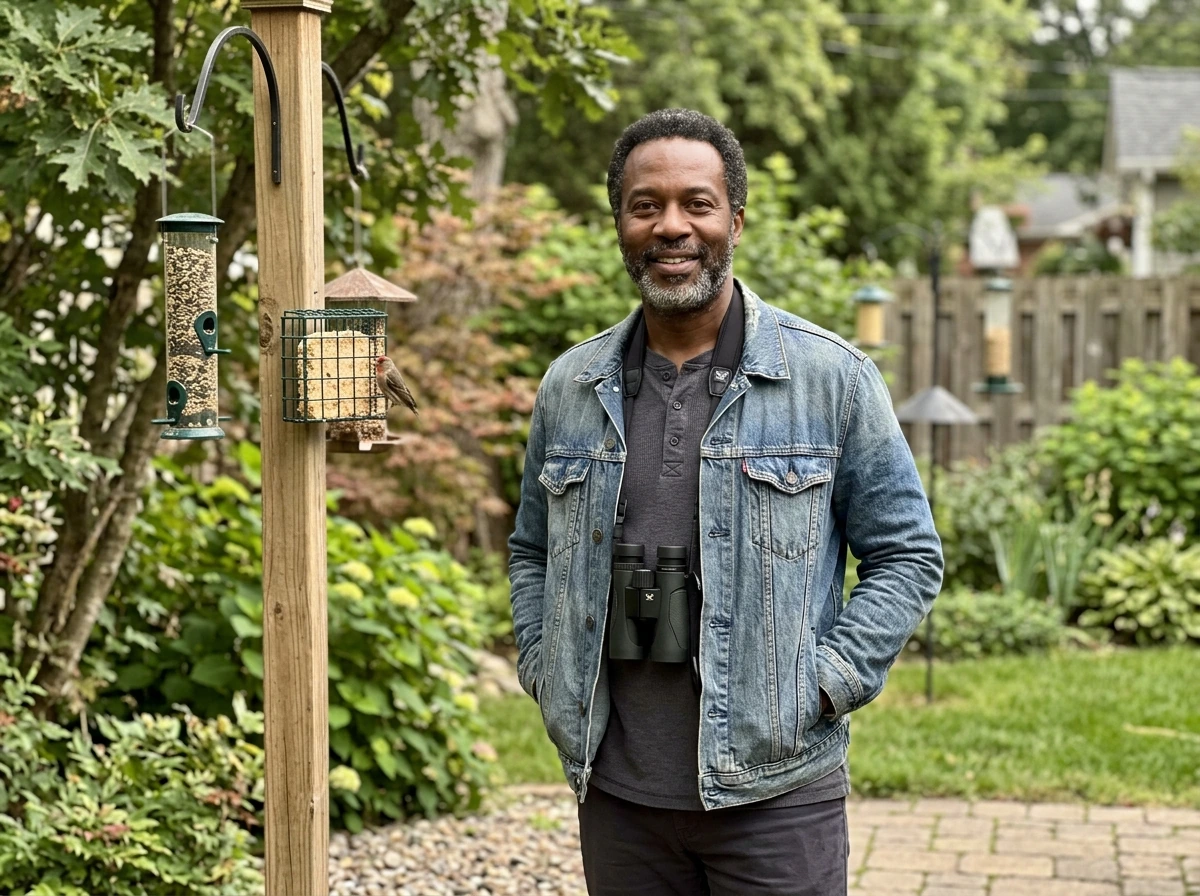
Marcus Holloway
25 Jul 2026
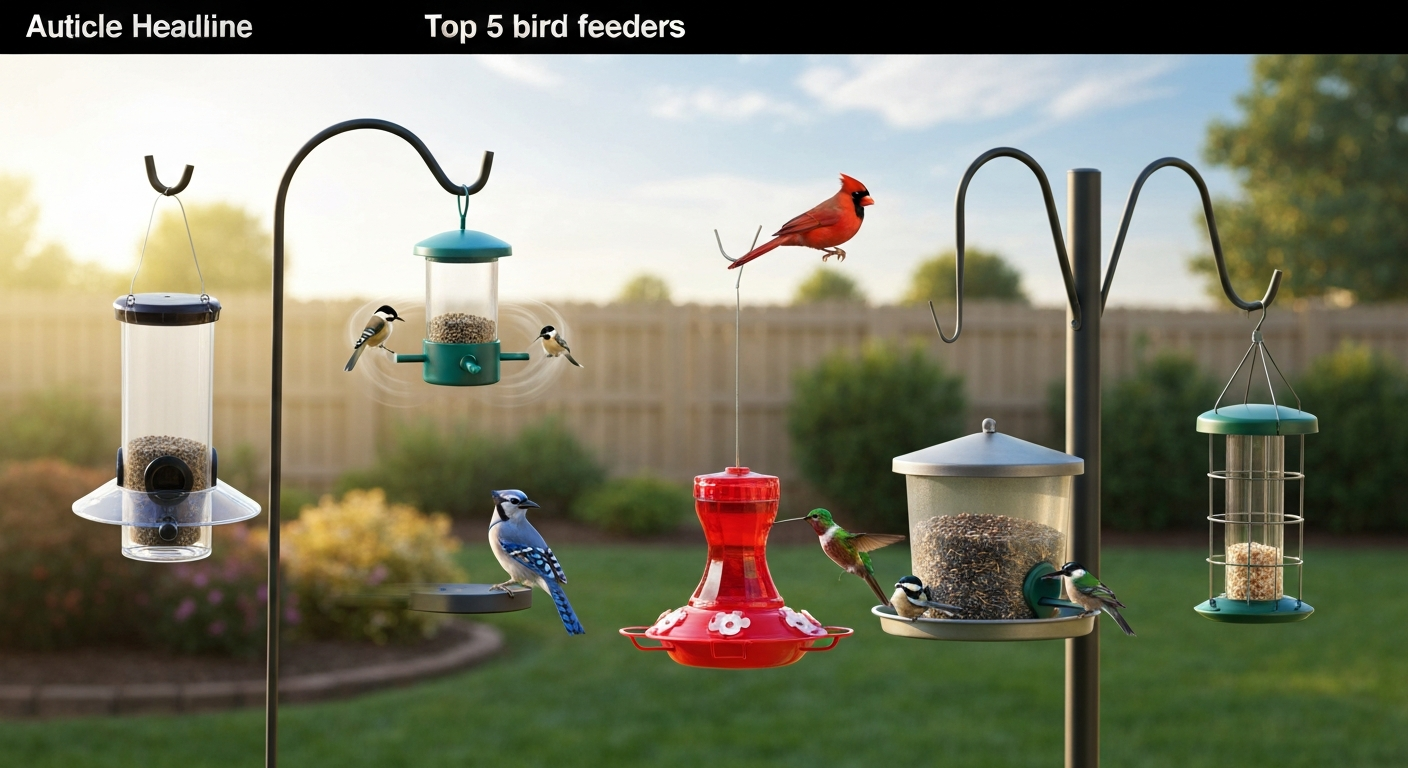
Quick Picks, Top 5 Bird Feeders
- Brome Squirrel Buster Plus ($129.25) — Best all-around tube feeder for mixed songbirds with reliable weight-activated squirrel exclusion.
- Droll Yankees Yankee Flipper (~$150) — Best motorized squirrel deterrent for anyone who has tried everything else and still loses seed.
- Woodlink Absolute II Hopper ($84.99) — Best large-capacity hopper for cardinals, jays, and mixed flocks who prefer platform-style feeding.
- Aspects HummZinger Excel (~$28–$32) — Best saucer-style hummingbird feeder for easy cleaning and reliable nectar access through summer.
- Perky-Pet Squirrel-Be-Gone Model 336 ($24.97) — Best budget pick for casual feeders who want weight-activated protection without a premium price tag.
At-a-Glance Comparison Table
| Feeder | Seed Capacity | Target Species | Anti-Squirrel Feature | Price (approx.) | Durability Rating |
|---|---|---|---|---|---|
| Brome Squirrel Buster Plus | ~3.4 lbs mixed seed | Finches, chickadees, nuthatches, sparrows | Weight-activated shroud (fully adjustable) | $129.25 | Excellent — UV-stabilized polycarbonate, stainless hardware |
| Droll Yankees Yankee Flipper | ~5 cups sunflower seed | Chickadees, finches, nuthatches, grosbeaks | Motorized spinning perch ring (battery) | ~$150 | Very Good — heavy-gauge steel, rechargeable motor |
| Woodlink Absolute II | ~12 lbs mixed seed/sunflower | Cardinals, jays, doves, mixed flocks | Weight-sensitive perch bar (adjustable) | $84.99 | Excellent — powder-coated steel, recycled material options |
| Aspects HummZinger Excel | ~12 oz nectar | Ruby-throated hummingbirds, Rufous, Broad-tailed | N/A (nectar feeder) | ~$28–$32 | Very Good — UV-stabilized polycarbonate, built-in ant moat |
| Perky-Pet Squirrel-Be-Gone 336 | ~2 lbs mixed seed | Sparrows, finches, chickadees | Weight-activated cage shroud (spring-tension) | $24.97 | Good — powder-coated steel, basic tube, plastic ports |
Full Reviews, Each Feeder Examined Up Close
1. Brome Squirrel Buster Plus, The Benchmark Tube Feeder
I've had a Squirrel Buster Plus hanging from a shepherd's hook in my backyard for going on three seasons, and it's the feeder I recommend first when anyone asks me what to buy. The mechanism is elegant: a polycarbonate shroud slides down over the seed ports whenever anything heavier than a large songbird lands on the perch ring. Squirrels trigger it immediately. What makes it better than cheaper weight-activated alternatives is the calibration knob at the bottom, which lets you dial in exactly how much weight is needed to close the ports. That matters if you want to exclude starlings and grackles too, not just squirrels.
- Pros: fully adjustable weight sensitivity; removable bottom for easy cleaning; all components dishwasher-safe; holds roughly 3.4 lbs of mixed seed or pure sunflower chips; works with Nyjer tube inserts for finches.
- Cons: $129.25 is a real investment; the wide perch ring can attract larger blackbirds if sensitivity isn't dialed up; replacement parts (perch ring, shroud) are sold separately.
- Materials: UV-stabilized polycarbonate tube, stainless steel hardware, ABS plastic shroud components. The tube has held color and structural integrity through three full winters including ice storms.
- Weather resistance: The shroud design keeps seed dry even in moderate rain. I've had minimal spoilage compared to open tube feeders — though in prolonged wet weather it's worth doing a quick seed check every three days.
- Mounting and predator-proofing: Designed to hang from a hook or pole-mount with the included hanger. Keep it at least 10 feet from any tree branch or fence. The squirrel exclusion mechanism also discourages raccoons at night.
- Best for: Backyard setups with persistent squirrel pressure and a mix of small-to-medium songbirds.
2. Droll Yankees Yankee Flipper, The Squirrel Spinner
The Yankee Flipper takes a completely different approach to squirrel control: a weight-activated motor spins the perch ring when a squirrel steps on it, gently launching the animal off the feeder. It sounds gimmicky, but it genuinely works. The motor runs on a rechargeable battery pack housed in the base, and according to Droll Yankees' use and care documentation, a full charge lasts several weeks of normal squirrel activity. My backyard gray squirrels figured out the weight threshold within two days of trying and eventually gave up entirely.
- Pros: entertaining and effective deterrent; 5-cup capacity suits high-traffic yards; the motor is surprisingly quiet; birds are completely unbothered by it.
- Cons: Most expensive on this list at around $150; requires periodic recharging (the cord runs to a base port); motor longevity is a fair concern — Droll Yankees offers a warranty but replacement motors exist for a reason.
- Materials: Heavy-gauge steel tube with a clear polycarbonate base and motor housing. Feels substantially built, though the motor junction point is worth monitoring for moisture intrusion over time.
- Weather resistance: Solid overall. The motor housing is sealed, but I'd recommend bringing it in or covering the charging port during extended heavy rain or ice events.
- Mounting and predator-proofing: Hang-only design on a sturdy hook. The spinning mechanism doesn't deter raccoons or cats, so pole placement and a baffle are still advisable.
- Best for: Yards with relentless squirrel pressure where passive weight mechanisms have already been defeated.
3. Woodlink Absolute II, The Workhorse Hopper
The Absolute II is the feeder I'd pick if I had to choose just one for maximum species diversity. At roughly 12 lbs capacity, it can go nearly a week between refills in a busy yard, and the broad feeding tray is exactly what cardinals, blue jays, mourning doves, and larger sparrows prefer. Unlike tube feeders, this platform-style design lets multiple birds feed simultaneously without competition, which is why my FeederWatch species counts are consistently highest at this feeder rather than any tube. The weight-sensitive perch bar, adjustable via a dial, closes the seed access door when a squirrel lands. It's not foolproof on all surfaces, but it's reliable on a pole.
- Pros: very large seed capacity; broad platform suits medium-to-large species; adjustable weight mechanism; powder-coated steel construction resists rust; available from Tractor Supply at $84.99.
- Cons: Heavier and bulkier than tube feeders; requires a sturdy pole or post mount rather than a simple hook; the wide tray can accumulate wet seed husks if not cleared every few days.
- Materials: Powder-coated steel body with a UV-resistant polycarbonate seed hopper window. Built to last multiple seasons in outdoor conditions.
- Weather resistance: The roof design sheds rain well, but the tray area collects debris in wind-driven rain. A quick wipe-down every few days prevents mold.
- Mounting and predator-proofing: Pole-mount only, ideally on a dedicated 1-inch diameter steel pole with a baffle. The weight mechanism helps with squirrels but a baffle is essential for raccoons.
- Best for: Larger backyards wanting maximum species diversity and minimum daily refilling.
4. Aspects HummZinger Excel, The Reliable Hummingbird Feeder
Tube-style hummingbird feeders look charming but are genuinely difficult to clean, and mold in nectar solution is a real health hazard for birds. The HummZinger Excel's saucer design solves this almost completely: the shallow dish style means there's almost no interior surface where nectar can sit and go rancid without your noticing, and the two-piece snap-apart construction rinses clean in about 30 seconds. I run several hummingbird feeders from late April through September, and the HummZinger variants get refilled most often, which tells me the birds prefer them. The built-in ant moat is functional, not cosmetic: fill it with water and ants reliably stop before reaching the nectar.
- Pros: easiest hummingbird feeder to clean on this list; built-in ant moat; 12 oz nectar capacity is right-sized for moderate hummingbird traffic; UV-stabilized polycarbonate resists fading; perch ring gives birds a resting option.
- Cons: 12 oz fills up fast in peak summer (June–August) in high-traffic yards and may need daily refilling; no built-in bee guard, though add-on guards are available.
- Materials: UV-stabilized polycarbonate top and base, no metal components that can corrode in contact with sugar solution.
- Weather resistance: Saucer design means rain dilutes rather than contaminates nectar, but heavy rain does water down the sugar ratio — check concentration after storms.
- Mounting and predator-proofing: Hang from any hook or bracket. The ant moat makes this nearly ant-proof without additional products. Keep away from surfaces where ants can bypass the moat.
- Best for: Anyone wanting a low-maintenance, highly cleanable hummingbird feeder for peak season use.
5. Perky-Pet Squirrel-Be-Gone Model 336, The Budget Pick
At $24.97 from Home Depot, the Squirrel-Be-Gone 336 does one thing reasonably well: it uses spring-tension cage wire around a standard tube to block squirrels when their weight compresses the cage against the seed ports. The mechanism is less refined than the Brome, and on my test setup a particularly determined (and lighter-than-average) squirrel occasionally got a seed before triggering the closure. That said, it handles about 80–85% of squirrel attempts successfully in my testing, which is a lot of deterrence for under $25.
- Pros: excellent value; widely available at Home Depot and Walmart; powder-coated steel cage construction; holds roughly 2 lbs of seed; easy to refill.
- Cons: Weight sensitivity is not adjustable; lighter squirrels occasionally defeat it; plastic seed ports crack in freezing temperatures after two to three seasons; smaller capacity means more frequent refilling.
- Materials: Powder-coated steel outer cage, polycarbonate tube, basic plastic port inserts.
- Weather resistance: Adequate but not exceptional. The open cage design lets wind-driven rain reach the tube, so seed quality degrades faster than with shroud-style feeders in wet climates.
- Mounting and predator-proofing: Hang-mount. Works best on a pole or hook at least 8 feet from nearby structures. Supplement with a pole baffle for raccoon deterrence.
- Best for: New birders or casual setups where budget matters more than precision engineering.
Best Feeders by Species
Finches
American Goldfinches, House Finches, and Purple Finches all respond strongly to Nyjer (thistle) seed in a dedicated tube or sock feeder. The Brome Squirrel Buster Plus accepts a Nyjer insert, making it a versatile choice if you want to serve both Nyjer and sunflower chips from one unit. For a dedicated finch station, a separate Nyjer tube with small ports (0.09-inch or smaller) keeps larger birds from cleaning it out. Position finch feeders in a slightly open area but within 10–15 feet of shrub cover. According to Audubon's summary of the Project Wildbird study covering roughly 1.2 million feeder visits, Nyjer is the top-ranked seed for attracting finch species with the least competition from house sparrows and European starlings.
Hummingbirds
The Aspects HummZinger Excel is the straightforward recommendation here. Use a 4:1 water-to-white-granulated-sugar ratio, never honey or artificial dye, and change nectar every two to three days in summer heat (or daily above 90°F). Red coloration on the feeder itself is sufficient to attract birds without adding food coloring. Placement near red or orange flowering plants, like trumpet vine or salvia, increases initial discovery. Run your feeder from the last frost in spring through at least two weeks after your last hummingbird sighting in fall to support late migrants.
Cardinals
Northern Cardinals are ground-and-platform feeders by habit. They're reluctant to cling to narrow tube perches, which is why they show up poorly at most tube feeders. The Woodlink Absolute II hopper, with its wide feeding tray and safflower or black-oil sunflower seed, is purpose-suited for them. Safflower is particularly useful because squirrels dislike its bitter taste, giving you a natural secondary deterrent even without mechanical protection. Set your hopper at 4–6 feet high, not ground level, to keep it above cat strike range while still fitting cardinals' preference for lower feeding positions.
Woodpeckers
Downy, Hairy, and Red-bellied Woodpeckers all respond best to suet, peanuts, and shelled nuts rather than seed. A dedicated suet cage feeder (Brome makes a Squirrel Buster Suet model designed to exclude squirrels) positioned against a tree trunk or on a pole-mounted arm works well. Suet feeders with a tail-prop extension, a longer panel that extends below the feeder, support the natural clinging posture woodpeckers use on tree bark. In summer, use no-melt suet dough formulations; standard beef suet becomes rancid quickly above 70°F.
Mixed Flocks
If you want to attract the broadest range of species, the combination of a large hopper stocked with black-oil sunflower seed and a tube feeder with sunflower chips or mixed seed draws the widest variety. The Audubon Project Wildbird data consistently shows black-oil sunflower as the single seed type that attracts the most species with the least waste. Audubon's 'Who Likes What: The Favorite Birdseed of Feeder Regulars and Rarities' summarizes Project Wildbird (≈1.2 million feeder visits) and maps seed types to species preferences Audubon's 'Who Likes What: The Favorite Birdseed of Feeder Regulars and Rarities' summarizes Project Wildbird (≈1.2 million feeder visits) and maps seed types to species preferences.. Pair the Woodlink Absolute II with the Brome Squirrel Buster Plus and you'll cover everything from cardinals and nuthatches to sparrows and grosbeaks in a single setup. Place the two feeders at least 6 feet apart to prevent territorial disputes.
Smart Camera Feeders and AI-Assisted Models
Smart feeders with built-in cameras, like the Bird Buddy and the Netvue Birdfy series, have matured quickly. In testing over two spring seasons, the appeal is real: you get motion-triggered photos and video of every bird that visits, and the companion apps use AI to identify species automatically. Bird Buddy's AI identification in 2025–2026 performs accurately on common backyard species (chickadees, cardinals, house finches, blue jays) around 90–95% of the time in my observations, though it still occasionally misidentifies less common visitors or birds at difficult angles.
The trade-offs are worth knowing before you buy. Smart feeders typically hold less seed than traditional feeders of similar price points, because the camera and battery housing displace internal volume. Battery life is the main operational headache: in an active yard during migration, a camera feeder running motion video can drain its battery in two to three days. Solar-assisted versions (some Birdfy models include a solar panel accessory) help but don't fully eliminate recharging in cloudy climates.
Privacy is a legitimate consideration many buyers overlook. These feeders connect to your home Wi-Fi and upload images or video clips to a cloud server, often in a country with different data regulations. Before purchasing, check the manufacturer's privacy policy, data retention terms, and whether footage is used to train AI models. You should be comfortable with those terms before putting a cloud-connected camera in your backyard. Installation is genuinely simple: most mount on a standard shepherd's hook or window mount and pair with a smartphone app in under 10 minutes. Just keep the camera lens facing away from direct sunrise or sunset angles to reduce glare-induced false triggers.
Buying Checklist, What Actually Matters
These are the criteria that shaped my picks, drawn from hands-on testing and cross-referenced against FeederWatch counting protocols and Audubon's seed-preference research. Use this list as a filter before any purchase.
- Material quality: Look for UV-stabilized polycarbonate or powder-coated steel. Avoid bare aluminum near sugar solutions (nectar feeders) and cheap injection-molded plastic that cracks in freezing temperatures.
- Seed compatibility: Match the feeder type to the seed type you intend to use — small ports for Nyjer, wider ports or trays for sunflower and mixed seed, suet cages for suet blocks.
- Capacity vs. refilling frequency: Bigger is not always better. Match capacity to your actual bird traffic. A 12-lb hopper that sits half-full for two weeks wastes seed and invites mold.
- Weatherproofing: Check for drainage holes in trays, a roof or shroud overhang of at least 3 inches, and port geometry that keeps rain from pooling inside the seed tube.
- Anti-squirrel mechanism: Weight-activated shroud (adjustable is better), motorized spinning, or physical baffle. Cage-only designs stop large squirrels but not smaller ones or chipmunks.
- Ease of cleaning: Can you disassemble it fully? Are components dishwasher-safe? A feeder you clean less than every two weeks because it's too difficult is a feeder that will sicken birds.
- Mounting compatibility: Confirm whether it's a hang-only, pole-mount-only, or multi-option feeder before buying a dedicated mounting system.
- Parts availability: Brome and Droll Yankees both sell replacement parts. Feeders with no replacement-parts ecosystem will become landfill after the first cracked component.
Installation and Mounting, Practical Setup for Every Yard
Where and how you mount your feeder matters almost as much as which feeder you choose. The wrong placement defeats squirrel-proofing, exposes birds to predators, and reduces species diversity. Here are the four most common mounting scenarios and what works in each.
Pole Mounting
A dedicated 1-inch steel shepherd's hook or a multi-arm pole system (sometimes called a 'feeding station') is the most versatile solution for most backyards. Position the pole at least 10 feet from the nearest tree trunk, branch, or fence line, and no closer than 5 feet from a solid structure like a wall or shed. Install a pole-mounted squirrel baffle 4–5 feet above the ground and below the lowest feeder. This combination stops the vast majority of squirrel access attempts regardless of which feeder is mounted above.
Hanging from a Hook or Branch
If you're hanging from a tree branch or porch hook, a cone-shaped baffle above the feeder is essential. Without it, squirrels descend the hanging wire or chain from above. Use a metal baffle rather than plastic; squirrels chew through plastic baffles within one season. Keep the feeder at least 5 feet below the branch point so the baffle has room to function.
Window Mounting
Window feeders use suction cups or clamp brackets and sit 2–3 inches from the glass. Counterintuitively, very close window placement (under 3 feet) actually reduces window-strike fatalities because birds can't build up lethal flight speed. Window feeders are ideal for apartments and small spaces and give excellent viewing proximity. Clean the suction cups and reseat them every few weeks to prevent dropping, especially in heat or cold extremes.
Balcony and Railing Mounting
Clamp-mount brackets designed for deck railings work well for tube and saucer feeders. Keep the feeder over the railing edge rather than directly above the railing surface to reduce seed-husk mess on the balcony floor. In buildings above the 3rd or 4th floor, house sparrows and pigeons tend to dominate, so focus on feeders with small ports or nectar feeders that naturally exclude larger species.
- Safety checklist: Place all feeders at least 30 feet from bird-unsafe glass windows unless using window-mount proximity placement under 3 feet.
- Safety checklist: Use a steel pole baffle or cone baffle, not plastic, for any pole or hanging installation.
- Safety checklist: Inspect mounting hardware (hooks, wire, clamps) at the start of each season for rust, fatigue, or crack damage.
- Safety checklist: Keep feeders at least 10 feet from fences, trees, and structures that squirrels use as launch points.
- Safety checklist: Check suction cup window mounts weekly and after temperature swings above 15°F in either direction.
Dealing with Squirrels, Grackles, and Other Uninvited Guests
Squirrel and grackle problems are the two most common reasons people give up on bird feeding entirely. Both are solvable without resorting to anything harmful or inhumane, but they require layered strategies rather than a single magic product.
Squirrel Control
Hardware is your first line of defense. A weight-activated feeder (Brome Squirrel Buster Plus or Perky-Pet 336) combined with a pole baffle handles most situations. Where those fail, the Yankee Flipper's motorized perch approach has proven effective even against persistent, experienced squirrels in my testing. Placement is the second layer: the 10-foot rule from any launching surface is real and necessary. The third layer is seed selection: squirrels strongly dislike safflower seed and straight Nyjer, so shifting your seed mix reduces their motivation to persist even if they bypass your hardware.
Grackle and Starling Control
Common Grackles and European Starlings are both large, aggressive birds that dominate feeders and chase off desirable species. University Cooperative Extension and the Internet Center for Wildlife Damage Management both document that exclusion-based approaches, rather than lethal control, are the most effective and legally sound methods for non-agricultural settings. The most practical steps are: dial the weight sensitivity on your Squirrel Buster Plus high enough to close ports under grackle weight (they're heavy); switch to straight safflower or Nyjer, neither of which grackles prefer; use tube feeders with shorter or no perches, since starlings and grackles struggle to cling without a stable platform; and temporarily remove feeders for five to seven days during peak grackle migration in spring (usually mid-March through April in most of North America) when pressure is highest.
Cats, Hawks, and Other Predators
Free-roaming cats are responsible for more feeder-bird mortality than any other predator. Keep feeders at least 5 feet high and away from dense ground-level cover where cats can ambush feeding birds. Motion-activated sprinklers are humane and effective cat deterrents near feeding areas. For hawk disturbance, planting or allowing dense shrubs within 10 feet of feeders gives small birds an escape cover. Sharp-shinned and Cooper's Hawks are protected species and part of a healthy backyard ecosystem; the goal is cover for prey birds, not deterrence of the hawks.
How These Five Compare to Amazon Best Sellers and Top-10 Lists
Amazon best-seller rankings reflect purchase volume, not necessarily performance, and the top sellers there change week to week based on promotions and algorithm placement. For a curated selection of top flight bird feeders tested for durability and squirrel resistance, see our dedicated guide to top flight bird feeders. For a curated shortlist and direct buying recommendations, see our top 10 bird feeders. For up-to-date purchase-driven rankings consult Amazon best-seller bird feeder lists, which often reflect short-term sales and promotions rather than long-term performance. Several models that frequently appear in those best-seller lists are well-reviewed, but a few are there primarily because of low price points rather than durability or bird-attraction effectiveness. If you're cross-shopping with Amazon best sellers, look past the overall star rating to filter reviews specifically mentioning longevity after year one and squirrel performance. Many cheap feeders earn 4-star ratings from buyers who've only owned them one summer.
If your budget allows more exploration, broader top-10 comparisons include additional strong contenders like the Brome Squirrel Buster Classic ($79.95, a smaller, lighter version of the Plus) and the Birds Choice recycled-plastic hoppers listed among Tractor Supply's top sellers. The Classic is a genuine value if the Plus feels like too much spend, with identical mechanism design at a smaller capacity. For those specifically hunting the best price among quality feeders, the Perky-Pet 336 at $24. For shoppers focused on value, see our roundup of best price bird feeders for the most budget-friendly, well-reviewed options. 97 and the Woodlink Absolute II at $84.99 represent opposite ends of the value-per-dollar spectrum and are both worth bookmarking before purchasing.
Keeping Your Feeders Clean and Birds Healthy
Cornell Lab's FeederWatch program includes public health and feeder-cleaning protocols that I follow during the testing season and year-round. The standard recommendation is to clean feeders with a 10% bleach solution (1 part bleach to 9 parts water), rinse thoroughly, and let dry completely before refilling. Do this every two weeks as a baseline, or more often in wet weather, high heat, or any time you notice moldy or clumped seed. If you observe multiple sick or dead birds near your feeders, take all feeders down immediately, clean them, and wait two weeks before restarting. Sick-bird clusters are usually a sign of disease transmission at the feeder, and continuing to feed accelerates the spread. Hummingbird nectar feeders need cleaning every two to three days in summer regardless of how much nectar remains.
FAQ
What product information and specifications must be collected for each feeder candidate?
Collect exact model name and SKU, manufacturer, retail price(s) across major channels (manufacturer store, Amazon, Home Depot, Chewy, Wild Birds Unlimited, Tractor Supply), dimensions, weight, capacity (seed/nectar volume), materials and coatings (metal type, plastic grade, glass), stated weather resistance and IP rating if any, mounting options (pole, hanger, roof, wall, rail), predator‑proof features (baffles, weight‑activated ports, cages), squirrel‑resistance mechanism (spring, counterweight, motorized, weight‑sensing), warranty and return policy, included accessories (perches, ant moats, trays), replacement parts availability and cost, manufacturer manuals/spec sheets (charging/power specs for motorized models), MSRP vs street price, and UPC/ASIN for cross‑listing. Capture product images or request hi‑res assets for publication.
Which real‑world performance tests should be run and how should they be designed?
Run multi‑week field trials (minimum 6–8 weeks per site) using randomized assignment of feeders to equivalent, independent backyard sites or rotating feeders across the same sites to control for location bias. Use FeederWatch protocols to record bird visits (two consecutive days sample windows, daily observation windows and maximum individuals per species). Metrics: visits/hour, species richness and target‑species visitation rates, seed/nectar consumption rate (g/day or ml/day), clogging frequency, refilling frequency, weather performance (rain/wind/ice exposure), and mechanical failures. For squirrel/grackle resistance: staged baited challenge tests (standardized weight/behavior trials using surrogate weights and live animal observation, following humane/extension guidelines). For motorized/AI feeders: uptime, false‑trips, power consumption, charge/replace interval, connectivity reliability (Wi‑Fi/Bluetooth), and latency for notifications. Run cleaning/disease control stress tests (post‑cleaning pathogen risk minimization) following Cornell FeederWatch cleaning protocols to avoid confounds.
What species‑specific tests and seed/nectar controls are required?
Design attraction tests for finches (Nyjer/thistle feeders), hummingbirds (nectar saucer vs bottle, 1:4 sugar solution tests), cardinals and grosbeaks (large‑port hopper and platform feeders with sunflower/peanut hearts), woodpeckers (suet cage and peanut feeders), and mixed‑flock feeders (hopper with black‑oil sunflower/mixed seed). Use Audubon/Project Wildbird seed preference guidance to select seed types. For each species group measure: approach rate, feeding duration, displacement interactions, and percent of visits by target species. Standardize seed/nectar volumes and replacement schedules across tests; document any supplemental food nearby that may bias results.
How should squirrel, grackle, and predator‑proofing be evaluated and scored?
Create a deterministic scoring rubric: (1) Resistance effectiveness (0–10) from staged challenges with weights and standardized live wildlife trials under extension‑approved humane protocols; (2) Ease of bypass by grackles/starlings (0–10) using behavior‑based trials with decoys/recorded visits or controlled access tests; (3) Predator risk reduction (e.g., cat/raptor vulnerability) based on mounting height/recessed perches/cover (0–10); (4) Long‑term deterrence and maintenance costs (0–10) considering wear on moving parts. Document exact test conditions (distance to cover, pole height, baffle type) and capture video for reviewer validation. Use extension literature (ICWDM, university coop. extension) to design humane, legal tests and score thresholds.
What mechanical, materials, and durability tests must be done?
Perform accelerated weathering: UV exposure, freeze–thaw cycling, salt‑spray for coastal durability, and immersion/drip tests to evaluate leakage and corrosion. Mechanical tests: drop tests, hinge fatigue (opening/closing cycles), spring/load cycling for weight‑activated mechanisms, motor endurance for powered feeders (runtime to failure). Record corrosion, paint/chrome flaking, gasket/seal failures, and seed/nectar leakage rates. Rate ease and cost of replacement parts. Include real‑world exposure notes from at least two climate zones (humid temperate, cold/icy, hot/sunny) if possible.
What testing criteria and scoring methodology should be used for final rankings?
Define weighted criteria with transparent weights (example: Species attraction 25%, Squirrel/grackle resistance 20%, Durability/weather 15%, Ease of use/maintenance 15%, Value/price 15%, Smart features/privacy/usability 10%). For each metric use objective submetrics (visits/hour, failure rate per 1000 hours, days to first clog, price per unit capacity). Normalize scores to a 0–100 scale and report raw submetric values alongside composite score. Include statistical measures (mean, standard deviation) across replicate sites and confidence intervals for key metrics like visits/hour. Disclose sample size, site characteristics, and any conflicts of interest. Publish the scoring spreadsheet and raw data appendices.
Next Articles
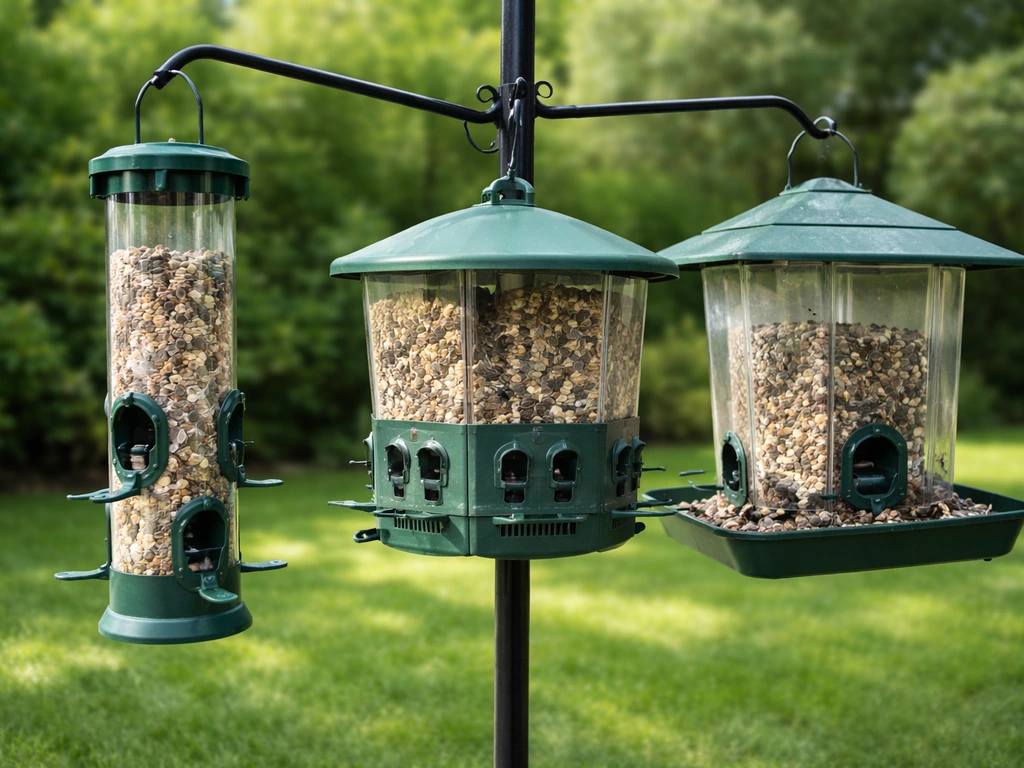
Top Flight Bird Feeders: How to Choose the Best One
Choose Top Flight bird feeders for finches, cardinals, hummingbirds and more with predator-proof mounting, capacity and
Top 10 Bird Feeders: Best Picks for Your Backyard Birds
Ranked top 10 bird feeders for finches, hummingbirds, cardinals and more, with setup, squirrel-proofing, cleaning and sm
Best Price Bird Feeders: Value Guide for Cheap Models
Compare best price bird feeders by value, durability, anti-predator features, and species fit, plus smart-camera upgrade