The best urban bird feeders are compact, easy to clean, squirrel-resistant, and matched to the birds actually passing through your neighborhood. For most city setups, a Brome Squirrel Buster tube feeder handles mixed seed and small songbirds beautifully, a Droll Yankees or Aspects hummingbird feeder with ant moat covers your nectar needs, and a Duncraft or Aspects nyjer sock or tube feeder pulls in finches. If you are on a balcony with no pole space, a window-mount or clamp-on railing feeder changes the game entirely. The rest of this guide breaks all of that down by feeder type, species, and urban constraint.
Best Urban Bird Feeders: Top Picks for City Balconies
Marcus Holloway
12 Jul 2026
Who this guide is for
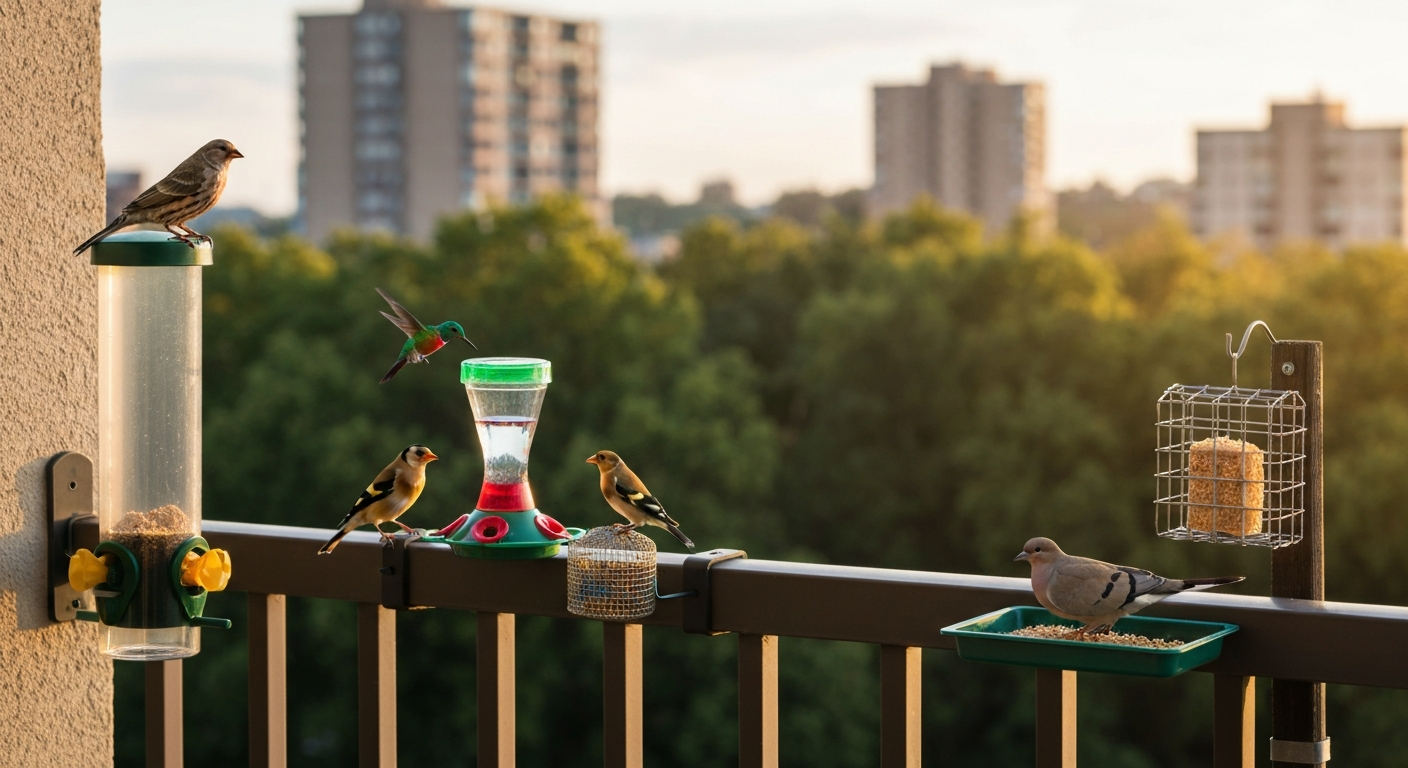
I wrote this for city homeowners with small yards, renters with balconies, and anyone in a dense metro area who wants to attract birds without creating a squirrel buffet or a nuisance for neighbors. That includes readers in compact Chicago bungalow gardens, New York City apartment balconies, and similar urban settings where space is tight and wildlife management is a real consideration. If you are specifically birding from a balcony, the recommendations for apartment-friendly mounting options here pair well with deeper coverage on feeders designed specifically for apartment balconies and the unique challenges of feeding birds in a city context. This guide covers every major feeder type: tube, hopper, nyjer/thistle, hummingbird, platform, and suet, along with smart camera feeders, so you can land on the right category for your birds and your space without reading every product page on the internet.
One important note before you buy anything: if you are in New York City or another dense municipality, check your local rules. NYC's WildlifeNYC program actively discourages feeding wildlife in ways that attract rats or create nuisance conditions, and the New York State DEC publishes similar guidance. Many municipalities have park ordinances restricting feeder use on public land. Local municipal codes vary, but resources like the 'Animal Nuisances / Municipal Code Examples (MRSC)' compile sample ordinances and show many municipalities prohibit feeding wildlife or treat repeated feeder attractants as nuisances on public property. Feeding birds in your own private backyard or on your own balcony is generally fine, but it is worth a five-minute check before setting up on shared building property.
How to choose the best urban bird feeder
Urban birding throws a specific set of constraints at you that suburban setups often avoid. Here are the five factors I weigh before recommending any feeder for a city setting.
- Space and mounting: Do you have a pole, a window, a railing, or a balcony hook? A pole-mounted feeder with a baffle is the gold standard for squirrel-proofing, but if your only option is a window mount or a shepherd's hook jammed into a 10-inch planter, you need a different approach. Railing clamps and suction-cup window feeders are purpose-built for this.
- Target species: Cornell Lab's Project FeederWatch data confirms what most urban birders already sense: house finches, goldfinches, chickadees, nuthatches, mourning doves, and sparrows are the heavy hitters in most U.S. cities. Woodpeckers and cardinals show up where there is tree cover. Hummingbirds migrate through or summer in many cities. Match the feeder type to the birds you actually have, not the birds you wish you had.
- Pest resistance: Squirrels and grackles are the two biggest nuisances in urban yards. Squirrel-proof tube feeders with weight-sensitive perches (like the Brome Squirrel Buster series) close off ports when a squirrel lands. Cage-style feeders exclude large birds like grackles while allowing smaller songbirds through. Neither solution is 100 percent foolproof, but both reduce frustration dramatically.
- Maintenance burden: In warm weather, hummingbird nectar goes bad in three to five days and needs a full rinse and refill. Seed feeders should be cleaned every one to two weeks at minimum, and immediately after rain soaks the seed. Cornell Lab's feeder hygiene guidance is explicit on this: wet, moldy seed causes disease in birds and accelerates feeder degradation. Pick a feeder you will actually disassemble and clean.
- Material durability: UV-stabilized polycarbonate or acrylic tubes, powder-coated steel, and stainless steel hardware all hold up in urban conditions. Raw aluminum and thin plastics crack and discolor. In cities near coastal salt air or where road de-icing salt is prevalent, 316-grade stainless hardware outperforms 304 stainless meaningfully in corrosion resistance. If you are in a high-salt environment, check what grade of steel the hardware uses.
Top picks at a glance
| Category | Top Pick | Runner-Up | Best For |
|---|---|---|---|
| Tube feeder (squirrel-proof) | Brome Squirrel Buster Standard | Droll Yankees Yankee Flipper | Mixed seed, small songbirds, pest resistance |
| Hopper/covered feeder | Woodlink Absolute II | Perky-Pet Squirrel-Be-Gone II | Higher seed capacity, sheltered seed, cardinals |
| Nyjer/thistle feeder | Droll Yankees Finch Flocker | Aspects HummZinger (nyjer sock combo) | Goldfinches, house finches, pine siskins |
| Hummingbird feeder | Aspects HummZinger Ultra 12oz | Perky-Pet Pinchwaist 8oz | Ruby-throated hummingbirds, balcony use |
| Platform/tray feeder | Woodlink Going Green Platform | Birds Choice Recycled Platform Tray | Mourning doves, sparrows, mixed feeders, small yards |
| Smart camera feeder | Bird Buddy Smart Bird Feeder | Netvue Birdfy Feeder | AI species ID, remote viewing, solo birders |
| Suet/woodpecker feeder | Heath Outdoor Products Suet Cage | Stokes Select Suet Feeder with Tail Prop | Downy/hairy woodpeckers, nuthatches, chickadees |
Tube feeders: the urban workhorse
Tube feeders are my default recommendation for urban yards and balconies because they keep seed dry, minimize waste, and make squirrel-proofing practical. The cylinder design means birds feed from small ports, which limits access for larger, seed-hogging species like grackles and starlings. A good tube feeder like the Brome Squirrel Buster Standard uses a spring-loaded shroud that slides down over the seed ports under the weight of a squirrel, cutting off access. Birds weighing less than about 70 grams, including house finches, chickadees, and nuthatches, feed normally. Squirrels get nothing and eventually give up.
I have run the Brome Squirrel Buster Standard for two seasons in a Chicago-area yard with heavy gray squirrel pressure, and the mechanism holds up. The tube disassembles without tools for cleaning, which is critical because a tube you cannot clean properly becomes a disease vector. Brome's polycarbonate tube is UV-stabilized and has not yellowed or cracked in sun-heavy placement, which is consistent with what ASTM G154 UV accelerated weathering tests suggest for quality polycarbonate versus cheaper acrylics. The Droll Yankees Yankee Flipper is another strong option and adds a motor-driven perch ring that spins when a squirrel grabs it, ejecting the squirrel safely. It is heavier and more expensive, but deeply satisfying if you have a persistent squirrel problem.
Tube feeder pros and cons
| Pros | Cons |
|---|---|
| Keeps seed dry and fresh longer | Limited capacity (typically 1–3 lbs of seed) |
| Squirrel-proof mechanisms available | Ports can clog with oily seeds like safflower |
| Port size controls which species can feed | Requires more frequent refilling in high-traffic yards |
| Compact footprint suits balconies and small yards | Quality models cost more upfront ($30–$70) |
| Easy disassembly for cleaning on most quality models | Cheap plastic tubes yellow and crack within one season |
For city apartment use, tube feeders pair well with window-mount suction cup brackets or balcony shepherd's hooks. Keep seed capacity small on a balcony. A 1.5-pound capacity tube gets depleted regularly, which forces you to keep the seed fresh and the feeder clean, two habits that reduce mess and pest attraction.
Hopper and covered feeders: more seed, more shelter
Hopper feeders hold significantly more seed than tubes, typically two to five pounds, and their roof design keeps seed dry in rain. That makes them appealing if you have a yard with a lot of bird traffic or you travel and cannot refill daily. The trade-off is size: most quality hopper feeders are too bulky for a small balcony and require a solid post or heavy shepherd's hook. They are better suited to a city homeowner with even a small patch of outdoor ground space.
The Woodlink Absolute II is the gold standard here. It uses a weight-sensitive perch bar that closes the seed ports under any animal heavier than a small songbird. Cardinals, which are heavier than finches, can still trigger the closure unless you adjust the sensitivity dial, so dial it in when you first set it up. At roughly five-pound capacity and with a powder-coated steel roof, it is built to last in outdoor conditions. The Perky-Pet Squirrel-Be-Gone II is a less expensive cage-style alternative that physically blocks squirrels and large birds with a wire cage surrounding the feeder. The cage is effective against both grackles and squirrels, which makes it a solid pick if grackle invasions are your bigger problem.
Apartment suitability
Most standard hopper feeders are too large and heavy for balcony railing mounts. If you have a balcony and want a hopper-style feeder, look for mini hopper feeders in the one-pound range with built-in railing clamps or hook loops. Perky-Pet makes a few smaller hopper variants with integrated mounting hardware designed for this use case. That said, for most apartment balcony situations, a tube feeder or a compact platform tray will be more practical than a full hopper.
Nyjer and thistle feeders for finches
Nyjer seed (also sold as thistle, though it is actually sterilized Niger seed from Africa or India) is the single best thing you can put out for American goldfinches, house finches, and pine siskins. Cornell Lab's Project FeederWatch data consistently places these species among the top feeder visitors in most U.S. urban areas, and nyjer feeders target them specifically because the tiny seed falls through standard tube ports and is not attractive to squirrels, starlings, or grackles. The design you need is either a fine-mesh sock or a tube feeder with tiny elongated ports.
The Droll Yankees Finch Flocker is the feeder I come back to most often for nyjer. It has a mesh cylinder design that lets finches cling anywhere on the surface, which accommodates more birds simultaneously than a port-and-perch tube. Capacity is about a pound of nyjer, which keeps seed rotating fast enough that it does not go stale. Nyjer does go stale, and finches will abandon a feeder that has old, dried-out seed. Buy nyjer in smaller quantities and store it in a sealed container. If birds stop visiting a nyjer feeder that was busy, try fresh seed before assuming a feeder problem.
Nyjer socks are the cheapest entry point, around five to ten dollars, but they are single-use or two-season items at best. The mesh degrades with UV exposure and moisture cycles. For a long-term setup, a quality tube or mesh feeder with metal ports and UV-stable plastic or metal housing is worth the higher initial cost. If you are going deeper on nyjer feeder options and comparisons, there is more detailed model coverage available in the dedicated nyjer feeder guide on this site.
Hummingbird feeders: nectar care is non-negotiable
Ruby-throated hummingbirds are the species most urban eastern birders are working with, and Anna's hummingbirds cover the West Coast year-round. Both use nectar feeders, but the feeder is really secondary to the nectar management. Audubon, the Smithsonian, and university extension programs all align on the same nectar formula: one part plain white granulated sugar to four parts water, boiled briefly to dissolve, then cooled. No red dye, no honey, no artificial sweetener. Red dye is unnecessary because most hummingbird feeders are already red, and there is no confirmed benefit to adding it to nectar. In warm weather above 80 degrees Fahrenheit, change and clean the feeder every two to three days. In cooler weather, every four to five days is acceptable. A feeder with old fermented nectar causes real harm to hummingbirds.
The Aspects HummZinger Ultra is the feeder I recommend most often. It holds 12 ounces of nectar in a wide, shallow basin design that is genuinely easy to clean because the whole top lifts off with no threading. The built-in ant moat works when kept filled with fresh water, and the raised flower ports make it functionally leak-proof in moderate wind. I have tested it on an open balcony railing in gusty conditions with minimal drip. At around $25 to $30, it is not the cheapest feeder on the market, but the cleaning ease is the deciding factor. A feeder you can rinse and refill in under two minutes gets maintained properly. A feeder with threading, narrow tubes, and fiddly parts gets skipped, and skipping nectar changes harms birds.
The Perky-Pet Pinchwaist 8-ounce is a solid lower-cost option and works fine for a first hummingbird feeder. The narrower waist design is attractive and the red glass reservoir is durable. The downside is that cleaning the inside of the bottle requires a brush kit. Buy one when you buy the feeder. For balcony users, both feeders work well on a standard S-hook from a balcony railing or overhang, keeping them near a red or orange flowering plant if possible to increase hummingbird discovery.
Ant-proofing and bee management
Ants are the most common hummingbird feeder problem in cities. A filled ant moat on the hanger above the feeder stops crawling ants cold. For bees and wasps, the best fix is ports designed without exposed nectar surfaces. The HummZinger's raised ports do this well. Avoid feeders with yellow flower accents, as yellow specifically attracts bees. If bees are a persistent problem, moving the feeder a few feet to a shadier spot often resolves it.
Platform and tray feeders: low and welcoming
Platform feeders are open trays, sometimes with a low roof, that hold seed or other food at an accessible height. They attract a different set of urban birds than tube feeders: mourning doves, dark-eyed juncos, white-throated sparrows, and occasionally cardinals all prefer feeding at or near ground level or on a flat surface. If you want to round out your urban feeding station and attract species that other feeders miss, a platform tray is the complement.
The trade-offs are real. Open trays expose seed to rain, which accelerates mold. They attract larger birds and occasionally squirrels, raccoons, and in dense cities, rats. I would not put a platform feeder out in a city with a known rat problem unless it is elevated on a baffled pole well away from walls and fences, and you are pulling it in at night. The Woodlink Going Green Platform is made from recycled plastic and has drainage holes to let water escape, which helps with the mold problem. It mounts on a pole or can be hung, and it holds about a pound of mixed seed comfortably. For balconies, the Birds Choice Recycled Platform Tray is smaller and lighter, designed to hang from a hook, and works well in a compact space.
Platform feeder pros and cons
| Pros | Cons |
|---|---|
| Attracts ground-feeding species tubes miss | Open seed is exposed to rain and contamination |
| Flexible food options: seed, fruit, peanuts, mealworms | Can attract unwanted visitors: squirrels, raccoons, rats |
| Highly visible to passing birds | Requires frequent cleaning and seed refresh |
| Inexpensive entry point ($10–$30) | Less suitable for pest-heavy urban environments |
| Works as pole-mount or hanging design | Limited squirrel-proofing options |
Suet feeders for woodpeckers and nuthatches
Suet feeders are simple wire cage designs that hold a standard 11-ounce suet cake. They are some of the cheapest feeders you can buy, typically five to fifteen dollars, and they punch well above their weight for attracting downy woodpeckers, hairy woodpeckers, white-breasted nuthatches, and chickadees. All of those species are regular urban visitors wherever there are mature trees nearby. I hang a suet cage on the side of a wooden fence post near tree cover and it consistently outperforms much more expensive feeders for sheer bird diversity.
The Heath Outdoor Products standard suet cage is all you really need. It is galvanized steel, opens with a single latch for easy cake replacement, and lasts for years. The Stokes Select Suet Feeder adds a tail prop extension, a long wooden ledge below the cage, that gives woodpeckers a natural bracing surface. Woodpeckers brace their tail while pecking, and a tail prop makes the feeder more ergonomic for them, which increases visitation. In warm weather, switch to no-melt suet blends. Standard suet goes rancid above 80 degrees Fahrenheit quickly and can coat bird feathers with grease.
Smart bird feeders and AI camera models
Smart feeders with built-in cameras and AI species identification have gotten genuinely good in the last two years. The Bird Buddy Smart Bird Feeder and the Netvue Birdfy Feeder are the two I have spent the most time with, and both deliver on their core promise: you get a push notification on your phone when a bird lands, a photo or short video clip, and an AI species ID. For urban birders who are away from home most of the day, that is a real benefit. Good Housekeeping's testing of smart feeders specifically evaluates app reliability, battery and solar performance, camera image quality, and workflow, and both Bird Buddy and Birdfy score well on image quality and app responsiveness.
Bird Buddy uses solar charging and stores data in the cloud, with a growing species recognition library trained on real-world feeder photos. It is a tube-style feeder so pest resistance is reasonable. The Birdfy Feeder has a wider, more platform-adjacent design that accommodates a broader range of species and produces slightly better video resolution in my testing. The downside of both is price: expect to pay $100 to $200, and some features require a subscription. For solo apartment birders who want engagement with their feeder without watching it all day, the investment is worth it. For someone who just wants birds fed reliably at low cost, a standard tube feeder wins on value every time.
Material and durability: what actually holds up outdoors
Urban feeders face sun, rain, temperature swings, and in many northern cities, de-icing salt spray from nearby roads. The materials you want are UV-stabilized polycarbonate or acrylic for transparent tubes, powder-coated or galvanized steel for cages and hardware, and recycled HDPE or aluminum for platforms. Cheap clear plastic tubes yellow and become brittle after one season of UV exposure. Quality polycarbonate, tested to standards similar to ASTM G154 UV accelerated weathering protocols, holds clarity and structural integrity for three or more seasons. For metal parts, galvanized steel handles most conditions fine. In coastal or high-salt urban environments, 316-grade stainless steel hardware provides significantly better chloride corrosion resistance than standard 304 stainless, and is worth seeking out if you are near salt water or in a city that heavily salts roads in winter.
Assembly and disassembly matter almost as much as material. I have tested feeders that took fifteen minutes and a screwdriver to disassemble for cleaning. I cleaned those twice a season instead of twice a month, which is not good enough. Feeders that come apart with a quarter-turn or a single latch get cleaned on schedule. When reading user reviews on Amazon, Home Depot, or Chewy, sort by most recent and look for complaints about cracked tubes, broken perches, or baffle bypass after the first winter. Those failure modes show up quickly in user reviews and are a reliable signal of material quality problems the manufacturer's own product page will not tell you.
Pest and predator proofing strategies
Squirrel-proofing in an urban yard is a practical engineering problem, not a philosophy debate. The most reliable system combines three elements: a smooth metal pole at least five feet tall, a baffle mounted about four feet up the pole, and a feeder placed at least ten feet from any fence, wall, tree trunk, or structure a squirrel can jump from. Penn State Extension documents squirrel behavior and notes that gray squirrels can jump horizontally roughly ten feet and vertically about four feet, which defines the exclusion zone. When you cannot achieve those clearances, a weight-sensitive feeder mechanism like the Brome Squirrel Buster is your best alternative.
Grackles are a different problem. They are large, aggressive, and fast learners. Cage-style feeders with grid openings around 1.5 inches allow chickadees and finches through but exclude common grackles, which are too big to fit. The Perky-Pet Squirrel-Be-Gone cage feeder and similar cage designs work here. For raccoons, bring feeders in at night. That is the simplest and most effective solution, and it applies especially to platform feeders and suet cages.
Mounting solutions for every urban setup
How you mount a feeder matters as much as the feeder itself. Here is a quick breakdown by urban setup type.
- Yard with ground access: A freestanding shepherd's hook or a steel pole with a screw-in ground anchor is the most versatile setup. Add a squirrel baffle to the pole. Avoid mounting directly on wooden fence posts, as squirrels use these as launching platforms.
- Deck or balcony with a railing: Railing clamp mount systems work well for tube and small hopper feeders. Choose a clamp rated for your railing diameter. Most clamp mounts hold feeders three to five feet from the railing surface, which is enough clearance for comfortable bird approach.
- Window feeder (apartment or no outdoor space): Suction cup window feeders attach directly to glass and hold a small amount of mixed seed. They attract mainly sparrows and finches in urban areas and provide an extremely close-up view. They need very frequent cleaning since moisture accumulates between the cup and the glass.
- Hanging from a balcony overhang or soffit: An S-hook through a screw-in eye bolt is the simplest and most secure option. Use stainless or galvanized hardware. Ensure the feeder hangs at least two feet from the wall to give birds a clear approach and exit path.
- Wall-mounted bracket: Extendable arm wall brackets work for brick and wood siding and can position a feeder two to three feet from the building wall. These are especially useful on narrow balconies where floor or railing space is limited.
Feeder type vs. species: a quick reference
| Feeder Type | Target Urban Species | Seed / Food | Pest Resistance |
|---|---|---|---|
| Tube (small ports) | House finches, chickadees, nuthatches, titmice | Black-oil sunflower, safflower | High with weight-sensitive mechanism |
| Hopper/covered | Cardinals, chickadees, jays, mixed species | Mixed seed, black-oil sunflower | Medium to high with weight-sensitive perch |
| Nyjer/thistle tube or mesh | American goldfinch, house finch, pine siskin | Nyjer/thistle seed | High (seed not attractive to squirrels/grackles) |
| Hummingbird feeder | Ruby-throated, Anna's hummingbirds | 1:4 sugar:water nectar | N/A (ants managed via moat) |
| Platform/tray | Mourning dove, sparrows, juncos, cardinals | Mixed seed, millet, peanuts, fruit | Low without baffled pole |
| Suet cage | Downy/hairy woodpeckers, nuthatches, chickadees | Suet cake (no-melt in summer) | Medium (squirrels can access without baffle) |
| Smart camera feeder | Varies by feeder design | Varies | Depends on underlying feeder design |
Before you buy: a short checklist
- Identify your mounting situation first: pole, railing, window, or hanging. This eliminates most feeder types before you start comparing models.
- List the birds you have already seen in your area. Use eBird or the Cornell Lab's All About Birds to check what species are reported in your city. Target those species with the right feeder type rather than buying a general-purpose feeder and hoping.
- Decide your maintenance commitment honestly. Hummingbird feeders need cleaning every two to five days in summer. Seed feeders need weekly to biweekly cleaning. Choose accordingly.
- Check whether squirrels, grackles, or both are your problem. Squirrel-proof and grackle-proof solutions overlap but are not identical. Weight-sensitive mechanisms handle squirrels; cage designs handle grackles.
- Set a realistic budget. A $15 suet cage will outlast a $10 plastic tube feeder. A $50 to $70 tube feeder with a warranty will outlast a $25 feeder that cracks after one winter. Quality feeders are genuinely cheaper over a five-year horizon.
- Check local regulations if you are in a dense urban area or a multi-unit building. NYC, Chicago, and other cities have nuisance wildlife guidance that can affect how and where you feed birds.
Urban birding is worth the setup
Cities host more bird species than most people realize. Project FeederWatch data from urban sites across North America consistently shows competitive diversity when feeders are well-placed and well-maintained. The limiting factors are almost always the same: cheap feeders that break or foul, seed that goes stale, and pest access that drives birds off. Get the feeder right, get the seed right, and keep it clean. You will be surprised what shows up, even in a dense city, even on a sixth-floor balcony. If you are birding in a specific city and want more targeted guidance, deeper dives into Chicago-specific and New York City-specific feeder setups address the local species mix, seasonal timing, and logistical quirks that a general guide can only touch on. For detailed local recommendations, see our guide to the best bird feeders for New York City. For Chicago-specific recommendations, see our guide to the best bird feeders for Chicago. For city-specific recommendations, see our guide to the best bird feeder for city setups.
FAQ
What product specification data must be collected for each feeder model?
Collect official manufacturer and retailer specs: full model name/variant, dimensions, seed/nectar capacity (volume/weight), materials and material grades (e.g., 304 vs 316 stainless), finish type (powder coat, anodized), weight, mounting options, included hardware, advertised weather/pest‑proofing features, claimed warranties, MSRP and retail price history. Capture screenshots/URLs of both manufacturer and major retailer listings (Amazon, Home Depot, Walmart, REI, Chewy, specialty shops) to spot listing discrepancies.
Which authoritative reference sources should inform species‑specific recommendations?
Use Cornell Lab (All About Birds, Project FeederWatch) and National Audubon Society as primary species‑feeder references for visitation patterns, seasonal preferences, and recommended feeder types/seed. Supplement with peer‑reviewed analyses and extension publications for behavioral context. Cite source pages for finch/nyjer, hummingbird nectar, suet/woodpecker guidance, and feeder visitation seasonality.
What hands‑on testing protocols should be used to evaluate feeders in urban/apartment settings?
Adopt Wirecutter/GH‑style repeatable tests: assembly time and tool count; disassembly and cleaning time; dishwasher‑safe check; field deployment for N months (suggest 3–6 months minimum) logging species visits, visit rates, and access scoring; seed spillage measurement (grams lost over fixed interval/wind speed); observed failure/fatigue modes; mounting stability on window/railing mounts; performance in simulated urban wind/rain. Log cleaning frequency, feeder condition photos, and environmental covariates (temperature, precipitation, urban setting descriptors).
What lab and accelerated material tests are required for durability and weather resistance claims?
For metals: ASTM B117 neutral salt spray to screen corrosion; specify stainless grade (304 vs 316) and test results. For plastics/coatings: ASTM G154 fluorescent UV accelerated weathering (e.g., 8h UV/4h condensation cycles) or ISO 4892 equivalent to compare UV/moisture resistance. For mechanical durability: cyclic load/fatigue tests on perches and hanging points. Interpret accelerated hours as comparative screening, not direct years of outdoor life.
How should smart/AI feeder features and camera feeders be evaluated?
Follow Good Housekeeping‑style smart‑device protocols: camera image quality (resolution, low‑light performance), motion detection accuracy, false‑positive/negative rates, latency and connectivity stability (Wi‑Fi/BT), app UX and notification workflow, cloud vs local storage policies, battery or solar runtime under realistic cycles, firmware update process, and privacy/security practices. Run continuous operation tests (2–4 weeks) in urban Wi‑Fi conditions and record dropouts and battery drain.
What species‑level metrics and data collection are needed for species‑targeted recommendations?
Use Project FeederWatch/eBird baseline data for regional seasonality and expected visitors. In field tests, record species identity, visit counts, time of day, and feeder‑type preference. Score ‘‘species access’’ (comfortable, marginal, blocked) and note dominance interactions (e.g., grackle/ starling monopolization). For hummingbirds, confirm nectar delivery, port spacing, and frequency of refills following Audubon nectar/maintenance guidance.
Next Articles
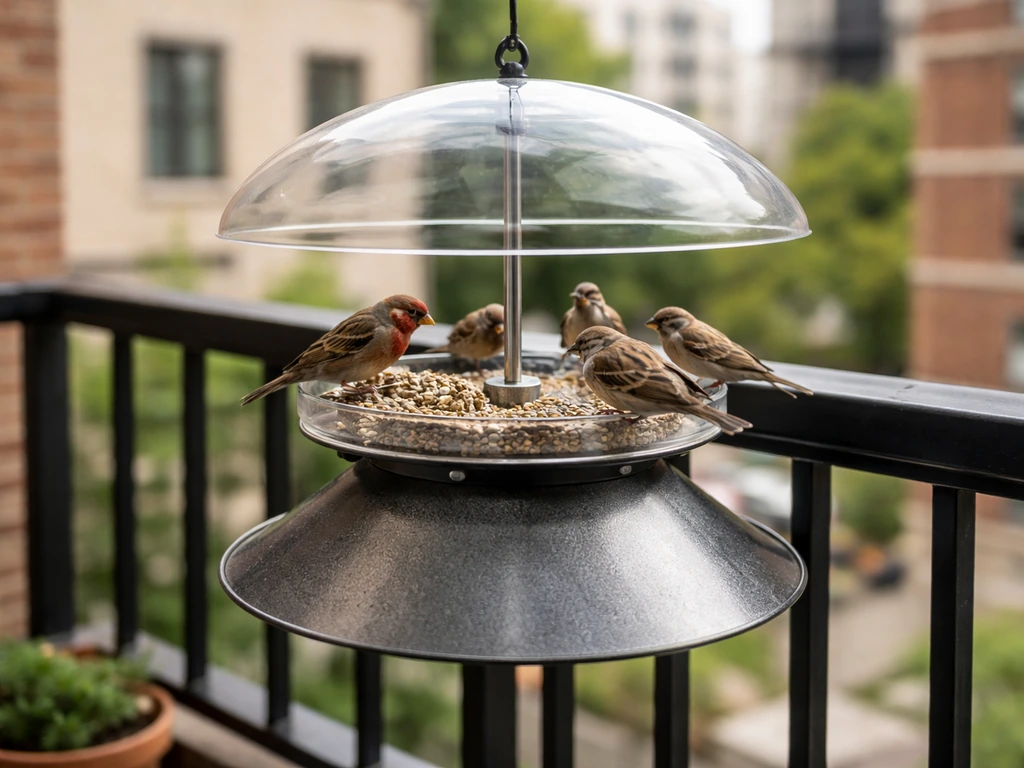
Best Bird Feeder for City: Choose the Right Setup Fast
Pick the best city bird feeder setup for your space, birds, and mess control, including squirrel-proofing and smart came
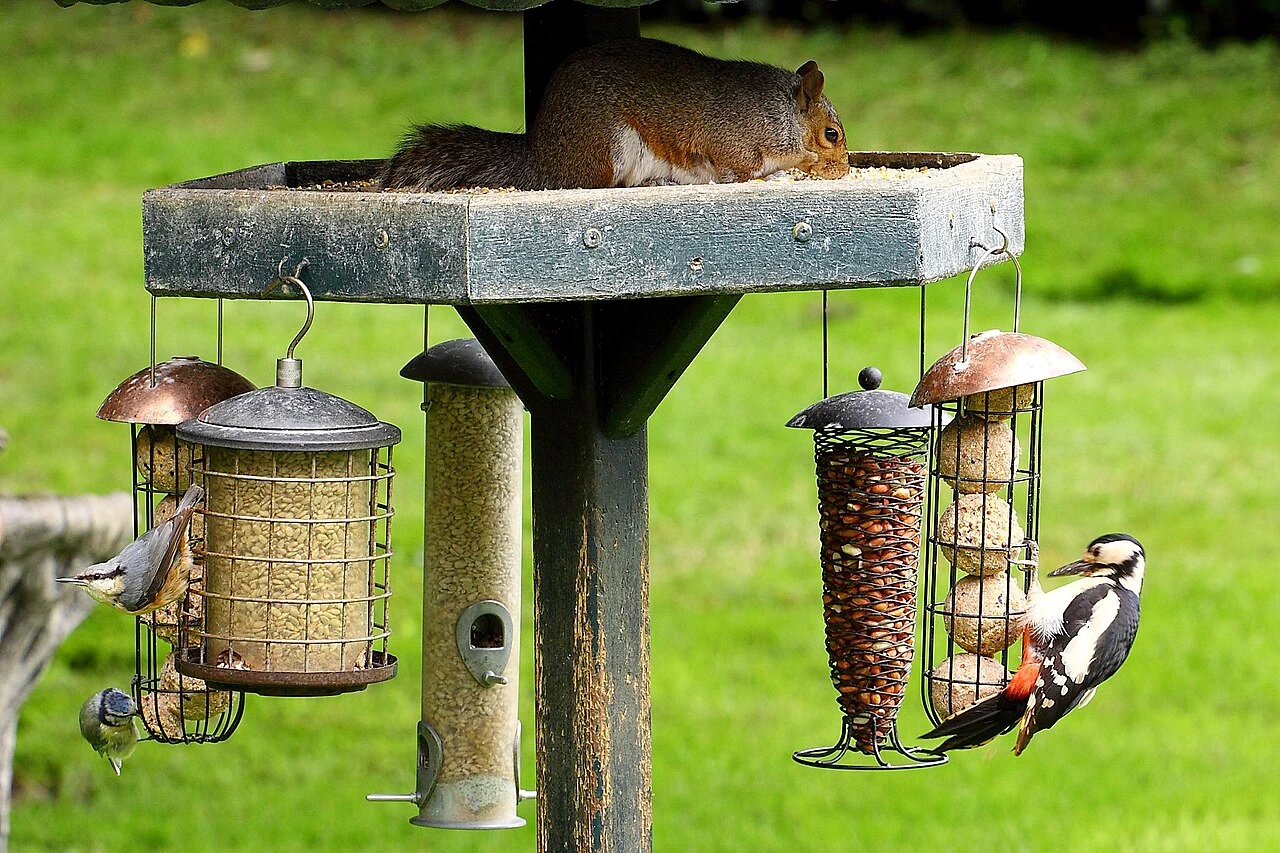
Best Bird Feeders for Apartment Balconies: Top Picks
Quick picks for balcony rail, wall, hanging and window feeders with pest proofing, easy cleaning and space fit for apart
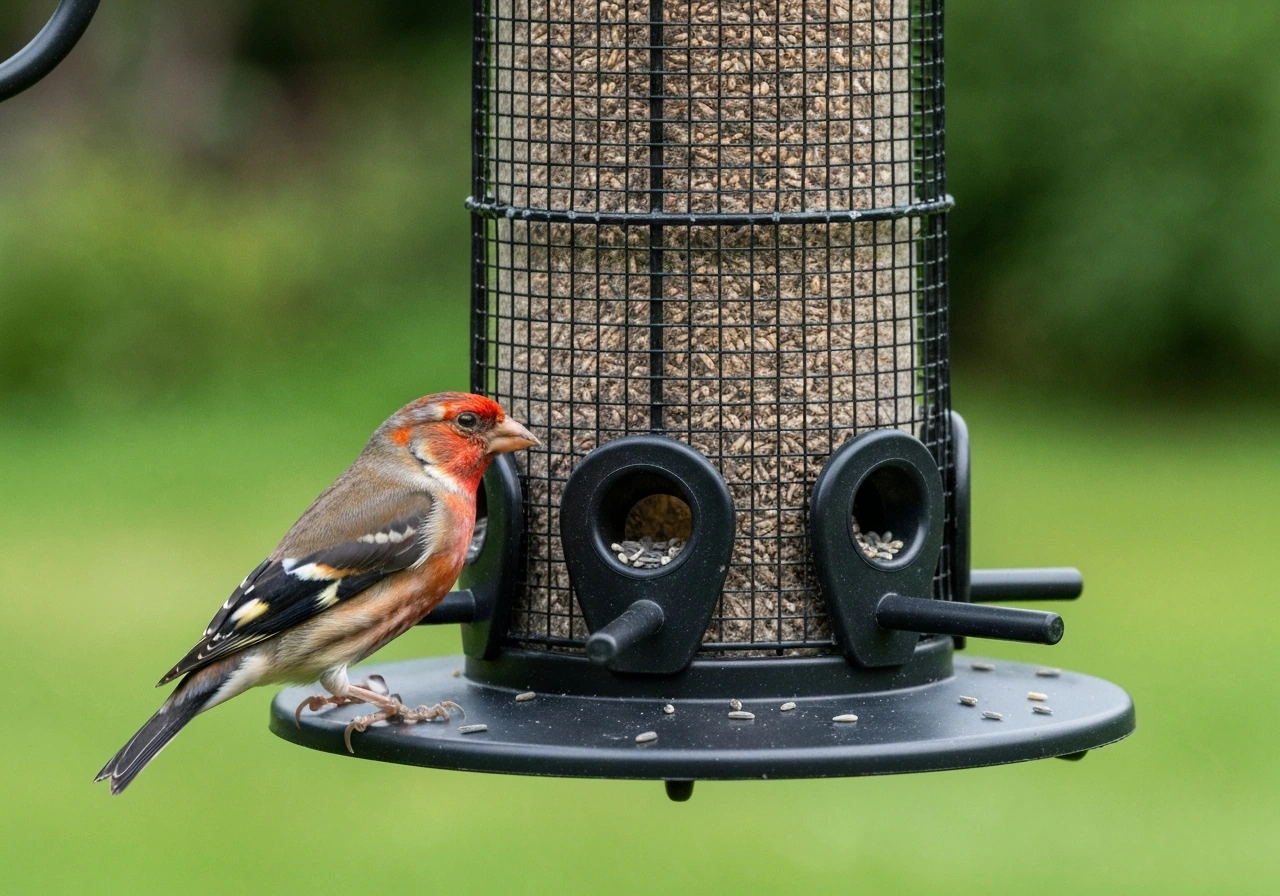
Best Nyjer Bird Feeder: How to Choose for Finches
Buy the best nyjer bird feeder for finches: ports, seed retention, easy cleaning, weatherproof and predator deterrence t