No bird feeder is truly 100% waterproof in the way a sealed container is, but the best ones come close enough to keep seed dry through heavy rain, wet snow, and wind-driven weather. If you want the simplest starting point, look for the best weatherproof bird feeder options that keep seed dry in heavy rain and wet snow best ones. What you're actually looking for is a feeder with a solid roof or dome, closed hopper construction, drainage holes in the right places, and durable materials (metal or thick polycarbonate) that don't warp, crack, or absorb moisture. Those four things together are what separate a feeder that keeps birds healthy and seed fresh from one that turns your yard into a soggy, moldy mess after every storm.
Best Waterproof Bird Feeder: How to Choose and Buy
Marcus Holloway
6 May 2026
What "waterproof" actually means for a bird feeder
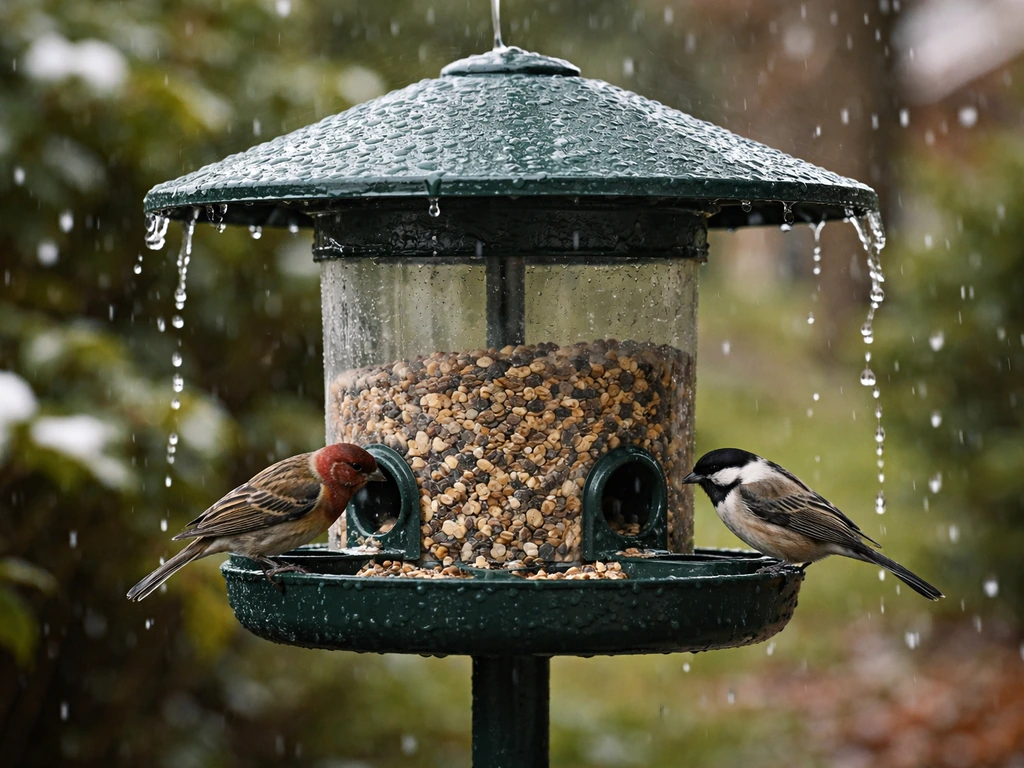
When feeder brands say "weatherproof" or "weather-resistant," they rarely mean the seed stays completely dry in a downpour. What they mean is that the design slows or deflects water long enough to protect most of the seed most of the time. Genuinely good weather protection comes from a combination of features, not just a single roof over the top.
The core issue is seed health. Rain and high humidity cause seeds to wet, clump, and stick together. If that seed sits for even a few days without drying out, it goes moldy, and moldy seed can make birds seriously sick. Open platform feeders are the worst offenders because there are no sides to block wind-driven rain. Hoppers are better because the seed is enclosed, but even a hopper with a loose-fitting cap or a plastic tube that warps in cold weather will let moisture in at the seams. I've pulled apart feeders in January that looked fine from outside but had a solid brick of frozen, clumped seed inside because the lid seal had gone soft.
How to tell if a feeder is truly waterproof
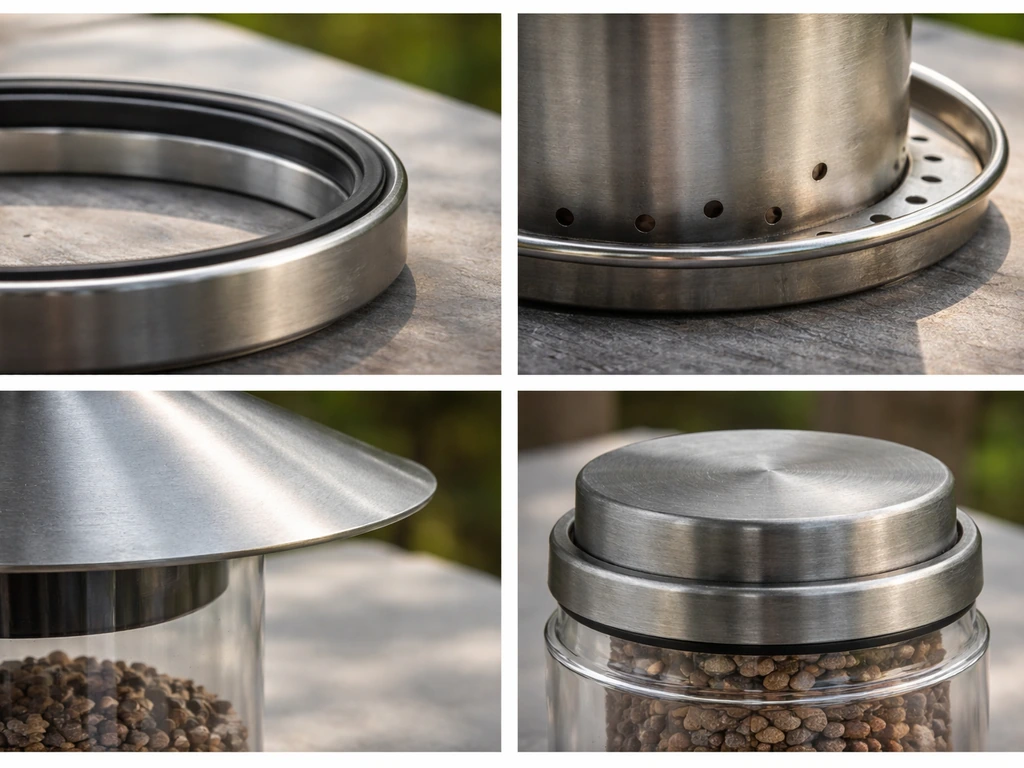
Before buying, run through these four checkpoints. They're what separate a feeder that handles a week of Pacific Northwest rain from one that fails after a single summer storm.
Materials
Metal feeders (steel, aluminum, copper) are the gold standard for wet-weather durability. The USFWS specifically notes that solid metal feeders keep seed dry better than plastic alternatives. Thick polycarbonate is a solid second choice, especially for tubes and domes, because it doesn't absorb moisture. Standard thin plastic warps, especially at refill openings in cold weather. Wooden feeders look great but are the hardest to keep clean, and extended rainy periods have been linked to black mold growth inside wood models, even ones with drain holes. I'd avoid wood if you're in a consistently wet climate.
Roof design and overhang
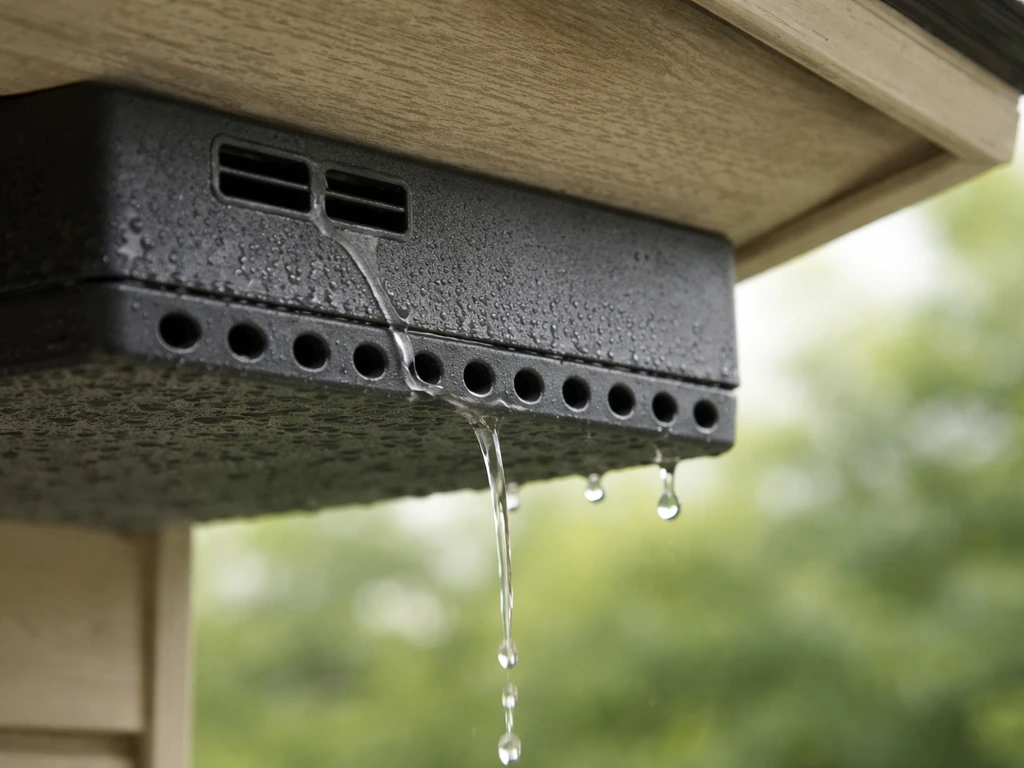
A wide roof overhang is one of the most effective passive rain protections a feeder can have. The overhang needs to extend well past the feeding ports so that wind-driven rain at an angle still clears the seed access points. Dome-style baffles above a feeder work on the same principle and add the bonus of deterring squirrels. Brome's Weather Guard accessory is a good example: it's specifically designed for areas with heavy rain and wind, and it attaches above the feeder to deflect water before it reaches the ports.
Drainage and venting
Any water that does get in needs somewhere to go. Feeders should have drain holes at the base of seed trays and inside the hopper cavity. Without them, even a small amount of rain collects and sits, soaking seeds from the bottom up. The drain holes need to be large enough to actually clear water, not just token perforations that clog with hulls and seed debris. Some feeders pair drain holes with attached baffles for a two-layer defense, which is the approach Perky-Pet uses on their straight-sided tube models.
Sealing and cap fit
This is where a lot of budget feeders fall apart. The cap or lid at the top of a tube or hopper feeder needs to fit tightly enough that rain can't seep in around the edges. Plastic caps are especially prone to warping in cold temperatures, which leaves a gap right at the refill opening. If you've ever noticed a clump of frozen seed right at the top of a plastic feeder in winter, that's usually the cause. Look for feeders with metal or thick polycarbonate caps with positive-locking closures, not caps that just friction-fit on top.
The best waterproof feeder types for different setups
Different feeder designs handle rain very differently. Here's how the main types stack up for wet-weather yards, and which setup each one suits best.
| Feeder Type | Waterproof Performance | Best For | Biggest Weakness |
|---|---|---|---|
| Closed hopper (metal) | Excellent | Cardinals, chickadees, jays, general mixed seed | Needs regular checks for internal moisture buildup |
| Tube feeder with dome/baffle | Very good | Finches, chickadees, small songbirds | Drain holes can clog with hulls |
| Platform/tray with roof | Moderate | Ground-feeding species, large birds | Open sides let in wind-driven rain |
| Open platform/tray | Poor | Best avoided in wet climates unless used under eave | No protection; seed spoils quickly |
| Smart/AI camera feeder (IP65+) | Good to very good | General backyard use + remote monitoring | Camera may not boot in extreme cold |
| Suet cage with weather guard | Good | Woodpeckers, nuthatches, wrens | Suet can go rancid in heat regardless of rain cover |
Closed metal hopper feeders are my first recommendation for anyone in a genuinely rainy or snowy climate. The seed is protected on all sides, airflow through the ports slows humidity buildup, and metal construction resists the warping and cracking that undermines plastic over time. Hopper feeders also hold enough seed that you're not refilling constantly, which matters when you're opening and sealing the feeder in wet conditions. The Minnesota DNR specifically recommends hopper-type feeders for keeping feed dry, pairing that recommendation with the advice to always scrape out old accumulated seed when you refill.
Tube feeders with a polycarbonate barrel and an attached dome baffle above them are a close second. The dome keeps rain off the ports, and a well-designed tube feeder will have drain holes at the base tray. The Birds Choice NP435 is a good example: it includes a 100% polycarbonate baffle and weatherguard that protects seed from both rain and snow, while doubling as a squirrel deterrent. That dual function matters in a real backyard where you're solving multiple problems at once.
Platform feeders are genuinely hard to waterproof because the open sides are the whole point of the design. If you want one, look for a model with a roof and use it only in a covered location, like under a porch overhang or pergola. Otherwise, plan to dump the seed after every rain. Southern States' bird feeding guidance puts it bluntly: after rain, throw out wet seed, because it will sprout, spoil, and grow mold or bacteria.
Top picks by scenario
Heavy rain and snow regions
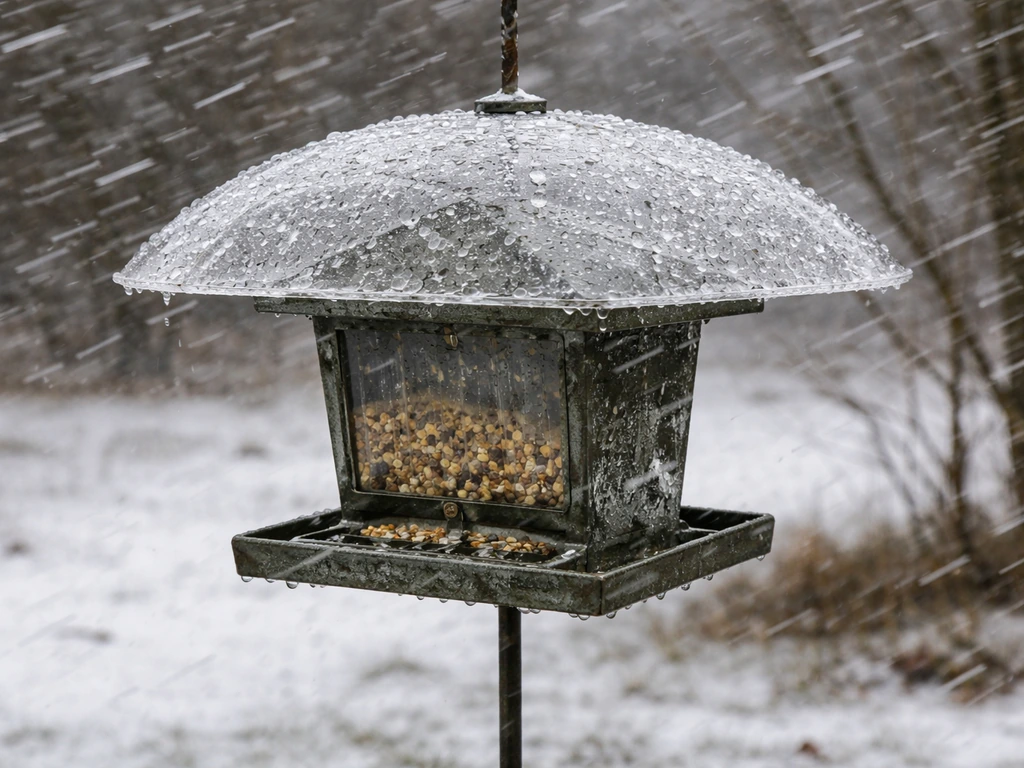
Go with a metal hopper feeder paired with a dome weather guard. The combination of enclosed seed storage and an overhead dome deflects both vertical rain and angled, wind-driven precipitation. Brome's Weather Guard accessory is specifically built for this scenario, though it does add some visual bulk above the feeder, and Brome's own guidance notes that some users notice fewer birds visiting after installation and may need to use the included spacer to adjust bird access. That's a real tradeoff worth knowing about before you buy.
Windy yards
Wind-driven rain is harder to block than vertical rain, so the overhang geometry matters more here than anywhere else. Choose a feeder with a very wide roof overhang (at least 3 to 4 inches past the ports) or mount a separate dome baffle close above the feeder. For placement and shape choices that hold up to strong gusts and wind-driven rain, check the best bird feeders for windy areas. Keep the feeder itself lower to the ground or closer to a windbreak like a fence, shrub row, or building wall. Covered versus exposed placement makes as much difference as the feeder design in a persistently windy yard. If you're also dealing with seed spillage, a tray with drain holes placed below a tube feeder catches overflow without letting water pool.
Covered locations (under eaves, porches, pergolas)
If your feeder hangs under a solid roof, you have more flexibility in design. A tube feeder or platform with a partial roof works fine here because the structure itself handles the bulk of weather protection. The main risk in covered locations is humidity and poor airflow, which can cause seed to clump without any direct rain contact. Prioritize feeders with good drainage and plan to clean them more often in humid summers.
Open, exposed locations
This is where build quality matters most. Stick with metal construction, a dome baffle overhead, and a hopper design with a tight-sealing cap. If you're running a smart feeder camera in an exposed location, check the IP rating before assuming it's adequately protected. Digital Camera World reports the Netvue Birdfy camera has an IP65 waterproof rating intended to handle rain, snow, and splashes. The Netvue Birdfy Feeder 2 series carries an IP66 rating, which Digital Camera World confirmed provides real protection against rain and splashes. The Bird Buddy camera module carries an IP67 rating per Bird Buddy's own support documentation, though Popular Science noted Bird Buddy doesn't prominently advertise an IP rating, which illustrates the gap between marketing language and formal waterproof testing that's worth watching for across the smart feeder category.
Matching waterproof feeder styles to your backyard birds
The best feeder is the one your target birds will actually use. Waterproofing a feeder style that the wrong species ignores is a waste. Here's how weather protection overlaps with species preferences.
- Cardinals: Prefer wide, open perching areas, which means hopper feeders with broad side trays or covered platform feeders. A closed hopper with a generous tray and roof overhang suits them well. Avoid tube feeders with tiny perches.
- Finches (goldfinches, house finches, purple finches): Use tube feeders with small ports and sock feeders. Tube feeders with polycarbonate barrels and attached dome baffles are the go-to here. Nyjer/thistle is particularly vulnerable to moisture, so a tight-sealing tube is non-negotiable.
- Woodpeckers (downy, hairy, red-bellied): Primarily suet feeders and hopper feeders with large perch space. Cage suet feeders with an overhanging roof or dome are best for wet climates since suet goes rancid faster in warmth and can become a soggy mess in rain.
- Chickadees and nuthatches: Extremely adaptable and will use tube, hopper, or suet feeders. Tube feeders with dome baffles work perfectly for these small, agile birds.
- Jays and larger birds: Need a sturdy hopper or platform feeder. In wet weather, a covered hopper with a wide, draining tray is the right call since open platforms collect standing water fast.
- Hummingbirds: Nectar feeders are a separate category with their own weather issues: rain can dilute nectar and ferment it faster. Look for hummingbird feeders with built-in rain guards and position them under a partial overhang.
Long-term durability: what really happens to feeders in wet weather
A feeder that handles its first rainy season well might start failing by year two if the materials aren't right. Here's what to watch for as feeders age.
Seed spoilage and mold
Even in well-designed feeders, moisture finds its way in over time. Moldy and decomposing seeds can make birds sick, and the hulls birds leave behind compound the problem because wet hulls trap moisture against fresh seed. All About Birds recommends cleaning seed feeders at least once a week with hot water and a bottle brush when they're in active use. In wet climates during rainy seasons, weekly cleaning is a minimum, not a stretch goal. I'd also suggest filling only as much seed as birds will eat in two to three days so you're not leaving fresh seed sitting through multiple rain events.
Ice and frozen seed in winter
Cold weather adds a layer of complexity that pure waterproofing doesn't solve. Water gets into a feeder, freezes, and physically jams the ports or creates a seed block inside the hopper. This is especially true for plastic feeders, where the cylinder can warp at the top opening during cold-weather refilling, making the cap difficult or impossible to replace correctly. Once a cap doesn't seal properly, every subsequent rain or snow event makes the problem worse. Metal hopper feeders with solid metal caps handle freeze-thaw cycles far better.
Wood feeder mold risk
Wood feeders look natural and attractive, but they're genuinely difficult to deep-clean, and they trap damp seeds in grain and crevices that are almost impossible to scrub out. Extended rainy weather has led to documented black mold growth in wood feeder models even when those feeders had drain holes. The drain holes themselves can become germination points, with damp seeds sprouting roots before they're eaten. If you love the look of wood, use it in a covered location and be honest with yourself about committing to weekly cleaning.
Smart feeder cameras and temperature limits
IP ratings measure water resistance, not temperature performance. The Birdfy Feeder 2 series is IP66 rated for water, but Netvue's own support documentation notes that if temperatures drop outside the operating range, the camera may not boot up or record. Bird Buddy's documentation also flags UV exposure and extreme temperature effects on feeder surfaces and batteries. If you're running a smart feeder camera through a full winter, check the stated operating temperature range and have a plan for the coldest weeks of your local season.
Mounting, placement, and keeping nuisance animals out in wet weather
How and where you mount a feeder affects weather resistance almost as much as the feeder's design. A well-designed feeder in a bad location will still have wet seed problems.
Placement basics for wet-weather yards
Position feeders where they're partially shielded from the prevailing wind direction. A fence, dense shrub row, or building wall can act as a windbreak that reduces how much rain reaches the feeder at an angle. Avoid mounting feeders directly under tree branches that drip long after rain stops, since that drip hits the feeder repeatedly. If you're in a region with frequent heavy rain, a covered location under a wide porch eave or pergola removes a significant portion of the weather exposure problem entirely.
Dome baffles and their double role
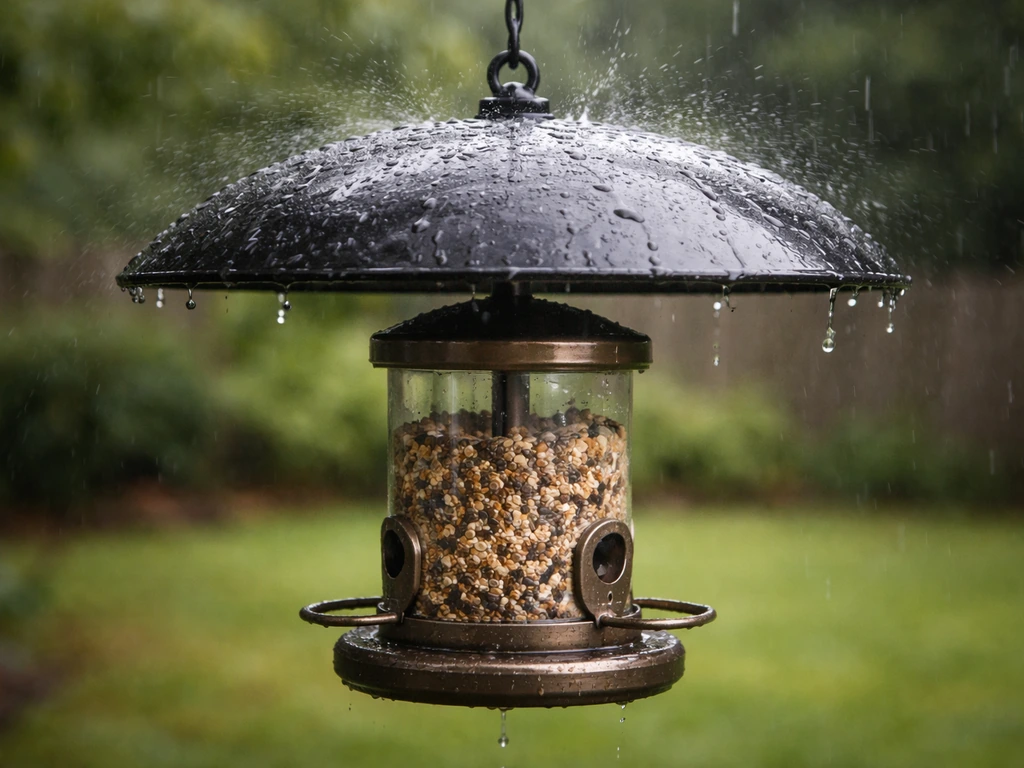
A dome baffle mounted above a hanging feeder does two things at once: it deflects rain and it blocks squirrels from dropping down onto the feeder from above. That dual function is why I almost always recommend adding a dome baffle to any feeder in a wet or squirrel-heavy yard, even if the feeder already has a roof. The Birds Choice polycarbonate baffle/weatherguard is a clear example of this double role being designed in from the start. For pole-mounted feeders, a stovepipe or cone baffle on the pole itself blocks climbing squirrels while also reducing splash-up from ground-level rain.
Grackles and wet-weather feeding dynamics
Grackles tend to dominate open platform feeders and hopper feeders with wide perches. In wet weather this gets worse because grackles will bill-wipe and dunk food in water dishes near feeders, creating even more moisture contamination. Weight-sensitive perch mechanisms (like those in the Brome Squirrel Buster line) will also exclude heavy grackles while allowing smaller songbirds through, which is a useful cross-problem solution. Just keep in mind that adding a weather guard dome, as Brome acknowledges, can reduce overall bird access slightly until birds adapt.
Splashback and seed tray placement
If your feeder has a seed catching tray below it, make sure the tray has drain holes and that it isn't positioned close to the ground where rain bouncing off hard surfaces splashes seed upward. In heavy rain, a tray without drainage becomes a bowl of standing water faster than you'd think. Raise feeders at least 5 feet off the ground to reduce splashback risk and make squirrel access harder at the same time.
How to choose the right waterproof feeder for your yard today
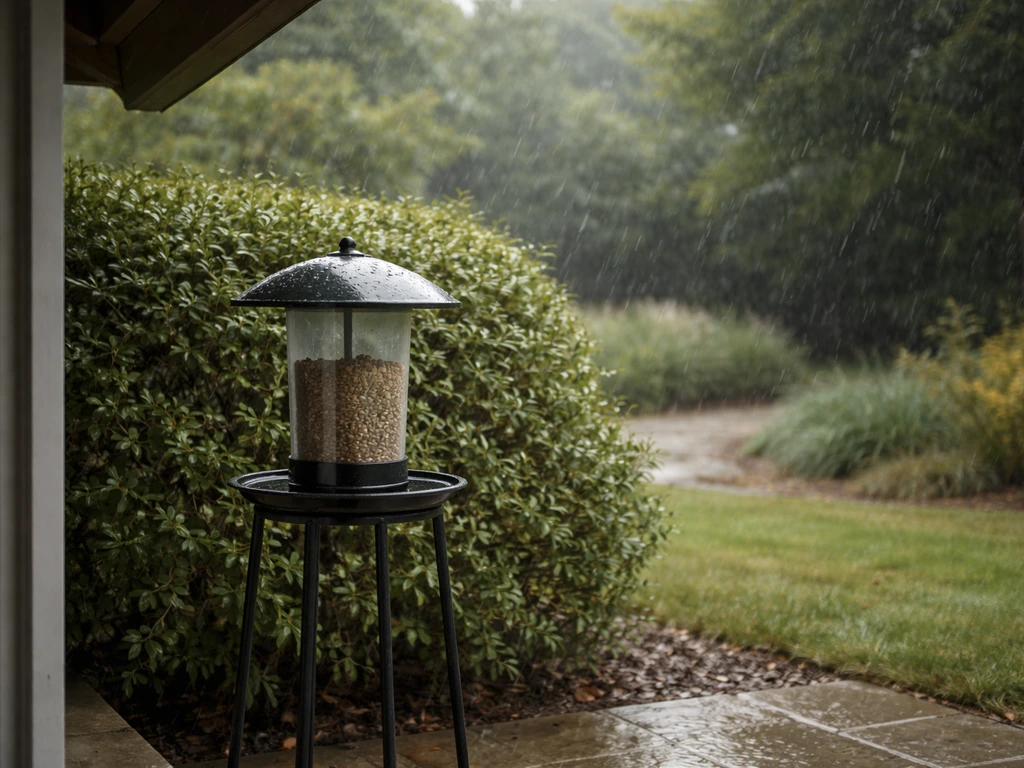
Here's a practical checklist you can run through before buying. It takes about two minutes and will save you from buying a feeder that fails in the specific conditions your yard actually has.
- Identify your worst-case weather condition: Is it prolonged rain, wind-driven rain, heavy snow, freeze-thaw cycles, or high humidity? Different conditions stress different feeder features.
- Check the material first: Metal construction is the most durable for wet weather. Thick polycarbonate is a solid second. Avoid thin plastic for any climate with regular precipitation.
- Look for a tight-sealing cap or lid: Especially for tube feeders, confirm the cap design locks or clips rather than just friction-fitting on top. Cold-temperature warping is a real failure mode.
- Confirm drain holes exist and are adequately sized: Small perforations clog. Look for holes at least 3 to 5mm in diameter at the base of the seed tray and inside the hopper.
- Check the roof or dome overhang: It should extend well past the feeding ports, not just cap the top of the feeder. For exposed locations, plan to add a separate dome baffle above.
- For smart feeders, verify the IP rating and operating temperature range: IP65 or higher is adequate for most conditions. IP66 or IP67 is better for heavy rain exposure. Check that the operating temperature covers your coldest winter lows.
- Match feeder style to your target birds before buying: The most waterproof feeder in the world doesn't help if the birds you want won't use it.
- Plan your cleaning schedule before the feeder arrives: Hot water and a bottle brush weekly during active wet-weather seasons. More frequent checks in heavy rain windows. Scrape out old accumulated seed every refill.
- Buy a dome baffle if you don't already have one: It solves weather and squirrels simultaneously, and it's the single cheapest upgrade that makes the biggest real-world difference.
The rest of this site goes deeper on specific weather conditions worth reading alongside this guide. If you're in a climate where winter is the main challenge, the coverage on the best bird feeder for winter gets into cold-specific design choices. If rain is your dominant concern, the guides on the best bird feeders for rainy weather and the best bird feeder to keep seed dry cover design details that overlap with waterproofing but are worth reading separately. If you want quick, model-by-model options, check our guide to the best bird feeders for rainy weather for strong protection and easy maintenance. For windy locations specifically, the best bird feeders for windy areas addresses placement and feeder shape in more depth than I could here.
The bottom line is this: there's no perfectly sealed, maintenance-free waterproof bird feeder. What exists are well-designed feeders that significantly reduce how much moisture reaches the seed, made from materials that hold up over years of wet weather, and mounted in ways that work with the protection the feeder already provides. If you want a quick starting point, look for a metal hopper design with a solid dome and proper drainage to keep seed dry. Get those three things right and you'll have fresh seed, healthy birds, and a feeder that's still working well three winters from now.
FAQ
Are “waterproof” bird feeders actually sealed enough to keep seed dry during nonstop storms?
Usually not. Even high-performing designs still rely on deflection and controlled drainage, so aim for “dry enough to prevent mold” rather than truly sealed. If you routinely get multiday downpours, plan to spot-check seed clumping and do a more frequent swap or cleaning during the wetest stretch.
How can I tell if my feeder’s drain holes are actually working or are clogged?
After a storm, tilt the feeder gently and check whether any stored water moved out. If you see wet seed at the bottom while the tray looks dry, the drains may be partially blocked by hull debris. Clean around the drain paths with a bottle brush and a small tool to remove compacted seed husks.
What’s the best way to prevent frozen seed blocks in cold weather?
Choose metal hopper feeders with tight metal caps, and avoid thin plastic tube models that can warp at the refill opening. Also refill closer to daylight so the cap seals while temperatures are less extreme, and scrape out any residue that could freeze and expand near the ports.
Should I dump all the seed after every rain, even if it looks mostly dry?
If the seed is clumped, smells musty, or has damp hulls, replace it. If it looks dry and fully separated, you can keep it but still do a quick check, especially if your feeder is in a humid area where air drying is slow. In general, fresh feeders with good drainage recover faster than feeders with any standing water.
How full should I keep a waterproof feeder to reduce spoilage?
Refill in smaller batches, enough for roughly a couple of days, then top off as needed. Overfilling increases the mass of seed sitting at the bottom longer, so any moisture that sneaks in has more time to soak and clump, even with a good roof and drainage design.
Can I use the same feeder year-round if my yard has both heavy rain and hot summer humidity?
Yes, but you need a maintenance rhythm change. In summer humidity, mold risk often comes from trapped moisture and slow drying, even without direct rain contact. Prioritize models with true drainage and clean on schedule, then slightly reduce fill volume during peak humidity weeks.
What bird species are most likely to ignore a weather guard or dome baffle?
Birds that prefer flat landing surfaces or wide perches can visit less at first when a dome narrows access. If you notice fewer visits after installing a dome, give it several days to a week, then consider a design with appropriate port sizing or adjust placement so smaller birds have a clear, short path to the ports.
How high should a wet-weather feeder be to reduce splashback and seed wetting?
For many yards, mounting at least around 5 feet helps reduce splash-up from wet ground and also makes it harder for squirrels to reach. If you have hard surfaces like patios or gravel, splash can be worse, so higher placement or a baffle that shields the lower tray becomes even more important.
Is wood ever a good choice for the best waterproof bird feeder?
Wood can work in sheltered, covered locations, but it is harder to deep-clean and it retains moisture in pores and crevices. If you live in consistently wet climates or you want minimal maintenance, metal or thick polycarbonate is a safer long-term bet for mold prevention.
What IP rating should I look for if my feeder is also a smart camera?
Look for ratings that specify water exposure handling, but also verify the operating temperature range and battery behavior in your coldest weeks. A device can be rain resistant yet fail to boot, record reliably, or function outdoors when temperatures fall outside its supported limits.
How do I prevent ants, wasps, or other insects from making wet feeders worse?
Keep spilled seed to a minimum by using a feeder that drains correctly and by cleaning trays regularly. Insects are drawn to accessible food and standing moisture, so remove wet hulls and seed debris after storms and avoid letting water pool under or behind the feeder.
Next Articles
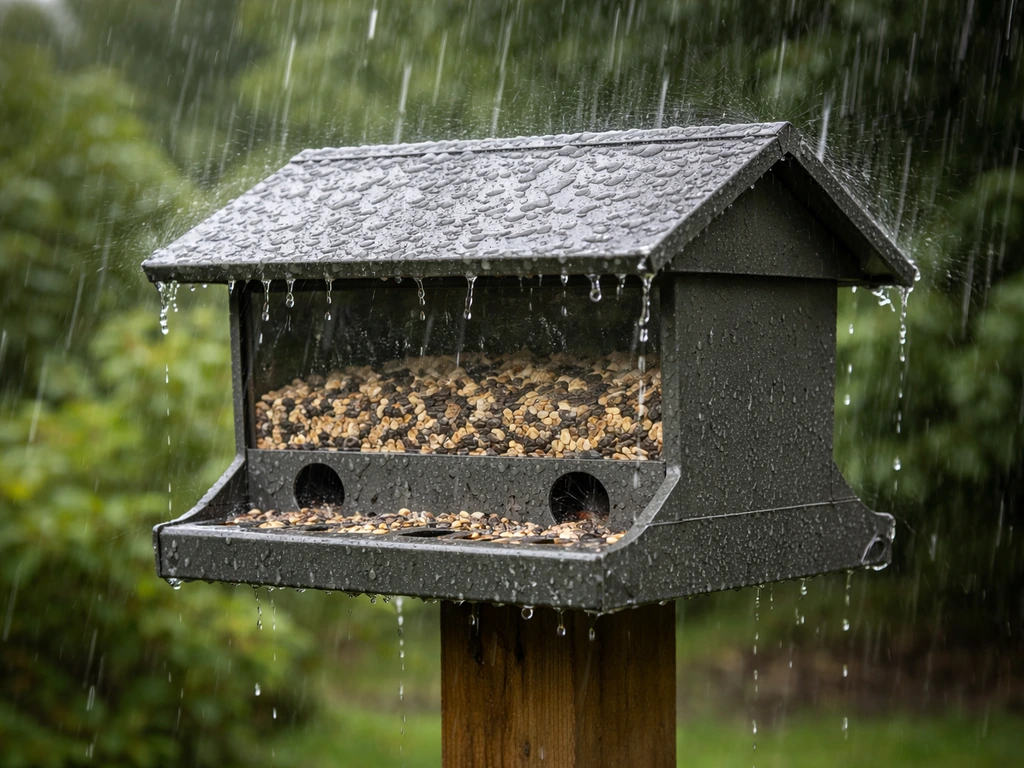
Best Weatherproof Bird Feeder Guide for Rain Proof Feeding
Pick the best weatherproof, rain proof bird feeder by design, materials, cleaning, mounting, and wildlife proofing.
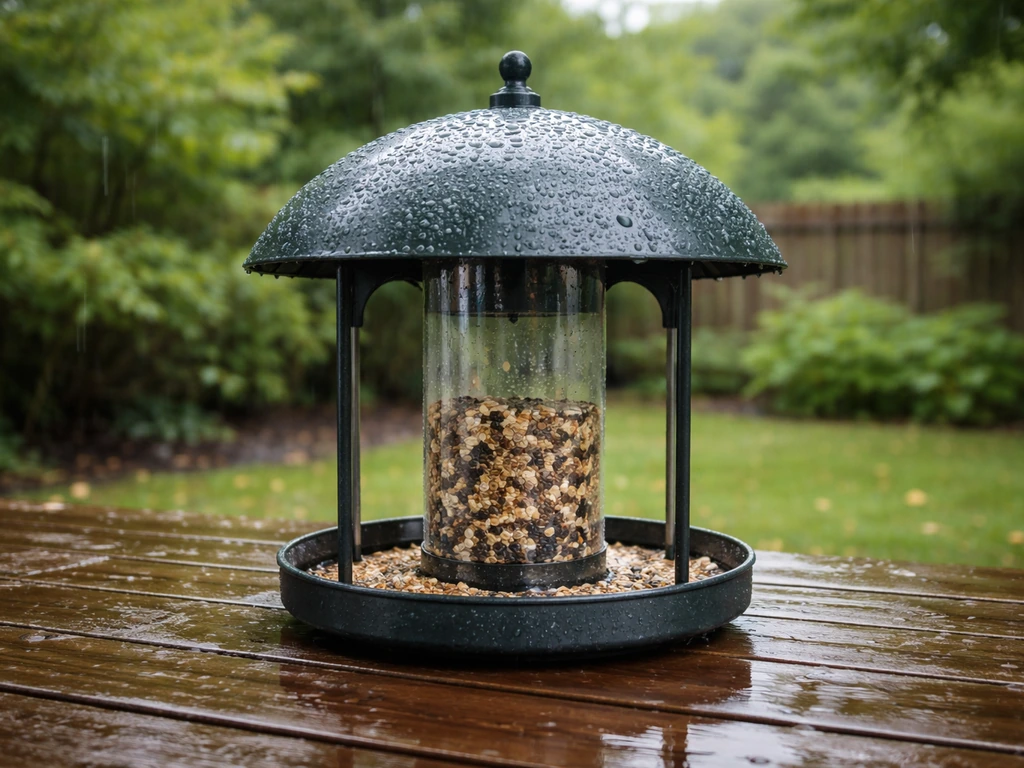
Best Bird Feeders for Rainy Weather: Top Picks and Setup Tips
Top rainy-weather bird feeders with weatherproof features, species picks, setup tips, and cleaning to prevent mess and s
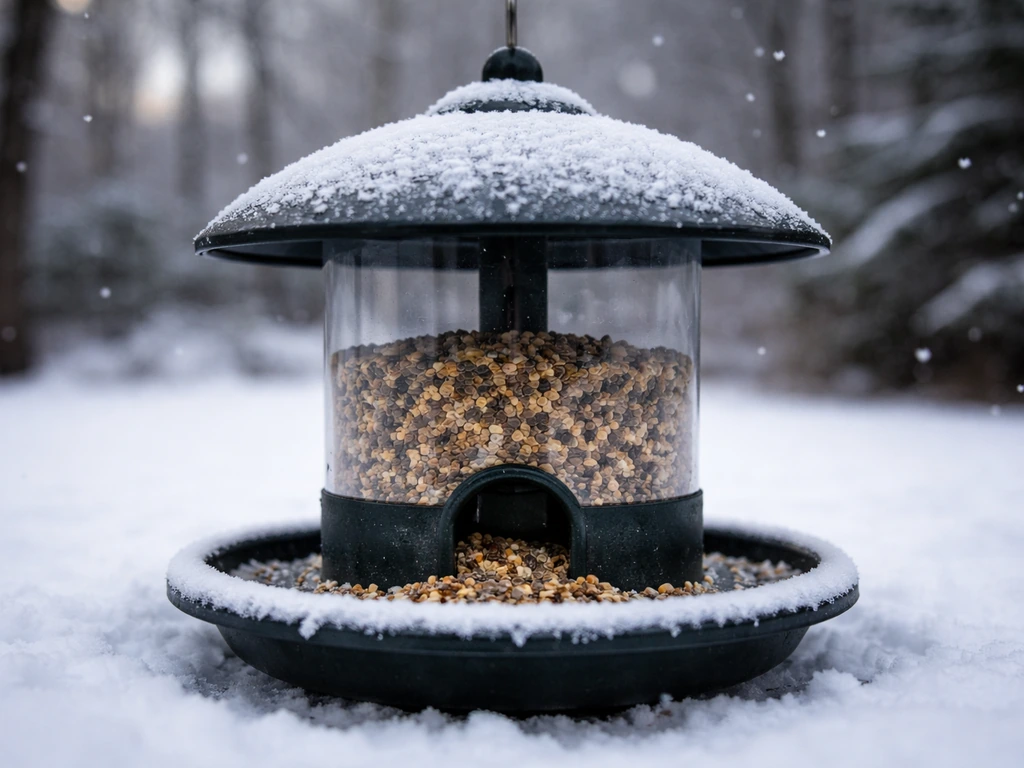
Best Bird Feeder for Winter: Choose What Works in Snow
Pick the best bird feeder for winter: weatherproof, squirrel-proof options with tips for dry feed and cold birds.