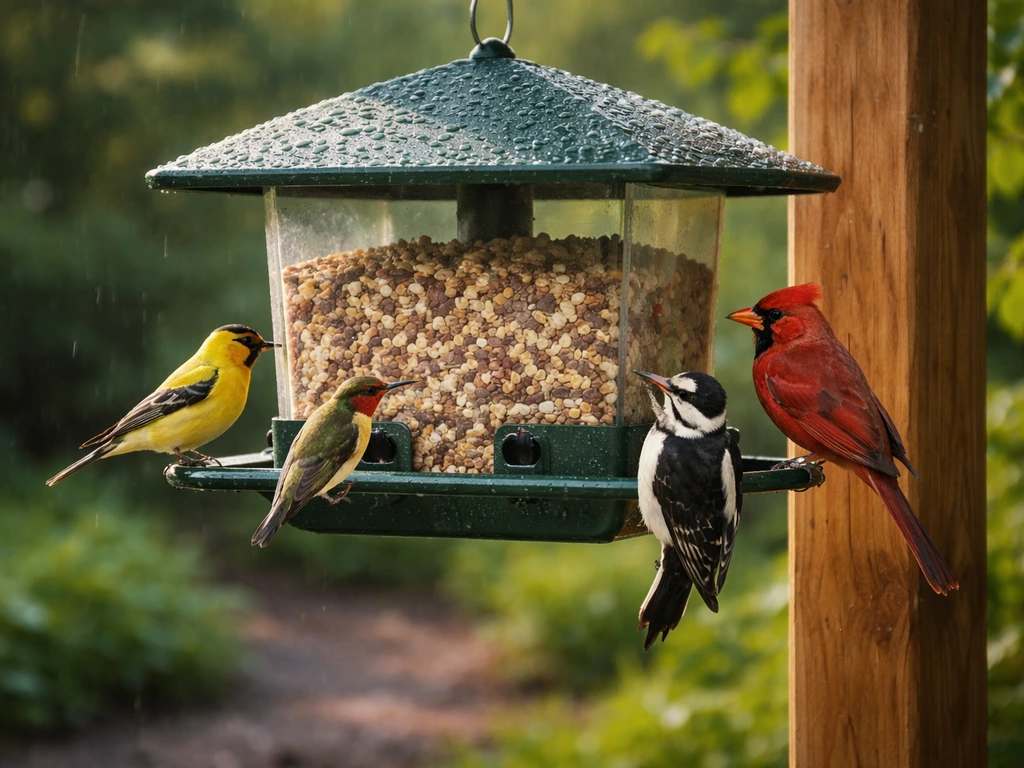
If you want to attract the most birds to your backyard, a hopper feeder loaded with black oil sunflower seed is your best single starting point. Hopper feeders pull in everything a tube feeder does (finches, chickadees, nuthatches) plus the larger birds like cardinals, blue jays, and red-winged blackbirds that tube feeders tend to exclude. Add a platform feeder nearby and you've covered almost every common seed-eating species in North America. That two-feeder combo beats any single feeder type hands down.
Which Bird Feeder Attracts the Most Birds: Quick Guide
Marcus Holloway
24 May 2026
Why hopper feeders win for sheer bird numbers
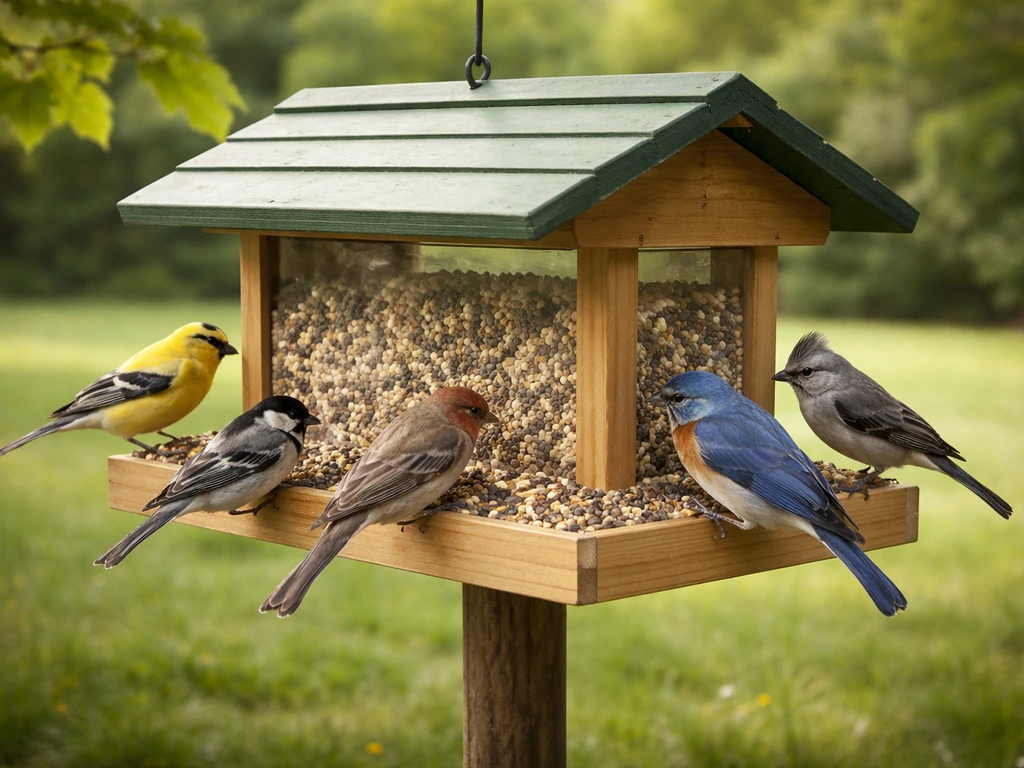
Hopper feeders are essentially a covered seed reservoir with perch space on multiple sides. That design does something no tube feeder can: it gives larger birds like cardinals and jays a place to land and feed comfortably while still welcoming the smaller songbirds. Audubon specifically recommends hopper feeders for this reason, and UF/IFAS backs it up by pointing out that hoppers hold more food and attract every species a tube feeder does, plus the bigger crowd. Platform feeders get the nod from Cornell's All About Birds for attracting the widest variety overall, but they come with a squirrel and pest problem that takes real effort to manage (more on that below).
The honest answer is that "most birds" is a moving target depending on your yard, your region, and the seed you fill it with. A hopper with sunflower seed in a suburban backyard is going to out-perform almost anything else for raw visit counts and species diversity. But if you're specifically chasing goldfinches, a nyjer tube feeder will outperform a hopper for that species every time. The goal is to match feeder type to both the birds in your area and the food they actually want.
Match your feeder type to the birds you actually want
Every feeder style has a natural audience. If you want the fastest answer to what bird feeders attract what birds, the best approach is to match feeder type and seed to the species you’re trying to draw in. Getting the match right is what separates a feeder that sits ignored for weeks from one that's busy all day. Here's how the main types break down by bird species:
| Feeder Type | Best For | Key Design Feature | Common Drawback |
|---|---|---|---|
| Hopper | Cardinals, jays, chickadees, nuthatches, finches | Covered seed reservoir, multiple perch sides | Needs regular cleaning to prevent mold in seed |
| Tube (large ports) | Chickadees, nuthatches, house finches, titmice | Cylindrical body, small port openings | Excludes larger birds; ports can clog |
| Nyjer/Thistle Tube | American goldfinches, pine siskins, redpolls | Very small ports to reduce seed spillage | Nyjer seed goes stale quickly if not used |
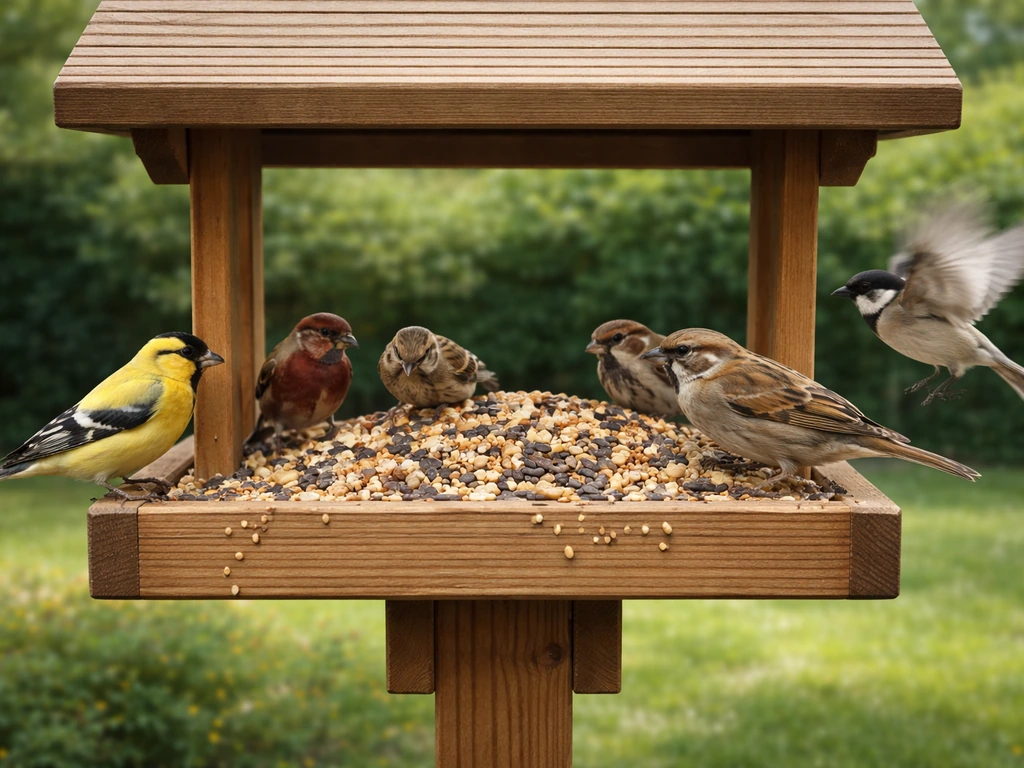
| Platform/Tray | Ground feeders: sparrows, juncos, doves, jays | Open tray with drainage holes | Highly exposed to squirrels, rain, and pest birds |
| Suet Cage | Woodpeckers, nuthatches, creepers, starlings | Wire cage holding suet cake | Starlings and grackles can dominate it |
| Nectar/Hummingbird | Ruby-throated and other hummingbirds, orioles | Small ports with red accents, no perch needed | Nectar spoils fast in heat; needs frequent cleaning |
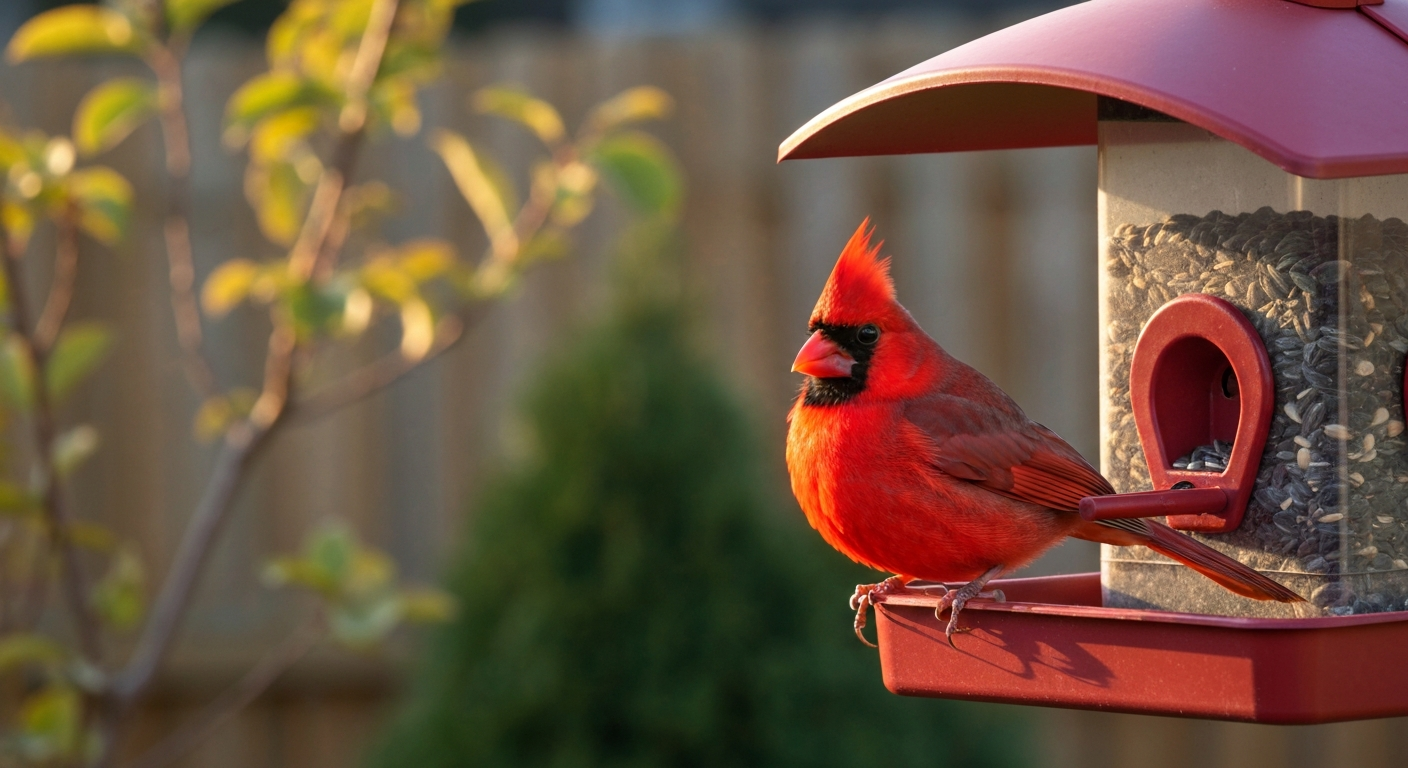
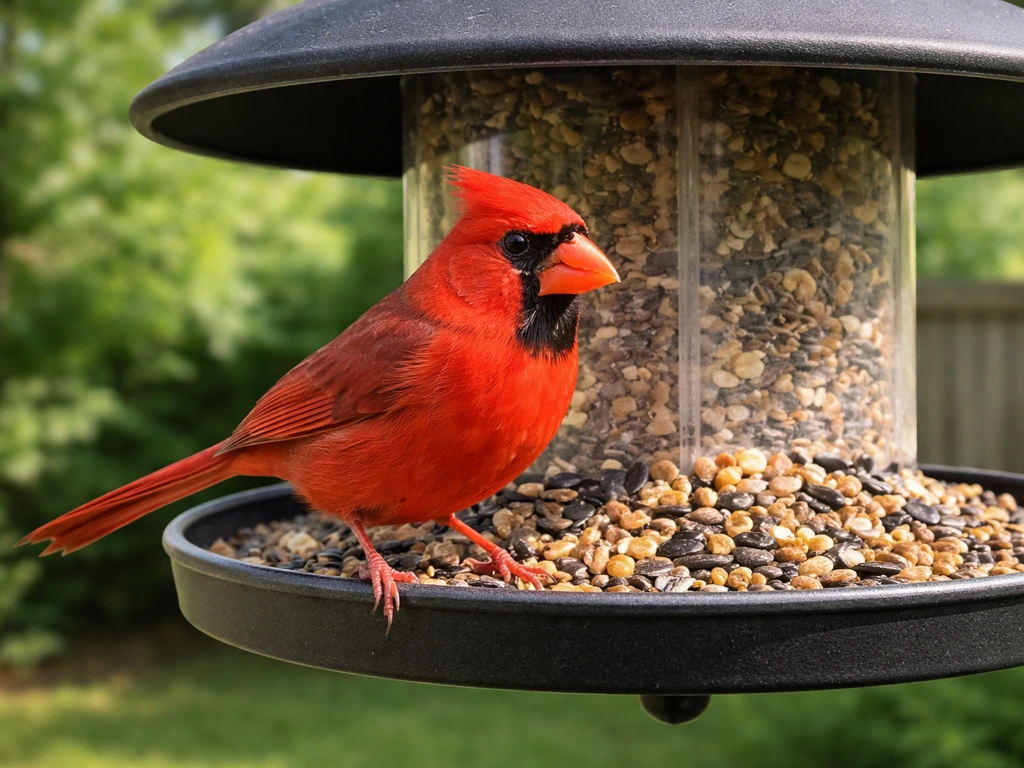
Woodpeckers need a suet cage or a feeder with a tail prop below the cake so they can brace naturally. Cardinals strongly prefer feeders with wide, stable perches or a tray, which is why a hopper with a broad ledge or a dedicated platform feeder works well for them. Finches will use a standard tube feeder, but if goldfinches are your main target, a dedicated nyjer feeder with small ports is the move. The tiny ports are designed specifically to prevent seed spillage and to keep larger, competing birds off.
One combination I've found works extremely well for maximizing both variety and visit counts: a hopper feeder with black oil sunflower seed as the anchor, a nyjer tube feeder for the finch crowd, a suet cage on a nearby tree or post, and a low platform tray scattered with mixed seed for ground-feeding species like dark-eyed juncos and white-throated sparrows. That setup covers the full range without any single feeder trying to do everything.
Seed choice matters as much as feeder style
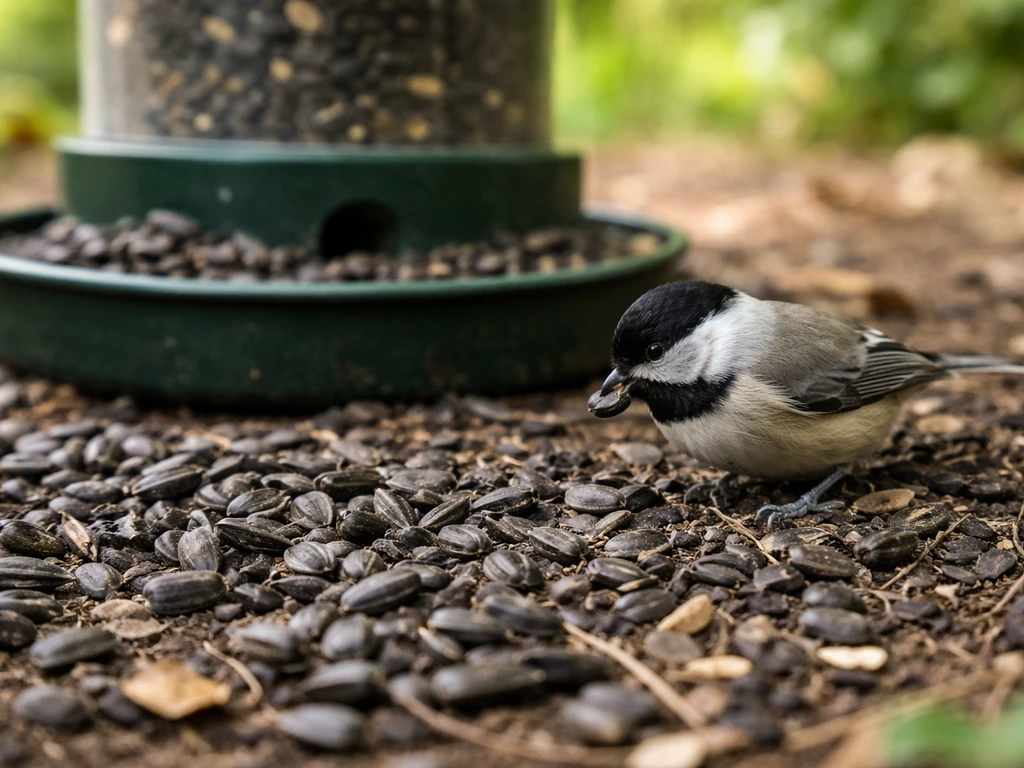
Black oil sunflower seed is the closest thing to a universal bird magnet that exists. Mass Audubon calls it a favorite of most bird species, and the data backs that up: a Project Wildbird study tracking 1. Mass Audubon also notes that [nyjer is enjoyed by finches](https://www. massaudubon.
org/nature-wildlife/birds/bird-feeding), so it's a strong second seed choice if finches are in your area. 2 million feeder visits over three years showed strong, consistent seed preferences that drive visitation patterns. Black oil sunflower has a thin shell (easier for smaller birds to crack), high fat content, and it's taken by practically every common feeder bird. Fill a hopper or tube with it and you're starting from the best possible position.
Nyjer (also called thistle) is the second essential seed if finches are in your area. It does require a feeder with appropriately small port openings to avoid waste.
Placement, height, and spacing that actually get results
Where you put a feeder often matters more than which feeder you buy. Birds want a clear sightline to spot predators but also nearby escape cover like shrubs or trees. The sweet spot is roughly 8 to 10 feet from a shrub or brush pile. Too far from cover and birds approach nervously and visit less often. Too close and the cover becomes a highway for cats and squirrels.
Window strikes are a real issue. The safe zones are within 3 feet of a window or beyond 10 feet. Within 3 feet, a bird that hits the glass doesn't build up enough speed to injure itself. Wild Birds Unlimited, All About Birds, and Project FeederWatch all point to this same window-distance rule. The danger zone is roughly 4 to 10 feet away, where birds have enough room to accelerate into glass at full speed. I've had feeders at both distances and the 3-foot window-mounted option has genuinely eliminated strikes in my setup.
Height-wise, most hanging feeders perform well at 5 to 6 feet off the ground. That's high enough to make squirrel jumps more difficult and low enough for easy refilling. Platform feeders work best slightly lower, around 3 to 4 feet, which suits the ground-feeding species that use them most. If you're running multiple feeders, space them at least 5 to 6 feet apart so dominant birds can't guard all of them at once, which increases the total number of birds feeding at any given time.
Feeder materials, durability, and keeping things clean
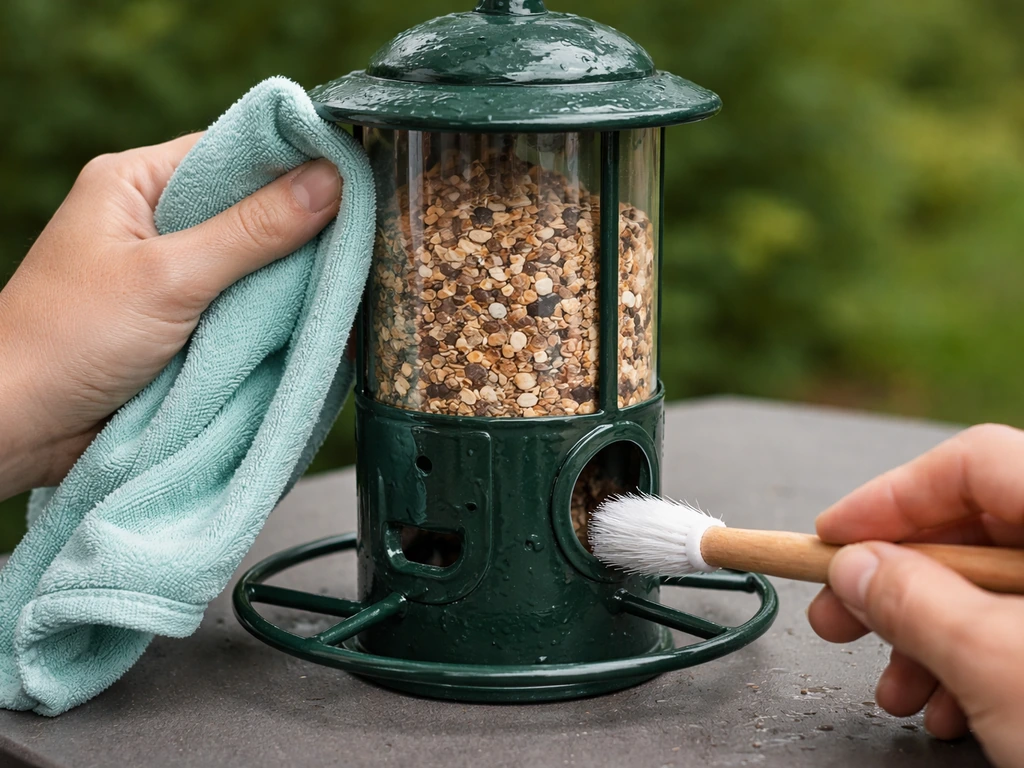
For long-term use, powder-coated metal or recycled plastic (HDPE) outlasts cheap acrylic or thin polycarbonate by years. Acrylic tube feeders look clean when new but crack in UV exposure and cold weather. Wood hopper feeders can work well if they're properly sealed and have ventilated seed chambers, but untreated wood warps and holds moisture, which causes seed to mold faster. If you're buying a hopper, look for one with drainage holes in the tray and a roof that actually overhangs the seed ports.
Cleaning is non-negotiable if you want birds to keep coming back. Dirty feeders develop mold and bacterial growth that can make birds sick and will drive them away from a feeder faster than any squirrel. The standard protocol is to scrub feeders with a 10% bleach solution (1 part bleach to 9 parts water), rinse thoroughly, and allow to fully air dry before refilling. Do this every 1 to 2 weeks for seed feeders, more often in humid weather.
For hummingbird nectar feeders, Audubon recommends cleaning every 2 to 3 days in hot weather using hot running water and a bottle brush, since nectar ferments and grows fungus quickly in heat. If cleaning frequency is a concern, look for feeders with wide-mouth openings or fully disassemblable parts, since they take about a quarter of the time to clean compared to narrow-necked tube designs.
Dealing with squirrels, grackles, and other feeder crashers
Squirrels are the single biggest obstacle to a productive feeder setup, and they will defeat most feeders given enough time and motivation. The most reliable approach combines physical placement with a baffle. Mount feeders on a smooth metal pole at least 4 feet off the ground, with a torpedo-style or dome baffle installed below the feeder. The pole should be at least 8 to 10 feet away from any jumping surface, including fences, trees, deck railings, and roof edges. Squirrels can leap surprisingly far horizontally and will use any nearby structure as a launch point.
Hanging feeders need a dome baffle above them, sized large enough (at least 15 to 18 inches in diameter) that squirrels can't reach around it. Perky-Pet and UNL Extension both provide specific clearance guidance for baffle installation. No baffle works perfectly on every setup, so combining baffle placement with a feeder that has a weight-sensitive perch (which closes ports when something heavier than a small bird lands) gives you redundancy.
Grackles and European starlings are the bird equivalent of squirrels at a suet feeder. A few strategies that actually work: use a starling-resistant suet feeder where birds have to feed upside-down (woodpeckers and nuthatches do this naturally; starlings generally won't). For grackles at seed feeders, short perches on tube feeders physically exclude them since grackles need a wider grip and more stable landing platform. Platform feeders and hopper feeders with wide ledges will attract grackles, so if they're a problem in your yard, a tube feeder with short perches is a better choice for keeping them off, even if it means sacrificing some visits from larger desirable birds like cardinals.
What to look for when buying a feeder today
If your goal is simply "the most birds possible" and you're buying one feeder today, get a hopper feeder made of powder-coated metal or high-quality recycled plastic, with a roof that extends over the ports and a ventilated tray at the bottom. Fill it with black oil sunflower seed. That's the practical minimum to get started with real results. A best-1 bird feeder is a great next step once you know what seed and feeder style will bring the species you want.
When evaluating any feeder, here are the features worth checking before you buy:
- Seed capacity: bigger reservoirs mean less frequent refilling, but seed can go stale in slow-traffic setups, so match capacity to your expected bird volume
- Port and perch design: short perches exclude large pest birds; wide ports work for sunflower and safflower but not nyjer; check port size matches your seed
- Ease of refilling and disassembly: top-fill hoppers and tube feeders with a simple base removal are far easier to maintain than feeders requiring tools
- Drainage: trays and platform feeders must have drainage holes or the seed turns to wet mush after rain
- Weather protection: an overhanging roof keeps seed dry and reduces spoilage significantly
- Mounting compatibility: check whether the feeder can work on a pole, hanging wire, or both, and that it's compatible with standard squirrel baffles
- Materials: powder-coated metal or HDPE plastic for durability; avoid thin acrylic for outdoor year-round use
One category worth mentioning for people who want to actually verify which feeder attracts the most birds in their specific yard: smart feeders with built-in cameras and AI species identification. These let you see exactly what's visiting, when, and how often, which removes all the guesswork from the "which feeder works best" question for your particular setup. If you're the kind of person who wants data instead of assumptions, a camera-equipped feeder is a genuinely useful tool, not just a gadget.
Running multiple feeder types is almost always more effective than optimizing a single feeder. In general, what bird feeders birds like best depends on your yard, the species you want, and the seed you offer what bird feeders do birds like best. Running multiple feeder types is almost always more effective than optimizing a single feeder, which is why smart shoppers often ask which bird feeders are best for their yard.
A hopper plus a nyjer tube feeder plus a suet cage will outperform any single feeder, no matter how well-designed, simply because each one attracts a different group of species. If you want to go deeper on species-specific choices, matching feeder style to specific birds is its own rabbit hole, as is figuring out which overall feeder design wins across different contexts. The hopper-plus-sunflower starting point gets you most of the way there on day one.
If you want the simplest path to the best bird feeder to attract birds, start with a hopper loaded with black oil sunflower seed and add a second feeder for variety.
FAQ
Which bird feeder attracts the most birds in most backyards, if I only want to buy one?
If you want the single best bet for the largest total number of visits, pick a hopper feeder filled with black oil sunflower seed, then only add a second feeder type after a week of observation. If finches are common in your area, add a nyjer tube next, because nyjer is the main “species accelerator” that a sunflower hopper alone will not fully capture.
Does feeder type matter more than seed, or will any seed work in a hopper?
The highest-visit setup usually comes from a “seed match,” not just feeder type. Black oil sunflower drives broad visitation, but if you use striped sunflower, cracked corn, or mix seeds with lots of filler, you may reduce attendance because many birds discard lower-preference items first.
Why do I still not see goldfinches even though my hopper is busy?
In many regions, a hopper alone will not reliably draw goldfinches, even when the hopper is popular with other species. Goldfinches strongly prefer nyjer, and they also need appropriately small ports to prevent larger birds from accessing the seed.
What’s the most common squirrel-related mistake that ruins feeder results?
Squirrels can “train” themselves to feeder routines, so using a baffle without changing the feeder’s placement sometimes fails over time. Make sure the pole is far from launch points (trees, fences, deck edges), use a properly sized dome baffle on hanging feeders, and consider a feeder that limits access when heavier animals land.
How long should I wait before deciding my feeder choice is “not working”?
Bird activity is often highest right after fresh refills and after you switch to the right seed, but it is not instant. Give the setup 3 to 7 days, and take note of which species show up before you change anything, because frequent changes can disrupt learning and reduce consistent visitation.
Can I attract more cardinals without switching from seed I already have?
Yes, if the perches are wrong for the species you want. Cardinals usually need stable, wide landing space, which is why hopper ledges and platforms tend to outperform tubes with narrow perches. If your tube is drawing mostly small birds, you may be excluding cardinals by perch design rather than by seed choice.
Why did I see fewer total birds after adding a second feeder?
Many “more birds” upgrades fail because the feeders are too close together or too close to cover. If feeders are within a bird’s dominance range, a few aggressive species can monopolize them. Spacing feeders at least 5 to 6 feet apart usually improves the number of feeding positions available at once.
What should I do if my yard layout forces me to place a feeder near a window?
For window strikes, the safest guidance is to avoid placing feeders in the 4 to 10 foot danger zone. If you cannot relocate, consider adding a visual deterrent pattern on the glass or using a nearby feeder location that keeps the approach route clearly visible to birds.
How can I tell if a hopper feeder is worth buying for long-term use?
Long-term performance differences matter: cheap feeders crack, warps develop, and seed often gets wet in a poorly designed hopper tray. Look for drainage in the tray and a roof that overhangs the seed ports, so the seed stays dry and mold risk stays low.
How often should I clean feeders to keep attracting birds instead of driving them away?
Cleaning frequency can be the difference between steady traffic and a sudden drop in visitors. Seed feeders generally need cleaning every 1 to 2 weeks (more often in humidity), and nectar feeders often require very frequent cleaning because fermentation and fungus can begin quickly in heat.
How do camera or smart feeders help me decide which feeder attracts the most birds in my yard?
If you want proof for your specific yard, focus on what you are measuring. A smart feeder can confirm which species are visiting each feeder type and at what times, which helps you decide whether the issue is feeder design, placement, or seed preference rather than guessing.
What second feeder should I add to a hopper if I want the biggest jump in species variety?
If you add only one “variety” feeder, the best second choice depends on who you want most. Nyjer tube feeders usually add finches, while a suet setup targets woodpeckers and related species. For ground-feeding birds, a low tray near cover adds species that may never use hanging or hopper perches.