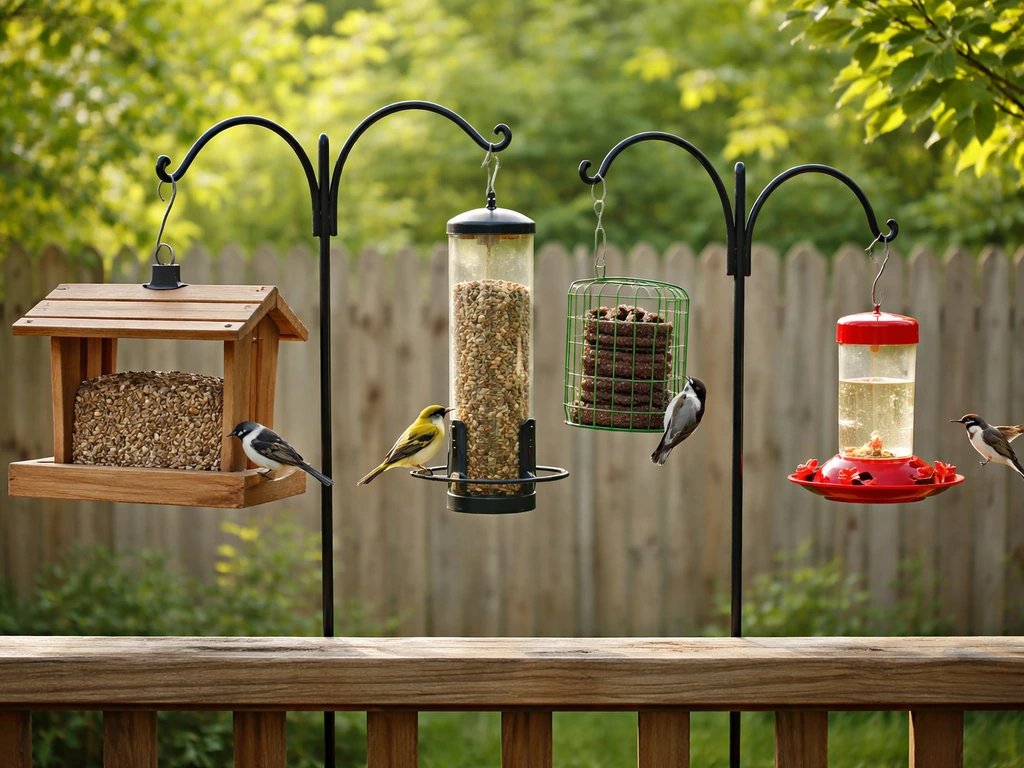
Match the feeder to the bird's feeding style and you'll see results fast. Tube feeders with small ports pull in chickadees, finches, and nuthatches. Hopper feeders attract the widest mix, including cardinals, sparrows, and grosbeaks. Platform or tray feeders bring in ground-feeders like mourning doves, juncos, and towhees. Suet cages draw woodpeckers, nuthatches, and chickadees, especially in cooler months. Hummingbird nectar feeders are the only reliable way to get hummingbirds. Get the feeder-food pairing right and birds usually show up within a few days to a couple of weeks. When you're shopping for the best-1 bird feeder, start by matching the feeder type to the specific bird you want to attract feeder-food pairing.
What Bird Feeders Attract What Birds: Match Species Fast
Marcus Holloway
11 Jun 2026
Feeder type to bird species: the quick reference
Before getting into the details, here's the core cheat sheet. Every feeder style was designed around how a particular group of birds naturally feeds, and the species you attract depend almost entirely on whether that feeding style matches the bird's instincts. A cardinal isn't going to cling upside-down to a tiny nyjer sock, and a goldfinch isn't going to wrestle with a chunky platform full of mixed seed. Knowing these natural pairings saves you a lot of trial and error.
| Feeder Type | Best Food to Use | Birds It Attracts | Birds It Won't Attract Well |
|---|---|---|---|
| Tube feeder (standard ports) | Black-oil sunflower, safflower | Chickadees, nuthatches, house finches, goldfinches, titmice | Doves, woodpeckers, ground-feeders |
| Tube feeder (nyjer/thistle) | Nyjer (thistle) seed | American goldfinch, house finch, pine siskin, redpolls | Most other species |
| Hopper feeder | Black-oil sunflower, safflower, blends | Cardinals, sparrows, grosbeaks, jays, doves, finches | Hummingbirds, woodpeckers (mainly) |
| Platform/tray feeder | Millet, sunflower, peanuts, mixed seed | Mourning doves, juncos, towhees, sparrows, cardinals | Hummingbirds |
| Suet cage (standard) | Suet cakes, suet plugs | Woodpeckers, nuthatches, chickadees, starlings (unwanted) | Hummingbirds, finches, sparrows |
| Suet cage (upside-down/bottom-access) | Suet cakes | Woodpeckers, nuthatches, chickadees | Starlings, most other species |
| Hummingbird nectar feeder | 1:4 sugar-water solution | Ruby-throated hummingbird, rufous hummingbird (region-dependent) | All other species |
Match the food to the bird, not just the feeder
The feeder style gets birds to show up. The food inside is what makes them stay, come back, and bring friends. A lot of beginners buy a bag of mixed seed thinking it covers everything. It doesn't. Most commercial blends are padded with milo, wheat, and filler grains that few North American backyard birds actually prefer. You end up with a pile of rejected seed rotting under your feeder and a yard full of sparrows and starlings while the cardinals and goldfinches go elsewhere.
Seeds: what each type actually does
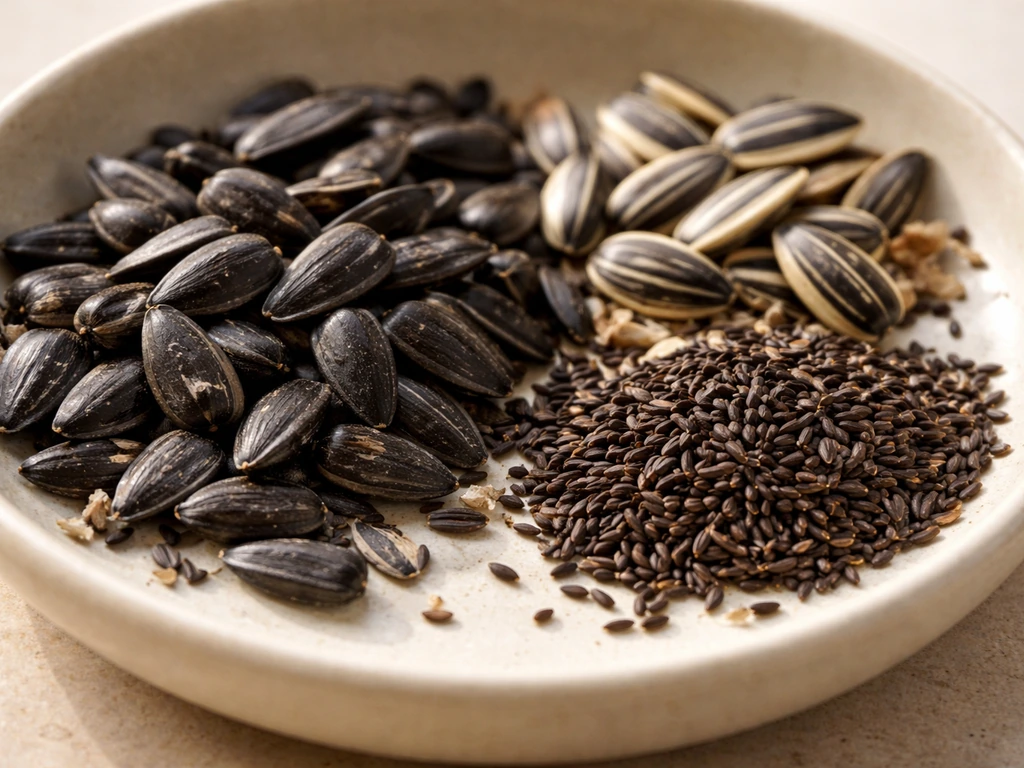
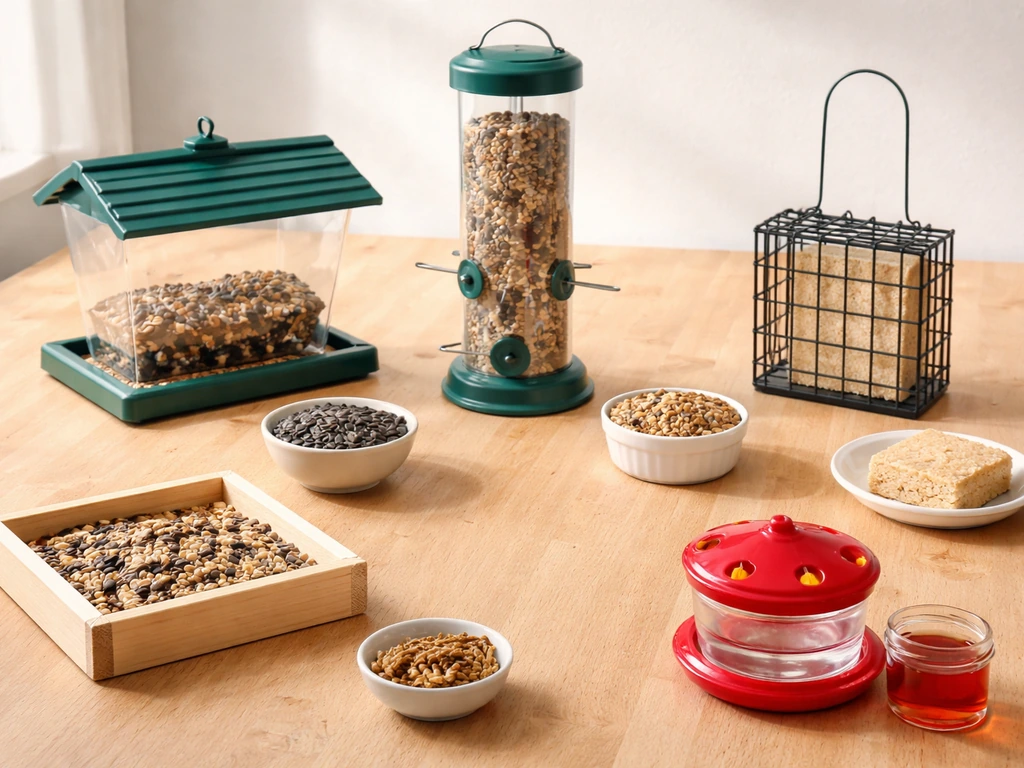
Black-oil sunflower is the single best seed you can offer. It has a thinner shell than striped sunflower, so more species can crack it open, and the kernel is high in fat and protein. Cardinals, chickadees, titmice, house finches, goldfinches, nuthatches, sparrows, and grosbeaks all eat it readily. If you're only going to put one seed out, make it black-oil sunflower. Hulled sunflower (the hearts/chips) is even more universally accepted because any bird that eats sunflower will eat the shelled version, and it leaves no mess under the feeder. The trade-off is cost and faster spoilage.
Nyjer (also sold as thistle) is a tiny, oil-rich seed that finches absolutely love. The key thing most people miss: it requires a feeder with very small ports, because standard tube feeder openings let the seed pour out and waste onto the ground. Dedicated nyjer tube feeders or mesh sock feeders are built specifically for this. American goldfinches, house finches, pine siskins, and common redpolls all respond well to nyjer. It's a target seed, not a general-purpose one.
White millet is the go-to for ground-feeders. Scatter it on a low platform or tray feeder and you'll pull in mourning doves, dark-eyed juncos, white-throated sparrows, and towhees. Peanuts (shelled or whole) are attractive to blue jays, woodpeckers, titmice, nuthatches, and chickadees. Safflower seed is worth knowing about specifically for cardinals because it's one of their favorites, and squirrels tend to leave it alone, which is a bonus. Keeping these seed types separate rather than blending them lets you control which species visit which feeder.
Suet: the winter power food for insect-eaters
Suet is rendered beef fat, often pressed into cakes with seeds, peanut butter, or dried berries mixed in. It's a high-energy food that mimics the insects and larvae that woodpeckers, nuthatches, and chickadees forage for in the wild. It works best in fall and winter when those natural food sources dry up. In warmer months, suet can go rancid quickly, so look for no-melt or heat-tolerant formulations if you're feeding through summer. Standard suet cages are simple and effective, but the design choice matters for pest control (more on that below).
Nectar: the only option for hummingbirds
Hummingbirds drink flower nectar and sugar water, and that's essentially it. The recipe is simple: 1 part refined white sugar dissolved in 4 parts water. Boil the water briefly to help the sugar dissolve, let it cool completely, then fill the feeder. That's it. Skip the red dye entirely. It's unnecessary because most nectar feeders already have red parts to attract the birds, and the dye hasn't been proven safe for hummingbirds. Artificial sweeteners are also a hard no. They provide zero calories and hummingbirds need the energy.
Where you put the feeder matters as much as which feeder you pick
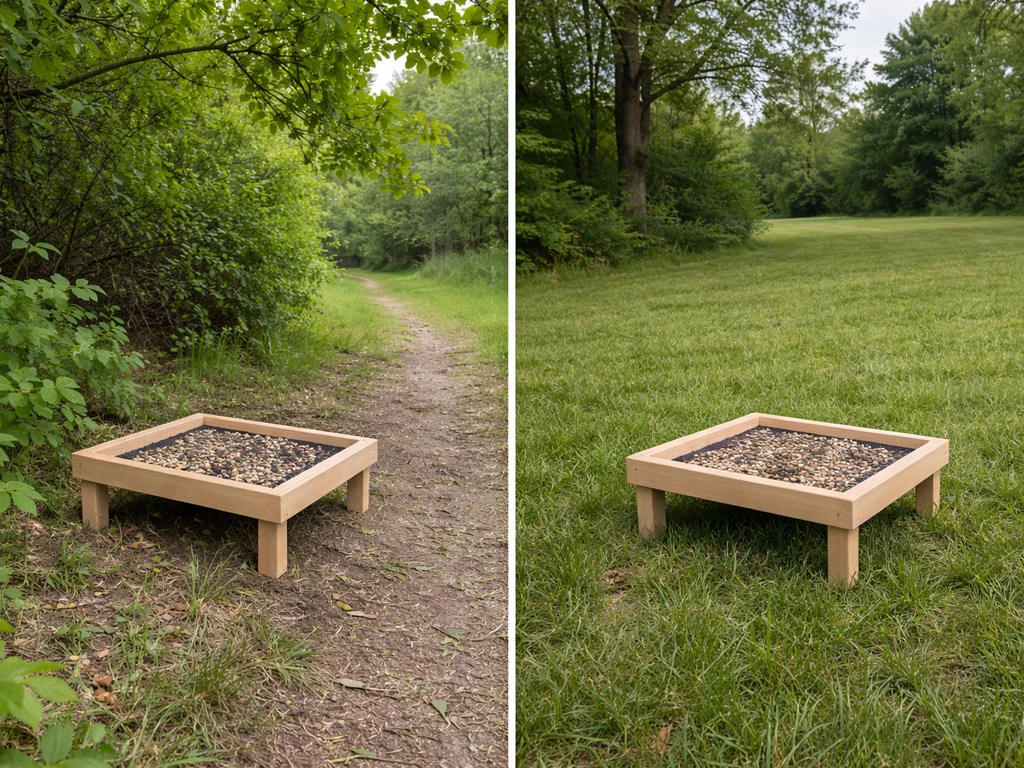
I've had feeders loaded with the right seed go untouched for two weeks just because of poor placement. Birds need to feel safe approaching a feeder, and different species have different comfort levels about exposure. Get placement right and you'll shorten the time it takes for birds to find your setup.
Height and habitat by species
Ground-feeding birds like juncos, towhees, and doves are most comfortable with platform feeders set low, close to the ground, near some light brush or cover they can retreat to. Shrub and mid-level birds, including cardinals, chickadees, and finches, prefer feeders hung or mounted at about eye level, around 4 to 6 feet up, with nearby shrubs or small trees within about 10 feet. Woodpeckers and nuthatches feed naturally on tree trunks, so suet cages mounted on poles or against tree trunks and set well off the ground feel most natural to them.
Window distance: protecting birds from collisions
Feeder placement relative to your windows is important and often overlooked. The rule of thumb: place feeders either within 3 feet of a window or more than 30 feet away. At 3 feet or closer, a bird that gets startled can't build up enough speed to cause a fatal collision. At 30 feet or more, the birds have enough distance to recognize the window as a barrier. The danger zone is anywhere between 3 and 30 feet, where birds see the reflection of open sky and fly full-speed into the glass.
Cover, visibility, and the new-feeder waiting game
Birds spot feeders more easily when they're placed near natural cover like shrubs, trees, or brush piles. Open yard feeders with no nearby cover often take longer to attract visitors, especially for shyer species. That said, too much nearby cover at ground level can give cats and other predators hiding spots. A good balance is a clear open zone immediately around the feeder, with trees or dense shrubs about 10 to 15 feet away. When you set up a new feeder, give it 1 to 2 weeks before troubleshooting. Birds have established routes and it takes time for them to add a new food source to their mental map.
Squirrel-proofing and keeping unwanted birds out
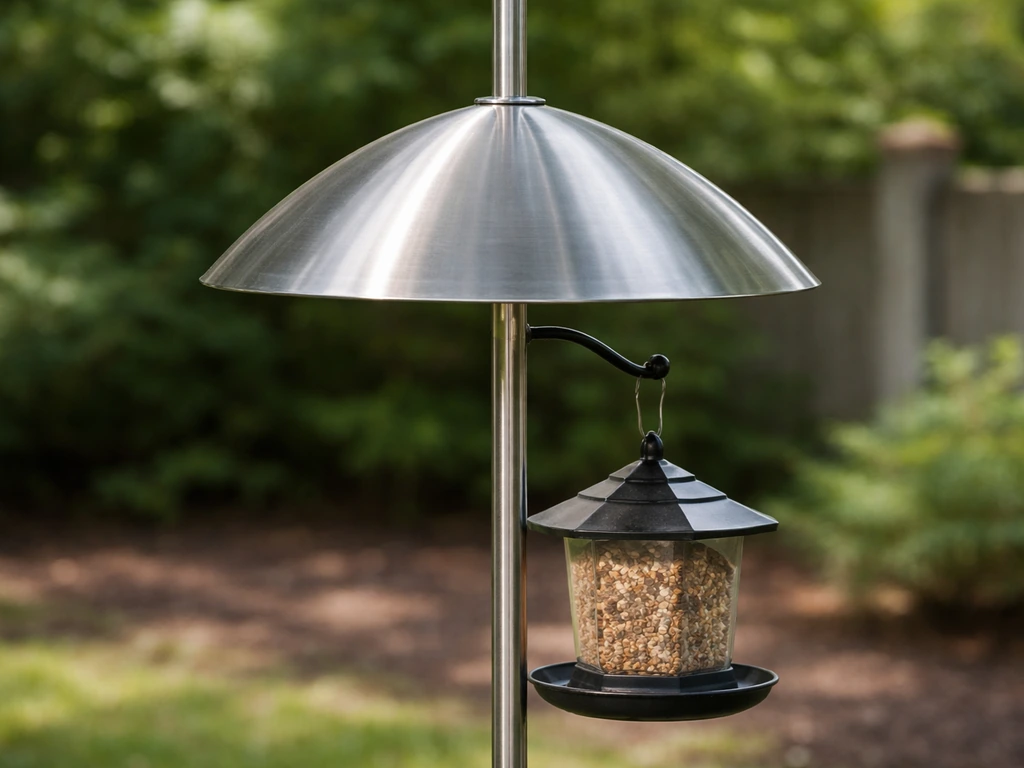
Squirrels and pest birds like starlings and grackles are the two biggest complaints I hear from backyard birders, and the solution is almost always a combination of feeder design and placement rather than one magic product. Here's how to think about it by feeder style.
Squirrel-proofing by feeder type
The most reliable setup I've used combines a smooth metal pole (not a tree or fence post) with a pole-mounted baffle and a feeder positioned at least 8 to 10 feet away from any structure a squirrel can jump from, including trees, fences, sheds, and the eaves of a house. Squirrels can leap surprisingly far horizontally, so that clearance matters.
Many weight-activated feeders add another layer of protection by closing seed ports when a heavier animal lands on the perch ring. Wild Birds Unlimited describes a weight/port-shut mechanism on its squirrel-proof feeder where contact from a squirrel closes seed ports to help foil seed-stealing [Many weight-activated feeders add another layer of protection by closing seed ports when a heavier animal lands on the perch ring. ](https://www. wbu.
com/products/squirrel-proof/fundamentals-squirrel-proof-bird-feeder/). These work well as long as the mechanism is calibrated appropriately for small birds versus squirrels. Metal ports and hardware around seed dispensers also help because squirrels can chew through plastic in short order. Safflower seed is a softer deterrent: squirrels tend to avoid it while cardinals love it.
Controlling starlings and grackles
Starlings and grackles are large, aggressive, and will dominate a hopper or platform feeder if given the chance. The most effective feeder-design fix for starlings is an upside-down suet cage. Starlings can't cling and feed from below, but woodpeckers, nuthatches, and chickadees do it naturally. For seed feeders, choosing safflower over sunflower reduces grackle interest considerably. Caged tube feeders with an outer cage that lets small birds through but blocks larger ones are also very effective at keeping grackles and European starlings off your seed supply.
Specialty feeders for specific birds
If you've got the basics running and want to target specific species more precisely, specialty feeders make a real difference. The simplest answer is that birds tend to favor feeders and foods that match their natural feeding habits, so start by choosing the right feeder type for the species you want to attract specialty feeders. Here's what actually works for the most commonly requested birds.
Finches: nyjer tube feeders and mesh socks
American goldfinches and their finch relatives require a dedicated nyjer feeder. The seed is so small that it pours out of standard ports, and finches prefer to cling and pick at individual seeds rather than perch on a broad shelf. A narrow tube feeder with fine mesh ports or a hanging nyjer sock feeder works best. Set it up in a quieter area of the yard, away from the busiest feeders, and expect goldfinches to take 2 to 4 weeks to find it in some areas. Keep the seed fresh because old nyjer goes stale and the birds will reject it.
Hummingbirds: nectar feeders with red accents
Hummingbird feeders need to be built for easy cleaning above all else, because nectar goes bad fast. In warm weather, nectar should be changed every 2 to 3 days and the feeder cleaned every time you refill it. Look for feeders that disassemble fully with no hard-to-reach crevices. The red color on the feeder itself is the visual attractant, so you don't need red dye in the nectar. Place hummingbird feeders in a partially shaded spot to slow spoilage, and if you're in a region where overnight temperatures drop below freezing, bring the feeder in at night or get an insulated or heated model.
Cardinals: hopper feeders with safflower or sunflower
Cardinals are heavier birds with thick bills built for cracking large seeds. They prefer a feeder with a sturdy, wide perch or tray where they can land comfortably and turn around. Hopper feeders and platform feeders are both well suited. Fill them with black-oil sunflower or safflower. Cardinals are often shy and prefer to have dense shrubs or trees nearby, so placing the feeder closer to cover (within 10 to 15 feet of shrubs) increases your odds. Pairs of cardinals often visit together, so a feeder with enough space for two birds feeding simultaneously is worth it.
Woodpeckers: suet cages and peanut feeders
Woodpeckers respond best to suet cages mounted on a pole or tree trunk at chest height or higher. An upside-down suet cage is both starling-resistant and natural for woodpeckers, who are comfortable clinging from any angle. Peanut feeders (tube-style feeders with a mesh or cage design that holds whole or shelled peanuts) also attract larger woodpecker species like red-bellied and hairy woodpeckers. Downy woodpeckers, the smallest common species, will use smaller suet cages and even visit tube feeders offering suet nuggets or peanut pieces.
When birds still aren't showing up
If you've had a feeder out for more than two weeks and aren't seeing the birds you expected, go through this checklist before buying something new. Most of the time the fix is small.
- Check the seed freshness. Old or wet seed clumps and smells off. Birds can detect it and will avoid the feeder. Dump old seed, clean the feeder, and refill with fresh stock.
- Confirm the seed matches the feeder. Nyjer in a standard tube feeder just pours out unused. Black-oil sunflower in a nyjer feeder won't dispense. The food and feeder ports have to be matched correctly.
- Re-evaluate placement. If the feeder is more than 3 feet from a window but less than 30 feet, move it. If it's completely exposed with no cover nearby, add some or relocate the feeder closer to existing shrubs or trees.
- Look for predator pressure. A neighborhood cat that regularly patrols under your feeder will suppress bird activity for days or weeks. Address the cat issue first if that's the problem.
- Consider the season and region. Some species are migratory and simply aren't present year-round. Hummingbirds in the northern US typically arrive in late April to May and leave by September. Goldfinches are year-round in many areas but peak activity varies. Check a regional bird chart to see what should be around this time of year.
- Clean the feeder. Dirty feeders with mold, old seed, or droppings are a health risk and birds sense it. Scrub with soapy water, then soak in a 50/50 vinegar-water solution for 15 minutes, rinse well, and let it dry completely before refilling.
- Try a different feeder style or food. If you've been running only a hopper with mixed seed for a month and traffic is low, try adding a separate tube feeder with black-oil sunflower only. Multiple feeder styles with targeted foods almost always outperform one general feeder.
Picking the right feeder and keeping it running
If you're just starting out, I'd recommend a hopper feeder with black-oil sunflower seed as your first setup. If you want a simple starting point, a hopper feeder is a great option and can help you get closer to the best bird feeder to attract birds. If you’re wondering which bird feeders are best, start with a hopper feeder for the broadest mix of everyday backyard birds.
It attracts the widest range of common backyard birds, it's easy to fill, and most hopper designs are reasonably weather-resistant. From there, add a dedicated nyjer tube feeder if you want to pull in more finches, and a suet cage if you're after woodpeckers and nuthatches. If hummingbirds pass through your region, a simple nectar feeder is an easy addition that requires almost no other gear.
Material matters more than most people think. Plastic feeders are cheap but crack in UV light and get chewed by squirrels. Metal and powder-coated steel feeders last far longer, especially in climates with harsh winters or intense sun. Recycled poly lumber or thick acrylic styles split the difference between durability and visibility. Whatever material you choose, make sure the feeder disassembles for cleaning, because a feeder you can't clean properly becomes a disease vector for the birds you're trying to help.
For ongoing maintenance, clean seed and suet feeders every one to two weeks under normal conditions, and more often during wet weather or heavy use. Hummingbird feeders need attention every couple of days in warm weather. A feeder that's easy to clean gets cleaned regularly. A feeder with fiddly parts and hard-to-reach corners gets skipped, and that's where problems start.
Once you have the basics dialed in, it's worth thinking about which birds you actually want to see more of and building your setup around that. The question of which single feeder attracts the most total birds is a slightly different one from which feeder attracts the specific birds you care about, and for most backyard birders the latter is what really matters. A targeted setup with two or three feeder types, each loaded with the right food and placed correctly, will consistently outperform one generalist feeder trying to do everything.
FAQ
What’s the fastest way to get birds to show up if I’m not seeing any visitors yet?
First, confirm the food is correct for the feeder type (for example, nyjer requires small ports, not a standard tube). Then check placement relative to safety cover, and the window rule, and give it time, typically 1 to 2 weeks, because birds need to incorporate the new resource into their routine.
Do I need to use multiple seed types, or can I run one feeder with one seed to attract most birds?
You can cover a lot with black-oil sunflower in most hopper or platform setups, since many common species will eat it. If you switch to a general mix, expect more waste because many birds reject filler grains, so species variety usually drops even if the feeder looks “full.”
Will squirrels still eat black-oil sunflower if I use a good feeder design?
They may, but black-oil sunflower is usually more manageable than softer, more squirrel-friendly options. The better approach is combining a pole-mounted baffle with enough distance from jump points (trees, fences, eaves), and considering safflower if you need a stronger squirrel deterrent.
How do I stop starlings and grackles without fully eliminating them from the yard?
Use feeder designs that they cannot dominate, like an upside-down suet cage for suet, and choose safflower instead of sunflower on seed feeders. Also consider caged tube feeders that block larger birds while allowing smaller species access.
What’s the safest seed plan if I’m trying to attract finches and avoid wasting seed?
Use a dedicated nyjer feeder with small ports or a hanging sock/mesh design, and place it away from your busiest feeders. Keep nyjer fresh, because stale seed is often rejected, which looks like “no finches,” even when finches are present.
Can I use red dye in hummingbird nectar to make the feeder more visible?
Skip the dye. The feeder’s own red parts already provide the visual cue, and the bigger issue is spoilage control, so focus on clean water ratios, full cleaning each refill, and partial shade rather than coloring additives.
How often should I clean feeders, and what if the weather is rainy?
Seed and suet feeders should be cleaned every 1 to 2 weeks under normal conditions, and more frequently during wet weather or heavy use. If nectar is involved, clean and refill on a tighter schedule (every couple of days in warm weather) because fermentation can occur quickly.
What’s the best feeder height for attracting different birds?
Ground-feeding birds usually do best with low, near-ground platforms close to cover. Many shrub and mid-level birds use feeders around eye level (about 4 to 6 feet), while trunk clingers like nuthatches and woodpeckers do better with suet cages mounted higher up on poles or trunks.
How do I reduce window collisions while still keeping birds comfortable?
Place feeders either very close to windows (within about 3 feet) or far enough away (more than about 30 feet). Avoid the intermediate “danger zone” because birds may not recognize the glass barrier when they can still build up full approach speed.
If birds start visiting one feeder, should I change the setup or stick with it?
Stick with it unless you see clear evidence of mismatch, like a feeder type that doesn’t match the target species or seed consistently untouched. When adjusting, change one variable at a time (food or placement first) so you can tell what worked, and expect added visitors to take days to a couple of weeks.
Are hopper, tray, and platform feeders interchangeable?
Not exactly. Hopper and tray feeders typically work well for a wider range of perch-and-pick species, while tray/platform feeders are especially useful for birds that feed on the ground but still want a stable landing surface. If you want ground-foraging birds, keep platforms low and near cover.
What should I do if I’ve had a feeder out for more than two weeks and no birds arrive?
Run a quick triage: confirm the food matches the feeder type (nyjer port size is a common miss), verify placement near cover without creating easy predator ambush spots, ensure the feeder is clean, and check that the seed is fresh (especially for nyjer and other prone-to-stale foods).
Does the feeder material really matter, or can I use anything that holds food?
Material matters. Plastic feeders can crack in sun over time and may invite chewing, while metal or powder-coated steel usually lasts longer in harsh winters or intense sun. Choose a feeder that disassembles easily for cleaning, because poor cleaning can undo all the correct feeder-food pairing.