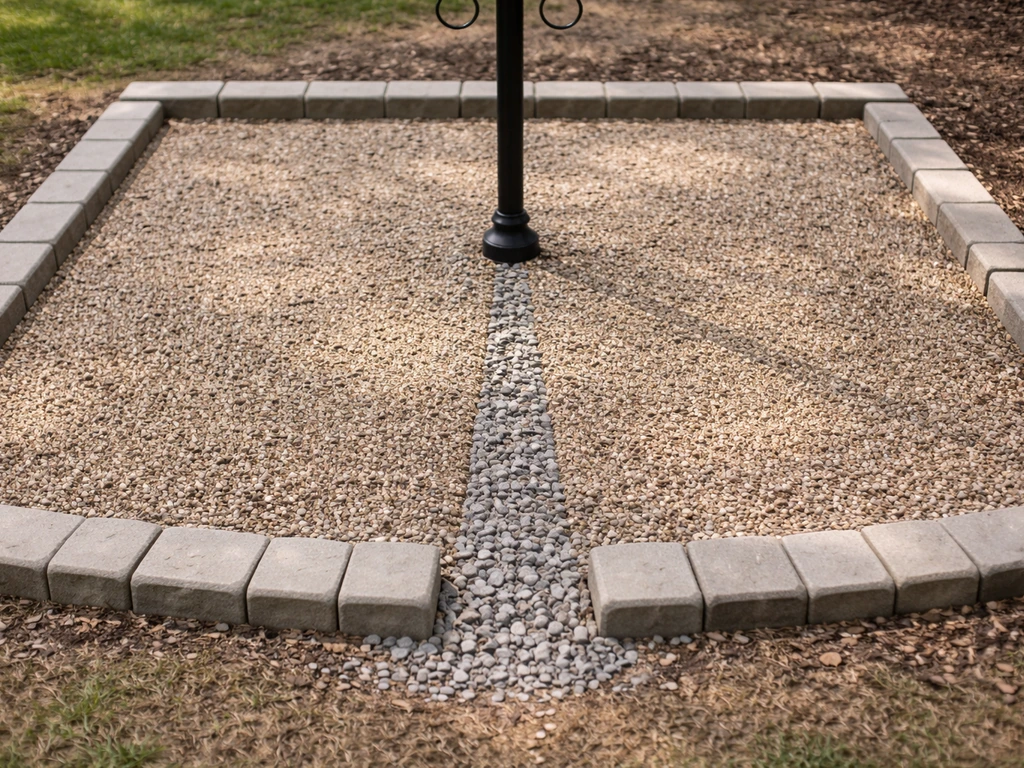
The best all-around ground cover under a bird feeder is a 3-to-4-inch layer of pea gravel or crushed granite over landscape fabric. It drains fast, resists weed growth, stays clean with a quick rake, and doesn't give rodents or cats easy cover to hide in. If you want something even lower effort, a pre-cut rubber or coir mat works well for smaller setups. But the right choice really does depend on your feeder type, how messy your birds are, and what your yard conditions look like, so here's how to think through it. If you want to narrow it down specifically for mockingbirds, the best feeder choice matters just as much as what you put under it bird feeder.
Best Ground Cover Under Bird Feeders: Clean, Weed-Free Options

Marcus Holloway
10 Jul 2026
What 'best ground cover' actually means under a bird feeder
When people search for ground cover under bird feeders, they're usually dealing with one or more of these problems: seed hulls smothering the grass, a muddy dead patch where nothing grows, weeds taking over, or rodents and other animals being drawn in by spilled food. Sometimes it's all four at once. The ideal ground cover solves each of these simultaneously, and they pull against each other in ways that make a single answer complicated.
Seed hull buildup is a real issue. Illinois Extension specifically notes that the mat of hulls under a feeder can smother grass plants as lawns emerge in spring, which is why so many people end up with a bare, dead circle under their feeder. That dead patch then becomes a mud pit in rain and a weed magnet when the season changes. Any ground cover you install needs to accept constant seed and hull debris, drain well after rain, suppress weeds, and stay sanitary enough that it doesn't become a disease vector or a rodent buffet. Clemson HGIC recommends sweeping up spilled seed and empty hulls at minimum monthly, so your ground cover should make that task easy rather than harder.
Safety is part of this too. Ground cover that creates dense hiding spots, like thick bark mulch piled high or ground-level plantings close to the feeder, can give cats and other predators a place to crouch and wait. USFWS and All About Birds both flag that feeding areas attract raccoons and rodents when seed accumulates, which makes ground cover design a predator-proofing decision as well as an aesthetic one.
Your main ground cover options, compared
Here's an honest look at the options people actually use, with the real trade-offs for each.
| Ground Cover | Drainage | Weed Suppression | Cleanliness/Sanitation | Predator Safety | Maintenance Level | Cost |
|---|---|---|---|---|---|---|
| Pea gravel / crushed granite | Excellent | Good (with fabric under) | Easy to rake, dries fast | Low hiding cover | Low | Low–Moderate |
| Pavers or brick | Good (gaps) | Excellent | Easy to sweep/hose | None | Very Low | Moderate–High |
| Landscape fabric + mulch | Moderate | Excellent | Harder, hulls embed in mulch | Some cover risk if deep | Moderate | Low |
| Rubber or coir mat | Good | N/A (no soil contact) | Easy to lift and rinse | None | Low | Low |
| Artificial turf / grass alternative | Moderate | Excellent | Hulls collect in fibers | Low | Moderate | Moderate |
| Bare soil / no cover | Poor | None | Very difficult | Some | High | Free |
Pea gravel and crushed granite
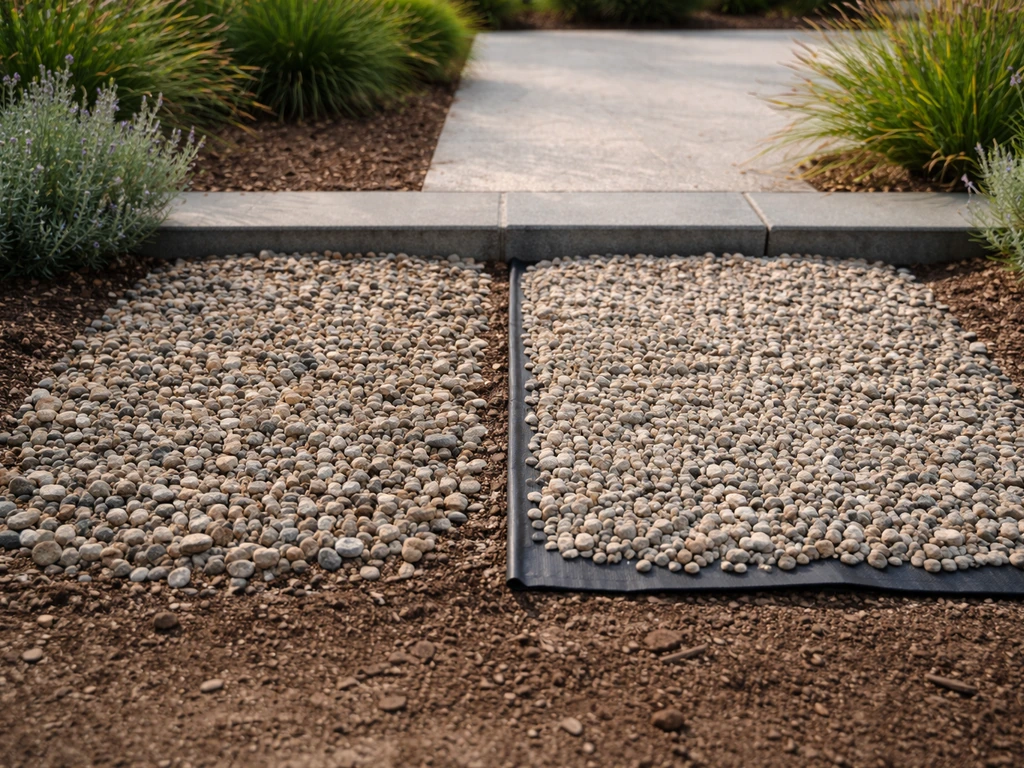
This is my first recommendation for most setups. If you're also shopping for the best bird feeders for garden, pair the feeder type with a low-maintenance surface like pea gravel so cleanup stays easy. Pea gravel (3/8-inch rounded stones) or crushed granite drains almost instantly after rain, which keeps the area from going muddy and stops mold from forming under accumulated seed husks. Laid 3 to 4 inches deep over a weed barrier, it suppresses almost all weed growth. A garden rake clears seed hulls and droppings in minutes. The open, low-profile surface also makes it genuinely hard for rats or cats to hide right under the feeder. The only real downside: it's not comfortable to kneel on when you're refilling or cleaning, and if you have kids playing nearby, pea gravel migrates. For most backyards with a pole-mounted or hanging feeder, this is the practical winner.
Pavers, flagstone, or brick
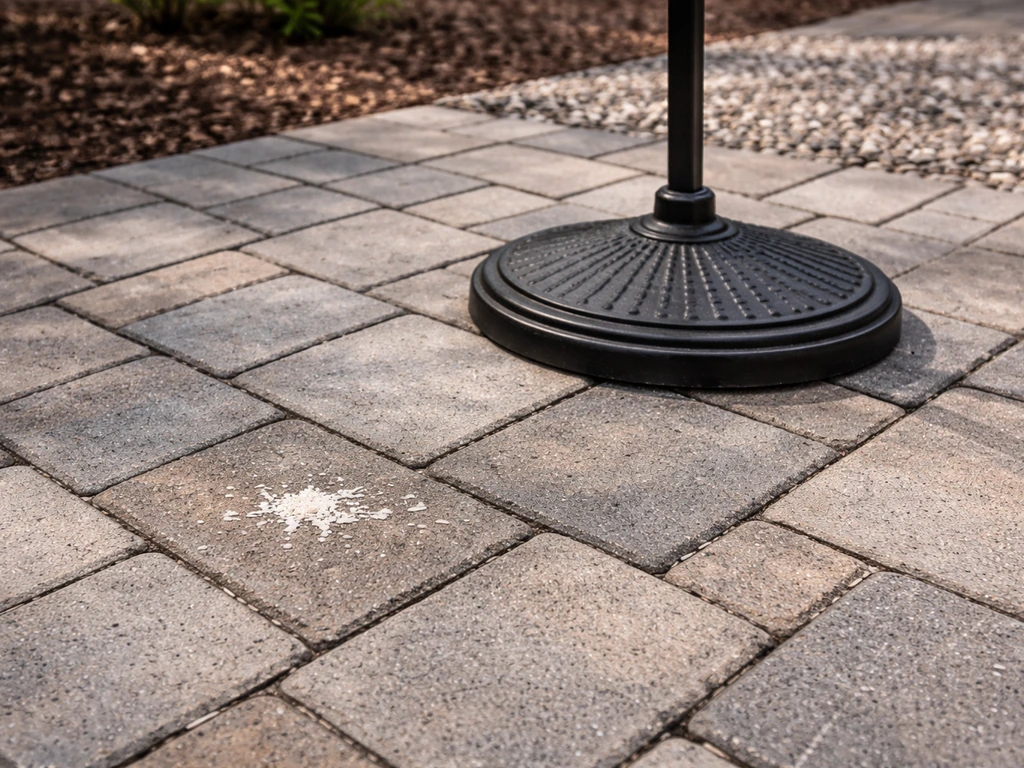
A paved surface under a feeder is the most durable and the easiest to keep truly clean. You can sweep it, hose it down, or use a stiff brush to scrub off dried droppings. This matters because All About Birds notes that droppings and contaminants can spread infectious bird diseases, and a hard surface is the easiest to fully sanitize. The downside is cost and effort upfront, and you need gaps or a slight grade to prevent water pooling. Pavers work especially well if the feeder is on a patio or deck area, which is a common setup if you're also thinking about feeders designed for patio use. If you are shopping for the best bird feeders for patios, the surface under the feeder matters just as much as the feeder itself. They're less practical if your feeder is out in the middle of a lawn.
Landscape fabric with mulch or gravel
Landscape fabric alone is not enough, you need something on top of it to hold it down and prevent weeds from rooting in debris that collects on top of the fabric. Paired with gravel, fabric works very well. Paired with bark mulch, it's a mixed bag. Bark mulch looks nice but seed hulls embed in it, it stays damp after rain (inviting mold), and it decomposes into soil over a season or two, giving weeds something to root in again. If you go the mulch route, use a coarse wood chip rather than fine bark, keep the layer to 2 inches rather than 4, and plan to fully replace it once a year.
Rubber or coir (coconut fiber) mats
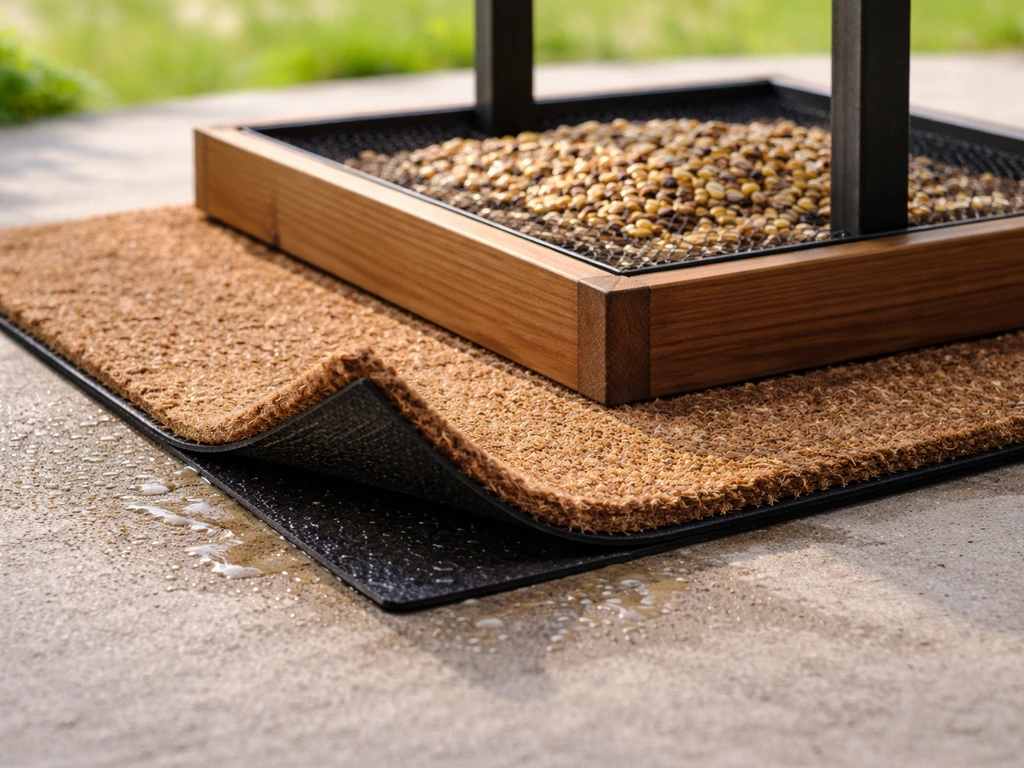
Pre-cut mats designed for under-feeder use are a genuinely good option for smaller setups, platform feeders, or patio feeders on hard surfaces. They're cheap, they lift up for rinsing, and they don't require any ground prep. The limitation is size: most mats are 2 to 3 feet in diameter, which is barely enough coverage for a tidy feeder but not nearly enough for a messy platform feeder with multiple species feeding at once. Some coir mats also break down within a single season outdoors. Look for thick rubber-backed versions if you want them to last two or more years.
Artificial turf and grass alternatives
Artificial turf feels like a tidy solution but creates more problems than it solves under a feeder. Seed hulls, droppings, and suet drips work their way into the fibers and are genuinely difficult to get out. The turf stays damp longer than gravel, which encourages mold. If you want a planted or living surface alternative, creeping thyme or clover can work well in sunny spots and recovers from foot traffic better than grass, though neither handles heavy seed fall well. For plant-specific suggestions, there's a full resource covering the best plants for under bird feeders that's worth reading alongside this guide. For more plant ideas, check out the best plants for under bird feeders resource and match them to your light and cleanup routine.
Weed and poop management
The two sanitation problems you'll fight most are seed germination (spilled millet, sunflower, and nyjer will all sprout) and droppings accumulation. UF/IFAS teaching material also warns that platform-style feeding can increase disease transmission by mixing droppings with food, since tube feeders have multiple feeding ports and can create more debris on platforms droppings accumulation. For weeds, the combination of a quality woven landscape fabric under 3 to 4 inches of gravel suppresses the vast majority of weed growth. Pre-emergent herbicide applied once in early spring around the edges of the gravel bed adds another line of defense. Sterilized seed mixes (heat-treated to prevent germination) are also available from most bird supply retailers and are worth considering if weeds are a persistent problem. They cost more but dramatically reduce sprouting.
For droppings, Penn State Extension recommends raking up and removing debris and droppings regularly, and Clemson HGIC suggests doing this at minimum monthly. With a gravel surface, raking takes under five minutes. With mulch, it's messier and you'll need to turn or spot-replace sections. With pavers, a stiff brush and garden hose handle most of it. Whatever surface you choose, plan for a more thorough clean every four to six weeks: rake or sweep the surface, remove accumulated hulls and droppings, and rake a thin layer of fresh gravel in to replace any that's dispersed. Twice a year, pull back the gravel entirely and inspect the landscape fabric for tears or areas where soil has built up on top of it, which is where weeds will root.
Predator-proofing and wildlife safety
Ground cover affects predator risk more than most people realize. Thick mulch, dense low plantings, or anything that creates knee-height concealment right under a feeder gives cats and other predators a place to crouch and ambush ground-feeding birds. Birds like mourning doves, dark-eyed juncos, and sparrows regularly drop to the ground to glean spilled seed, and they're vulnerable. USFWS notes that feeding areas can attract raccoons and other predators when seed accumulates, which is a problem both for the birds and for how frequently you'll have nighttime visitors disrupting your setup.
Gravel and pavers are the safest surfaces from a predator standpoint because they offer no concealment, and loose gravel actually makes noise when an animal walks across it, giving ground-feeding birds an audio warning. Keep any ground cover layer flat and low (under 4 inches for gravel, no raised mounds of mulch). Don't place the feeder directly against a shrub or fence line where a cat can wait in cover. A clear sightline of 6 to 8 feet in all directions around the feeder post gives ground-feeding birds enough reaction time.
On pest control: All About Birds and Penn State Extension both flag that accumulated seed attracts rodents. A clean ground cover that dries fast and doesn't allow seed to sit wet and ferment is one of the simplest deterrents. Penn State also recommends limiting how much you put out, especially for platform-style feeders, to only what birds will consume in a day. This habit combined with a clean, raked gravel surface is more effective than any single product at keeping rats and mice from setting up under your feeder.
Weather durability and year-round maintenance
Rain drainage is the most critical weather factor. A ground cover that pools water turns into a mud and mold problem within one wet week. Gravel and pavers both drain fast. Mulch holds moisture for days. If you live somewhere with regular heavy rain or have clay soil that drains poorly, grade the area very slightly (a 1 to 2 percent slope away from the feeder post) so water runs outward rather than pooling.
In winter, freeze-thaw cycles are hard on pavers and landscape fabric. Pavers can heave and shift when soil freezes and thaws repeatedly, so use a proper sand base (2 inches of compacted sand) under any paving stone installation to minimize this. Landscape fabric can become brittle at the edges over multiple winters and tear. Check it each spring and replace any torn sections before weeds exploit the gaps. Gravel is almost entirely freeze-thaw resistant and is usually the lowest-maintenance option in cold climates.
Raking and replacement frequency by surface type:
| Surface | Rake/Clean Frequency | Full Replacement or Major Refresh |
|---|---|---|
| Pea gravel / crushed granite | Every 2–4 weeks | Top up with new gravel every 1–2 years |
| Pavers / flagstone | Monthly sweep, hose as needed | Re-level sand base every 3–5 years |
| Landscape fabric + mulch | Every 2–3 weeks (surface turn) | Replace mulch annually, inspect fabric each spring |
| Rubber/coir mat | Lift and rinse monthly | Replace coir annually; rubber every 2–3 years |
| Artificial turf | Weekly brush-out | Replace every 3–5 years depending on quality |
Match your ground cover to your feeder type and birds
Your feeder type changes how much mess hits the ground and what kind of mess it is. If you’re specifically trying to attract blackbirds, choose a feeder setup and ground cover that handles their heavier visits and messy, seed-heavy feeding style best bird feeders for blackbirds. This matters when choosing your surface.
- Tube feeders with nyjer (finches, siskins): Relatively tidy. Nyjer seeds are tiny and mostly fall straight down in a narrow radius. A 24-inch gravel or mat pad is usually sufficient. Hulls are light and easy to rake.
- Sunflower tube feeders (chickadees, nuthatches, cardinals): Moderate mess. Sunflower hulls are bulky and accumulate fast. Gravel works well; plan for at least a 36-inch radius coverage.
- Platform or tray feeders (cardinals, jays, doves, sparrows): Heaviest mess by far. Birds scratch, scatter, and push seed off the edges constantly. UF/IFAS notes that droppings mixing with food is a disease risk with platform feeders specifically. Use gravel or pavers with a 48-inch or larger radius, and plan for more frequent raking. Pavers are especially practical here because you can hose off droppings directly.
- Suet feeders (woodpeckers, nuthatches): Suet drips are oily and sticky and don't rinse off mulch or fabric easily. Gravel or pavers are the right call here. Avoid mulch directly under suet feeders.
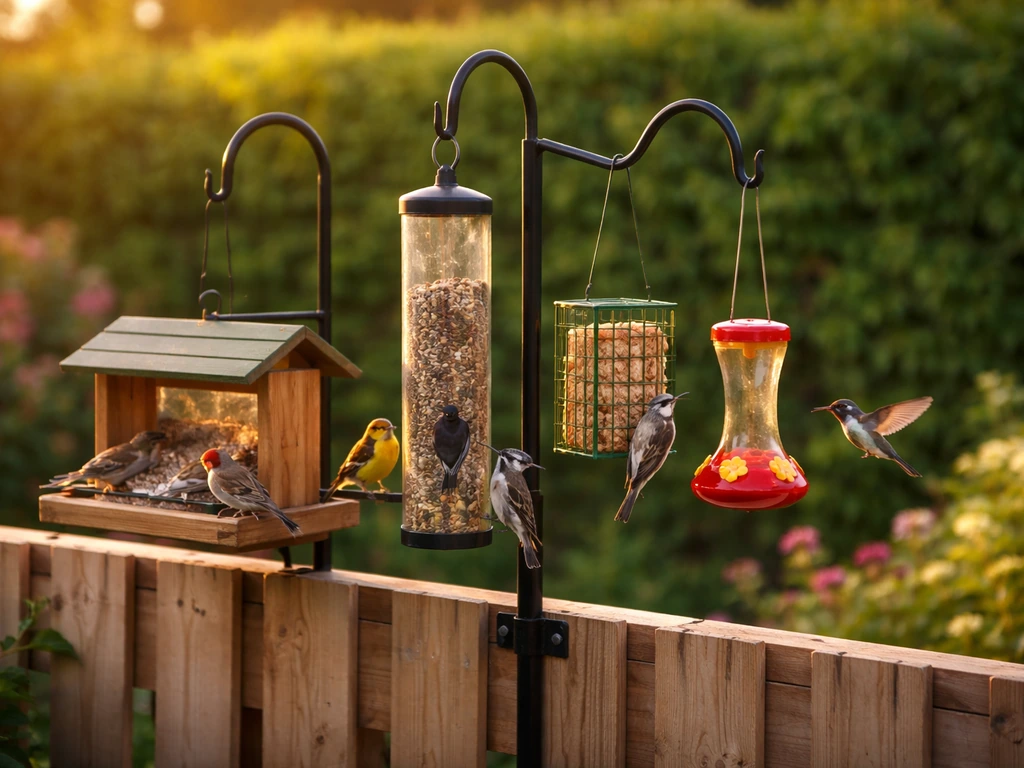
- Specialty feeders for hummingbirds: Ground cover is largely irrelevant for hummingbird feeders since they feed in midair. Focus on ground cover under any seed feeders in the same area.
- Feeders in garden settings: If your feeder is integrated into a planting bed, creeping ground covers that tolerate seed fall (like clover or creeping thyme) can blend the feeder area into the garden. This is covered in more depth in the guide on the best bird feeders for gardens and the companion piece on the best plants for under bird feeders.
How to measure, buy, and install your ground cover today
Getting this done today is straightforward if you have the measurements right before you buy anything. Here's how to approach it.
Step 1: Measure and mark your coverage area
The minimum coverage radius from the feeder post should be 24 inches for a small tube feeder, 36 inches for a standard sunflower or mixed seed feeder, and 48 to 60 inches for a platform feeder or any feeder with multiple high-traffic birds. Use a garden hose, rope, or landscape paint to mark a circle on the ground before you dig. A circular shape is easier to maintain than a square because seeds fall in a radius, not a rectangle.
Step 2: Calculate material quantities
For a circular gravel pad, use this rough guide: a 36-inch radius circle (about 28 square feet) needs approximately 0.35 cubic yards of gravel for a 3-inch depth, or just under half a cubic yard for a 4-inch depth. Most home improvement stores sell pea gravel in 0.5-cubic-foot bags (which cover about 2 square feet at 3 inches deep) or in bulk by the cubic yard. For landscape fabric, buy a roll that covers your circle plus a 6-inch overhang all around so you can tuck or pin the edges.
Step 3: Install it
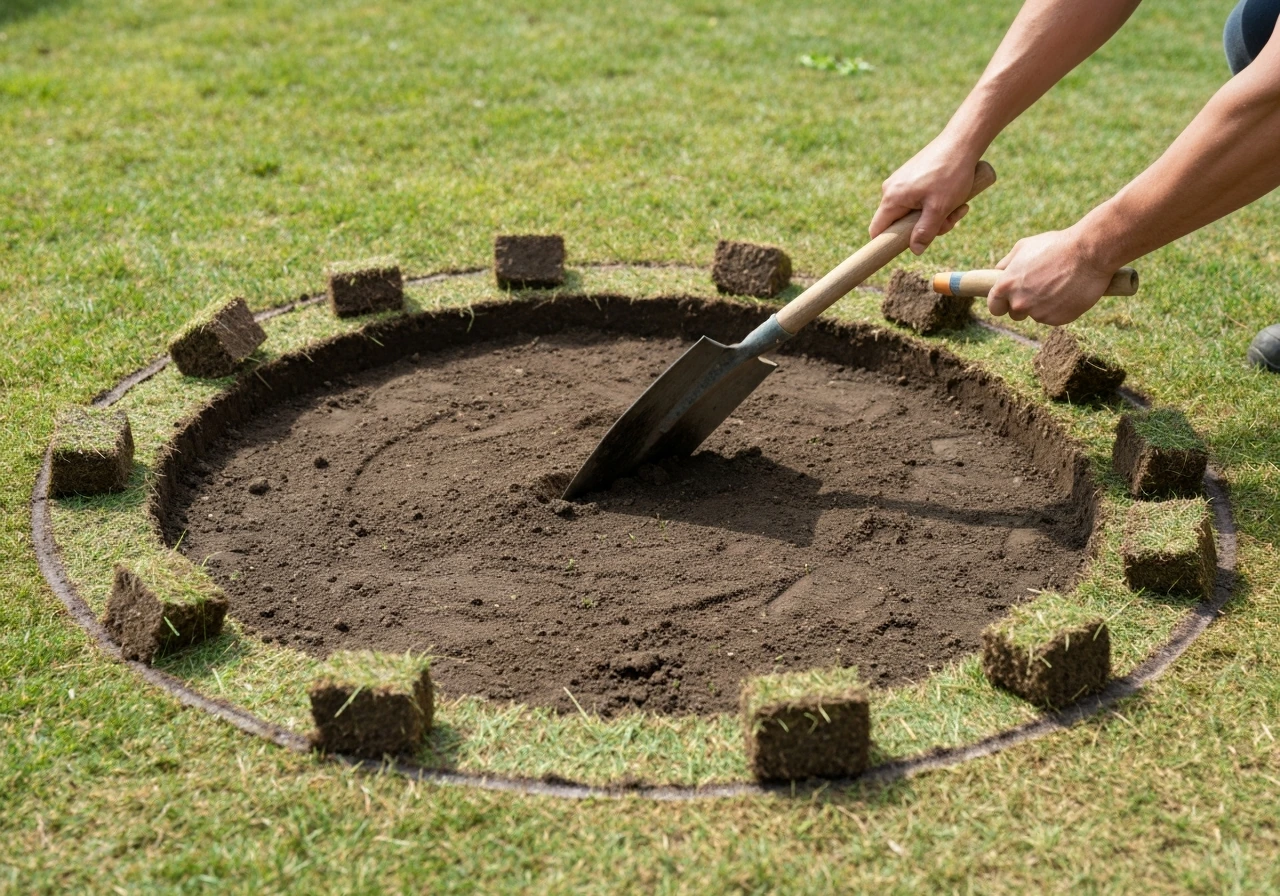
- Clear the area: Remove existing sod or vegetation with a flat spade. Dig down 3 to 4 inches across the entire circle so the finished gravel surface sits at or just below the surrounding lawn grade.
- Level and tamp: Rake the soil flat and tamp it firm with a hand tamper or the back of a spade. A firmer base means less gravel migration over time.
- Lay landscape fabric: Cut it to fit your circle with 6 inches of overlap at the edges. Use landscaping staples or pins every 12 inches around the perimeter to hold it down. Overlap any seams by at least 6 inches.
- Add your gravel: Pour in pea gravel or crushed granite and rake it to an even 3 to 4 inch depth. Avoid piling it against the feeder post, which traps moisture and can accelerate post rot.
- Install an edging border (optional but recommended): A flexible plastic or metal lawn edging ring around the circle keeps gravel from migrating into the lawn and gives the area a clean edge that's easy to mow around.
- Do a first rake: Rake the fresh gravel smooth and check that the feeder post is stable and plumb. You're done.
Quick pre-buy checklist
- Measure your feeder's drop radius and add 12 inches to determine your pad diameter
- Check soil drainage in the spot: pour a bucket of water and see how fast it absorbs. If it pools for more than 5 minutes, plan for a grade or add a French drain before installing
- Decide whether you want a permanent (gravel/pavers) or removable (mat) solution
- For gravel: buy woven landscape fabric (not the cheap paper-backed kind), pea gravel or crushed granite (not decorative stones that are too large to rake), and landscape staples
- For pavers: buy polymeric sand for the joints and plain sharp sand for the base layer
- For mats: measure the area and buy a mat at least 6 inches larger in diameter than your expected seed fall zone
- Buy enough material to go 3 to 4 inches deep, not just a surface dusting
- Pick up a dedicated garden rake to keep near the feeder for quick cleanups
FAQ
How do I stop weeds if I already have a dead patch under the feeder?
Remove the old debris first, pull any existing sprouts, then level the soil. Install a woven weed barrier, keep it fully covered by gravel, and top with the full 3 to 4 inch depth. For a stubborn area, do an edge-only pre-emergent treatment around the gravel bed after installation, then switch back to regular monthly raking to prevent new hulls from germinating.
What should I do if birds are dropping so much seed that the gravel starts looking dirty?
Use a quick, low-effort routine, rake or sweep twice per week during peak seeding, and then do a deeper clean every 4 to 6 weeks. Also reduce daily fill amounts, especially on platform feeders, so spilled seed stays minimal. If you see hull buildup, pull back a thin top layer of gravel and replace it rather than digging into the fabric.
Can I use crushed granite instead of pea gravel, and will it affect cleanup?
Yes, crushed granite works well for drainage and weed suppression. Cleanup can be slightly slower because crushed rock can trap fine debris more than rounded pea gravel, but raking still works. If you have kids playing nearby or want a softer feel for kneeling, pea gravel is usually more comfortable.
Is landscape fabric enough for frost-prone climates, or do I need to change the plan?
Landscape fabric can tear at the edges over multiple winters, freeze-thaw makes soil move, and weeds exploit those gaps. In cold areas, inspect each spring, repair or replace torn sections, and keep the gravel depth consistent. Avoid burying fabric edges too shallowly, pin them firmly so they do not lift during freeze-thaw.
How do I prevent pea gravel from migrating when I refill or when kids walk by?
Border the pad with a rigid edge (metal or plastic landscape edging) or a tight ring of pavers so stones cannot roll outward. Keep the pad level, and do not overfill the feeder so you are not blasting hulls across the surface. If stones still drift, top off with a small amount and rake flat after your monthly cleanup.
What if my feeder is on a slope or near a driveway where water runs toward the yard?
Grade the pad so water flows away from the feeder post by about 1 to 2 percent. If you cannot regrade, consider pavers with a slight grade and sand setting so pooling is minimized. Keep the gravel bed footprint larger than the feeder’s drop zone so runoff does not carry seed into adjacent lawn areas.
Should I use coir or rubber mats under a feeder, and how long will they last?
They can work for small, tidy setups, but durability depends on thickness and weather. Some coir mats break down within a single season outdoors, while thicker rubber-backed mats often last longer. Mats also trap seed and droppings more than gravel, so expect more scrubbing or rinsing and plan to lift and clean them regularly.
Do I need to use a pre-emergent herbicide if I already have weed fabric and gravel?
Often you do not, but it can be a good edge strategy if weeds are persistent in your yard. Apply only around the perimeter of the gravel bed, follow the label carefully, and keep granules off the feeder area. The main weed control still comes from full fabric coverage plus maintaining enough gravel depth to block light.
How big should the coverage area be if I switch feeder types during the year?
Design for the messiest feeder you plan to use, usually a platform feeder or high-traffic sunflower feeder. If you only install enough for a small tube feeder but later switch to multiple birds at a platform setup, you will get seed spill beyond the pad and into soil where weeds can root. A larger circle also makes rotation between feeders easier.
What’s the safest option for cats and other predators if I can’t avoid vegetation nearby?
Avoid any raised mounds of mulch or low plantings close enough to provide concealment under the feeder. Keep a clear sightline (about 6 to 8 feet) by trimming nearby dense growth, and place the feeder so it is not tight against shrub or fence cover. Gravel or pavers are preferable because they provide no hiding cover and are easier to keep free of seed accumulation.
How often should I replace the gravel and check the fabric underneath?
Do a light rake or sweep and debris removal every 4 to 6 weeks. Twice per year, pull back gravel enough to inspect the fabric for tears and areas where soil has built up on top of it. When you see soil migrating through or weed roots appearing, lift, patch or replace the fabric, and reset the correct 3 to 4 inch gravel depth.
Will turf or creeping thyme under the feeder attract more mess or mold?
Yes, higher moisture retention usually increases problems under feeding areas. Artificial turf fibers can trap hulls and droppings, making sanitation harder, and living groundcovers can struggle with heavy seed fall and prolonged dampness. If you want a planted look, choose the sunniest spot possible and be ready for more frequent cleaning to prevent seed from building up.
Next Articles
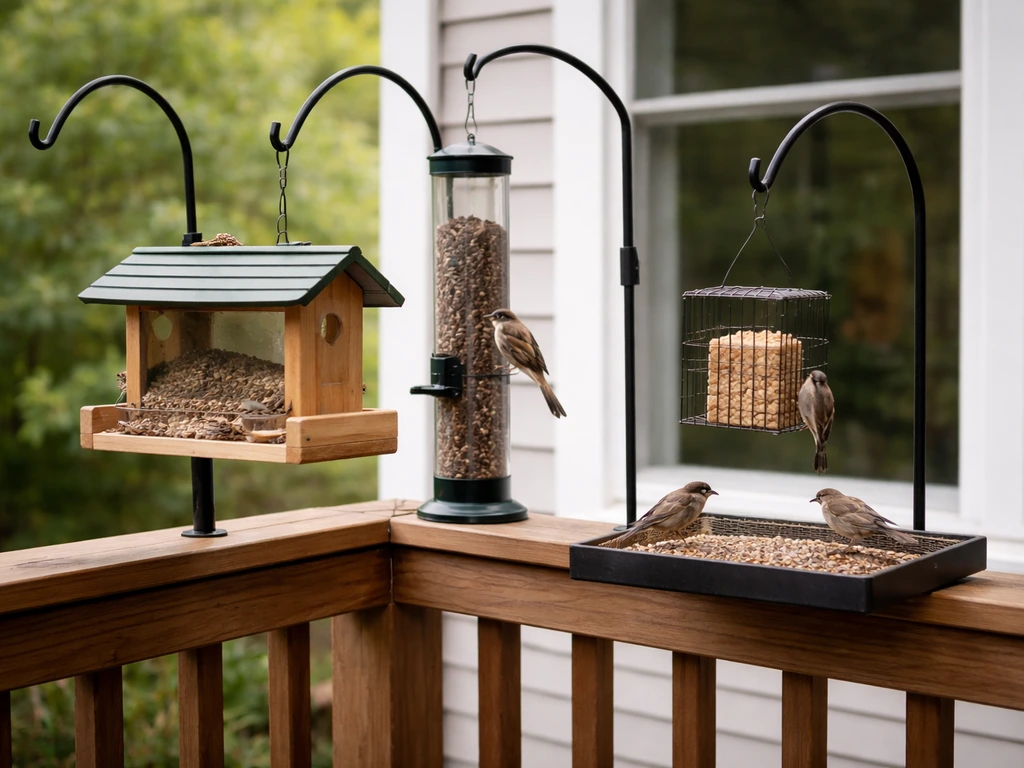
Best Bird Feeders for Patios: Types, Placement, and Picks
Buying guide to pick best bird feeders for patios, including types, placement, cleaning, squirrel control, and top picks
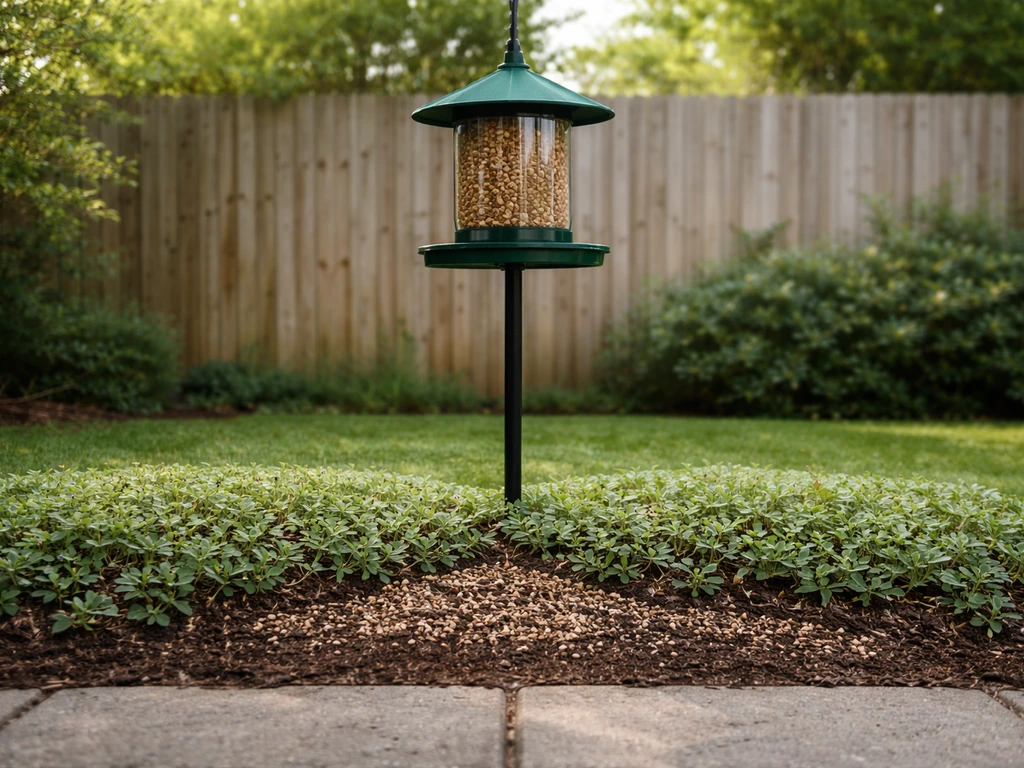
Best Plants for Under Bird Feeders: Tidy, Helpful Options
Best under-bird-feeder plants for tidy yards: low-mess groundcover, shelter, and easy maintenance, plus pest control tip
Best Bird Feeders for Garden: Top Picks by Bird Type
Best bird feeders for garden by bird type: smart camera picks, squirrel-proof designs, low-mess feeders, and how to choo