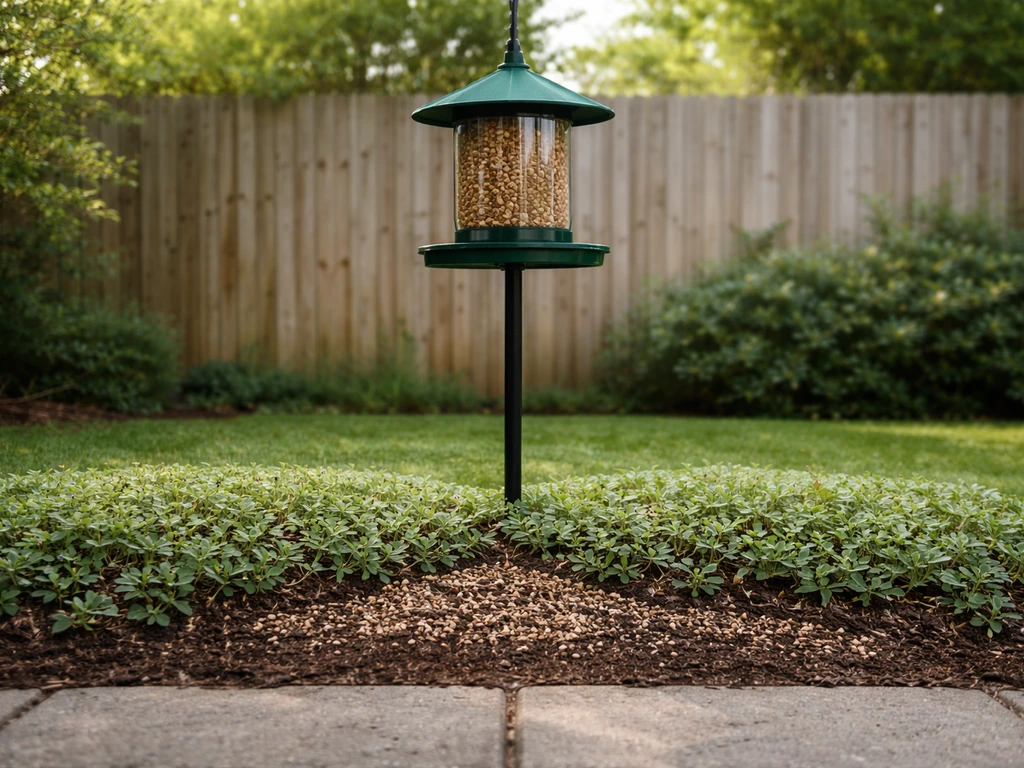
For most patios, a tube feeder filled with black-oil sunflower seed is the single best starting point. It attracts the widest range of birds, keeps seed dry, limits mess, and hangs easily from a hook or pergola beam. If you want to go further, pairing it with a hummingbird feeder and a suet cage covers almost every species that will realistically visit a patio. The trick is matching the feeder type to the birds you actually want, then placing and protecting it so squirrels and grackles don't run the show.
Best Bird Feeders for Patios: Types, Placement, and Picks
Marcus Holloway
2 Jul 2026
Choosing the right feeder for patio birds
Patios are different from open gardens. You're working with limited space, close proximity to windows and doors, and more exposure to human activity that can spook shy birds. The upside is that patios let you observe birds at close range, which makes feeder placement and design choices matter even more. Before you buy anything, ask yourself three questions: Which birds do I actually see in my yard? How much cleanup am I willing to do? And do I have a railing, overhang, or post I can mount something on?
Feeding behavior is the core filter. Ground-feeding birds like doves and juncos do best with a low platform feeder. Shrub and treetop feeders like chickadees, nuthatches, and finches prefer a tube or hopper hung at mid-height. Woodpeckers want a suet cage placed well off the ground, ideally at least five feet up on a post or hanging from an arm bracket. Matching the feeder style to the feeding behavior is the single best thing you can do to attract the birds you want and filter out the ones you don't.
Best patio feeder types: which one does what
Here's how each major feeder type performs in a real patio setting, from most to least universally useful.
Tube feeders
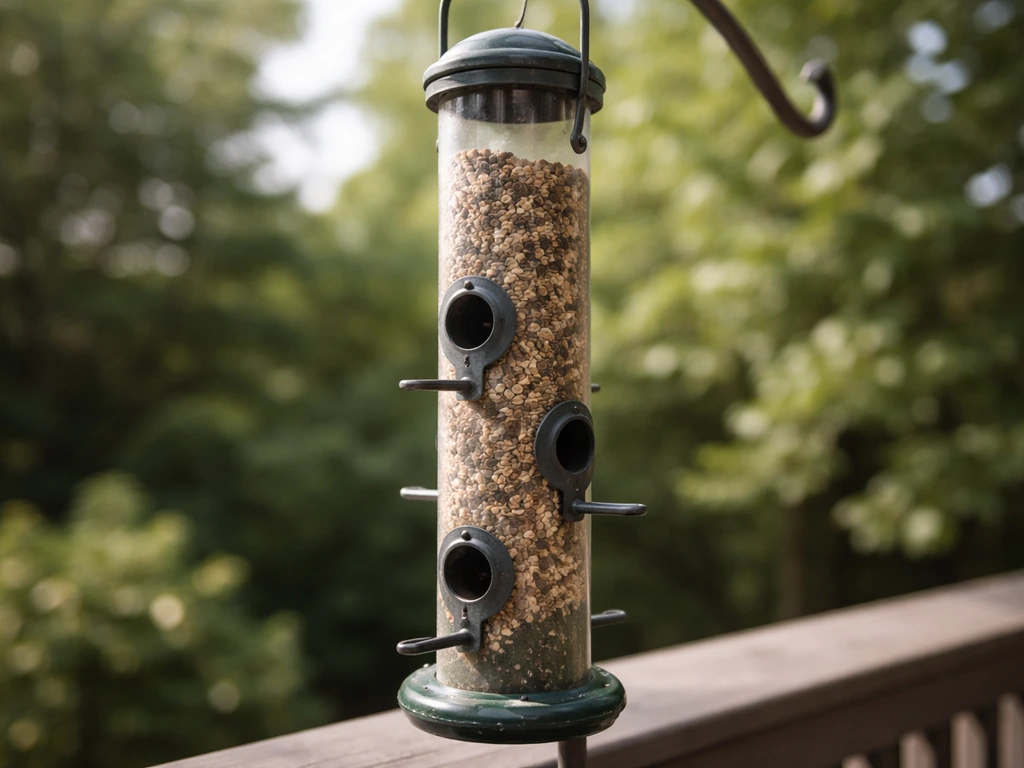
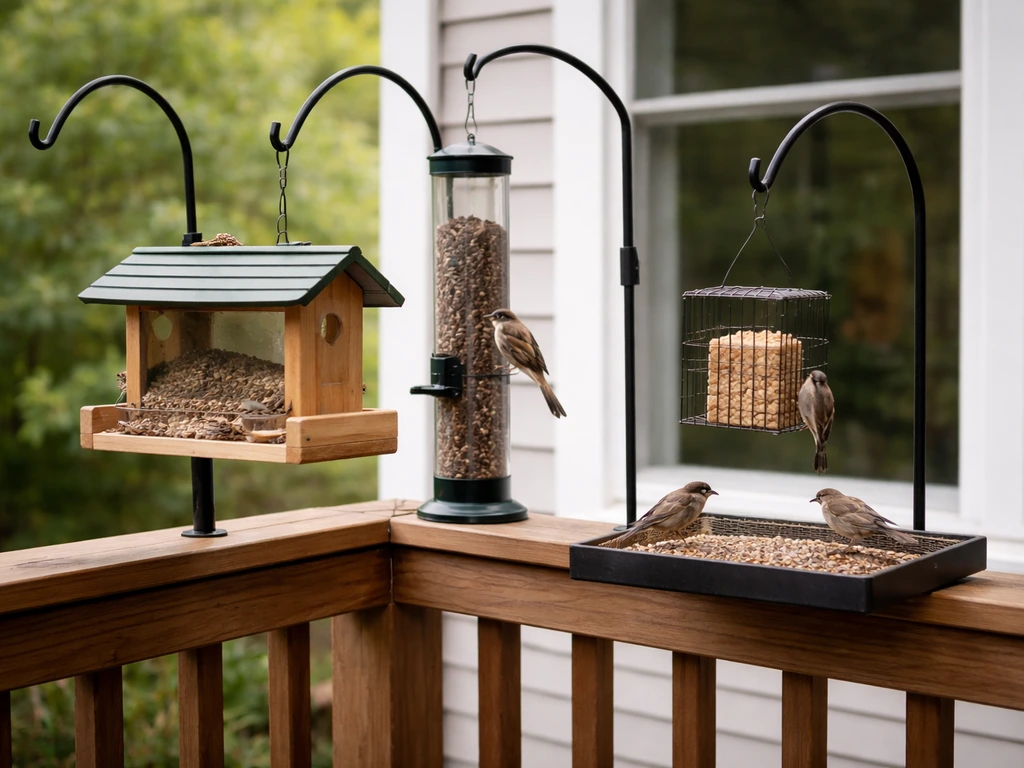
A tube feeder is a hollow cylinder with multiple feeding ports and perches along the side. It's the workhorse of patio birding. Tube feeders are weather-resistant by design because the seed is enclosed, they're compact enough to hang from almost any hook or shepherd's crook, and they attract chickadees, finches, nuthatches, titmice, and cardinals depending on the seed you use. Fill with black-oil sunflower seed for the broadest mix of visitors. Fill with nyjer (thistle) seed and swap to a fine-mesh tube to target goldfinches and small finches specifically.
Hopper feeders
A hopper feeder is essentially a seed reservoir with walls and a roof, which is exactly why Project FeederWatch describes it as a platform with weather protection built in. The roof keeps seed dry longer than a platform feeder would. Hoppers attract a wide range of species including cardinals, jays, sparrows, and doves, but their open feeding area means larger birds and grackles can dominate them. They work well on a patio post or mounted on a railing bracket, but be prepared for more hull mess underneath.
Platform and tray feeders
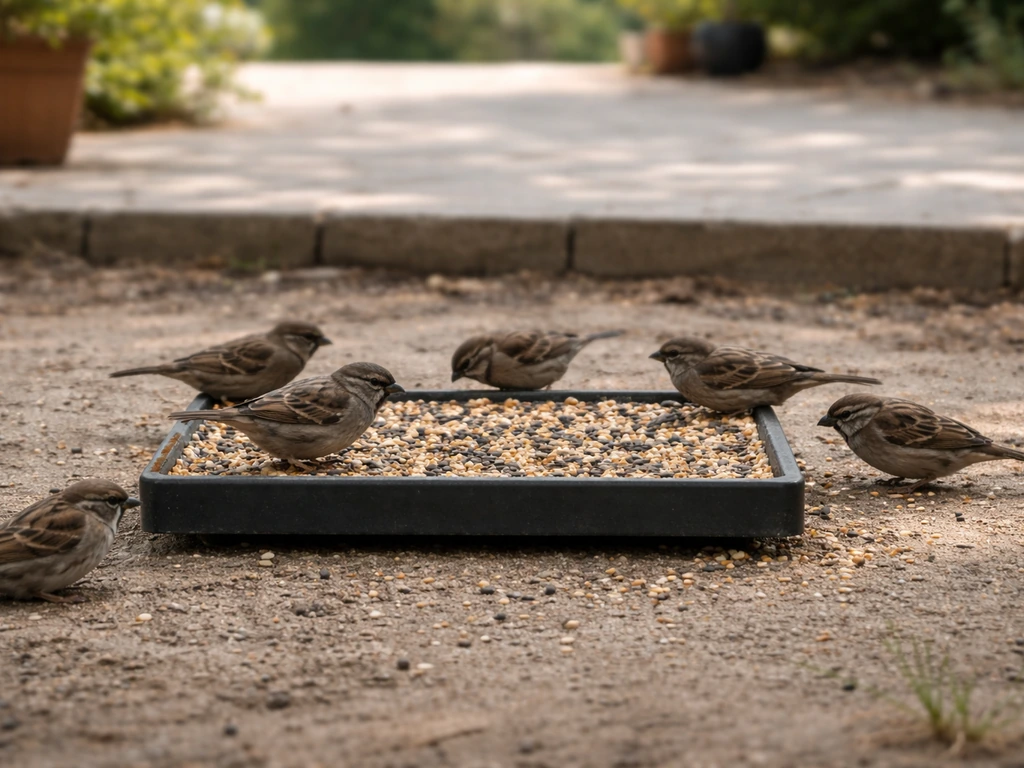
Platform feeders are flat raised surfaces where you spread seed, fruit, or even mealworms. They're the most inviting style for ground-feeding birds that feel comfortable on an open surface, and cardinals in particular seem to prefer them. If you want the best plants for under bird feeders, choose options that tolerate frequent seed and droppings without turning muddy platform feeder. The tradeoff is that seed gets wet fast, and you'll need to clean and refill more often than with an enclosed feeder. On a covered patio, platform feeders do much better since they're protected from rain. If you're mostly dealing with seed hulls piling up on patio pavers, a platform feeder with a mesh bottom that lets hulls fall through will save you some sweeping.
Suet cage feeders
A wire mesh suet cage holds a suet cake and is specifically designed for insect-eating birds: woodpeckers, nuthatches, chickadees, and brown creepers. Hang it at least five feet up, away from surfaces squirrels can launch from, and expect reliable woodpecker activity if any live nearby. Suet is a winter staple, but you can buy no-melt suet cakes for summer use. Suet cages are cheap, easy to clean, and the birds that use them are some of the most entertaining to watch up close.
Hummingbird feeders
A hummingbird feeder filled with nectar (one part white sugar to four parts water, nothing else) is a patio essential during the migration season and year-round in warmer climates. Glass models last longer and are easier to clean than plastic, and feeders with built-in ant moats and bee-resistant ports save a lot of frustration. The key maintenance rule: change nectar every one to two days in hot weather, every three to four days when it's cooler, and immediately if it turns cloudy. That schedule is non-negotiable if you want to keep hummingbirds safe and coming back.
Finch and nyjer feeders
If goldfinches, pine siskins, or redpolls visit your area, a dedicated nyjer tube feeder (sometimes called a thistle sock or fine-mesh tube) is worth adding alongside your main feeder. These feeders have tiny ports that are too small for larger birds and squirrels to empty quickly, which is a bonus. Fill them with nyjer seed only. They're narrow, lightweight, and hang from any hook. The downside is that nyjer seed goes stale faster than sunflower, so if you see birds ignoring the feeder, freshen the seed.
Weather durability and cleaning: what actually holds up outside
On a patio, your feeders are close enough to touch, which means you'll notice degraded plastic, warped wood, and mold-stained ports faster than you would on a distant pole in the yard. UV-stabilized polycarbonate and powder-coated metal outlast cheap acrylic or raw wood in direct sun and rain. If you're choosing between two otherwise equal feeders, pay for the metal or glass version. You'll replace it far less often.
Cleaning schedule: tube and hopper feeders should be cleaned with a dilute bleach solution (1 part bleach to 9 parts water) at least once a month, and more often during wet weather when seed can clump and mold. Use a bottle brush to scrub the inside of tubes and seed ports. Rinse thoroughly and let the feeder dry completely before refilling, because putting seed into a damp feeder is one of the fastest ways to cause spoilage. Sweep up seed hulls and spilled seed under the feeder monthly to reduce disease and rodent activity underneath your patio.
Hummingbird feeders need more frequent attention. Rinse with hot water every one to two days in summer, and do a deeper scrub with a bottle brush weekly. Avoid soap residue, which can deter hummingbirds. If you see black mold inside the nectar reservoir, a dilute bleach rinse followed by thorough rinsing is the fix. Discard any seed or nectar that looks cloudy, smells off, or has been sitting in hot sun for more than two days.
Mounting, placement, and keeping your patio tidy
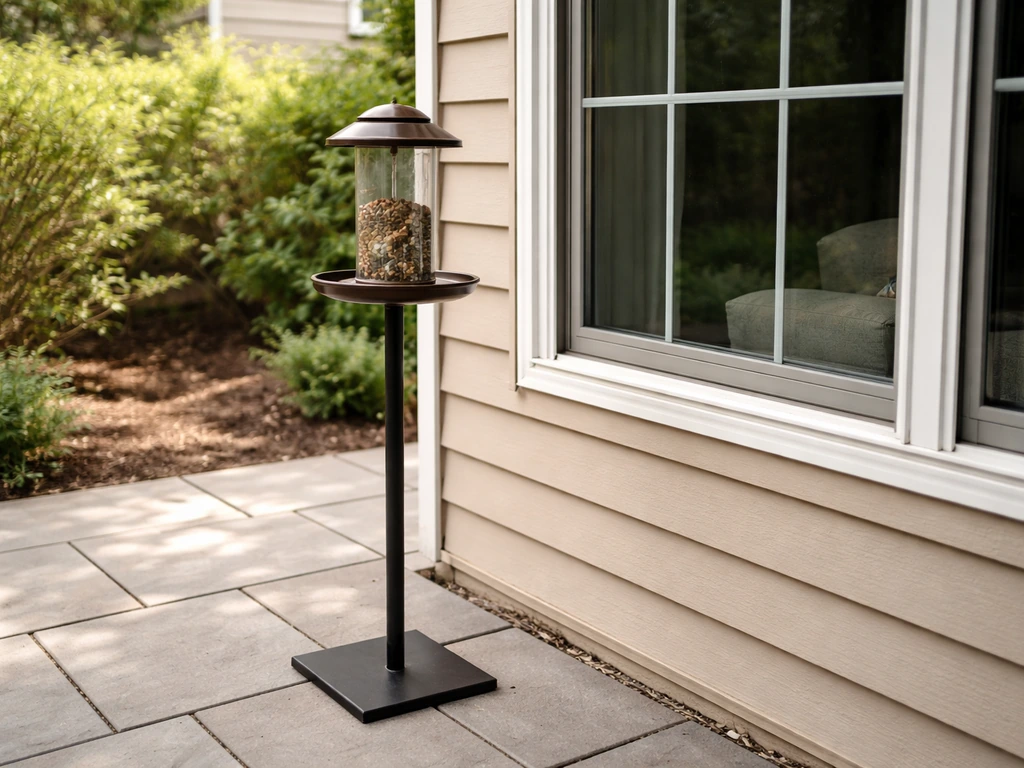
The single most important placement rule for any patio feeder is the window distance rule: put feeders either within three feet of a window or beyond ten feet. The U.S. Fish & Wildlife Service also advises keeping feeders, baths, or houses no more than three feet from a window to reduce bird-window collision momentum no more than three feet from a window to reduce collision momentum. The danger zone is three to ten feet, where birds build up enough speed to fatally strike glass. Most patio setups actually make the under-three-feet placement easy: a window-mounted feeder, a hook screwed into a pergola beam just outside a door, or a railing-mounted arm bracket all keep feeders close enough to be safe. Bonus: you get better views.
Mounting options for patios are more varied than most people realize. A shepherd's crook stake works in a planter box or any soil border. A railing-mounted clamp bracket attaches to most deck or patio railings without drilling. A pergola or overhang beam is ideal for hanging feeders because it also provides weather protection. If you have none of these, a freestanding pole with an arm bracket is a clean solution and lets you position the feeder exactly where you want it, independent of your house structure.
For mess control, positioning feeders over a paved surface (rather than furniture or a rug) makes cleanup much easier. A tray catch mounted under a tube or hopper feeder catches falling hulls and can be emptied weekly. If you're using a platform feeder with mesh bottom, hulls fall through onto the surface below. A dedicated mat under the feeder, or a small section of pavers surrounded by a low border, makes sweeping easier and keeps the rest of the patio cleaner. Some people growing plants near their patio may find value in thinking about what ground cover or plants work beneath feeders to manage the mess more naturally.
Keeping squirrels out and grackles from taking over
Squirrels are relentless, and on a patio they have even more launch points to work from: railings, furniture, planters, and walls. The most effective hardware solution is a weight-activated feeder. The Brome Squirrel Buster Standard and Squirrel Buster Plus both use a weight-activated shroud that drops down and closes off seed ports when a squirrel's weight is applied. They work consistently as long as the feeder is positioned so squirrels can't reach seed ports from an adjacent surface. That positioning rule matters more than the feeder mechanism itself.
The Perky-Pet Squirrel-Be-Gone Max uses the same principle with its Weight-activated Seed Shield, closing ports under heavier animals. All of these products are honest about their limitations: they stop squirrels from feeding directly, but they're not magic. If a squirrel can grip a nearby post and reach the ports from the side, the weight mechanism never activates. Keep feeders at least four to five feet from any surface a squirrel can use as a platform, and add a baffle on any pole or post below the feeder.
Grackles are a different problem entirely. Weight-activated feeders do not reliably deter grackles because grackles are light enough that the mechanism doesn't close under their weight. Brome's own product pages explicitly state the Squirrel Buster Plus will not deter grackles. For grackle-heavy yards, the most effective tactic is feeder style selection: switch from an open hopper to a tube feeder with short perches that physically can't accommodate a grackle's body length. Tube feeders with small ports and short perches are built for small perching birds and make it physically awkward for large birds to feed. Cage-style feeders, where small birds enter a wire cage surrounding the feeder but larger birds can't fit through, work well too. You can read more about managing specific nuisance birds in guides focused on blackbirds, since many of the same tactics apply across large, aggressive feeder species. If blackbirds are your target species, choosing feeder styles that prevent grackles and larger birds from taking over can help you narrow down the best bird feeders for blackbirds guides focused on blackbirds.
Best feeder choices by bird species
Here's a practical species-to-feeder match for the birds most likely to visit a patio feeder setup.
| Bird | Best Feeder Type | Best Food |
|---|---|---|
| American Goldfinch | Fine-mesh nyjer tube | Nyjer (thistle) seed |
| Northern Cardinal | Hopper or platform feeder | Black-oil sunflower seed |
| Chickadee / Nuthatch | Tube feeder or suet cage | Black-oil sunflower, suet |
| Downy / Hairy Woodpecker | Suet cage (hung high) | Suet cake |
| House Finch / Purple Finch | Tube feeder | Black-oil sunflower or nyjer blend |
| Mourning Dove | Low platform or tray feeder | Millet, sunflower, cracked corn |
| Hummingbird | Nectar feeder with ant moat | 1:4 sugar-to-water nectar |
| Tufted Titmouse | Tube or hopper feeder | Black-oil sunflower, peanuts |
| Dark-eyed Junco | Low platform feeder or ground tray | White millet, sunflower chips |
Cardinals specifically prefer feeders where they can land and face forward while eating rather than clinging, which is why a hopper or platform feeder suits them better than a standard tube. If attracting cardinals is your priority, a hopper feeder with a wide tray ledge filled with black-oil sunflower seed is a reliable setup. Mockingbirds are occasional feeder visitors but tend to prefer fruit and mealworms over seed, so a platform feeder with fruit offerings works better for them than any enclosed seed feeder. For the best bird feeder for mockingbirds, offer a platform feeder with fruit and mealworms rather than relying on enclosed seed feeders.
How to pick the best feeder for your budget and setup
If you want one feeder that does the most for a typical patio, buy a quality tube feeder with a UV-stabilized polycarbonate body, metal ports, and a removable base, and fill it with black-oil sunflower seed. Add a hummingbird feeder during spring and summer if hummingbirds come through your area. That two-feeder setup covers the majority of common patio species without a lot of maintenance overhead.
If squirrels are already a problem or you know they will be, put your budget into a weight-activated tube feeder like the Brome Squirrel Buster Standard or Plus instead of a budget tube feeder plus a separate squirrel baffle. The integrated mechanism is more reliable on a patio where mounting a separate baffle can be awkward. Expect to spend $40 to $65 for a quality weight-activated tube feeder. Cheaper squirrel-resistant feeders are more likely to fail after one determined season.
For a full patio setup with multiple species in mind, here's a practical priority order to build toward:
- Start with a quality tube feeder filled with black-oil sunflower seed, hung within three feet of a window or at least ten feet away. This is your highest-return purchase.
- Add a hummingbird feeder with an ant moat and bee-resistant ports if hummingbirds are in your region. Glass body preferred for durability and easy cleaning.
- Add a suet cage hung at least five feet up to attract woodpeckers, nuthatches, and chickadees. This is low cost and high reward.
- Add a nyjer tube or fine-mesh sock if you see goldfinches or small finches. Keep the seed fresh.
- If you want cardinals or doves specifically, add a hopper or low platform feeder. Be ready for more mess and more frequent cleaning.
- If squirrels are active, swap your standard tube for a weight-activated squirrel-resistant model and position it at least four to five feet from any launch surface.
One last thing worth checking: what you're growing or placing under and around feeders matters more on a patio than in an open garden. Seed hulls and spillage pile up fast in a confined space. Thinking about what plants or ground cover sit beneath your feeders can make the area look intentional rather than messy, and helps manage moisture and mold buildup at the base. If you want the cleanest look, choose the best ground cover under bird feeders that will handle seed spills and wet weather. That's a detail that makes patio birding genuinely pleasant rather than a chore to manage.
FAQ
Can I use one feeder to attract almost all patio birds without mixing seed types?
You can cover a lot with a single tube feeder using black-oil sunflower seed, but expect fewer specialty visitors like goldfinches. If your area has frequent nyjer eaters, add a separate nyjer tube instead of changing the main seed, since nyjer requires different feeder port sizes and goes stale faster.
What’s the safest distance from windows if I already have a feeder where birds can see the window clearly?
If the feeder is between 3 and 10 feet from glass, relocate it, or add a window-saving strategy like positioning it so birds cannot build up speed toward the pane. The simplest rule remains, place feeders within 3 feet of the window or beyond 10 feet, since the 3 to 10 foot range is the highest collision risk.
Do I need to worry about ant protection for hummingbird feeders on a patio?
Yes, especially if you see ants walking the feeder. Use built-in ant moats or ant barriers, and regularly clean the moat area so it does not clog. Also avoid soap residue on the reservoir, since it can deter hummingbirds and make you rely longer on whatever ants are already dissuading them.
How do I reduce mold and spoiled seed when my patio gets humid or rainy?
Choose tube or hopper feeders to keep seed enclosed, and increase cleaning frequency during wet spells, not just on a calendar. Make sure the feeder is fully dry before refilling, because even small moisture inside ports can trigger clumping and mold.
Is it better to choose a platform feeder or a tube feeder if grackles keep showing up?
Tube feeders are usually the better choice for grackle-heavy patios because small ports and short perches physically make feeding harder. Hoppers and open platforms give grackles more access area, so even if you clean frequently, the bigger birds can dominate the feeder and reduce smaller birds’ visits.
Will a squirrel-resistant feeder still work if squirrels are able to reach from the side or jump from a nearby surface?
Not reliably. Weight-activated feeders only close if the squirrel’s weight activates the shroud, and many patio situations let squirrels access ports from adjacent posts, railings, or furniture. Keep feeders at least 4 to 5 feet from any surface a squirrel can use as a launch point, and add a baffle when mounting on a pole or post.
How often should I refill seed on a patio without overbuying or wasting money?
Refill based on bird traffic and how quickly the seed turns messy, not only on time. For tube and hopper feeders, you can usually manage monthly deep cleans plus more frequent top-offs, but under heavy use or wet weather, check weekly because seed can clump or get damp faster than in open yards.
Do I need to clean hummingbird feeders the same way year-round?
You should follow a faster schedule in hot weather and a slower one when it is cool, but the “non-negotiable” part is checking more frequently than you think during heat. If nectar looks cloudy or you see black mold, clean immediately, rinse thoroughly to remove residue, and do not reuse nectar that has been sitting too long in sun.
What’s the cleanest setup for hulls on patio pavers or near the door?
Mount the feeder over a paved surface and use a catch tray under tube or hopper feeders, then empty it weekly. If you use a platform feeder, consider a model with a mesh bottom so hulls fall through, and place a dedicated mat or bordered paver section directly beneath to simplify sweeping.
Can I feed ground birds like doves and juncos from a patio without bringing seed everywhere?
Yes, but choose a low platform feeder and be ready for more cleanup since ground feeding increases hull spread. Place it on a protected, easy-to-sweep surface and consider ground cover beneath the feeder that can tolerate seed and droppings, so the area stays controlled instead of turning muddy.
Next Article
Best Plants for Under Bird Feeders: Tidy, Helpful Options
Best under-bird-feeder plants for tidy yards: low-mess groundcover, shelter, and easy maintenance, plus pest control tip