For most gardens, a hopper or tube feeder filled with black-oil sunflower seed is the single best starting point. It attracts the widest range of common backyard birds, holds a decent seed volume, and keeps rain off your seed better than an open platform. But that one-size answer only gets you so far. If you want cardinals, add a wider perch. If hummingbirds are your goal, you need a nectar feeder entirely. And if squirrels have already destroyed two feeders this year, the feeder type matters less than the baffle system underneath it. This guide walks through every decision so you can buy the right setup today and actually enjoy it.
Best Bird Feeders for Garden: Top Picks by Bird Type
Marcus Holloway
22 Jun 2026
Match Your Feeder to Your Birds First
Before you look at any product, figure out which birds you are actually trying to attract. If you are planning a yard setup, pairing the right feeder placement with the best plants for under bird feeders can help balance coverage, shelter, and bird-friendly traffic flow. This sounds obvious but it is the step most people skip, and it is why so many feeders end up attracting mostly house sparrows and squirrels.
The Audubon Society frames this well: different birds forage at different heights and in different ways, so your feeder should mimic where they naturally eat. Ground-feeding birds like doves, juncos, and sparrows do best with a low platform or tray feeder. Chickadees, finches, and nuthatches naturally cling to branches, so a tube feeder with short perches suits them perfectly.
Cardinals need a wider landing surface, so look for a hopper or tube feeder with a large tray or extended perch ring. Woodpeckers and nuthatches want to cling vertically to suet, well off the ground.
Food type is equally important. Black-oil sunflower seed is the closest thing to a universal crowd-pleaser for seed-eating birds. Nyjer (thistle) seed is almost exclusively for finches, especially goldfinches and pine siskins, and requires a specialized tube feeder with tiny ports. Suet is high-fat fuel that woodpeckers, chickadees, and wrens love, especially in colder months. Safflower seed is worth knowing about because squirrels and grackles tend to dislike it, while cardinals happily eat it. If you are targeting mockingbirds, mealworms or fruit in a platform tray will outperform any seed-only setup.
| Bird | Preferred Food | Best Feeder Type | Foraging Height |
|---|---|---|---|
| Northern Cardinal | Sunflower, safflower | Hopper or wide-tray tube | Mid-level (4–6 ft) |
| American Goldfinch | Nyjer (thistle) | Nyjer tube or sock feeder | Mid to high (4–6 ft) |
| Downy/Hairy Woodpecker | Suet, sunflower | Suet cage, clinging tube | High (5–7 ft) |
| Black-capped Chickadee | Sunflower, suet | Tube feeder, suet cage | Mid to high (4–6 ft) |
| Mourning Dove | Millet, sunflower | Platform/tray feeder | Low (ground to 3 ft) |
| Ruby-throated Hummingbird | Nectar (1:4 sugar:water) | Nectar/hummingbird feeder | Any height, sheltered |
The Main Feeder Types, Compared
There are four feeder categories worth knowing in detail for a garden setup: hopper feeders, tube feeders, suet feeders, and hummingbird/nectar feeders. Each has real trade-offs and each attracts a somewhat different mix of birds.
Hopper Feeders
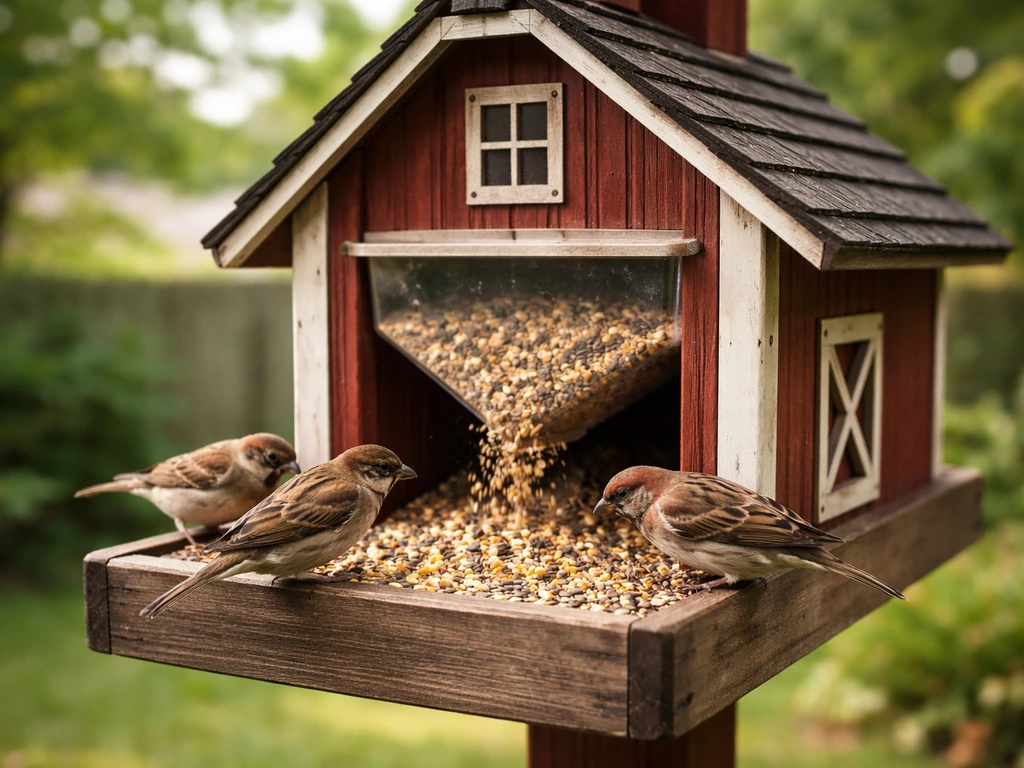
A hopper feeder is the classic barn-shaped feeder with walls and a roof that funnels seed down to a tray as birds eat. Cornell Lab's Project FeederWatch describes these well: the enclosed walls and roof protect seed from rain and wind, making them one of the more weather-resistant seed feeders you can buy. They hold a large volume (often a pound or more of seed), so you are not refilling every day.
The wide tray supports cardinals, jays, and larger songbirds. The downside is that hoppers can harbor mold in the bottom corners if you overfill them or if moisture gets in, so choose one with a removable base you can scrub clean. These are my go-to recommendation for most gardens.
Tube Feeders
Tube feeders are hollow cylinders with multiple feeding ports and short perches, ideal for clinging birds like chickadees, finches, and nuthatches. They dispense seed only as birds eat, which limits waste. For goldfinches and other finches, a dedicated nyjer tube with tiny ports is essential since standard sunflower seed ports are far too large for nyjer.
Weight-activated tube feeders (like the Duncraft MAGNET design) collapse the perches under heavier animals, blocking larger birds such as grackles and starlings, and making it much harder for squirrels to feed. That feature alone is worth the premium for a lot of gardeners. The one real complaint I have with most tube feeders is that the ports at the bottom always get wet and moldy first, so look for models with drainage holes at the base.
Suet Feeders
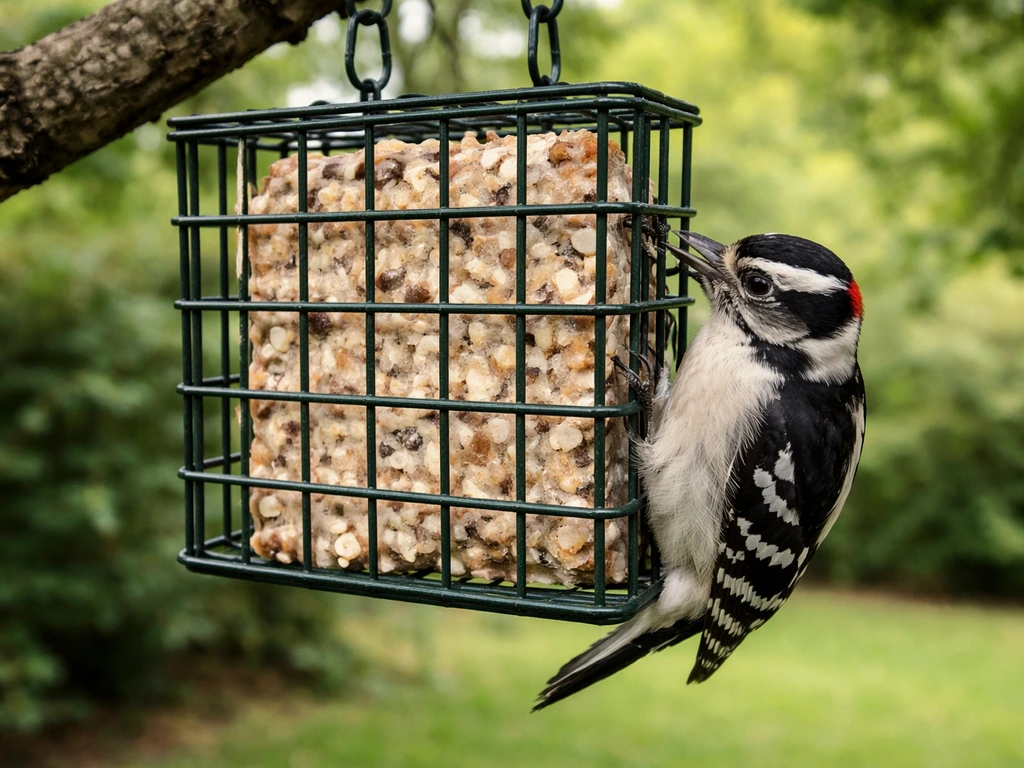
Suet feeders are simple wire or metal cages that hold a compressed suet cake. They are inexpensive, easy to clean, and extraordinarily effective at bringing in woodpeckers, nuthatches, and chickadees. You can get a basic suet cage for a few dollars and a name-brand suet cake for around the same. The only real consideration is placement: hang suet well off the ground and away from areas where raccoons can reach it at night. In summer, look for no-melt suet formulas because standard suet goes rancid quickly in heat. If you want to attract woodpeckers specifically, a suet feeder is a must-have addition alongside any seed feeder.
Hummingbird/Nectar Feeders
Hummingbird feeders are a completely separate category. They hold liquid nectar rather than seed, and the Smithsonian's National Zoo is clear on the recipe: one part plain white granulated sugar dissolved in four parts water. Do not use honey, brown sugar, or artificial sweeteners. You can refrigerate extra nectar and use it within a week. The feeder itself should be red (to attract hummingbirds) and easy to fully disassemble for cleaning, because nectar ferments fast in warm weather and can harm birds if left too long. In summer, plan to clean and refill every two to three days. Saucer-style hummingbird feeders are easier to clean than bottle-style ones, though they hold less nectar.
| Feeder Type | Best For | Seed/Food | Weather Protection | Ease of Cleaning | Main Drawback |
|---|---|---|---|---|---|
| Hopper | Cardinals, jays, sparrows, finches | Sunflower, safflower, mixed | Good (roofed) | Moderate | Corner mold if overfilled |
| Tube (standard) | Finches, chickadees, nuthatches | Sunflower, nyjer | Good (enclosed) | Easy | Bottom ports can get wet |
| Tube (weight-activated) | Small songbirds, grackle/squirrel deterrence | Sunflower | Good (enclosed) | Easy | Higher cost |
| Suet cage | Woodpeckers, nuthatches, chickadees | Suet cakes | Poor (open cage) | Very easy | Suet melts in summer heat |
| Platform/tray | Doves, juncos, sparrows | Millet, sunflower, fruit | Poor (open surface) | Easy | Seed gets wet, attracts pests |
| Hummingbird/nectar | Hummingbirds | Sugar-water nectar | Moderate (varies) | Requires frequent cleaning | Nectar ferments quickly |
Weather Resistance and Durability: What to Look For
Garden feeders take a beating. Sun fades plastic, rain warps wood, and freeze-thaw cycles crack cheap materials. After watching a bargain acrylic hopper split along its seam after one winter, I stopped buying on price alone. Here is what actually matters in terms of materials and design.
- Powder-coated steel or cast metal: the most durable option for the structural parts of a feeder. Resists rust, holds up to UV, and is nearly impossible for squirrels to chew through.
- UV-stabilized polycarbonate or thick acrylic: better than basic plastic for the seed reservoir panels. Look for feeders that explicitly mention UV-stabilized materials rather than standard ABS plastic.
- Cedar wood: a traditional and genuinely weather-resistant choice for hopper feeders, especially when finished with a non-toxic wood stain or oil. Avoid cheap pine, which rots fast.
- Roof overhang depth: the deeper the roof overhang on a hopper feeder, the better it sheds rain away from the seed tray. Look for at least a 2-inch overhang on all sides.
- Drainage holes: any tray or platform feeder should have drainage holes in the base. Without them, standing water turns seed into mold within days.
- Port design on tube feeders: metal-ringed ports resist squirrel chewing far better than bare plastic ports, and they are worth paying extra for.
If you garden in a region with heavy rain or snow, covered hopper feeders and tube feeders will keep seed usable far longer than open platform designs. Platform feeders work well in drier climates but need a mesh-bottom tray so water drains through rather than pooling. For patios or areas with limited exposure to weather, the calculus shifts a bit since a beautiful glass or ceramic feeder is less likely to get destroyed by the elements when it is under an overhang.
Keeping Squirrels, Grackles, and Mess Under Control
Squirrels are the number one complaint I hear from gardeners setting up feeders, and honestly, there is no setup that is completely squirrel-proof. Even Audubon acknowledges you can get "pretty darn close" but stops short of promising a perfect solution. That said, the right approach gets you about 90 percent of the way there without much fuss.
Squirrel Deterrence
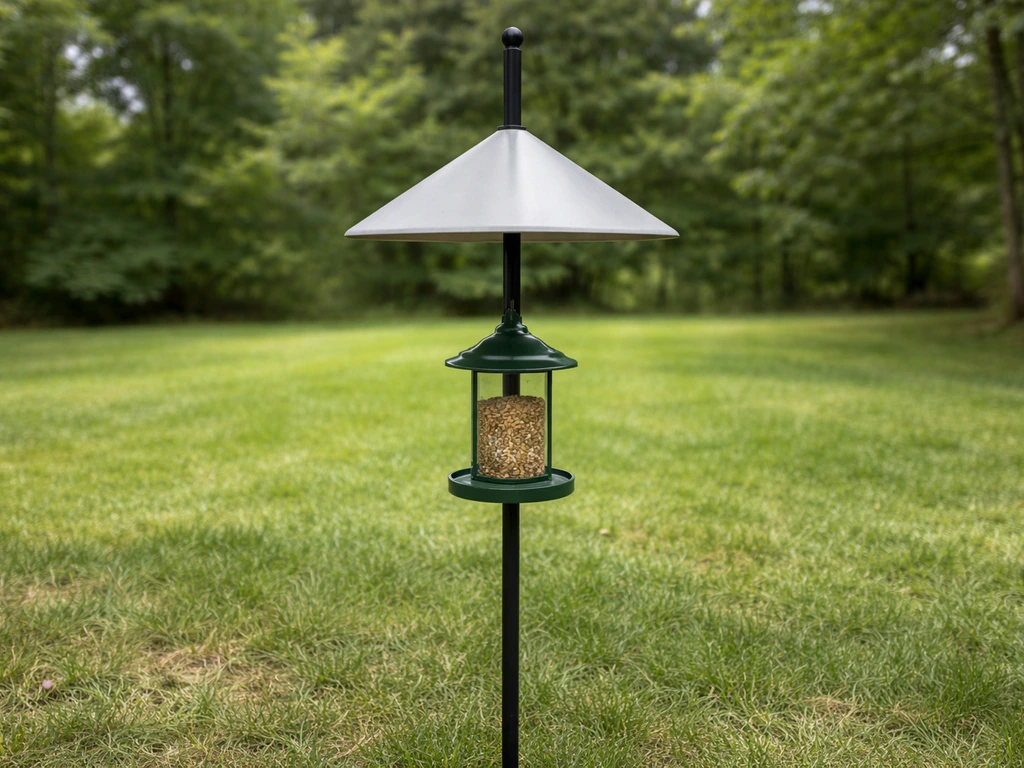
The most reliable method is a pole-mounted feeder combined with a cone-shaped baffle. Audubon and Roaring Fork Audubon both specify the cone should be at least 17 inches in diameter to cut off enough climbing leverage. Perky-Pet's guidance puts the minimum at around 18 inches. The baffle should be mounted on the pole below the feeder, with the pole positioned at least 10 feet from any fence, tree, or structure a squirrel can leap from.
This combination works. When I switched my main feeder to a smooth metal pole with a 17-inch cone baffle, squirrel raids dropped dramatically compared to hanging the same feeder from a branch. Some feeders also use weight-activated perch collapse, which adds a second layer of defense if a squirrel does somehow reach the feeder itself.
Managing Grackles and Larger Nuisance Birds
Grackles are a trickier problem because they are birds, so exclusion options are more limited. Weight-activated tube feeders are the most effective tool here: the perches collapse under heavier birds like grackles and starlings, releasing their grip before they can eat. Weight-activated tube feeders are also a smart way to target the best bird feeders for blackbirds. Switching your seed to safflower is another practical tactic because most grackles avoid it while cardinals and chickadees eat it readily. Caged feeders (where a wire cage surrounds a smaller inner feeder) also physically block larger birds, allowing only smaller songbirds through the gaps.
Seed Mess and Cleanup
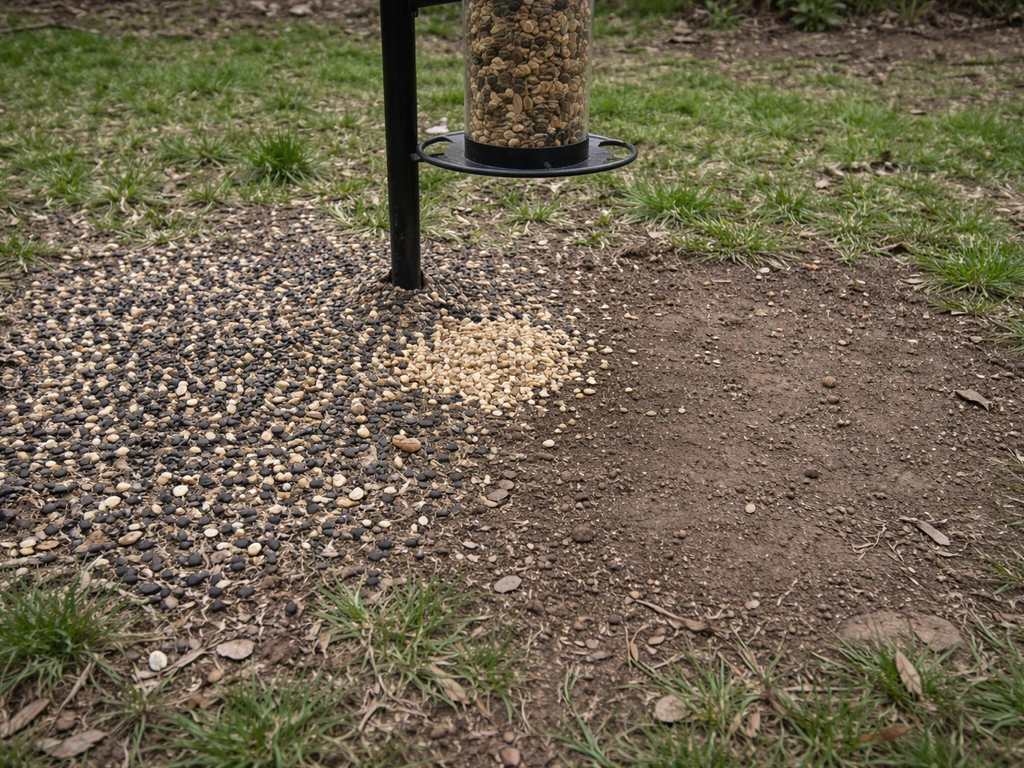
Seed mess under feeders is partly a feeder-design issue and partly a food-choice issue. Hulled (shelled) sunflower chips eliminate shells entirely and are worth the extra cost if a clean lawn matters to you. No-mess seed blends that exclude filler seeds like milo and wheat also help because birds toss those out in search of what they actually want. For feeder cleaning, any feeder with a removable base or tray that can go under a tap is worth prioritizing.
You should scrub feeders with a 10 percent bleach solution and rinse thoroughly every couple of weeks, more often in humid weather. If what grows under your feeder is becoming an issue, covering the ground beneath it is worth thinking about separately. If what grows under your feeder is becoming an issue, picking the best ground cover under bird feeders for your yard can prevent bare soil and cleanup headaches.
Getting the Placement and Mounting Right
Even the best feeder underperforms if it is placed poorly. Placement affects which birds find it, how safe they feel using it, and how much maintenance you end up doing.
Height and Distance from Cover
The classic advice is to place feeders either very close to a window (within 3 feet) or well away from one (at least 10 feet) to prevent window collision injuries. Mid-range distances of 4 to 9 feet are the danger zone where birds build up enough speed to hurt themselves. For most seed feeders, a height of 4 to 6 feet off the ground puts them in the natural foraging zone for most songbirds. Hummingbird feeders can go a bit higher and benefit from partial shade to slow nectar fermentation. Suet feeders work best mounted on a pole or attached to a tree trunk at roughly 5 to 7 feet.
Mounting Options
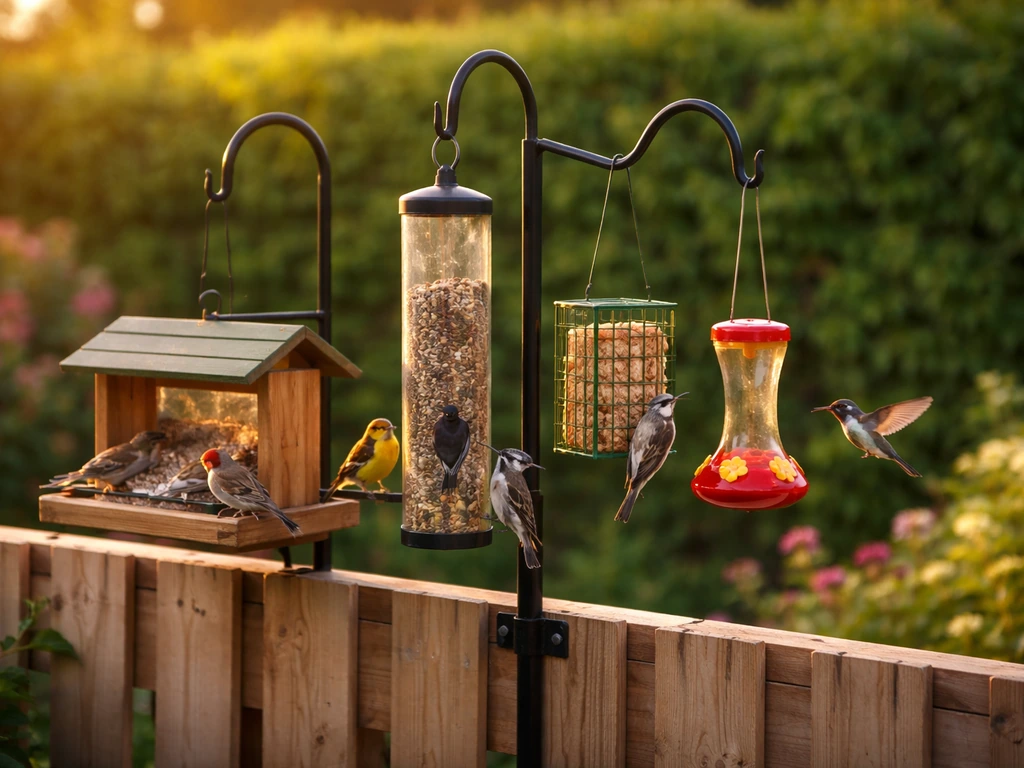
- Freestanding metal pole with baffle: the most versatile and squirrel-resistant setup for an open garden. Choose a pole with a shepherd's hook or feeder arm and add a cone baffle 4 to 5 feet up.
- Deck-mounted pole or clamp: good for patio setups where you cannot dig a pole into the ground. Make sure the clamp or bracket is rated for the feeder weight plus wind load.
- Hanging from a tree branch or hook: convenient but much harder to squirrel-proof unless you add a squirrel baffle above the feeder on the hanging wire. Use a long wire or cable so the feeder hangs away from the trunk.
- Wall or fence bracket: works for suet cages and some tube feeders in tight spaces. Not ideal for squirrel-heavy yards since walls and fences are easy jumping platforms.
- Window-mounted feeders: suction-cup feeders that attach directly to glass let you watch birds at very close range. Good for smaller birds; suction cups need checking regularly in temperature extremes.
If you are working with a compact garden or patio, the constraints around mounting and space change what makes sense, and a more targeted setup built around the birds you can realistically attract in that environment tends to work better than trying to replicate a full backyard rig. For patios, the best bird feeders for patios are the ones that match the birds you want and the limited space and weather exposure you have.
Yard Layout Tips
Place feeders near natural cover like shrubs or hedges but not so close that predators can ambush from them. About 10 feet from dense shrubs is a reasonable rule. Avoid placing feeders directly under trees with heavy squirrel traffic. If you have multiple feeders, spread them out rather than clustering them, which reduces competition and lets shyer species (like goldfinches) feed without being harassed by dominant birds like house sparrows or jays. A separate low platform for ground-feeding doves and a high tube for finches can coexist well in the same yard without much conflict.
Are Smart or AI Bird Feeder Cameras Worth It?
Smart feeder cameras are a genuine category now, not a gimmick, and if you find yourself wondering "what bird is that?" more than once a week, they are worth considering seriously. The two most popular options right now are the Birdfy (by Netvue) and the Bird Buddy (now Birdbuddy 2). They work differently and suit different buyers.
Birdfy
The Birdfy smart feeder has a built-in 1080P camera and uses motion detection to capture video clips when birds visit. The AI bird identification feature is subscription-based, meaning you pay separately to unlock it through the Birdfy account portal. Cloud video storage is retained for 30 days by default before being cleared, unless you subscribe to a Moment video recording plan. The subscription model is worth knowing upfront because the base feeder price does not include ongoing AI recognition. Real-world AI accuracy reports from users are mixed: some report missed identifications and occasional misidentifications, which is honest to acknowledge. It is good, but not infallible.
Bird Buddy (Birdbuddy 2)
Bird Buddy takes a different approach. Tom's Guide notes that core bird identification functionality requires no subscription on Bird Buddy, which makes the total cost of ownership easier to predict. The Birdbuddy 2 runs on a 3900 mAh rechargeable lithium-ion battery and supports both 2.4 GHz and 5 GHz Wi-Fi (802.11 a/b/g/n), so it works with most modern home networks. The no-subscription model is a genuine differentiator if you are wary of recurring fees, though the upfront hardware cost is higher.
Should You Upgrade to a Smart Feeder?
A smart feeder camera makes the most sense if you are actively curious about species identification, want a record of what visits your yard over time, or have kids who would engage with the real-time bird recognition aspect. If you just want to feed birds reliably without the tech overhead, a quality traditional feeder with a good baffle system will cost you less and require less fiddling. One middle-ground option is adding a separate dedicated wildlife camera near a traditional feeder, which keeps the feeder itself simpler and more cleanable.
| Feature | Birdfy (Netvue) | Bird Buddy (Birdbuddy 2) |
|---|---|---|
| AI bird ID | Subscription required | Included (no subscription) |
| Camera resolution | 1080P | Not publicly specified per current specs |
| Power source | Wired/adapter (varies by model) | 3900 mAh rechargeable battery |
| Wi-Fi bands | 2.4 GHz | 2.4 GHz and 5 GHz |
| Cloud video storage | 30-day default (subscription for more) | App-based storage |
| Upfront cost | Lower | Higher |
| Ongoing cost | Subscription for full features | None for core features |
Your Next Steps: A Quick Decision Path
Here is how to turn everything above into an actual purchase. Start by picking the one or two bird types you most want to attract, then match the feeder type to those birds using the first table in this guide. If squirrels are a known problem in your yard, budget for a smooth metal pole and a cone baffle of at least 17 to 18 inches in diameter before you even look at feeder models.
Choose a feeder material (powder-coated metal or UV-stabilized polycarbonate for durability, cedar for aesthetics in a sheltered spot) that matches your local weather. If grackle dominance is your problem, add a weight-activated tube feeder or switch to safflower seed. Set up your feeder at 4 to 6 feet high, at least 10 feet from jumping-off points for squirrels, and either within 3 feet or more than 10 feet from windows.
Finally, decide on smart camera tech only after you have the basic setup working: it is an upgrade worth making once you know which birds are actually visiting.
- Identify your target birds and their natural foraging style.
- Choose the feeder type that matches their food preference and perching behavior.
- Select a durable material suited to your local weather (metal, UV poly, or cedar).
- Plan your mounting: freestanding pole with baffle is the most squirrel-resistant for open gardens.
- Position the feeder at the right height and distance from windows, trees, and structures.
- Fill with the right food: black-oil sunflower for most birds, nyjer for finches, 1:4 sugar-water for hummingbirds, suet for woodpeckers.
- Clean every one to two weeks with a dilute bleach solution.
- Consider a smart camera feeder (Birdbuddy 2 for no-subscription simplicity, Birdfy if you want a lower entry price and are comfortable with a subscription) once your core setup is working.
FAQ
What is the best bird feeder for a beginner who doesn’t know which birds will visit first?
Start with a hopper or tube feeder filled with black-oil sunflower seed, then place it at about 4 to 6 feet high near natural cover. After 1 to 2 weeks, adjust based on what is actually showing up (for example, add a wider perch for cardinals or a nyjer tube if you see goldfinches).
How do I prevent feeders from becoming a magnet for house sparrows?
Avoid platform trays that are easy for aggressive birds to dominate. Tube feeders with short perches, plus keeping multiple feeder types spaced apart, can reduce bullying. Also consider swapping part of your seed mix to safflower if cardinals are a priority and grackles or sparrows are taking over.
Do I need to use the exact seed you recommend, or can I mix foods?
You can mix, but keep it bird-appropriate. For example, nyjer requires tiny ports and a dedicated nyjer tube, so mixing nyjer into a sunflower feeder just leads to waste and poor access. For seed-eating yards, a clean strategy is one main sunflower feeder plus a separate nyjer feeder when finches show up.
How often should I refill seed to avoid mold and spoilage?
It depends on humidity and airflow, but a practical rule is to avoid letting seed sit longer than about a week during humid or rainy stretches. If you notice clumping, musty odor, or wet ports (common on tubes), empty and clean the feeder base first, then refill with dry seed.
What’s the best way to clean feeders without harming birds or leaving residue?
Use the removable base or tray so you can rinse thoroughly under a tap. After the bleach clean, rinse until the solution smell is gone, then fully air-dry before refilling. Don’t forget small areas like tube port rims, where residue and moisture can trap mold.
Why do tube feeder ports get wet, and what can I do about it?
Ports at the bottom of tubes collect drizzle and condensation, which promotes mold. Look for designs with drainage holes at the base, hang the feeder with proper clearance under eaves if possible, and check ports more frequently in wet weather (often every few days).
Is there a single best setup to keep squirrels away completely?
No setup is truly squirrel-proof, but you can get close by combining a smooth pole with a properly sized cone baffle (around 17 to 18 inches) and placing the pole at least 10 feet from jump access points. If squirrels still persist, add a weight-activated perch collapse on the feeder itself.
How far from windows should I place feeders to reduce bird collisions?
Use either a close placement strategy (within 3 feet) or a far placement strategy (at least 10 feet). The mid-range (roughly 4 to 9 feet) is the higher-risk zone, because birds build up enough speed to collide.
Where should hummingbird feeders go to reduce fermentation problems?
In hot weather, use partial shade so nectar warms more slowly, and plan to clean and refill every 2 to 3 days in summer. Also choose a feeder that fully disassembles so you can remove film and prevent lingering fermented nectar.
Can I put suet and seed feeders near each other?
Yes, as long as you manage spacing and placement so one doesn’t dominate. Mount suet around 5 to 7 feet, then place the seed feeder at a compatible height and spread multiple feeders out to reduce aggressive competition.
What’s the best feeder height for different bird types?
A common starting point is 4 to 6 feet for most seed feeders to match typical songbird foraging. Suet often performs best around 5 to 7 feet on a pole or trunk mount. Hummingbird feeders can be set a bit higher, with placement that slows nectar spoilage.
How do I handle seed waste on the ground beneath the feeder?
Switch to hulled sunflower chips or a no-mess blend to reduce shell litter. If you still end up with bare spots, add ground cover beneath the feeder rather than letting seed accumulate, because sprouting and constant cleanup can become a maintenance cycle.
When should I consider a smart feeder camera instead of improving traditional feeders?
Choose a smart feeder camera when you regularly wonder which species are visiting or you want a time-stamped record of activity. If your main issues are seed choice, baffles, and placement, fix those first, because camera data is only useful once the right birds are actually able to access the feeder.
Is it worth buying a smart feeder if there are subscription costs?
It can be, but only if the subscription unlocks a feature you truly want, like AI species recognition. If you want predictable total cost, favor models that do identification without a subscription, and budget for hardware upfront rather than recurring fees.