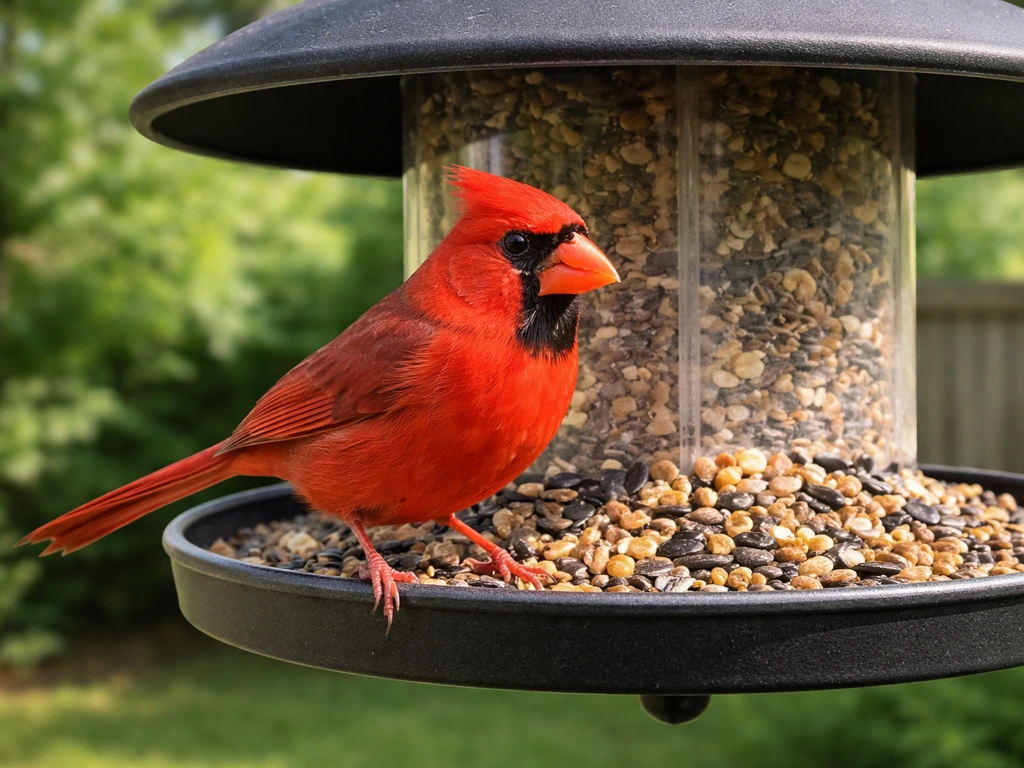
The best feeders for blackbirds are open platform feeders and large hopper feeders, filled with cracked corn, hulled sunflower seeds, and millet. Blackbirds are ground-level foragers by nature, so they feel most comfortable on wide, flat surfaces where they can move around freely. If you want to attract red-winged blackbirds, Brewer's blackbirds, or common grackles reliably, a sturdy platform feeder stocked with cracked corn is honestly the single most effective setup you can start with today.
Best Bird Feeders for Blackbirds: What to Buy and Feed
Marcus Holloway
18 Jun 2026
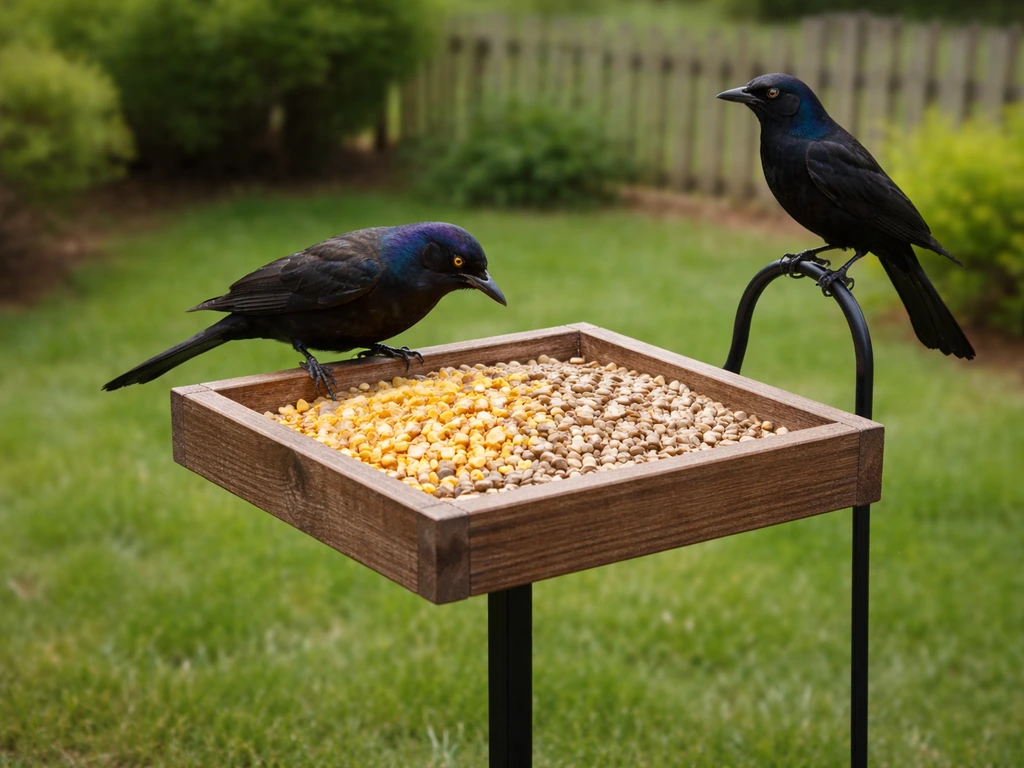
What blackbirds actually want at your feeder
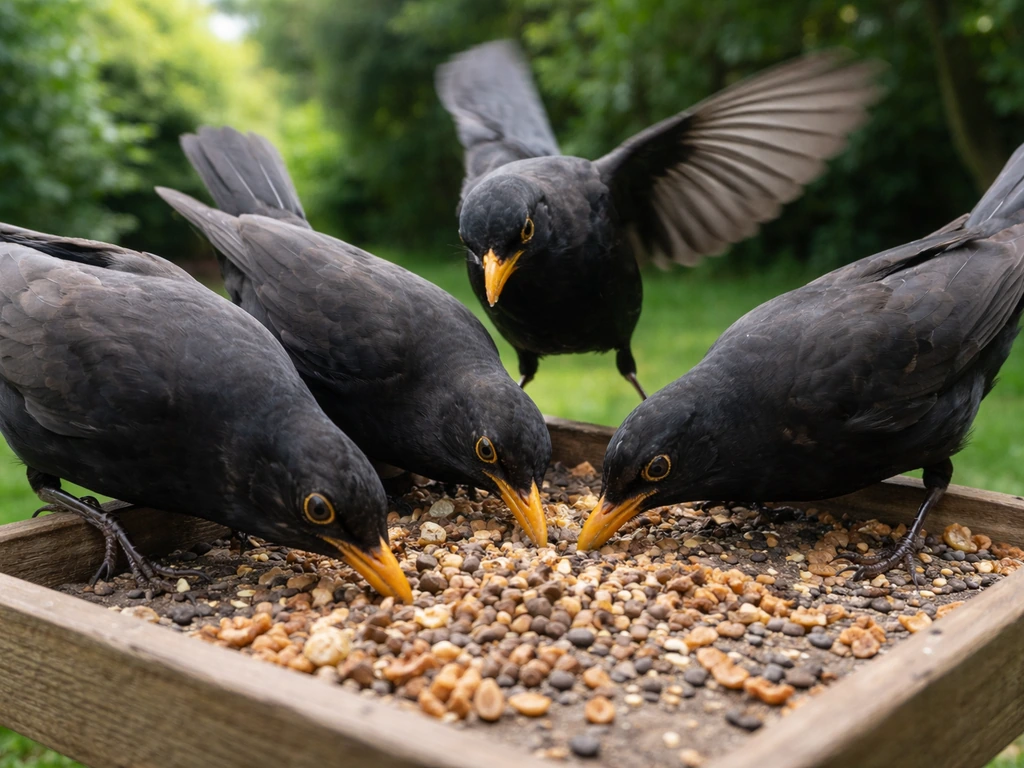
Blackbirds (the family Icteridae, which includes red-winged blackbirds, Brewer's blackbirds, common grackles, and brown-headed cowbirds) are omnivores. During spring and summer, they eat a lot of insects: beetles, caterpillars, grasshoppers, even spiders and snails. You can't replicate that at a feeder, but you don't need to. Come fall and winter, seeds make up roughly three-quarters of their diet, and that's when a well-stocked feeder becomes genuinely useful to them. Cracked corn and grains are the closest thing to their natural food base, which is why feeders stocked with corn draw them in so reliably.
Feeder style matters as much as food. Blackbirds are large, assertive birds that forage on or near the ground in real life. They're not going to hover at a tiny tube feeder port. They want a surface they can land on, stand on, and look around from. That's the core rule: bigger landing area equals more blackbird activity.
Best feeder styles for blackbirds
Platform feeders are the clear first choice. A platform feeder is basically a flat, raised tray, open on all sides, that lets blackbirds (and other large birds) land and feed comfortably. They have wide deck space and low or no walls, which matches how blackbirds naturally forage. The critical feature to look for is drainage: platform feeders need plenty of drainage holes in the base so rain doesn't pool and rot your seed. Without that, you'll be throwing out soggy, moldy millet every few days, which gets old fast.
Hopper feeders are a solid second option, especially if you want some seed protection from rain. A hopper has walls and a roof that keep seed dry and fresh longer, with a trough-style feeding area along the base where birds can perch and eat. The roof genuinely helps: seed stays fresh noticeably longer than in an open tray on a rainy week. The downside is that hopper feeders typically have a narrower feeding trough than a full platform, so a large flock of blackbirds may crowd each other out.
Tube feeders are mostly not the right call for blackbirds. The ports are designed for smaller birds like finches and chickadees, and the perches are short and narrow. Larger blackbirds like grackles will sometimes cling awkwardly to them, but it's frustrating for the bird and wasteful for you. If you're also trying to attract smaller songbirds alongside blackbirds, a tube feeder with a short perch actually helps keep grackles off it, which I'll come back to in the nuisance bird section.
| Feeder Type | Blackbird Access | Seed Protection | Squirrel Risk | Best For |
|---|---|---|---|---|
| Platform/Tray | Excellent (wide open surface) | Low (rain exposure) | High without baffle | Attracting blackbirds quickly |
| Hopper | Good (open trough area) | Good (roof keeps seed dry) | Moderate | Consistent feeding with less mess |
| Tube | Poor (small ports, short perches) | Good | Low-moderate | Smaller birds; keeps grackles off |
Best food choices for blackbirds
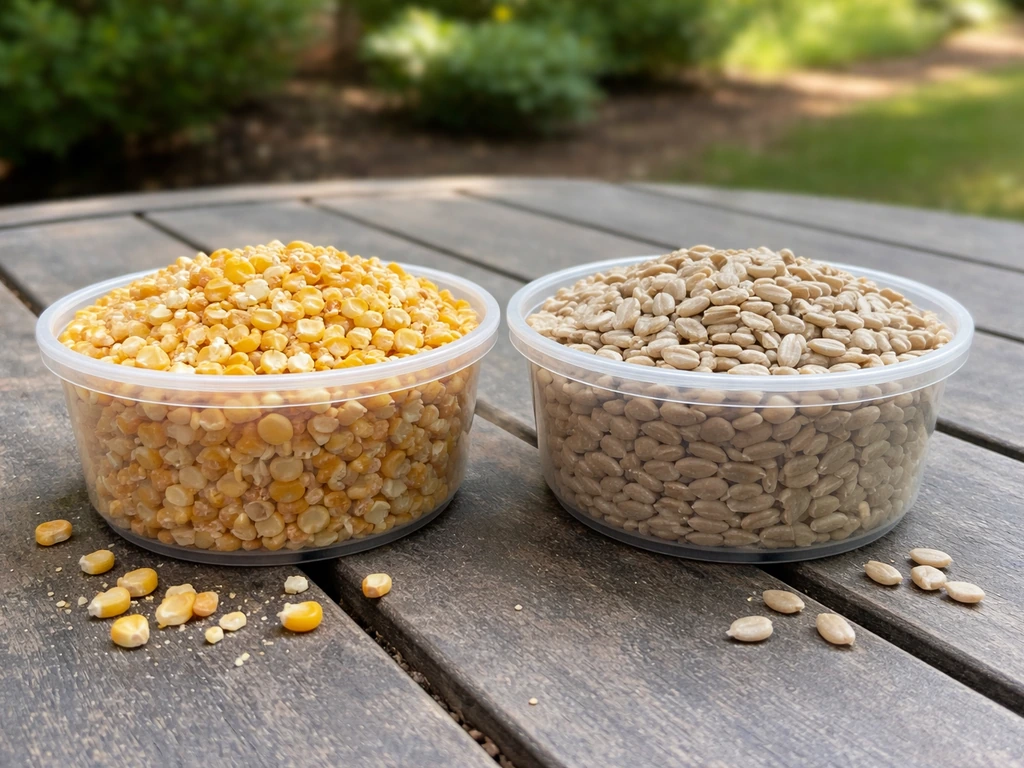
Cracked corn is the number one food to put in a blackbird feeder. It's cheap, widely available, and mimics the agricultural grains blackbirds naturally eat. Red-winged blackbirds, Brewer's blackbirds, and grackles all go for it readily. Fill a platform feeder with cracked corn in fall or winter and you'll often have visitors within a day or two. If you also want the best bird feeder for mockingbirds, look for a design that offers open, comfortable landing space and an easy food setup that they can access confidently.
Hulled sunflower seeds (sunflower hearts or chips) are a great addition. They're high in fat and energy, easy to eat without cracking shells, and attractive to a wide range of blackbirds. They also produce less waste under the feeder since there are no shells to discard, which matters if you care about what's growing under your feeders or on your patio.
White proso millet rounds out the mix nicely. It's a small, round seed that blackbirds and ground-feeding birds pick up easily, and it's one of the most recommended seeds for attracting the broader blackbird family including brown-headed cowbirds.
- Cracked corn: top pick for all common blackbird species, especially red-winged blackbirds and grackles
- Hulled sunflower seeds: high energy, no shell waste, widely accepted
- White proso millet: excellent for ground-foraging blackbirds and cowbirds
- Whole peanuts (out of shell): occasional supplement that grackles especially appreciate
- Safflower seeds: less favored by blackbirds but useful if you want to attract cardinals at a separate feeder without grackle competition
One thing to avoid: cheap mixed seed blends that are heavy on filler like red millet, oats, or wheat. Blackbirds and most other backyard birds toss these aside, and they end up rotting on your feeder floor or piling up under the feeder. Spend a little more on a quality mix or buy individual seeds and blend them yourself. You'll waste less and attract more.
Dealing with squirrels and nuisance birds (grackles, starlings)
Here's the honest tension with blackbird feeders: the open platform setup that works best for attracting blackbirds also makes it easy for squirrels and large nuisance birds like European starlings to dominate. You'll need to decide upfront how much nuisance bird activity you're willing to tolerate, because there's no perfect solution that attracts nice blackbirds while blocking bad ones. They often belong to the same family.
Squirrel control
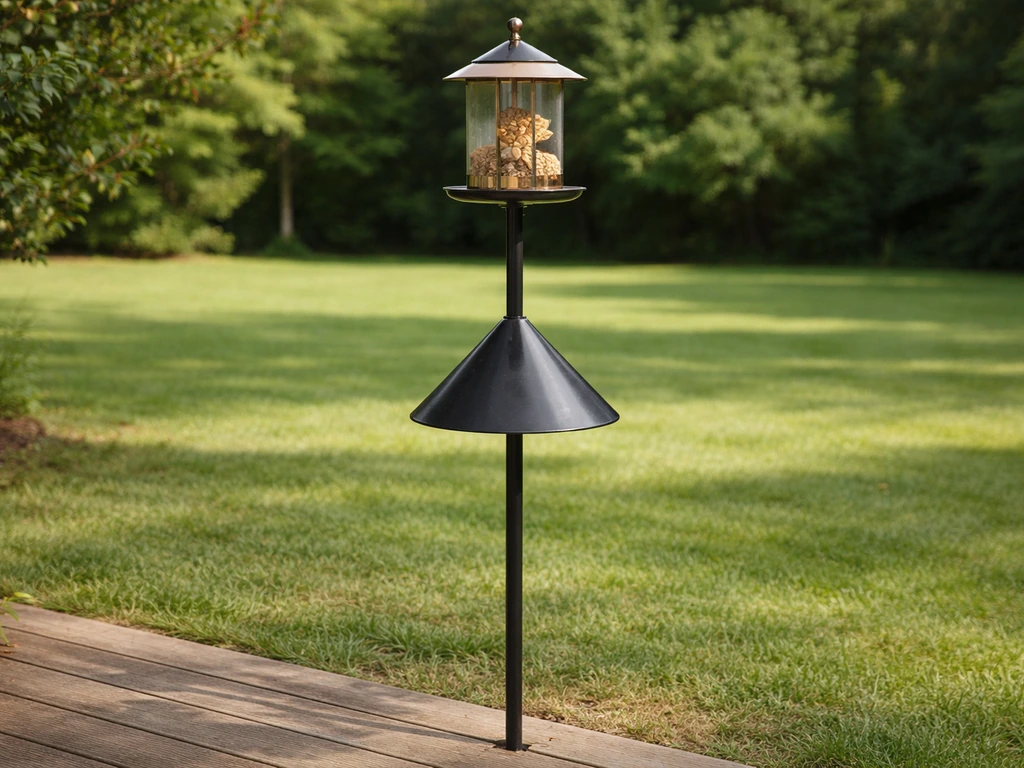
The most reliable squirrel deterrent is a pole-mounted feeder with a cone-shaped baffle installed below the feeder. Place the pole at least 10 feet away from any trees, fences, or structures a squirrel could use as a launch point, and make sure the feeder itself is high enough that a squirrel can't jump up from the ground (at least 5 feet off the ground is a good baseline). This combination works better than any squirrel-proof feeder alone, because squirrels are persistent enough to defeat most hardware given enough time and motivation. The baffle plus the distance is what actually stops them.
Caged feeders (a smaller feeder surrounded by a larger wire cage) are another good option. The cage openings are sized to let smaller birds through but block squirrels. The catch: the cage also blocks large blackbirds, so this approach works better for a second feeder aimed at smaller songbirds rather than for your primary blackbird setup.
Managing grackles and starlings
Common grackles are technically in the blackbird family, so if you're getting flocks of grackles instead of the red-winged blackbirds you actually want, it can feel like a takeover. The flock dynamics are real: when grackles or red-winged blackbirds discover a reliable food source, they sometimes arrive in groups of dozens or even hundreds, especially in fall migration periods.
A few practical moves help here. First, switch to a covered platform or hopper feeder instead of a fully open tray. Some blackbird species are more reluctant to go into enclosed or semi-covered spaces, which can reduce mob feeding. Second, try tube feeders with short perches for your non-corn seeds like sunflower and millet: grackles can't grip the small perches comfortably, but smaller songbirds can. Third, use selective feeding: offer safflower seeds in a separate feeder since grackles and starlings largely ignore it, while cardinals and other desirable birds eat it readily. This won't stop a determined flock, but it gives your other birds somewhere to eat in peace.
If a flock gets genuinely overwhelming, the simplest fix is to temporarily close your feeder for a few days. Flocks move on when a food source disappears, and you can reopen once they've dispersed. It's not elegant, but it works.
Weather resistance, durability, and keeping things clean
Platform feeders take a beating from weather because they're open to the sky. For long-term durability, look for feeders made from recycled plastic or powder-coated steel rather than untreated wood. Cedar holds up reasonably well for wood options, but even cedar will eventually crack and warp. Metal hardware (screws, hooks, hinges) is important: cheap zinc or uncoated steel corrodes fast when it's wet every time it rains.
Drainage is the most important weather-resistance feature on a platform feeder. A solid-bottom tray with no drainage holes turns into a puddle after every rain, and wet seed goes moldy within 24 to 48 hours depending on temperature. Look for platforms with a mesh or slatted base, or at minimum multiple drainage holes at the lowest points of the tray. I've found that mesh-bottom platforms stay noticeably drier and require less frequent full cleaning.
Cleaning is non-negotiable regardless of feeder type. Dirty feeders accumulate moldy seed, hulls, and bird droppings that can spread disease among the birds you're trying to attract. The practical routine: scrub the feeder surfaces with a 10% bleach solution (one part bleach, nine parts water), rinse thoroughly, and let it air-dry completely before refilling. Do this every one to two weeks during wet or warm weather, and at least monthly in dry, cold conditions. Hopper feeders sometimes trap seed residue in the corners and at the base of the reservoir, so pay attention to those spots specifically.
Where to put your blackbird feeder
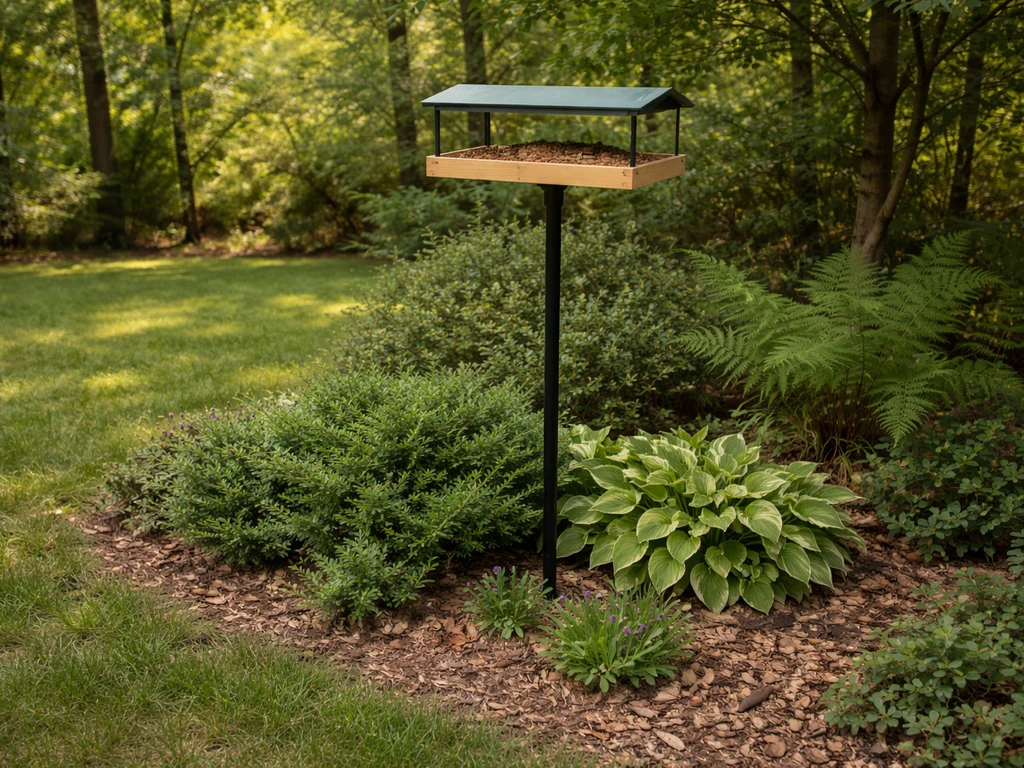
Blackbirds feel most comfortable feeding near cover. Adding the best ground cover under bird feeders can also help blackbirds feel secure while they forage ground-level cover under bird feeders. blank" rel="noopener noreferrer">Place your feeder within about 10 to 15 feet of trees or dense shrubs so birds have a quick escape route if something startles them. No cover nearby means birds are nervous, and nervous birds don't stick around long enough to settle in as regulars. That said, don't place the feeder directly under or against dense shrubs where cats can hide and ambush: keeping about 10 feet of open ground between the feeder and thick ground-level cover is a good compromise.
Height matters too. A platform feeder set 5 to 6 feet off the ground on a pole is visible, accessible, and hard enough for ground-based predators to reach quietly. Ground-level platform feeders (literally on or near the ground) also work well for blackbirds since they naturally forage at ground level, but they increase predator risk and require more frequent cleaning from debris and droppings. If you also want to add a natural food source and shelter, the best plants for under bird feeders are dense groundcovers and native plants that can handle frequent visits.
If you're mounting near a window, the counterintuitive advice applies: blank" rel="noopener noreferrer">a feeder closer than 3 feet to a window is actually safer than one 10 to 15 feet away. Birds leaving a close feeder don't build up the speed needed for a fatal window strike. If you have a patio setup and want the feeder nearby, this is worth knowing. If you’re shopping for the best bird feeders for patios, focus on placement that’s close enough to use daily but positioned to limit mess and distractions from furniture and foot traffic patio setup. Patio feeder placement specifically has its own considerations around furniture, foot traffic, and mess, which is worth thinking through before you commit to a mounting spot.
What to do if blackbirds aren't showing up
Give it at least a few days before worrying. A new feeder can attract birds within hours in an area with lots of bird activity, but in quieter yards it might take a week or two for birds to discover it. The timeline depends heavily on what's already in your neighborhood and what season it is. Fall and winter are peak times for blackbird feeder visits because natural food sources are depleted. In summer, when insects are abundant, don't expect as much feeder activity.
If birds still aren't coming after a week or two, run through this checklist:
- Check the food: is it fresh? Stale or wet seed is often ignored. Dump it, clean the feeder, and start with fresh cracked corn or hulled sunflower.
- Check the location: is there cover nearby? An exposed feeder in the middle of an open lawn gets fewer visits from nervous birds.
- Check for competition: is another feeder in the yard pulling all the activity somewhere else? Consolidate or reposition.
- Check the feeder style: if you're using a tube feeder, blackbirds may be physically unable to use it comfortably. Switch to a platform or hopper.
- Check the season: summer blackbirds are eating insects, not visiting feeders as often. Fall and winter are your best window.
- Check for predators: a hawk, outdoor cat, or other predator regularly visiting the yard will suppress feeder activity for days at a time.
One more thing that helps: add a shallow water source near the feeder. Blackbirds drink and bathe regularly, and a birdbath or ground-level water tray can pull birds into your yard who then discover the feeder nearby. It's one of the most underrated tactics for getting a new feeding station noticed quickly.
A quick setup checklist before you buy
If you're starting from scratch, here's the practical sequence that works best in most yards: start with one open platform feeder on a baffled pole, filled with cracked corn and hulled sunflower. For a quick match to the most popular setups, use this approach to guide you toward the best bird feeders for garden visits. Place it near cover, 5 to 6 feet off the ground, away from squirrel-launch zones. Add a shallow birdbath nearby.
Wait a week. If you're getting overwhelming grackle activity instead of the mix of blackbirds you wanted, add a covered hopper feeder and reduce or remove the open platform temporarily. If you're also trying to attract other species alongside your blackbirds, a separate tube feeder with short perches and safflower or nyjer seed will give smaller birds a space that larger blackbirds largely leave alone. That two-feeder approach handles most real-world backyard situations without constant management stress.
FAQ
How much cracked corn and sunflower should I put in a blackbird platform feeder at one time?
Start with a fill level that will last about 3 to 5 days, then top up. This reduces the amount of stale or rain-soaked seed on the deck, especially if you have a wet or humid week. For large visitor flocks, you may need more frequent refills, but avoid overfilling to the point that seed piles and rots underneath.
Do blackbirds eat safflower or will they ignore it like starlings and grackles often do?
Blackbirds may sample safflower, but many do not rely on it the way they do on cracked corn, sunflower, and millet. That is why safflower can work as a separate “peace zone” feeder for smaller or seed-selective birds, even if your goal is primarily blackbirds. If your blackbird pressure is high, expect some spillover and plan on selective placement (separate feeder, different seed).
What should I do if the seed keeps getting moldy even though I have drainage holes?
Check that water is draining out of the base rather than running along the sides and pooling beneath. If seed still stays wet, pause refilling for a day after heavy rain, empty the feeder completely, scrub, and air-dry. Also consider switching to a slatted or mesh-bottom platform with more airflow, or move to a hopper for the wet season.
Will a covered platform or semi-enclosed hopper stop grackles from dominating the feeder?
It can reduce “mob feeding” for some species, but it will not stop a determined flock if the food source stays reliable. If grackles overwhelm your preferred mix, use the covered option but also consider temporarily removing the most attractive open corn source and replacing it with a less preferred feeding arrangement (for example, a separate feeder for other seed types).
Why do smaller birds sometimes avoid the area where blackbirds feed?
Large ground-feeders can make the area feel risky, and their feeding style can crowd smaller birds out. If you want both, keep a second feeder farther from the main platform (and use a tube feeder with short perches as you already planned) so smaller birds can access seed without having to share the same landing and approach space.
Is it safe to put a blackbird feeder on the ground if I use cover nearby?
It is usually more risky for predators and also increases cleanup from droppings and seed debris. If you do go ground level, place the feeder so open sightlines reduce ambush opportunities (avoid tucking it directly under thick cover) and expect more frequent removal of hulls and fallen seed.
How do I prevent squirrels without relocating the feeder every time?
The key is placement plus a baffle, not just hardware. Mount on a pole with a cone baffle underneath and keep the pole at least about 10 feet from launch points like fences, trees, and stacked items. If squirrels still persist, raise the feeder height and re-check the distance from nearby structures, because a small change in launch geometry can matter.
Can I use a squirrel cage feeder as my main blackbird feeder?
Usually not, because cage openings that let small birds in will also restrict access for larger blackbirds. The better use for caged feeders is a secondary setup aimed at smaller birds. Keep your primary blackbird feeder open or hopper-style so blackbirds can land and feed comfortably.
What is the best height for a blackbird feeder if I have cats?
Aim for a moderate height like 5 to 6 feet on a pole, which is tall enough to discourage silent ground ambush. Avoid placing the feeder directly next to dense shrubs where cats can hide. Even with height, keep an open approach area around the feeder so you reduce cover that predators can use.
How long should I wait before concluding that blackbirds will not visit my feeder?
In active bird neighborhoods, you can see visits within hours, but in quieter areas it can take 1 to 2 weeks. Season matters too, fall and winter bring more feeder traffic because natural foods are less available. If nothing shows after that window, adjust placement near cover, confirm seed quality, and consider adding a nearby water source.
Should I clean a blackbird feeder in winter differently than in summer?
Yes, the frequency changes. In wet or warm periods, plan for cleaning every 1 to 2 weeks because mold and residue build faster. In dry, cold weather you can extend cleaning to about once per month, but you should still scrub promptly if you see wet seed, clumping, or a buildup of hulls and droppings.
What’s the safest way to place a blackbird feeder near windows to avoid bird strikes?
If the feeder must be near a window, keep it close enough that birds do not have time to build speed, using the general rule of staying within about 3 feet. If you are placing it farther out, be more cautious and consider changing placement so birds are not forced to fly through the window path at close range.
Can I mix seeds from different brands, or should I buy single seeds?
For best results with blackbirds, favor single seeds like cracked corn, hulled sunflower, and millet rather than heavy filler blends. Mixed blends often include seeds that get tossed, which increases waste and encourages rot and mold under the feeder. If you do use a blend, choose one with minimal filler and monitor what the birds actually consume.
Next Article
Best Bird Feeder for Red Birds: Top Picks and Setup Guide
Top feeders and setup tips to attract cardinals and other red birds using the right seed, mounts, and squirrel-proofing.