For safflower seed, a hopper feeder or a wide-tube feeder with decent-sized ports is your best starting point. Cardinals, chickadees, and nuthatches handle safflower's thick shell just fine, but the feeder needs to match their feeding style: a sturdy perch, ports or openings large enough for the seed to flow without jamming, and enough weather protection to keep that oil-rich seed from clumping. Squirrels generally dislike safflower's bitter taste, which already gives you a leg up compared to sunflower or nyjer setups, but that doesn't mean you can skip pest-proofing entirely.
Best Bird Feeder for Safflower Seed: Top Choice Guide
Marcus Holloway
19 May 2026
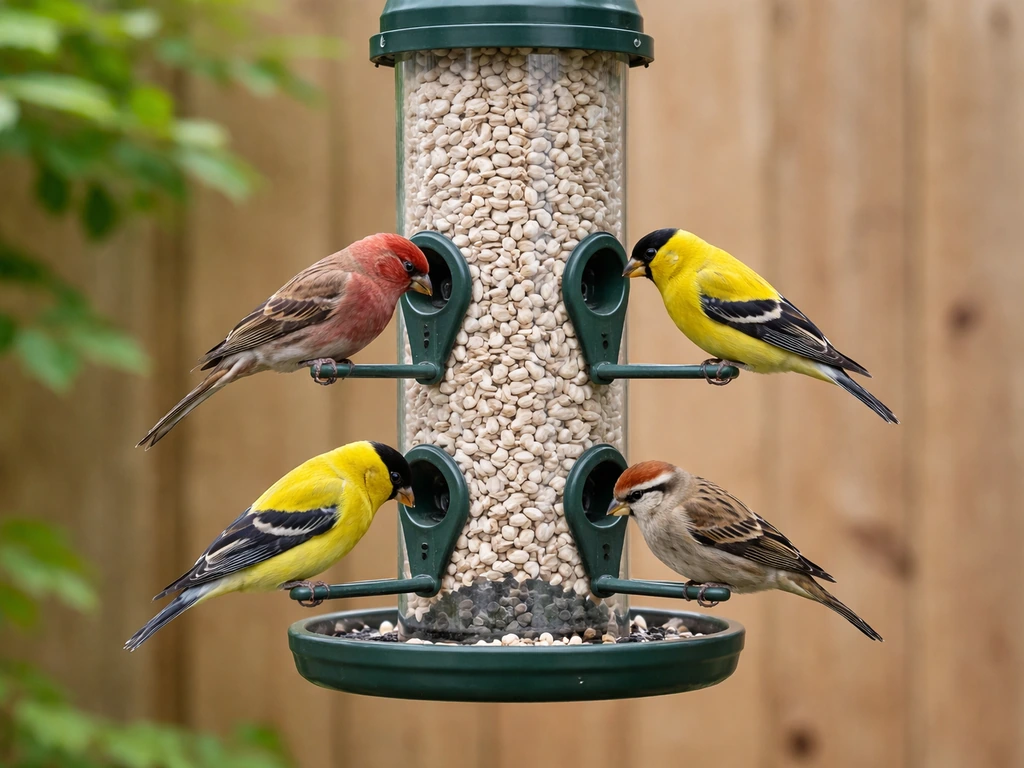
Why safflower seed is different (and what feeder design it needs)
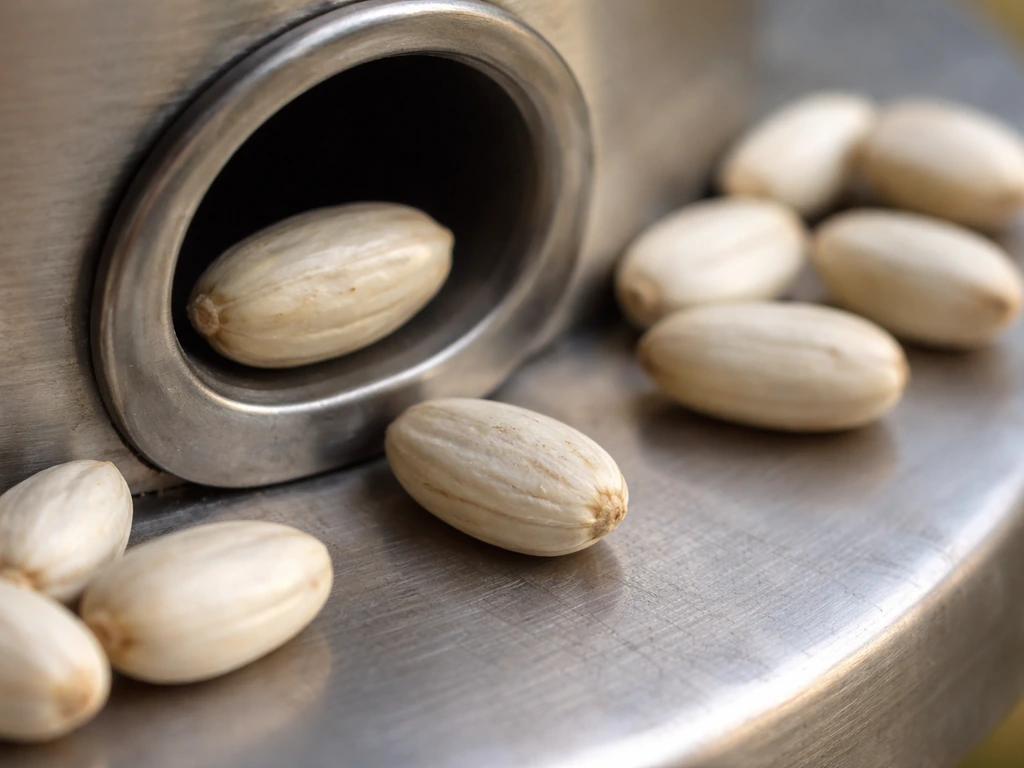
Safflower is a chunky, oval, white seed with a noticeably thick, hard shell. That shell is the whole point. Birds like Northern Cardinals, black-capped chickadees, and nuthatches have the beak strength to crack it open, but many common pest birds like house sparrows and European starlings either struggle with it or simply move on to easier options. The same logic applies to squirrels: most squirrels find safflower bitter and will pass it up in favor of sunflower or corn nearby. This makes safflower one of the most naturally selective seeds you can put out.
Because of its size and shape, safflower needs feeder ports or openings that are wide enough to let the seed flow freely. Nyjer (thistle) tube feeders with tiny slits won't work at all, and even some finch-specific feeders designed for niger seed are too narrow. This is why the best thistle bird feeder for niger or thistle mixes is usually not suitable for safflower Nyjer (thistle) tube feeders. You want ports in the 3/8-inch to 1/2-inch range at minimum, or an open tray, hopper, or tube designed for medium-to-large seed. The seed can also clump if it gets wet and stays wet, so drainage and airflow inside the feeder matter more than most people expect.
Best feeder types for safflower seed
There are four main feeder styles that work well with safflower, and each has a real use case depending on which birds you're targeting and how much maintenance you want to deal with.
Hopper feeders
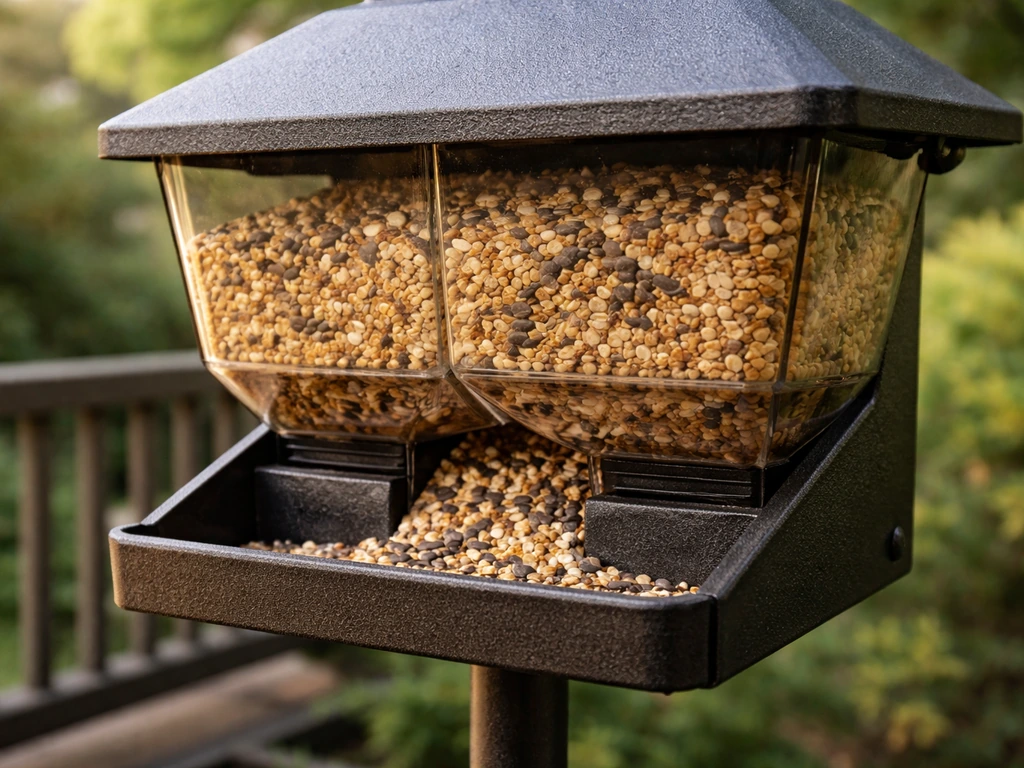
A hopper feeder is probably the most practical all-around choice for safflower. The enclosed reservoir keeps the seed protected from rain and direct sun, and the seed flows down by gravity to a tray or ledge where birds perch and feed. Cardinals in particular love hopper feeders because the perch is wide enough for their larger body and the feeding position is comfortable. The enclosed design also means you're not constantly refilling, which is a real advantage if you're filling up with a premium seed like safflower. The main downside is that hoppers can harbor moisture inside if the seal isn't tight, so look for ones with good roof overhangs and ventilation in the seed chamber.
Tube feeders
A tube feeder with medium to large ports works well for safflower and has one big advantage: the seed stays noticeably drier inside the tube compared to open trays or hoppers. If you deal with a lot of rain or humid summers, this matters. The enclosed cylinder protects the seed column and limits access to birds that can actually cling and reach the ports. The trade-off is capacity: most tube feeders hold less seed than a hopper, so you'll refill more often. If your goal is cardinals specifically, choose a tube with a built-in tray at the bottom so they have a flat surface to land on, because cardinals aren't great clingers.
Platform and tray feeders
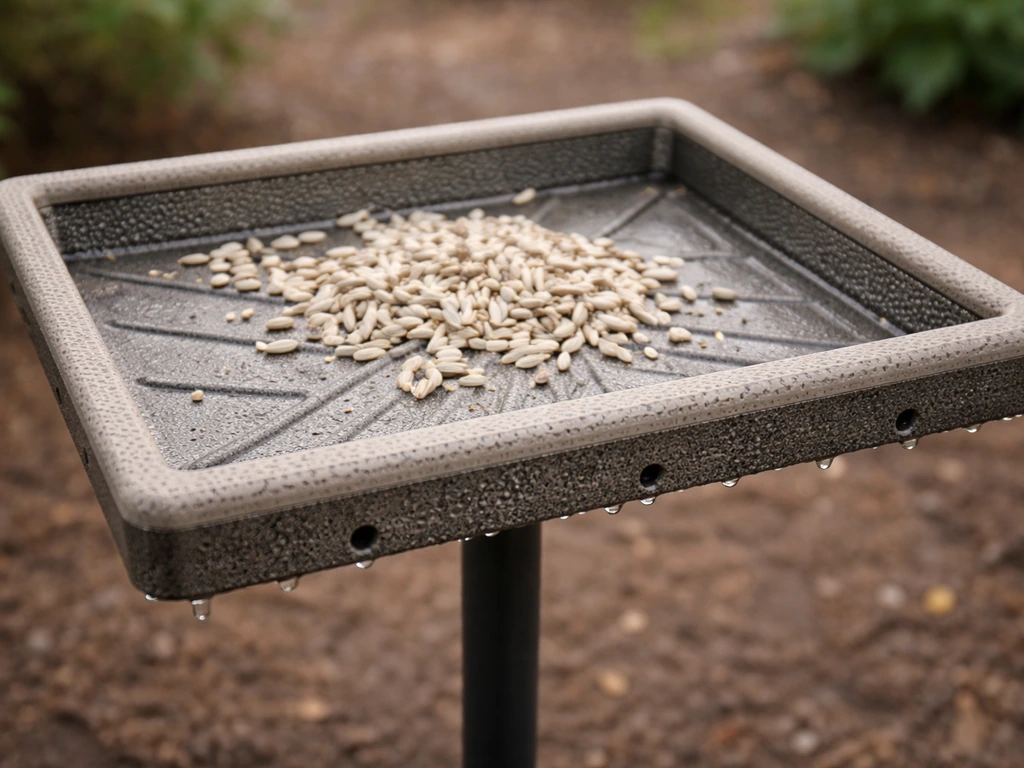
Open platform feeders are the most accessible design for a wide range of birds, including ground-feeding species that wouldn't touch a tube feeder. The problem with platforms and safflower is weather exposure: seed sitting on a flat tray gets wet fast, and wet safflower goes moldy. A platform with a metal mesh floor drains much better than a solid tray, and it forces air through the seed to slow spoilage. That said, the open design also invites every bird in the neighborhood, including doves, blackbirds, and grackles, which partly defeats the point of using a selective seed. I'd use a platform as a secondary feeder or in a sheltered spot rather than a primary safflower station.
Caged feeders
A caged feeder, typically a tube or small hopper surrounded by a wide-gauge wire cage, is worth considering if you want to keep larger nuisance birds away from your safflower supply. The cage spacing lets chickadees, nuthatches, and small sparrows pass through, but blocks starlings, grackles, and even doves. Cardinals are borderline depending on the cage gauge and feeder design, so if cardinals are your main target, check that the cage openings are at least 1.5 inches wide. The caged design also provides a physical barrier against squirrels in some configurations.
| Feeder Type | Best For | Weather Protection | Squirrel/Pest Risk | Cardinal-Friendly |
|---|---|---|---|---|
| Hopper | Cardinals, chickadees, nuthatches | Good (enclosed reservoir) | Moderate (open tray access) | Yes |
| Tube (medium/large ports) | Chickadees, nuthatches, small cardinals | Excellent (enclosed column) | Low to moderate | With bottom tray only |
| Platform/Tray (mesh floor) | Broad species variety | Poor (open exposure) | High (easy access) | Yes |
| Caged tube or hopper | Smaller birds, excludes large pests | Good | Low (physical barrier) | Depends on cage gauge |
Squirrel- and predator-proofing features to prioritize
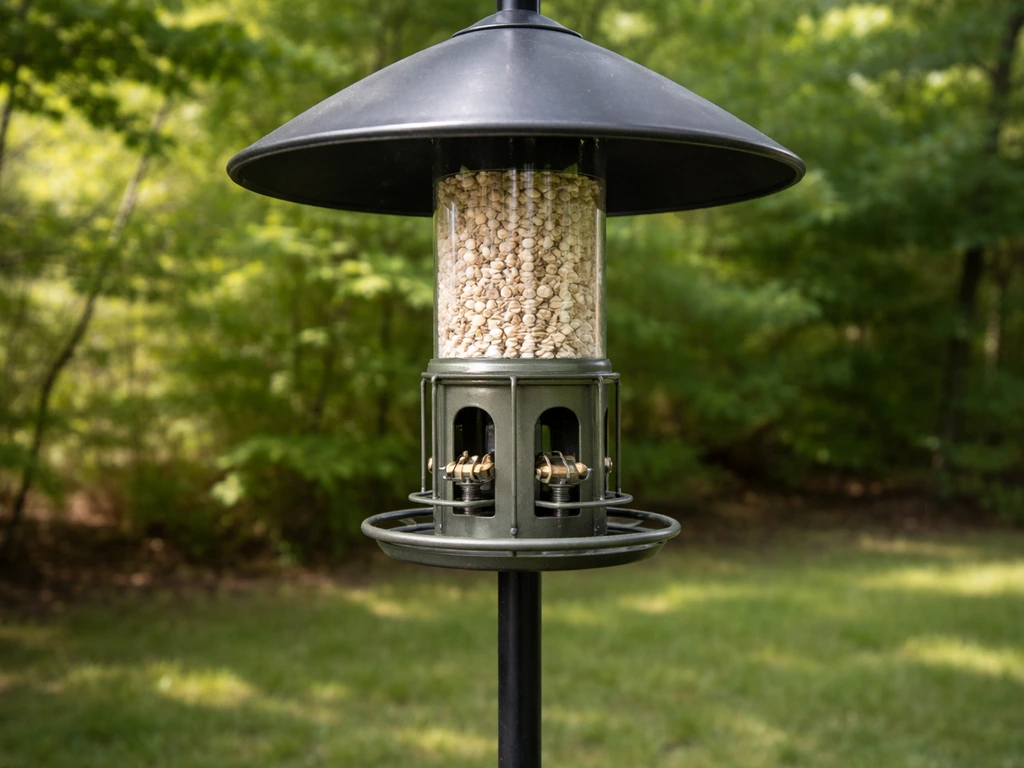
Safflower's natural bitterness does discourage most squirrels, but don't count on it completely. A hungry or persistent squirrel will eat what's available, especially in winter. And even if squirrels skip the safflower, they'll still knock a feeder around, scatter seed, and generally make a mess that attracts rats. Here's what actually works.
- Weight-activated port closures: Feeders like the Perky-Pet Squirrel-Be-Gone series use a spring-loaded mechanism that closes the feeding ports when a heavier animal (a squirrel, rat, or large bird) lands on the perch ring. Birds under the weight threshold feed normally. This is one of the most reliable mechanical solutions available.
- Motorized spinning perch: The Droll Yankees Yankee Flipper takes a more dramatic approach. A weight-activated motor spins the perch ring when a squirrel lands, sending it off without injury. It's rechargeable, works reliably, and birds aren't affected because they don't weigh enough to trigger the spin. It's expensive but genuinely 100% effective against squirrels in my experience.
- Pole-mounted squirrel baffles: A torpedo-style baffle (around 6 inches in diameter, 15-3/4 inches tall) mounted on the pole below the feeder blocks climbing squirrels. Place your feeder on a smooth metal pole at least 5 to 6 feet off the ground, with the baffle positioned so squirrels can't grab above it.
- Caged feeder design: As mentioned above, a wire cage around the feeder body is a passive physical barrier that also blocks larger birds.
Placement matters just as much as the feeder hardware. Squirrels can jump roughly 8 to 10 feet horizontally from a branch, fence, roof edge, or any other launch point. Keep your feeder at least 10 feet away from trees, fences, and the side of your house. If you have a lot of squirrel pressure, add a distraction station: a pile of dried corn or peanuts placed far away from your main feeder pulls a lot of them away without you having to fight it constantly.
For rats, the single most effective tactic is eliminating ground spillage. Safflower shells and uneaten seed that falls to the ground are a free meal for rodents. Use a seed catcher tray under your feeder, clean it out every two to three days, and pick up loose seed from the ground regularly.
Weather resistance and seed protection
Safflower has a relatively high oil content, which is part of why birds love it, but that also means it goes rancid faster than drier seeds once it gets wet. Wet safflower clumps, molds, and becomes useless (and potentially harmful to birds) within a day or two in humid conditions. This is one area where feeder choice genuinely changes outcomes.
Tube feeders keep the interior seed column the driest because the enclosed cylinder blocks most rain from reaching the seed directly. Hopper feeders with a good roof overhang (at least a 2-inch extension past the feeding tray on each side) protect reasonably well. Both are significantly better than open platforms in wet weather.
Whatever feeder you use, drainage is non-negotiable. Look for a mesh or perforated floor in the tray section rather than a solid plastic one. Water that pools at the bottom of a feeder is where mold starts. Metal mesh inserts drain passively and also let air circulate through the seed, slowing the damp-to-moldy process considerably.
Material durability is the other half of weather resistance. Powder-coated steel or UV-stabilized polycarbonate hold up to sun and rain far better than basic painted plastic, which cracks and fades within a season or two. For the roof and any metal hardware (perch rods, port rings, mounting screws), stainless steel or zinc-coated steel prevents the rust staining and structural weakening you get with bare metal. If a feeder ships with untreated steel components exposed to outdoor weather, that's a red flag.
Clean your feeder every one to two weeks during active feeding season. Disassemble it, scrub with a 10% bleach solution, rinse thoroughly, and let it dry completely before refilling. Safflower residue left inside a warm, moist feeder will spoil faster than you'd expect.
Size, placement, and setup for your backyard birds
Feeder capacity depends on how many birds visit regularly and how often you want to refill. For a primary safflower station in an active yard, a hopper or tube that holds 2 to 4 pounds of seed is practical. A 2-pound capacity feeder needs refilling every few days when cardinals are active; a 4-pound feeder can stretch to a week in moderate traffic. Avoid overfilling with more seed than birds consume in about a week, especially in humid weather, because the bottom layer will start to go stale.
For placement, mount your main feeder on a smooth metal pole at 5 to 6 feet off the ground with a baffle below it. To further reduce squirrel access, the University of Nebraska, Lincoln Extension “Selective Bird Feeding” PDF recommends using a squirrel baffle placed on a hook or wire so squirrels cannot jump onto it to shake out food. Keep it at least 10 feet from any tree branch, fence post, roof edge, or other squirrel launch point. For predator safety (cats, hawks), aim for about 12 feet of clearance between the feeder and a dense shrub or brush pile: close enough for birds to escape to cover quickly, but far enough that a cat can't use it as an ambush spot.
Cardinals and nuthatches prefer feeders in relatively open areas with good sight lines, not tucked against a wall. Chickadees are more flexible and will use feeders in partial shade near tree cover. If you're setting up multiple feeders, spacing them at least 6 to 10 feet apart reduces competition and lets more timid birds feed without being driven off by dominant cardinals.
Safflower works well as a single-seed feeder specifically because it's selective. If you're shopping specifically for black oil sunflower seeds, look for a feeder with ports or openings sized to medium-to-large seed and strong weather protection. Unlike a mixed seed feeder that attracts a chaotic mix of species, a dedicated safflower feeder tends to pull in your target birds (cardinals, chickadees, nuthatches, doves) without the mess of millet, milo, and filler seeds that hit the ground and sprout weeds. If you want the best sunflower seed bird feeder, look for similar traits like proper port sizing, weather protection, and easy cleaning. If you're also running feeders for sunflower or niger seed, keep the safflower station on the opposite side of your yard to reduce competition at any one spot. If you want the same level of selectivity for niger seed, use a feeder with openings sized for nyjer-type seed and keep it as dry as possible.
A buyer's checklist for choosing the best safflower feeder today
Before you buy, run through this list. It covers every spec and feature that actually matters in a real backyard setup with safflower seed.
- Port or opening size: Confirm ports are at least 3/8 inch to 1/2 inch in diameter, or that the feeder opening accepts medium-to-large seed. Nyjer/thistle feeders will not work for safflower.
- Perch design for target birds: If you want cardinals, choose a feeder with a wide, flat perch or a built-in tray, not just small peg perches. Cardinals need room to stand.
- Seed flow and anti-jam design: Check that the hopper or tube doesn't have narrow internal channels where safflower's chunky shape could bridge and block flow.
- Drainage in the tray: Look for a mesh or perforated floor in any tray section. Solid plastic trays pool water and are the main source of mold problems.
- Roof overhang: At least 2 inches of overhang past the feeding area on each side to deflect rain.
- Material: Powder-coated metal, UV-stabilized polycarbonate, or cedar/recycled composite. Avoid thin painted plastic for anything you want to last more than one season.
- Squirrel-deterrent feature: Weight-activated port closure (like Squirrel-Be-Gone style), spinning perch (like the Yankee Flipper), or compatibility with a standard pole-mounted baffle.
- Easy disassembly for cleaning: The feeder should come apart for a full scrub without tools. If you can't clean it completely, it will mold.
- Capacity matched to your traffic: 2 lbs for a light-traffic yard, 3 to 4 lbs for active cardinal populations. Don't buy a feeder so large that seed sits for weeks.
- Mounting compatibility: Verify whether it hangs on a hook, mounts on a pole, or both, and that it fits the baffle and pole hardware you already have or plan to buy.
A quality hopper feeder with a mesh tray floor, good roof overhang, and compatibility with a torpedo baffle covers the vast majority of backyard safflower setups. If squirrels are a serious ongoing problem, step up to a weight-activated feeder. If larger nuisance birds like starlings or grackles are the bigger issue, go with a caged tube or caged hopper design. Safflower's built-in selectivity does a lot of the filtering work for you, but the right feeder makes it reliable instead of just occasional.
FAQ
Can I use the same feeder for safflower and sunflower, or should I keep them separate?
You can, but it usually performs better when you separate them. Mixed seed encourages larger birds and increases ground spillage, which leads to mold and weeds. If you use one feeder, choose a model with port sizes that suit safflower, add a seed catcher, and expect more refill and cleaning than a dedicated safflower station.
What port size should I look for if I want to target cardinals but avoid birds that struggle with safflower?
Aim for a feeder that lets safflower flow freely, the article suggests roughly 3/8-inch to 1/2-inch openings as a baseline. Cardinals have the strength to crack the thick shell, but smaller beaks and some nuisance birds often pass on it. If you see persistent finch-like traffic, your ports may be too narrow or the feeder too open, allowing easier-to-handle seeds and shell fragments to accumulate.
Will safflower go bad faster in a hopper versus a tube feeder?
Yes, generally. A tube keeps the seed column drier, while a hopper can trap moisture if the seal or ventilation is poor. If you get humid weather, prioritize drainage and ventilation in the hopper, and consider shorter refill cycles instead of letting a large portion sit for weeks.
How do I prevent safflower from clumping inside the feeder?
Treat clumping as a drainage problem first and a storage problem second. Use a feeder with a mesh or perforated tray floor, keep the roof overhang substantial, and avoid overfilling so the bottom layer does not sit wet. During rain events, empty the tray if you notice pooling or damp seed, then refill after the feeder dries.
Are open platforms ever a good option for safflower?
They can work as a secondary feeder, especially in sheltered locations, but they are the most vulnerable to wet spoilage. If you use a platform, choose one with a metal mesh floor and place it where it does not collect rain splash. Plan on more frequent cleaning and seed removal after storms.
What’s the safest way to clean a safflower feeder when mold is a concern?
Disassemble the feeder, scrub all seed-contact surfaces, then rinse thoroughly. The article mentions a 10% bleach solution and complete drying, which is important because residual moisture speeds rancidity. If you see dark residue or persistent musty odor, extend the rinse and let it dry longer before refilling.
How often should I refill safflower to avoid rancid or moldy seed?
In active cardinal periods, a hopper or tube with a few days of capacity is often safer than letting seed sit for a week in humid weather. The article gives general refill expectations, but the practical rule is to refill based on how quickly the feeder stays dry, and to remove any damp or clumped seed immediately.
Will a baffle help with squirrels if safflower is naturally bitter?
It helps, but it is not a complete solution. The article notes squirrels may still eat or knock feeders around, and they will target whatever is easiest to reach. Pair a baffle with placement away from launch points, and consider a weight-activated feeder if you have repeated squirrel interference.
How far away should I place the feeder from trees, fences, and the house to reduce squirrel access?
Mounting distance matters, the article recommends at least 10 feet from trees, fence posts, and roof edges, and using a pole plus baffle. If squirrels are persistent, increase clearance and also ensure there are no nearby horizontal branches that line up with the feeder height.
Do I need a seed catcher for rats even if I use safflower?
Yes. Rats are attracted to spilled shell fragments and uneaten seed regardless of seed type. A seed catcher plus routine cleanup breaks the food source cycle, and the article suggests cleaning it out every two to three days and picking up loose seed regularly.
When should I switch feeder types because I’m not getting the birds I want?
If you primarily see birds that cannot access or crack safflower, check port size and feeder access style first, then consider a tube with medium-to-large ports or a hopper with wide feeding openings. If you want cardinals specifically, ensure there is a stable landing surface, like a built-in tray at the base of a tube, since they are not reliable clingers.
Can I place safflower feeders close to bushes for bird safety from predators?
You can, but balance is key. The article suggests about 12 feet of clearance to allow escape cover without turning dense brush into a cat ambush spot. If you have both cats and hawks, start with wider spacing and observe for a few days before moving the feeder.