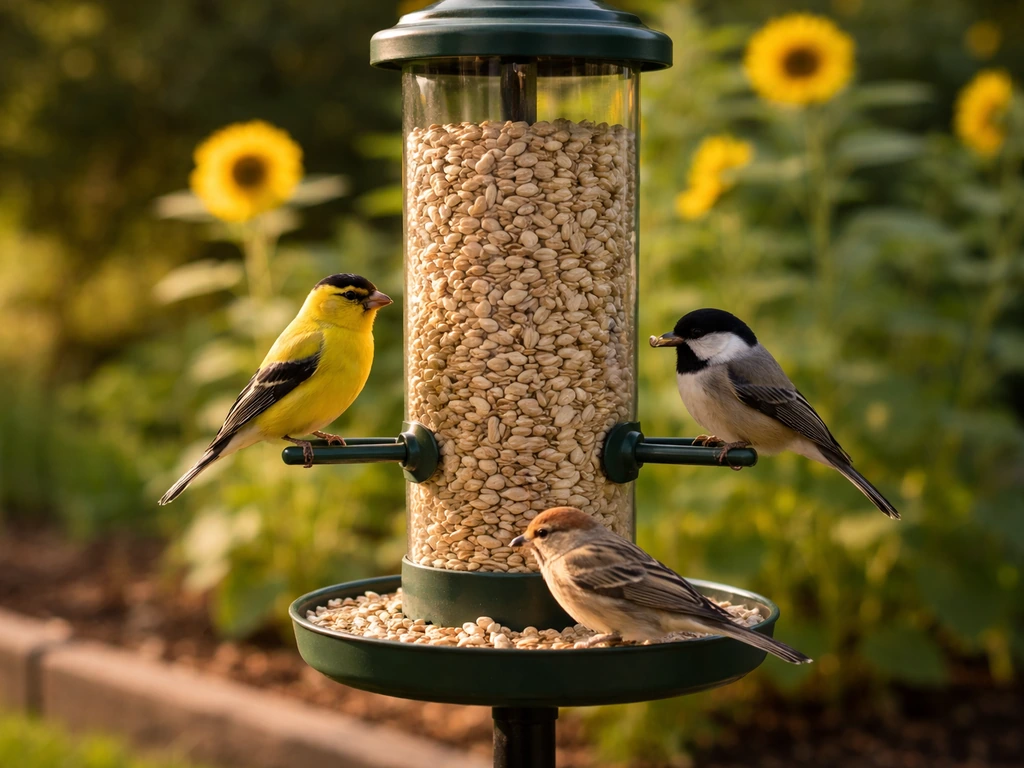
If you want goldfinches, pine siskins, and house finches flooding your backyard, a thistle feeder is the single best investment you can make. Thistle (sold commercially as Nyjer seed) is tiny, oil-rich, and almost exclusively loved by finches and a handful of other small songbirds. The catch is that Nyjer seed won't work in a standard tube or hopper feeder, the ports are too large and the seed just falls through. You need a feeder specifically engineered for it: tight seed ports, fine mesh, or a breathable sock. Get that right, and you'll see results faster than with almost any other feeder type.
Best Thistle Bird Feeder Guide: Choose, Compare, Mount

Marcus Holloway
19 Apr 2026
What a thistle feeder attracts and when you need one
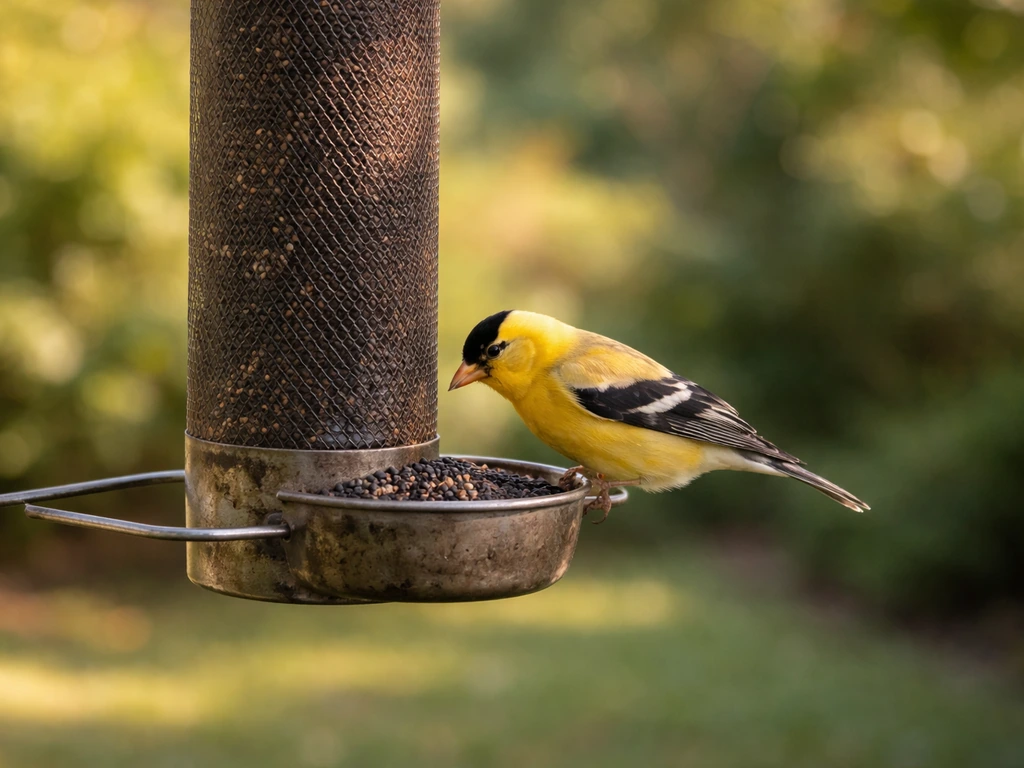
American goldfinches are the flagship species. They're drawn to Nyjer year-round but especially in fall and winter when natural seed sources dry up. Pine siskins are close behind, thistle is a significant part of their winter diet, and they'll travel to find a reliable Nyjer source. House finches are year-round feeder regulars that readily take to nyjer sock feeders and will often congregate in small flocks. Depending on where you live, you might also pull in common redpolls, lesser goldfinches, or purple finches. The common thread is that all of these birds are small-billed, agile, and perfectly built for clinging to a tube or mesh feeder.
So when do you actually need one? If you're already running a sunflower or black oil sunflower seed feeder and want to expand to a finch-specific setup, a thistle feeder is the logical next step. If you want the best results for black oil sunflower seeds, look for a feeder designed with the right port size and squirrel resistance for that seed type best bird feeder for black oil sunflower seeds.
If you're still deciding on a sunflower option, the best sunflower seed bird feeder will depend on the species you want and how you plan to handle mess and squirrels sunflower or black oil sunflower seed feeder. It lets you target finches without having every bird in the yard competing for the same port.
If you're a first-time feeder buyer specifically hoping to attract goldfinches, start here rather than with a general-purpose seed feeder, Nyjer is that effective for finches specifically.
What actually makes a thistle feeder worth buying
Not all thistle feeders are created equal. I've gone through a few that looked fine in photos but fell apart in the first winter or clogged constantly. Here's what actually matters when you're evaluating specs or holding a feeder in your hands.
Construction and materials
Tube feeders made from UV-stabilized polycarbonate are the gold standard. Companies like Droll Yankees engineer their tubes to resist cracking and fading through years of sun and rain exposure, and their rust-resistant powder-coated metal components hold up to repeated squirrel harassment. Cheap feeders made from thin plastic will crack at the seams within a season, especially in climates with hard freezes or intense summer heat. Metal tubes or heavy-gauge mesh are worth the extra cost if you're committed to a long-term setup.
Seed ports and perch design
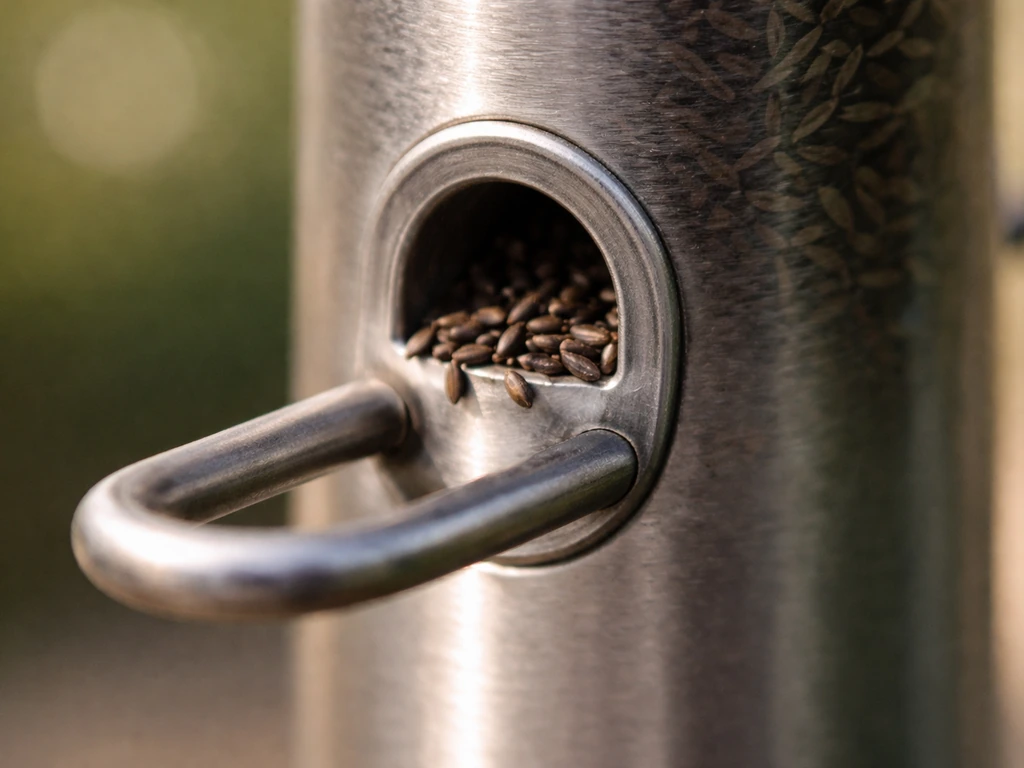
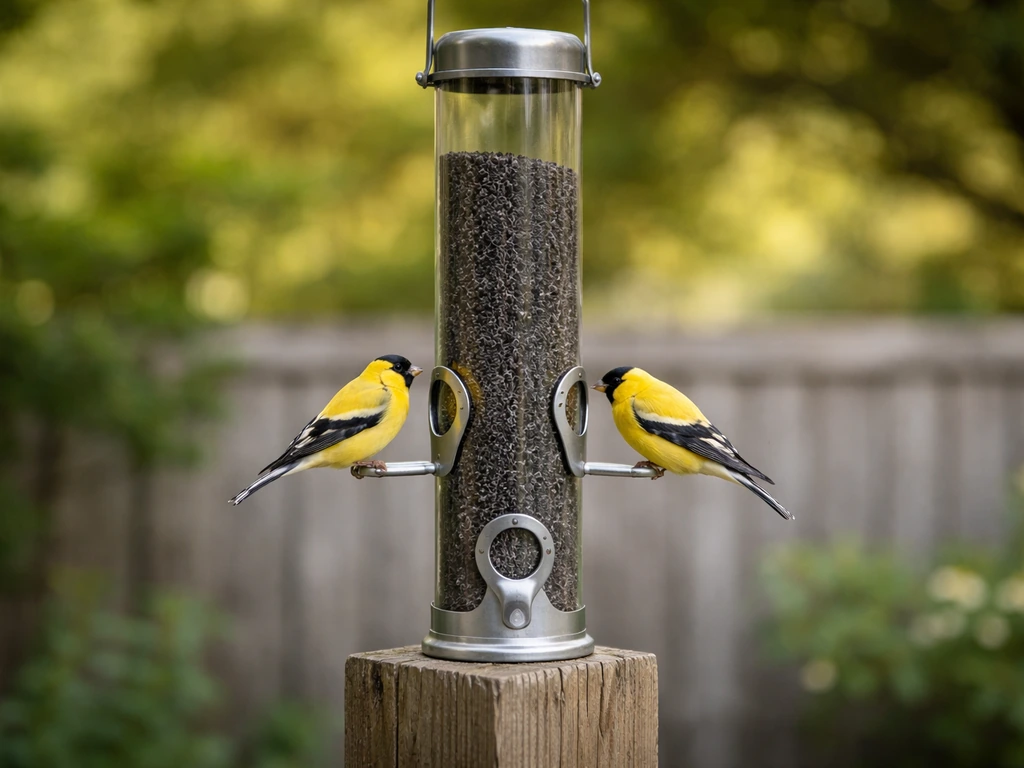
Nyjer seed is roughly the size of a sesame seed. The ports on a thistle feeder have to be small enough to meter it out without letting it pour freely, but large enough that birds can actually extract seed without frustration. Some tube feeders include a seed diffuser or internal baffle that redirects seed toward the ports as the level drops, this prevents the frustrating "dead zone" where seed sits a few inches below an empty-looking port.
Perch style matters too: finches are natural clingers, so a feeder with multiple perches or a full-length mesh tube lets several birds feed simultaneously without territorial squabbling. The Songbird Essentials 3-Tube finch feeder, for example, holds up to 3 pounds of Nyjer across multiple feeding stations, useful if you're seeing heavy finch traffic.
Ease of cleaning
This is where a lot of otherwise decent feeders fail. Nyjer seed clumps when wet, and a feeder with no removable bottom or narrow interior access is going to become a mold incubator by spring. Look for feeders with a removable bottom cap, wide-mouth tube openings, or quick-clean bottom designs. Mesh finch feeders with removable bases are especially easy to break down and rinse. Sock feeders (more on those below) are the ultimate in easy cleanup because you just throw them out when they're done, though that creates ongoing waste and cost.
Feeder style comparison
| Style | Capacity | Cleaning Ease | Bird Access | Durability | Best For |
|---|---|---|---|---|---|
| Tube feeder (ports) | Medium to large (up to 3+ lbs) | Moderate (removable base needed) | Perching birds, multiple ports | High with UV polycarbonate or metal | Year-round use, serious setups |
| Mesh tube feeder | Medium | Easy (full surface access) | Clingers like goldfinches | Medium (mesh can rust or stretch) | High finch traffic, cling-feeding preference |
| Nyjer sock | Small (disposable) | Easiest (throw away) | Clingers | Low (single use) | Budget starter, seasonal use |
| Multi-tube feeder | High (3 lbs+) | Moderate | Multiple birds simultaneously | High | Busy feeders, flocks |
Squirrel-proofing: what works and what doesn't
Good news: squirrels are less obsessed with Nyjer than they are with sunflower seed or safflower. University wildlife extension research specifically notes that squirrels tend to leave Nyjer relatively alone compared to other seeds. That said, "relatively alone" doesn't mean they'll ignore it entirely, and a determined squirrel will chew through or knock down a feeder given the chance. Don't skip squirrel-proofing just because you're running thistle.
Weight-activated feeders
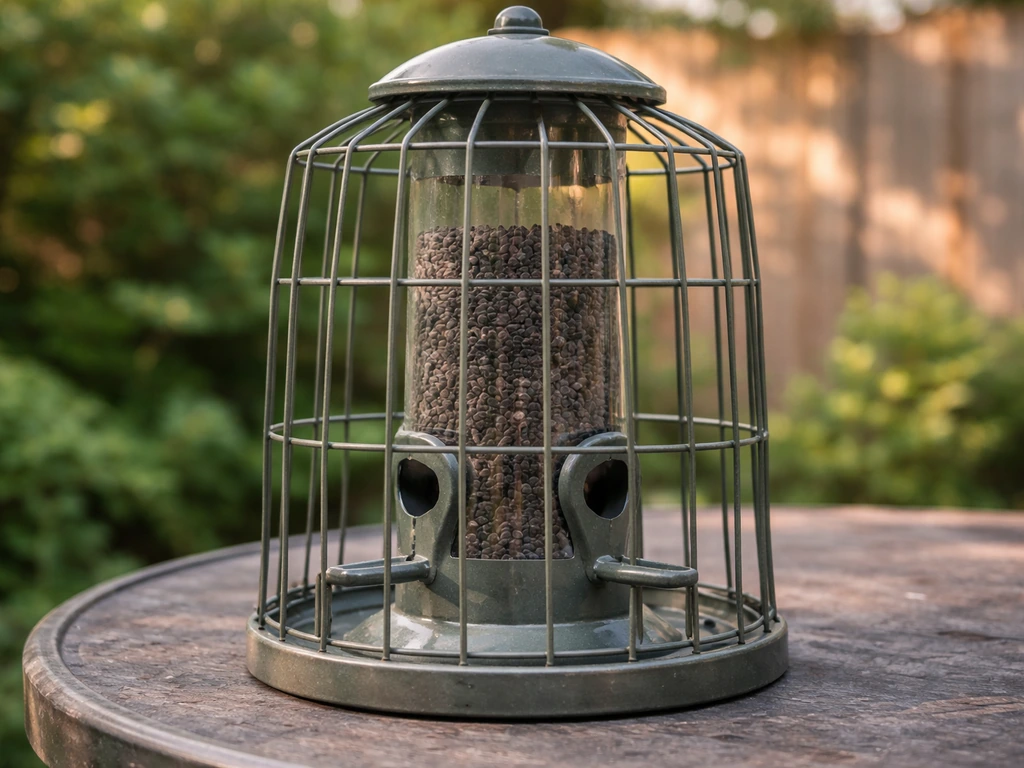
The Brome Squirrel Buster Nyjer is the most recognized thistle-specific squirrel-proof feeder. It uses a wire shroud that slides down over the seed ports when a heavier animal (a squirrel, a large bird) puts weight on the perch ring. The 2.4 lb seed capacity is solid for a squirrel-proof tube, and the clinging-access design works well for finches that don't always need a perch. The Roamwild PestOff takes a slightly different approach: individually spring-loaded ports mean that when a squirrel weighs down one perch, only that port closes while the rest stay open to lighter birds. Both designs work, though the Brome's all-or-nothing shroud is simpler mechanically and has a longer track record.
Baffles and placement as your first line of defense
Even a squirrel-resistant feeder needs good placement to do its job. Squirrels can jump several feet vertically and horizontally, so a feeder mounted too close to a fence, tree branch, or roofline gives them an easy launch point. Wild Birds Unlimited's placement guidance is specific: mount your baffle so the top sits about five feet off the ground, with your feeder above it, and position the pole at least 10 feet away from any surface a squirrel could jump from. A metal cylinder (torpedo) baffle on the pole below the feeder is more effective than a dome baffle above it, because squirrels approach from below. This placement geometry matters as much as feeder design.
Mounting and placement for maximum bird traffic
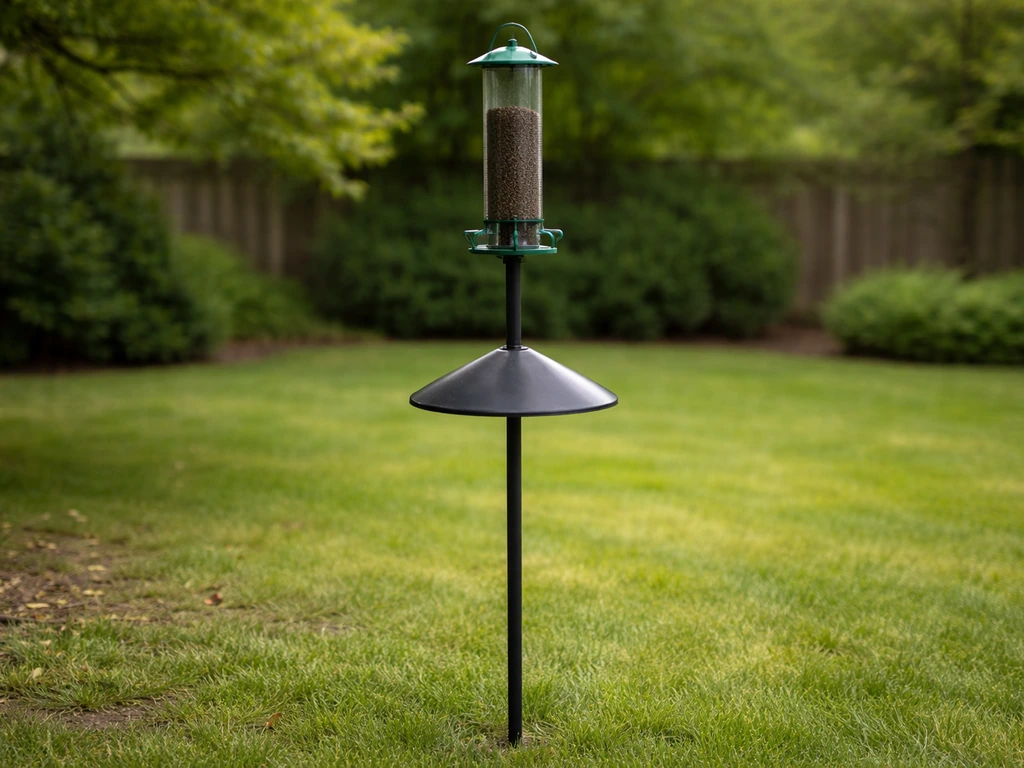
Where you put a thistle feeder affects how quickly birds find it and how often they return. Finches aren't as skittish as some species, but they still prefer feeders with some visual cover nearby, a shrub or tree within 10 to 15 feet gives them a staging perch and a retreat if something startles them. That said, don't go so deep into dense cover that the feeder is hidden from birds flying over or passing by.
Height matters more than most people think. Hanging a thistle feeder at about 5 to 6 feet off the ground puts it in the natural visual range of finches and keeps it accessible for refilling without a ladder. If you're pole-mounting, the baffle geometry described above already puts you in the right range. For hanging feeders on a shepherd's hook or bracket, make sure the hook is sturdy enough to hold a full 2 to 3 pound feeder in wind without spinning constantly, continuous spinning discourages birds from landing.
Weather exposure is a real consideration with Nyjer specifically. This seed clumps and molds faster than sunflower in wet conditions. A tube feeder with a roof or dome cover over the top ports helps shed rain and keeps the top layer of seed dry. If you live somewhere with frequent rain or high humidity, a covered feeder is not optional, it directly affects seed freshness and bird health.
- Hang or pole-mount at 5 to 6 feet high for easy finch access and comfortable refilling
- Position within 10 to 15 feet of a tree or shrub for cover, but keep it visible from open sky
- Keep the pole or hook at least 10 feet from fences, branches, or rooflines squirrels can jump from
- Use a roof or dome cover in wet climates to protect Nyjer from rain and moisture
- Avoid windy, exposed locations where a spinning feeder discourages landing
Seed, refills, and how often to clean
Nyjer seed (marketed as thistle) is sold under the Nyjer trademark by the Wild Bird Feeding Industry. Buy it fresh, it has a higher oil content when fresh, which is exactly what finches are after, and it goes stale faster than sunflower seed. If you notice birds suddenly ignoring a feeder they were using regularly, stale seed is often the first thing to check. Fresh Nyjer should feel slightly oily and dark; pale, dry-looking seed is past its prime.
One thing that confuses a lot of people: what looks like fallen seed scattered under a Nyjer feeder is usually the empty outer shells the birds have extracted. Goldfinches and siskins bite out the oily interior and drop the husk. This is normal and not waste, though if you're seeing a real pile of intact seed on the ground, that's a sign of a feeder problem (clogged ports, stale seed) rather than bird behavior.
On cleaning: Project FeederWatch recommends cleaning seed feeders at least every two weeks, and more often during heavy use, warm weather, or damp conditions. Project FeederWatch advises cleaning seed (and suet) feeders regularly, such as every week or two, and more often during heavy use or wet weather to help reduce the spread of avian disease cleaning seed feeders at least every two weeks.
Minnesota DNR specifically flags wet weather as a period when mold and bacteria form quickly on birdseed. For tube feeders, disassemble the feeder, empty any remaining seed, and wash all parts in a diluted bleach solution (roughly 1 part bleach to 9 parts water), then rinse thoroughly and let it air dry completely before refilling. Feeders that go back into service while still damp are just restarting the mold problem.
If you see black mold or smell something off, clean immediately and discard the remaining seed, don't just top it off.
Nyjer socks are Project FeederWatch-recommended as a disposable alternative: when the sock is used up or gets dirty, you replace it rather than clean it. That makes maintenance nearly zero, but the ongoing cost of replacement socks adds up, and they don't hold much seed. For a permanent setup with regular finch traffic, a proper tube feeder is more economical and better for birds over time.
Smart feeders and AI add-ons: worth it for a thistle setup?
Smart feeders and camera modules have gotten genuinely useful in the last couple of years. Bird Buddy's camera module attaches to compatible feeders and uses on-device species recognition to identify visitors after they land, you get a photo and a species ID pushed to your phone. The Kiwibit Beako runs around $249 to $269 depending on the AI-enabled version, and includes a squirrel alarm in addition to species alerts. The Camouflage EZ Birdfeed smart feeder camera claims identification capability across roughly 11,000 species and sends Wi-Fi app alerts with each visit.
Here's the honest take: most dedicated thistle feeders are not designed to accommodate a camera module or smart attachment. The slim tube design that makes them efficient at dispensing Nyjer doesn't give you a flat platform for a camera. If smart monitoring is a priority, you're more likely to get it working on a platform feeder or a wide-tube hopper that's compatible with add-on camera hardware. That said, you can always position a separate camera-equipped feeder nearby and run your thistle tube alongside it, many backyard setups do exactly that.
If you're specifically into species tracking and want to know whether those winter visitors are pine siskins or goldfinches (they look similar in low light), a smart camera on an adjacent feeder is a genuinely worthwhile add-on. For pure finch feeding without the tech, a good tube feeder does the job without any subscription or app required.
How to pick the right thistle feeder for your yard
Here's how I'd think through the decision based on what you're working with.
If you're just starting out and want to see whether finches will come to your yard before investing heavily, start with a Nyjer sock. It costs next to nothing, requires no cleanup commitment, and will tell you within a week or two whether you have goldfinch or siskin traffic worth building on. If the sock stays empty after two weeks, your local finch population may be light or you may need to reposition.
If you have confirmed finch traffic and want a durable, long-term setup, a UV-stabilized polycarbonate tube feeder with a removable base is the right call. Look for models with a seed diffuser or internal baffle to prevent dead zones, a rain cover or dome if you get significant rainfall, and enough ports to serve small flocks without a constant waiting line. Droll Yankees and similar quality brands build feeders that outlast three or four seasons of weather and squirrel abuse.
If squirrels are an active problem in your yard, go directly to the Brome Squirrel Buster Nyjer or a similar weight-activated shroud design, and pair it with a pole-mounted torpedo baffle positioned with the top at five feet and the pole 10 feet from any jump-off point. The feeder and the placement geometry work together, one without the other is only half the solution.
If you want high capacity for a busy feeding station (peak winter finch season can bring a dozen birds at a time), a multi-tube design like the Songbird Essentials 3-Tube holding up to 3 pounds reduces how often you're refilling and lets more birds feed without competition. Pair it with a mesh exterior if your finch species skew toward clingers.
One last thing: if you're also running sunflower or black oil sunflower seed feeders, safflower feeders, or niger-specific setups for different bird targets, keep your thistle feeder at least a few feet away from those. If you're comparing options, the best bird feeder for niger seed will be different from a thistle feeder since niger seed uses larger ports and a different seed handling design niger-specific setups. Finches will happily share space, but separating seed types by feeder keeps cross-contamination down and makes it easier to monitor which birds are using what. Your thistle feeder is a finch-specific tool, let it do that job cleanly.
FAQ
What’s the fastest way to tell if my feeder ports are the right size for Nyjer (thistle)?
Pour a small amount of Nyjer in a dry feeder, then gently tilt it. The seed should not immediately gush from every port, it should meter and birds should be able to extract it with light pecking. If you see a steady stream through ports or the feeder empties quickly without bird use, the ports are too large or the feeder is the wrong design.
My thistle feeder seems to attract birds briefly, then they stop coming. What should I check first?
Check seed freshness and wet clumping first. Nyjer can go stale or moldy faster than sunflower, especially if the top layer gets damp. Replace the seed and clean all parts, then keep the feeder under a roof or dome if you have frequent rain or heavy humidity.
Can I use thistle or Nyjer seed interchangeably with other “small seed” blends?
No, don’t mix Nyjer with generic small seed blends. Blends often contain seed types that fit standard ports, and they can clog fine mesh or cause uneven dispensing. Use pure Nyjer only, so the ports and perches stay tuned to finch clinging behavior.
What can I do if birds are dropping husks, and it looks like a lot of waste?
Expect husk litter under Nyjer feeders, it’s normal. However, if you find intact, unbroken seed piled up, that usually means the feeder is clogged, the ports are failing to meter, or the seed is too wet and not being properly extracted. In that case, empty the feeder, clean it thoroughly, and confirm ports are clear.
How do I position a thistle feeder if I don’t have space for a long baffle distance?
Use the best available geometry even if you cannot hit the ideal distance. Place the feeder so the pole baffle is below the feeder and keep the feeder away from any surface squirrels can jump from (fences, branches, roof edges). If you must choose, prioritize eliminating jump-off points rather than maximizing distance to every object.
Is a sock feeder better than a tube feeder for all climates?
Sock feeders are great for short trials and easy disposal, but they can be a poor fit where rain or humidity is frequent because you may need more frequent replacements. In wet climates, a tube feeder with good rain shedding and easy bottom access usually stays healthier longer between cleanings.
How often should I clean a Nyjer thistle feeder beyond the general two-week guidance?
Increase cleaning frequency if you notice dampness, clumping, or slower seed flow. In warm, humid weather or during heavy use, plan on more frequent disassembly and washing, because mold growth can start before you would typically see obvious changes. Always dry fully before refilling.
Can I refill a Nyjer feeder when it’s only partly empty?
It’s better to remove any damp or clumped seed and start fresh. Topping off can trap moisture and keep mold spores active even if the feeder looks mostly fine. If the seed has changed color, feels sticky, or smells off, discard remaining seed and sanitize the parts.
Do finches feed at different heights or times than other backyard birds?
Yes. Finches often prefer consistent access and a predictable setup, and they may use the feeder more during cooler parts of the day. If you see initial interest but then fewer visits, try keeping the feeder at a consistent height (about 5 to 6 feet for hanging) and avoid relocating it repeatedly, which can break the birds’ routine.
Will a thistle feeder bring in the same species year-round in my region?
Not always. American goldfinches and pine siskins often use Nyjer heavily in fall and winter, and activity can drop in summer when natural food is abundant. If you want year-round traffic, consider keeping other safe foods available in separate feeders rather than forcing Nyjer to do all the work.
Can I combine thistle feeding with sunflower or safflower feeders without problems?
Yes, but separate the stations by a few feet and keep seed types from mixing in the area. Mixing can complicate monitoring (which species are using what) and can change how each feeder performs if a feeder gets contaminated with the wrong seed size and texture.
Are smart cameras compatible with most thistle tube feeders?
Usually not directly. Most dedicated Nyjer tube designs are too narrow and don’t provide a stable mounting surface. If you want species IDs, plan to run a separate camera-compatible feeder nearby, then use the thistle feeder strictly for feeding consistency.
Next Article
Best Sunflower Seed Bird Feeder: Guide for Hearts
Choose the best sunflower seed or hearts feeder with squirrel proofing, low-waste design, and tips for mounting and clea