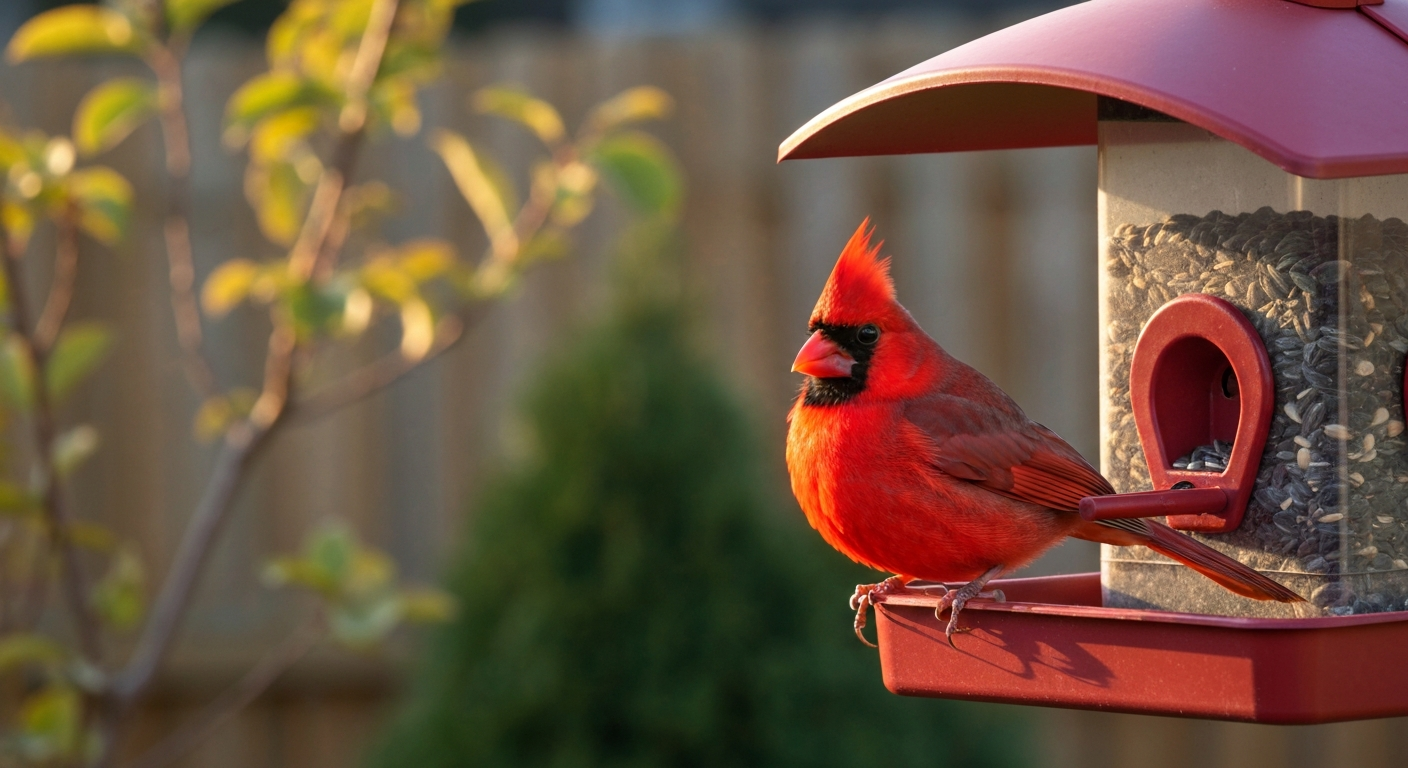
The best sunflower seed bird feeder is a sturdy hopper or tube feeder with ports and perches sized for medium songbirds, made from UV-stable polycarbonate or powder-coated metal, mounted on a pole with a stovepipe baffle. That covers the vast majority of backyard setups. But the details matter a lot, especially if you're switching between whole sunflower seeds and shelled sunflower hearts, which behave quite differently in feeders and attract slightly different crowds of birds.
Best Sunflower Seed Bird Feeder: Guide for Hearts
Marcus Holloway
15 Apr 2026
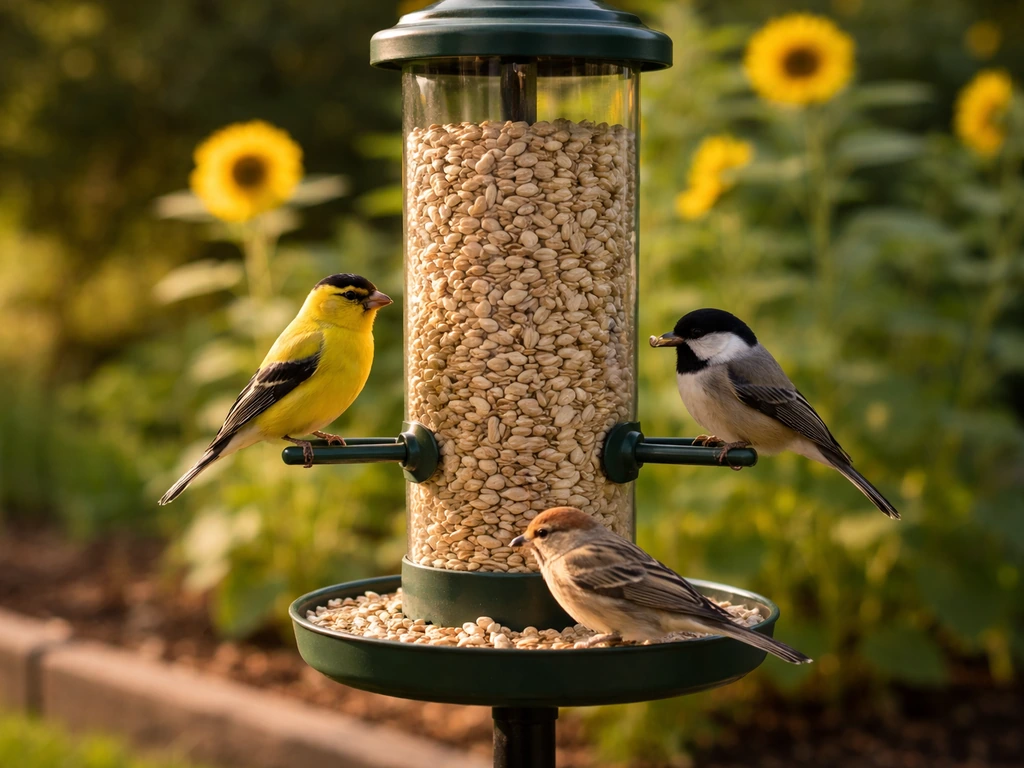
Sunflower seeds vs sunflower hearts: what actually changes for your feeder
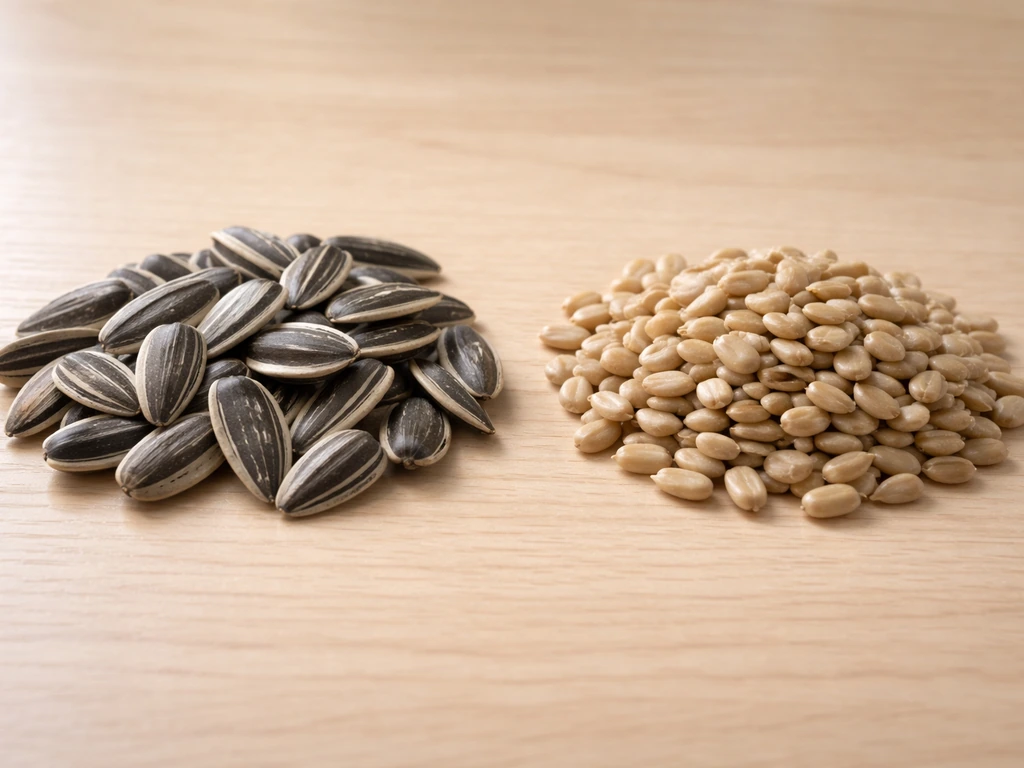
Whole sunflower seeds come in two main varieties: striped and black oil. Black oil sunflower seeds are the go-to choice for most backyard setups because their shells are thinner and easier for a wider range of species to crack open. Striped sunflower seeds have thicker shells, which cuts down the number of birds that can actually access the food inside. Neither is wrong, but black oil is almost always the better buy.
Sunflower hearts (also called sunflower chips or hulled sunflower seeds) are simply the edible kernel with the tough outer shell removed. Because there's no shell to crack, practically every bird that shows up can eat them immediately, including smaller species that struggle with whole seeds. The practical trade-off is that hearts are more expensive per pound and spoil faster once wet because there's no protective shell. That changes what you need from a feeder.
For whole sunflower seeds, your feeder needs to hold the seed securely while birds work at cracking it. Port size matters here: too small and larger birds like cardinals can't get a good grip; too large and seed pours out and gets wasted. For sunflower hearts, the feeder needs excellent drainage and weather protection because a clump of wet, shell-less hearts turns into a moldy mess much faster than whole seeds would. A weather dome or roof cover goes from optional to pretty much mandatory when feeding hearts.
What actually makes a feeder great for sunflower seed or hearts
Not every feeder marketed for sunflower seed is actually well-designed for it. Here's what to look for before you buy.
- Port size: Ports should be wide enough for whole seeds (roughly 3/8 to 1/2 inch for tube feeders) or slightly wider mesh openings for hearts. Too narrow and seed jams; too wide and it pours out when a bird lands.
- Perch length and placement: Longer perches (2 to 3 inches) let cardinals and grosbeaks sit comfortably. Shorter or no perches favor clinging birds like chickadees and nuthatches.
- Seed capacity: Larger hoppers (2 to 4 lbs) reduce how often you refill, but only if the feeder is sheltered. Oversized capacity with hearts in rainy weather just means more spoiled seed.
- Drainage: Look for drain holes in the seed tray or bottom of hoppers. Hearts need this more than whole seeds, but both benefit from it.
- Weather protection: A roof or dome cover is important for hopper feeders. For tube feeders, a weather guard or baffle overhead makes a real difference in keeping seed dry.
- Material durability: UV-stabilized polycarbonate or powder-coated steel lasts years longer than plain plastic or untreated wood. Metal ports resist squirrel chewing far better than plastic ones.
- Ease of cleaning: Look for feeders that disassemble easily or have removable trays. The more friction there is in cleaning, the less often you'll do it, and dirty feeders harbor mold and bacteria.
One thing I've learned the hard way: a feeder with metal-reinforced ports is worth paying more for upfront. Squirrels will chew through plastic ports in a single season. The same goes for feeder roofs. Cheap plastic cracks in UV exposure within a year or two, and then you're buying another feeder anyway.
The feeder types that work best for sunflower seeds and hearts
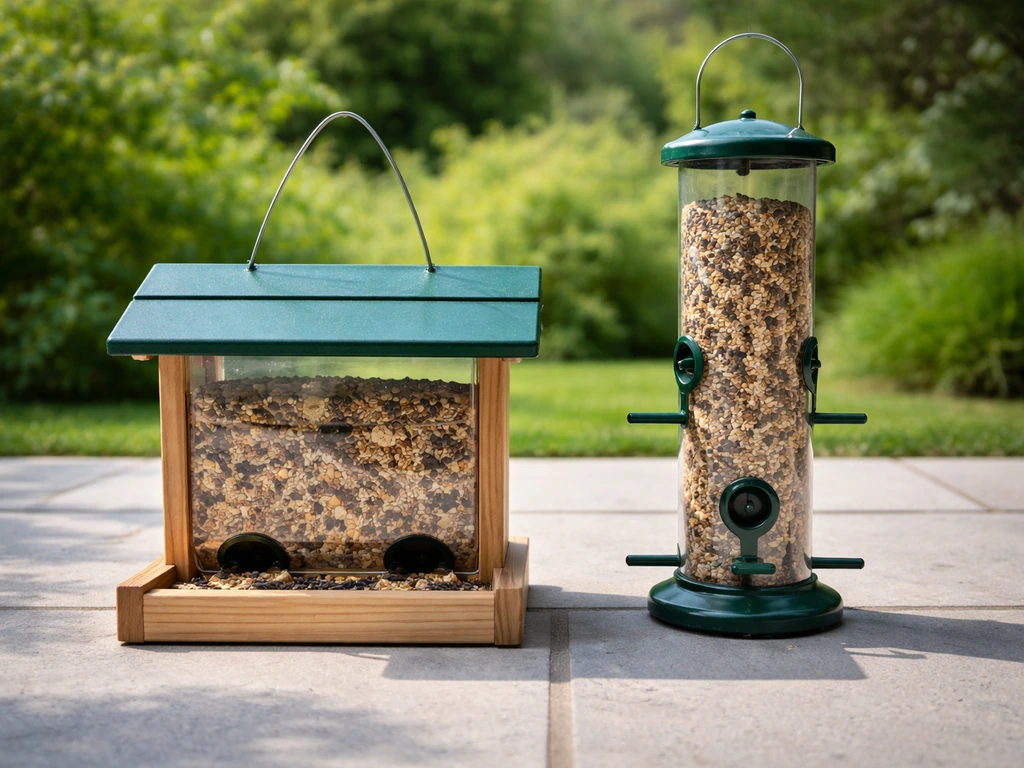
Hopper feeders
Hopper feeders are the workhorses of sunflower feeding. They hold large quantities, dispense seed gradually through a bottom tray, and accommodate a wide range of bird sizes. A good hopper with a pitched roof keeps rain off the seed, and most have tray drainage built in. The downside is that they're harder to fully seal against squirrels unless you pair them with a baffle, and the seed at the bottom of a hopper can sit long enough to get damp if you're not topping it off regularly. For whole black oil sunflower seeds, a hopper is often the best all-around choice.
Tube feeders
Tube feeders work well for sunflower seeds when the ports are sized correctly. They're more weather-resistant than hoppers by design since seed stays enclosed in the tube, and they're easier to hang with a baffle above. For hearts, a mesh tube feeder (with a wire mesh cylinder instead of individual ports) is often ideal because birds can cling anywhere and access seed without fighting over individual ports. The wide surface area also lets multiple birds feed at once, which cuts down on the territorial squabbling I see constantly at single-port feeders.
Platform and tray feeders
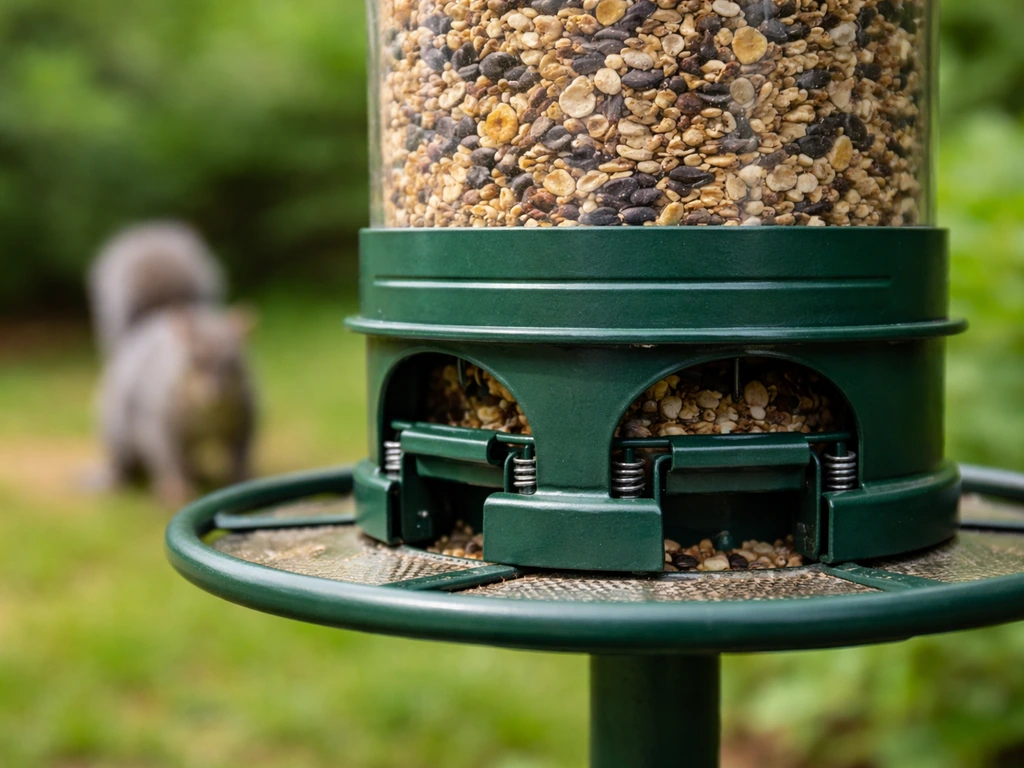
Platform feeders attract the widest range of species, including ground-feeding birds like juncos and doves that won't use a hanging feeder. The problem with platforms and sunflower hearts is obvious: they offer zero weather protection. If you use a platform for hearts, plan to offer small amounts at a time and clear out uneaten seed daily. For whole sunflower seeds, platforms are more forgiving, but squirrel access is essentially guaranteed unless the platform is pole-mounted with a solid baffle system.
Weight-activated and caged feeders
Weight-activated feeders close seed ports when something heavier than a songbird (like a squirrel or a large grackle) lands on them. They work well, though setup matters. Audubon notes there's no truly squirrel-proof feeder, but weight-activated models get you very close when the feeder hangs far enough from the pole that squirrels can't bypass the mechanism entirely. Caged tube feeders use a wire cage to let small songbirds in while physically blocking larger birds and squirrels. If grackles are overwhelming your feeder, a caged model is often the fastest fix.
Which birds show up: seeds vs hearts
Both whole sunflower seeds and hearts draw a strong core group of visitors, but the difference in accessibility shifts the mix a bit.
| Species | Whole Sunflower Seeds | Sunflower Hearts |
|---|---|---|
| Northern Cardinal | Yes (cracks shell easily) | Yes (preferred, less effort) |
| Black-capped/Carolina Chickadee | Yes (takes seed, flies off to crack) | Yes (faster feeding) |
| White-breasted Nuthatch | Yes | Yes |
| House Finch / Purple Finch | Yes | Yes (strong preference) |
| American Goldfinch | Occasionally | Yes (very common) |
| Tufted Titmouse | Yes | Yes |
| Rose-breasted Grosbeak | Yes (strong preference) | Yes |
| Downy/Hairy Woodpecker | Yes (at hopper or platform) | Yes |
| Dark-eyed Junco | Fallen seed on ground | Yes (fallen hearts on ground) |
| House Sparrow | Yes | Yes (can become dominant) |
| Common Grackle | Yes (competitive) | Yes (competitive) |
Sunflower hearts draw a noticeably broader audience because no cracking skill is required. Smaller finches and birds that might struggle with a thick shell can feed immediately. If your goal is to attract goldfinches specifically, hearts in a mesh tube feeder are one of the most reliable approaches. Keep in mind that if you're already offering nyjer (thistle) seed, you can compare dedicated thistle feeders to see how the two setups complement each other for finch species.
One practical note on safflower: cardinals that love sunflower seeds also take strongly to safflower, and safflower has the bonus of being mostly ignored by squirrels and grackles. If you're fighting competition from those species, it's worth reading up on the best feeders for safflower seed as a complementary or alternative setup alongside your sunflower feeder.
Squirrel-proofing, weather resistance, and durability
Squirrel-proofing that actually works
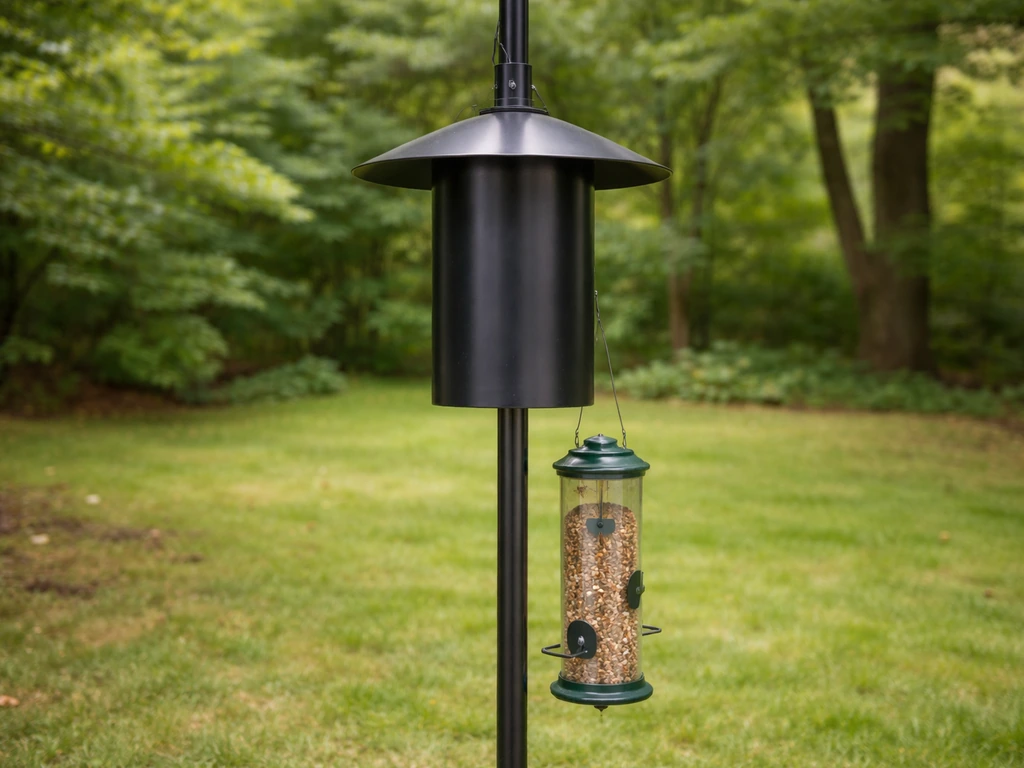
No setup is 100% squirrel-proof, but you can get remarkably close with the right approach. The most reliable system I've used is a smooth steel pole with a stovepipe baffle mounted partway up. Wild Birds Unlimited describes this configuration well: when a stovepipe baffle is placed correctly on a pole, it makes it virtually impossible for a squirrel to climb past it. The key word is "correctly." The baffle needs to be high enough off the ground (at least 4 to 5 feet) that squirrels can't jump over it from the ground, and the feeder needs to be positioned so squirrels can't leap onto it from a nearby tree or structure.
A cylindrical baffle needs to fit your pole diameter snugly. Models with adjustable collars accommodate a range of pole sizes, which is worth checking before you buy. If the baffle wobbles or slides down the pole, a determined squirrel will figure that out fast. For hanging feeders, a cone-shaped baffle above the feeder works well, or you can choose a weight-activated feeder that closes under the load of a squirrel.
If grackles are your bigger problem rather than squirrels, a caged feeder with openings sized for small to medium songbirds is the most direct solution. The cage lets chickadees, finches, and titmice in while physically blocking larger birds. It won't stop all grackle pressure, but it dramatically reduces it.
Weather resistance and materials
UV-stabilized polycarbonate is the best plastic for feeders. It doesn't yellow, crack, or warp the way cheaper plastics do after a season or two in direct sun. For metal components, powder-coated steel or anodized aluminum resists rust and stands up to rain, snow, and temperature swings. Avoid feeders with raw steel hardware; even stainless screws are worth the upgrade.
Wet seed is one of the biggest maintenance problems with sunflower feeders, and it's worse with hearts. Wild Birds Unlimited recommends rinsing feeders thoroughly and letting them dry completely before refilling, and using a weather guard or sheltered position to prevent wet and moldy seed from accumulating. A simple roof extension or hanging weather dome above a tube feeder makes a measurable difference. If you're going through hearts quickly in rainy weather and noticing clumping, that's your sign to add overhead protection or switch to a hopper with a better roof.
Placement and mounting to get the most bird traffic
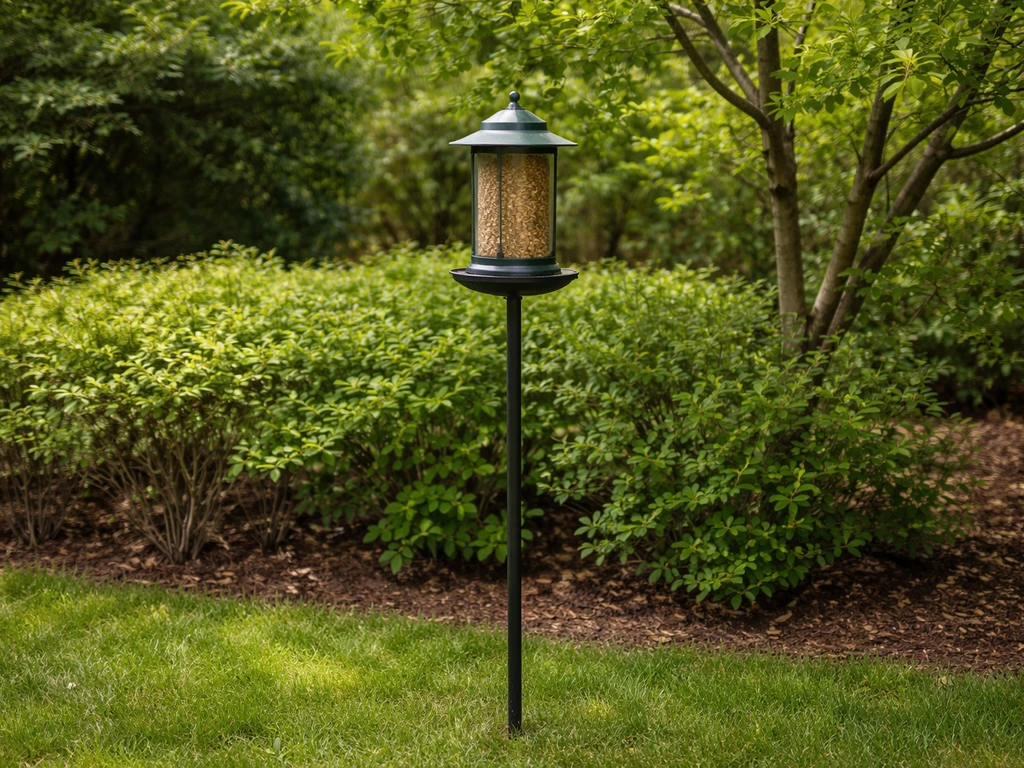
Where you put the feeder matters almost as much as which feeder you choose. The standard advice on window safety applies directly here: place your feeder either within 3 feet of the nearest window or more than 30 feet away.
The logic is that birds flushed from a feeder close to a window don't build up enough speed to cause serious injury if they hit the glass, while feeders placed far away give birds plenty of room to redirect before reaching the house. According to U. S. Fish & Wildlife Service guidance on [bird window collisions](https://www.
fws. gov/sites/default/files/documents/2025-01/01. 29. 2025-learn-more-about-bird-window-collisions-vyfwc.
pdf), placing feeders 3 feet or less from a window (or farther than 3 feet) helps prevent birds from gaining enough momentum to be seriously injured if they hit the glass. The dangerous middle zone is 5 to 30 feet from a window, where a startled bird has room to accelerate but not enough room to avoid a strike.
Beyond window placement, position the feeder near shrubs or small trees (within 10 to 15 feet) so birds have a quick escape route and a staging area. Birds are more likely to use a feeder that offers nearby cover than one sitting in the middle of an open lawn with no shelter. At the same time, don't place it so close to dense cover that cats can use the shrubs as a hunting blind. About 10 feet of open space between the feeder and any thick brush is a reasonable balance.
For pole-mounted feeders, a height of 5 to 6 feet off the ground is practical for filling and for keeping seed away from ground-level predators. If you're adding a stovepipe baffle, account for the baffle height in your total pole length. WBU's Advanced Pole System and similar modular setups let you configure pole sections, baffles, and hangers in a way that's more flexible than a single fixed pole, which helps if you're adjusting for squirrel pressure or adding multiple feeders.
One thing that often gets overlooked is reducing spillage under the feeder. Fallen seed on the ground attracts ground feeders (which is fine) but also rats and raccoons (which is not). A seed catcher tray below the feeder collects spillage and can be cleaned regularly. Alternatively, offering sunflower hearts in a tube feeder with small ports dramatically cuts the amount that falls because birds take individual pieces rather than flinging husks around.
Sunflower seeds vs sunflower hearts: quick feeder comparison
| Feature | Whole Black Oil Sunflower Seeds | Sunflower Hearts |
|---|---|---|
| Shell/husk waste | Yes (husks accumulate under feeder) | None (no shells) |
| Spoilage speed when wet | Moderate (shell offers some protection) | Fast (no shell buffer) |
| Species accessibility | Good (most medium songbirds) | Excellent (nearly all species) |
| Cost per pound | Lower | Higher |
| Port size needed | Standard (3/8 to 1/2 inch) | Wider mesh or slightly larger ports |
| Weather cover priority | Helpful | Essential |
| Mess/cleanup under feeder | More (husks + seed) | Less overall, but hearts clump when wet |
| Best feeder type | Hopper or tube with standard ports | Mesh tube or hopper with roof and drainage |
A buyer checklist and what to do if birds ignore the feeder
Before you buy, check these
- Port size matches seed type: standard ports for whole sunflower, mesh or wider openings for hearts.
- Perch length suits your target birds: 2 to 3 inches for cardinals and grosbeaks, shorter or absent for clinging species.
- Material is UV-stable polycarbonate, powder-coated steel, or treated wood (not raw plastic or untreated pine).
- Metal-reinforced ports, not plastic, especially if squirrels are a known problem.
- Drainage holes exist in the tray or base.
- A roof, dome, or weather guard is included or compatible.
- The feeder disassembles easily for cleaning.
- You have a pole-and-baffle plan if mounting on a post.
If birds aren't using the feeder after a week or two
This happens more often than people expect, and it's rarely a sign that the feeder is broken. Birds need time to find a new food source and build confidence around it. That said, there are a few things worth checking. First, confirm the seed is fresh.
Sunflower seeds and especially hearts go stale or develop mold if they've been sitting in a bag for months. Pinch a seed and smell it. Fresh black oil sunflower seed has a mild, neutral smell. Old or rancid seed smells off and birds can detect it.
Second, check your placement. If the feeder is too exposed with no nearby cover, skittish birds may be seeing it but not trusting it yet. Try moving it closer to a shrub or tree edge.
If you've waited three or four weeks and still see nothing, consider whether the feeder type matches the birds in your area. Tube feeders with small ports work great for finches but may be awkward for larger birds that prefer a flat surface. A hopper or platform might attract more activity in your specific yard depending on your local species mix. It's also worth knowing that certain species have very specific seed preferences: if you're primarily trying to attract finches and the sunflower approach isn't working, a niger seed feeder may be more effective for that group.
For readers who want to go deeper on the black oil sunflower variety specifically, there's a useful resource comparing feeders designed specifically for black oil sunflower seeds, which covers some of the more specialized port and tray designs built around that seed size and shell thickness. It's worth a look if you're narrowing down between a few feeder models.
When to switch feeder types
If you've got the placement right, the seed is fresh, and birds are still not showing up after a month, it's time to honestly assess the feeder itself. Some cheap feeders have ports that are just slightly off in size, making feeding genuinely awkward for birds even if it looks functional. Try offering seed in a simple open tray temporarily to confirm birds are willing to eat in that spot. If they take the tray but ignore the tube or hopper, the feeder design is the problem. Upgrade to a better-built model, prioritize metal construction and correct port sizing, and give the new feeder a couple of weeks before drawing any conclusions.
FAQ
Can I use one feeder for both whole sunflower seeds and sunflower hearts?
Yes, but plan for the differences in moisture. For hearts, prioritize a feeder with a roof or weather dome and a design that drains well, because hearts clump fast when wet. If your hopper holds seed for long periods, rotating or topping off more frequently reduces spoilage, especially during humid or rainy stretches.
What port sizes or opening types work best for small finches versus larger birds?
For small finches, look for feeders that let them grip seed easily, either smaller individual ports or a mesh tube with many accessible surfaces. For larger birds, ports that are too tight can prevent proper access, leading to wasted seed and fewer visits. If you are unsure, start with a mesh tube for hearts (finches usually do well) and a hopper or tube with medium-sized ports for whole seed.
How do I prevent mold or rancid smells when feeding hearts in rainy weather?
Keep hearts as a short-cycle food. Offer smaller refills, remove clumps during rain, and clean and dry the feeder before reloading. Also, avoid placing the feeder in areas that collect runoff from nearby branches, roof lines, or window awnings, since continual drips shorten feeder maintenance intervals.
Is black oil sunflower seed really worth paying more for?
Usually, yes, because it cracks more easily due to thinner shells, which broadens the number of species that can access the food. If you notice many “hunters” birds are present but they leave quickly, it can be a sign that the feeder ports are forcing them to crack unsuccessfully, or that the seed you bought is older and less fresh.
How often should I clean a sunflower seed or hearts feeder?
For whole sunflower seed, a thorough clean on a regular schedule is still important, but less frequent than for hearts. For hearts, clean more often, especially if you see dampness, residue buildup, or any odor change. A practical rule is to rinse, dry fully, and restart with a smaller amount after any wet clumping event.
Why did birds stop coming after a few weeks, even though the feeder is still full?
The most common causes are stale seed, moisture trapped in the feeder, or a placement shift that makes birds feel exposed. Check seed freshness by smell and inspect for any dampened areas at the bottom tray. If the feeder is near a window or in a spot without nearby escape cover, moving it closer to shrubs can also restore confidence.
What can I do if squirrels are learning the setup quickly?
First, verify that your baffle is properly positioned and cannot be bypassed by jumps from nearby structures. If you see chewing at specific contact points, upgrade those parts to metal-reinforced ports and use a baffle that fits snugly to your pole without wobble. Also, reduce the “training” effect by cleaning up fallen seed under the feeder so squirrels have less reason to keep hanging around.
How do I reduce spillage without sacrificing bird access?
Use a seed catcher tray for cleanup, and choose a feeder style that reduces flinging. For hearts, smaller access points often reduce the amount of waste compared with open platforms. If spillage is high with a tube feeder, check whether birds are removing too many pieces at once, and confirm the port or mesh spacing matches your target birds.
What should I do if grackles are dominating my sunflower feeder?
Switch to a caged feeder or one designed to block larger birds while allowing small songbirds in. If you are using a single-port design, consider a feeder that disperses access across a wider area, because multiple smaller “feeding lanes” can reduce how quickly aggressive birds monopolize the food.
Where should I place the feeder for both safety and visitation?
Use safe window distance, keep the feeder either within a short range (so birds do not gain speed) or far enough away to allow a redirect, and avoid the mid-range that increases impact risk. For visitation, add nearby escape cover, usually within about 10 to 15 feet, but do not place it so close to dense cover that it doubles as a cat ambush point.
What is the best height for mounting a sunflower seed bird feeder?
A common practical range is about 5 to 6 feet for easy refilling and to keep seed away from some ground predators. If adding a stovepipe baffle, include the baffle height in your total setup, and ensure squirrels cannot jump over the baffle from the ground or nearby perches.
How long should I wait before deciding the feeder “doesn’t work”?
After fixing obvious variables like seed freshness and placement, give it a couple of weeks. If there are still zero visits after three or four weeks, the feeder type or access style may not match local bird preferences, even if the feeder looks correct. A temporary alternative is offering seed on a simple open tray nearby to confirm birds will eat in that location.
Next Article
Best Red Cardinal Bird Feeder: Top Picks & Buying Guide
Best red cardinal bird feeder guide: top picks, painting tips, seed & placement advice to attract Northern Cardinals.