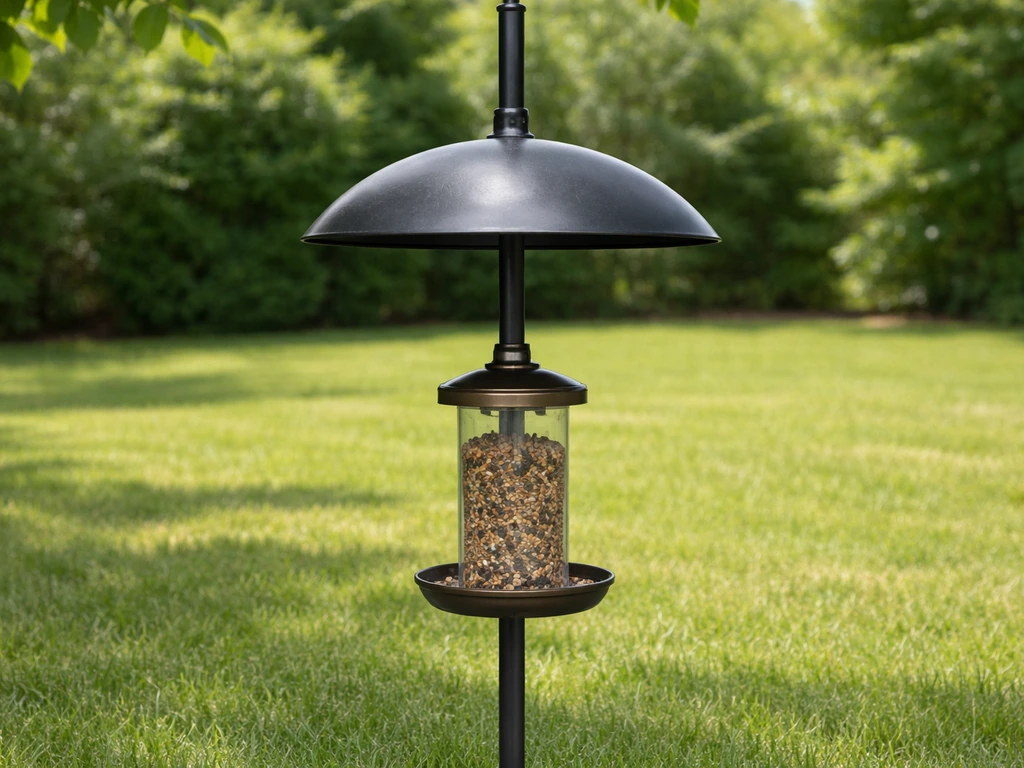
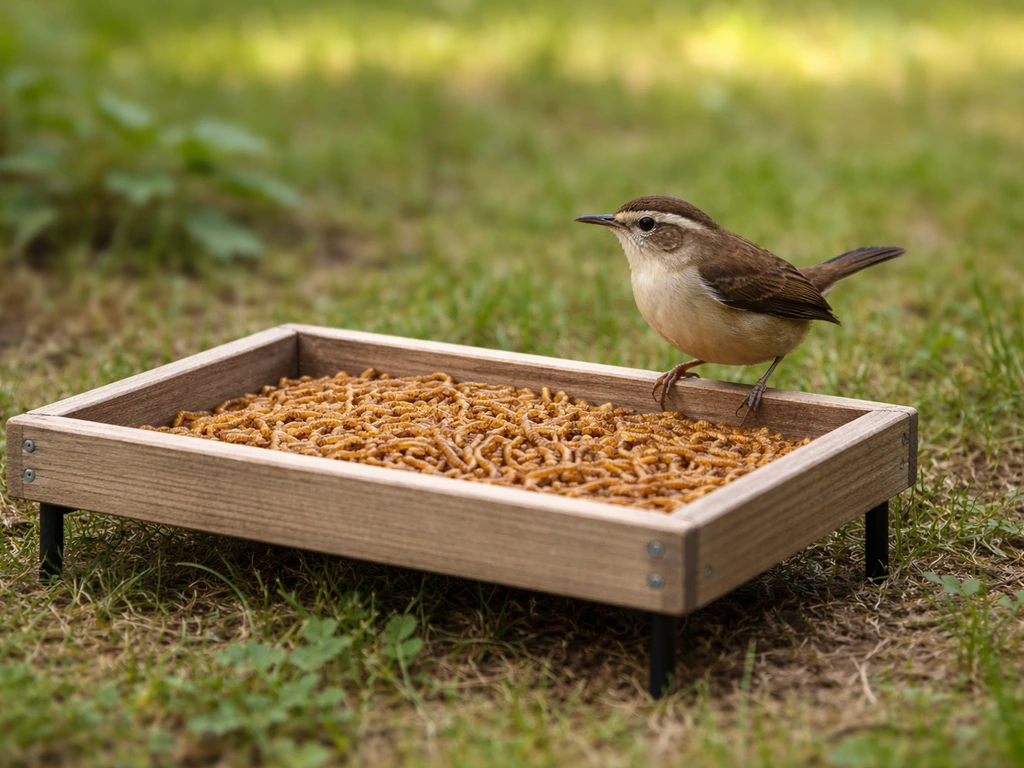
The best feeder for wrens is a low-profile platform or tray feeder stocked with mealworms, suet, or peanut hearts, placed within 10 to 15 feet of dense shrubs or brush. Wrens are not typical seed-eating birds, so most standard tube or hopper feeders won't cut it. Get the food right and the placement right, and wrens will find you.
Best Bird Feeder for Wrens: Picks, Setup, and Tips

Marcus Holloway
4 May 2026
Why wrens are different from your average backyard bird
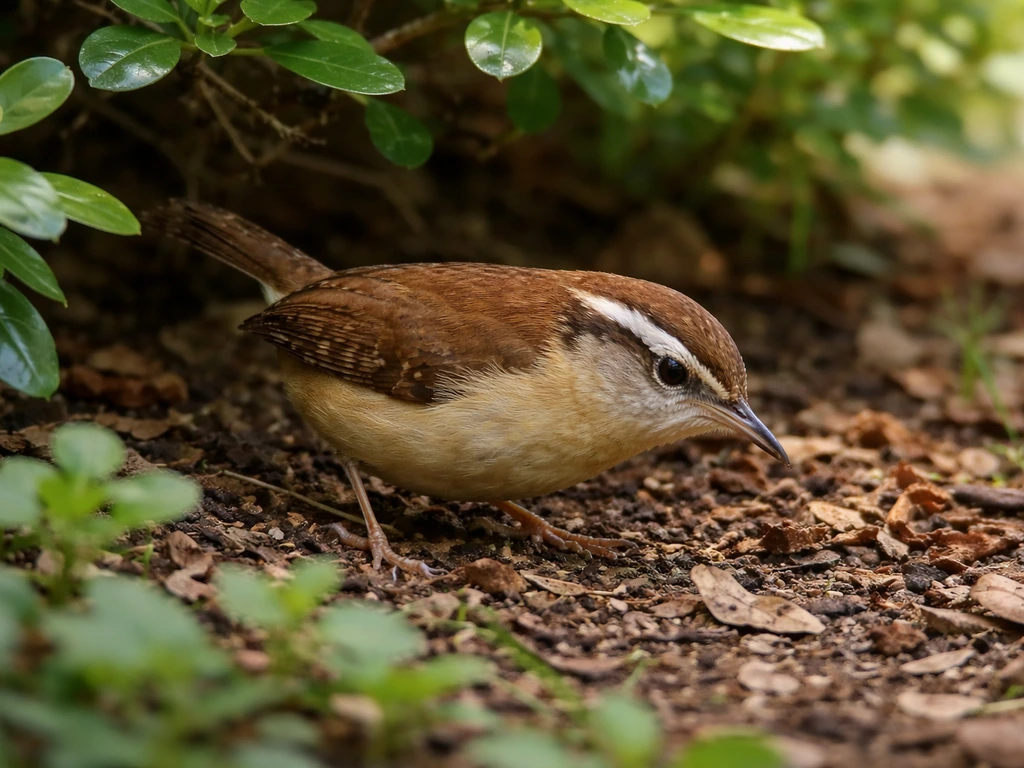
Wrens, especially Carolina wrens, are almost entirely insectivorous. About 94% of their diet is animal matter, mostly insects and spiders, with the remaining 6% being seeds, berries, and fruit. Wikipedia notes that blank" rel="noopener noreferrer">Carolina wrens spend much of their time on or near the ground searching for food, and that vegetable matter like fruit and seeds makes up only a small portion of their diet. That ratio matters a lot when you're picking a feeder, because the typical mixed-seed setup that attracts house finches and sparrows is mostly invisible to a wren. They're not browsing a seed buffet; they're hunting.
Their feeding style is also different. Wrens are low-to-the-ground foragers. In the wild they work through leaf litter, brush piles, and dense undergrowth, hopping and probing for insects. At feeders, they tend to land low, grab quickly, and retreat to cover. They don't perch on a tube feeder and leisurely shell seeds the way a chickadee might. If your feeder requires a confident perch at height or a tight port, wrens will usually pass.
The other thing wrens are known for: they're easily pushed off feeders by larger, more aggressive species. Carolina wrens are bold for their size, but a house sparrow or starling will dominate a shared feeder. Feeder design that limits access by size actually works in wrens' favor.
The feeder types that actually work for wrens
Platform and tray feeders
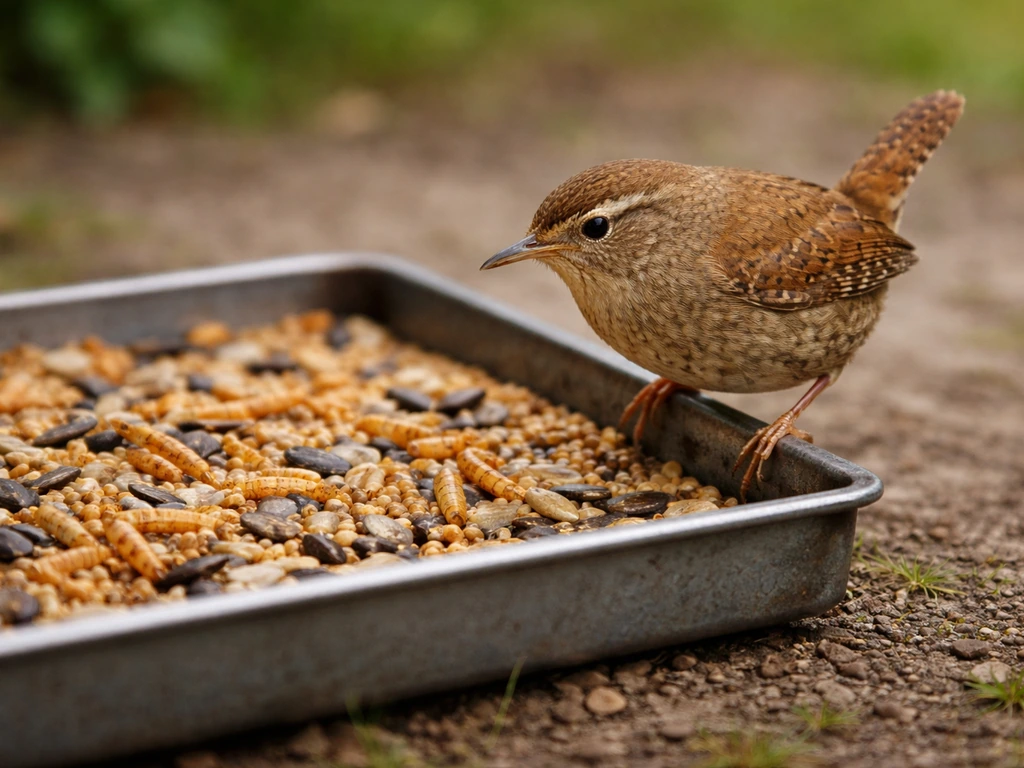
This is the workhorse option for wrens. A platform feeder is essentially a flat, open surface where food is spread out directly. Wrens can land on the edge or right in the tray, access food from multiple angles, and leave quickly, which matches how they naturally feed. The key feature to look for is a screened or mesh bottom rather than a solid one. Solid-bottom trays collect water and wet food turns moldy fast. A screened bottom drains immediately and keeps food fresher longer, which matters especially when you're putting out mealworms or suet crumbles.
Low-mounted or ground-level tray feeders are especially effective. Wrens are comfortable feeding at or near the ground, and a tray set on a short post or even placed on a flat surface near shrub cover will get visits faster than a feeder hung at chest height. If you're using a hanging tray, keep it low rather than at eye level.
Small hopper feeders
A smaller hopper feeder can work for wrens if it's loaded with the right food and has accessible perching. The advantage of a hopper is that it protects food from rain better than an open tray. The downside is that larger birds tend to monopolize hopper feeders, and wrens won't fight for position. If you go this route, look for a smaller hopper with limited perch space that discourages starlings and grackles. Hulled sunflower seeds and peanut hearts work well in this style.
Suet feeders
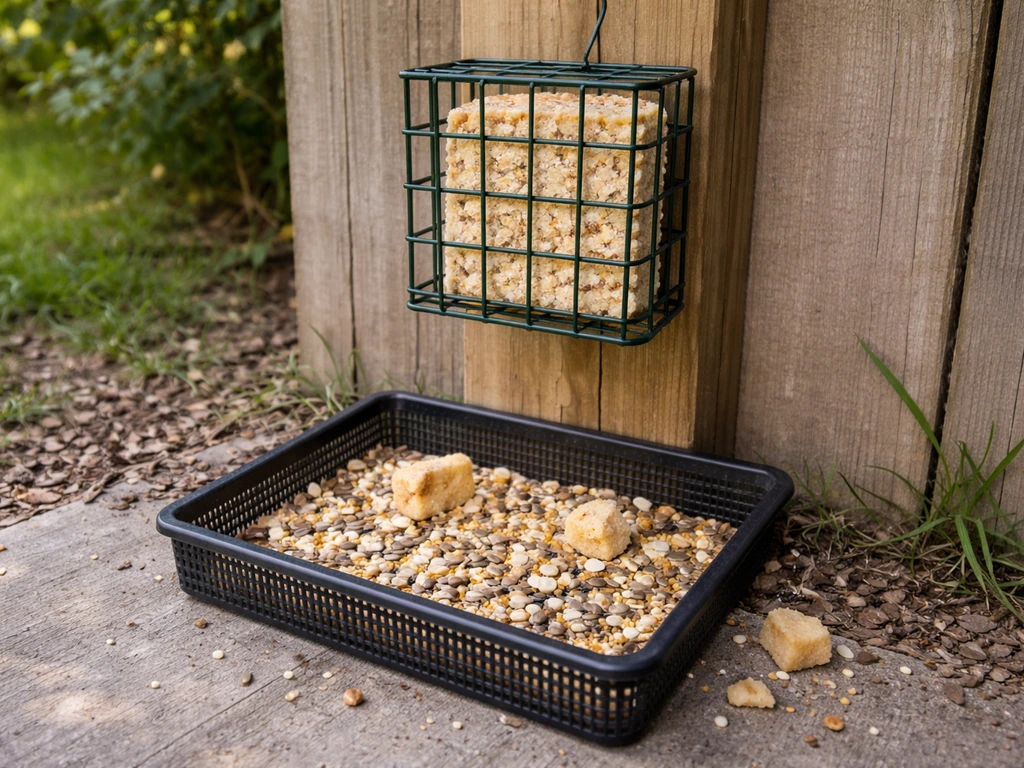
Suet is one of the best foods you can offer wrens, and a suet feeder paired with a tray is a strong combination. Carolina wrens are documented visitors to suet feeders, and suet is calorie-dense enough to be worth their effort, especially in winter when insects are scarce. Standard cage-style suet feeders work, but wrens do better with designs that have some horizontal surface nearby to land on, or tail-prop designs that let them cling from below. One consideration: suet melts in summer heat and can go rancid quickly. Look for feeders with no-melt suet cakes during warm months, or switch to mealworms as your primary offering in summer.
Ground feeding
Honestly, some wrens will skip the feeder entirely and prefer to forage on or near the ground. Scattering a small amount of mealworms or peanut hearts on a flat stone or low platform near brush cover can pull them in reliably. The downside of direct ground feeding is that it attracts rodents quickly, so keep quantities small and place food in a low tray rather than directly on bare ground.
What to look for when choosing a wren feeder
| Feature | What wrens need | What to avoid |
|---|---|---|
| Entry/access | Open tray or wide landing zone; no narrow ports | Tube feeders with tiny ports designed for finches |
| Perch style | Low edge perching, flat landing surface, or clinging surface for suet | Long dowel perches that larger birds dominate |
| Food type | Mealworms, suet, peanut hearts, hulled sunflower seeds | Whole sunflower seeds, millet, mixed wild bird seed |
| Drainage | Screened or mesh bottom for trays | Solid-bottom trays that hold standing water |
| Size/scale | Compact feeders; small hoppers or trays 8–12 inches across | Large platform feeders that attract bigger, dominant birds |
| Cleaning access | Easy to disassemble or wipe down | Feeders with enclosed chambers hard to reach |
| Weather resistance | UV-stable materials, rust-resistant mesh or hardware | Untreated wood trays that rot quickly in rain |
Best picks by situation
Best overall: low tray feeder with mealworms
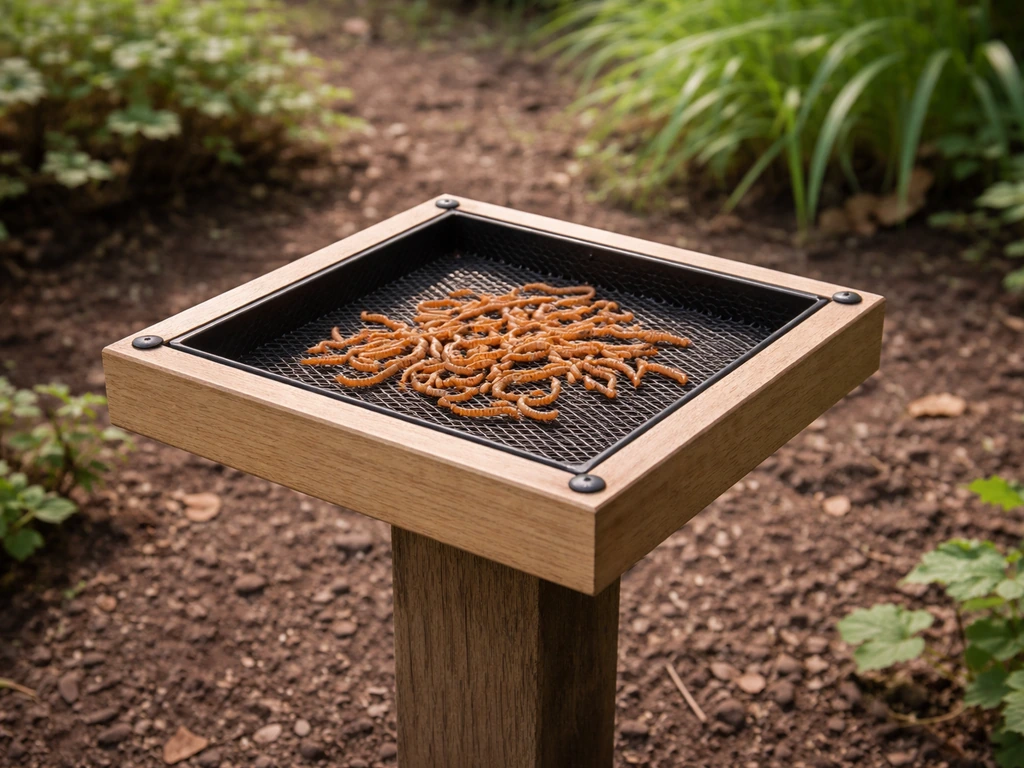
For most yards, a compact tray feeder with a mesh or screened bottom, mounted on a short post at about 2 to 3 feet off the ground, is the best starting point. Load it with live or dried mealworms and add some peanut hearts on the side. This setup works across climates, requires minimal investment, and directly matches how wrens prefer to feed. If you have squirrel pressure, put this on a smooth metal pole with a baffle rather than hanging it from a shepherd's hook. A baffle for a bird feeder helps keep squirrels from climbing up the pole or perch and getting to the food.
Best for yards with heavy squirrel or predator pressure
A squirrel-resistant suet feeder is worth the extra cost here. The Brome Squirrel Buster Suet (model 1106) is a solid example: it uses a weight-activated shroud that closes off the suet when a squirrel tries to access it. Wrens are light enough that they don't trigger the mechanism, so they can feed uninterrupted. It also includes a crumb port that catches falling bits of suet, which actually gives wrens even more to work with at the base. Pair it with a pole-mounted baffle at 4 feet or higher and keep the pole at least 7 to 8 feet from any fence, tree, or structure a squirrel can jump from.
Best for small yards or balconies
A small hanging tray or window-mount platform feeder works well in tight spaces. Keep it compact, 8 to 10 inches across, so it doesn't become a landing pad for starlings. Stock it with dried mealworms and a small suet nugget or two. Window feeders also let you observe wrens up close, which is a bonus since they're quick and easy to miss.
Best for cold-weather climates
In winter, wrens shift toward more plant-based food since insects are unavailable, but suet remains their go-to at feeders. A covered hopper or covered tray feeder that keeps snow and ice off the food is worth it in cold climates. Stock it with suet, peanut hearts, and hulled sunflower seeds. Berries scattered on a low tray are also a useful cold-weather option since wrens eat fruit in winter. Raisins are a low-cost choice that wrens will pick at when mealworms freeze.
Mounting, placement, and habitat setup
Placement is probably the most underrated factor in attracting wrens. You can have the perfect feeder with the right food and get nothing if it's sitting in the middle of an open lawn 30 feet from any cover. Wrens are edge birds. They stay close to shrubs, brush piles, vine tangles, and woody cover. The ideal placement is within 10 to 15 feet of dense low cover where wrens can dash for safety between visits.
Mount tray feeders at 2 to 3 feet off the ground on a dedicated post rather than hanging them from a tree branch. A dedicated pole keeps the feeder stable, makes squirrel-proofing with a baffle practical, and keeps the feeder from swinging in wind (which can spill mealworms and deter cautious birds). If you're using a suet feeder, hang or mount it at about 4 to 5 feet, close to but not directly against a tree trunk.
If your yard doesn't have natural brush cover, build a small brush pile near the feeder. Stack dead branches and woody brush loosely so wrens can perch inside and hop in and out easily. Project FeederWatch specifically recommends this for ground-feeding birds, and wrens use these brush piles constantly. You don't need anything elaborate, a pile roughly 3 to 4 feet across and 2 feet tall is enough.
One important note on cat predation: placing feeders 10 to 12 feet from low shrubs or brush reduces the chance that a cat can ambush birds as they move to and from cover. The National Wildlife Federation recommends this distance as a practical balance between cover access and predator safety.
Predator-proofing and common problems
Squirrels
Squirrels are the number one feeder problem for most people, and they're especially disruptive with mealworm trays since they'll clean them out in minutes. The most reliable solution is a smooth metal pole with a cone-shaped or cylindrical baffle installed so its top sits at least 4 feet off the ground, and the pole is at least 7 to 8 feet away from any fence, deck railing, or tree limb. Squirrels can jump about 5 feet horizontally, so distance matters. If the feeder is hanging, a torpedo-style hanging baffle above the feeder adds protection.
Dominant birds
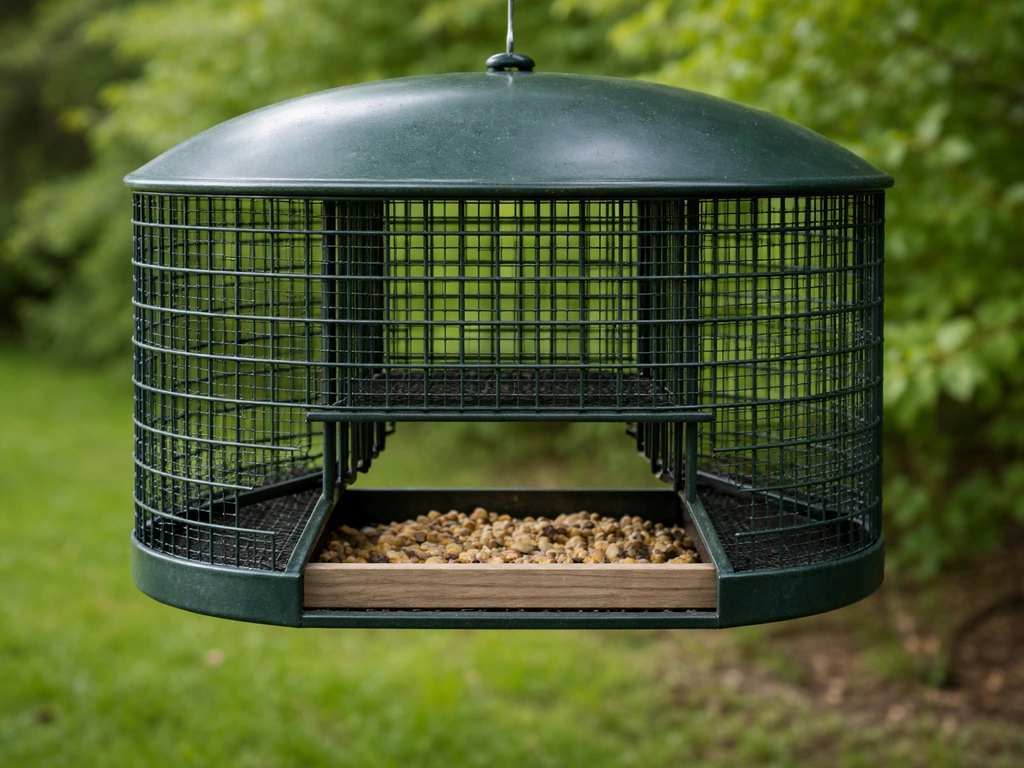
Starlings, grackles, and house sparrows can monopolize a mealworm tray and leave nothing for wrens. A few strategies help: keep the tray small so only one or two birds can land at a time, use a wire-mesh cage around the feeder with openings sized for small birds (roughly 1.5-inch mesh), or switch to a weight-activated feeder that closes under heavier birds. Wrens are small enough to slip through or stay light enough to feed, while starlings trigger the mechanism.
Cleanliness and food spoilage
Mealworms and suet go bad faster than seed. In warm weather, dried mealworms can start to mold within a few days in a wet tray. Clean tray feeders at least every two weeks as a baseline, and more often during hot, humid stretches. Use a 10% bleach solution (about 1 part bleach to 9 parts water), scrub the tray, rinse thoroughly, and let it fully dry before refilling. Never add fresh mealworms or food on top of old, damp residue. A screened-bottom tray drains much better and extends the time between cleans, which is why it's worth paying a little more for that design feature.
Suet in summer is its own challenge. Standard beef suet melts into a greasy mess above about 80 degrees Fahrenheit and can coat birds' feathers. Use no-melt suet formulations in summer or switch entirely to mealworms when temperatures climb. In winter, standard suet is fine and actually provides the high-calorie fat wrens need to get through cold nights.
Feeding schedule, amounts, and seasonal adjustments
Wrens are year-round residents in much of their range, so consistent feeding through all seasons pays off once they find your yard. Here's a practical seasonal breakdown:
- Spring and summer: Prioritize live or dried mealworms. This is breeding season, and the protein supports nesting adults and chicks. Offer small amounts (a tablespoon or two of dried mealworms, or a small cup of live ones) once or twice daily. Avoid suet in heat above 80 degrees unless you're using no-melt formula.
- Fall: Mix mealworms with peanut hearts and some hulled sunflower seeds as wrens start building up fat reserves. Small suet nuggets are fine as temperatures cool.
- Winter: Shift to suet as the primary offering, supplemented with peanut hearts and occasional raisins or berries. Wrens need high-calorie food to survive cold nights, and this is when they'll visit feeders most consistently.
- General amounts: Keep portions small and fresh. A tray that gets cleaned out every day or two is better than one that sits full for a week. Wrens won't eat stale food.
You don't need a strict clock-based schedule, but morning fills work well since wrens are most active in early morning. If you're using live mealworms, check and refill in the afternoon too since they can escape a shallow tray.
Troubleshooting: why wrens aren't showing up
If you've set up a feeder and haven't seen a wren yet, work through this checklist before giving up:
- Check your food first. If you're only offering sunflower seed or mixed wild bird seed, wrens will ignore it. Switch to mealworms or suet immediately. This is the single biggest reason people don't attract wrens.
- Check your feeder height. If your tray or platform is mounted above 4 or 5 feet, wrens may be uncomfortable with it. Lower it. Wrens want to feed low.
- Check the cover situation. If there's no brush, dense shrub, or woody cover within about 15 feet of the feeder, wrens have no safe staging area. Add a brush pile or move the feeder closer to existing cover.
- Check for dominant birds. If starlings, grackles, or house sparrows are constantly at the feeder, wrens won't compete. Add a wire cage exclusion or switch to a smaller, more sheltered feeder location.
- Check for squirrel disruption. Squirrels at a mealworm tray will eat everything and scare off small birds in the process. Add a baffle before assuming wrens aren't present.
- Give it time. Wrens are territorial and cautious. Once they find a food source, they return reliably, but discovery can take one to three weeks if wrens aren't already frequent yard visitors. Stay consistent.
- Consider whether wrens are in your area year-round. Carolina wrens stay put in most of the eastern US, but other wren species migrate. If you're outside Carolina wren territory, check which species are local and when they're present.
One thing worth mentioning: wrens are much less likely to visit a busy, chaotic feeder scene. If you have a popular feeder already attracting large flocks of sparrows or finches, consider setting up a second, separate wren-specific station in a quieter corner of the yard, stocked exclusively with mealworms or suet. Wrens tend to prefer a little solitude. The same logic applies to species-specific setups for chickadees and painted buntings, where a dedicated, calmer station often outperforms a shared one. If you're specifically trying to attract painted buntings, the best bird feeder for painted bunting is usually a low, seed-friendly setup placed where they can feel secure. Species-specific setups often outperform shared feeders, including for chickadees species-specific setups for chickadees.
Once you get a wren pair visiting regularly, the real reward kicks in: they're entertaining, bold little birds that will work every inch of your yard and often investigate anything new you put out. Get the food, placement, and predator protection right, and they'll become some of the most reliable daily visitors you have. If you are targeting blue jays instead of wrens, choose a feeder and food designed for larger, stronger birds blue jays feeder. If you want finches too, a dedicated best bird feeder for finches setup can help draw the right species without competing with the wrens’ preferences reliable daily visitors.
FAQ
What food should I use if I only want one feeder for wrens all year?
Use dried mealworms as your default and add small, separate servings of peanut hearts (or a little suet) depending on season. Mealworms stay useful in shoulder seasons, while suet is especially valuable in winter when insects drop off. Keeping the foods in separate sections or side areas helps you avoid mixing wet, messy suet residue into mealworms.
Do wrens eat sunflower seeds or generic birdseed blends?
Most wrens will ignore typical mixed seed blends because they are largely insect-focused. If you want to include seeds, use hulled sunflower seeds or peanut hearts in small amounts near cover, and expect lower visitation than with mealworms or suet. If you only see sparrows or finches at the same spot, your feeder is likely offering the wrong food profile.
How can I tell if my feeder setup is discouraging wrens even though I placed it near shrubs?
Watch how birds approach and land. If you see birds perching higher and dominating the feeder area, wrens may be getting outcompeted or are unable to land comfortably. Switch to a low tray (2 to 3 feet), smaller footprint (so only a few birds can land at once), and foods that can be grabbed quickly, like mealworms and peanut hearts.
Will fresh, live mealworms work better than dried ones?
Live mealworms can attract wrens because they move, but they also escape if the tray is shallow or the feeder is tilted. Dried mealworms are usually easier to maintain and store, and they mold less dramatically than wet mixes when you drain well. Either way, use a screened bottom and check in the afternoon during warm weather.
What’s the best way to keep mealworms from turning into a mess?
Use a mesh or screened bottom to drain moisture, keep portions small, and remove wet debris during cleaning. Avoid piling new food on old damp residue, and don’t overfill. During humid weather, shorten the time between cleanings to prevent mold before it starts.
My wrens never visit, but other birds do. What should I try first?
First, reduce competition and “noise.” Create a dedicated wren station in a quieter corner, and stock it only with mealworms and/or suet, not mixed seed. Second, confirm the feeder is low and close to cover (about 10 to 15 feet from dense low shrubs). If starlings or sparrows dominate, use a smaller tray and consider a mesh enclosure or access-limiting design.
How do I make a tray feeder safer for predators like cats?
Place the feeder far enough from low ground-level cover that cats cannot stage easily along the approach path. A practical target is around 10 to 12 feet from low shrubs or brush, while still keeping the feeder within roughly 10 to 15 feet of wrens’ protective cover. This balance reduces ambush risk without pushing the feeder too far from where wrens feel secure.
Squirrels keep getting to the food, even with a baffle. What am I doing wrong?
Baffles fail when the pole is too close to launch points (fences, tree limbs, deck rails) or when the gap height is too low. Keep the pole about 7 to 8 feet away from nearby jumpable surfaces, and ensure the baffle’s top is high enough to block climbing. Also, avoid hanging feeders in locations where squirrels can drop onto the tray or perch beside it.
Can I hang a tray feeder for wrens, or should it be on a post?
Wrens will use hanging trays if they are kept low and the design allows easy land-and-grab feeding. However, a dedicated post is usually better because it stays stable in wind and makes squirrel-proofing more reliable. If you do hang it, use a torpedo-style baffle above the feeder and keep it away from access points for squirrels.
How often should I refill in summer versus winter?
In summer, check at least daily and refill small amounts to prevent mold and rancidity. In winter, you can refill less frequently because food spoils slower, but you should still remove snow and ice from covered feeders. Mealworms tend to require more frequent attention than suet, especially in wet weather.
Do I need to cover feeders in snow and ice?
In cold climates, a covered hopper or covered tray helps keep food reachable and reduces freezing. If you use a tray, look for designs that limit snow buildup and plan to clear the feeding surface after storms. Suet remains useful even in winter, but it still benefits from shelter from heavy snow and direct ice.
What’s the best mesh size or access control if starlings and grackles are stealing everything?
If you use a wire-mesh cage around a mealworm tray, aim for openings around 1.5 inches to allow small wrens to access while discouraging larger birds. Keep the tray small so only a limited number of birds can land at once, and consider weight-activated access if your area has persistent larger competitors.
Should I move the feeder if I see only chickadees or finches using it?
Yes, consider repositioning or creating a separate wren-only station. Wrens prefer low, quiet access near dense brush and may avoid areas where larger flocks linger. Place the wren feeder closer to thick low cover, keep it at 2 to 3 feet off the ground, and avoid sharing the exact landing surface with seed-focused feeders.
How do I attract a wren pair instead of single visitors?
Provide consistent food and micro-cover, then keep the setup stable. Once a pair starts using the area, minimize changes to height, location, and food type. Add a small brush pile near the feeder so they can safely hop in and out, and keep portions reliable so they do not need to search elsewhere.
Next Article
What Is a Baffle for a Bird Feeder? Types and Setup
Learn what a bird feeder baffle does, which types fit your pole, and how to size and install it to block squirrels.