The 10 best bird feeders right now are the Brome Squirrel Buster Plus (best overall), Perky-Pet Squirrel Stumper (budget squirrel-proof), Droll Yankees Yankee Flipper (squirrel deterrent with flair), Aspects HummZinger Excel (best hummingbird feeder), Stokes Select Double Suet (best for woodpeckers), Kaytee Finch Station (best for finches/nyjer), Woodlink Going Green Platform (best for cardinals), Gardman Heavy Duty Squirrel Proof (best cage feeder), Netvue Birdfy (best smart camera feeder), and Bird Buddy 2 Mini (best AI feeder for tech enthusiasts). That's the shortlist. What follows is everything you need to match the right one to your yard, your birds, and your specific headaches.
10 Best Bird Feeders: Top Picks by Species and Setup
Marcus Holloway
14 Jun 2026
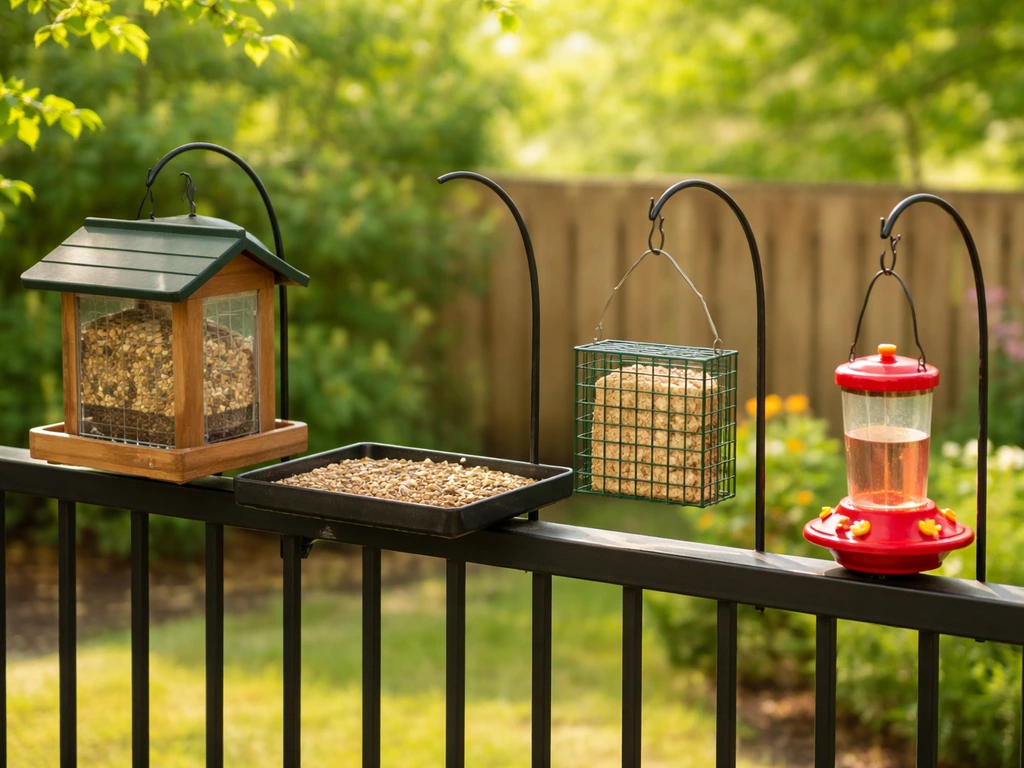
How to choose the right feeder for your birds
The biggest mistake people make is buying a feeder they like the look of, filling it with generic mixed seed, and wondering why only house sparrows show up. Feeder type, seed type, and feeder design are all linked to specific species. Get that triangle right and your yard transforms.
Start by asking two questions: which birds do you actually want to attract, and what pests or weather challenges do you need to work around? Those answers drive everything else. A thistle sock works brilliantly for goldfinches but is completely useless if you want cardinals. A large hopper feeder is great for cardinals but becomes a squirrel buffet overnight without the right protection.
| Target Bird | Best Feeder Type | Best Seed/Food |
|---|---|---|
| Goldfinches, siskins | Tube or nyjer sock feeder | Nyjer (thistle) seed |
| Cardinals | Platform or wide hopper feeder | Sunflower seeds, safflower |
| Woodpeckers | Suet cage or clinging feeder | Suet cakes, peanuts |
| Hummingbirds | Nectar feeder with red ports | 1:4 sugar-to-water nectar |
| Chickadees, nuthatches | Tube feeder or small hopper | Black-oil sunflower, peanut chips |
| Mixed species | Hopper or platform feeder | Black-oil sunflower seed |
| Jays | Platform or tray feeder | Whole peanuts, sunflower |
Beyond species, think about your setup. A pole-mounted feeder gives you the most flexibility for adding baffles and controlling squirrel access. A window feeder is great for close-up views but needs regular cleaning to stay safe (window strikes are a real risk Audubon flags consistently). Hanging feeders are convenient but need to be placed far enough from jump-off points to stop squirrels, which I'll cover in the placement section.
Top picks: the 10 best bird feeders by use case
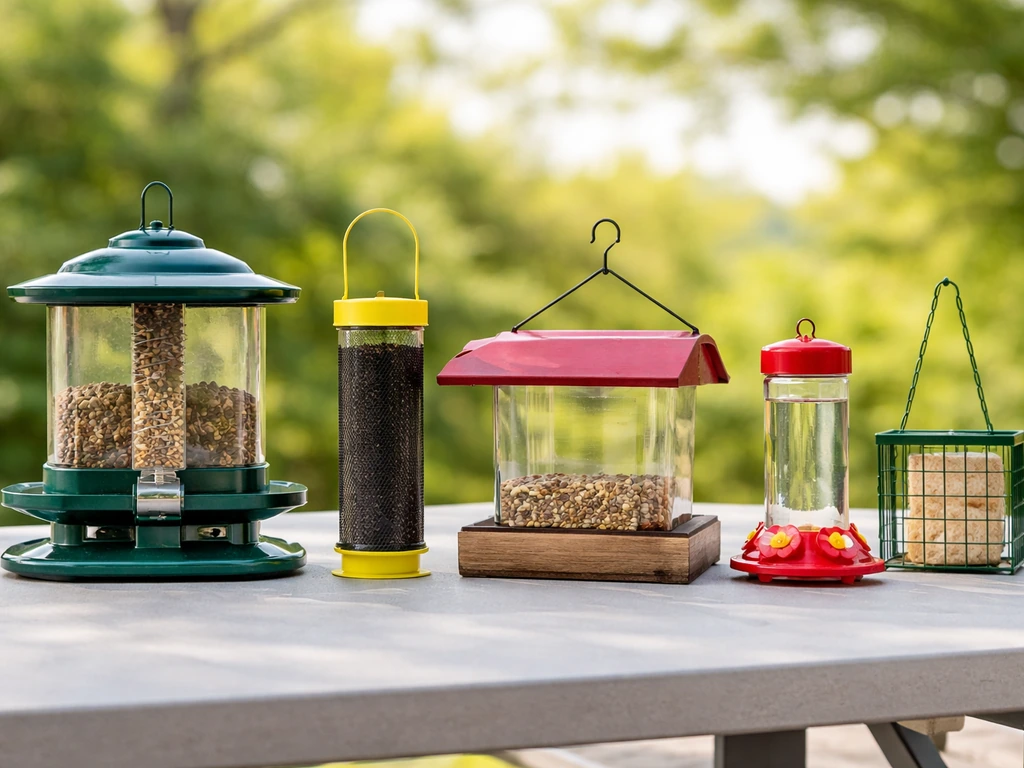
Here's the full ranked list with a plain-language reason for each pick. Here's the full ranked list with a plain-language reason for each pick best selling bird feeders. If you're shopping online, these picks also line up with the best bird feeders you can find on Amazon best bird feeders amazon. These are ordered by overall usefulness and versatility, not price.
- Brome Squirrel Buster Plus: Best overall. Weight-activated squirrel-proofing, 5.1-quart capacity, fully disassembles for cleaning, UV-stable and corrosion-resistant materials. Works straight out of the box without fiddling. Attracts chickadees, finches, and nuthatches. If you only buy one feeder, this is it.
- Perky-Pet Brass Squirrel Stumper: Best budget squirrel-resistant feeder. The brass cage construction is more durable than most plastic options at this price. Real-world performance can vary with persistent squirrels, so verify you have the current generation before buying and manage expectations if squirrel pressure in your yard is extreme.
- Droll Yankees Yankee Flipper: Best for entertainment and deterrence. The motorized perch spins when a squirrel lands, sending it flying without harm. Battery-powered motor is reliable in mild weather. Songbirds are light enough to feed unaffected. A genuine crowd-pleaser that actually works.
- Aspects HummZinger Excel: Best hummingbird feeder. Wide, shallow basin design keeps nectar fresher than tall bottle-style feeders, and it's genuinely easy to take apart and clean. Built-in ant moat blocks crawling insects. The perch ring lets hummingbirds rest, which you'll actually get to watch.
- Stokes Select Double Suet Feeder: Best for woodpeckers and nuthatches. Holds two standard suet cakes and has a tail-prop extension for larger birds like pileated and red-bellied woodpeckers. Metal construction holds up in wet conditions. Cheap to fill.
- Kaytee Finch Station: Best nyjer feeder for goldfinches and pine siskins. Multiple feeding ports, wide enough for several birds at once, and the mesh design reduces waste from birds tossing seed. Light enough to hang from a shepherd's hook without tipping.
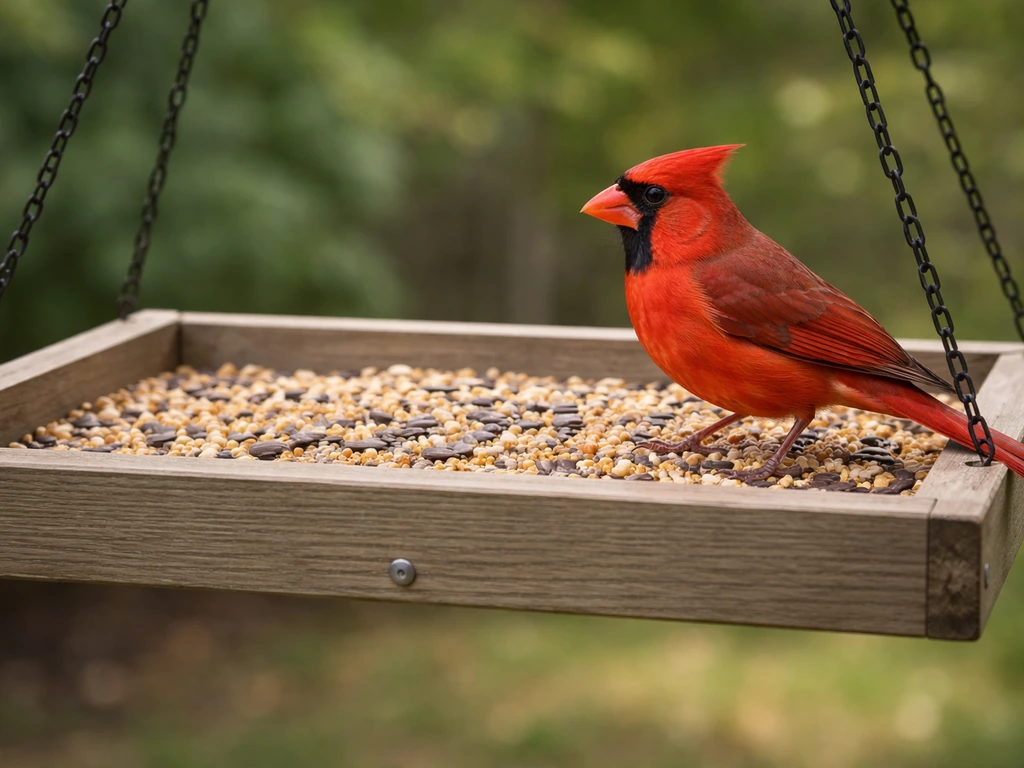
- Woodlink Going Green Platform Feeder: Best for cardinals and ground-feeding species. The recycled plastic construction resists rot. Open platform design lets cardinals, grosbeaks, and jays feed comfortably without fighting over perch space. The mesh floor drains rain so seed doesn't clump and mold.
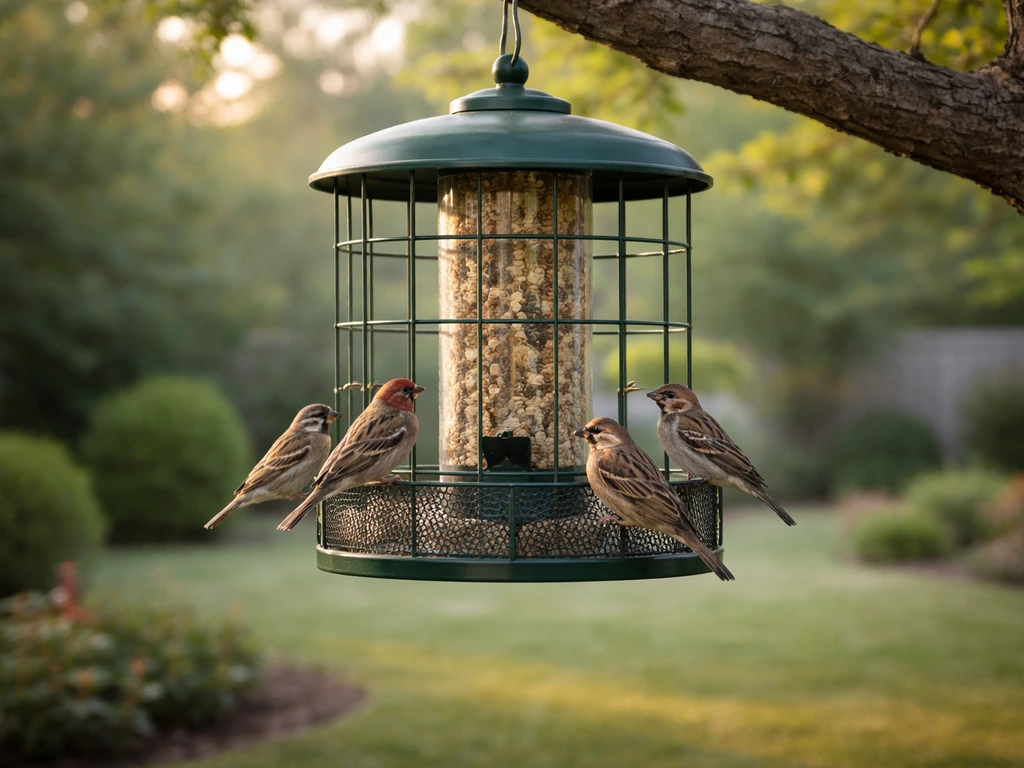
- Gardman Heavy Duty Squirrel Proof Cage Feeder: Best cage-style feeder for small birds. The outer metal cage lets chickadees, titmice, and small finches pass through while physically blocking larger birds and squirrels. Completely mechanical, no batteries required.
- Netvue Birdfy: Best smart camera feeder. Identifies over 6,000 bird species via AI, the app is free to use with no mandatory paid subscription for basic features, and the camera quality holds up in low light. TechRadar called it the best choice for straightforward everyday use. Worth it if you want to know what's visiting without standing at the window.
- Bird Buddy 2 Mini: Best AI feeder for tech-forward birders. Pre-orders opened mid-2026 at around $129, and the new model adds birdsong identification so it can ID a bird even when the camera doesn't get a clear shot. Promising upgrade over the original if you want the most capable smart feeder available.
Best feeders for specific species
Hummingbirds
The Aspects HummZinger Excel is the easiest to recommend because the shallow basin design means nectar sits exposed to air rather than locked in a bottle, which actually helps you notice when it's gone cloudy. And hummingbird nectar goes bad fast: clean and refill every 3 to 5 days in warm weather, and every 1 to 2 days when temperatures push above 85°F. The recipe is simple: 1 part plain white sugar dissolved in 4 parts water. Boil the water first to slow fermentation. Skip the red dye entirely; the red ports on the feeder are enough to attract birds, and there's no benefit to coloring the nectar.
Finches and goldfinches
Goldfinches, siskins, and redpolls all key in on nyjer seed. The Kaytee Finch Station handles the volume well when you have a flock cycling through. If you want a lower-cost alternative, a simple nyjer mesh sock works fine, though the fabric degrades after a season or two. Position finch feeders in a relatively open area where birds can watch for predators while feeding. Finches are skittish and will abandon a feeder that feels exposed to cats or hawks.
Cardinals
Cardinals need a wide perch or a platform because they don't cling the way chickadees do. The Woodlink Going Green Platform is ideal, but if you'd rather not put out an open tray (which can collect water and debris), a large hopper feeder with a wide perch ledge works too. Safflower seed is worth adding to your mix specifically for cardinals: most squirrels and grackles avoid it, so you get a natural filter on who eats what.
Woodpeckers
Suet is the go-to for woodpeckers, especially in fall and winter. The Stokes Select Double Suet's tail-prop extension is worth paying attention to: bigger woodpeckers like the pileated or northern flicker brace their tail feathers when feeding, and a feeder without that prop often just gets ignored by larger species. In summer, you can swap suet for peanut butter mixed with cornmeal to avoid suet melting in heat.
Mixed backyard species
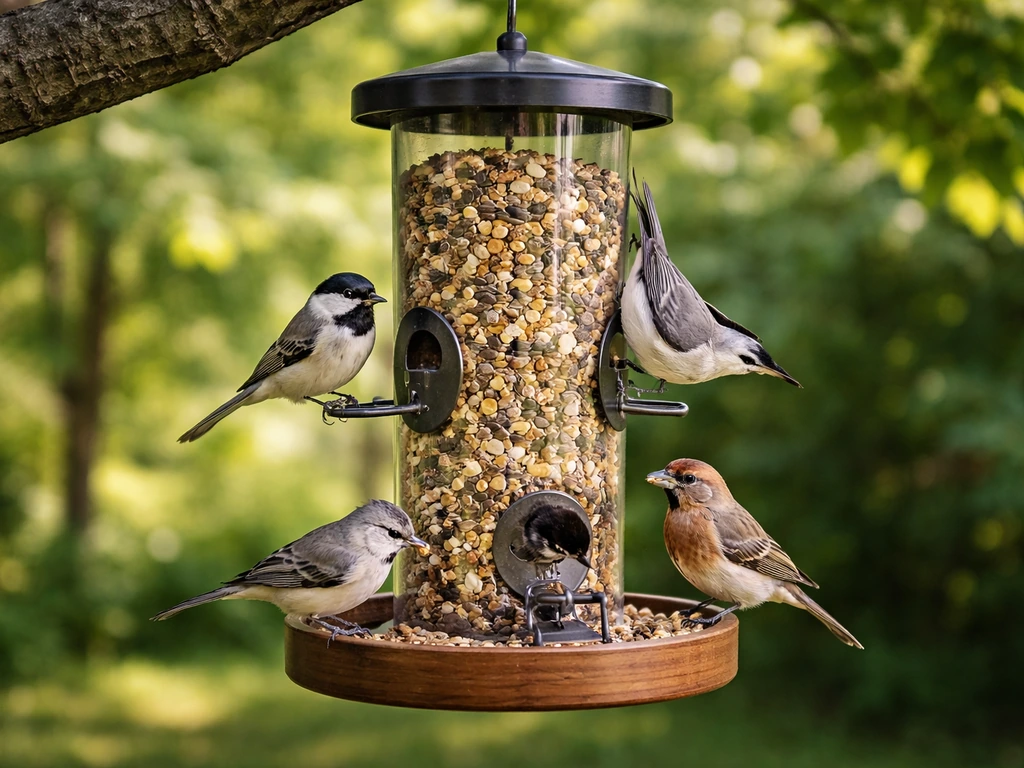
For a general-purpose setup that attracts chickadees, nuthatches, titmice, and house finches all at once, you can't go wrong pairing the Brome Squirrel Buster Plus (filled with black-oil sunflower) with a simple suet cage nearby. That two-feeder combo covers the widest range of common backyard visitors without getting complicated.
Weatherproofing, durability, and easy maintenance
Weather is where cheap feeders fall apart fast. I've seen plastic tube feeders warp at the fill cap after a single hard freeze, making the lid nearly impossible to close. Perky-Pet's own reviewer feedback on some models flags this exact issue: the plastic top opening can warp in cold weather, which locks you out of your own feeder mid-winter. Metal or UV-stable polycarbonate construction handles temperature swings far better.
For durability, prioritize these material qualities when comparing feeders:
- UV-stable plastics or polycarbonate: resists fading and brittleness from sun exposure
- Powder-coated or stainless steel metal parts: won't rust when wet seeds sit against the surface
- Corrosion-resistant wire or mesh: important for cage feeders and suet holders
- Drainage holes in trays or platforms: prevents seed rot and mold after rain
Cleaning is non-negotiable. The recommended schedule from Cornell Lab's All About Birds and Audubon is roughly every two weeks for seed and suet feeders, and more frequently in hot, humid weather or if you spot sick birds. For hummingbird feeders, every 3 to 5 days is the minimum; every week at the absolute longest according to the Minnesota DNR. Use a dilute bleach solution (1 part bleach to 9 parts water), scrub all surfaces, rinse thoroughly with clean water, and let everything air dry completely before refilling. Skipping the drying step defeats the purpose because moisture and leftover bleach residue both cause problems.
The easiest feeders to clean are ones that fully disassemble without tools. The Brome Squirrel Buster Plus and the Aspects HummZinger both come apart easily, which matters because you'll actually do it. Feeders that require prying or have hard-to-reach corners almost always get cleaned less often.
Predator- and pest-proofing: squirrels, grackles, and backyard bullies
Squirrels
Squirrels are genuinely impressive athletes. A gray squirrel can leap horizontally about 8 to 10 feet and drop from heights of 10 feet or more. That's why Audubon recommends placing feeders at least 8 to 10 feet away from any solid launch point, whether that's a tree trunk, fence, building, or roof edge. A pole-mounted feeder with a baffle mounted 4 to 5 feet off the ground is the most reliable physical solution. Position the baffle too high and squirrels climb past it; too low and they can use it as a landing pad from above.
Weight-activated feeders are the other reliable approach. The Squirrel Buster Classic works by having a squirrel's weight push down a wire mesh shroud that closes the feed ports. The bird's lighter weight doesn't trigger it. This is the same mechanism on the Brome Squirrel Buster Plus and a handful of other feeders. The Yankee Flipper takes a more aggressive approach: when a squirrel lands on the motorized perch ring, it spins them off. Both styles genuinely work, though the Flipper needs batteries and will need replacement eventually.
One thing worth saying plainly: no squirrel-proof feeder is fully squirrel-proof under enough pressure. If you have a dozen determined squirrels and the feeder is close to launching points, even the best weight-activated model will eventually get defeated. Physical placement and baffles working together with a weight-activated feeder is the most effective combination.
Grackles and larger pest birds
Grackles are smart, aggressive, and will empty a feeder in minutes if they find it. Cage feeders like the Gardman Heavy Duty are effective because the outer cage physically prevents large birds from reaching the food while smaller songbirds pass through freely. Switching from mixed seed to safflower is another tool: grackles strongly dislike safflower but most desirable feeder birds accept it. Avoid millet and cracked corn, which are grackle favorites.
Weight-sensitive perches also help with grackles. Set the counterweight adjustment on a weight-activated feeder to a lower threshold and a grackle's heavier body will close the ports. Most Squirrel Buster models allow you to adjust the weight sensitivity, which is underused but highly effective.
Cats and raptors
Hawks will occasionally hunt at feeders, which is natural. If a Cooper's hawk or sharp-shinned hawk is picking off birds regularly, the best response is to take your feeders down for a week or two until the hawk moves on. Cats are a more persistent threat: pole-mounting feeders at 5 to 6 feet, combined with a baffle on the pole, makes it significantly harder for a cat to climb up or ambush from below.
Placement and mounting tips that actually make a difference
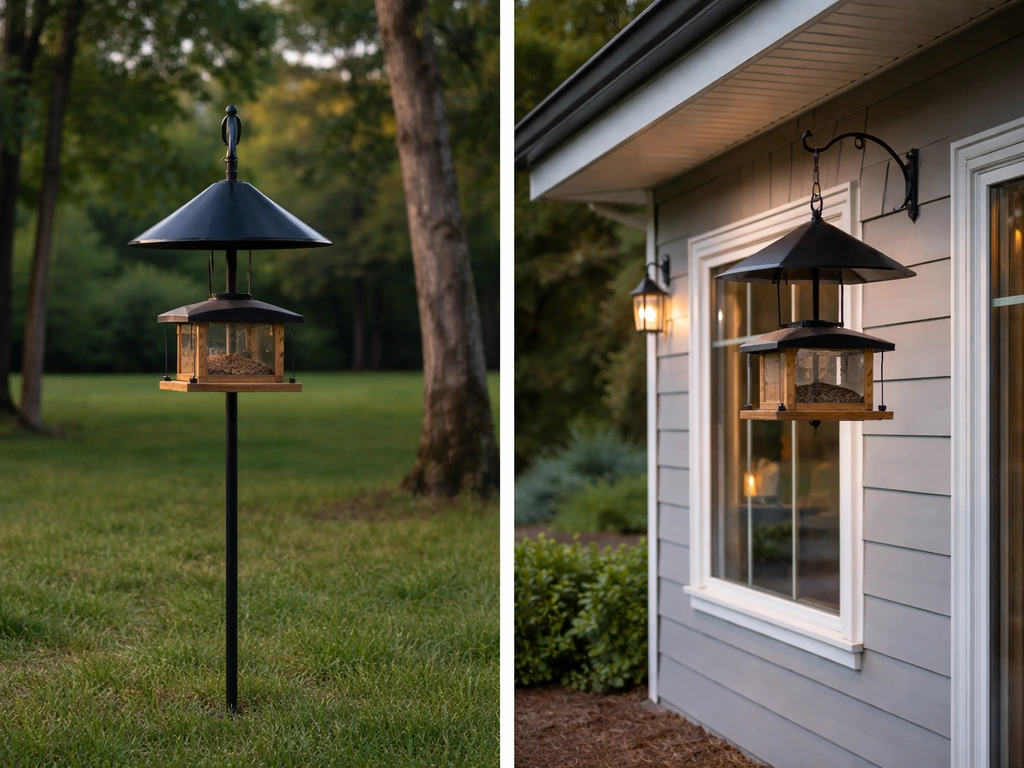
Where you put a feeder matters as much as which feeder you choose. The most common mistake is hanging a feeder directly in a tree, which gives squirrels an automatic highway to it and puts birds at risk from window strikes if the tree is close to your house.
The safest placement for window-strike prevention is either very close to the glass (within 3 feet, so birds can't build enough speed to be seriously injured) or more than 30 feet away. The dangerous middle ground is 5 to 15 feet from a window: birds spooked from the feeder fly directly toward the reflected glass. This is a point Audubon emphasizes regularly, and it's one of the most overlooked parts of feeder setup.
Here are the placement rules worth memorizing:
- Mount pole feeders at least 8 to 10 feet from trees, fences, or buildings to prevent squirrel jumping
- Position baffles 4 to 5 feet off the ground on the pole, not higher
- Place feeders either within 3 feet of windows or more than 30 feet away to reduce strike risk
- Keep feeders visible from your main sitting area so you actually enjoy them
- Allow some nearby shrub or brush cover within about 10 feet so birds have escape cover from raptors
- Avoid placing feeders directly over garden beds where seed hulls and waste will accumulate
For mounting hardware, a simple galvanized shepherd's hook handles most hanging feeders. For heavier setups (large hopper feeders, multi-feeder poles), invest in a pole with a ground anchor stake. Wobble and tipping waste more seed than most people realize, and a stable pole setup also makes baffles more effective.
Smart and AI bird feeder cameras: worth it or gimmick?
The honest answer is: it depends entirely on how you use bird feeding. If you want to know what's visiting when you're not home, identify unfamiliar species, or share clips with other birders, a smart camera feeder is genuinely useful. If you're primarily feeding birds for the birds' sake and you're happy watching from a chair, you probably don't need one.
Netvue Birdfy: the no-fuss smart feeder
The Birdfy is TechRadar's pick for best overall bird feeder camera, specifically because the app is free and there's no required monthly subscription for core features. The AI can identify over 6,000 species, and accuracy in testing runs around 85 to 90 percent according to smart home review sites. For most people this is the easiest entry point into smart feeders. The camera holds up in low light better than most competitors, which matters given how many birds are most active at dawn and dusk. You do have the option to add an AI recognition subscription for expanded features, but the free tier is genuinely functional.
Bird Buddy 2 Mini: the AI upgrade for enthusiasts
Bird Buddy opened pre-orders in mid-2026 at $129 for the 2 Mini. The headline feature is birdsong identification: the feeder listens to a bird's call and can make an ID even when the camera doesn't get a clear shot. That's a meaningful step forward. If you live somewhere with dense vegetation where birds sing but don't always land in view, this feature changes what the camera can tell you. It's a newer product, so real-world long-term durability data is still thin, but the specs are compelling.
A note on subscription costs
Some smart feeders, like the SOLIOM, require a cloud subscription starting around $7 per month just to access AI features and cloud storage. That's $84 a year on top of the hardware cost. Before buying any smart feeder, check whether the AI identification and video storage you want are included free or locked behind a subscription. The Birdfy's free app tier is one of the things that makes it stand out in that comparison.
| Smart Feeder | AI Species ID | Subscription Required | Birdsong ID | Approx. Price |
|---|---|---|---|---|
| Netvue Birdfy | Yes (6,000+ species) | No (optional upgrade) | No | ~$100–$130 |
| Bird Buddy 2 Mini | Yes | Varies by plan | Yes (new feature) | ~$129 |
| SOLIOM | Yes | Yes, from $7/month | No | Varies |
If you're just getting started with smart feeders and want to try the technology without committing to ongoing costs, the Birdfy is the safer first purchase. If you're already a dedicated birder who wants the most capable AI system available in 2026 and you're willing to be an early adopter, the Bird Buddy 2 Mini is the one to watch.
Putting it all together: your next steps
If you're choosing your first feeder, start with the Brome Squirrel Buster Plus filled with black-oil sunflower seed, mounted on a pole with a baffle, placed at least 10 feet from any jumping-off point. That single setup will attract the widest range of backyard birds with the least frustration. Add a hummingbird feeder (Aspects HummZinger) and a suet cage if you want woodpeckers, and you have a complete yard station.
If you're refining an existing setup, the species-specific picks in this list let you target gaps: adding a nyjer feeder for finches, a platform for cardinals, or a smart camera to finally figure out what's raiding the feeder at 6am. The feeders on this list are the ones I'd put in my own yard, and in most cases, already have.
One final thing: don't overlook the maintenance side. The best feeder in the world becomes a disease vector if it's not cleaned on schedule. Every two weeks for seed feeders, every 3 to 5 days for hummingbird feeders, always dry completely before refilling. Iowa DNR advises cleaning seed feeders and waterers about once per month with a roughly 10% bleach solution, and for hummingbird feeders cleaning every 3 to 5 days using hot water and dish soap or a 10% bleach solution, then rinsing thoroughly and drying before refilling blank" rel="noopener noreferrer">cleaning every 3 to 5 days for hummingbird feeders. That routine matters more than which brand you pick, and it's the single habit that separates backyard setups that thrive from ones that just attract problems. If you want a quick way to compare options, start with the best bird feeder brands for your yard and the species you’re targeting.
FAQ
What’s the best “first choice” feeder if I don’t know which birds I have in my yard yet?
Start with a baffle-mounted hopper style filled with black-oil sunflower. It draws a broad mix of common backyard birds, and the baffle helps you avoid attracting squirrels to the same easy access point. Once you see frequent visitors, swap in species-specific options like nyjer for finches or safflower for cardinals or grackle control.
How do I choose between a hopper feeder, a cage feeder, and a suet feeder?
Use hopper feeders for seed-eaters that perch comfortably, use cage feeders when you need physical protection against larger birds like grackles, and use suet for woodpeckers and other insect-seeking species especially in cool weather. If you currently struggle with grackles emptying feeders quickly, a cage style plus safflower usually fixes the problem faster than changing seed alone.
Can I mix all bird seeds in one feeder to simplify?
Usually not. Mixed seed increases the chance of attracting unwanted species because different birds prefer different portions of the mix. If you want fewer “oops birds” (like grackles or problem rodents), use targeted seed types per feeder, for example nyjer in a finch setup and black-oil sunflower in your general feeder.
Do I need to clean feeders even if birds look healthy?
Yes. “Looks fine” can still hide issues because mold, leftover nectar, and bacteria can build up in seams and ports even when you do not see obvious sickness. A good rule is to clean on schedule and immediately after you notice fewer visits, clumped seed, cloudy nectar, or any bird that seems lethargic.
What’s the safest way to sanitize without leaving residue?
Scrub with a dilute bleach solution, then rinse thoroughly with clean water and air dry completely. Skipping drying is a common mistake because moisture plus bleach residue can irritate birds and cause more spoilage when you refill.
How often should I refill if the weather is hot, rainy, or humid?
Increase frequency in heat and humidity beyond the basic schedule. Nectar feeders often need attention more often than you expect during warm spells, and seed feeders can get damp and start spoiling sooner after rain. If you see wet, clumped, or discolored feed, empty, clean, and refill rather than topping off.
Where should I place a feeder to reduce squirrel access without harming bird safety?
Avoid trees and rooflines that create “launch highways.” Use the recommended distance from jump-off points, and keep any baffle positioned so squirrels cannot climb past it. If you already have jump points, you may need to move the feeder first, then fine-tune the baffle height.
What if I’m seeing birds at the feeder but squirrels still win?
First, check proximity to launch points like nearby fences, branches, or ledges. Next, confirm the baffle is the right height and not leaving a climb-over path. If you still have persistent squirrels, consider switching to a weight-activated option and adjust sensitivity so heavier animals trigger it more reliably.
How can I keep grackles from dominating my feeder?
Use safflower or other grackle-resistant seed and consider a cage feeder that prevents large birds from reaching the food while allowing smaller songbirds through. Also watch perch and port behavior on weight-activated feeders, you can often lower the trigger threshold to improve exclusion of heavier grackles.
Are smart bird feeder cameras worth it if I just want to know what’s eating my seed?
They can be very useful when thieves show up at odd hours or you cannot identify visitors by sight. A key decision point is whether video storage and AI identification are included without an ongoing subscription. If you only need basic alerts or occasional IDs, choose the option that offers meaningful features on a free tier.
What’s the best way to place a feeder near windows to prevent strikes?
Use either a very close placement (within about 3 feet) or place the feeder far enough away that birds do not fly into reflections (more than about 30 feet). The dangerous middle range is where spooked birds redirect toward window reflections, so if you cannot do those two extremes, you may need additional window mitigation like visual deterrents.
What should I do if a hawk starts hunting at my feeder?
If a hawk is repeatedly taking birds, temporarily remove feeders for a week or two to break the routine while the predator relocates. Meanwhile, keep pet cats indoors and avoid adding cover near feeders that could help ambush hunters.
Can I use suet in summer without a mess?
Often yes, but choose heat-appropriate formulations. One approach is swapping to a peanut butter mixture with cornmeal to reduce melting compared with traditional suet. If it starts turning soft or drippy, take it down and replace it more frequently.
Next Articles
Best Bird Feeder Brands: Top Picks by Feeder Type and Species
Best bird feeder brands by feeder type and species, plus squirrel-proof, low-waste, and smart AI camera options.
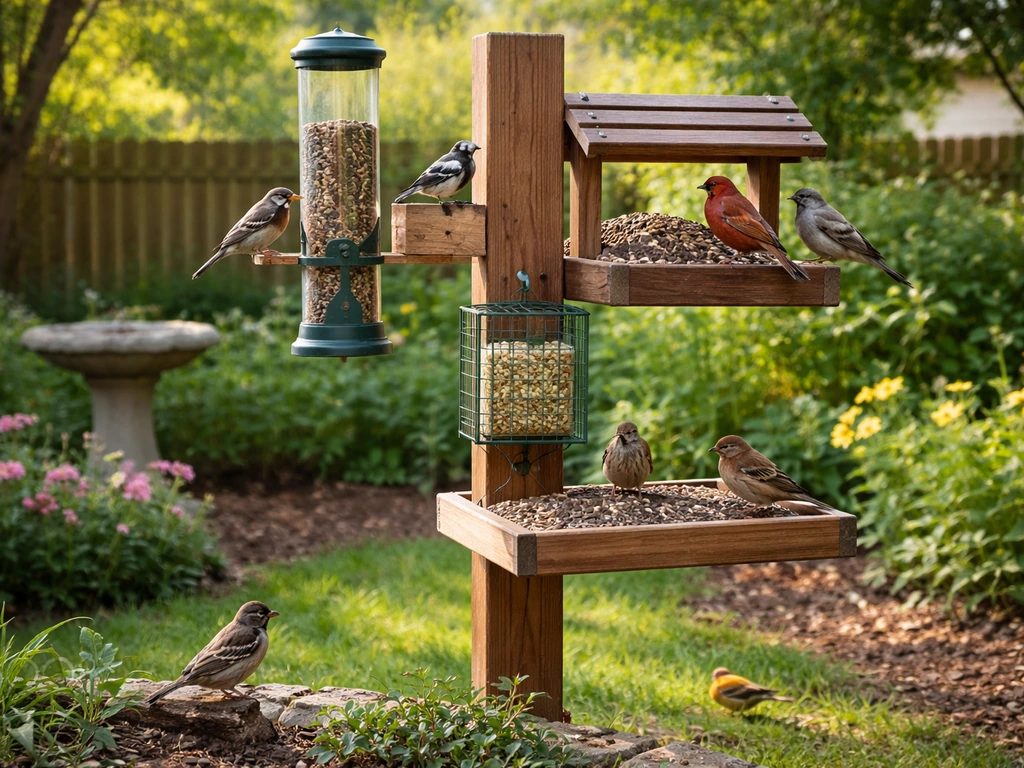
Best Bird Feeders on Amazon: Complete Buying Guide
Choose the best bird feeders Amazon offers by type, target birds, squirrel proofing, cleaning, and smart AI camera featu
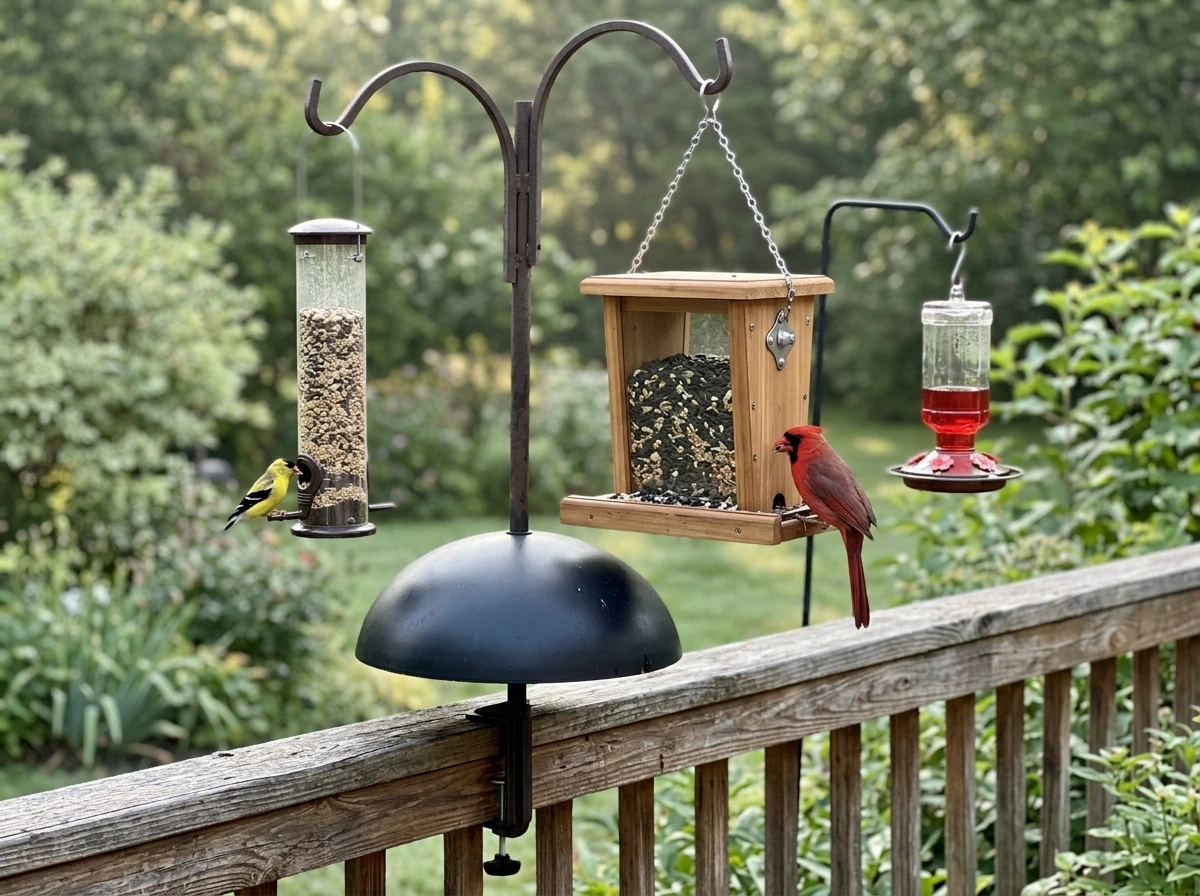
Best Rated Bird Feeders: Top Picks Plus Buying Guide
Top rated bird feeders for finches, cardinals, hummingbirds plus video models, with squirrel-proof tips and placement gu