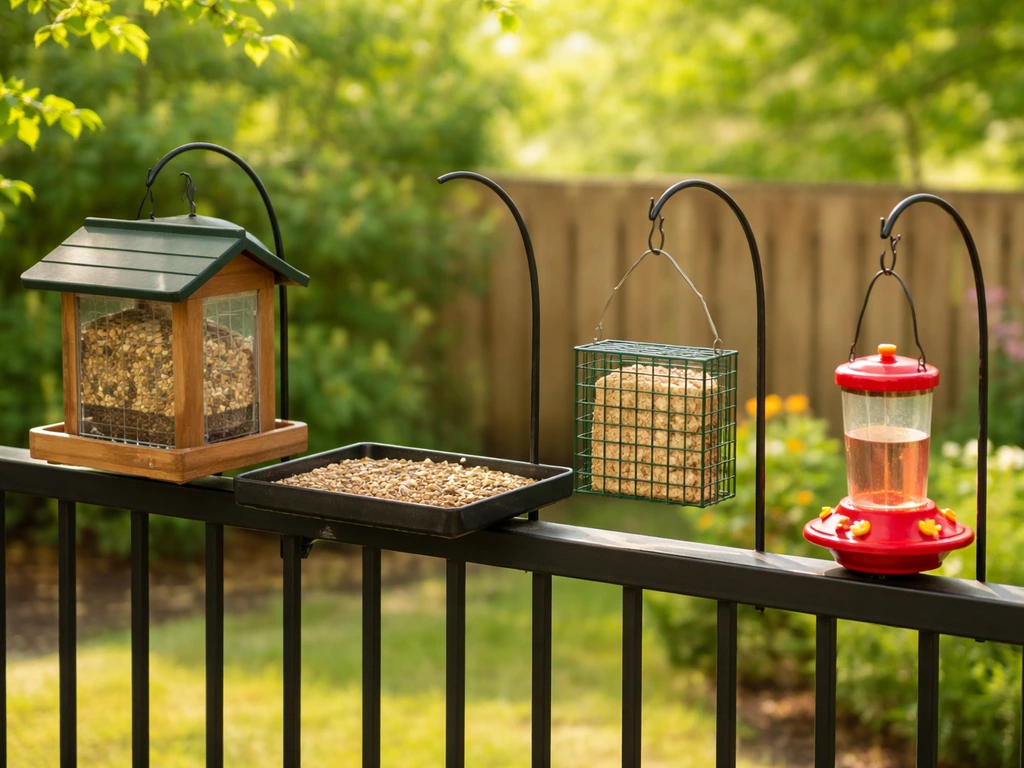
If you want a straight answer: a tube feeder filled with black-oil sunflower seed, mounted on a pole with a squirrel baffle at least 5 feet off the ground and 8-10 feet from any structure a squirrel can launch from, is the single most versatile starting point for most backyard setups. It attracts finches, chickadees, nuthatches, and cardinals, it's cheap to refill, and it comes in dozens of durable options under $30. From there, you layer in specialty feeders based on which birds you actually want to attract. The rest of this guide helps you figure out exactly what to add, how to set it all up, and how to stop squirrels, grackles, and bad weather from ruining it.
Best Selling Bird Feeders: Top Picks, Buying Guide, Fit Tips
Marcus Holloway
15 Jun 2026
What 'best-selling' actually means for bird feeders
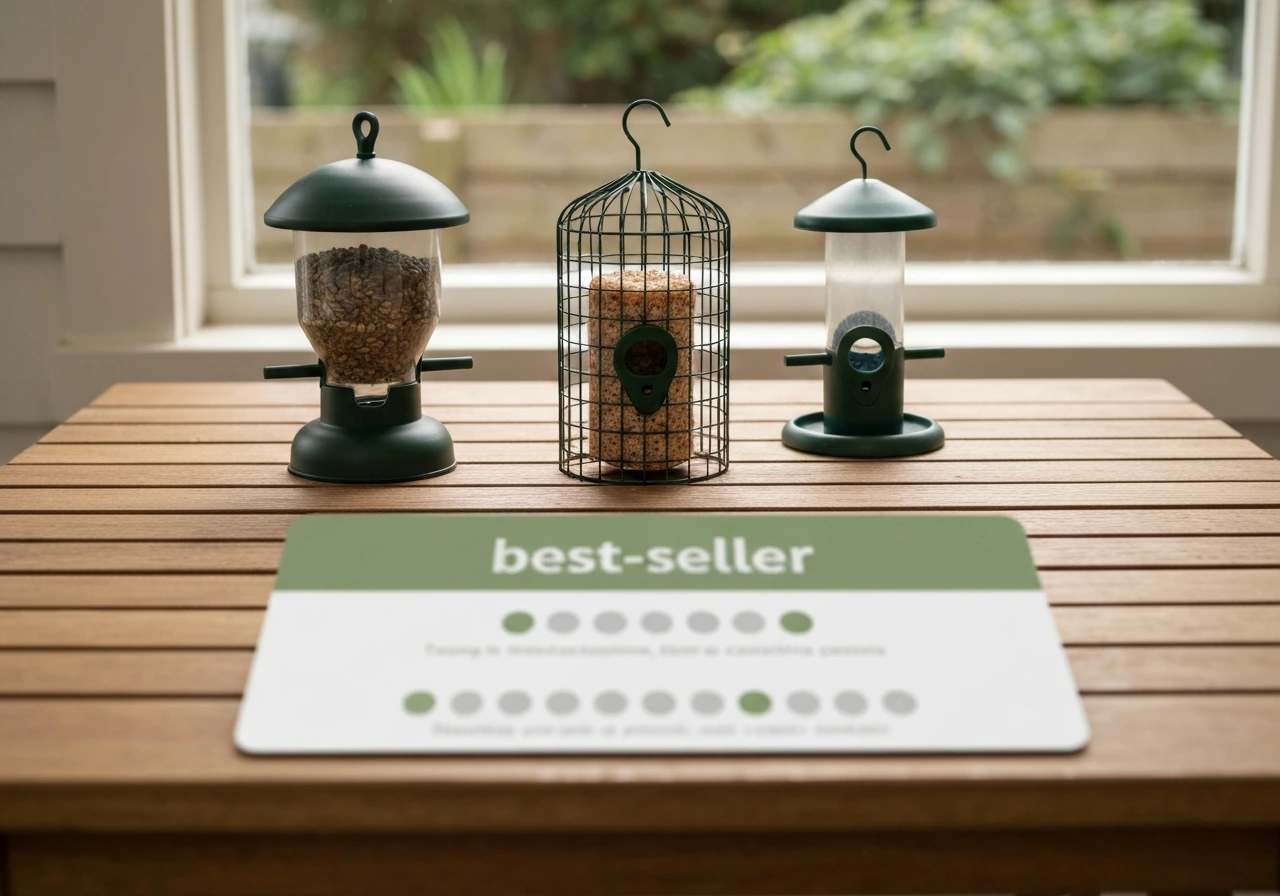
When you see a feeder labeled 'best seller' on Amazon or any major retailer, that label reflects recent sales velocity, meaning a lot of people bought it in a short window. It says nothing about whether the plastic held up after six months in the sun, whether the ports are sized correctly for the seed inside, or whether squirrels defeated it by week two. Sales volume is partly a function of price and marketing, not just performance. I've tested feeders that were top Amazon picks and watched them crack, warp, or simply stop latching shut after one winter.
The more useful definition of 'best' for a feeder comes from Cornell Lab and Project FeederWatch: the best feeder is sturdy enough to handle weather and squirrels, tight enough to keep seeds dry, and easy to take apart and clean. Those three criteria are measurable and directly tied to long-term value. When you're shopping, they matter far more than a badge that tracks last week's checkout counts. With that framing in mind, the feeders that consistently show up as popular on best-rated lists and best bird feeders on Amazon also tend to be the ones that meet these durability and usability standards, which is why there's real overlap between sales rankings and genuinely good products. When you compare the best rated bird feeders, focus on durability and ease of cleaning more than marketing claims best-rated lists. You just need to know what to look for.
Match your feeder to the birds you actually want
This is the step most people skip. They buy a generic feeder, fill it with cheap mixed seed, and wonder why they're only getting house sparrows and starlings. Feeder design, port size, perch style, and seed type all filter which species show up. Here's what works for the birds most people are trying to attract.
Finches (House Finches, Goldfinches, Purple Finches)
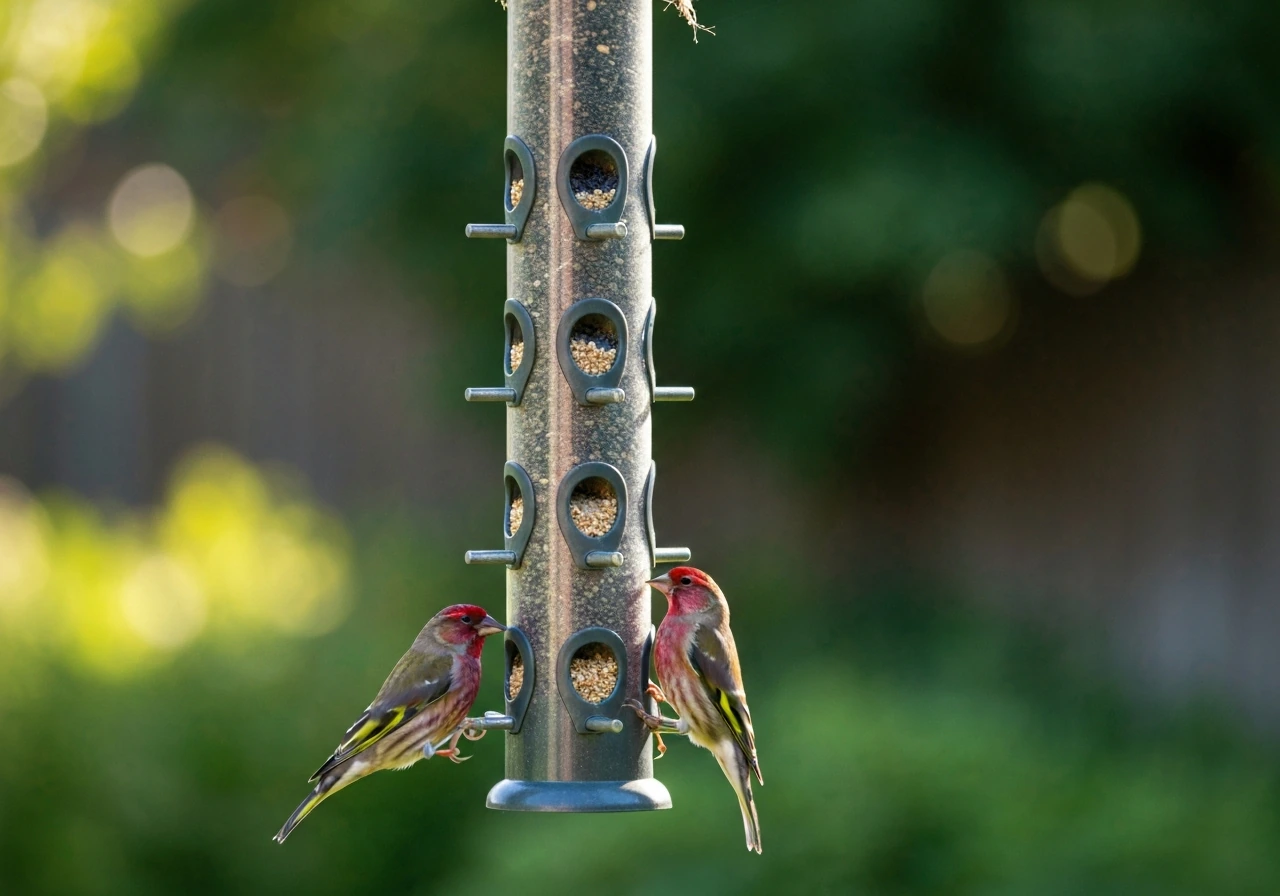
Tube feeders with small ports and short perches are the go-to for finches. For goldfinches specifically, a nyjer (thistle) sock or a tube feeder with tiny nyjer ports is the most targeted option. Goldfinches are comfortable feeding upside-down, which is actually useful because it naturally excludes most other species. If you want to attract American Goldfinches year-round, a dedicated nyjer feeder is worth having alongside your main sunflower setup.
Hummingbirds
Hummingbirds need nectar feeders, typically a bottle or basin design with red plastic flower-shaped ports and bee guards to keep insects out of the solution. The nectar formula is simple: 1 part plain white sugar dissolved in 4 parts water. No red dye, no food coloring. The hummingbirds are attracted to the red feeder hardware, not dye in the liquid. Keep extra nectar in the fridge for up to one week, and plan to swap and clean the feeder every 2-5 days depending on how hot it is outside. In a heat wave, that can mean every other day. Hummingbirds are also extremely territorial, so if you're getting aggressive chasing at your feeder, adding a second feeder out of sight of the first one often solves it.
Northern Cardinals
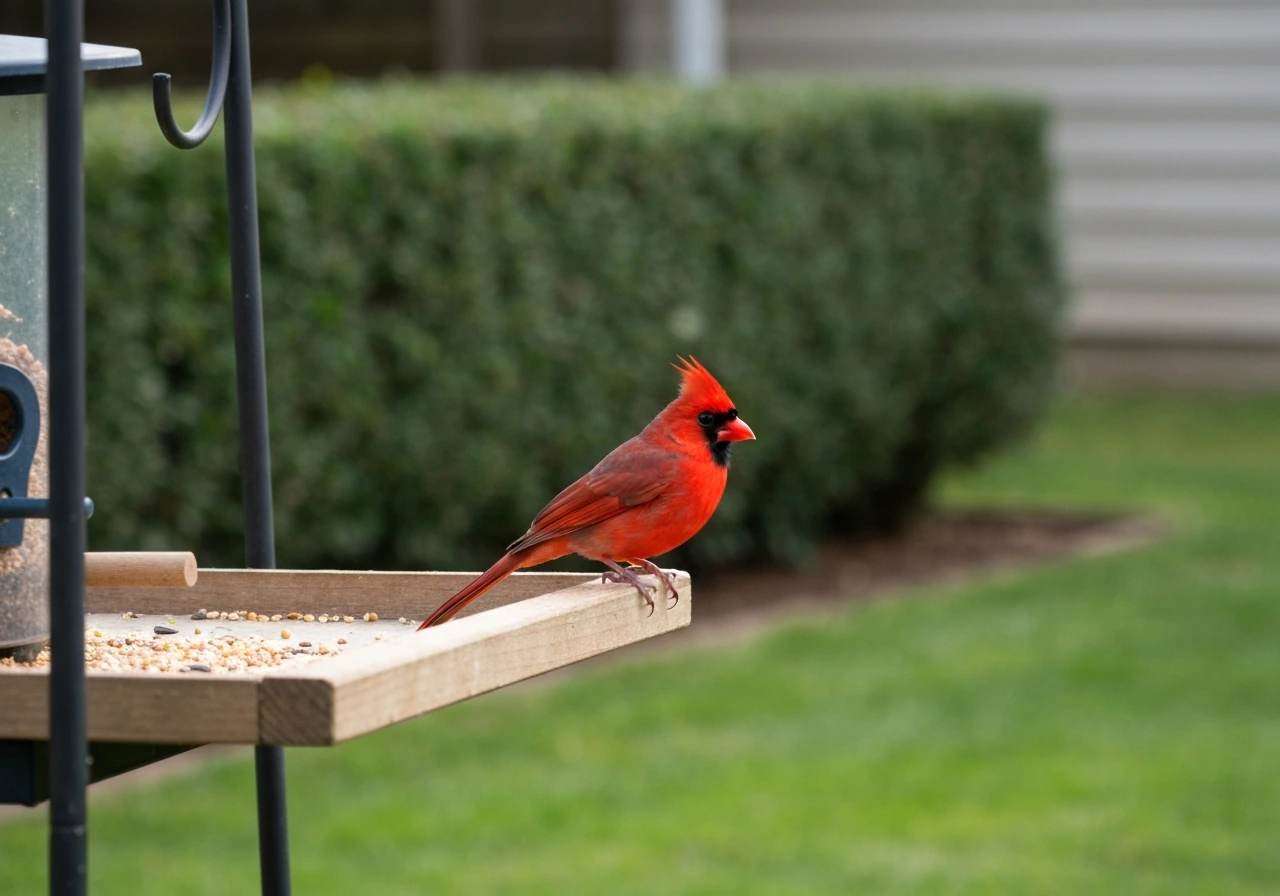
Cardinals are ground-feeding birds by nature, so they prefer feeders with wide, flat trays and sturdy perches that let them face outward while feeding. Large tube feeders with tray attachments, hopper feeders, platform feeders, and even ground feeders all work well. The seed of choice is black-oil sunflower, which is what Cornell Lab specifically flags as a cardinal favorite. Avoid small-port tube feeders for cardinals. They'll try to use them but will often give up and go elsewhere.
Woodpeckers
Suet feeders are the primary draw for woodpeckers, and the cage design matters more than most people realize. Standard cage suet feeders work, but if you're getting European Starlings muscling in, switch to an upside-down suet feeder, which is a cage that only allows access from the bottom. Woodpeckers, nuthatches, and chickadees can cling upside-down to reach the suet. Starlings typically won't bother. This single design tweak is one of the most effective, low-cost fixes in backyard birding. Hang suet feeders about 5 feet off the ground on a pole or from a tree branch.
General backyard mix (Chickadees, Nuthatches, Titmice, Juncos)
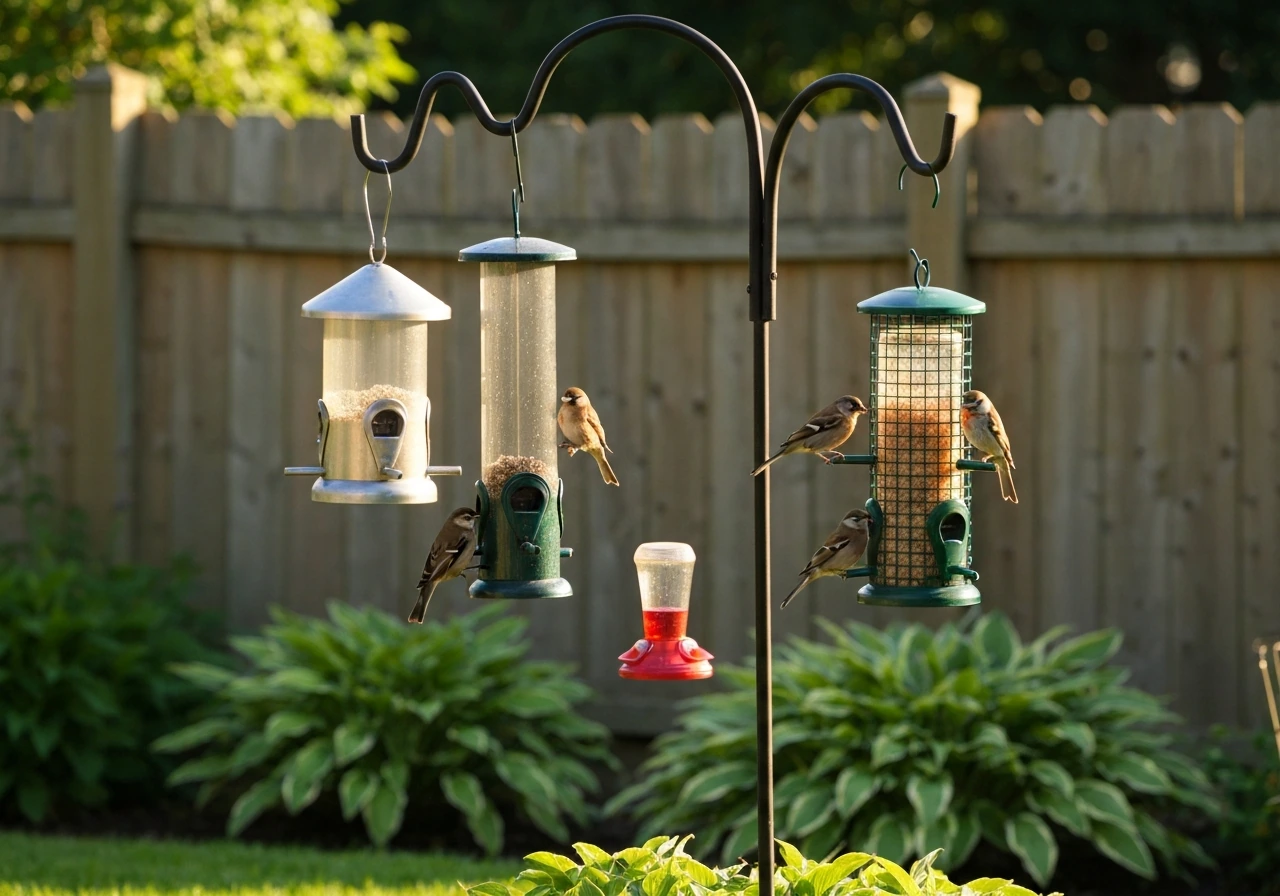
For a mixed-species setup, the combination that consistently outperforms anything else is a tube or hopper feeder with black-oil sunflower seed plus a separate suet cage. Add a platform or tray feeder at or near ground level if you want juncos, doves, and sparrows. Cornell Lab notes that offering multiple feeder types is one of the most reliable ways to increase species diversity in your yard. You don't need to spend a lot to do this, but you do need at least two or three feeder designs rather than one 'all-in-one' catch-all.
How to evaluate a traditional feeder before you buy
Whether you're looking at a tube feeder, hopper, platform, or suet cage, four criteria should drive your decision: seed compatibility, capacity, materials, and weather resistance.
| Feeder Type | Best Seed/Food | Best For | Watch Out For |
|---|---|---|---|
| Tube feeder | Black-oil sunflower, nyjer | Finches, chickadees, nuthatches | Port size too small for sunflower in some models |
| Hopper feeder | Sunflower, mixed seed | Cardinals, jays, general mix | Wood models can rot; check for drainage |
| Platform/tray feeder | Sunflower, millet, peanuts | Cardinals, juncos, doves | Exposed to rain; needs drainage holes |
| Suet cage (standard) | Suet cakes | Woodpeckers, chickadees, nuthatches | Starlings and grackles can access easily |
| Suet cage (upside-down) | Suet cakes | Woodpeckers, nuthatches, chickadees | Slightly harder to refill |
| Nectar feeder | Sugar water (1:4 ratio) | Hummingbirds | Needs cleaning every 2-5 days; bees/ants |
On materials: powder-coated metal and UV-stabilized polycarbonate hold up far better than basic plastic over multiple seasons. Recycled plastic lumber is also solid for hopper-style feeders and resists rot better than wood. If a feeder is made of thin, clear acrylic with no reinforcement at the ports or perch mounts, it will crack. I've seen it happen reliably by the second winter. Capacity matters less than you might think for most setups. A feeder you refill every three days because it's small but easy to fill is better than a giant hopper that sits untouched because refilling it is a project.
Weather resistance is about more than just materials. Look for drainage holes in platform and tray designs so wet seed doesn't pool and mold. Hopper feeders should have a roof that actually overhangs the seed ports. And any feeder with a seed access door or bottom clean-out panel is going to be far easier to maintain than one you have to flip upside-down and shake out.
Smart feeders and AI cameras: are they worth it?
This is a genuinely different product category, and whether it's worth it depends entirely on what you want out of backyard birding. If you want to identify species, log sightings, share photos, and get alerts when something interesting shows up, then a smart feeder camera is a real upgrade. If you just want birds in your yard and aren't interested in tracking them, it's an expensive layer you don't need.
The main brands in this space right now include Bird Buddy, Birdfy, BirdKiss, BirdSnap, and FeatherSnap. Most of them shoot 2K video with image sensors around 3MP, and nearly all of them use AI to identify species automatically. Here's the catch: the AI identification on most of these feeders is subscription-gated. Bird Buddy locks some features behind a Pro plan at roughly $2.50-$2.99 per month. BirdKiss runs from $2.99 to $7.99 per month depending on feature tier. FeatherSnap's Premium plan runs about $59.99 per year (around $4.99/month). Birdfy has a tiered model that includes a free AI option but locks extended cloud storage and unlimited recognition behind paid plans.
So the real cost of a smart feeder isn't just the hardware. Budget for the subscription if you want the full experience. That said, if you're genuinely interested in species identification and building a visual log of your backyard birds, these feeders are legitimately fun and more useful than any field guide app I've used. The AI has gotten quite good.
One practical note: smart feeders still need the same seed, placement, and cleaning attention as traditional feeders. The camera doesn't change what the birds need. And most smart feeders are not designed with predator-proofing as a priority, so you'll need to manage squirrel access through your mounting setup separately.
Squirrels, grackles, and other backyard problems
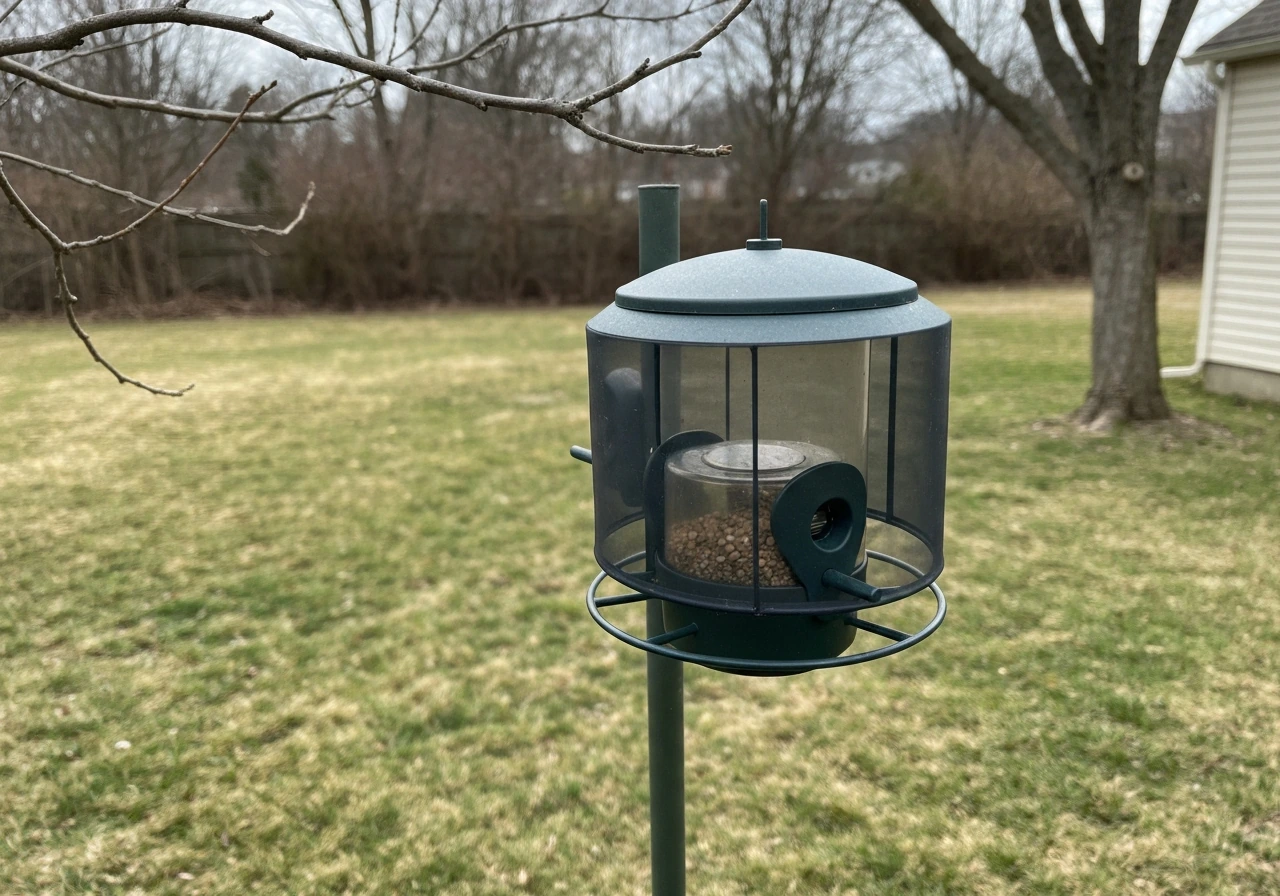
Squirrels destroyed my first real feeder setup inside two weeks. I'd underestimated both how far they can jump and how persistent they are. Here's what actually works, in order of effectiveness.
Squirrels
No setup is completely squirrel-proof, and Audubon is upfront about that. What you can do is make it hard enough that most squirrels give up. The placement rule that works best in practice is the 5-7-9 guideline: mount your feeder roughly 5 feet off the ground, at least 7 feet from any structure (fence, wall, shed), and at least 9 feet below any overhanging branch. Audubon's own guidance puts the minimum clearance from structures at 8-10 feet. A pole-mounted baffle below the feeder is essential if you're using a pole. Without the baffle, squirrels will climb the pole directly.
Weight-sensitive feeders like the Brome Squirrel Buster line use a closing shroud that shuts seed ports when a squirrel's weight triggers it. This works well in practice, with one caveat: if a squirrel can reach the feeder from a nearby surface without putting its full weight on the feeder itself, it can bypass the mechanism entirely. This is why placement matters as much as feeder design. Use both.
Grackles and starlings
Grackles are big, aggressive, and will clear out a platform or hopper feeder fast. The most effective deterrents are design-based. Caged tube feeders, where a metal grid surrounds the inner tube, physically exclude large birds while letting small species squeeze through. Upside-down suet feeders, as mentioned earlier, specifically exclude starlings. Switching from mixed seed to straight black-oil sunflower or nyjer also helps because grackles and starlings strongly prefer millet and cracked corn, which are common fillers in cheap mixes.
Ants, bees, and wasps at nectar feeders
An ant moat above the feeder (a small water-filled cup that ants can't cross) is the most reliable ant fix. For bees and wasps, bee guards on the feeding ports help, and keeping the feeder clean so there's no sugar residue on the outside makes a real difference. Avoid feeders without bee guards if you're in an area with active wasp populations.
Where and how to set up your feeders
Placement affects which birds show up, how safe they are while feeding, and how often you'll have to deal with predators and pests. A few rules that hold across most yard types.
- Mount pole feeders about 5 feet off the ground with a baffle at least 18 inches below the lowest feeder.
- Keep feeders either very close to windows (within 3 feet) or more than 10 feet away. Birds leaving a feeder 3-10 feet from glass can hit it at a speed that causes injury.
- Space multiple feeders at least 6-8 feet apart to reduce competition and territorial chasing.
- Position nectar feeders in partial shade to slow fermentation and reduce cleaning frequency.
- Hang suet feeders on the shady side of a tree or pole in summer to keep suet from melting.
- Place platform or ground feeders away from dense shrubs where cats can hide.
- If using a shepherd's hook, choose one with a built-in baffle or add one. A bare pole is an open invitation.
If you have a small yard or a balcony, window-mounted feeders using suction cups work for chickadees, finches, and even woodpeckers on occasion. They're not ideal for high-volume setups but they're a genuinely good option when pole placement isn't possible. Just make sure the mount is rated for the feeder weight and you clean the suction cups regularly so they don't fail in cold weather.
Cleaning: how often and why it matters
This is probably the most skipped part of feeder ownership and also the one that causes the most bird health problems. The standard guidance from Project FeederWatch, Audubon, and Cornell Lab all converges on the same schedule: clean seed and suet feeders every two weeks minimum, and more often during hot, humid, or wet weather. Nectar feeders need attention every 2-5 days because sugar water ferments and can grow mold that's harmful to hummingbirds. A bottle brush, diluted bleach solution (1 part bleach to 9 parts water), and a thorough rinse and full dry before refilling is the process. Feeders that come apart easily, have no deep crevices, and have wide clean-out openings will actually get cleaned. Ones that require tools or five steps to disassemble won't, and that's worth factoring into your purchase decision as much as price.
What to buy today: quick picks and a decision checklist
Here's how to translate everything above into an actual buying decision. Rather than naming single 'best' models (which change with availability and pricing), I'll frame this by goal and then give you the checklist to verify any specific feeder fits. If you want a quick starting point on the best bird feeder brands, use the checklist below to compare build quality, seed compatibility, and maintenance needs.
Quick picks by goal
| Your Goal | Feeder Type to Buy | Seed/Food | Key Feature to Look For |
|---|---|---|---|
| Attract finches and chickadees | Tube feeder | Black-oil sunflower or nyjer | Small ports, easy-open clean-out |
| Attract goldfinches specifically | Nyjer sock or nyjer tube | Nyjer (thistle) | Fine mesh or tiny ports |
| Attract cardinals | Hopper or large tube with tray | Black-oil sunflower | Wide perch, tray attachment |
| Attract woodpeckers | Upside-down suet cage | Suet cakes | Bottom-access only design |
| Attract hummingbirds | Nectar feeder with bee guards | 1:4 sugar water | Red hardware, easy to disassemble |
| General backyard mix | Tube + suet cage combo | Sunflower + suet | Two separate feeders, pole-mounted |
| Squirrel resistance | Weight-sensitive feeder + baffle | Sunflower | Brome Squirrel Buster style or caged tube |
| Species ID and photo logging | Smart feeder camera | Sunflower or appropriate seed | 2K camera, AI ID, check subscription cost |
Before you check out, run through this
- Which birds do you specifically want to attract? Match feeder type and seed to species first.
- What's your squirrel situation? If squirrels are active in your yard, plan for a pole, a baffle, and at least 8-10 feet of clearance from structures before buying any feeder.
- What material is the feeder made of? Powder-coated metal or UV-stabilized polycarbonate will outlast basic plastic by years.
- How easy is it to clean? Can you open it fully, reach inside, and let it dry? If the answer is no, look at a different model.
- How often are you realistically willing to refill? Match feeder capacity to your schedule, not the largest option available.
- If you're buying a smart camera feeder, what does the base price include and what requires a subscription? Factor the ongoing cost in.
- Do you have a mounting solution already? A great feeder on a bare shepherd's hook with no baffle is a squirrel feeder. Plan the pole and baffle at the same time.
- What's your local climate like in winter? If you get heavy snow and ice, prioritize feeders with covered ports and drainage, and plan to check them after storms.
The honest reality is that a $25 tube feeder on a properly positioned pole with a baffle will outperform a $150 smart feeder sitting in the wrong spot. Get the placement and seed selection right first, then add specialty or tech feeders as your setup matures. That's the approach that actually fills your yard with birds.
FAQ
Do “best selling” bird feeders usually attract the same birds as “best rated” feeders?
Often there is overlap, but sales rankings can miss long-term issues like ports that don't match the seed size or plastic that warps in winter sun. If a feeder is on the bestseller list, still check port dimensions, clean-out access, and material type (powder-coated metal or UV-stabilized polycarbonate tend to age better).
Can I use mixed seed in the same tube feeder that works best for finches?
It's usually not ideal. Tube feeders that target finches (especially nyjer or black-oil sunflower) rely on seed compatibility, and mixed cheap blends often contain grains finches don't eat well. If you want multiple species, use a separate main seed type for the tube or hopper, and add a platform or ground feeder for the birds that prefer mixed diets.
What seed should I choose if I want cardinals but I still have finches visiting?
Use black-oil sunflower as the main seed, then separate feeding types if needed. Cardinals prefer wide tray and sturdier access, while finches are typically driven by smaller ports and nyjer access. If you combine everything in one feeder, finches and small birds may outcompete cardinals for the most accessible openings.
How do I prevent mold when my hopper or tray feeder gets wet?
Look for drainage holes (platform and tray styles) and a roof that overhangs the seed ports (hopper). Also avoid filling until rain is over, since wet seed can sit and mold. Even with good hardware, empty and dry the feeder more frequently during humid stretches.
Are suction-cup window feeders safe in cold weather?
They can be, but only if the mount is rated for the feeder's full loaded weight and the pads are cleaned regularly. Cold weather reduces adhesion, and residue or frozen moisture can cause sudden failure. Check the mount after the first freeze and periodically through winter.
Do I really need a squirrel baffle if I already have a weight-sensitive feeder?
Yes, ideally. Weight-sensitive shrouds help, but squirrels can bypass mechanisms if they can access the feeder from a nearby surface without putting their full weight on the feeder. Placement rules and a pole baffle work together, because geography is often the weak link.
How do I keep grackles from clearing my feeder overnight?
Switch to design-based exclusion first. A caged tube feeder physically blocks large birds while allowing small species. If you're using mixed seed, replacing it with black-oil sunflower or nyjer also helps, since grackles and starlings are strongly attracted to millet and cracked corn found in many blends.
What is the best way to deter ants without harming bees?
Use an ant moat with water above the feeder, and keep the moat filled and clean. For bees and wasps, bee guards on feeding ports are important, but they won't replace cleanliness. Sugar residue on the outside of the feeder attracts insects, so wipe and rinse as part of regular cleaning.
How often should I clean a nectar feeder during hot weather?
In warm, fast-fermenting conditions, plan on every 2 to 3 days, and be ready to go as often as every other day during heat waves. Always remove remaining nectar, scrub the bottle, rinse thoroughly, and fully dry before refilling. Nectar that stays too long risks mold and fermentation.
What’s the easiest feeder design to clean if I don't want a complicated routine?
Prioritize feeders that come apart quickly and provide wide clean-out access, such as designs with reachable seed access doors or bottom panels. Avoid models that require tools, multiple steps, or hard-to-reach crevices, because owners commonly skip cleaning when disassembly is annoying.
Are smart bird feeder cameras worth it if I only care about having birds visit?
Usually not. The camera does not replace seed, placement, or cleaning, and many units focus on identification features behind subscriptions. If your main goal is simple visitation and variety, start with correct feeder type and seed, then add a camera only if you want a photo log and species alerts.
Will a smart feeder camera also stop squirrels or grackles by itself?
No. Most smart feeder designs are not built with predator-proofing as the primary goal, so you still need separate squirrel management (placement, baffle, or weight-sensitive mechanisms) and grackle control (caged tubes or seed and feeder type choices).
What feeder height and distances should I use if my yard has nearby trees?
Use the clearance rules that include branches, not just fences and walls. A common effective guideline is about 5 feet off the ground, at least 7 feet from structures, and at least 9 feet below overhanging branches. If you have low branches, you may need to raise the feeder or change the mounting location to keep squirrels from launching or climbing.
Next Article
10 Best Bird Feeders: Top Picks by Species and Setup
Ranked 10 best bird feeders for finches, hummingbirds, cardinals and more, with setup, cleaning, and squirrel-proof tips