For most UK gardens in 2026, the best all-round traditional feeder is the Brome Squirrel Buster Plus, and the best camera feeder is the Netvue Birdfy. The Squirrel Buster handles mixed seed, resists squirrels through a weight-activated shroud, and cleans up easily. The Birdfy gives you 1080p footage, AI bird ID, and solid night vision without a fiddly setup. If you want to spend less on a camera feeder, the Camouflage EZ BirdFeed punches well above its price.
Best Bird Feeders Reviews UK: Standard and Camera Picks

Marcus Holloway
9 Jun 2026
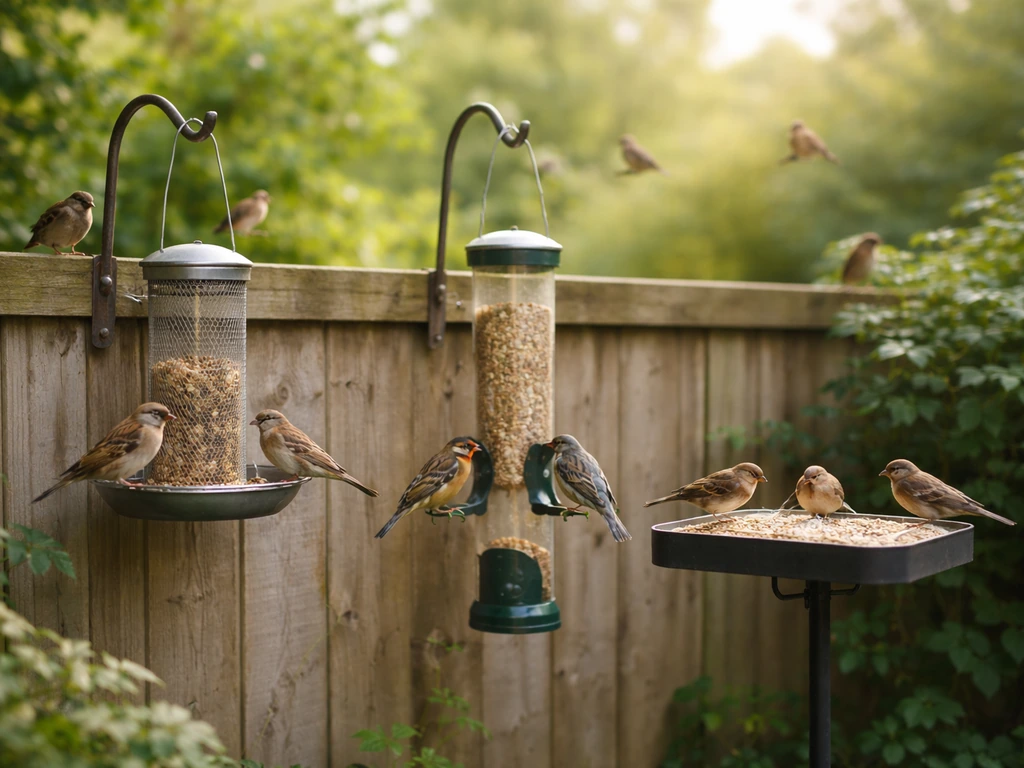
Everything below helps you narrow down exactly which one fits your birds, your garden, and your patience levels. If you're specifically looking for the best hanging bird feeders UK, use the categories above to match feeder type, seed, and protection to the birds in your garden.
Best overall picks right now
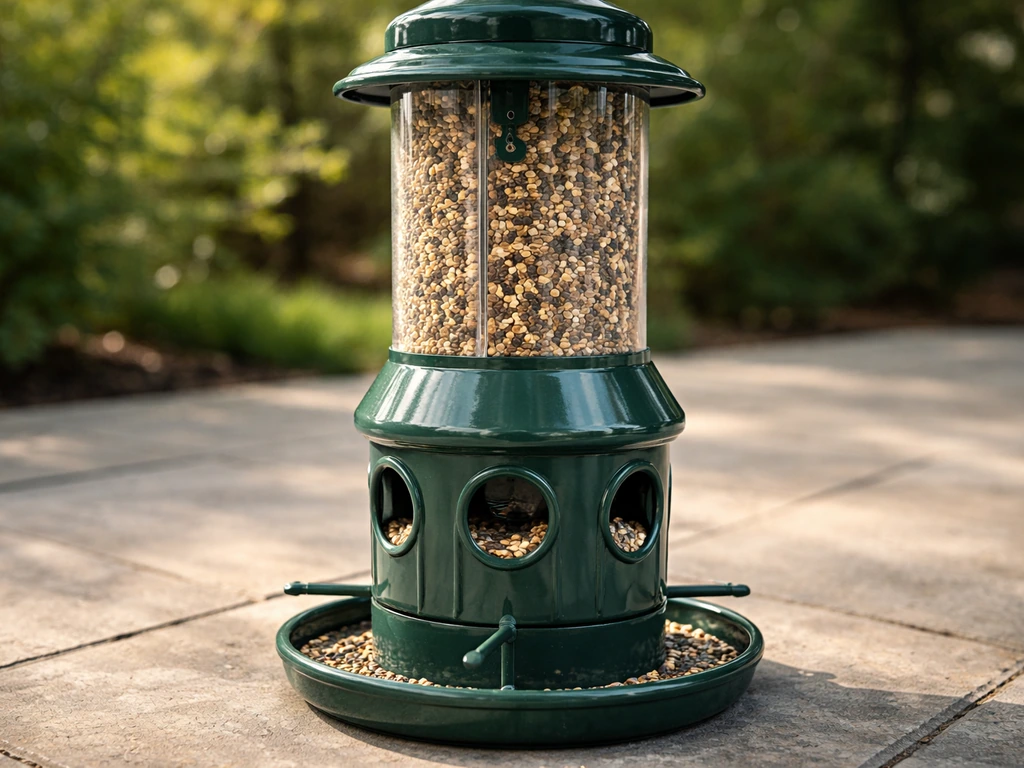
Here are the top recommendations by category before we get into the detail. These are the feeders I'd tell a friend to buy without much hesitation.
| Category | Top Pick | Best Budget | Best Premium |
|---|---|---|---|
| Traditional / Seed | Brome Squirrel Buster Plus | Gardman Heavy Duty Seed Feeder | Jacobi Jayne I'M SO Clever Feeder |
| Suet / Fat Ball | Brome Squirrel Buster Suet | Ring Pull Suet Feeder | Gardman Suet Cage Feeder |
| Camera Feeder | Netvue Birdfy | Camouflage EZ BirdFeed | FeatherSnap Scout |
| Squirrel-Proof | Brome Squirrel Buster Plus | Cage-style guardian feeder | Weight-activated tube feeder |
The Netvue Birdfy sits at the top of the camera feeder list because it combines genuine 1080p full HD video, reliable AI bird identification, microSD local storage, and IR night capture in a package that works well in typical UK weather. The FeatherSnap Scout is worth considering if you want a slightly more discreet design and don't mind a narrower focal range of around 4 to 24 inches. The Camouflage EZ BirdFeed is the value standout, with AI that claims to recognise 11,000 species and the same six No Glow 940NM IR LED night capture you'd expect from pricier models.
Match the feeder to your birds first
Before anything else, figure out which birds you're actually trying to attract. The feeder type, seed, and port size all need to match. Getting this wrong is the most common mistake I see. Someone buys a peanut feeder expecting to see goldfinches and wonders why nothing shows up.
Finches (goldfinches, siskins, greenfinches)
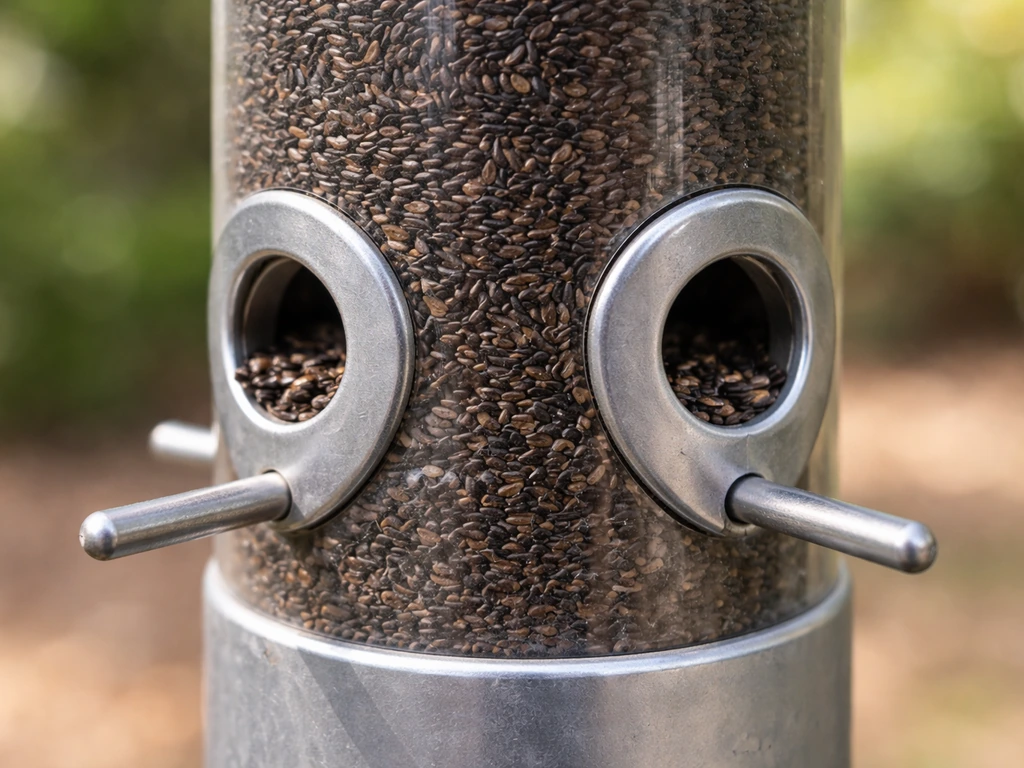
These birds need nyjer seed (also called niger or thistle seed) dispensed through small ports. A nyjer-specific tube feeder with tiny holes is essential. Standard seed mix ports are too wide and nyjer pours out. Look for a feeder with at least four perches, because goldfinches in particular feed in sociable groups. A bright yellow feeder can also help attract them initially, it sounds gimmicky but it genuinely works for goldfinches.
Tits (blue tits, great tits, coal tits)
Tits are acrobatic and will use almost any hanging feeder, but they do best with peanuts in mesh feeders, sunflower hearts in tube feeders, or suet balls in cage feeders. They don't need a tray and can cling to mesh easily. A standard cylindrical mesh peanut feeder is cheap, effective, and these birds will arrive within days of hanging one up in a sheltered spot.
Robins, dunnocks, and ground feeders
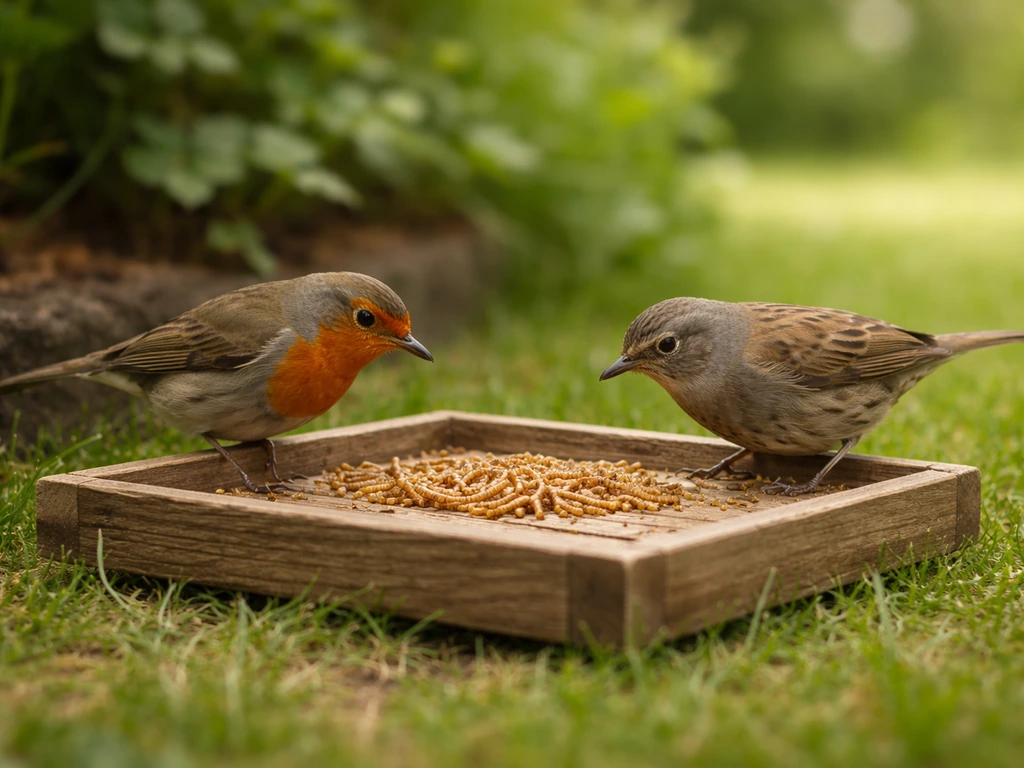
Robins famously struggle with tube feeders because they prefer an open platform. A tray feeder or a flat dish placed low to the ground works much better. Mealworms (live or dried) on a platform feeder will have a robin showing up within minutes. Dunnocks are similar but tend to feed on dropped seed below the feeder rather than on the feeder itself, so placing a mat or tray underneath any feeder helps them too.
Woodpeckers
Great spotted woodpeckers are more common visitors than most people expect, especially in gardens with mature trees nearby. They love suet and peanuts. A suet log feeder drilled with holes or a sturdy suet cage feeder mounted on a pole or tree trunk works perfectly. Woodpeckers need something to brace against, so a hanging-only feeder with no vertical surface to grip will frustrate them.
Sparrows, starlings, and larger garden birds
House sparrows and starlings will eat almost anything, but they do bulk feeding rather than delicate perching. A hopper-style feeder or a larger tray feeder suits them. The problem is they can also bully smaller birds off the feeder. If that's an issue, a cage feeder with smaller gaps lets tits and finches through but keeps larger birds out.
What about hummingbirds and cardinals?
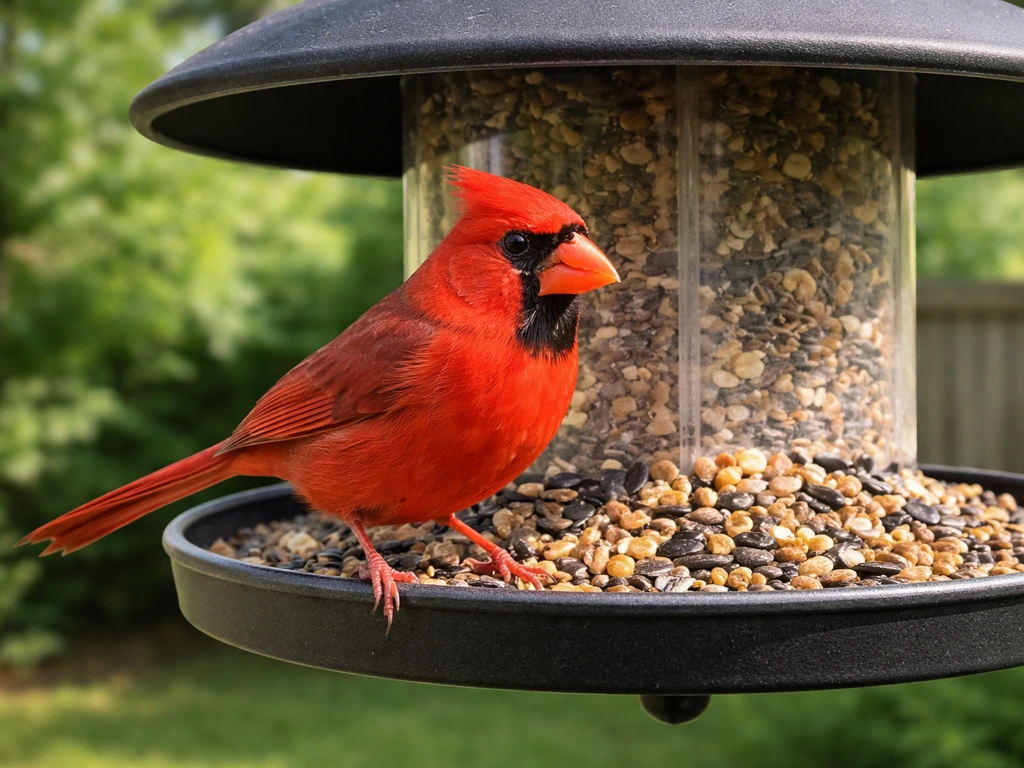
Hummingbirds and cardinals are not UK species, so purpose-built feeders for those birds are not something most UK gardeners need to worry about. If you've arrived here from a broader search, the rest of this guide covers exactly what's relevant for British garden birds.
Traditional feeder reviews: what actually matters
There are hundreds of feeders on the UK market and most of them are mediocre. Here's what separates the ones worth buying.
Materials and weatherproofing
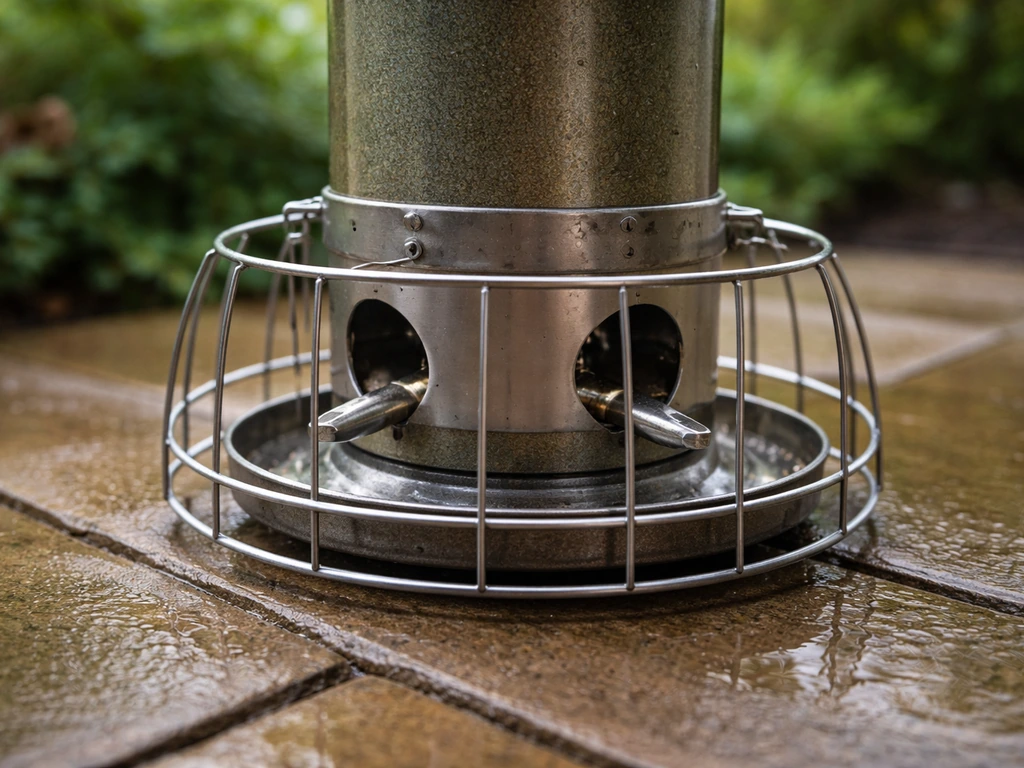
The UK's damp climate is hard on feeders. Cheap plastic cracks after one winter, painted metal rusts, and wooden feeders go green and swell unless they're made from properly treated or rot-resistant timber. The feeders that last are either UV-stabilised hard plastic (polycarbonate rather than cheap acrylic), powder-coated steel, or stainless steel. The Brome Squirrel Buster range uses a tough polycarbonate tube with stainless steel components, which is why it survives UK winters reliably. If a feeder doesn't specify UV-stabilised plastic, assume it'll be brittle within two years.
Seed types and port design
Match port size to seed type every time. Sunflower hearts and mixed seed need a medium port. Nyjer needs a tiny pinhole port. Peanuts need mesh. Suet needs a cage or log holes. A universal feeder with adjustable ports sounds appealing in theory, but in practice the adjustment mechanism clogs and the ports are rarely optimised for any seed type. Better to buy a dedicated feeder for each food type if you have the space.
Ease of cleaning and the RSPB's hygiene rules
This is where many feeders fail. The RSPB is clear that regular cleaning is essential to prevent disease spread, particularly salmonella and trichomoniasis. The RSPB also recommends regular cleaning of bird feeders, and its cleaning buying guide includes tools such as a brush for tube-style feeders to reach into hard-to-clean areas [regular cleaning is essential to prevent disease spread](https://shopping. rspb.
org. uk/page/cleaning-buying-guide). Tube feeders need a long-handled brush to reach the bottom. Any feeder with internal corners, fiddly perches that don't detach, or a base that doesn't come off properly is going to get mouldy and stay that way.
I disassemble and scrub my feeders with a dedicated brush and mild disinfectant every two weeks during peak feeding season. The feeders I keep coming back to are the ones where the base twists off cleanly and I can get a brush down the tube without fighting the design.
The RSPB also advises removing tray-style feeders during warmer months. Between 1 May and 31 October, the risk of seed spoiling quickly and harbouring parasites is much higher. Suet products should be replaced within seven days regardless of season. In summer, suet can melt and go rancid faster, so fat balls in a cage feeder need checking every few days rather than every week.
Brome Squirrel Buster Plus
This is the feeder I recommend most often because it solves multiple problems at once. The polycarbonate tube holds a decent seed volume, the perches are removable for cleaning, and the base twists off in seconds. The weight-activated shroud drops down to cover the feeding ports when anything heavier than a small garden bird lands on it, making it genuinely squirrel-proof rather than just squirrel-resistant. The weight threshold is adjustable, which matters if you want to exclude starlings as well as squirrels. It's not cheap, but it lasts.
Gardman and budget alternatives
Gardman's heavy-duty seed feeders are widely available in UK garden centres and hold up reasonably well for the price. They won't last as long as a Brome feeder and the bases can crack after a year or two, but if you're just starting out or want a secondary feeder, they're a solid pick. Avoid the very cheapest supermarket feeders entirely. They typically use thin, brittle plastic and have no mechanism for cleaning properly.
Bird feeder camera reviews: the smart feeder picture
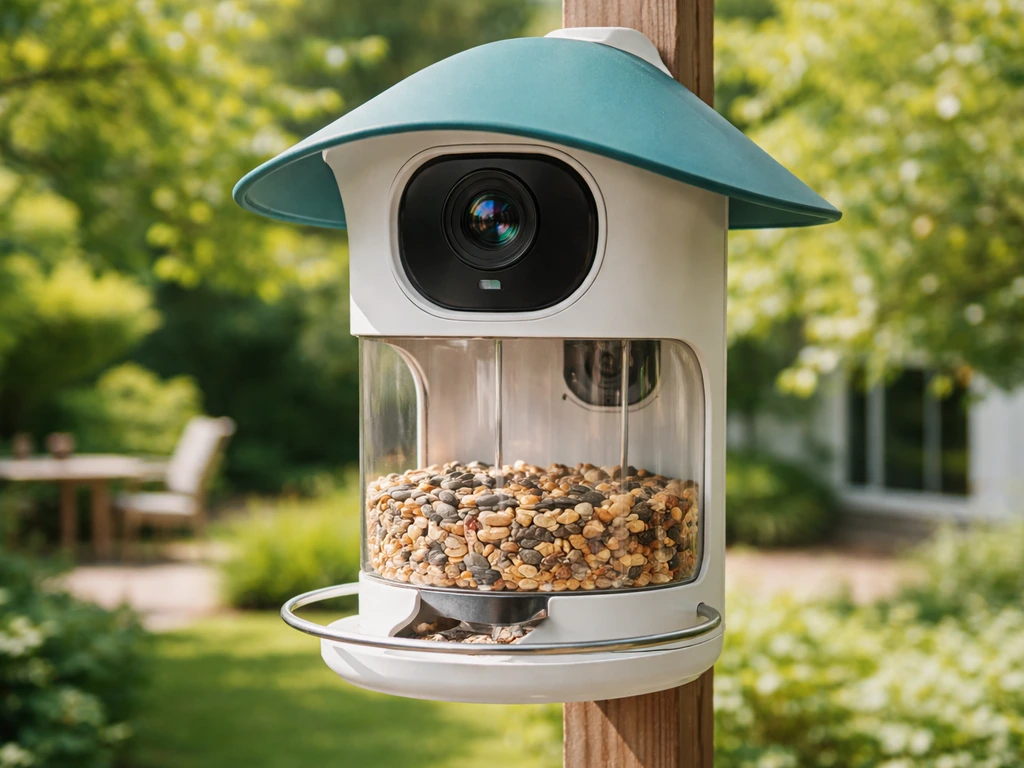
Camera feeders have genuinely improved in the last couple of years. The AI bird identification is now accurate enough to be useful rather than just a novelty, and the video quality on the top picks is good enough to actually see plumage detail. Here's how the main contenders compare.
| Model | Video Quality | AI Bird ID | Night Vision | Storage | Connectivity |
|---|---|---|---|---|---|
| Netvue Birdfy | 1080p Full HD | Yes, AI-powered | IR LED | microSD + cloud | Wi-Fi app |
| Camouflage EZ BirdFeed | HD | Yes, 11,000 species | 6x No Glow 940NM IR LEDs | Cloud / app | Wi-Fi app |
| FeatherSnap Scout | HD, colour day / B&W night | Yes, AI-powered | 6x No Glow 940NM IR LEDs | Cloud / app | Wi-Fi app |
Netvue Birdfy
The Birdfy is the most polished camera feeder currently available in the UK. The 1080p full HD resolution is the real differentiator here. When a goldfinch or a bullfinch lands right in front of the lens, you can actually see the individual feathers in the footage rather than a blurry blob. The AI detection triggers recording when a bird lands (rather than just any motion), which dramatically reduces the number of empty clips you have to scroll through.
Storage on microSD means you're not entirely dependent on the cloud or a subscription. The companion app is reliable, and the camera works across the Birdfy ecosystem, so if you later want a bird bath camera as well, everything connects in the same app.
Camouflage EZ BirdFeed
This is the one to buy if the Birdfy's price gives you pause. The AI claims to recognise 11,000 bird species, which in practice means it handles UK common garden birds well with some impressive accuracy on less obvious visitors. Night capture is handled by six No Glow 940NM IR LEDs, which means the LEDs don't emit a visible red glow that might spook birds or annoy neighbours. The trade-off compared to the Birdfy is that the video quality is a step down in terms of fine detail, and the app interface is slightly less refined. But for the price, it's genuinely impressive.
FeatherSnap Scout
The FeatherSnap Scout has a very wide 130-degree field of view, which is useful if you want to capture the whole feeding area rather than just whatever's directly in front of the lens. Motion detection works within about 10 feet of the feeder, though the camera's actual focal sweet spot is roughly 4 to 24 inches, so it's really optimised for birds on or very close to the feeder itself.
Like the EZ BirdFeed, it uses six No Glow 940NM IR LEDs for night vision, shoots in colour during daylight, and switches to black and white at night. The AI bird ID is solid. Where it sits slightly behind the Birdfy is in the overall camera experience: the footage is good but not quite as detailed.
It's a premium product with a premium price, and whether it beats the Birdfy comes down to personal preference more than any objective quality gap.
A note on connectivity and app reliability
All three camera feeders require a reasonably stable 2.4GHz Wi-Fi signal near the feeder location. If your garden Wi-Fi is patchy, none of these will work reliably. Check your signal strength at the spot you're planning to hang the feeder before buying. A Wi-Fi extender is much cheaper than a new camera feeder and solves the problem completely. Also check whether the AI features require a subscription after a trial period. Some camera feeders lock AI identification behind a monthly fee after the first year, which changes the long-term cost calculation significantly.
Squirrel-proofing, grackle-proofing, and keeping the bullies out
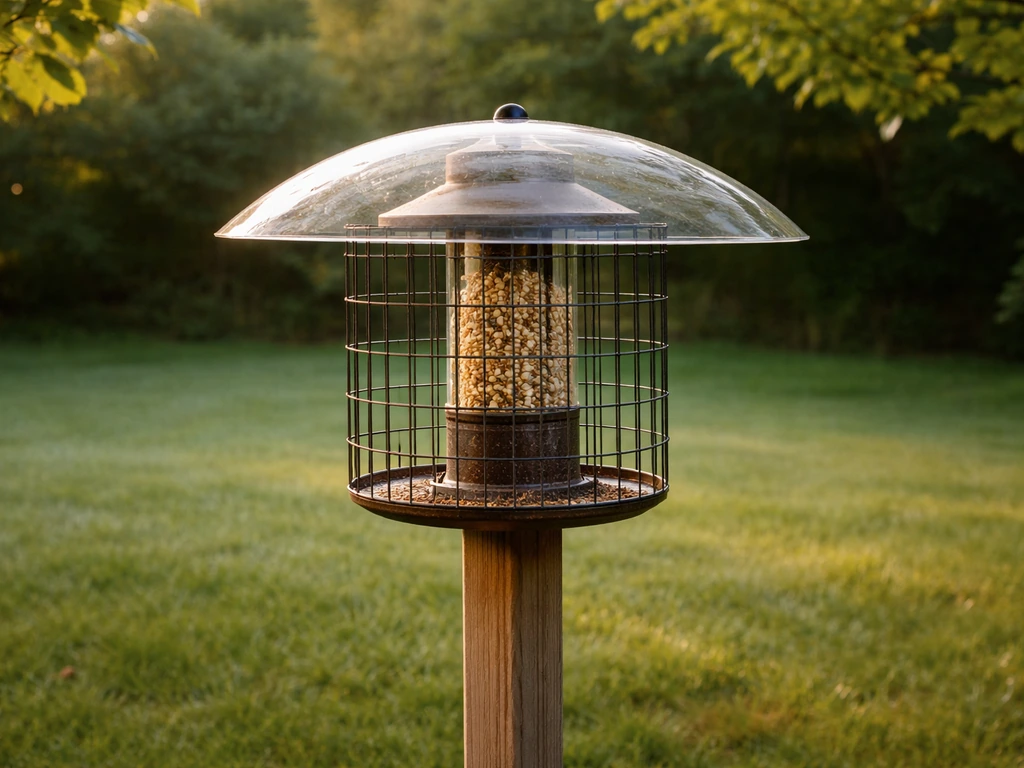
Squirrels destroyed two of my previous feeders before I switched to weight-activated designs. I've also had starling flocks take over a feeder within an hour of filling it. Here's how to deal with both.
The 5-7-9 rule for placement
The 5-7-9 rule is a squirrel-proofing placement method: position feeders at least 5 feet off the ground, at least 7 feet from any horizontal surface a squirrel can jump from (fence tops, walls, shed roofs), and at least 9 feet below any overhead branch or structure. If your feeder is within any of those distances, squirrels will reach it eventually no matter what the feeder itself is made of. This placement rule works, but it's not always possible in smaller UK gardens with lots of fences and trees. In that case, a weight-activated feeder is non-negotiable.
Weight-activated feeders
The Brome Squirrel Buster range uses a weight-activated wire shroud that drops down over the feeding ports when a squirrel's weight triggers it. This works even when squirrels try shaking the feeder, because the mechanism responds to weight on the perches rather than the feeder body. The Squirrel Buster Suet feeder uses the same mechanism to block access to suet cages. The key advantage over cage-style guardians is that the adjustment lets you set the weight threshold, so you can also exclude larger birds like starlings or wood pigeons if they're a problem.
Cage guardians for smaller birds
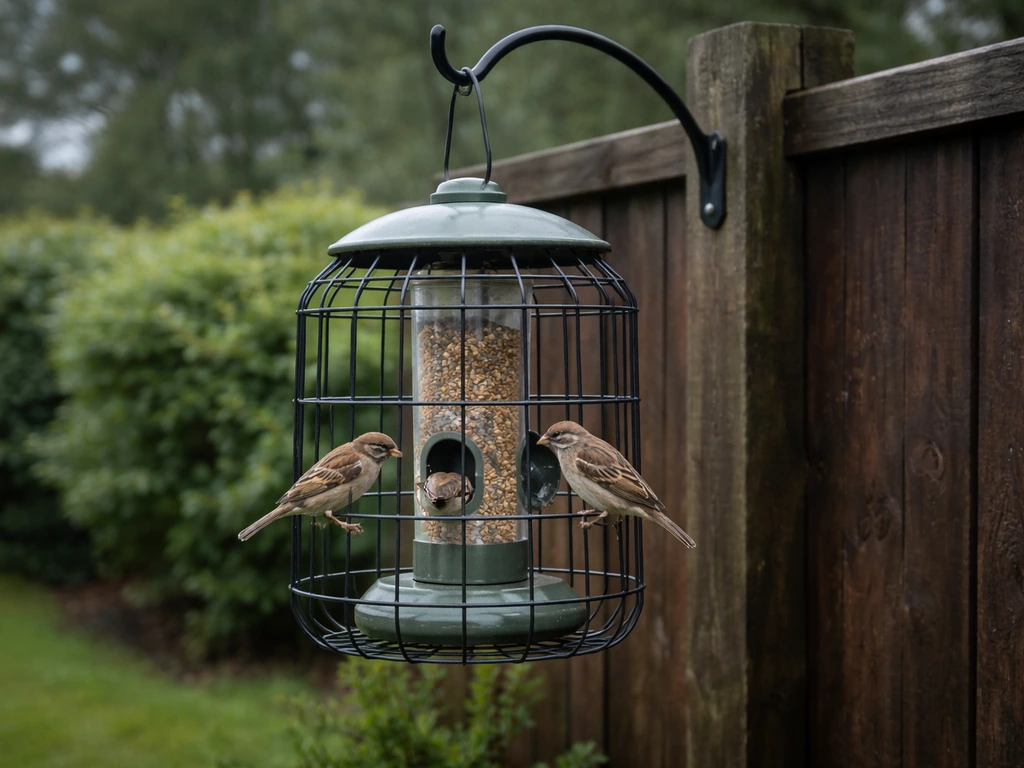
A cage guardian is a simple wire cage that surrounds a standard tube or suet feeder. The cage gaps are sized so that small birds can fly in freely but larger birds and squirrels cannot access the feeder. These are inexpensive, reliable, and work extremely well for excluding wood pigeons, magpies, and starlings. They're less effective against squirrels who are determined and have time to chew, which is why pairing a cage guardian with a weight-activated design or correct placement is the most robust solution.
What about grackles?
Grackles are not a UK bird (they're a North American species), so if you're a UK gardener this won't be a direct concern. The closest equivalent problem in UK gardens is starling flocks monopolising feeders. The strategies are effectively the same: weight-activated mechanisms, cage guardians, and offering nyjer seed in small-port feeders that starlings cannot access. Starlings can't use nyjer feeders effectively, which makes a dedicated nyjer tube feeder one of the most reliable ways to feed finches without interference from larger opportunist birds.
Where to put your feeder and how to make it actually work
Height and mounting
Most garden birds prefer feeders at roughly eye height for a standing person, around 1. 5 to 2 metres off the ground. Too low and cats become a serious problem. Too high and smaller birds feel exposed and vulnerable.
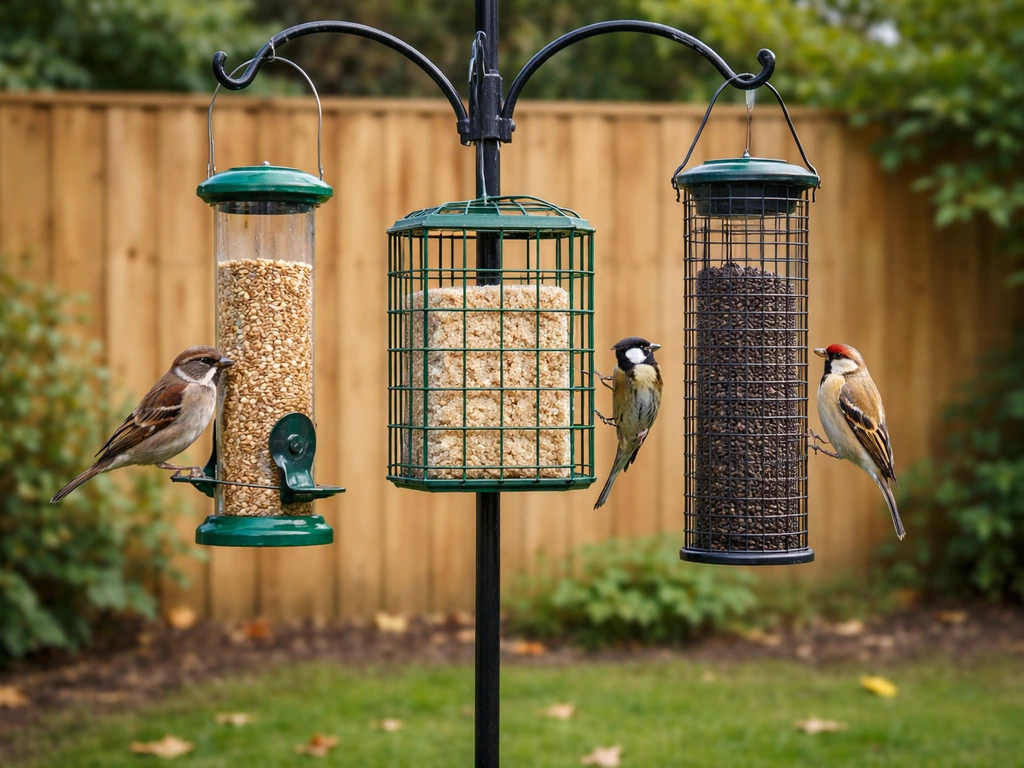
A freestanding metal pole with a hook or bracket arm is the most flexible mounting option because it lets you position the feeder in open space away from fences and trees rather than being constrained by where you can attach something to a wall or branch. Shepherd's hook poles are cheap and easy to move around while you figure out where birds feel most comfortable.
For camera feeders, pole mounting also gives you better sightlines and keeps the camera lens at a useful angle.
Distance from cover and windows
Birds need nearby cover to feel safe but don't like landing directly from a dense bush onto an exposed feeder. A distance of roughly 2 to 3 metres from cover (hedge, shrubs, tree) is a good target. For windows, the advice is counter-intuitive but important: either place the feeder very close to the window (within 1 metre) so birds can't build enough speed to injure themselves if they fly toward the glass, or keep it more than 3 metres away.
The dangerous zone is the middle distance where birds can accelerate into the glass. Window feeders, which are a separate category worth exploring if you have the right setup, work well precisely because proximity to the glass eliminates the collision risk. Window feeders are a brilliant solution if you want to keep birds safe while still getting a great viewing experience from indoors.
Why birds sometimes ignore a new feeder
A common frustration is hanging a new feeder and seeing nothing for days or weeks. Birds are cautious about new objects in their territory. Give it at least two weeks before you conclude the location isn't working. Fill the feeder to the top so the seed is visible and there's a strong scent. Placing the feeder near other feeders that birds are already using shortens the discovery time significantly. If you have an existing feeder that birds use, hang the new one within a metre of it initially, then gradually move it to its permanent position over a week or two.
Troubleshooting: seed going wet or mouldy
If seed is clumping or going mouldy, the feeder drainage is inadequate. Look for drainage holes in the base of any tube feeder. If they're there but not working, clean them with a cocktail stick or pipe cleaner. If they're not there at all, drill a few small holes in the base. A seed tray underneath catches fallen seed but also collects water, so either empty it regularly or remove it in rainy periods. Sunflower hearts are particularly prone to going rancid quickly in damp conditions. Fill smaller quantities more often rather than topping up a half-full feeder that's already been sitting in rain.
Your buying checklist and what to get next
Before you buy, work through these questions. The answers will tell you which feeder is actually right for you.
- Which birds do I actually see in my garden? Match the feeder type and seed to those species first.
- Do I have a squirrel problem? If yes, buy a weight-activated feeder like the Brome Squirrel Buster Plus rather than relying on placement alone.
- Is my garden feeder spot near fences, walls, or overhanging branches? Apply the 5-7-9 rule or switch to a freestanding pole setup.
- Do I want a camera feeder? If yes, check your Wi-Fi signal strength at the intended location before ordering anything.
- What's my budget? Birdfy for the best camera experience, Camouflage EZ BirdFeed for best value, Brome Squirrel Buster Plus for best traditional feeder overall.
- How often am I willing to clean? Every two weeks minimum. If that sounds like a lot, buy a feeder with a twist-off base and detachable perches to make it bearable.
- Am I buying in summer? Remove tray feeders between May and October and keep suet fresh, replacing it within seven days.
If you're still not sure which direction to go, here's the fastest shortcut: buy a Brome Squirrel Buster Plus with sunflower hearts and a separate small nyjer tube feeder. That combination attracts the widest range of UK garden birds, handles squirrels, and gives you a reliable setup that'll last years. Add a camera feeder later if you catch the birdwatching bug properly. If you already know you want a camera feeder, go straight to the Netvue Birdfy. It's the most capable all-rounder and the footage quality alone makes it worth the price.
If you want to dig deeper into specific feeder types, it's worth looking at the options for hanging feeders and window feeders separately, as both categories have their own quirks and trade-offs that affect which products make the shortlist. The best wild bird feeders for UK gardens is also a broader category worth exploring once you've nailed the basics. The best bird feeders in Australia will depend on local bird types and the climate, so the same basics can still help you choose confidently best wild bird feeders for UK gardens.
FAQ
Can I use one feeder for mixed seed and nyjer, or do I need separate feeders?
You generally need separate feeders. Nyjer requires tiny ports, mixed seed uses wider ports, and a single adjustable design tends to clog or be poorly tuned, which either blocks nyjer flow or lets seed pour out. If you want one housing, the practical option is a dedicated nyjer tube plus a second feeder for mix and sunflower hearts.
What’s the best way to stop starlings taking over, without excluding smaller birds?
Choose a cage-style feeder (or a correct-sized cage guardian) paired with a seed type starlings struggle with, nyjer in particular. Also consider a weight-activated design if starlings persist, then set the weight threshold so small birds can feed while heavier birds hit the shutoff.
How long should I leave a new feeder up before deciding it doesn’t work?
Give it at least two weeks. Birds are wary of unfamiliar objects, and “nothing for days” is common even when the location is correct. During that period, keep the feeder visible by filling to the top, and if you can, place it within a metre of an established, trusted feeder at first.
Do camera feeders work reliably in typical UK Wi-Fi, or do I need to change my network?
They need a stable 2.4 GHz Wi-Fi signal at the feeder location. If the signal is patchy, recordings will be unreliable or fail. The fastest fix is usually adding a Wi-Fi extender near the garden, then checking signal strength on your chosen mounting spot before you buy.
Will AI bird identification work for rarer visitors, or is it only good for common birds?
It can recognise common UK garden birds well, but accuracy drops with unusual species, unusual lighting, or birds that don’t face the camera clearly. If you want consistently useful results, review the AI tags on your first few sessions and use the video to correct or confirm uncertain IDs.
How often should I clean feeders in the UK summer versus winter?
In peak season, a two-week deep-clean approach works well, but summer needs more frequent attention, especially for suet and any feeder that gets heavy moisture or heat. Suet products should be replaced within seven days regardless of season, and fat balls often need checking every few days in hot weather.
What should I do if my tube feeder has drainage holes but still smells or grows mould?
Clean the feeder thoroughly and inspect the holes for blockage. If moisture is trapped inside, use a long-handled brush to reach the bottom, then clear drainage with a cocktail stick or pipe cleaner. Also avoid topping up a half-full feeder sitting in rain, start smaller batches, and empty any seed tray if it’s collecting water.
Is it better to hang feeders near trees and bushes or keep them in open space?
Aim for nearby cover but not direct landing on a dense bush right next to the feeder. A distance of roughly 2 to 3 metres from cover helps birds feel safe while still landing in a predictable place. Open “islands” often lead to fewer visits because birds feel exposed.
Where should I mount a feeder if I have cats, and does height change depending on the feeder type?
Too low invites cats, too high can make smaller birds feel exposed. As a practical target, mount around 1.5 to 2 metres off the ground, or adjust within that band so birds can approach safely but cats cannot ambush easily. Pole mounting in open space often improves both safety and sightlines for you.
My sunflower hearts go rancid quickly in damp weather, what can I change?
Reduce how much you put in at once and refill more frequently, especially if your feeder is catching rain. In high humidity, sunflower hearts can spoil before birds finish them, so smaller top-ups, better drainage, and keeping the seed dry make a noticeable difference.
Are weight-activated feeders enough on their own, or do I still need smart placement?
You should still use placement rules, even with weight-activated feeders. Squirrels can reach feeders from clever jump points, so keep feeders away from fence tops, walls, and overhead branches. If your garden layout prevents safe distances, weight-activated mechanisms become the most important safeguard.
Can I leave a tray feeder out all year?
Avoid leaving tray-style feeders during warmer months. Warmer temperatures increase spoilage and parasite risk, so removing them from 1 May to 31 October is a sensible default. Use other feeder types in summer, then switch back to trays when the weather cools.