For most UK gardens, a tube-style feeder with a metal or powder-coated frame, a wide roof to shed rain, and either a weight-activated squirrel-proof mechanism or a cage outer is the best all-round hanging bird feeder. If squirrels are your main problem, the Brome Squirrel Buster Classic (1.4 litre, four ports, weight-activated closing shroud) is the one to beat. If you just want something reliable and easy to clean for finches and tits, a sturdy metal-mesh tube feeder with a removable base will do the job well. The rest of this guide maps those choices to your specific garden, your target birds, and the wet, windy UK weather that wrecks cheap feeders within a season.
Best Hanging Bird Feeders UK: Buy Guide and Top Picks
Marcus Holloway
4 Jun 2026
What makes a hanging bird feeder genuinely good in the UK
The UK is not a forgiving place for bird feeders. You get driving rain from October through April, occasional hard frosts, and wind that turns a lightweight feeder into a spinning projectile. A feeder that works brilliantly in a sheltered California backyard can be a soggy, mouldy disaster after one British winter. That means the "best" feeder for UK gardens has to clear a higher bar than the basic global shortlist suggests.
Beyond weather, you have grey squirrels in virtually every suburban and rural garden in England, Wales, and much of Scotland. They are not a fringe problem. Any feeder without a credible squirrel-resistance strategy will either be destroyed or emptied overnight, which gets expensive fast. And then there is hygiene: the RSPB is explicit that damp food allows disease to survive and spread, and blank" rel="noopener noreferrer">the BTO has done significant work on disease transmission via feeder residues. A feeder that traps wet seed and is hard to clean is not just inconvenient, it is a genuine health risk to the birds you are trying to attract.
So when I evaluate hanging bird feeders for UK gardens, I am looking at four things above anything else: how well it handles rain and wind (materials, roof design, drainage), how resistant it is to squirrels, how easy it is to take apart and clean, and how the hanging mechanism itself behaves in a gusty garden. Price matters, but a cheap feeder that you replace every season ends up costing more than a solid £30-40 feeder that lasts five years.
Key features to compare before you buy
Capacity
For most gardens, a capacity between 1 and 2 litres is the sweet spot. The Squirrel Buster Classic sits at 1.4 litres, which keeps seed fresh without needing daily top-ups. Larger feeders (2+ litres) sound appealing but encourage you to leave seed in too long, which means moisture builds up at the bottom and mould sets in. If you have a very active garden with a dozen birds visiting regularly, go larger. If you are just starting out or only get occasional visitors, keep it smaller so seed stays fresh.
Materials
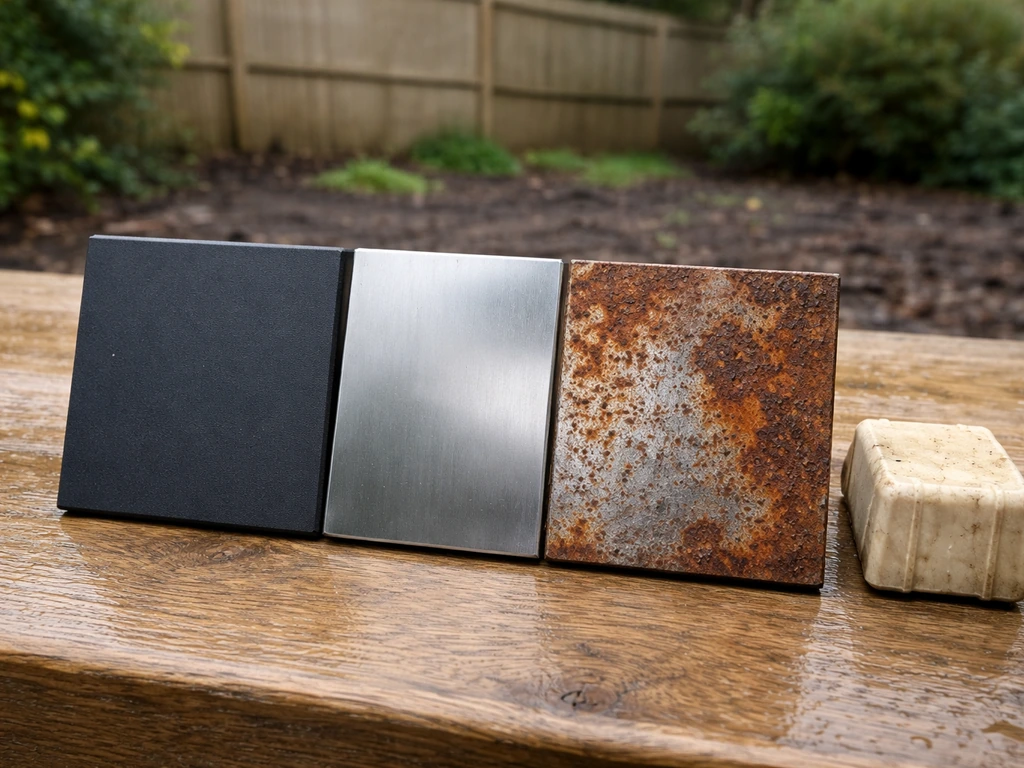
Powder-coated metal or stainless steel are your best options for UK conditions. Untreated metal rusts. Basic plastic yellows and cracks after one or two winters. Heavy-duty, powder-coated steel (the same finish used on the Wildlife World Feeder Defender squirrel baffles) handles UV, rain, and frost well and does not become brittle. UV-stabilised polycarbonate seed tubes are acceptable for the transparent section of a tube feeder because they are genuinely tough, but the frame, roof, and base need to be metal. Avoid any feeder described as "wood and wire" for regular hanging use in rain-heavy gardens: the wood swells, warps, and rots quickly.
Weather protection and drainage
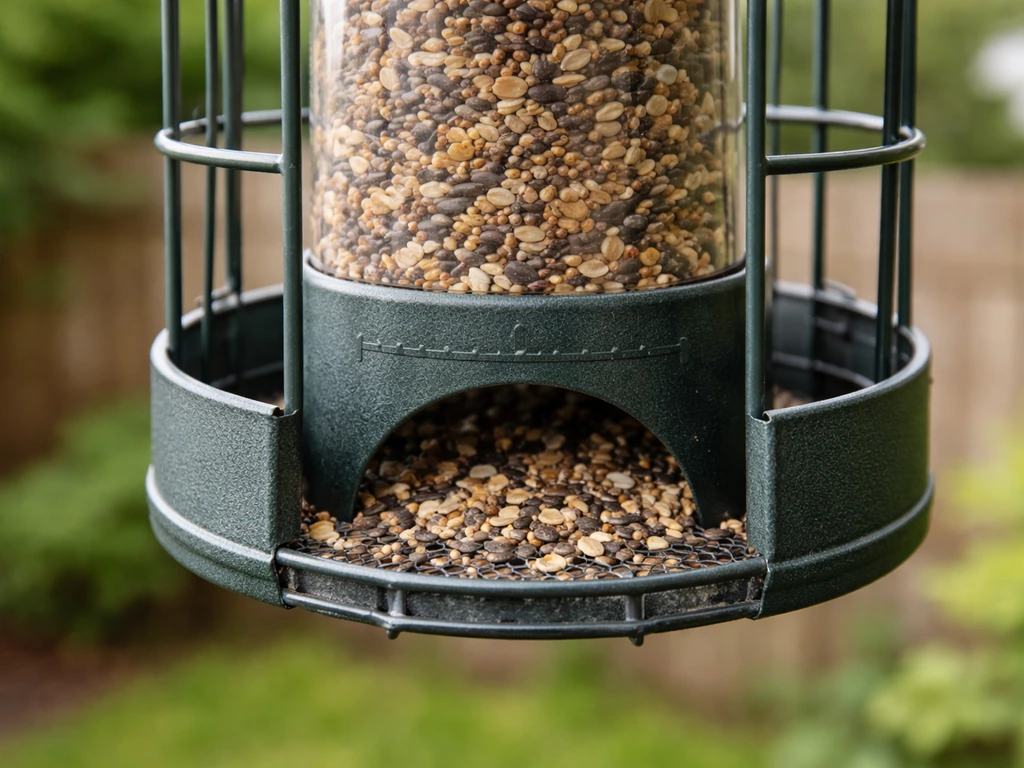
Look for a wide, overhanging roof that extends well beyond the feeding ports. A roof that barely clears the ports lets rain blow in sideways, especially in wind. Equally important is a drainage hole at the base: if water gets in (and it will), it needs a way out. Feeders without base drainage turn into small paddling pools that breed mould and bacteria in wet weeks. This is why keeping food as dry as possible, as the RSPB stresses, is a design issue as much as a management one.
Ease of filling and cleaning
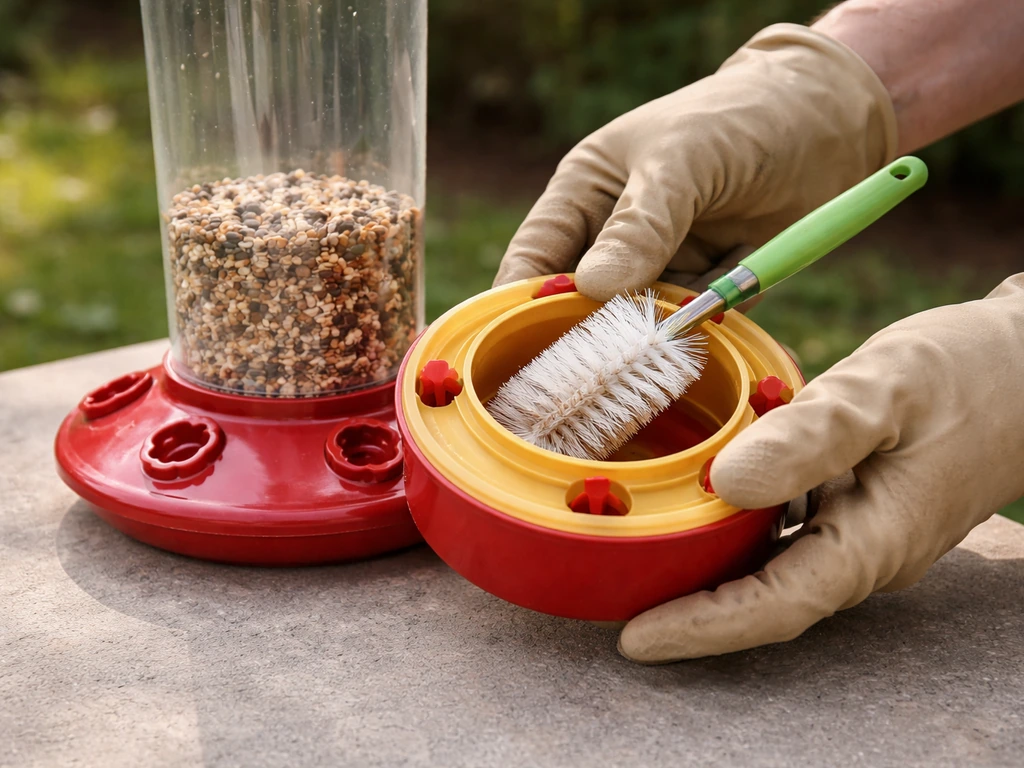
A feeder you cannot be bothered to clean regularly will eventually harm birds. Look for a feeder where the base either unscrews or clips off so you can get a bottle brush into every corner. Tube feeders with a removable bottom tray and a detachable seed tube are much easier to clean than integrated designs. The Squirrel Buster Classic, for example, allows you to remove the seed tube for proper access and maintenance. Aim to clean hanging feeders at least every two weeks in winter and weekly in warmer months when bacteria multiply faster. The RSPB advises putting out less food rather than letting it accumulate and go mouldy.
Hanging mechanism
This one gets overlooked. A thin wire loop on a flimsy hook is asking for trouble in a British garden in February. Look for a sturdy, powder-coated or stainless steel hanger, preferably with a locking mechanism so the feeder does not slide off in wind. The hanger design also affects sway, which matters both for squirrel resistance and for keeping birds comfortable enough to visit. More on this in the placement section below.
Squirrel-proofing and predator resistance
Squirrels destroyed my first two hanging feeders before I accepted that a feeder without a dedicated squirrel-resistance strategy is basically a very expensive squirrel buffet. There are three main approaches, and the best setups combine more than one.
Weight-activated feeders
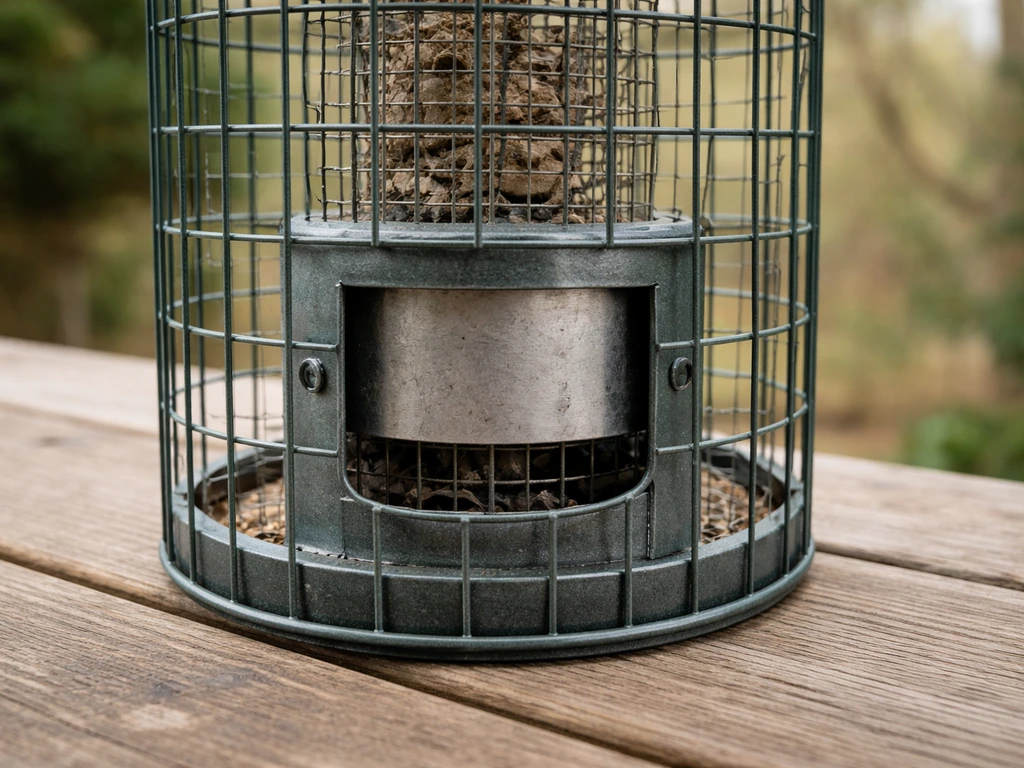
The Brome Squirrel Buster Classic is the benchmark here. Its wire-mesh shroud drops down and closes the feeding ports the moment a squirrel's weight (well above that of small songbirds) lands on the feeder. The spring mechanism is adjustable, so you can tune the sensitivity to your specific birds and, if you have red squirrels in your garden, the Squirrel Buster Plus can be set to close even at around 115 grams. The Classic holds 1.4 litres, has four ports, and is described by UK retailers as 100% squirrel-proof. In practice, it works as advertised as long as you hang it correctly (see placement section below). It is not cheap, but it is the most reliable weight-activated option I have tested.
Droll Yankees make weight-activated designs too, including the Yankee Flipper, which uses a motorised rotating perch to physically spin squirrels off. It is entertaining to watch but more expensive and requires batteries, which adds a maintenance overhead.
Cage-style feeders
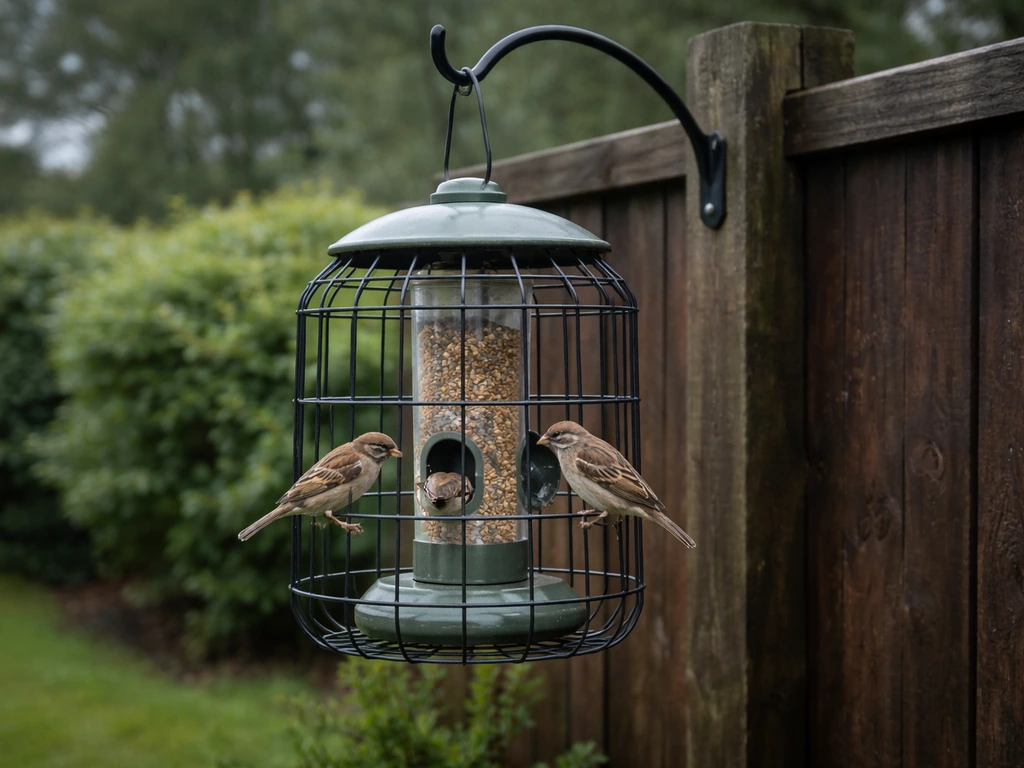
A wire cage surrounds the inner seed tube, with gaps just wide enough for small birds but not for squirrels or large nuisance birds like pigeons and jackdaws. These are simple, robust, and very effective. The downside is they also exclude larger desirable birds like nuthatches or great spotted woodpeckers if the cage is too tight. For a garden where you mainly want finches, sparrows, and tits, a cage feeder is a smart low-maintenance choice.
Squirrel baffles
A baffle is a physical barrier, usually a dome or cone, mounted above or below the feeder to stop squirrels getting to it. Tom Chambers and Wildlife World both make UK-designed baffles in heavy-duty, powder-coated metal that also function as rain covers. The Gardman baffle is another widely available option, described for use either above a hanging feeder or below a pole-mounted one. The critical point, and this cannot be overstated: a baffle only works if your feeder is also positioned correctly. No baffle saves you if a squirrel can simply jump directly onto the feeder from a nearby branch.
The 5-7-9 placement rule
Ideal Home's widely cited guidance sets up a practical framework: hang feeders 5 feet off the ground, at least 7 feet away from any structure (fence, deck, wall) a squirrel can jump from, and at least 9 feet from overhanging branches. The Gardman squirrel-proof feeder manual also specifies hanging the feeder at least one foot below the hanging point using the supplied wire. These numbers are not arbitrary: grey squirrels can jump roughly 5 feet vertically and up to 10 feet horizontally from a run-up. Get the placement wrong and no feeder design will save you.
Matching hanging feeders to the birds you want
The feeder type should follow the birds you want, not the other way around. Here is how the main UK garden bird groups map to hanging feeder styles.
| Target birds | Best feeder style | Seed/food type | Key features to look for |
|---|---|---|---|
| Blue tit, great tit, coal tit | Tube feeder or cage feeder | Sunflower hearts, mixed seed | Small ports, perches, cage to exclude pigeons |
| Goldfinch, siskin, lesser redpoll | Nyjer seed tube feeder | Nyjer (thistle) seed | Tiny ports designed for nyjer, no tray needed |
| Chaffinch, sparrow, greenfinch | Open tray or wide-port tube feeder | Sunflower hearts, mixed seed | Larger ports, wider perches, tray to catch spillage |
| Nuthatch, great spotted woodpecker | Wide-mesh cage feeder or peanut feeder | Peanuts, suet | Clinging surface, no perch required, wider cage spacing |
| Long-tailed tit | Suet ball feeder or wire cage | Suet balls/pellets | Hanging design, close mesh to hold suet balls |
| Mixed garden birds | Squirrel Buster-style weight-activated tube feeder | Sunflower hearts | Squirrel-proof mechanism, adjustable ports, easy cleaning |
Nyjer feeders are worth a special mention. Goldfinches have surged in UK garden numbers over the last decade and a dedicated nyjer tube is one of the most reliable ways to bring them in. The ports need to be tiny (nyjer seed is fine and falls straight through a standard port), so do not try to use a general seed feeder for nyjer. Get a specific tube designed for it.
If you want to attract woodpeckers specifically, a hanging peanut feeder with a wide steel mesh (not a fine tube) or a suet log feeder gives them something to cling to and probe at. Great spotted woodpeckers do occasionally use hanging tube feeders, but they are far more likely to visit if there is a surface they can brace against.
Where to hang your feeder and how to stop it swinging
The best hanging points in a typical UK garden
A sturdy tree branch is ideal, but not every garden has one. Shepherd's crook poles (single or multi-arm) are the next best thing: they let you position the feeder in open ground away from squirrel launch points, and you can add a baffle below the pole head. Dedicated bird feeding stations with multiple hanging points are popular and practical for smaller gardens where you want several feeder types in one spot. Wall-mounted brackets are fine if the wall is not a squirrel route, but keep the bracket arm long enough (at least 60cm) to maintain clearance from the wall itself so the feeder does not bang against it in wind.
Clearance and cover
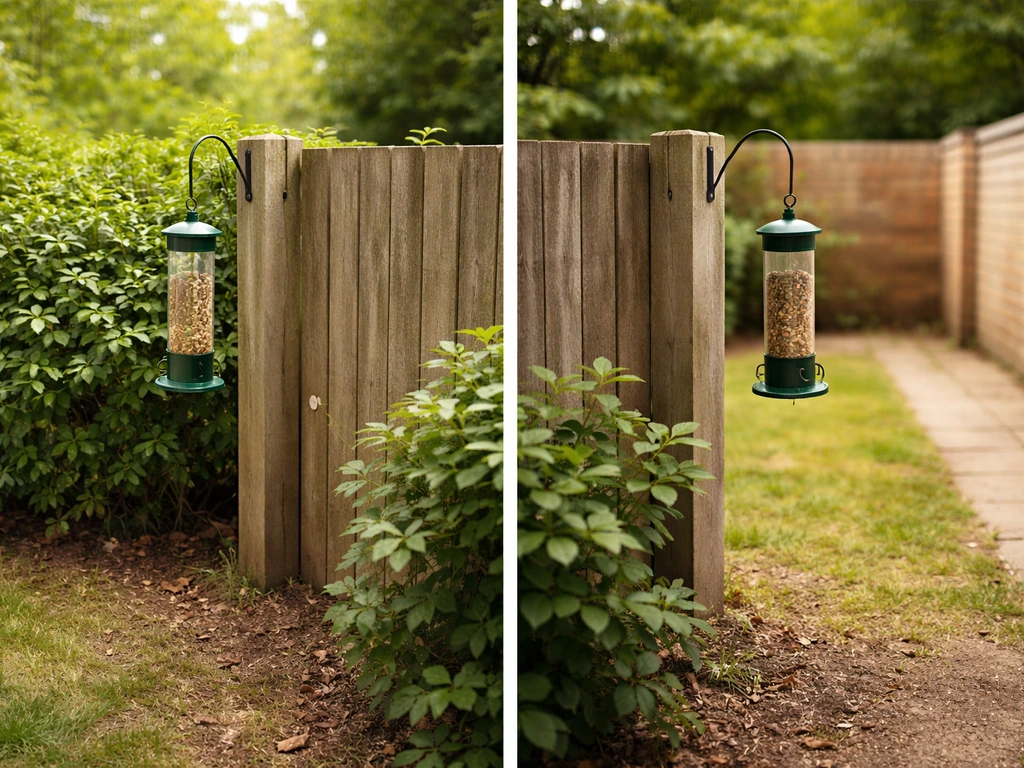
The BTO's Garden BirdWatch guidance recommends positioning feeders close enough to a bush or shrub that birds can dash to cover if a sparrowhawk appears. Roughly 2 metres from a hedge or dense shrub is a good working distance: near enough for safety but not so close that cats can use it as ambush cover. Keep the feeder in an open enough spot that birds approaching it have clear sightlines in multiple directions.
Stopping the sway
A wildly swinging feeder discourages visits and can damage the feeder against a wall or post. A few practical fixes: use a shorter drop from the hanging point (the Gardman manual specifies at least one foot of drop, which is a minimum rather than a target), use a wider-gauge hanger rather than thin wire, or weigh the base of the feeder down slightly with a heavy-duty tray. Some feeders come with a stabiliser arm or cage design that naturally reduces spin. On shepherd's crooks, a wide-base pole bedded at least 30cm into the ground also reduces sway compared to lightweight spike poles.
Rain and mould management
Even a well-designed feeder will accumulate moisture inside in prolonged wet UK weather. Position hanging feeders where they get some airflow (not tucked into a dense tree canopy where it stays damp) and check the base drainage holes regularly to make sure they are not blocked by compacted seed. If you notice wet, clumped seed at the bottom, remove it immediately and let the feeder dry before refilling. Put out smaller amounts of seed more frequently rather than loading the feeder to maximum capacity: you will waste less, the seed will stay fresher, and the feeder will be lighter and easier to handle.
The shortlist: best hanging bird feeders by what you need
Here is how I would break it down by use-case. These are not paid recommendations, they are what I would actually buy (or have bought) for the problem described. If you are searching for the best bird feeders reviews UK shoppers recommend, the rest of this shortlist will help you narrow down the right option for your garden and target birds.
| Use-case | Top pick | Why it works | Budget note |
|---|---|---|---|
| Best squirrel-proof hanging feeder | Brome Squirrel Buster Classic (1.4L) | Weight-activated closing shroud, adjustable spring, robust build, 4 ports | Mid-high price, worth every penny if squirrels are active |
| Best for goldfinches and siskins | Dedicated nyjer tube feeder (metal body, tiny ports) | Designed for nyjer seed flow, narrow ports prevent waste | Low-mid price, widely available |
| Best easy-clean option | Tube feeder with removable base and detachable seed tube | Full internal access, brushable surfaces, drains properly | Mid price, look for stainless or powder-coated metal body |
| Best for mixed small garden birds (budget) | Powder-coated steel cage tube feeder | Excludes pigeons and squirrels mechanically, simple, long-lasting | Low-mid price, no moving parts to fail |
| Best squirrel-proof with baffle add-on | Any good tube feeder plus Wildlife World or Tom Chambers powder-coated dome baffle | Physical exclusion above the feeder, also keeps seed dry | Feeder cost plus £25+ for quality baffle |
| Best for woodpeckers and nuthatches | Wide-mesh steel peanut feeder or suet cage | Clinging surface, wide mesh gaps allow probing beaks | Low price, simple but very effective |
Quick checklist before you buy
Run through this before you hit the buy button. It takes two minutes and saves a lot of returns.
- Do you have active squirrels? If yes, go weight-activated (Squirrel Buster Classic) or cage-style, and plan your placement around the 5-7-9 rule.
- What birds do you actually want? Choose port size and mesh spacing to match: tiny for nyjer and finches, medium for tits, wide for woodpeckers and peanuts.
- Is the body powder-coated metal or stainless? Reject anything described only as "painted" or "wood and wire" for a UK hanging setup.
- Does the base remove or unscrew for cleaning? If not, you will regret it by month three.
- Is there a drainage hole at the base? Check the product description specifically.
- Does the roof overhang extend well past the feeding ports? Hold a ruler up to the product photo if you are unsure.
- Where will you hang it? Confirm you can achieve at least 7 feet clearance from fences and 9 feet from branches before ordering a feeder that relies on placement for squirrel resistance.
- Are you planning a baffle? If so, check the feeder hanger is compatible with a dome baffle above it (most are, but verify the attachment point).
A note on the broader feeder picture
Hanging feeders are only part of a well-rounded garden bird setup. If you want to go deeper into what works for UK wild birds across all feeder types, there is a lot more to explore around ground feeders, window feeders, and specialist options for specific species. If you are interested in window bird feeders in the UK too, the same ideas about placement, weather resistance, and hygiene still matter. The core principles here, solid materials, proper weather resistance, squirrel-proofing, and species matching, apply across the board. But for hanging feeders specifically, getting the squirrel situation and the placement right will make more difference to your results than any individual product choice. If you want, you can use this checklist to compare the best wild bird feeders in the UK across different feeder types too best hanging bird feeders. For the best bird feeders in Australia, focus on similar basics like weather protection, easy cleaning, and keeping seed secure from local pests.
FAQ
Are tube-style hanging bird feeders suitable for all seed types in the UK?
No. Tube feeders with standard ports are best for small seeds like sunflower hearts and general mixes, but they are a poor fit for nyjer (thistle) because the seed needs tiny ports to prevent spillage and sorting. If you want nyjer, use a dedicated nyjer tube designed for that seed size.
How much seed should I put out to avoid mould in UK weather?
Aim for smaller, more frequent fills rather than topping up to the maximum. A practical rule is to reduce the amount when rain and mild temperatures overlap, then refill when the ports and base are dry. If you ever see clumped, wet seed at the bottom, remove it immediately and dry the feeder before refilling.
What’s the difference between squirrel-proof and squirrel-resistant hanging feeders?
Squirrel-resistant models reduce access or delay attack attempts, but squirrels can still sometimes win, especially with poor placement. A true squirrel-proof design either physically closes to deny the ports under weight, or uses an effective barrier that prevents launch and access even if a squirrel climbs nearby. Placement still determines whether any design actually works.
Do I need to clean a hanging feeder differently in summer versus winter?
Yes. In warmer months, residues and dampness can encourage faster bacterial growth, so shorter intervals matter. Winter can be cleaned less often, but you should still do regular checks after rain, and immediately clean if you notice wet seed, sticky residue, or heavy bird droppings buildup.
Can I use a baffle and still have squirrels take the feeder?
It’s possible if the squirrel can reach the feeder directly, for example by jumping from a nearby branch onto the side or top. A baffle is meant to block a path to the feeder, not to replace correct spacing and height. If you see squirrels testing from branches, adjust placement first before assuming the baffle is failing.
What’s a safe height for hanging feeders if I have cats?
Lower placements can increase danger from cats, but too high can create access issues for birds and make the feeder harder to reach for cleaning. A safer compromise is to choose a height that allows quick bird movement to nearby cover while keeping the feeder out of easy cat reach, then ensure birds have a clear escape route to a bush or dense shrub.
Why does my feeder swing or spin even if it looks sturdy?
Most swing problems come from hangers that flex, thin wire hooks, or placing the feeder where wind has a direct line of impact. Switching to a wider-gauge, rigid hanger, shortening the drop, and ensuring the hanging point supports the feeder without excessive lateral movement can reduce discouraging sway and prevent damage to walls or posts.
What should I do if the base drainage hole gets blocked?
Check drainage after wet spells. Seed husks and compacted residues can clog the holes, turning the base into a puddle. If you find blocked holes, remove the seed debris, clean the base, and let everything dry fully before refilling.
Are cage-style feeders always better than weight-activated ones for squirrels?
Not necessarily. Cage designs work well for small songbirds, but the cage gaps can also keep out desirable larger birds. Weight-activated feeders can protect ports while still allowing bigger access when set correctly. Your best choice depends on both squirrel pressure and which species you actually want to attract.
How do I tune a weight-activated squirrel feeder for my birds?
If the design offers sensitivity adjustment, start less sensitive to squirrels and test gradually. The goal is for small songbirds to trigger normal feeding without closing during typical bird landings, while preventing squirrels from reaching the ports. Keep an eye on results for a few days, then adjust if the feeder closes too easily or not at all.
Is a 1 to 2 litre capacity always the right choice?
It’s a common sweet spot, but not always. If you get frequent visitors in a lively garden, a larger capacity can reduce daily handling. If your visitors are intermittent, smaller capacity helps because the feeder stays emptier, fresher, and less likely to develop damp residues at the bottom.
Can I mount a hanging feeder on a wall bracket instead of hanging from a post or shepherd’s crook?
Yes, but only if the wall area is not a squirrel route. Use a bracket arm long enough to keep the feeder away from the wall surface so it clears by enough distance to reduce bumping and does not create a launch path for squirrels. Also verify that the feeder can be cleaned without awkward overreaching.
Next Articles
Best Red Cardinal Bird Feeder: Top Picks & Buying Guide
Best red cardinal bird feeder guide: top picks, painting tips, seed & placement advice to attract Northern Cardinals.
Best Bird Feeder for Red Birds: Top Picks and Setup Guide
Top feeders and setup tips to attract cardinals and other red birds using the right seed, mounts, and squirrel-proofing.
What Color Bird Feeder Attracts Birds Most: Quick Guide
Discover which bird feeder color draws the most birds, plus setup tips for durability, placement, and reducing squirrels