For most UK gardens, a quality seed feeder filled with sunflower hearts, paired with a separate suet or fat ball feeder, is the combination that attracts the widest range of common garden birds fastest. If you only buy one feeder, make it a well-built seed tube with a wide port and removable base for cleaning. That said, the 'best' feeder really does depend on which birds you want, how much squirrel pressure you're dealing with, and whether you're happy to clean regularly. This guide walks through all of that so you can buy with confidence today.
Best Wild Bird Feeders UK: Buying Guide and Smart Options

Marcus Holloway
6 Jun 2026
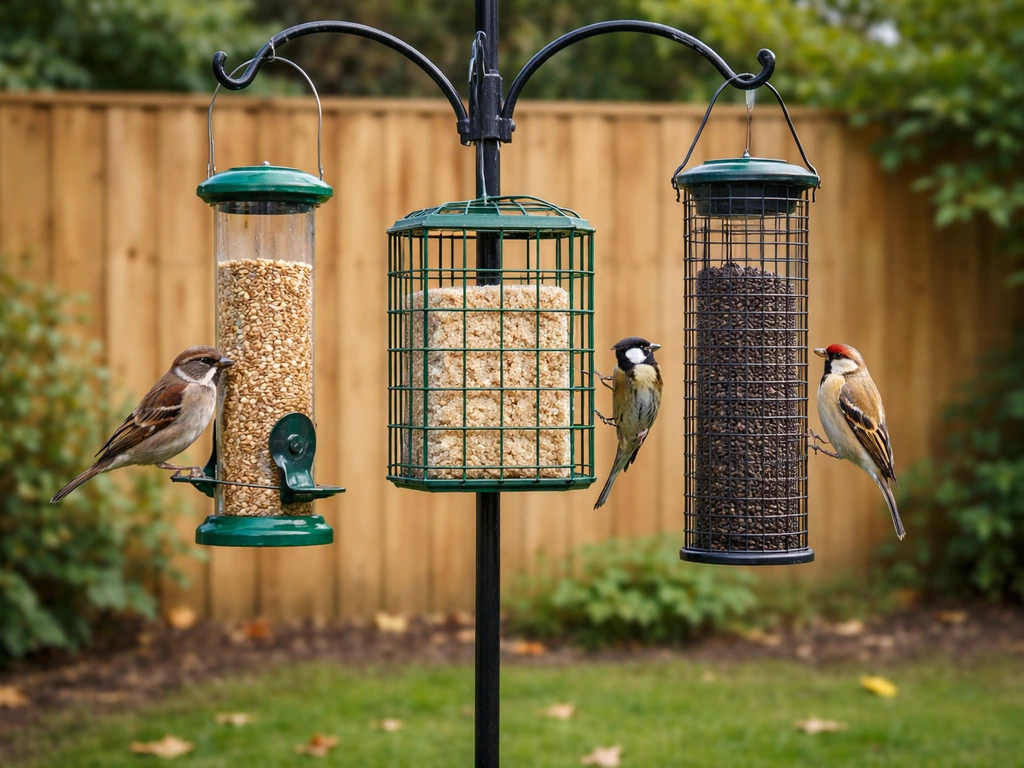
How to choose the best bird feeder for your UK garden
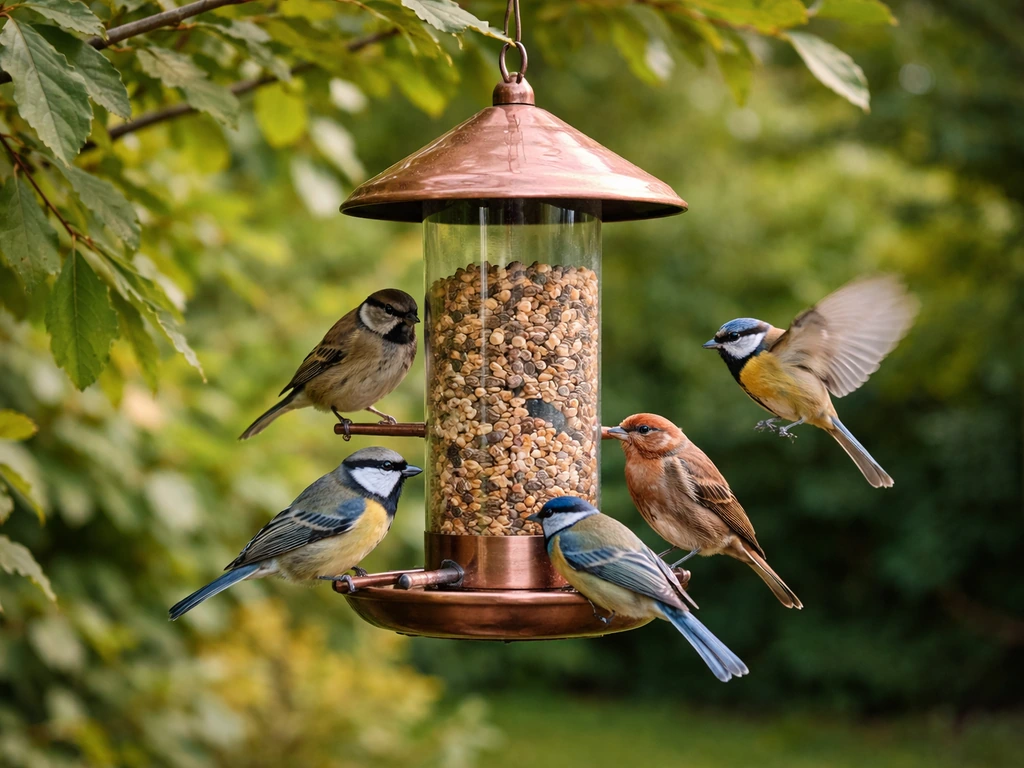
Before you look at any specific product, get clear on two things: which birds you want to attract, and what your garden setup actually allows. A beautiful copper-topped feeder hung from a cherry tree sounds idyllic, but if squirrels patrol your fence line morning to night, it'll be emptied in an hour. Equally, a heavyweight squirrel-proof cage feeder is overkill if you're in a flat with a small balcony and just want blue tits.
Think about your garden type first. Open gardens with trees and shrubs nearby tend to attract more species than bare patios, because birds feel safer with cover close by. If you have a lawn, ground feeding trays will bring in blackbirds, robins, and dunnocks that rarely touch hanging feeders. If space is tight, window feeders (which attach directly to glass with suction cups) are a clever option worth exploring alongside traditional hanging styles.
Then think about how much time you can realistically give to maintenance. The RSPB recommends moving feeders weekly where possible to avoid a build-up of contaminated debris underneath, and cleaning feeders thoroughly and regularly to prevent disease. If that sounds like too much, choose a feeder with a removable base and easy-clean design from the start. Some RSPB 'Easy-Clean' seed feeders have removable lids and bases specifically to make this less of a chore. Budget matters too. A cheap feeder that cracks after one winter or gets wrecked by a persistent squirrel is a false economy. Spending a bit more upfront on UV-stabilised polycarbonate or powder-coated metal generally pays off in the UK climate.
Match the feeder to the birds you want
Robin, blackbird, and dunnock: these species strongly prefer ground-level or low feeding trays. Blue tit, great tit, coal tit, and long-tailed tit: classic cling feeders, happy on hanging seed or suet. Greenfinch, chaffinch, goldfinch: seed feeders with perches, particularly fond of sunflower hearts. Goldfinch: also a strong candidate for a nyjer feeder. Siskin, redpoll: nyjer seed is genuinely popular with these species. Great spotted woodpecker, nuthatch: suet and peanut feeders fixed to a post or tree trunk tend to work best.
Best feeder types for common UK garden birds
There are four main feeder types worth knowing about for a typical UK garden. Each suits different birds and different seeds, and honestly you get the most visits by combining two or three rather than trying to find one feeder that does everything.
Seed feeders (tube-style)
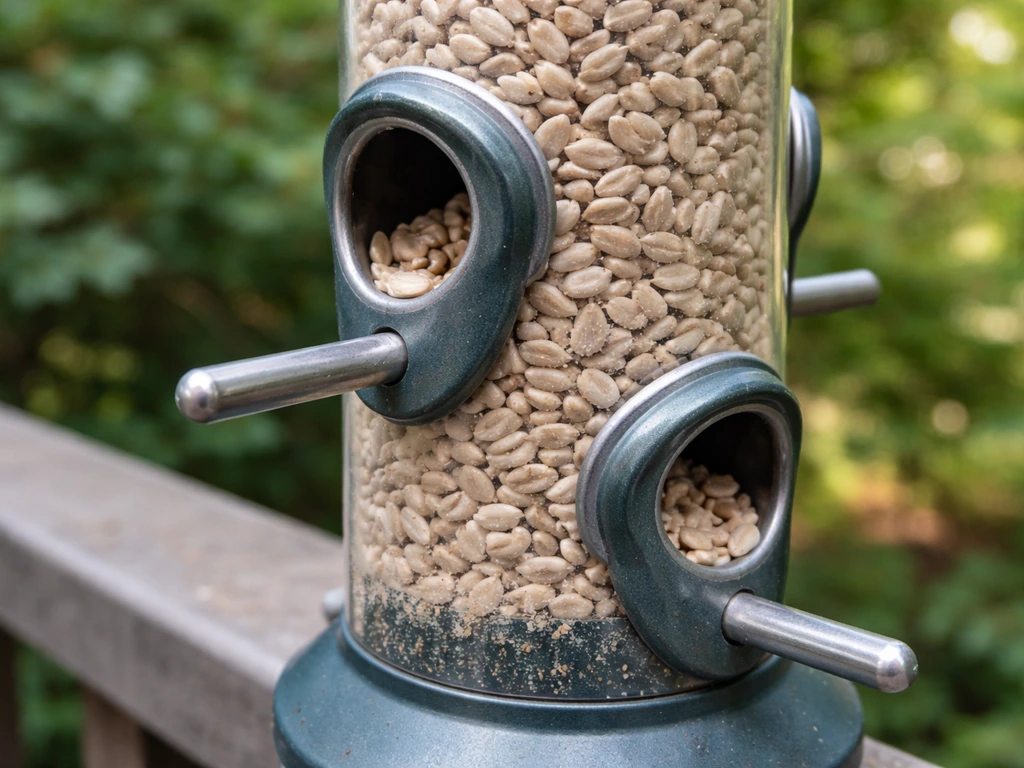
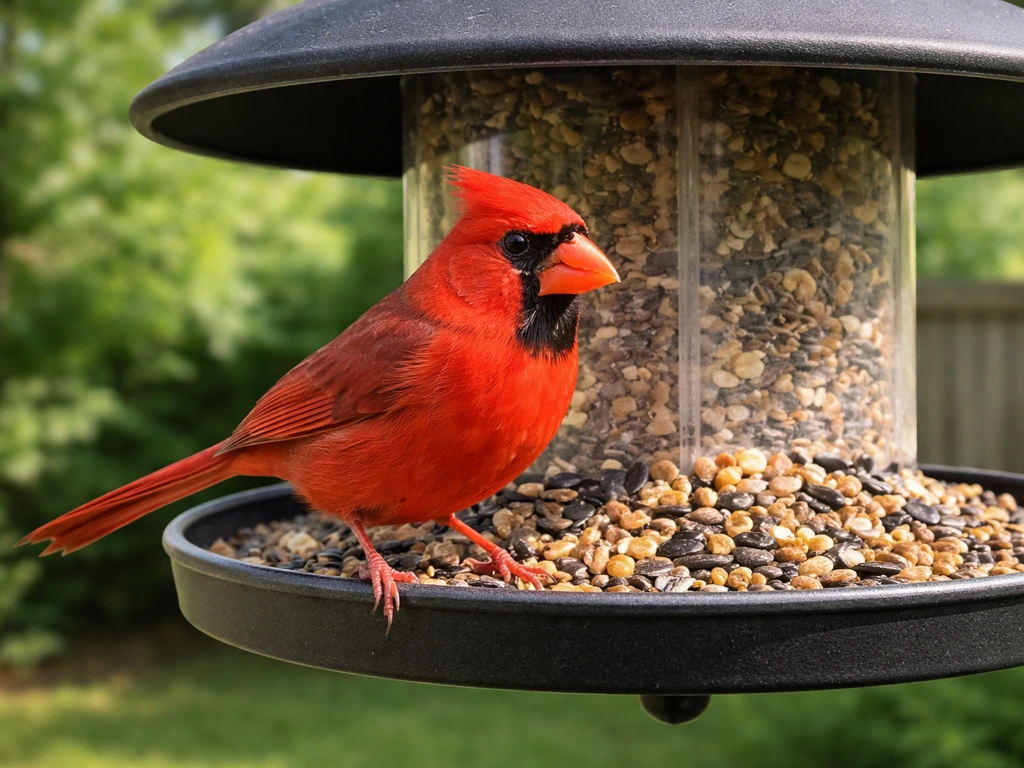
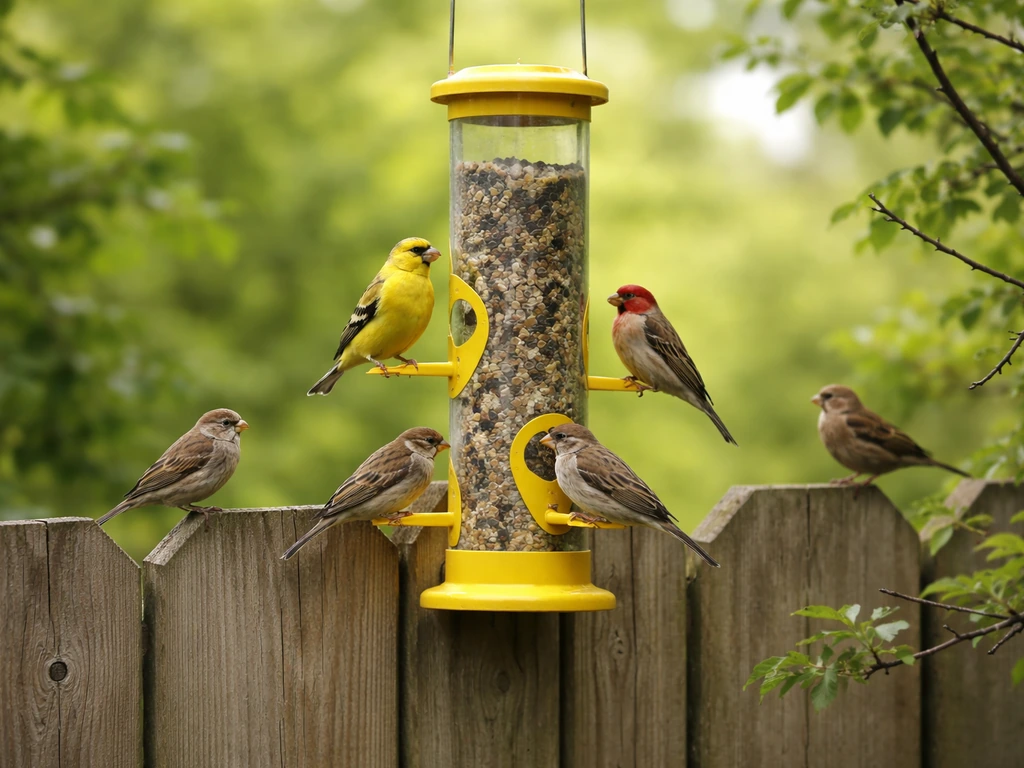
The most versatile option for most gardens. A good seed tube with multiple feeding ports and perches suits finches, tits, and sparrows well. Filled with sunflower hearts (no mess, no husks, no waste), these attract a really strong variety from day one. The RSPB notes that finches including chaffinches and greenfinches love sunflower hearts, so if you want those species, this is your starting point. Look for a feeder with a removable base tray and wide-mouth ports that don't jam. Cheap plastic feeders can crack in frost, so polycarbonate or metal-reinforced feeders are worth the extra cost in the UK.
Nyjer (niger) seed feeders
Nyjer seed is tiny, and you cannot use a standard seed feeder for it. The RSPB is clear on this: you need a specially designed feeder with small feeder ports sized for nyjer. The reward is worth it if you get goldfinches and siskins in your area, as they flock to nyjer. These feeders are typically slim tubes with very fine ports. They don't suit squirrels well at all (squirrels find small ports frustrating), which is a side bonus. Just keep in mind nyjer can go rancid in damp weather, so buy in smaller quantities and keep it fresh.
Suet and fat ball feeders
For blue tits, great tits, coal tits, and great spotted woodpeckers, a suet or fat ball feeder is arguably more effective than any seed feeder. The RSPB notes suet-and-peanut style feeders are popular with tits and other cling-feeding species. Suet cage feeders are typically a simple wire cage on a hanger: inexpensive, easy to fill, and very effective. The main maintenance note is that the RSPB recommends consuming suet balls within seven days, so don't over-fill them in summer when the fat can go rancid faster.
Peanut feeders
Peanut feeders use a fine wire mesh that forces birds to peck out pieces rather than swallow whole nuts, which is important because whole peanuts are a choking hazard for nestlings. They're popular with blue tits, great tits, nuthatches, and great spotted woodpeckers. Look for stainless steel mesh rather than coated wire, which can rust or peel over time. These are also worth using alongside suet feeders rather than instead of them, since different species often prefer one over the other.
Top-rated wild bird feeders in the UK: picks by situation
Rather than one universal winner, here are the feeder types and products that genuinely perform in different real-world UK scenarios. If you want the most helpful bird feeders reviews UK buyers are looking for, the next step is to match these types to the best-reviewed options for your specific setup feeder types and products. The right pick depends heavily on your garden, your budget, and how hands-on you want to be.
| Situation | Best feeder type | Key feature to look for | Rough budget |
|---|---|---|---|
| General garden, mixed species | Seed tube with multiple ports | Removable base, UV-stable polycarbonate | £15–£30 |
| Squirrel-heavy gardens | Weight-activated squirrel-proof cage feeder | Perch mechanism that closes under squirrel weight | £30–£55 |
| Goldfinch / siskin focus | Nyjer tube feeder | Fine ports, slim design, easy-clean base | £10–£20 |
| Tits and woodpeckers | Suet cage or peanut mesh feeder | Stainless or galvanised mesh, sturdy hanger | £8–£20 |
| Small balcony / no garden | Window feeder with suction cups | Strong suction, removable tray, clear sides | £10–£25 |
| Tech-forward / keen observer | Smart feeder with camera and AI ID | Solar panel, weatherproofing, app connectivity | £80–£180+ |
For durability and everyday use
Tom Chambers is a brand that consistently shows up in UK garden centres and online for good reason. Their Heavy Duty Flick n Click Seed Feeder uses a push-and-click locking mechanism that makes refilling fast and keeps the feeder sealed properly between fills. Build quality is noticeably better than budget alternatives, with metal fittings rather than all-plastic. For most gardens on a mid-range budget, this style of feeder is a solid workhorse choice.
For weather resistance
UK winters are wet and the feeders that last are the ones designed with drainage holes in base trays (so wet seed doesn't pool and rot), metal hanging loops rather than cheap plastic hooks, and roofed designs that keep rain off the seed ports. Powder-coated steel and UV-stabilised polycarbonate both hold up well over multiple seasons. Avoid any feeder with flat-bottomed trays and no drainage, especially if you're using mixed seed blends that can clump badly when wet.
For budget buyers
If you're starting out or just want to trial a new feeding station position before committing, a basic RSPB-branded or own-brand seed tube from any large garden centre will do the job. The key is not to go so cheap that you end up with a cracked feeder after the first hard frost. Anything with metal fittings and a clearly designed easy-clean base in the £15–£25 range is a reasonable entry point. Pair it with sunflower hearts rather than mixed seed (less mess, more variety of visitors) and you'll see results quickly.
Choosing the right seed and feeder compatibility
The seed you use matters at least as much as the feeder itself, and the combination has to work. Sunflower hearts are the single most universally effective seed for UK garden birds. They're husk-free (no mess on the ground), high-energy, and attract finches, tits, sparrows, and nuthatches. If you only buy one type of seed, this is it. The RSPB's Premium sunflower hearts are suited to standard seed tube feeders with typical port sizes.
Nyjer seed is a specialist case. The RSPB is very specific that it needs its own dedicated feeder with fine ports. It is worth having if goldfinches or siskins visit your garden, but buying nyjer and putting it in a standard seed feeder will just result in it pouring out of the ports and onto the ground. Don't make that mistake.
Mixed seed blends can attract a wide variety of species but often include millet and cheaper fillers that many birds throw aside, which creates mess and can attract rats. If you're feeding in a smaller garden or on a patio, stick to sunflower hearts or a no-mess blend (pre-de-husked mixes). The RSPB recommends putting out only enough food to be eaten within one to two days, which is good practice regardless of seed type, since it keeps seed fresh and discourages rats and other unwanted visitors.
| Seed type | Best feeder | Attracts | Notes |
|---|---|---|---|
| Sunflower hearts | Standard seed tube | Finches, tits, sparrows, nuthatches | No husks, no mess, high energy |
| Nyjer seed | Dedicated nyjer feeder (fine ports) | Goldfinch, siskin, redpoll, greenfinch | Needs specific feeder; goes stale quickly in wet weather |
| Peanuts | Wire mesh peanut feeder | Blue tit, great tit, nuthatch, woodpecker | Never whole nuts in open trays; mesh forces small pieces |
| Suet/fat balls | Wire suet cage feeder | All tits, starling, robin, woodpecker | Use within 7 days; avoid plastic net bags |
| Mixed seed | Open tray or hopper feeder | Sparrows, buntings, dunnock, blackbird | Can attract rats; choose no-mess blends to reduce waste |
Squirrel-proofing and dealing with problem visitors
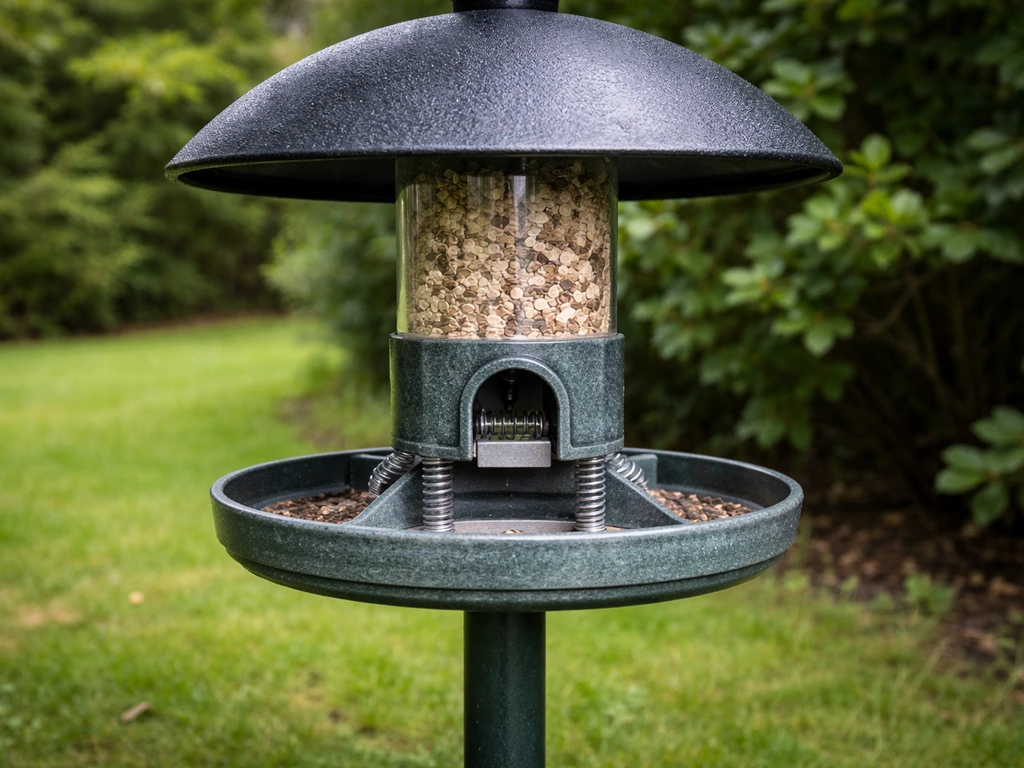
Squirrels are probably the most common reason a good feeder fails in a UK garden. I've seen squirrels dismantle basic feeders in under two minutes, chew through plastic tubes, and leap from seemingly impossible distances to reach a hanging feeder. If you have squirrels, you need to build your setup around that reality from the start, not treat it as an afterthought.
Weight-activated feeders
The most reliable squirrel deterrent built into a feeder is a weight-activated mechanism. Tom Chambers' Squirrel Stop Seed Feeder works on this principle: the feeder recognises the weight landed on the perch and closes off the feeding ports when something heavier than a typical small bird lands. Squirrels are significantly heavier than a blue tit or goldfinch, so they trigger the closure every time. This approach works well in practice, though it's worth noting that large birds like pigeons can also trigger the closure, which may or may not be what you want.
Cage feeders
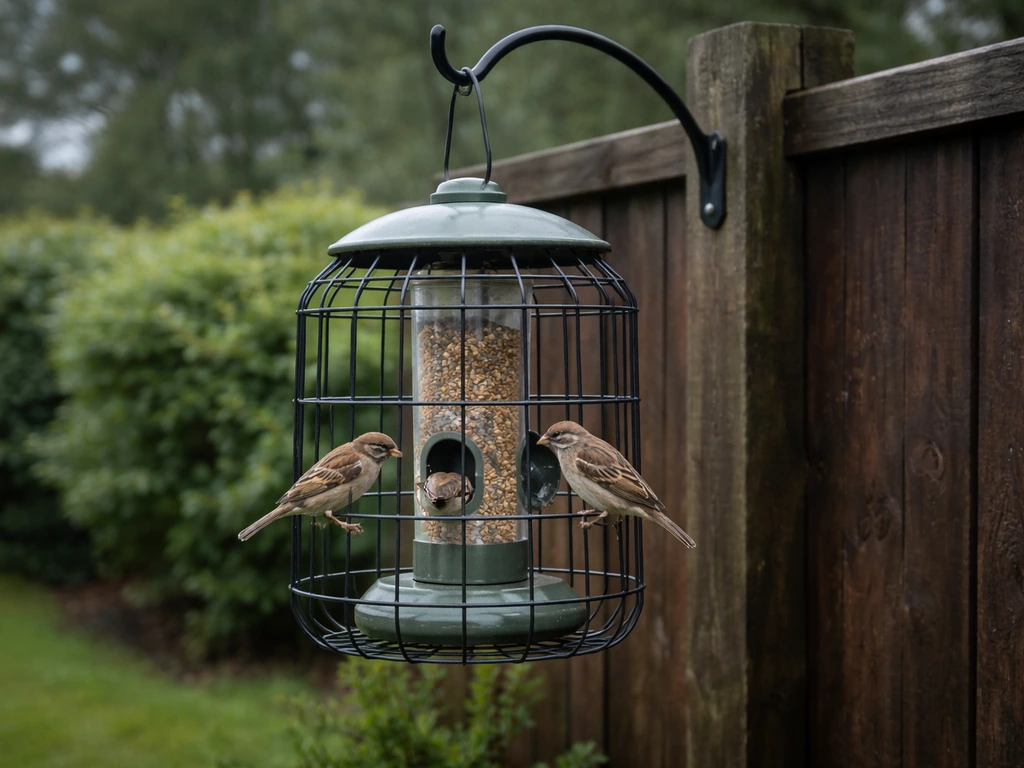
A cage feeder surrounds a standard seed tube with a wide wire cage. Small birds fly straight through the cage openings with no trouble, but squirrels (and larger pest birds) can't get close enough to the ports to feed. Tom Chambers' Squirrel Proof Cage Seed Feeder includes a squirrel baffle and cage clips designed to make filling and cleaning easier despite the extra layer. The cage design has another advantage: it also discourages larger bully birds like jackdaws and magpies, which can dominate a conventional feeder and scare off smaller species.
Pole baffles and placement
Even the best squirrel-proof feeder benefits from a sensible placement strategy. A pole-mounted feeder with a domed baffle below it is much harder for squirrels to reach than a hanging feeder near a fence or tree. Keep the feeder at least 2 metres from any wall, fence post, or branch a squirrel could use as a launch pad. It sounds obvious but it's genuinely the most common reason a squirrel-proof feeder still gets raided.
Managing aggressive or unwanted bird visitors
The UK doesn't have the same grackle problem as North America, but starlings, house sparrows in large flocks, jackdaws, and pigeons can take over feeders and crowd out the smaller birds you're trying to attract. A cage feeder is your best tool here, because the gap size can be matched to small birds. For pigeons specifically, a ground feeding tray positioned away from your hanging feeders is a better approach than fighting them at the feeder itself: give them their own space with a bit of cheap grain, and they'll mostly leave the hanging feeders alone. Removing perches from a seed feeder entirely (some models allow this) can also discourage larger species that can't cling, while goldfinches and tits happily manage without.
Smart and camera bird feeders in the UK: are they worth it?
Smart bird feeders with built-in cameras and AI species identification have moved from novelty to genuinely useful in the last couple of years. If you want to know exactly which birds are visiting, or you travel a lot and want to watch remotely, they're worth serious consideration. But they come with real trade-offs, and it's worth being honest about those.
How they work
Smart feeders like the Bird Buddy and FeatherSnap Scout use a built-in camera triggered by motion or bird landing. The image is processed by AI, which identifies the species and logs it in an app. Bird Buddy (available from Menkind for UK mainland delivery) captures photos and videos and reportedly requires no subscription for core features. Tom's Guide's Bird Buddy review also describes the feeder as having no subscription and recording photos and videos of birds that land on the device reportedly requires no subscription for core features. FeatherSnap's model includes a solar-panelled roof and uses AI for automatic species identification, though its instant-ID features are tied to a paid Premium Subscription tier. The Bird Buddy 2 goes further, reportedly using audio to identify birds by their song, which is impressive for identifying shy or distant species.
Birdfy and other camera feeder options
Birdfy (also available in the UK) offers dual-lens imaging and claims IP-rated weatherproofing, which matters in the UK climate. For a 2026 purchase, this is a credible smart feeder option if you want the camera angle coverage. These feeders tend to use Wi-Fi connectivity and can feel fiddly to set up initially, but most buyers report it's worth the effort once it's running.
The honest trade-offs
Smart feeders cost significantly more than conventional feeders, typically £80 to £180 or more. They depend on your home Wi-Fi signal reaching the garden, and some require ongoing subscriptions for the features that make them worthwhile. There's also a hygiene angle that's easy to miss: TechRadar's coverage of RSPB disease guidance specifically flags that camera feeders can encourage complacency around cleaning. TechRadar’s bird-feeder-camera safety coverage points to RSPB guidance, including avoiding overfilling seed trays and cleaning feeder trays weekly in cooler months TechRadar’s coverage referencing RSPB disease guidance. The birds don't care whether the feeder is smart or basic. They still need it cleaned weekly in cooler months and seed trays shouldn't be overfilled. If the tech side makes you less likely to maintain the feeder properly, a simpler conventional feeder is the healthier choice for the birds.
For most casual garden birders, the smart feeder is a genuine pleasure if the budget allows. For serious observers, having AI-based species logging automatically is a real upgrade over trying to identify everything by eye. If you're somewhere between those camps, consider starting with a traditional feeder and adding a smart camera separately once you've got a reliable visiting population established.
Where to put your feeder, how to mount it, and how to keep it clean
Even the best feeder in the wrong position gets ignored. Birds are cautious and they need a combination of things to feel safe enough to commit to a feeding spot: cover nearby, a clear sightline to watch for predators, and enough distance from windows to avoid collision risk.
Placement principles that actually work
- Position the feeder within 1 metre of a shrub or tree (so birds can retreat quickly) but not so close that cats can use it as ambush cover
- Keep feeders at least 1 metre from windows, or over 3 metres away, to reduce collision risk. Very close placement (under 1 metre) can actually be safer as birds don't build up enough speed to injure themselves
- Avoid placing feeders directly over bird baths or feeding trays, as seed husks and droppings contaminate the water
- In a small garden, a feeding station pole with multiple hanger arms lets you run a seed feeder, suet feeder, and nyjer feeder from one mounted point, which is space-efficient and easier to manage
- The RSPB recommends moving feeders weekly where possible to prevent contaminated debris building up underneath. Mark the spot and rotate between two positions
Mounting options
Hanging from a tree branch is the simplest start, but a dedicated feeding station pole gives you far more control. For a focused shopping shortlist, check our guide to the best hanging bird feeders uk and compare what fits your birds and garden setup hanging from a tree branch. You can position it away from squirrel launch points, add baffles below the feeders, and adjust height easily. Most feeding station poles push into soft ground and don't require any permanent fixing, making them ideal for rented gardens or if you want flexibility to move things around. Wall-mounted brackets are a good option for patios with no soil access, but make sure the fixings are genuinely rated for outdoor use. Cheap brackets rust and fail quickly.
Cleaning routine that keeps birds healthy
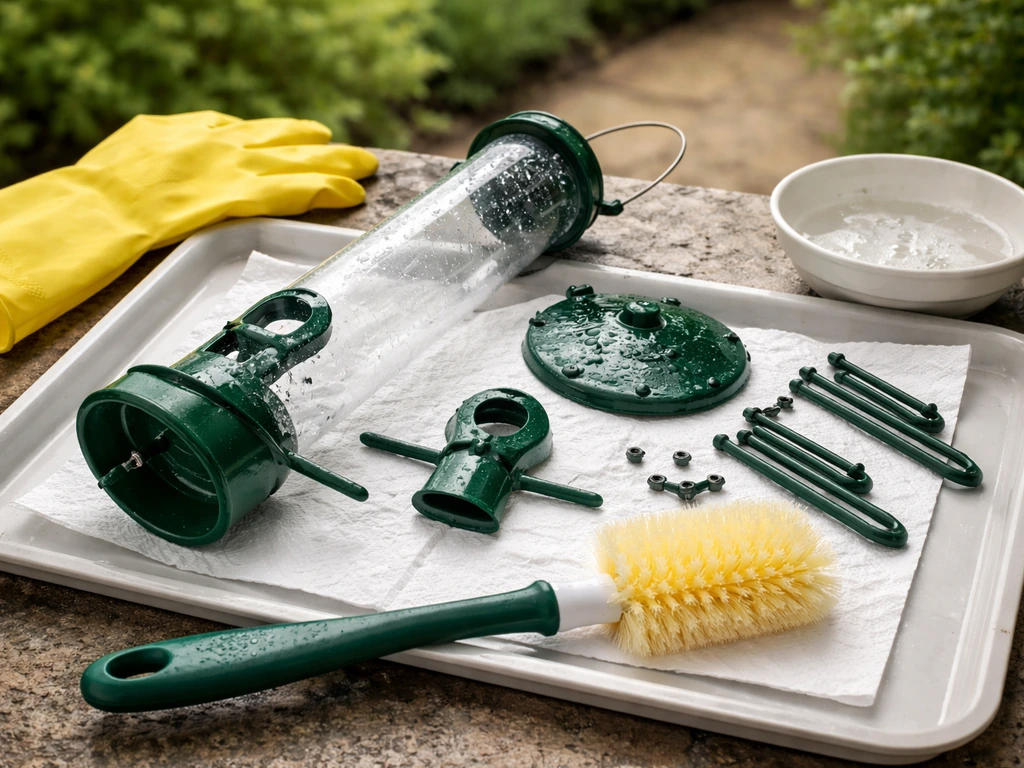
This is the part most people underestimate. The RSPB is very direct on hygiene: bird feeders and baths need regular cleaning to prevent infectious diseases spreading through your visiting population. Dirty feeders are a disease risk, not just an aesthetic problem. The RSPB recommends disinfecting bird baths weekly and changing the water daily. For feeders, the practical minimum is a thorough clean every two weeks in colder months, and weekly in warmer months when bacteria multiply faster.
If you notice birds looking unwell or find dead birds near your feeder, the RSPB's advice is clear: stop feeding immediately, clean all feeders thoroughly, and store them away from the garden (a shed or garage) until the problem passes. This is more common with greenfinches and chaffinches affected by trichomonosis, which can spread via contaminated feeders. Easy-clean feeder designs are worth the investment specifically because they make this routine realistic to stick to, not just good in theory.
To clean properly: dismantle the feeder completely, remove all old seed and debris, scrub with hot soapy water and a bottle brush, rinse thoroughly, and allow to dry fully before refilling. A diluted disinfectant solution (purpose-made or a weak bleach solution) is advisable every few weeks. Never refill a wet feeder as wet conditions accelerate mould growth in stored seed.
How much to put out and how often
The RSPB recommends putting out only enough seed to be eaten within one to two days. This keeps the seed fresh, discourages rats, and forces you to check the feeder regularly (which means you'll notice any problems early). Suet balls should be consumed within seven days. In practice, you get a feel for your garden's throughput quickly: a well-visited feeder with a regular goldfinch flock will empty faster than a new feeder that hasn't built its regulars yet. Start small and scale up as demand grows rather than filling to the brim from day one.
FAQ
What’s the best wild bird feeder UK choice if I only want to buy one feeder for maximum variety?
Choose a well-made seed tube designed for sunflower hearts, with multiple wide ports (and ideally perches) plus a removable base for fast cleaning. This combination covers finches, tits, sparrows, and nuthatches well, and it avoids the common failure mode of using mixed seed that birds waste or dump on the ground.
Can I use nyjer seed in a normal seed feeder if the holes look small enough?
No. Nyjer requires feeder ports sized for tiny seeds, otherwise it will spill onto the ground. Treat nyjer like a specialist setup: use a dedicated nyjer feeder with fine ports and top it up in smaller amounts because it can deteriorate faster in damp UK weather.
How do I stop squirrels without blocking visits by pigeons or larger birds?
Consider a weight-activated “squirrel stop” mechanism, but be aware that heavier birds (including pigeons) can trigger it too. If pigeons are a big issue, use separate feeding zones, for example a ground tray for pigeons away from hanging feeders, so the deterrent protects the smaller birds without making your main feeder unusable.
What’s the safest distance to place a feeder from my house or windows to reduce collision risk?
Move feeders farther from windows than you think, especially if you have larger flocks visiting. A practical approach is to avoid direct lines of sight close to glass, and aim for clear nearby cover rather than positioning birds right beside windows. If you can see birds approach the window area, increase the spacing.
Are ground trays worth it in the UK, or should I stick to hanging feeders?
If you want blackbirds, robins, and dunnocks, ground level or low trays are often more effective than hanging options. Use a tray with shallow sides and place it where cats cannot easily stalk, and keep it separate from your main hanging feeder so you can manage seed waste and cleaning more easily.
What feeder type works best for greenfinches and chaffinches if they don’t always use suet?
A seed tube or tube-style feeder loaded with sunflower hearts is usually the better match, because these finches strongly prefer that food type. If you still want broader coverage, add suet or fat balls separately rather than replacing seed entirely.
How much seed should I put out, so I don’t attract rats or cause mess?
Start with enough to be consumed quickly, then adjust after a few days. A good rule is to keep portions small so seed does not sit around, especially on patios or in smaller gardens where waste accumulates faster and attracts rodents.
What’s the minimum cleaning routine I can get away with without increasing disease risk?
Plan on thorough cleaning at least every two weeks in colder months and weekly during warmer months, and do not refill if the feeder is damp or dirty. If you see sick or dead birds nearby, stop feeding immediately and fully clean and disinfect all feeders before restarting.
Do I need to disinfect feeders, or is hot soapy water enough?
Hot soapy water and a proper rinse can remove most residue, but periodic disinfection is helpful when you are maintaining a regular feeding station. Use a diluted disinfectant approach and only refill once everything is fully dry, because residual moisture speeds up mould growth in stored seed.
How can I make feeder maintenance easier if I’m away on weekends or travel often?
If you cannot manage frequent checks, prioritize feeders with removable bases and easy access for cleaning, and choose a smaller “service” size rather than overfilling. You may also reduce risk by placing the feeder where it is less exposed to rain and by starting with modest quantities so you can catch issues early when you return.
Are camera AI bird feeders actually worth it for hygiene and learning which birds are visiting?
They can be useful for species identification, especially if you want to log visits remotely, but the benefit only matters if you keep up the same cleaning discipline as with basic feeders. If the added setup or subscription cost makes you less likely to maintain weekly cleaning and correct portion sizes, a conventional feeder is the healthier option for the birds.
What should I look for in UK winter durability so the feeder lasts more than one season?
Look for drainage in base trays (so wet seed does not pool), roofed designs that keep rain off ports, and corrosion-resistant materials such as powder-coated steel or UV-stabilised polycarbonate. Avoid flat-bottom trays with no drainage, because seed clumping and mould become major problems in wet UK weather.
Which seed type causes the most mess if I’m feeding on a patio or balcony?
Avoid bulk mixed blends that include cheaper fillers, because birds often waste parts, creating husk and scatter that looks messy and draws unwanted visitors. If you are limited on cleanup time or space, sunflower hearts or a no-mess, pre-husked option tends to be cleaner.
What if larger “bully” birds take over my feeder and smaller birds stop visiting?
Add physical barriers that limit access, a cage feeder often helps by keeping smaller birds able to feed while discouraging bigger species. Another tactic is removing perches from seed feeders if your model allows it, and creating separate feeding options for pigeons (a distant ground tray) rather than competing at one station.