The single best bird feeder to attract the widest variety of birds is a tube feeder filled with black-oil sunflower seed, mounted on a squirrel-baffled pole about 5 to 6 feet off the ground and 10 feet from any tree branch. That one setup will pull in chickadees, titmice, finches, nuthatches, cardinals, and even the occasional woodpecker within a few days of going up. But if you want to attract specific species, or maximize activity in your yard, adding a second feeder type, say a suet cage or a nyjer sock, doubles or triples the number of species you'll see. The sections below break everything down by goal, species, and budget.
Best Bird Feeder to Attract Birds: Top Picks & Species Guide
Marcus Holloway
16 Jul 2026
Best feeders at a glance
Here's a quick summary of the best bird feeder choices by goal before we get into the full details. If you want to dig deeper into which single feeder does the most work, the related guide on which bird feeder attracts the most birds goes into head-to-head activity counts by feeder type. For a concise comparison of which bird feeders are best, see our guide. For a concise overview, see our guide on what bird feeders do birds like best. For a focused answer to the question what is the best bird feeder, see our short guide that names a single top pick and explains why.
| Goal | Best Feeder Type | Best Seed/Food | Top Species Attracted |
|---|---|---|---|
| Best overall | Tube feeder (6-port, metal ports) | Black-oil sunflower | Chickadees, finches, titmice, nuthatches, cardinals |
| Best for small yards | Window mount tube feeder | Sunflower hearts | Chickadees, nuthatches, finches |
| Best for finches | Nyjer/thistle mesh sock or fine-port tube | Nyjer (thistle) seed | American Goldfinch, Pine Siskin, redpolls |
| Best for cardinals | Hopper or wide-tray tube feeder | Black-oil sunflower, safflower | Northern Cardinal, Rose-breasted Grosbeak |
| Best for woodpeckers | Suet cage (inverted style) | No-melt suet cake | Downy, Hairy, Red-bellied Woodpecker |
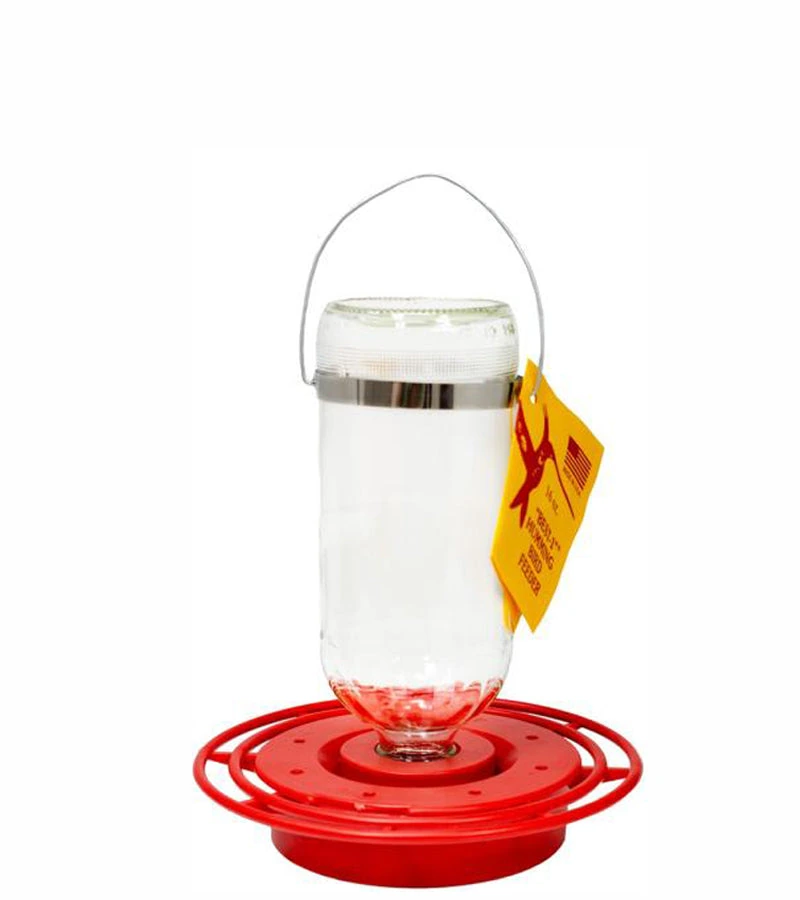
| Best for hummingbirds | Glass nectar feeder with ant moat | 1:4 sugar-water solution | Ruby-throated, Anna's, Rufous Hummingbird |
| Best budget pick | Basic plastic tube feeder | Black-oil sunflower | Broad mix of songbirds |
| Best for photographers | Window feeder with clear acrylic panel | Sunflower hearts | Chickadees, nuthatches, titmice |
| Best for deterring grackles | Caged tube feeder or upside-down suet | Safflower or nyjer | Small songbirds only |
| Best all-around setup | Tube + suet cage + nyjer sock (trio) | Sunflower, suet, nyjer | 15+ species possible |
Feeder types and which birds they actually attract
Knowing what feeder type to buy is genuinely more important than which brand you choose. I've had expensive feeders sit ignored for weeks because they weren't the right style for the birds in my yard, and I've had a $9 mesh sock covered in goldfinches within 24 hours of going up. Here's how each type performs in practice.
Tube feeders
Tube feeders are the workhorse of backyard birding. A classic 6-port acrylic or metal tube filled with black-oil sunflower reliably draws chickadees, house finches, purple finches, titmice, nuthatches, and cardinals (at lower ports or with a cardinal ring). The key design detail is port size: small ports and short perches favor cling-foraging birds like chickadees and finches, while larger ports and wider perches let cardinals and jays feed comfortably. A tube feeder with metal-reinforced ports holds up to squirrel chewing far longer than all-plastic models. If you're just starting out and want a broad mix of songbirds, this is the feeder to buy first.
Hopper feeders
Hopper feeders, the barn-shaped ones with a seed reservoir and side perches, are excellent cardinal and jay attractors because they offer wide, stable perches and larger seed ports. They hold more seed than most tube feeders (often 3 to 6 pounds), which means less frequent refilling, but they also have a real weakness: if the seed gets wet inside the hopper, mold builds up fast. Models with a sloped roof and drainage slots in the seed tray are significantly better in rainy climates. I've gone through three cheap hopper feeders that rotted at the seams inside a year; the ones worth buying have either a treated cedar frame or a powder-coated steel hopper.
Platform and tray feeders
Platform feeders are open trays, either mounted on a post or hung from a hook, and they are non-selective by nature. Cardinals, jays, doves, towhees, juncos, and sparrows all use them readily. The downside is equally obvious: grackles, starlings, and squirrels love them too. If you use a platform feeder, putting safflower seed in it instead of sunflower cuts grackle visits significantly. Drainage is the biggest maintenance factor: look for a mesh or slatted floor so rain drains through rather than pooling and rotting seed.
Thistle and nyjer feeders (mesh socks and fine-port tubes)
Nyjer, often sold as thistle, is a tiny, oily seed that American Goldfinches, Pine Siskins, Common Redpolls, and House Finches go absolutely crazy for. The seed is so fine it needs either a mesh sock feeder or a tube feeder with very small ports. The practical beauty of this setup is that large birds physically cannot eat from it in meaningful quantities, so you get a finch-only feeding station with almost no competition. One note: nyjer goes stale quickly. If birds stop using your nyjer feeder, the seed is probably old. Buy it in smaller quantities and store it in a sealed container.
Suet feeders
A basic wire suet cage is one of the cheapest, highest-impact things you can add to a backyard setup. Woodpeckers (Downy, Hairy, Red-bellied), White-breasted and Red-breasted Nuthatches, and chickadees all hit suet feeders hard, especially in fall and winter. Suet (rendered animal fat mixed with seed or insect bits) is the recommended high‑energy food to attract woodpeckers, nuthatches, and chickadees; no‑melt varieties exist for warm climates but all suet requires frequent cleaning in heat to avoid spoilage, Here’s What to Feed Your Summer Bird-Feeder Visitors, All About Birds (Cornell) Here’s What to Feed Your Summer Bird-Feeder Visitors — All About Birds (Cornell). In summer, use no-melt suet specifically, because standard suet cakes go rancid quickly above 80 degrees Fahrenheit and can coat birds' feathers in grease, which disrupts insulation. The inverted-style suet cage, where the bird must cling to the bottom to reach the suet, is one of the most effective deterrents for starlings and grackles, because woodpeckers and nuthatches do this naturally while pest species usually won't bother.
Nectar feeders
Hummingbird feeders are a category unto themselves. The nectar recipe is simple: 1 part plain white granulated sugar dissolved in 4 parts water, cooled and used without red dye or additives. That's it. No honey, no brown sugar, no commercial nectar mix with red coloring. The problem with nectar feeders isn't attracting hummingbirds, it's keeping the nectar fresh. In warm weather (above 80 degrees Fahrenheit), you need to change it every two days. Glass feeders with wide-mouth reservoirs are much easier to clean thoroughly than small-necked plastic designs. An ant moat (a small water-filled cup above the feeder) prevents ant invasions, and a built-in bee guard reduces wasp access.
Window feeders
Suction-cup window feeders attach directly to a glass pane and put birds literally inches from your face, which is why they're the top pick for bird photographers working from indoors. They attract the same species as tube feeders when filled with sunflower hearts, and the proximity to the window actually reduces bird-strike risk because birds don't build up flight speed that close to glass. The trade-off is small capacity, maybe a few days of seed, and the suction cups eventually fail in temperature extremes. Check the cups monthly and replace them every season.
Mesh and sock feeders
Mesh feeders and soft nyjer socks are inexpensive, lightweight, and extremely effective for finches. Goldfinches in particular will cling to every square inch of a mesh sock. They're also useful for peanuts in the shell: a large mesh peanut feeder draws Blue Jays, nuthatches, and woodpeckers. The downside is durability, fabric socks degrade quickly outdoors and need replacing every season or two, while metal mesh cylinders last much longer.
Smart and AI-powered camera feeders
Smart feeders with built-in cameras and AI species identification have grown from a novelty into a genuinely useful tool. Models like the Bird Buddy and Netvue Birdfy use on-device or cloud AI to identify birds as they land, log visits, and send photo alerts to your phone. From a pure attraction standpoint they perform like a standard tube feeder, the seed and port design are what pull birds in, but the identification feature is excellent for new birders learning species and for tracking which species visit at which times. They're more expensive than standard feeders (typically $80 to $200) and require charging or a power connection, but if you want to combine feeder watching with species learning or photography, they're worth serious consideration.
Top-ranked picks by goal and budget
Best overall: metal-port tube feeder with squirrel baffle
A 6-port tube feeder with steel or die-cast metal ports and a domed squirrel baffle is the best all-around choice for attracting the most species reliably. Look for models with a removable base for easy cleaning and drainage holes in the seed tray. Brands like Droll Yankees and Aspects have offered these configurations for decades and the hardware holds up. Expect to pay $30 to $55 for the feeder and another $20 to $35 for a quality baffle. That's not a trivial investment, but a cheap plastic feeder with no squirrel protection will be destroyed or emptied overnight in most yards.
Best budget: basic tube feeder under $15
If you're testing whether birds will actually use your yard before spending more, a basic plastic tube feeder in the $8 to $15 range does the job. Fill it with black-oil sunflower and hang it with a simple shepherd's hook. You'll get birds. The trade-offs are real though: plastic ports get chewed by squirrels within weeks, UV exposure yellows and cracks plastic in one to two seasons, and many budget feeders don't have drainage holes. Use it as a starter feeder, then upgrade once you've confirmed bird activity and know which species you're targeting.
Best for small yards and apartments: window mount feeder
If you have a small balcony, a screened porch, or just no room for a pole setup, a window-mount acrylic feeder is your best option. Fill it with shelled sunflower hearts (no mess, no waste hulls on the ledge) and you'll have chickadees, nuthatches, and titmice feeding within arm's reach. The Aspects Quick-Clean window feeder is a popular recommendation because the seed tray lifts out entirely for cleaning, which matters since these small feeders need weekly attention.
Best for photographers: close-up window or camera feeder
For photography, you want birds close, well-lit, and in a predictable position. A window feeder mounted at eye level on a glass door or large window does this better than any pole setup. If you want automated capture, a smart camera feeder like the Netvue Birdfy or Bird Buddy mounts like a standard feeder and gives you a front-row view with autofocus and motion-triggered shots. Natural perch attachments (a short wooden branch zip-tied near the feeder) give birds somewhere to pause before landing, which creates better photo opportunities than a bare metal perch.
Best for attracting the greatest variety: the three-feeder system
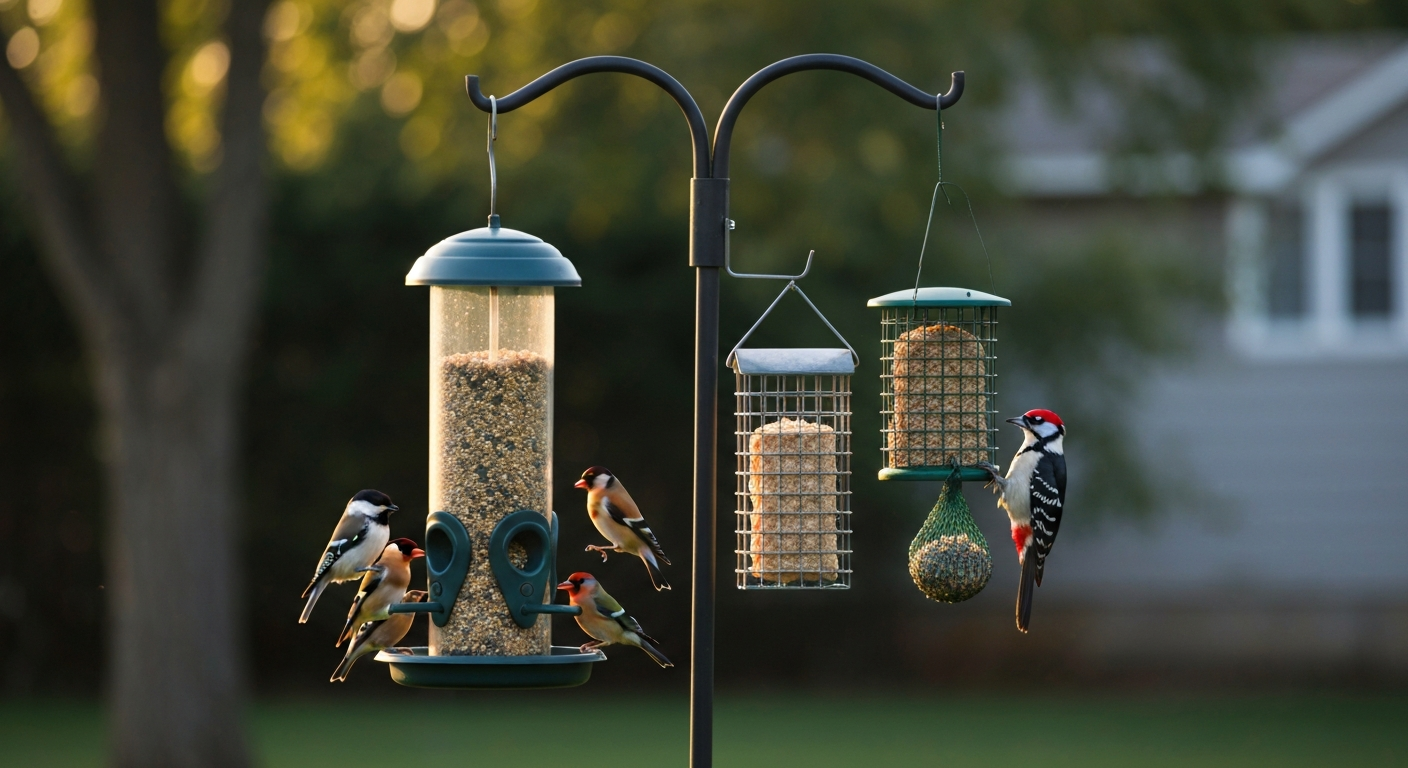
The setup that consistently draws the most species is three feeders on the same pole system or spread across the yard: a tube feeder with black-oil sunflower, a suet cage with no-melt suet, and a nyjer mesh feeder or sock. This trio covers canopy-foraging songbirds, woodpeckers and nuthatches, and finch species simultaneously. In a typical eastern North American backyard, this combination is capable of attracting 15 or more species over a season. That's the practical answer to which bird feeder attracts the most birds: it's not one feeder, it's the right combination.
Species-specific setups and recommendations
American Goldfinch and finches
A nyjer mesh sock or fine-port tube feeder is the single most targeted setup for goldfinches and other small finches (Pine Siskins, Common Redpolls). The small port physically excludes most competition. Goldfinches also take sunflower hearts from tube feeders, but nyjer is the stronger draw. Buy nyjer fresh, in smaller bags, and store it sealed. If birds ignore a full nyjer feeder, the seed is almost certainly stale: pinch a few seeds, they should smell slightly oily, not musty.
Northern Cardinal
Cardinals have a strong preference for black-oil sunflower seed and also take safflower readily (safflower has the added benefit of being unappealing to squirrels and grackles). Audubon recommends black-oil sunflower and peanuts as prime attractants for Northern Cardinals How to Attract Northern Cardinals to Your Home — Audubon. They prefer wide, stable perches or trays over narrow tube perches, so a hopper feeder with a tray, a platform feeder, or a tube feeder with a cardinal ring attachment works best. Cardinals also tend to feed early morning and late afternoon, so placing their feeder where it gets soft angled light helps you actually see them.
Hummingbirds
The nectar recipe is not negotiable: 1 part white sugar to 4 parts water, boiled briefly to dissolve, then cooled. No red dye, no honey, no agave syrup. Red dye has no proven benefit and some studies suggest it may be harmful. The red color on the feeder itself is sufficient to attract hummingbirds. In temperatures above 80 degrees Fahrenheit, change the nectar every two days to prevent fermentation and mold growth. A feeder with a wide-mouth reservoir or removable base is essential because narrow-necked feeders that can't be scrubbed properly will harbor black mold that can kill birds.
Woodpeckers (Downy, Hairy, Red-bellied)
Suet is the primary draw for woodpeckers, and a simple metal suet cage screwed or wired to a tree trunk is often more effective than a hanging design because it mimics natural foraging on bark. Shelled peanuts in a mesh feeder are a strong secondary option. Larger woodpeckers like the Pileated and Red-bellied prefer bigger suet logs or large cage designs over the standard 4x4-inch suet cage. Place suet feeders on or near trees rather than on open poles; woodpeckers are less comfortable feeding in open space.
Chickadees and titmice
Black-capped and Carolina Chickadees and Tufted Titmice are among the easiest birds to attract and among the first to find a new feeder, often within hours of setup. They take black-oil sunflower, shelled peanuts, and suet readily. Their habit of grabbing a seed and flying to a nearby branch to eat it means feeder traffic looks lower than it actually is. A tube feeder and a suet cage together will have these species visiting constantly all winter.
Nuthatches
White-breasted and Red-breasted Nuthatches are suet and sunflower birds that like to feed upside-down, which makes them natural users of inverted suet cages. They also take shelled peanuts and sunflower hearts from tube feeders. They tend to cache food aggressively, so don't be surprised if a nuthatch makes dozens of rapid trips to your feeder; it's stashing seeds for later rather than eating on the spot.
Mourning doves and ground-feeding birds
Doves almost exclusively ground-feed or use low platform feeders. They eat millet, cracked corn, and sunflower seed. The most practical approach is a low platform feeder or a tray placed on or just above the ground, separate from your main feeding station. Doves also clean up seed that falls from higher feeders, so they serve a useful maintenance function. Safflower mixed with millet in a low tray is a dove-specific setup that doesn't over-attract grackles.
Blue Jays
Blue Jays want whole peanuts in the shell, whole corn, and black-oil sunflower. A platform feeder or a peanut wreath feeder loaded with whole peanuts is the targeted draw. Jays are bold and often chase smaller birds off shared feeders, so if jay competition is an issue, offer peanuts on a separate feeder positioned away from your songbird tube feeders.
Grackles and starlings (when you want to deter them)
Common Grackles and European Starlings are persistent feeders that can dominate a yard quickly. The most effective deterrents are: switching to safflower seed instead of sunflower (grackles strongly dislike safflower); using caged tube feeders that let small birds through but block larger bodies; and switching to an inverted suet cage that starlings and grackles rarely use but woodpeckers and nuthatches handle easily. Platform feeders and open tray feeders are the most grackle-friendly designs and should be avoided or temporarily removed during peak blackbird migration in spring and fall.
Comparing key feeder features
Not all tube feeders are equal, and not all hopper feeders fail the same way. Here's how the features that actually matter stack up, and how each one affects which birds use the feeder and how long it stays clean. For another relevant comparison, see which bird feeder attracts most birds.
| Feature | What to look for | Why it matters |
|---|---|---|
| Seed capacity | 1–3 lb for tube; 3–6 lb for hopper | Larger capacity means less refilling but also more seed sitting exposed to moisture |
| Port size | Small ports (3/8 in) for finch/chickadee feeders; larger ports for cardinals | Port size directly controls which species can access seed and how fast it flows |
| Perch style | Short thin perches favor small birds; wide trays/rings favor cardinals and jays | Perch length and width determines which body sizes feed comfortably |
| Anti-clog design | Metal seed shelves, agitators, or mesh floors | Wet seed clumps and blocks ports; metal shelves prevent compaction |
| Drainage holes | Minimum 2–4 holes in seed tray or base | Standing water in trays is the #1 cause of mold and seed spoilage |
| Refill access | Removable base or flip-top lid | Bottom-fill models are usually faster to refill; top-fill hoppers easier to monitor |
| Visibility | Clear acrylic tube or hopper panel | Lets you monitor seed level and spot mold without opening the feeder |
| Cleaning access | Fully disassemblable base and tube | Feeders that can't be fully opened harbor mold and bacteria in dead corners |
Materials and how long feeders actually last
Material choice is where the price difference between a $15 feeder and a $50 feeder is most obvious. I've tested feeders across most of these material categories over several years, and the lifespan differences are real.
| Material | Pros | Cons | Expected Lifespan |
|---|---|---|---|
| UV-stabilized acrylic/polycarbonate | Lightweight, clear for visibility, affordable | Cracks in cold, yellows in UV over time, chewed by squirrels | 2–4 years if squirrel-protected |
| Powder-coated steel | Durable, squirrel-resistant, weather-proof | Can rust at chips or welds if coating fails; heavier | 5–10+ years with maintenance |
| Recycled plastic (HDPE) | UV-resistant, won't rot, eco-friendly | Opaque, limited visibility into seed level | 10+ years |
| Cedar (kiln-dried) | Naturally rot-resistant, attractive, weatherproof finish | Heavier, requires occasional oiling, seams can fail if not well-jointed | 5–8 years well-maintained |
| Die-cast or cast aluminum | Extremely durable, squirrel-resistant, rust-proof | Expensive, limited designs | 10–15+ years |
| Standard plastic (polystyrene) | Very cheap | Cracks in frost, yellows fast, no squirrel resistance | Under 1–2 seasons |
Powder-coated steel and UV-stabilized polycarbonate combinations, like those used by Droll Yankees, Aspects, and Brome, represent the best balance of durability and visibility. Purely cedar hoppers look beautiful but need more maintenance. Avoid uncoated mild steel, which rusts at the joints within a season in wet climates. For suet cages, vinyl-coated steel wire is better than plain steel in humid conditions.
Squirrel and pest-proofing that actually works
I've tried everything. Greased poles, spinning feeders, hot pepper suet, you name it. The honest answer is that no feeder design alone reliably stops a determined squirrel. What works is a combination of placement and physical barrier. Mount your feeders on a smooth metal pole at least 5 feet high, add a dome or stovepipe baffle at least 15 to 18 inches in diameter directly below the feeders, and ensure there is at least 8 to 10 feet of horizontal clearance from any fence, tree, roof edge, or launch point. That combination, done correctly, stops squirrels more reliably than any weight-sensitive perch system.
Weight-sensitive feeders (like the Squirrel Buster series from Brome) do work as a secondary layer: the perch collapses under anything heavier than a small songbird, blocking port access. They're excellent for pole setups where full baffle clearance isn't possible. Caged feeders (a tube feeder inside a metal cage) are the most durable long-term option but they also exclude larger birds like cardinals unless you choose a cage with wider spacing. For ground-feeding areas, a large dome baffle mounted over the feeding area and a hardware cloth skirt around low platforms discourages raccoons and rats from accessing overnight.
Deterring grackles and starlings specifically
- Switch sunflower seed to safflower in platform and hopper feeders: grackles largely ignore it, most songbirds accept it
- Use an inverted suet cage so birds must cling upside-down to feed: woodpeckers and nuthatches do this naturally, grackles and starlings rarely do
- Install a caged tube feeder with 1.5-inch cage spacing: allows small songbirds through, blocks starlings and grackles
- Temporarily remove open platform feeders during spring and fall blackbird migration peaks
- Offer nyjer/thistle only: blackbirds show little interest in nyjer feeders
Mounting and placement: where you put it matters as much as what it is
Placement is one of the most underrated factors in feeder success. Birds need two things near a feeder: cover to retreat to if a predator appears, and an open sight line so they can see approaching danger while feeding. The research-backed sweet spot is 10 to 15 feet from shrubs or dense cover (close enough for safety flights, far enough that cats can't ambush from inside the bush). Tube feeders work well at 5 to 6 feet high on a pole. Suet cages do best mounted directly on tree bark or within a few feet of a trunk. Window feeders placed within 3 feet of a window actually reduce bird strike injuries compared to feeders placed 10 to 30 feet away, because birds can't build up dangerous speed that close to glass.
Mounting options compared
| Mounting Type | Best For | Key Consideration |
|---|---|---|
| Freestanding metal pole with baffle | Main tube/hopper feeders, squirrel-proofing | Requires 8–10 ft clearance from launch points for baffle to work |
| Shepherd's hook (single or double) | Budget setup, hanging feeders | No baffle protection; squirrels climb easily without additional deterrent |
| Deck rail mount bracket | Small yards, apartment decks | Good visibility; keep at least 10 ft from any tree branch |
| Tree-mounted suet cage | Woodpeckers, nuthatches | Position on north-facing bark in summer to slow suet melting |
| Window suction-cup mount | Photography, close viewing, small spaces | Check suction cups monthly; replace each season |
| Hanging from eave or pergola | Hummingbird feeders, lightweight tube feeders | Swing in wind; use a hook with a locking gate to prevent drops |
Seed choices by species: what to buy and what to skip
Seed selection is where a lot of backyard birders waste money. The standard 'wild bird mix' sold in grocery stores is mostly filler seeds like milo, millet, and cracked corn that most desirable songbirds ignore or kick onto the ground. For general songbird feeding, black-oil sunflower seed or shelled sunflower hearts is the highest-value seed you can buy, attracting the widest variety of species with the least waste. Here's a practical breakdown by species.
| Species/Group | Best Seed or Food | Secondary Option | Avoid |
|---|---|---|---|
| American Goldfinch, siskins | Nyjer (thistle) | Shelled sunflower hearts | Whole sunflower, milo |
| Northern Cardinal | Black-oil sunflower, safflower | Shelled peanuts | Nyjer, milo |
| Chickadees and titmice | Black-oil sunflower, shelled peanuts | Suet, sunflower hearts | Cheap wild bird mix |
| Nuthatches | Shelled peanuts, suet | Black-oil sunflower | Milo, cracked corn |
| Woodpeckers | Suet cakes (no-melt in summer) | Whole or shelled peanuts | Nyjer, small millet |
| Mourning doves | White proso millet, safflower | Cracked corn, sunflower | Nyjer, suet |
| Blue Jays | Whole peanuts in shell, whole corn | Black-oil sunflower | Nyjer |
| Hummingbirds | 1:4 white sugar:water nectar | None | Honey, red dye, brown sugar |
| House Finches, Purple Finches | Black-oil sunflower, nyjer | Safflower | Milo, cracked corn |
| Dark-eyed Juncos, sparrows | White proso millet (ground or low tray) | Sunflower hearts | Suet, nyjer |
If budget is a concern, black-oil sunflower seed bought in 20 to 40-pound bags is consistently the best cost-per-visit investment. It attracts more species per dollar than any other seed. Shelled sunflower hearts cost more but produce zero hull waste on the ground, which matters if you're feeding over a deck, patio, or lawn where hulls kill grass or create a mess.
Keeping feeders clean and reducing waste and mold
Dirty feeders are one of the leading causes of feeder-associated bird disease outbreaks, including Mycoplasma conjunctivitis in House Finches and salmonellosis in finches and sparrows. This isn't alarmist: peer-reviewed research has documented reduced pathogen loads in birds at regularly cleaned feeders compared to neglected ones. The practical cleaning protocol recommended by Cornell's Project FeederWatch and Audubon is straightforward: scrub all feeder surfaces with a stiff brush, soak in a solution of 1 part bleach to 9 parts water for at least 10 minutes, rinse thoroughly, and dry completely before refilling. Do this every one to two weeks during normal conditions, and weekly in warm weather.
If you ever see sick or dead birds near your feeder, remove the feeder immediately and clean it with the bleach protocol before putting it back up. This is the wildlife authority recommendation and it's worth following. Sick birds congregate at predictable food sources and can spread pathogens to healthy birds rapidly.
Practical tips for reducing mess, mold, and waste
- Use shelled sunflower hearts instead of whole seeds to eliminate hull accumulation under feeders
- Add a seed tray catcher below tube feeders to collect fallen seed and reduce ground pest attraction, then empty it every few days
- Choose feeders with mesh or slatted floors in the seed tray so rain drains through rather than pooling
- In summer, fill feeders only halfway so seed is consumed within 2 to 3 days before it can go stale or moldy
- Store seed in a metal or hard plastic sealed container, not the paper or thin plastic bags it's sold in, to prevent moisture and rodent access
- Clean nyjer/thistle feeders more often than sunflower feeders because nyjer oil goes rancid faster
- Position feeders where morning sun hits them to dry overnight moisture from seed ports and trays
- Use no-waste seed blends (hulled seeds, no milo or filler) to prevent birds from kicking unwanted seed onto the ground
Building your feeder setup: a practical buying checklist
Before you buy, work through this checklist. It's based on the most common mistakes people make when starting or expanding a feeder setup, and it takes about two minutes to run through.
- Identify which species live in or pass through your area: check eBird or All About Birds for your region
- Choose feeder types matched to your target species: tube for general songbirds, nyjer sock for finches, suet cage for woodpeckers
- Decide on mounting: pole with baffle (best), shepherd's hook (acceptable), window mount (small spaces)
- Confirm you have 8 to 10 feet of horizontal clearance from trees or fences if using a baffle for squirrel-proofing
- Budget for seed storage: sealed metal or hard plastic container to keep seed fresh and pest-free
- Plan your cleaning routine: do you have time for bi-weekly scrubbing? If not, choose feeders that fully disassemble for easy cleaning
- Start with one or two feeders, not six: adding feeders gradually lets you confirm bird activity before investing heavily
- Note whether grackles, starlings, or squirrels are common in your area and factor in caged feeders or safflower seed from the start
The guides on what bird feeders attract what birds and what bird feeders do birds like best go deeper on species-by-species pairing if you want to get more granular before buying. And if you're deciding between specific model options, the comparisons in which bird feeders are best and the best-1 bird feeder breakdowns cover current top-rated models with hands-on notes.
FAQ
What is a natural, search-oriented title for this article?
Best Bird Feeder to Attract Birds: A Practical, Species-Focused Buying Guide
What is a concise meta description (≤160 characters)?
Find the best bird feeder to attract birds—species-specific picks, feeder-type guide, pest-proofing, placement, and a practical buying checklist.
Quick answer: Which feeder is best overall and best by common goals?
Best overall: a versatile hopper feeder with adjustable ports and a raintop (attracts a wide range: cardinals, jays, doves, chickadees). Best by goal: finches—nyjer sock or fine-port tube; hummingbirds—standard sugar-nectar feeder (1:4 sugar water, clean frequently); woodpeckers—suet cage; cardinals/jays/doves—large-capacity hopper or platform; to discourage grackles/starlings—caged sunflower or small-port finch feeders.
Which feeder types attract which species?
Tube feeders: small songbirds (finches, chickadees, titmice, nuthatches). Thistle/nyjer (mesh or finch sock): goldfinches, siskins, small finches. Hopper/box and platform/tray feeders: cardinals, jays, doves, grackles and other large-bodied birds. Suet feeders: woodpeckers, nuthatches, chickadees. Nectar feeders: hummingbirds. Window feeders: close-up viewing; works for small visitors like chickadees and titmice. Mesh/sock feeders: nyjer and peanuts for finches and titmice. Trays are non-selective and attract larger blackbirds unless modified.
How do feeder design features (ports, perches, drainage) affect which birds visit?
Small ports and narrow perches favor small cling-foragers (finches, chickadees) and exclude larger birds. Wider ports and full perches allow cardinals and jays. Built-in drainage holes and seed shelves reduce wet seed and clogging; anti-clog seed troughs and sloped baffles help flow. Weight-sensitive perches and caging can exclude heavy pests.
What materials and construction features offer best durability and weather resistance?
Powder-coated steel, stainless steel, and brass fittings resist rust; UV-stable polycarbonate and acrylic resist cracking/discoloration better than cheap plastics. Cedar provides natural rot resistance for wooden feeders. Look for stainless fasteners, reinforced seams, and a good raintop/overhang to keep seed dry.
Next Article
Best 1 Bird Feeder Buying Guide: Top Pick for Any Backyard
Choose the best 1 bird feeder top pick: types, setup, squirrel-proofing, cleanup, and smart vs basic guidance.