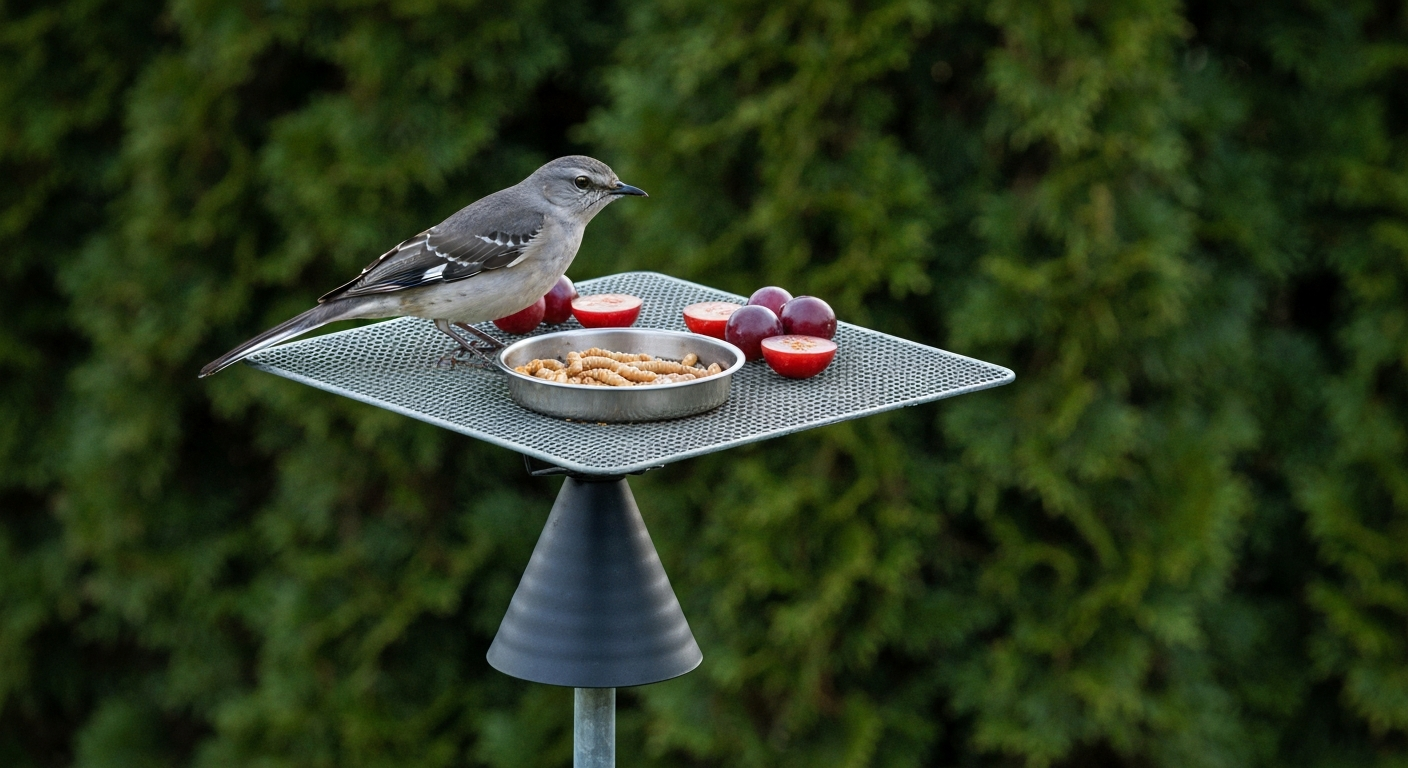
The best feeders for mockingbirds are open platform or tray feeders, low fruit and mealworm dishes, and suet cages, stocked with live or rehydrated dried mealworms, fresh or dried fruit, and suet. All About Birds, Northern Mockingbird notes that Northern Mockingbirds shift seasonally: primarily insectivorous during the breeding season (spring–summer) and switch to eating mostly fruit (berries, grapes, dried fruit) in fall and winter; they prefer open ground and shrubby habitat/edges All About Birds — Northern Mockingbird. Mockingbirds are not typical seed birds, so tube feeders loaded with sunflower mix will mostly disappoint you. Set a shallow platform at roughly 3 to 5 feet high, keep it within about 10 feet of a shrub edge for escape cover, and start with mealworms or halved grapes, and you have a realistic shot at pulling in a resident mocker within a week or two.
Best Bird Feeder for Mockingbirds: Complete Buying Guide
Why mockingbirds deserve their own feeder setup
This guide focuses entirely on Northern Mockingbirds (Mimus polyglottos), and the reason is simple: they eat differently from nearly every other common feeder bird. Most backyard setups are optimized for seed-eating finches, sparrows, and cardinals. Mockingbirds eat mostly insects in spring and summer, then switch hard to fruit from fall through winter. Seeds rank low on their preference list in every season. If you're running a standard tube feeder packed with black-oil sunflower seed and wondering why mockers ignore it, that's why. Getting mockingbirds to visit regularly means rethinking food, feeder shape, and placement together.
This guide covers everything you need to set up a mockingbird-friendly station: which feeder types actually work, what to put in them and when, where to put them, how to keep out squirrels and grackles without also excluding the bird you want, what materials hold up, how to clean safely, and how smart camera feeders fit into the picture. There is also a practical decision matrix at the end to match your specific yard situation to a recommended setup.
How mockingbirds actually feed (and why it shapes every choice)
Northern Mockingbirds are omnivores with a strong seasonal swing. From roughly April through August, they are heavily insectivorous, hunting arthropods on lawns, mulch beds, and low shrub edges. Cornell Lab data confirms they shift to eating mostly berries, grapes, and other fruit from fall through winter. Research published in Condor (Ornithological Applications) found that nestling diets include a substantial fruit component alongside animal prey, roughly 30 to 35 percent fruit even during the breeding period, which means fruit is never entirely off the menu.
At feeders, mockingbirds forage low. They prefer platforms, open dish or tray presentations, and ground-level foraging, not narrow tube perches. They are also intensely territorial. A resident pair will defend a food patch aggressively, chasing off other birds including much larger ones. This territorial drive is actually useful: once a mocker claims your feeder station, it will return reliably. But it also means placing multiple feeding stations slightly apart can reduce single-bird monopolization and let you observe more birds overall.
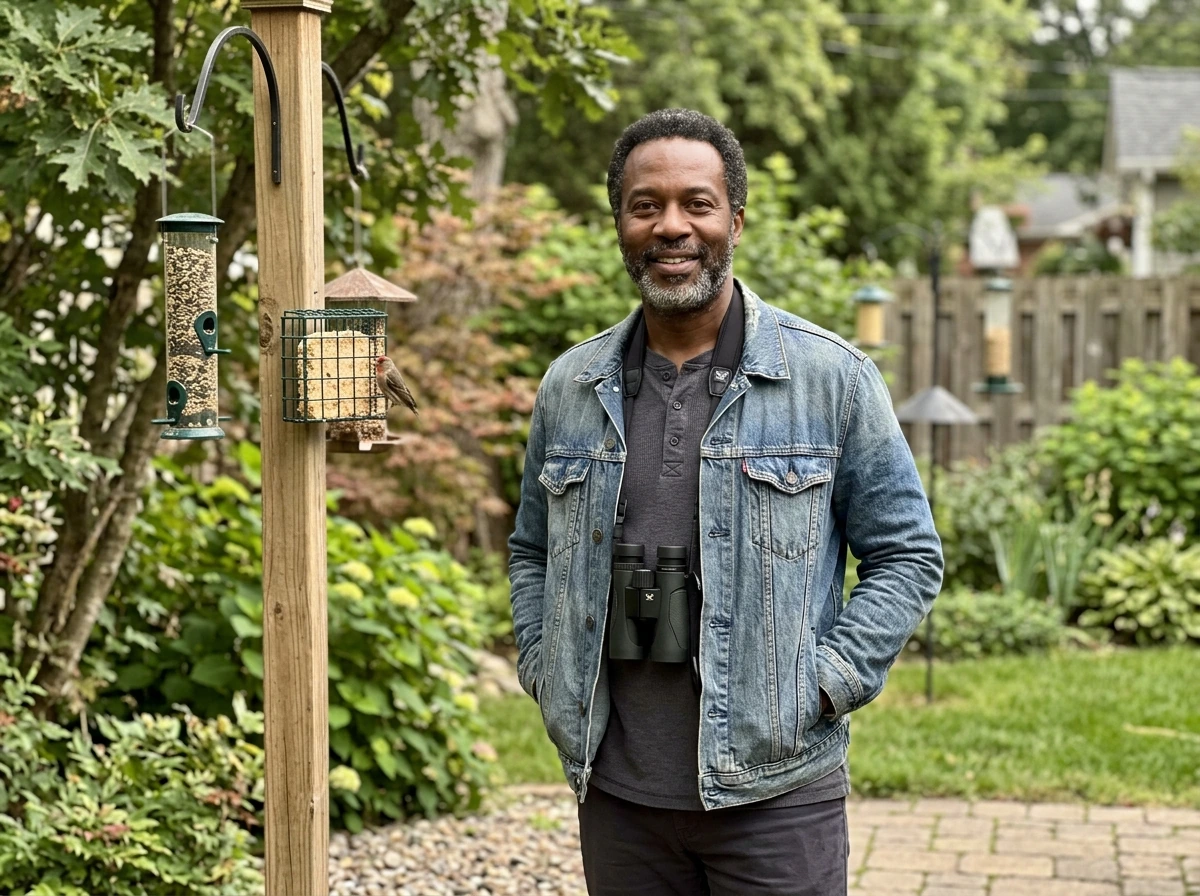
From a design standpoint, the feeding behavior points to a few concrete requirements. The feeder needs an open, stable landing surface with good visibility in all directions. Mockingbirds are alert and will not linger at a cramped or cluttered feeder with poor sight lines. Low placement (3 to 5 feet) is more natural to them than a high tube feeder, and a nearby escape perch, a fence post, a shrub edge, or a small tree, makes them more comfortable.
Feeder types that reliably attract mockingbirds
Not all feeder designs are created equal for mockingbirds. Four types consistently deliver results. Platform and tray feeders are the most versatile option. Fruit and mealworm dishes are the highest-conversion choice for dedicated mockingbird attraction. Open-hopper feeders with wide perches can work when paired with appropriate food. Suet cages add a useful protein option in fall and winter. Everything else, standard tube feeders, finch feeders, nectar feeders, is largely irrelevant to mockingbirds and can be skipped unless you are managing a mixed-species yard.
Platform and tray feeders
Design variants
Platform feeders come in three main variants: hanging trays (a flat tray suspended from a hook or branch), pole-mounted platforms (a wide flat surface on top of a pole), and deck-rail tray attachments. For mockingbirds, pole-mounted is the most practical because you can pair it with a squirrel baffle below and position it precisely relative to cover. Hanging trays are fine but sway in wind, which can spook a territorial bird mid-meal. Deck-rail trays are good for patios and balconies but offer less flexibility on predator-proofing.
Drainage is a critical detail that cheap platform feeders get wrong. A solid-bottom tray collects rainwater, leading to moldy fruit and clumped mealworms within hours of a storm. Look for a mesh, perforated, or slatted floor that lets water drain freely. Recycled plastic and powder-coated steel platforms with drain holes are the better material choices; raw wood degrades quickly when wet food sits on it and is nearly impossible to disinfect properly.
Pros, cons, and real-world use
| Platform / Tray Feeders | Pros | Cons |
|---|---|---|
| Open visibility | Mockingbirds can see approaching threats; mimics natural foraging surface | Also visible to squirrels and hawks from above |
| Food flexibility | Accepts mealworms, fruit, suet nuggets, seed — no design limitation | No food containment; wind/rain can scatter or soak food quickly |
| Perch space | Large enough for a mocker to land and eat without competition pressure | Large platform also invites grackles and starlings |
| Accessibility | Easy to fill and monitor; no funnel or port hardware to clog | Requires frequent refills since food sits exposed |
| Drainage models | Mesh-floor versions shed rain fast, reducing mold risk | Mesh can trap fruit pulp; needs scrubbing after every wet cycle |
In my own yard testing, a 12-inch square mesh-floor platform on a 5-foot pole was the first feeder a resident mocker visited consistently. I placed it about 8 feet from a dense cedar hedge and put a cone baffle on the pole. The bird was on it within four days. The same feeder loaded with only sunflower seed attracted mostly house sparrows, but the moment I switched to mealworms plus halved grapes, the mocker claimed it as territory within 48 hours.
Open-hopper and wide-perch seed feeders
A hopper feeder with an open, wide tray-style base or a broad perch shelf can attract mockingbirds, but only when stocked with food they actually want, which typically means peanut pieces or a fruit-blend seed mix rather than straight sunflower or safflower. The enclosed hopper section protects seed from rain, which is a genuine advantage, but the design also suits grackles and starlings that are comfortable on exposed horizontal surfaces.
Wide-perch hoppers work best in yards with low grackle pressure or when paired with a weight-activated shroud. If grackles are a serious problem in your area, the open hopper design will create frustration. In that scenario, you're better off with a dedicated mealworm or fruit dish that sits lower, and reserving any seed hopper for a separate station focused on finches and sparrows.
Fruit and mealworm dishes: the highest-conversion option
If I had to pick a single feeder type for mockingbirds, it would be a shallow ceramic, stainless steel, or recycled-plastic dish or bowl specifically for fruit and mealworms. The design is dead simple: a low, open bowl or tray with no lid, placed on a short post or deck mount at 3 to 5 feet. Project FeederWatch at Cornell explicitly names mockingbirds as one of the primary target species for fruit and mealworm dish presentations, alongside catbirds, bluebirds, and robins.
Ceramic dishes look attractive but chip and crack in freeze-thaw cycles, which matters in northern states and Canada where mockingbirds winter in smaller numbers. Stainless steel dishes are the best material choice: they are easy to scrub clean, do not absorb fruit stains or bacterial load, and hold up to bleach-water disinfection without degrading. Recycled plastic is a decent middle-ground option. Avoid painted wood or raw wood dishes entirely; they harbor bacteria and cannot be properly sanitized.
Placement for a dedicated fruit or mealworm dish should be lower and more sheltered than a seed platform. A short post mount at 3 to 4 feet near a fruiting shrub is ideal. Fill with a small quantity, roughly half a cup of mealworms or three to four grape halves at a time, and refresh daily. Leaving large amounts out overnight attracts raccoons and opossums and results in waste.
Suet cages and suet blocks
Mockingbirds are not woodpeckers, but they will visit a suet cage, especially in fall and winter when protein and fat are valuable. Standard wire suet cages work fine. The practical limitation is that flat-fronted suet cages favor birds comfortable clinging vertically, which mockingbirds are not. A better option for mockers is a suet cage with a bottom-access tail-prop ledge, or better yet, crumbling suet nuggets onto a platform or dish feeder rather than presenting a cage at all.
Suet goes rancid rapidly in warm weather. In summer, use no-melt suet dough formulas or skip suet entirely and lean on mealworms instead for the protein offering. From October through March, standard beef suet or nut-blended suet cakes are fine. If you live somewhere with hot summers, I'd suggest treating suet as a winter-only food for your mockingbird station and not stocking it during breeding season.
What to feed mockingbirds and when
The core food list
- Live mealworms: highest conversion rate, especially during spring breeding season
- Dried or freeze-dried mealworms (rehydrated): widely accepted by adults; rehydrating in warm water for 10 to 15 minutes dramatically improves uptake
- Fresh or dried fruit: halved grapes, blueberries, chopped apple, dried cranberries, raisins soaked in water (unsulphured)
- Peanut pieces or peanut butter blended suet: accepted year-round, especially useful in winter
- Suet cakes or nuggets: best from October to March; avoid in hot weather unless no-melt formula
- Seed mixes with small fruit pieces or peanut content: only useful as a secondary offering; plain sunflower or millet mixes attract minimal mockingbird interest
Live vs. dried mealworms: the honest comparison
Live mealworms win in preference tests. The movement triggers prey-capture behavior in insectivorous birds, and experimental work confirms some species will refuse dried mealworms entirely when live ones are available. For mockingbirds during breeding season when they are feeding nestlings, live mealworms are strongly preferred and the North American Bluebird Society explicitly recommends live over dried for birds feeding chicks.
The practical downside is storage. Live mealworms need refrigeration at around 45 to 50 degrees Fahrenheit in a breathable container with oat bran or wheat bran as bedding, and they last two to three weeks under those conditions. You can order them in bulk (1,000 to 5,000 count bags) online or from feed stores, which cuts cost significantly. Offer them in a shallow, smooth-sided dish so they cannot crawl out. I use a 4-inch stainless steel prep bowl bolted to a small platform shelf, which works well.
Dried or freeze-dried mealworms are far more convenient and cost less per serving. The trick is rehydration: soak them in warm water for 10 to 15 minutes before offering. This restores some moisture, improves smell, and gets closer to the texture of live prey. Mockingbirds and bluebirds accept rehydrated dried mealworms regularly in my testing, though they will always take a live mealworm over a dried one if both are available.
| Factor | Live Mealworms | Dried/Rehydrated Mealworms |
|---|---|---|
| Mockingbird preference | High: movement triggers prey capture behavior | Moderate: better when rehydrated, lower when dry |
| Best use season | Spring and summer, especially when birds are feeding nestlings | Fall and winter; adequate for adults year-round |
| Storage | Refrigerator at 45-50°F; 2 to 3 weeks shelf life | Room temperature in sealed container; 6 to 12 months |
| Cost | Higher per serving; bulk orders reduce cost | Lower per serving; widely available |
| Prep effort | Transfer to dish; keep cool until serving | Soak in warm water 10 to 15 minutes before offering |
| Messy? | Can crawl; use smooth-sided dish to contain | No crawling; easy to serve but dries out fast on hot days |
Seasonal feeding strategy
Spring (March through May) is the highest-impact feeding window for mockingbirds. Resident pairs are establishing territory and breeding pairs begin nesting. Live mealworms at this time will attract the most interest and may bring birds to your station daily if they have not already found it. Keep fruit available but lean into protein-heavy offerings.
Summer (June through August) is nesting and nestling season. Parent mockingbirds are foraging hard to feed chicks. Live mealworms in a shallow dish near the nest territory will be taken quickly. Skip suet; the fat ratio is wrong for hot weather and it goes rancid. Fresh berries and grape halves can supplement the protein during this period.
Fall (September through November) marks the transition to fruit dominance. Shift your platform or dish loading toward dried fruit, fresh berries, and peanut pieces. Suet can return to the rotation in October. Some mockingbirds disperse or move short distances in fall, so you may experience a lull followed by a new individual claiming territory.
Winter (December through February) is fruit and fat season. Dried fruit, peanut butter suet, and any lingering ornamental berries in your yard become primary attractants. Continue offering dried or rehydrated mealworms; adult mockingbirds will take them even in cold weather when insect availability drops to near zero. Freeze-thaw cycles affect food freshness, so check the dish or platform more frequently and remove any frozen or fermenting fruit promptly.
Placement, height, and mounting
The widely recommended rule across Cornell Lab and other extension sources is about 10 feet of lateral clearance from dense cover like shrubs or tree canopy. This is a compromise: close enough for birds to escape to safety quickly, but far enough that a cat or hawk cannot ambush from cover directly. Squirrels need at least 8 to 10 feet of running start to leap laterally, and a few feet of vertical clearance from below, so 10 feet of lateral clearance from tree branches also limits their approach.
Height for a mockingbird platform or dish should be 3 to 5 feet above ground. This is lower than typical seed feeders (which often sit at 5 to 6 feet) and reflects how mockingbirds naturally forage. A 5-foot pole-mounted platform is a good default: it keeps the feeder above easy cat-swipe range, is comfortable for people to refill, and is close to mockingbird foraging height. For mealworm dishes specifically, 3 to 4 feet works well if a baffle is on the pole.
Window clearance matters for bird safety. Either place feeders within 3 feet of a window (so birds cannot build up dangerous speed before impact) or more than 30 feet away. The 4 to 30 foot zone is the danger zone for window strikes. Mockingbirds are active, fast-moving birds and window collisions are a real risk if you place a feeder at mid-distance from glass.
Patio and balcony setups for mockingbirds
If you are working with a patio, balcony, or small urban outdoor space, a full pole setup may not be practical. The best option is a deck-rail clamp mount supporting a shallow tray or dish feeder. Most commercial deck-rail mounts accept a 3/4 inch or 1 inch diameter post stub, and from that you can hang or clip a small platform or dish. A clamp-mounted mealworm dish at 3 to 5 feet above a deck rail, set against an adjacent railing or planter, is a workable mockingbird station in compact spaces. For more options tailored to small outdoor spaces, see our guide to the best bird feeders for patios.
Hanging hook mounts from a balcony overhang are another option for fruit and mealworm dishes. Use a lightweight stainless or ceramic bowl on a S-hook, and position it so the bird has an unobstructed approach from at least two directions. In balcony situations, squirrel pressure is often lower, but pigeons and house sparrows can be persistent. Keeping portion sizes small (refresh daily rather than filling generously) limits the attraction for unwanted species.
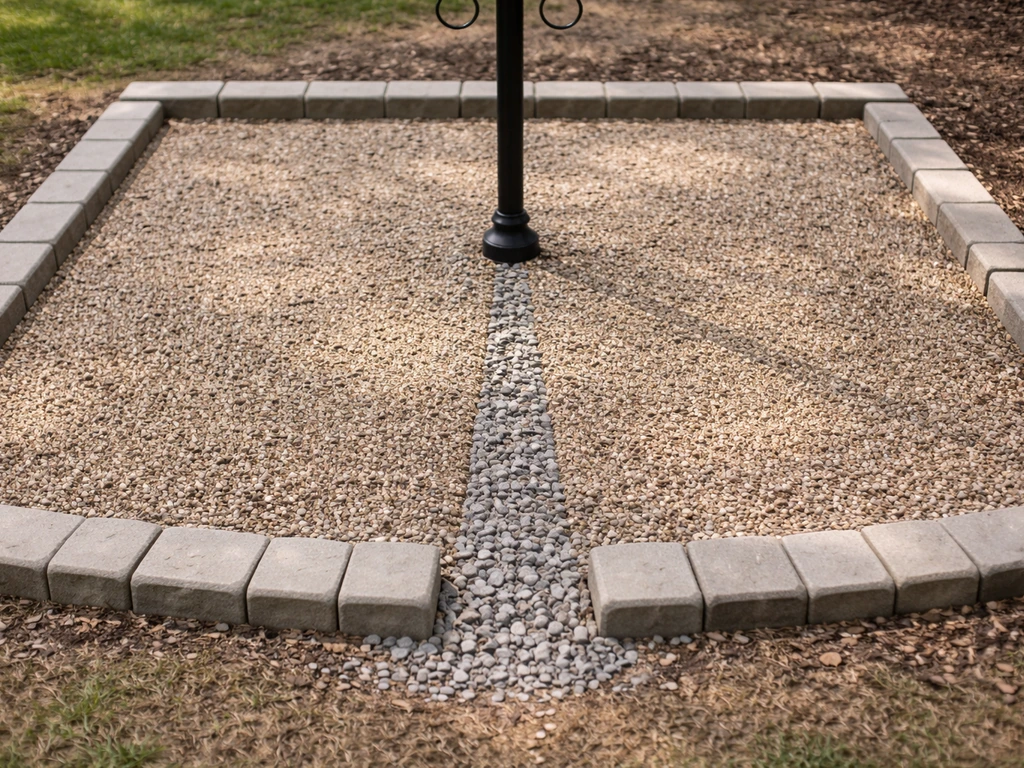
If you are setting up a feeder on a patio, it is worth thinking about what goes beneath it. Mealworm waste, fruit pulp, and hulled seed can make a mess on deck boards and pavers. A drip tray below the feeder or a layer of gravel or smooth stone around the base catches droppings and spilled food. This connects to broader setup decisions covered later in the landscaping section.
Squirrel-proofing tactics that actually work
Squirrels are persistent and genuinely clever. I have gone through two wood platform feeders and a basic plastic hopper because I underestimated them, so take the hardware seriously. There are three proven approaches: baffles, weight-activated shrouds, and motorized spinners. UNH Extension and Audubon recommend baffles and weight‑sensitive/physical exclusion devices as the most reliable non‑lethal measures UNH Extension and Audubon recommend baffles and weight‑sensitive/physical exclusion devices as the most reliable non‑lethal measures.. Using two of these together is more reliable than either alone.
Pole-mounted cone or torpedo baffles below the feeder are the first line of defense. A baffle needs to be at least 17 inches in diameter and positioned about 5 feet up the pole, with the feeder 5 feet or more above ground. UNH Extension and Audubon both confirm baffles and physical exclusion are the most reliable non-lethal deterrents. If squirrels are approaching from above via tree branches, add a dome baffle above the feeder as well.
Weight-activated feeders add a second layer. The Brome Squirrel Buster Plus uses an adjustable weight-activated shroud that closes seed ports when a squirrel (or heavy bully bird) lands on it. At roughly 5.1 lb activation weight and 3-quart capacity, it handles most squirrel sizes. The weight threshold is adjustable, which also makes it useful for excluding grackles. The limitation: this design is most effective for seed; mealworm and fruit dishes cannot use a shroud mechanism, so baffles are non-negotiable for open dish setups.
Motorized spinners like the Droll Yankees Yankee Flipper use a battery-powered spinning perch that activates under squirrel weight, dumping the squirrel off. It works well but requires periodic charging and correct placement with at least 10 feet of lateral clearance from jump points, since it cannot stop a squirrel that leaps directly onto the feeder. Motor maintenance is a real consideration: I would not call this a set-and-forget solution.
Dealing with grackles and blackbirds without losing your mockingbird
This is one of the harder problems in feeder management because mockingbirds and common grackles or red-winged blackbirds can overlap at the same feeder types. The standard Project FeederWatch advice for suppressing grackles is to use small-hopper or tube feeders with short perches, weight-sensitive closures, or cage-style exclusion feeders sized for small songbirds only. The problem is that mockingbirds are medium-sized birds (around 2 oz body weight) and will also be excluded by a cage sized for finches. You cannot cage your way out of this conflict easily.
The most practical strategy is a combination of food selectivity and scheduling. Grackles are seed-focused and less interested in mealworms and fresh fruit. A station dedicated to mealworms, grape halves, and blueberries will attract far fewer grackles than any seed-based setup. If you do run a seed platform as a secondary station, avoid cracked corn, milo, and mixed millet, which grackles love. Striped or black-oil sunflower in the hull (not striped) is less attractive to grackles than hulled kernels.
Timing also helps. Grackles are most active in large flocks from late afternoon. Filling your mockingbird station in the morning and not refilling after 3 or 4 PM limits grackle exposure. Mockingbirds forage earlier and more independently. If grackles dominate your yard regardless, a weight-activated shroud set at a threshold that excludes heavy birds (around 3 oz and up) while admitting a mockingbird is a workable partial solution, though it requires calibration testing.
The sibling topic covering best bird feeders for blackbirds goes deeper into grackle and blackbird management strategies if you are dealing with a serious flock problem rather than occasional visits.
Materials, durability, and weather resistance
The material of a feeder matters more than most buying guides acknowledge. Moist food like mealworms, fresh fruit, and soaked dried fruit sits in the feeder daily. Any material that absorbs moisture, cracks, or cannot be bleach-washed is a liability. Here is how the main materials stack up for mockingbird-specific feeders.
| Material | Durability | Cleanability | Weather Resistance | Best For |
|---|---|---|---|---|
| Stainless steel | Excellent; 10+ years | Best: tolerates bleach-water soak | Excellent; no rust if 304-grade | Mealworm and fruit dishes; dish inserts |
| Recycled/UV-stabilized plastic | Good; 5 to 8 years | Good: dishwasher safe in many cases | Good: UV-stabilized resists fading | Platform bases, hopper bodies |
| Powder-coated steel | Good; watch for chip spots | Good: wipe-down and bleach okay | Good: chips can lead to rust at exposed spots | Pole hardware, cage frames |
| Ceramic/glazed pottery | Moderate; cracks in hard freezes | Excellent: non-porous glaze resists bacteria | Poor in freeze-thaw climates | Mealworm dishes in mild climates only |
| Untreated or stained wood | Poor with wet food | Poor: absorbs bacteria; cannot be bleached effectively | Poor: swells, splits, molds | Avoid for mockingbird setups |
Capacity is worth considering too. For mealworm dishes, small capacity (half to one cup) is actually correct: you want to offer small amounts frequently rather than filling a large bowl that sits and grows bacteria. For seed hoppers or platforms used as a secondary station, 2 to 4 quarts is a reasonable size: large enough to last a couple of days without refilling, small enough to empty and clean on a weekly cycle without wasting significant food.
Cleaning schedule and disinfection protocol
Cleaning is where a lot of backyard birders cut corners, and it costs birds. Project FeederWatch recommends cleaning seed and suet feeders every 1 to 2 weeks and more frequently during wet weather or heavy use. For a mockingbird dish loaded with mealworms or fresh fruit, I clean it every 2 to 3 days minimum, because fruit pulp and mealworm waste in a warm dish become a bacterial and mold problem very quickly.
- Remove all remaining food and discard it. Do not put old fruit or mealworms back.
- Rinse the feeder with hot water to remove loose debris and food residue.
- Scrub with hot soapy water using a brush kept exclusively for feeder cleaning, never for indoor food prep.
- Prepare a 10 percent bleach solution: 1 part household bleach to 9 parts water.
- Soak the feeder in the bleach solution for at least 3 minutes. This is the Canadian Wildlife Health Co-operative recommended protocol for disease prevention including avian salmonellosis.
- Rinse thoroughly with clean water until no bleach smell remains.
- Allow to dry completely before refilling. Wet food on a damp surface accelerates mold.
- During any local outbreak of sick or dying birds, remove feeders entirely until health authorities confirm it is safe to resume.
Feeder design affects how thoroughly you can clean. Project FeederWatch specifically cautions against feeders that cannot be disassembled. Any feeder with permanently glued joints, tight internal corners, or untreated wood surfaces that cannot be soaked in bleach solution is a disease risk. When shopping, physically check whether the feeder comes apart into pieces you can scrub individually. If it does not, skip it.
Smart feeders and bird cameras: what is actually useful
Smart feeders with integrated cameras and AI bird identification have improved significantly in the past two years. For mockingbird watching specifically, they add genuine value because mockingbirds are bold and willing to linger at a feeder, which means you get clean photo and video captures. The AI identification on models like the Bird Buddy or Netvue Birdfy can correctly identify mockingbirds reliably since mockers have a fairly distinct silhouette and coloring.
Features worth having on a smart feeder for mockingbird setups: motion-triggered alerts (not continuous recording, which drains batteries fast), AI species identification with log history, and weatherproof housing rated for rain and direct sun. Solar-assisted charging is a practical advantage for platforms placed in sunny spots, though purely solar models need backup battery for cloudy-week stretches. Avoid models that require cloud subscription fees for basic AI identification; that cost adds up.
The integration consideration: most smart camera feeders are tube or hopper designs optimized for seed, not open platform or dish feeders where mockingbirds prefer to eat. The practical solution is to pair a standard open platform or mealworm dish with a separate clip-on or post-mount camera module aimed at the feeder. This is more flexible than buying a combined smart feeder that may not suit mockingbird feeding behavior. Several manufacturers now sell camera modules that mount on a pole or deck rail adjacent to any feeder style.
Comparison criteria for choosing a mockingbird feeder
When evaluating any feeder for mockingbird use, these are the criteria that actually matter, in rough order of importance.
- Mockingbird attraction rate: does the feeder design and food offering match mocker foraging behavior? Open surface, low to mid height, stable perch?
- Non-target species interference: how effectively does it limit grackles, squirrels, starlings, and pigeons without excluding mockingbirds?
- Cleanability: can it be fully disassembled and soaked in bleach solution? Is the material non-porous?
- Weather performance: does food stay usable after rain? Does the structure hold up to sun, frost, and wind?
- Maintenance burden: how often does it need refilling, cleaning, and adjustment relative to how much food it holds?
- Predator resistance: does it work with a baffle, and does the placement support squirrel-proofing and cat deterrence?
- Durability: will the material hold up 3 to 5 years with weekly cleaning and outdoor exposure?
- Camera compatibility: can a camera module be added, and does the feeder position allow a clear camera angle?
Testing and evaluation protocol for hands-on reviews
What to measure and how
A useful hands-on review of a mockingbird feeder runs for at least four weeks across consistent conditions, or covers two different seasons if you want a full picture. Use the same food type and the same placement across the test period. Key metrics to record: daily mockingbird visit frequency (how many distinct visits), time-on-feeder per visit, non-target species interference count (how often a squirrel, grackle, or other unwanted species accessed the feeder), and post-rain food condition within 30 minutes of precipitation ending.
- Set up the feeder at the chosen location with the same food type throughout the test. For mockingbird testing, use live or rehydrated dried mealworms plus halved grapes.
- Record a baseline week with no squirrel deterrent hardware, then add baffle and record second week. This isolates the deterrent effect.
- Log daily visits by time of day for at least 14 consecutive days. Note whether visits are by a confirmed resident individual or new birds.
- After a rain event, photograph the food dish or platform within 30 minutes and rate food condition on a 3-point scale: usable, degraded, must replace.
- Disassemble and clean the feeder at the end of week two. Rate cleaning effort: easy (under 5 minutes with basic scrubbing), moderate (5 to 15 minutes), hard (over 15 minutes or requires special tools).
- After four weeks, calculate visit frequency per day, non-target interference rate as a percentage of all visits, and food waste percentage (food discarded due to weather or spoilage vs. food consumed).
- Replicate with a second feeder type in the same yard using the same food, keeping both feeders active simultaneously so bird pressure is comparable. The feeder with higher mockingbird visit frequency and lower non-target interference wins the comparison.
Practical decision matrix: matching your yard to a feeder setup
| Yard / Situation | Main Nuisance | Camera Priority | Maintenance Tolerance | Recommended Setup |
|---|---|---|---|---|
| Large yard, pole mounting possible | Squirrels | Low | Moderate | Pole-mounted mesh platform + cone baffle + mealworm dish; weekly cleaning |
| Large yard, pole mounting possible | Grackles/blackbirds | Low | Moderate | Mealworm and fruit dish only; no seed station; avoid cracked corn and millet; AM-only filling |
| Patio or deck, no pole space | Pigeons/sparrows | High | Low | Deck-rail clamp tray + mealworm dish; camera module on adjacent railing; small daily portions |
| Balcony, hanging only | None significant | High | Low | Hanging ceramic or stainless dish for fruit and mealworms; camera on railing hook; rehydrated dried mealworms for convenience |
| Suburban yard with mixed threats | Squirrels + grackles | Moderate | Moderate | Weight-activated hopper for secondary seed station + dedicated fruit and mealworm dish with pole baffle; scheduling to limit PM grackle access |
| Rural or semi-rural, high predator pressure | Cats + hawks | Low | High | Tall pole (6 ft) with torpedo baffle, open-top cage surround, platform feeder; 10+ ft from dense cover; no low ground feeding |
Installation tips and quick-start checklist
First-time installation goes wrong most often in two ways: feeders placed too close to cover or too far from escape routes, and feeders mounted without any squirrel deterrent hardware. Work through this checklist before you fill the feeder for the first time.
- Choose a location with 8 to 10 feet of lateral clearance from trees, rooflines, or dense shrubs from which squirrels could jump.
- Select a pole or mount that can accommodate a baffle. A standard 1/2-inch or 3/4-inch steel conduit pipe works with most commercial baffles.
- Install the pole baffle at 4 to 5 feet above ground so the baffle top is at least 5 feet up. The feeder sits above it.
- Check window distance. You want the feeder either under 3 feet from the nearest window or more than 30 feet away to reduce strike risk.
- Position the feeder so a perching mockingbird has clear sight lines in at least three directions. Do not place it against a wall or fence corner.
- Start with a small food offering (half a cup of mealworms, two to four grape halves) to establish freshness. Refill daily until the bird finds it.
- Add a nearby perch if none exists: a short 3/8-inch wooden dowel stub, a fence post top, or a single branch position about 18 inches from the feeder gives the mocker a staging spot.
- Take a baseline photo of the setup and note the date. This helps you track when the first mockingbird visit occurs and compare against any changes you make.
Troubleshooting: when things are not working
No mockingbird visitors after two weeks
First, confirm a mockingbird is present in your neighborhood. Mockers are territorial and not all areas have resident pairs. If you hear one singing nearby (they are unmistakable and loud), check placement: the feeder may be too exposed or too close to traffic and human disturbance. Try moving it closer to a hedgerow edge and switching to live mealworms if you have been using dried. Also check whether other birds are actively using the feeder: a feeder that other birds avoid may have a food quality issue.
Grackles monopolizing the feeder
Switch the food immediately. Remove any seed or cracked corn and go to mealworm-and-fruit only. Stop afternoon refills. If grackles are still coming for the mealworms, consider a weight-activated shroud on any hopper component, and try smaller individual portions so there is less incentive for flock behavior. A dedicated mealworm dish on a separate low post some distance from the seed station can also draw the mockingbird away from the grackle traffic.
Squirrels defeating the baffle
This usually means the baffle is too low, the pole is too close to a jump point, or the squirrel is dropping from above. Measure lateral distance from every possible launch point and extend clearance where needed. If squirrels are climbing the pole past the baffle, check whether the baffle is tight against the pole (no gap) and that the pole is smooth. A second baffle above the feeder addresses the dropping-from-above problem.
Mold and drainage problems
Mold on fruit or mealworms in a covered or solid-bottom platform means drainage is inadequate. Replace the feeder with a mesh or perforated-floor model, or drill 1/4-inch drain holes in the existing tray. Reduce portion size so food is consumed before it sits long enough to mold. In very wet climates, adding a dome-style rain cover over the dish (not a lid, just an overhead rain shield) reduces direct rain-on-food contact significantly.
Landscaping under and around the feeder
What you put under the feeder affects both mess management and the overall ecosystem around your mockingbird station. Spilled mealworms, fruit pulp, and seed hulls accumulate under any active feeder. The best ground cover choices are materials that make that accumulation manageable and support the insects that mockingbirds also forage from naturally.
A 2 to 3 inch layer of pea gravel or coarse wood chip mulch under the feeder keeps spilled food off bare soil, improves drainage, and is easy to rake clean or replace. Avoid fine bark mulch directly under a fruit or mealworm feeder; it holds moisture and composts spilled fruit into a mold layer quickly. Gravel also makes it harder for cats to crouch unseen beneath the feeder.
Plants around the feeder base add habitat value. Native fruiting shrubs like American beautyberry, elderberry, or native viburnums within 10 to 15 feet of the feeder station extend the foraging range for mockingbirds naturally and provide natural food sources that reduce feeder dependency in the fall berry season. Low-growing native groundcovers like creeping thyme or native clover support insect populations, which in turn supports the mockingbird's summer insect diet. The companion topic on best plants for under bird feeders covers plant selection in more depth for those who want to develop the full habitat picture.
Keep the area under the feeder clear of dense brush piles at ground level. Dense low cover within 5 feet of the feeder base creates hiding spots for cats and makes the station feel less safe for an alert species like a mockingbird. A clean, open ground zone of at least 5 feet radius around the pole base, with a perch element nearby but not at ground level, is the combination that works best in my experience. The best ground cover under bird feeders topic covers specific material choices in more detail if you are dealing with an existing messy setup.
Buying checklist and final recommendations by scenario
Use this checklist before you buy any feeder marketed for mockingbirds or general backyard use. A feeder that passes all of these points will serve you well; one that fails on cleanability or drainage is going to become a problem within a few weeks of active mealworm and fruit use.
- Open platform or dish design with mesh or perforated floor for drainage
- Non-porous material: stainless steel, glazed ceramic, or UV-stabilized recycled plastic
- Fully disassemblable for cleaning: no permanently glued joints or sealed internal chambers
- Pole-mount or rail-clamp compatible, with baffle clearance above the mounting point
- No narrow tube ports or short perches that would prevent a mockingbird from landing comfortably
- Capacity matched to daily consumption: 0.5 to 1 cup for mealworm/fruit dishes, 2 to 4 quarts for secondary seed platforms
- Weatherproof hardware: stainless or powder-coated steel fasteners, UV-resistant structural components
- Camera-compatible positioning or secondary mount point for clip-on camera module if you want AI identification features
Best setups for common backyard scenarios
For a typical suburban yard with moderate squirrel pressure and occasional grackles: a pole-mounted mesh platform at 5 feet with a cone baffle below, loaded with rehydrated dried mealworms and halved grapes, cleaned every two to three days. Add a suet cage on a nearby post from October through March. Skip the seed hopper unless you want to attract other species at a separate station.
For a patio or small garden: a deck-rail clamp tray with a stainless dish insert, daily small-portion mealworm and fruit offerings, a simple hanging camera module for species logging, and a planted container of native berry-producing shrubs nearby for habitat reinforcement. For more options on choosing feeders for outdoor spaces, see our guide to the best bird feeders for garden setups.
For high grackle-pressure yards: a food-first strategy. Eliminate seed from the mockingbird station entirely. Use only mealworms and fresh fruit in a dish feeder. Fill in the morning only. If that still does not reduce grackle visits, shift the dish position to a lower, more sheltered spot (3 feet, near a hedge edge) where large flocking species feel less comfortable but a single territorial mockingbird will still feed.
For camera-first setups where watching and documenting birds is the primary goal: pair any of the above physical feeder setups with a dedicated camera module on an adjacent post or railing. Choose a model with motion-triggered recording, onboard AI identification, and a weatherproof housing rated for your climate. Set the field of view to capture the entire platform or dish rather than just a close crop, so you can also identify non-mockingbird visitors and track patterns over time.
FAQ
Which feeder types most reliably attract Northern Mockingbirds?
Platform/tray feeders and open dish feeders are the most reliable because mockingbirds prefer visible, flat feeding surfaces. Low-mounted hopper feeders with wide open perches and shallow fruit/mealworm dishes also work well. Suet cages placed where mockingbirds can perch accessibly will attract them, especially in cooler months. Avoid narrow tube feeders and designs with tiny port openings — these limit access and visibility and are less attractive to mockingbirds.
Why do mockingbirds prefer platforms, dishes and low perches?
Mockingbirds are opportunistic ground/edge foragers that spot food visually and take items from open surfaces. Platforms and shallow dishes mimic natural foraging substrates (ground, leaf litter) and allow them to inspect and handle fruit, mealworms and suet. Low, stable perches give them the stance they favor while feeding and allow quick escape to nearby cover.
What specific foods should I offer to attract and support mockingbirds year‑round?
Spring–summer: live mealworms or rehydrated dried mealworms and high‑protein suet to match insectivorous breeding diets. Fall–winter: a variety of fruits — halved or sliced grapes, raisins/soaked dried fruit, berries, and canned fruit pieces; suet remains valuable in cold weather. Peanuts (shelled or in a tray) and selective seed mixes (millet, cracked corn, safflower) are taken sometimes but are less preferred than fruit/mealworms/suet. Rotate offerings seasonally: emphasize live/insect protein in breeding season and fruits in migration/winter.
Live vs dried mealworms — which should I use?
Live mealworms are most attractive, especially when feeding nestlings or during breeding season — movement and moisture trigger prey capture. Dried/freeze‑dried mealworms are acceptable to many adults but less reliable; rehydrate dried mealworms (soak briefly) to improve uptake. For hands‑off backyard feeding, a mix of live for peak breeding and rehydrated dried for convenience works well.
How should I present fruit and mealworms to maximize mockingbird use?
Use shallow dishes or small platform feeders placed low (ground level to ~3 ft) or on a stable pole platform. Cut grapes/fruit into halves or slices and scatter or arrange in a tray; place mealworms in shallow mealworm dishes with a lip to prevent spillage. Keep offerings visible and unobstructed; avoid deep bowls where food is hidden.
What are the pros and cons of suet for mockingbirds?
Pros: high energy, especially in cold weather; accessible in suet cages or on flat trays; attracts mockingbirds when insect availability is low. Cons: melts in hot weather (messy), can be monopolized by starlings or grackles if not positioned/access‑restricted, and suet feeders must be cleaned regularly to reduce disease risk.
Best Ground Cover Under Bird Feeders: Clean, Weed-Free Options
Best ground cover under bird feeders: weed-free gravel, mats, pavers and fabric setup tips for clean drainage and easy c