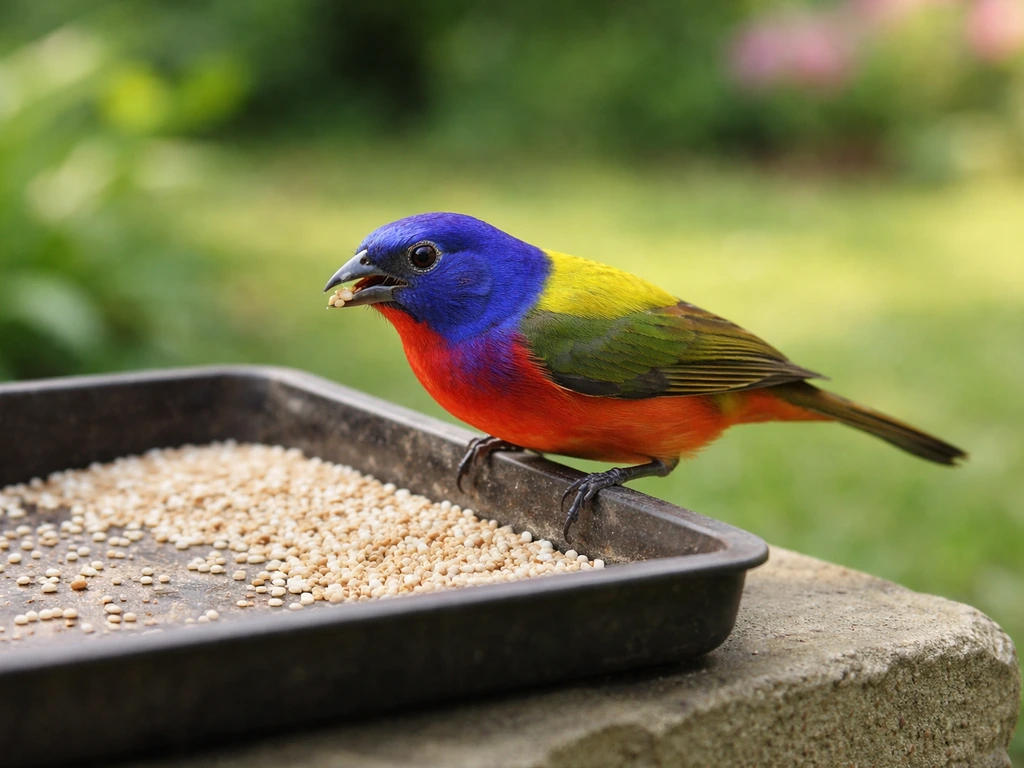
For painted buntings, a low platform feeder or a caged tube feeder loaded with white proso millet is your best starting point. These birds feed naturally on the ground, they're shy around larger birds, and millet is the seed they'll reliably show up for. Get those three things right and you'll see them. Get any one of them wrong and you'll wonder why the feeder sits empty.
Best Bird Feeder for Painted Bunting: Buying Guide
Marcus Holloway
27 May 2026
What painted buntings actually want in a feeder
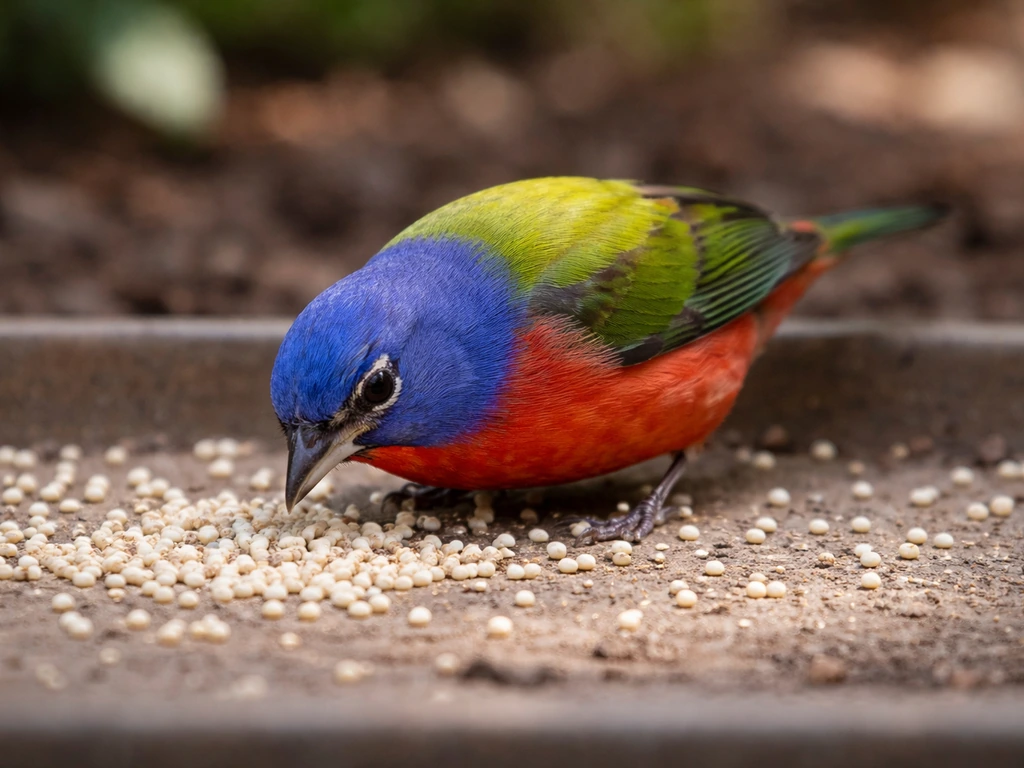
Painted buntings are ground foragers by nature. In the wild, they pick through grass seeds, pigweed, and spurge seeds on or near the ground, and they'll even grab a plant stem, pull it down, pin it with one foot, and eat the seeds off it. That behavior tells you a lot about feeder selection: they're most comfortable feeding at or close to ground level, on an open surface where they can see around them. Elevated tube feeders with tiny perches are not their natural element.
The seed choice is straightforward: white proso millet. That's not a guess or a generalization. It's the one commercial seed that reliably draws painted buntings, and it's what you should fill whatever feeder you choose. Most mixed birdseed bags contain millet, but the ratio matters. A bag heavy on sunflower or safflower won't do much. Buy a dedicated bag of white proso millet and use that. Outside of breeding season, seeds make up most of a painted bunting's diet. During spring and summer breeding months they shift to insects for protein, so don't be discouraged if activity drops during that window.
The other thing to know is that painted buntings are genuinely shy. They'll avoid a busy feeder crowded with grackles, house sparrows, or starlings. A caged feeder design, which physically blocks larger birds from reaching the seed ports, can make the difference between a bunting that hangs around and one that glances over and keeps moving. Keep the feeding surface low, keep the seed right, and reduce competition. That's the whole formula.
Which feeder style works best (and when)
There are four main feeder styles to consider for painted buntings: platform, tube, hopper, and specialty caged designs. Each has a different use case, and the right one depends on your yard setup and how much competition you're dealing with.
Platform feeders: the natural choice
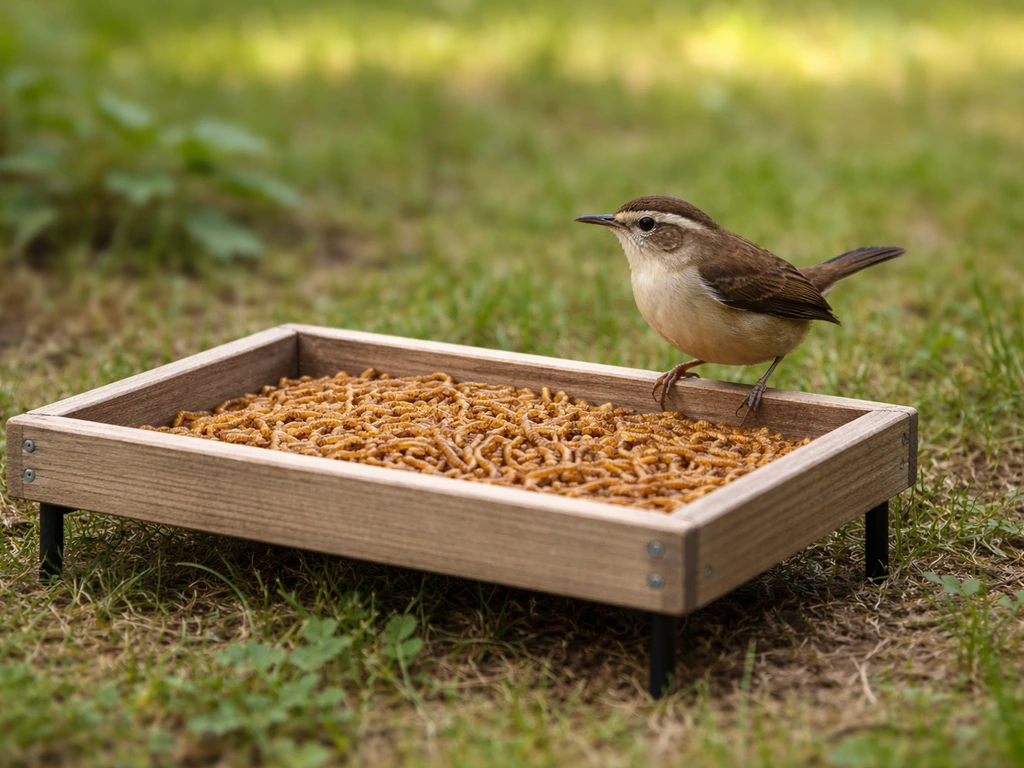
A low platform or tray feeder is the most intuitive match for painted buntings. It mimics ground feeding, gives them a wide open surface to land and move around, and lets you pile in a generous amount of millet. You can hang it low or mount it on a short post close to the ground. The downside is seed exposure: platform feeders offer no weather protection unless they come with a roof, and millet left wet will mold fast. Look for a platform with drainage holes in the tray and a roof or cover if you're in a rainy climate. Clean it out every few days during humid weather.
Caged tube feeders: the best all-around pick
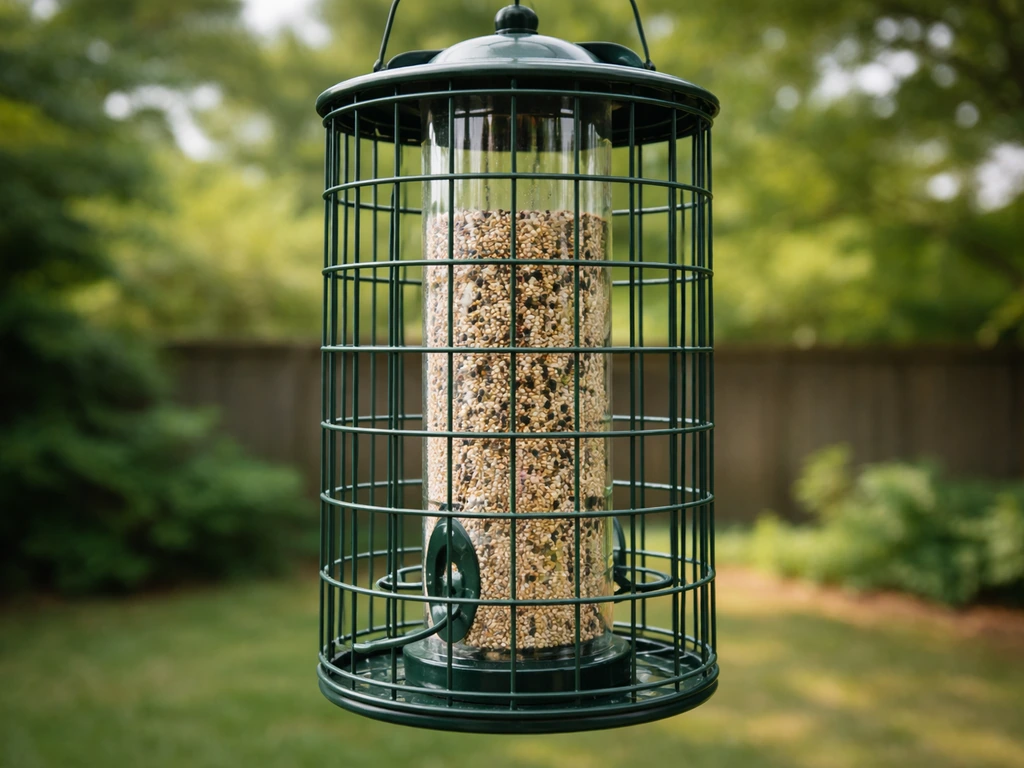
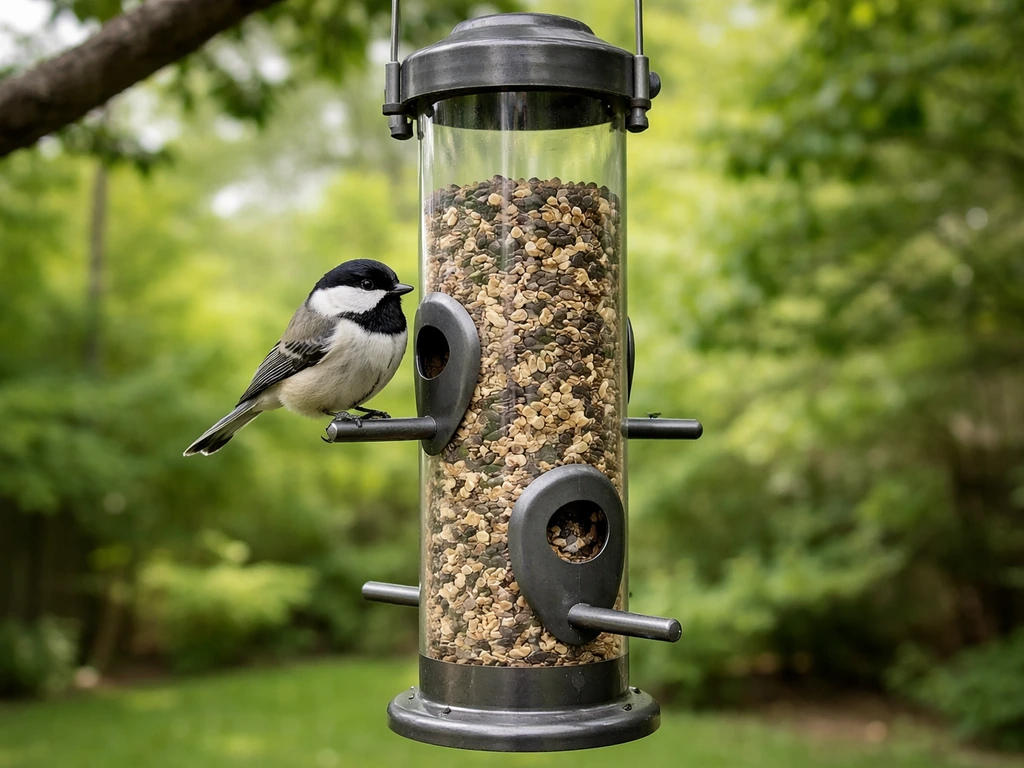
If I had to pick one feeder style for painted buntings in a typical backyard, it would be a caged tube feeder. The tube holds millet (make sure the ports are sized for millet, not just nyjer), and the outer cage, typically a 1.5-inch powder-coated metal grid, physically prevents larger birds and squirrels from reaching the seed. Painted buntings fit through the cage openings; grackles and starlings don't. That cage design does a lot of work for you, and it's why caged feeders are specifically recommended for shy species that get crowded out. The Audubon Dragonfly-style caged tube feeders are a well-known example of this format, using a steel cage paired with fold-down perches inside.
Hopper feeders: decent but not ideal
Hopper feeders hold a lot of seed and dispense it gradually, which is convenient. They'll attract painted buntings if stocked with millet, but most hoppers are designed for mixed seed and larger birds. The feeding ledge tends to attract every bird in the neighborhood, which creates exactly the crowded, competitive situation painted buntings avoid. If a hopper is what you already have, try it with millet and see what shows up. Just be ready for heavy traffic from house sparrows.
Specialty and weight-activated feeders
Weight-activated feeders like the Audubon Magnet tube feeder use perches that collapse under anything heavier than about 3 ounces, which knocks out squirrels, grackles, starlings, and larger jays. Painted buntings are light enough to trigger the perches normally. These feeders offer a good combination of pest control and species targeting, and the Magnet design holds up to 7.5 pounds of seed so you're not refilling constantly. The trade-off is cost: these are more expensive than a basic platform tray. If squirrels and grackles are a real problem in your yard, the extra investment usually pays off.
| Feeder Style | Best For | Painted Bunting Fit | Main Downside |
|---|---|---|---|
| Low Platform/Tray | Ground-level feeding, open yards | Excellent: mimics natural foraging | Seed gets wet; high competition |
| Caged Tube | Blocking larger birds/squirrels | Excellent: size-selective access | Smaller seed capacity |
| Hopper | High-volume feeding, mixed species | Moderate: will visit but busy | Attracts too many competitors |
| Weight-Activated Tube | Pest/competitor control | Good: light birds pass through | Higher cost |
Where to put the feeder: height, cover, and shade
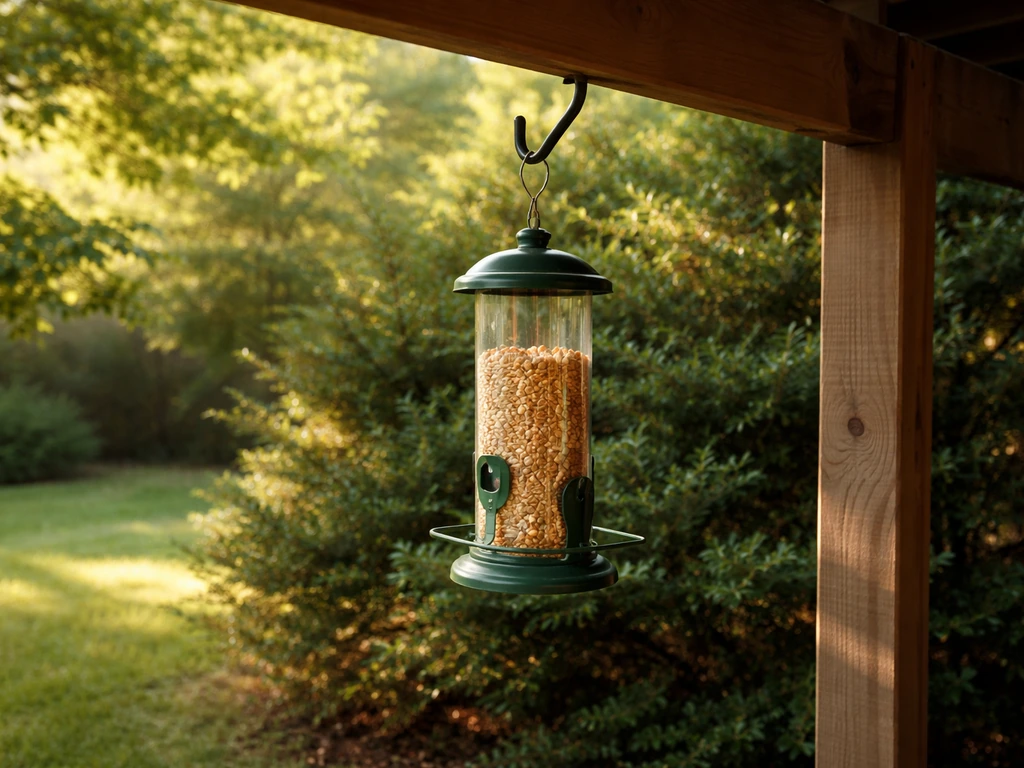
Placement is where a lot of people leave results on the table. You can have the right feeder with the right seed and still see nothing because the location is off. Painted buntings, being naturally cautious and ground-oriented, need to feel safe approaching the feeder. The sweet spot is 10 to 15 feet from dense shrubs, brush piles, or trees. That distance gives them quick escape cover if something spooks them, but it's far enough that a cat or hawk can't launch an ambush from the same cover. Oklahoma wildlife guidance suggests 5 to 10 feet from dense shrubbery, while ornithologists interviewed for birding sites tend to recommend 10 to 15 feet. I'd aim for about 10 feet as a practical middle ground.
For height, low is better for painted buntings specifically. A platform feeder sitting 18 to 24 inches off the ground is very effective. If you're using a tube or caged feeder, hanging or mounting it at about 4 to 5 feet is reasonable, but lower placements tend to outperform higher ones for this species. Avoid mounting any feeder directly in full afternoon sun in summer. Seed dries out and degrades faster, and buntings, like most birds, prefer a bit of shade and shelter. Morning sun is fine.
One more placement note: keep at least 10 feet of open space around the feeder so birds can scan for predators as they approach. A feeder crammed into dense foliage might feel protected but actually makes birds nervous because they can't see what's coming.
Keeping squirrels, grackles, and starlings out
Pest management is not optional if you want painted buntings to stick around. Squirrels will empty a platform feeder in a morning, and grackles will run off smaller birds like buntings the moment they land. Here's how to deal with each.
Squirrel-proofing
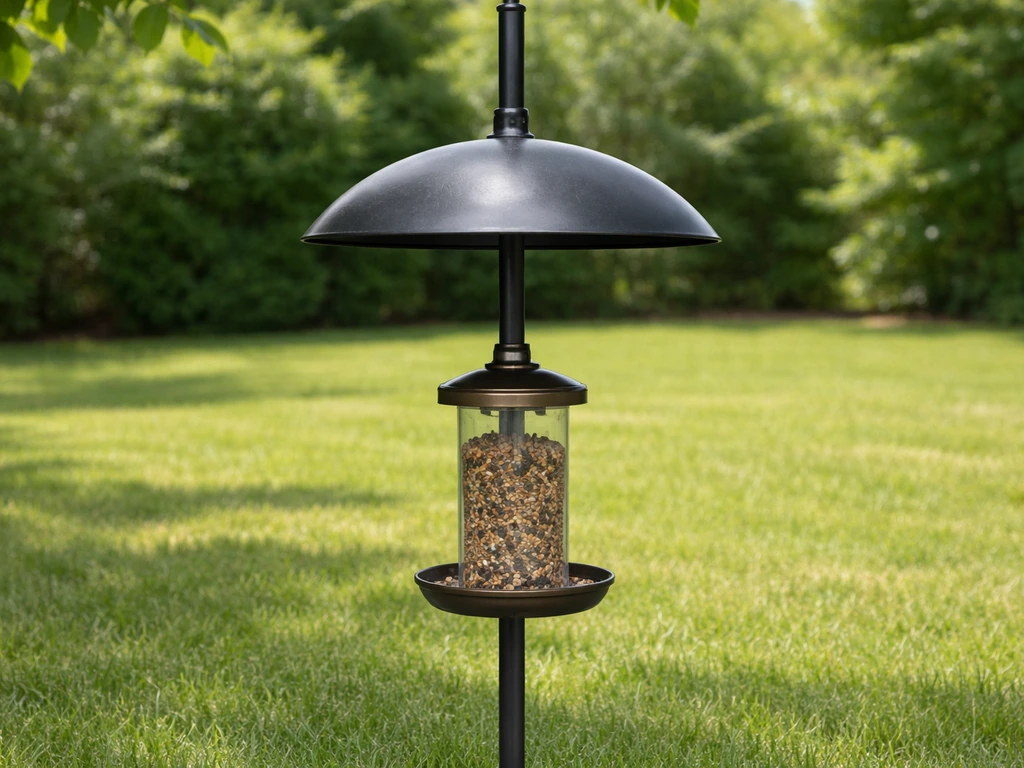
The most reliable approach combines a baffle with the right feeder. If you're not sure what is a baffle for a bird feeder, it helps block squirrels from reaching the seed. If you're using a pole-mounted feeder, a wrap-around baffle placed at least 4 to 5 feet off the ground and more than 10 feet from any horizontal jumping surface (fence, tree branch) stops most squirrels cold. The 5-7-9 rule is a useful shorthand: mount the feeder at least 5 feet high, place any baffle at least 7 inches in diameter, and keep the feeder 9 feet from any horizontal launch point. For hanging feeders, a squirrel-proof cage (like the Audubon Dragonfly caged design) or a weight-activated feeder (like the Magnet) handles the problem directly without needing a separate baffle. The Perky-Pet Squirrel-Be-Gone uses a weight-activated cage mechanism in a compact 2-pound feeder, which is a budget-friendly option. The cage also doubles as competition control for larger birds.
Grackles and starlings
These are the trickier problem for painted buntings because they're big, bold, and aggressive. A caged feeder with 1.5-inch grid openings physically prevents grackles and starlings from reaching the seed or the perches. Weight-activated feeders like the Audubon Magnet will also collapse the perches under a grackle's weight, cutting off their access. Avoid open platform feeders if grackles are a serious issue in your yard. If you love the platform style but have a grackle problem, try a small caged platform (some exist with a mesh dome or cage surround) or simply switch to a caged tube feeder for the primary bunting feeding station. This is similar to the challenge finch feeders face with house sparrow competition, and the solutions overlap.
Material and durability: what to look for
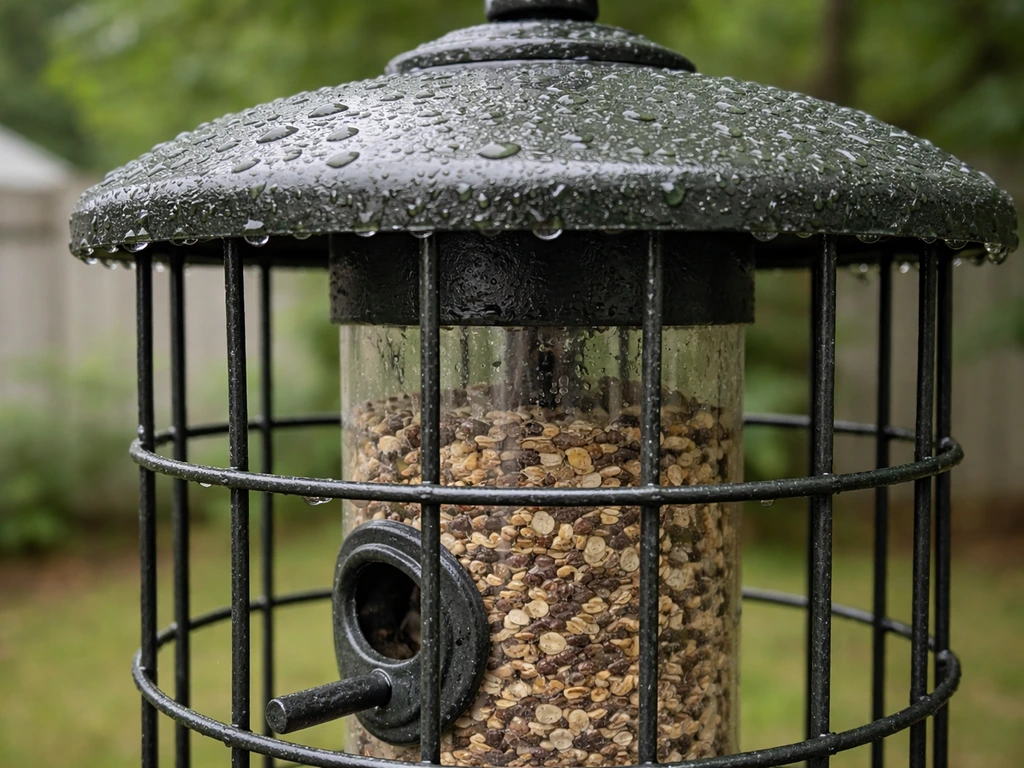
Painted bunting feeders sit outside year-round in many climates, including the humid Gulf Coast and Southeast where these birds winter and breed. Material choice matters more than people expect.
- Powder-coated metal cage: Resists rust and holds up to sun and rain far better than bare wire. Look for this on any caged feeder design.
- UV-stabilized polycarbonate or thick acrylic tubes: Clear tubes let you see seed levels, but cheap plastic yellows and cracks. UV-stabilized versions last several seasons.
- Metal ports and perches: Plastic ports wear and crack at the seed opening. Metal ports hold their shape longer and are easier to clean thoroughly.
- Drainage holes in trays and platform bases: Essential for millet, which molds quickly when wet. Any platform or tray without drainage is a maintenance headache.
- Stainless or rust-resistant hardware: Hooks, hangers, and screws rust in wet climates. Check these before buying, especially on cheaper models.
Cleaning frequency matters as much as material. Audubon recommends cleaning feeders every two weeks as a baseline, but in hot and humid weather you should do it more often. Moldy or musty seed needs to go in the trash immediately, not just pushed aside. Use a solution of nine parts water to one part bleach, rinse thoroughly, and let the feeder dry completely before refilling. Wet millet sitting in a tray is a fast mold factory, and sick or dead birds around a feeder are almost always linked to neglected cleaning.
The best feeders for painted buntings: how to choose for your yard
Here's how I'd think about it based on your specific situation:
- If you're just starting out and want the simplest path to seeing painted buntings: buy a low platform or tray feeder, fill it with white proso millet, and place it 10 feet from a shrub or brush pile at a height of 18 to 24 inches. That's your entry-level setup and it works.
- If you have squirrel and grackle pressure: skip the open platform and go straight to a caged tube feeder with 1.5-inch metal grid openings. The Audubon Dragonfly-style caged tube feeder is the benchmark in this category. Make sure the seed ports are large enough for millet (some are designed for nyjer only).
- If you want a hands-off, low-refill setup: the Audubon Magnet weight-activated tube feeder holds 7.5 pounds of seed and handles squirrel and large-bird exclusion automatically. It's a bigger upfront cost but a genuinely low-maintenance feeder for an active yard.
- If you already have a hopper feeder: load it with white proso millet and monitor what shows up. Add a caged tube feeder nearby as a dedicated bunting station to give shy birds a competition-free option.
- If you're in a rainy or humid climate: prioritize a platform feeder with a roof or a covered hopper design, combined with drainage holes in any tray. Plan on cleaning every five to seven days during wet stretches.
One thing worth noting: painted buntings can take time to discover a new feeder, sometimes a few weeks. Placement near natural cover, consistent seed, and a clean feeder are the three things you can control. Don't move the feeder around during the first month. Let them find it and get comfortable. Once a painted bunting starts coming regularly, it often becomes a reliable visitor for the whole season.
If you're already running feeders for other species like finches or wrens, a dedicated low platform with millet placed slightly apart from your main feeding station works well. If you want the best results for blue jays, use a feeder designed to hold up to heavier birds and discourage smaller competitors. A dedicated “best bird feeder for finches” setup can also help you fine-tune your approach for smaller seed-eating birds in the same backyard. It gives buntings a less competitive spot without forcing you to overhaul your whole setup. A baffle on the pole is always worth adding regardless of feeder style, and it protects every species you're trying to attract.
FAQ
What white millet amount should I start with, so painted buntings actually find the feeder?
Start with a full, visible layer rather than a thin sprinkle. For a low tray or platform, a couple of inches of millet that birds can pick through is usually better than just filling the bottom, especially during the first week when they are sampling and may not commit to deeper seed.
Can I use mixed seed if I see painted buntings checking the feeder?
You can, but only if you confirm the millet proportion is high. If sunflower or safflower dominates, buntings often ignore it, then the feeder stays “busy” with other species instead. If you want a mixed setup, separate the millet into its own feeder rather than relying on a blend.
How do I know if the feeder ports are the right size for millet in a caged tube feeder?
Check that millet can flow freely through the exact ports without bridging or clogging. If the tube empties slowly, or you find millet stuck near the top of the ports, the openings may be sized for nyjer or smaller seeds. In that case, switch to a millet-rated model or lightly adjust how you fill (loose fill, not packed).
Should I remove perches from the feeder for painted buntings?
Usually no for caged and weight-activated designs, because the issue is access and competition, not perch preference. Painted buntings can feed without perching long, but perches can help them approach safely. If perches increase visits by larger birds, then choose a design that restricts them physically (cage grid or weight-activated collapse) rather than simply removing perches.
How long should I wait before assuming the feeder setup is not working?
Give it at least 2 to 4 weeks before making major changes. Painted buntings can take time to discover a new food source, and moving the feeder too early resets their learning. During that period, keep seed type consistent, keep the feeder clean, and only do small placement tweaks if needed.
What’s the best way to keep millet from getting wet and molding on a platform feeder?
Use a feeder with a roof or cover, or place it where rain is less likely to directly hit the tray. Even with shelter, empty and dry the tray more often in humid weather, and don’t reuse millet that has been wet for any length of time.
Will a baffle alone solve squirrel problems if I have a low platform feeder?
Not always. A baffle helps on pole-mounted feeders, but squirrels may still access low trays by jumping from nearby surfaces. If squirrels are persistent, increase separation from fences and branches and consider a squirrel-proof caged tube or a weight-activated feeder so access is denied mechanically.
How can I reduce grackles and starlings without giving up my platform feeder?
If open platform designs keep getting crowded, switch your primary station to a caged tube or use a small platform that has an enclosure or cage surround. Another approach is to keep the platform as a secondary feeder and focus your millet on the caged/weight-controlled setup where larger birds cannot reach ports or perches.
Is it okay to keep the feeder up in winter, or should I change anything?
You can keep millet feeders year-round, but watch for weather-driven spoilage and adjust cleaning frequency in cold, wet snaps. Also consider that bird activity may be lower during the breeding season, since painted buntings shift toward insects, so empty feeders do not always mean the setup is wrong.
What feeder height should I choose if I have both cats and a lot of shrub cover?
For painted buntings, low is still generally best (platform near 18 to 24 inches, or tube at roughly 4 to 5 feet), but ensure the approach corridor has clear sightlines. Aim for the feeder to be far enough from dense cover that predators cannot stage an ambush from the same spot, while still letting buntings use nearby cover to feel safe.
How do I handle cleaning if I see dead birds near the feeder?
Stop refilling immediately and discard any moldy or musty seed. Clean thoroughly with a diluted bleach solution, rinse well, and let the feeder dry completely before refilling. If dead birds appear repeatedly, consider temporarily removing the feeder and reassessing placement and cleaning schedule.