The best position for a bird feeder is in a spot that sits at least 10 feet from dense shrubs or trees (so predators can't ambush from cover), either within 3 feet of your nearest window or more than 30 feet away (to avoid fatal window collisions), and mounted 4 to 6 feet off the ground on a pole fitted with a baffle. That combination handles the three biggest placement problems at once: predator access, window strikes, and squirrels. Everything else, like sun orientation, wind protection, and spacing multiple feeders, builds from there.
Best Position for a Bird Feeder: Placement Tips
Marcus Holloway
31 May 2026
How to choose the ideal feeder location
Start by thinking about what birds actually need from a feeding spot. They want to see threats coming, have a quick escape route to nearby cover, and not have to fight wind and rain while eating. Those needs pull in slightly different directions, which is why the placement sweet spot takes a bit of thought.
Distance from cover
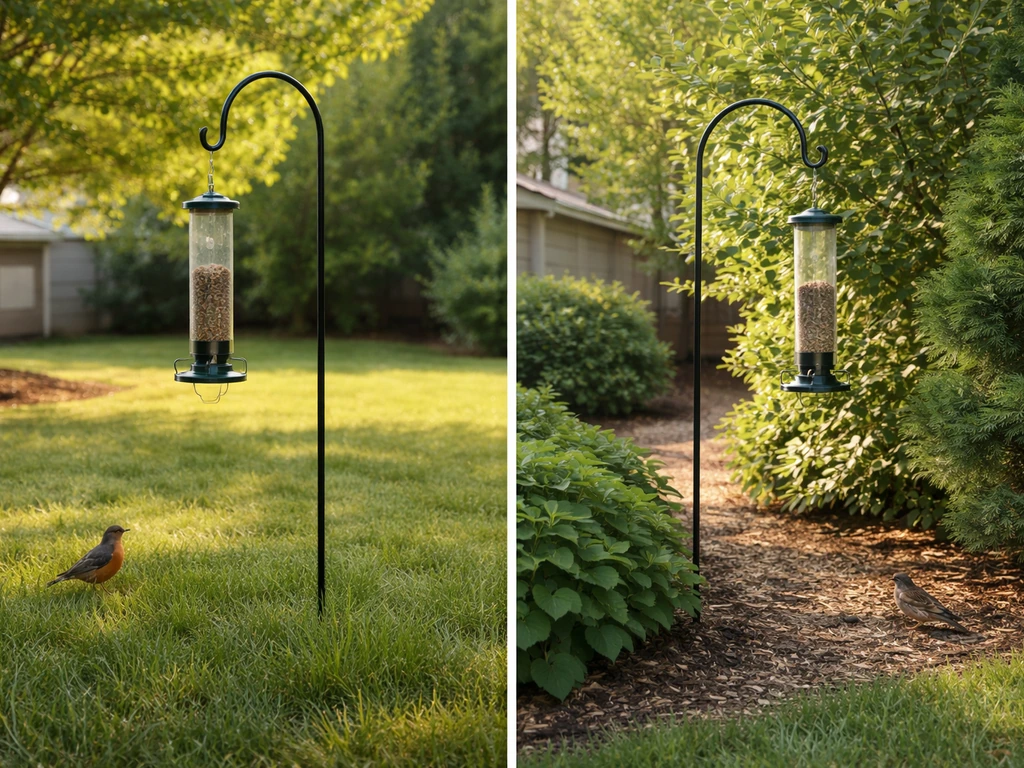
Birds won't visit a feeder that sits in the open with no shelter nearby. At the same time, you don't want the feeder right up against a conifer, dense shrub, or fence line because that gives cats and squirrels a hidden launch point. The practical rule is roughly 10 feet from any vegetative shelter or structure. That's close enough that birds can dash to safety, but far enough that a cat can't crouch in the shrubs and lunge. In my yard I use an ornamental hedge as the background and keep my main pole station about 12 feet out from it. Birds use the hedge constantly between visits.
Sun, shade, and wind orientation
A south- or east-facing spot gives you good morning light for watching and photography, and it keeps the feeder warmer in winter without baking nectar feeders in summer heat. For hummingbird feeders specifically, avoid long stretches of direct afternoon sun because it spoils nectar faster and forces more frequent cleaning. Wind is the other factor people underestimate. A spot sheltered from the prevailing wind by a fence, wall, or hedge keeps seed from scattering and makes the feeder more comfortable for birds during storms. They'll keep visiting through bad weather if the feeder feels protected. That said, don't stick the feeder so deep into a corner that air circulation is poor, since stagnant damp air accelerates mold in seed.
The window distance rule you have to follow
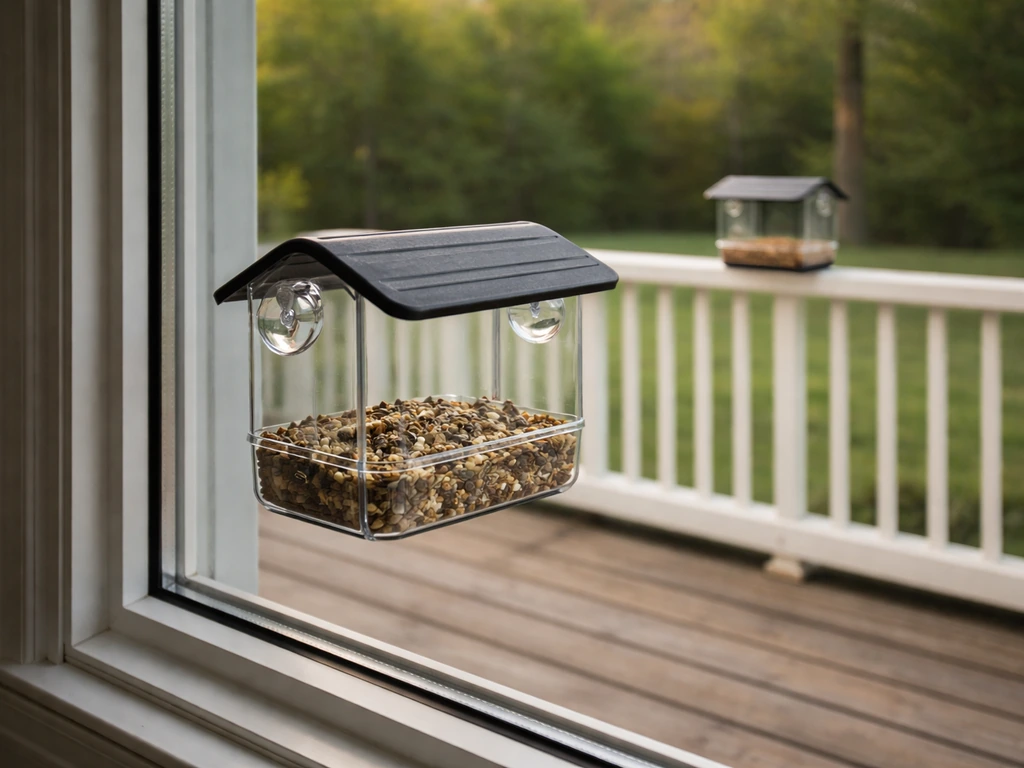
Window collisions kill hundreds of millions of birds in North America every year, and feeder placement is a direct contributing factor. The research-backed rule is simple: place your feeder either within 3 feet of a window or more than 30 feet away. The danger zone is anywhere between 3 and 30 feet. At those intermediate distances, a startled bird has enough room to build speed before hitting glass but not enough distance to course-correct.
Within 3 feet, a collision happens at very low speed and is rarely fatal. Beyond 30 feet, the bird has time to recognize the glass. If your setup puts you in the danger zone, moving the feeder closer to the window is usually the easier fix. Adding window decals or external tape patterns (as recommended by the U.
S. Fish and Wildlife Service and the Cornell Lab) also helps break up the glass reflection and warn birds off.
Height and spacing: what works for different species
Different birds feed at different levels in the wild, and they tend to stick to those preferences at your feeders too. Matching feeder height to species significantly increases traffic. For the best height for bird feeders, match the feeder level to the species you want to attract and the cover they need for safety.
| Species / Group | Preferred Feeder Height | Feeder Type |
|---|---|---|
| Ground feeders (juncos, doves, sparrows) | Ground level to 2 feet | Platform or tray feeder on low post or ground |
| Small songbirds (finches, chickadees, nuthatches) | 4 to 6 feet | Tube feeder or sock feeder on pole |
| Cardinals, blue jays, grosbeaks | 5 to 6 feet | Hopper feeder or large tube feeder with tray |
| Woodpeckers | 5 to 7 feet | Suet cage or clinging feeder on tree/post |
| Hummingbirds | 4 to 6 feet | Nectar feeder hung from bracket or shepherd's hook |
| Mixed station (multiple species) | Varies by feeder, 4 to 6 feet average | Combination pole system with multiple hook arms |
When you're running multiple feeders, give each one at least 5 to 6 feet of horizontal spacing so dominant birds at one feeder can't block access to the next. If you have a tube feeder for finches next to a hopper for cardinals, aggressive jays at the hopper won't police the tube feeder as easily when there's real distance between them.
Hopper feeders can attract many of the same species as tube feeders, but they may also bring larger birds such as blue jays and cardinals, according to UF IFAS (UF EDIS) hopper for cardinals.
For a full bird feeding station with four or five feeders, spreading them across a 10- to 15-foot area (or across different parts of the yard) gives shyer species a fighting chance.
Mounting and setup: poles, rails, and hanging options
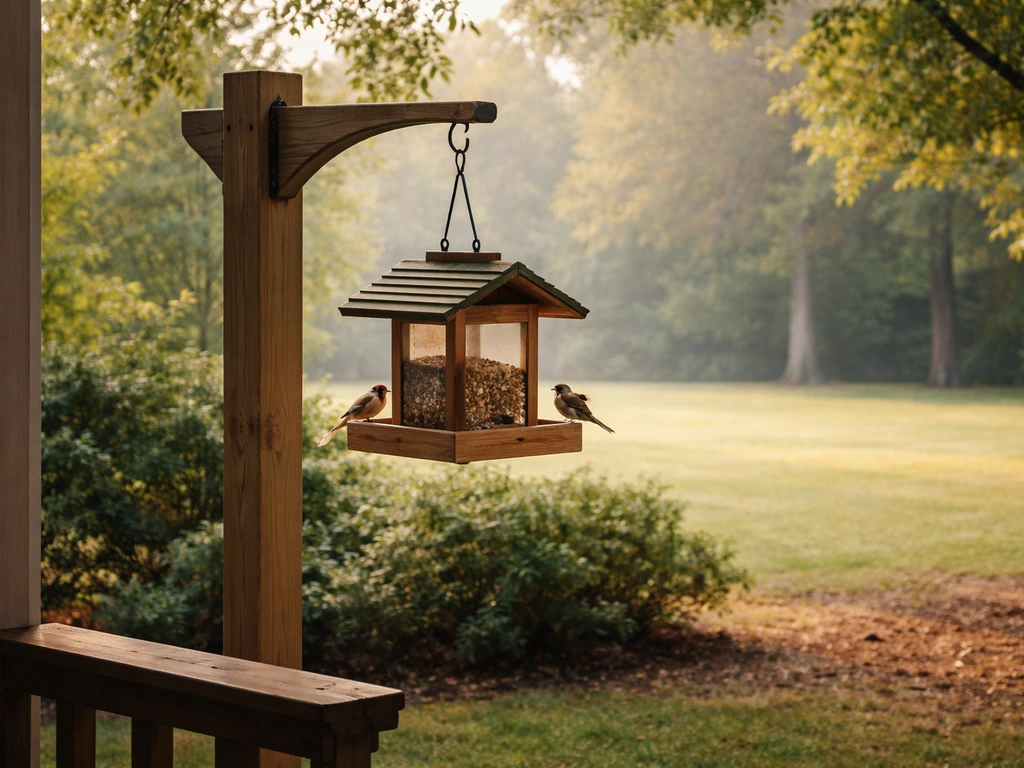
How you mount the feeder matters almost as much as where you put it. A feeder that sways wildly in the wind, tips over, or wobbles on a flimsy bracket discourages birds and wastes seed. Here's what actually works.
Freestanding pole systems
A dedicated metal pole system is the most flexible and predator-resistant mounting option. Poles let you add a baffle (more on that below), position the feeder anywhere in the yard, and adjust height easily. Sectional shepherd's hook poles are inexpensive and work for single feeders. Multi-arm feeder poles (sometimes called feeding stations) hold four to six feeders at once and are ideal if you want to attract a mix of species in one spot. Push the pole at least 12 to 18 inches into the ground for stability, or use a ground anchor if your soil is loose. A feeder that rocks or tilts after every starling lands on it will drain your patience fast.
Hanging from eaves, trees, and brackets
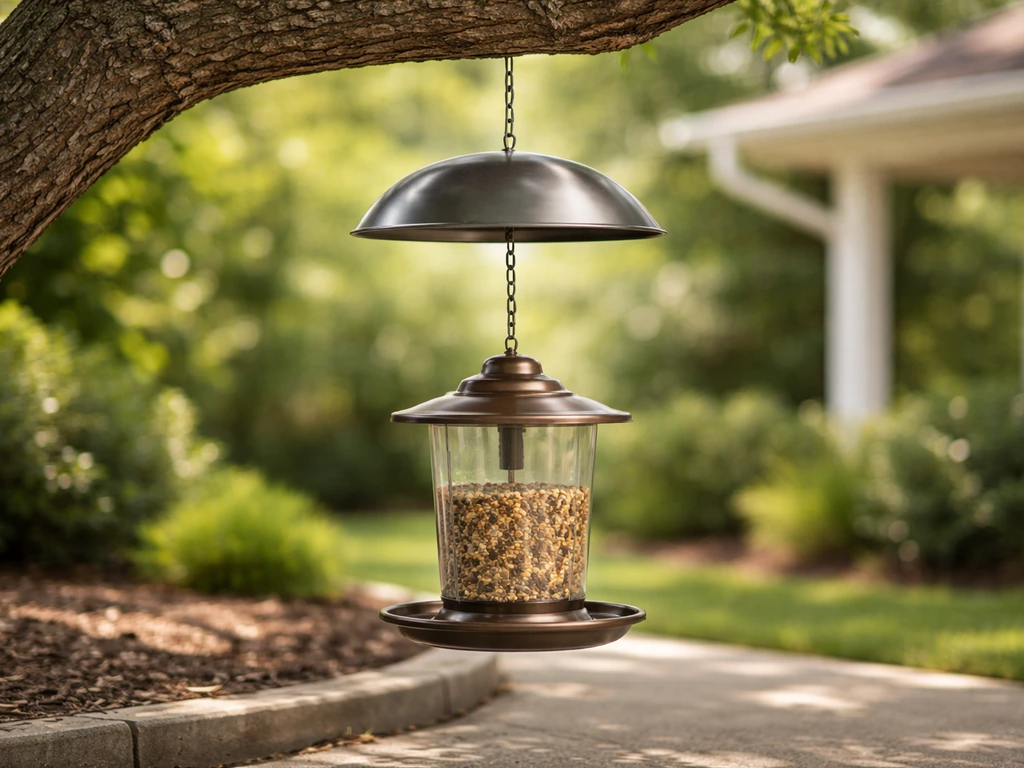
Hanging feeders from a tree branch or porch eave is convenient, but it creates real squirrel problems unless there's a baffle involved. If you're hanging from a branch, the branch needs to be at least 10 feet from a roof edge or wall so squirrels can't jump across. Bracket-mounted feeders on the side of a house or fence post are popular for window viewing, but again, keep in mind the 3-foot or 30-foot window rule. A sturdy L-bracket screwed into a window frame puts the feeder within arm's reach of the glass, which satisfies both the safety rule and your viewing comfort.
Deck rails and window-mount feeders
Rail-clamp feeders work well on deck railings if you accept that squirrels will likely reach them. They're best paired with a cage-style feeder that physically blocks squirrel access. Window-mounted suction-cup feeders sit right against the glass, which puts them inside the safe 3-foot zone and gives you an unbeatable close-up view. If your goal is the best photo bird feeder setup, focus on close, safe window viewing plus a stable mount so birds stay comfortable and predictable. They're particularly popular for camera feeders and photography setups. Just make sure the suction cups are rated for your feeder's weight when full of wet seed after a rainstorm.
Keeping out squirrels, cats, and nuisance birds
This is where most backyard birders spend the most time troubleshooting, so let's be direct about what works and what doesn't.
The squirrel-proofing placement formula
The most reliable squirrel-proofing system combines height, distance from launch points, and a baffle. Wildlife experts often call this the 5-7-9 rule: mount the feeder about 5 feet off the ground, position the pole at least 7 feet from any fence, deck, or structure a squirrel can jump from, and keep it 9 feet away from overhanging branches. Then add a pole-mounted baffle at 4 to 5 feet above the ground. Baffles are bowl- or umbrella-shaped barriers that spin or tilt when a squirrel grabs them, dumping the animal before it reaches the feeder. Without that distance from structures, even a perfect baffle won't stop a squirrel that can simply leap past it from a nearby railing.
Cats and other ground predators
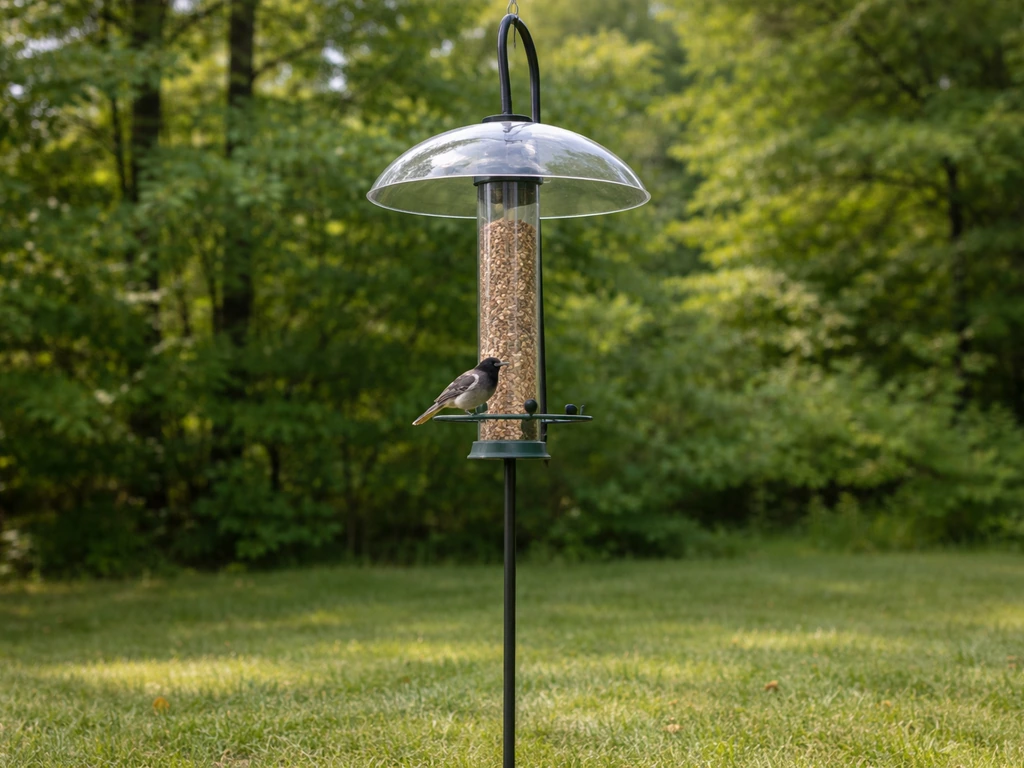
A freestanding pole 4 to 6 feet high with a smooth metal shaft and a baffle is genuinely difficult for a cat to climb. The bigger cat risk is ambush: a cat hiding in ground cover near the feeder and rushing birds that land low to grab spilled seed. Keep the area under your feeders clean of seed debris (or switch to no-mess hulled seed blends that produce less waste), and maintain that 10-foot clear zone around the feeder base. If neighborhood cats are a chronic problem, a wider dome baffle at the top of the pole also deters perching raptors, which can scare birds away from the feeder entirely.
Dealing with grackles and other nuisance birds
Grackles are persistent, and placement alone won't solve a grackle problem, but it helps. Positioning tube feeders higher (6 to 7 feet) with small perches favors lighter birds like finches and chickadees, since grackles prefer to feed comfortably without clinging. Cage-style feeders that physically cage the tube also work well because grackles are too large to reach through the wire. Avoid open tray and platform feeders at ground level if grackles are your main issue, as those designs invite flocks. Switching to safflower seed instead of sunflower is another effective tactic because grackles strongly dislike it, while cardinals and chickadees eat it readily. That's more of a seed strategy than a placement one, but it works hand-in-hand with thoughtful positioning.
Weather resistance and keeping birds comfortable year-round
Seed that turns to a moldy clump after one rainstorm, or a nectar feeder that freezes solid in January, stops birds from coming back. Placement decisions directly affect how well feeders handle weather.
Choose a spot with some overhead protection if you can. The overhang of a porch roof, a dense tree canopy above the feeder, or a feeder with its own built-in roof keeps seed dry and extends the time between cleanings. Look for feeders with drainage holes in the tray or base. Without drainage, a good rainstorm fills the bottom with water, seeds swell and rot, and you've got a disease vector instead of a feeder. In winter, darker-colored feeders in a sunny south-facing spot absorb a little extra warmth, which can help prevent seed from freezing into a solid block in very cold climates.
Clean all seed feeders at least every two weeks under normal conditions, and more often during warm, wet weather when mold grows fast. The cleaning process doesn't have to be complicated: scrub with soap and water, then soak in a 50/50 vinegar-and-water solution, rinse thoroughly, and let the feeder dry completely before refilling. (Skip the soap on hummingbird feeders.) Wet seed left to sit is one of the fastest ways to spread avian diseases like salmonellosis through your yard, so this isn't just a tidiness issue.
Safety, disease control, and being a good neighbor
Feeding birds responsibly means thinking about the birds' health, not just their presence in your yard.
Disease control at the feeder
Position feeders so fallen seed and husks don't pile up in one spot. Rotating where you place a ground tray feeder occasionally, or raking up hulls weekly, prevents the buildup of bacteria and mold that causes illness in birds. During periods when avian disease outbreaks are reported in your region (such as the salmonella outbreaks that periodically affect finch populations), taking feeders down temporarily and thoroughly sanitizing before putting them back up is the right call. The Cornell Lab's Project FeederWatch recommends treating feeder breaks during active outbreaks as a normal part of responsible bird feeding.
Winter feeding: when it matters most
Winter is when feeders genuinely make a difference for bird survival, particularly during ice storms and heavy snow when natural food is buried. A feeder that's easy for you to access for refilling means you'll actually keep it stocked through cold snaps. Place winter feeders close enough to your house that you'll refill them even on unpleasant days. A suet feeder hung within sight of your kitchen window is one you'll remember to maintain. High-energy foods like black-oil sunflower, suet cakes, and nyjer (thistle) are the priority in winter, and positioning these feeders in a sheltered spot out of prevailing north or northwest winds makes them more attractive to birds hunkered down in cold weather.
Neighbor and community considerations
Scattered seed husks, spilled millet on a patio, and squirrels raiding neighboring yards are real sources of neighbor friction. Siting your feeder toward the interior of your yard rather than on a boundary line, using hulled no-mess blends that produce minimal waste, and keeping the ground underneath clean goes a long way. If you're near a property line, a natural hedge or garden bed between the feeder area and the boundary softens the visual impact and catches debris before it crosses over.
Your placement checklist and what to do if birds aren't showing up
Run through this list when you set up a new feeder or troubleshoot a quiet one:
- Is the feeder within 3 feet of a window or more than 30 feet away? If it's between 3 and 30 feet, move it.
- Is the pole or hanging point at least 10 feet from dense cover (shrubs, conifers, buildings)?
- Is the feeder 4 to 6 feet off the ground with a baffle installed at 4 to 5 feet?
- Is the pole at least 7 feet from fences, decks, or rails, and 9 feet from overhanging branches?
- Does the feeder have drainage holes or a roof to handle rain?
- Have you cleaned the feeder within the last two weeks?
- Is the seed fresh? Old, clumped, or wet seed will be ignored.
- Is there natural cover nearby (but not too close) for birds to perch and watch before approaching?
- Are you giving it enough time? New feeders in a new location can take one to four weeks for birds to discover.
If birds are visiting but then disappearing, check whether a new predator (a neighborhood hawk, cat, or even a persistent squirrel) has started patrolling the area. Birds will abandon a feeder location that feels unsafe, sometimes permanently until conditions change. Moving the feeder even 5 to 10 feet can reset that association. If you're trying to attract specific species, matching feeder type to bird (tube for finches, hopper for cardinals, suet cage for woodpeckers) matters as much as position.
The height and spacing guidance in this article applies most effectively once you have the right feeder type in place. And if you're adding a camera feeder to your setup, feeder placement relative to your viewing angle and natural light becomes its own layer of decision-making worth thinking through separately. Many birders also use dedicated feeders as the best bird feeder for photography helps you get sharp, safe shots camera feeder.
A bird feeder setup for photography also depends on how you position the feeder for safe window distance and flattering light camera feeder. If you plan to use a camera feeder, place it where the action happens but your setup still follows the window distance safety rule.
FAQ
What should I do if I cannot place the feeder outside the 3 to 30 foot window collision zone?
If your yard only allows a placement in the 3 to 30 foot “danger zone,” the most practical first move is to shorten that distance to within 3 feet (or lengthen it beyond 30 feet) by moving the feeder, not by relying on “hoping birds will be careful.” If moving isn’t possible, switch to a feeder design that encourages calmer approach (cage or close-to-glass mounting) and add visual deterrents to break up reflections.
How often should I clean my feeder if it’s covered but we get heavy rain?
Yes, but treat it as a tradeoff. After major storms, when you notice a sudden increase in wet seed, mold smell, or clumping, clean right away even if your usual schedule is every two weeks. Also check that drainage holes are actually open, since blocked drainage can turn a “covered” feeder into a damp seed trap.
Can I put the feeder in a more open area for better viewing, or do birds require nearby escape cover?
Choose the “escape route” over perfect visibility. Put the feeder where birds can see an obvious safe line toward nearby cover, but keep the shelter far enough away to preserve the predator buffer (roughly the 10 foot clear zone from dense cover or launch points). If you place it in an open lawn edge with no nearby escape cover, bird activity often drops even if predators are technically blocked.
What are the most common reasons a squirrel baffle still doesn’t work?
If you’re seeing squirrels persist despite a baffle, the most common cause is that the baffle is at the wrong height or mounted too low on a pole that still allows a jump past it. Verify the baffle sits about 4 to 5 feet above ground for the typical 5-7-9 approach, and ensure the pole system is smooth and stable so squirrels cannot climb. Then re-check distances to fences, decks, and overhanging branches.
How do I reduce cat risk if I already mounted the feeder at the recommended height?
For cats, distance and clutter matter as much as feeder height. Keep the area under the feeder clean of spilled seed and husks, and avoid placing the pole where cats can stalk from thick ground cover, planters, or dense shrubs within the feeder’s base area. If cats are chronic, consider widening the top baffle design to also reduce perching raptors that can make birds stop visiting.
Will changing feeder height help when one type of bird crowds out the others?
Often, yes. Finches and chickadees may visit more at higher feeder levels, while larger, more aggressive birds tend to dominate at lower or more accessible feeders. If you are targeting specific species, align feeder height and feeder type together, for example tube feeder placement higher for smaller birds and hopper placement lower or differently configured when larger birds are crowding out others.
Do sun direction guidelines change in very hot climates or during long heat waves?
Avoid assuming the correct sun direction solves all weather issues. In very hot regions, an east or south spot can still overheat seed and nectar depending on afternoon shade and how exposed the feeder is. Use a sheltered position from prevailing wind, and if you run nectar, reduce direct afternoon exposure and clean more frequently because nectar spoils faster when temperatures rise.
How should I balance “best placement” with how accessible the feeder is for winter refilling?
Set up your feeder so it can be reached safely and quickly without “temporary fixes” that lead to irregular maintenance. For winter, place it close enough to your house that you can refill during storms and cold snaps, because birds will not return if the feeder goes empty for long periods. If you plan to use a pole, make sure you can access the baffle area too, since squirrel-damage or seed buildup can appear at the top.
What are the extra placement or safety concerns for window-mounted or camera feeders?
For window-mounted or camera-focused feeders, suction-cup feeders require extra attention. Make sure the suction cups are rated for the full feeder weight when wet, and inspect them after rainstorms because water and weight changes can loosen mounts. Also keep the window-distance rule in mind, even for photography setups, since close viewing is safer only when the feeder is mounted in a way that reliably stays put.
Birds visited for a week, then stopped, what’s the fastest way to troubleshoot the placement?
Yes, and the solution is usually local, not global. If birds disappear after being regular visitors, check for new patrols (hawks, cats, or persistent squirrels) within the same micro-area, since even a 5 to 10 foot shift can break a “unsafe” association. Also consider recent changes like new fences, garden growth, or a new parked vehicle blocking the sightline.
If I want multiple feeders, how far apart do they need to be to prevent bullying?
Generally, give each feeder its own “territory” so aggressive birds cannot block access. Keep several feeders separated horizontally (about 5 to 6 feet) and spread them across a larger area (10 to 15 feet) if you have many feeders, so shy species can choose a different route and dominant birds cannot monopolize a single chokepoint.
What placement adjustments matter most for winter-feeding when seed freezes or scatters in storms?
Often, winter performance improves with sheltered positioning plus high-energy foods, but the “right” spot depends on wind patterns. Place winter feeders out of prevailing north or northwest winds when possible, and prioritize stable, protected areas for suet, sunflower, and nyjer so birds can feed during storms without fighting the wind. If freezing happens, make sure the feeder design and drainage or cover reduce standing moisture and ice formation.