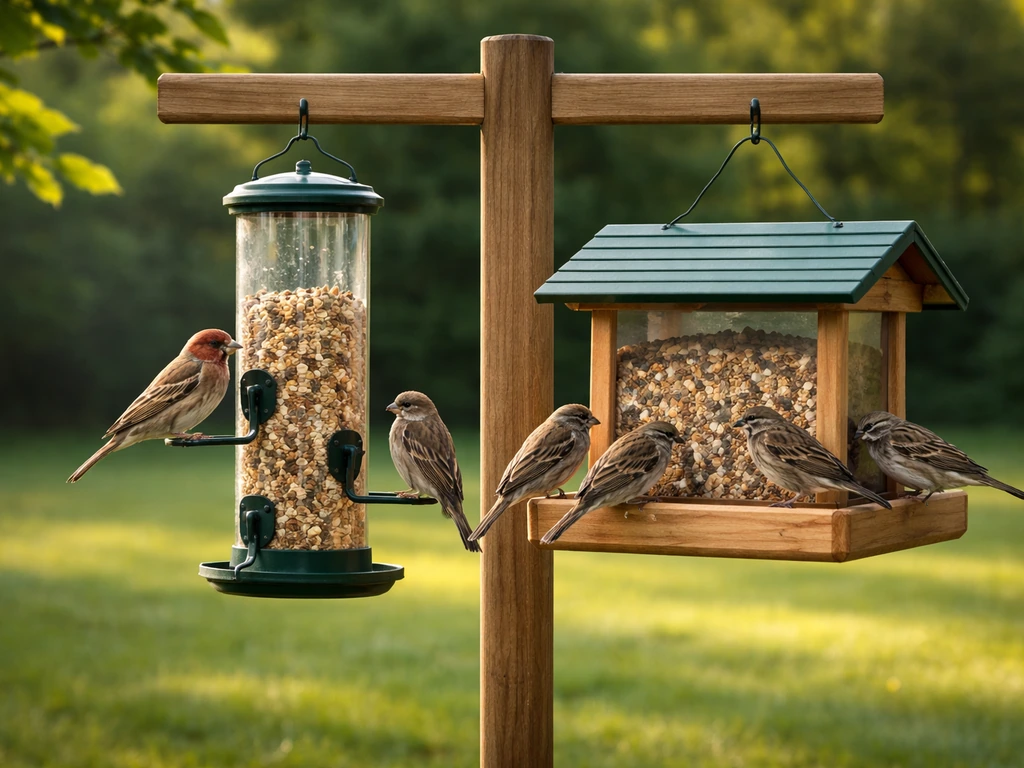
The best style bird feeder for your backyard depends on two things above everything else: which birds you actually want to attract, and what's working against you (squirrels, rain, grackles, or limited space). If you want cardinals and chickadees with minimal hassle, a hopper feeder on a baffled pole is your answer. If you're chasing finches, go tube. Hummingbirds need a nectar feeder with red parts. Woodpeckers want suet hung high. And if you're fighting squirrels or grackles, your feeder style matters less than the cage or baffle you pair with it. Read through this guide to nail down exactly which style fits your birds, your yard, and your patience level.
Best Style Bird Feeder: Choose by Species, Weather, and Yard
Marcus Holloway
23 Jun 2026
What 'best style' actually means for your setup
When people search for the best style bird feeder, they usually mean one of two things: the one that looks nicest, or the one that works best. For help choosing the most visually pleasing feeder for your yard, start with the style that matches the birds you want to attract best looking bird feeders. This guide is firmly about the second.
Feeder style is really shorthand for the combination of shape, feeding mechanism, seed type, and bird behavior it's designed for. A tube feeder is not better or worse than a platform feeder in any absolute sense. It's better or worse for specific birds in a specific yard with specific problems. So before you buy anything, you need to answer three quick questions: What birds do you want?
What's your main headache (squirrels, weather, seed waste)? And where are you mounting this thing?
Project FeederWatch makes this explicit: feeders are not one-size-fits-all. Sparrows and doves, for example, prefer large flat surfaces and may never visit an elevated tube feeder no matter how good the seed is. Meanwhile, goldfinches will happily cling upside down on a mesh sock but ignore a platform. Getting the style wrong means the feeder sits empty while birds forage elsewhere. Getting it right means a busy, rewarding yard within a few days of hanging it.
Match your feeder style to the birds you want
This is the most useful shortcut in the whole buying process. Audubon recommends thinking of feeder style in terms of the ecological 'role' it fills: table-like feeders for ground-feeding birds, hopper or tube feeders for shrub and treetop foragers, and suet cages positioned well off the ground for trunk-clinging species like woodpeckers, nuthatches, and chickadees. Here's how that maps to real backyard birds. If you want the fastest way to pick, you can also compare bird feeders side by side based on the species they attract, ease of cleaning, and how they handle local weather.
| Bird | Preferred Feeder Style | Best Seed or Food | Notes |
|---|---|---|---|
| American Goldfinch | Tube feeder or mesh sock | Nyjer (thistle) | Cling feeders with small ports work best |
| Northern Cardinal | Hopper or platform with wide tray | Sunflower seeds | Cardinals prefer a perch and some cover nearby |
| Downy/Hairy Woodpecker | Suet cage or vertical log feeder | Suet cakes | Mount high and away from ground |
| Ruby-throated Hummingbird | Nectar feeder with red parts | Sugar-water (4:1 ratio) | Use multiple small feeders to reduce territorial fights |
| Chickadee / Nuthatch | Tube, suet cage, or hopper | Sunflower seeds, suet | Versatile; will use most elevated feeders |
| Mourning Dove / Sparrow | Platform or ground tray | Mixed seed, millet | Rarely visit elevated tube feeders |
| House Finch / Purple Finch | Tube feeder | Sunflower chips, nyjer | Prefer ports over open trays |
One practical note on hummingbird feeders: territorial behavior is real and it will drive birds away if you use one giant multi-port feeder. All About Birds recommends using several smaller feeders spread around the yard instead. I've seen this play out personally. I replaced a single 10-port feeder with three 4-port feeders in different corners and activity tripled within a week because dominant males couldn't guard all three spots at once.
Traditional feeder styles: hopper, tube, and platform
These three styles cover probably 80% of backyard setups and are the right starting point for most people. If you’re wondering what are two types of bird feeders, most backyards start with hopper feeders and tube feeders. Each has a clear use case and a clear weakness.
Hopper feeders
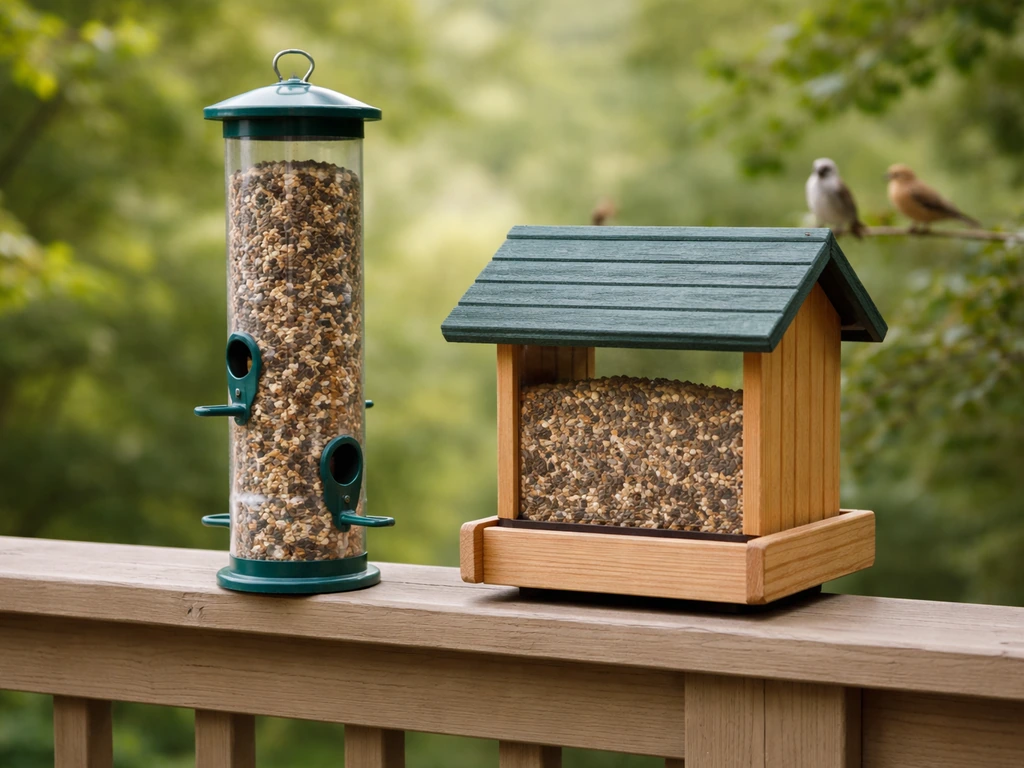
Hopper feeders are the classic barn-shaped feeders with a seed reservoir that dispenses from the bottom as birds eat. They hold a lot of seed, have a roof that keeps rain off reasonably well, and attract a wide range of species including cardinals, chickadees, jays, and house finches. Cornell's All About Birds specifically calls out the roof as a meaningful advantage for keeping seed dry. The downside is that seed can still get wet near the ports if there's driving rain, and damp seed molds fast. Look for models with drainage holes in the tray. Hoppers are the best all-around style if you want variety without buying four different feeders.
Tube feeders
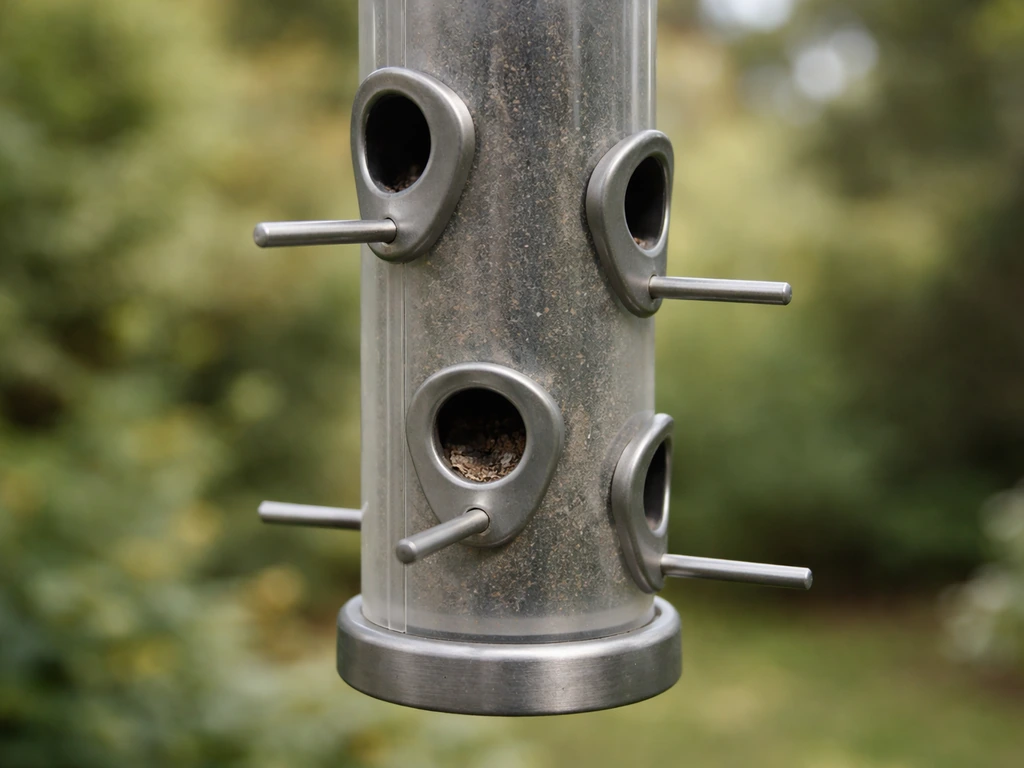
Tube feeders are cylindrical, usually clear or metal, with multiple ports along the side. They excel at targeting specific species because port size matters. Small ports with short perches favor goldfinches and pine siskins. Larger ports with longer perches accommodate house finches and chickadees. Tube feeders waste less seed than platforms because birds can only access what's at each port, and they're easier to keep clean than hoppers. The one real limitation is capacity: a tube feeder empties faster than a hopper in a busy yard, so plan on refilling every couple of days if you've got a lot of traffic.
Platform and tray feeders
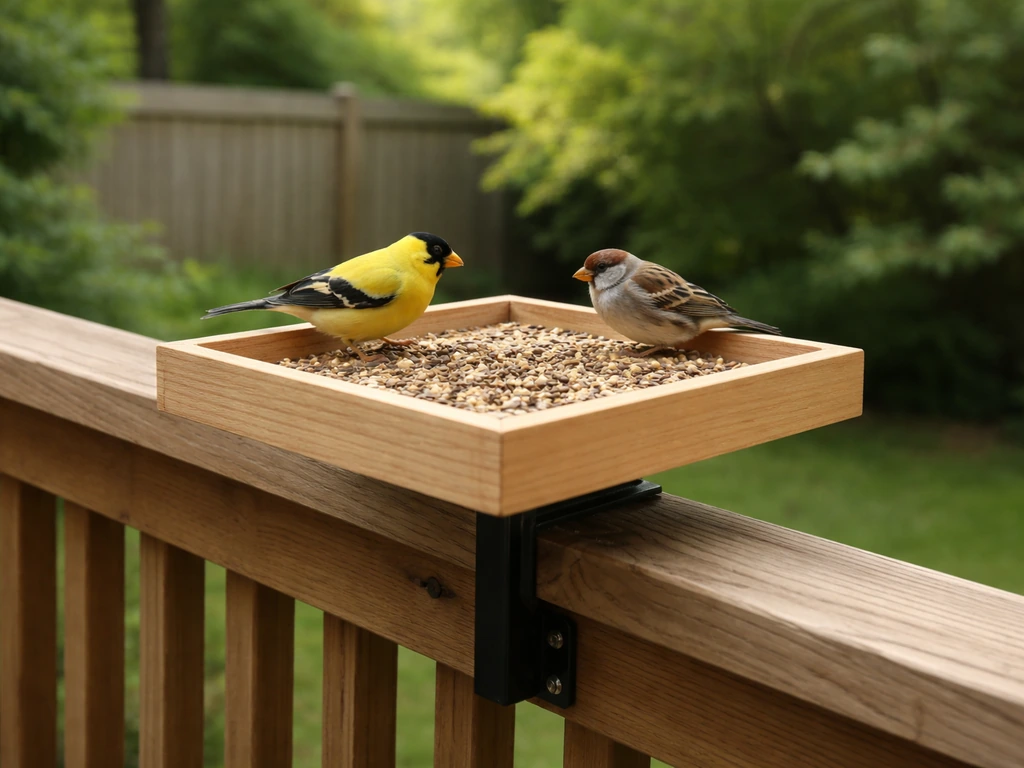
Platform feeders are flat, open trays that sit on a pole, hang from a tree, or sit on a railing. They're the most accessible style for the widest range of birds because there's nothing to navigate: birds land, eat, and leave. Doves, sparrows, juncos, and towhees all prefer them. The problem is exposure.
Seed gets wet, seed gets contaminated by droppings quickly, and squirrels love an open buffet. If you use a platform, go for one with mesh screening on the bottom for drainage, and clean it every few days. Some of the best bird feeder designs incorporate a tray as an extension of a hopper or tube feeder, which gives you the species variety of a platform with slightly better seed protection.
If you want to compare the best bird feeder designs, start with how platform trays protect seed and handle drainage.
Specialty and predator-proof styles: cages, baffles, and squirrel-resistant designs
If squirrels have destroyed your previous feeders, this section is the most important one in the article. The honest truth is that no feeder style alone is truly squirrel-proof. What works is a combination of feeder design and placement. Audubon's placement recommendation is specific and worth following: keep feeders at least 8 to 10 feet from any solid anchor surface (trees, fences, buildings, roofs) that a squirrel can launch from. That placement tip alone solves maybe half of squirrel problems without buying anything new.
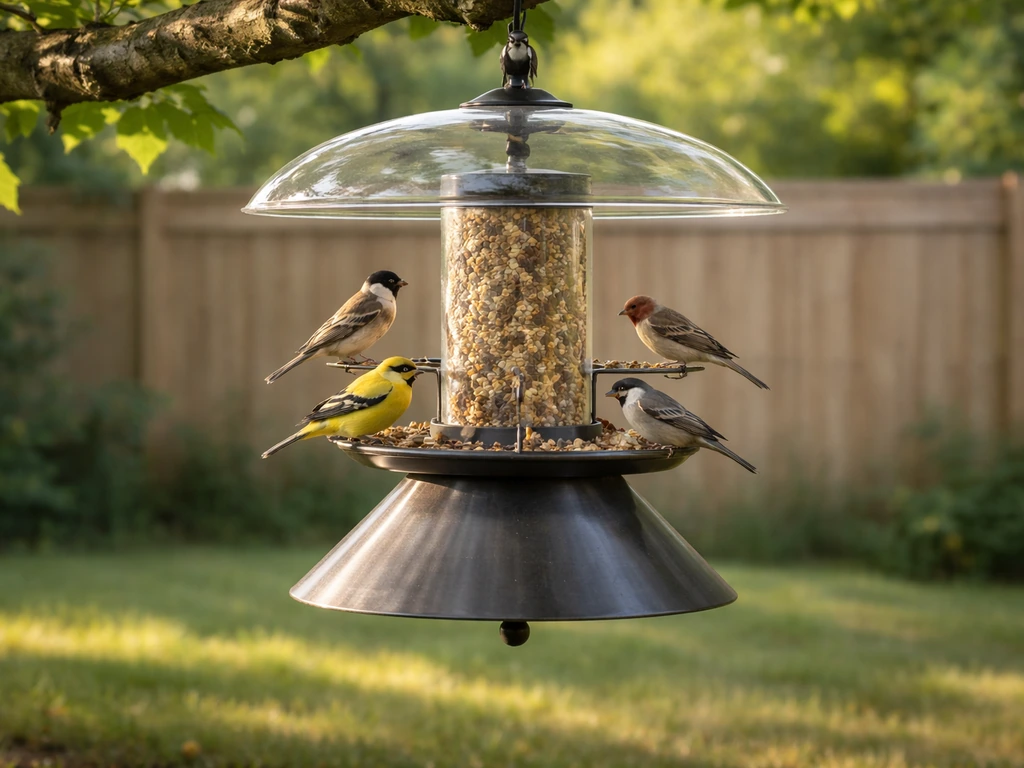
For the other half, you need hardware. The most effective squirrel mitigation options are pole-mounted baffles (dome-shaped guards positioned below the feeder on the pole) and cage-style feeders. Cage feeders are tube or hopper feeders surrounded by a wire cage with openings large enough for small songbirds but too small for squirrels or larger birds like grackles and starlings. They're genuinely effective. I've tested several and the ones with opening sizes around 1.5 inches stop almost everything except the smallest squirrels.
- Pole-mounted baffle: Best first line of defense; pair with a smooth metal pole squirrels can't grip
- Cage-style feeder: Dual purpose — keeps out squirrels AND large pest birds like grackles and European starlings
- Weight-sensitive perch feeders: Ports close when something heavier than a songbird lands; works well against squirrels and large birds
- Dome-style hanging baffle: Hangs above a feeder to block aerial approach from above
- Safflower seed swap: Not a style, but a seed strategy — squirrels and grackles both dislike safflower, cardinals love it
Suet cages for woodpeckers deserve a specific mention here. A basic suet cage is just a wire basket that holds a suet cake. The upside-down suet feeder style is worth considering if you're getting starling invasions: starlings struggle to feed upside down while woodpeckers, nuthatches, and chickadees can manage it easily. It's a simple design choice that makes a real difference.
Smart, camera, and AI bird feeder styles: when they're actually worth it
Smart feeders with built-in cameras and AI bird identification have exploded in the past few years, and a few of them are genuinely good. The core appeal is that the feeder identifies the species visiting through image recognition and logs them in an app, so you get a bird journal without doing any work. For casual birders who are curious what's showing up in the yard, this is a real upgrade over a basic feeder.
The trade-offs are cost and maintenance. Smart feeders typically run $80 to $200+, need to be charged or wired, and the cameras require regular cleaning to stay useful. The feeding capacity is also usually smaller than a traditional hopper, so you'll refill more often. I'd recommend a smart feeder as a second or third feeder in a setup, not as your only one. Use a solid hopper or tube feeder as your main workhorse, and add a camera feeder somewhere with good sightlines from a window. That way you get the data and the experience without depending on a battery-powered device for your birds' daily food supply.
AI identification accuracy is generally good for common species (goldfinches, cardinals, chickadees) and gets shakier with sparrows and confusing fall warblers. If you're an intermediate birder who already knows most of your regulars, the AI feature adds less value. If you're just starting out and want to learn what's visiting, it's genuinely useful and kind of addictive.
Weather resistance, materials, and mounting that actually works
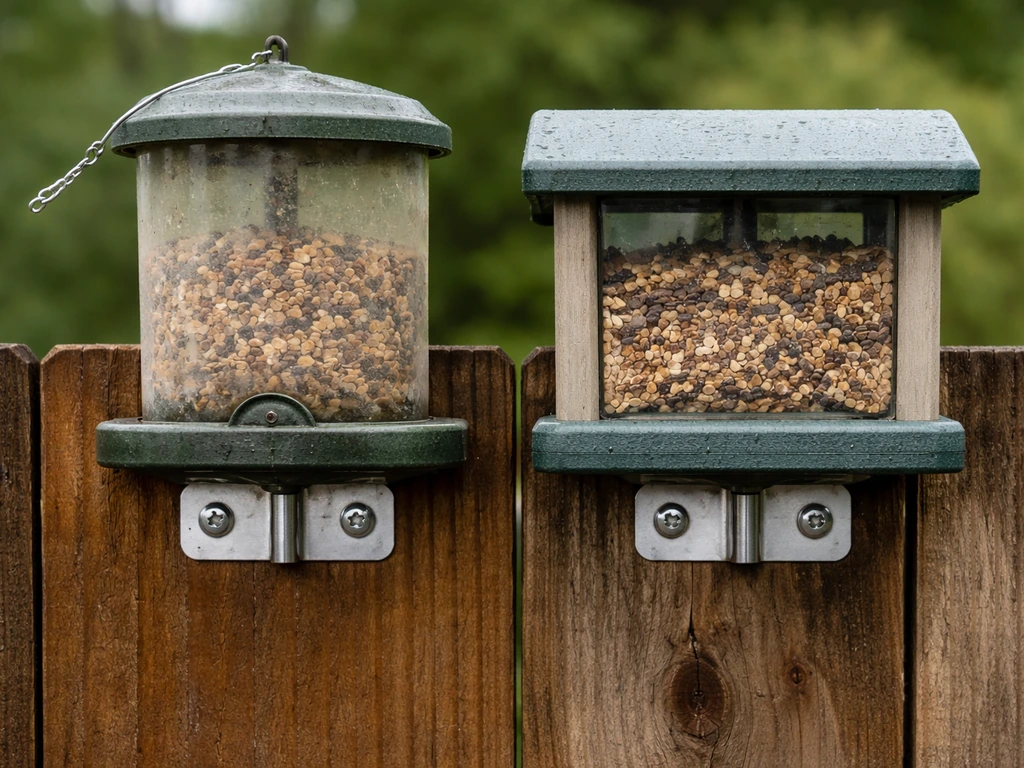
Feeder material is one of those things that only matters until it really matters. A cheap plastic feeder will fade and crack in two seasons of UV exposure. Recycled poly lumber and powder-coated steel both hold up well. Metal ports resist squirrel chewing (plastic ports don't). For wet climates, look specifically for drainage holes in seed trays and roofs with real overhang. For windy areas, hanging feeders on a bungee cord or chain with weight at the bottom dramatically reduces spinning and seed scatter.
| Material | Durability | Weather Resistance | Best For | Watch Out For |
|---|---|---|---|---|
| Recycled poly lumber | Excellent (10+ years) | High; won't rot or fade | Hopper feeders in any climate | Heavier; more expensive upfront |
| Powder-coated steel | Very good | High; rust-resistant if coating intact | Tube and cage feeders | Chips over time; inspect annually |
| Acrylic/polycarbonate | Good | Medium; UV stable grades last longer | Window feeders, tube feeders | Cheap grades crack and yellow quickly |
| Cedar/hardwood | Good with maintenance | Medium; needs seasonal sealing | Hopper and platform feeders | Can warp or rot if not maintained |
| Standard plastic | Poor to fair | Low | Budget feeders | Squirrel damage, UV cracking in 1-2 seasons |
For mounting, a freestanding pole system with a baffle is the most versatile option for most yards. It lets you position the feeder exactly 8 to 10 feet from cover without relying on a tree location. Shepherd's hooks are affordable but wobble in wind and are easy for squirrels to climb. If you're mounting to a deck railing, look for clamp-on pole mounts that keep the feeder out over open space rather than flush against the structure. Window feeders with suction cups work surprisingly well for smaller tube-style or tray designs, and they're the best option for apartment balconies or yards without good pole placement options.
Dealing with grackles, squirrels, and seed mess
Grackles are the problem nobody warns you about until you have them. A flock of 30 grackles can empty a large hopper feeder in under an hour and chase off every other bird in the yard. The most effective style solution is a cage feeder: the wire openings let in chickadees, goldfinches, and small sparrows but exclude grackles physically. Weight-sensitive feeders also work well because grackles are significantly heavier than most songbirds and trigger the port closure. Switching part of your seed mix to safflower is a backup strategy since grackles typically ignore it while cardinals and chickadees eat it readily.
Squirrel management comes back to the 8-to-10-foot placement rule combined with a properly installed baffle. The baffle needs to be at least 4 feet off the ground (squirrels can jump from ground level) and the pole needs to be smooth metal so they can't grip it. If you've done both of those things and squirrels are still getting in, check for overhead branches or structures you missed. They'll find the launching point every time.
Seed mess and waste is mostly a function of feeder style and seed type. Tube feeders with no-mess seeds (hulled sunflower, nyjer) have the least spill. Platform feeders have the most. If you're getting a lot of germination in the lawn below the feeder, switch to hulled seeds or put a catch tray under your existing feeder. Cleaning frequency matters too: Project FeederWatch recommends cleaning seed feeders every one to two weeks under normal conditions, and more often during wet weather or heavy use periods. Moldy seed is a disease vector for birds and a fast way to kill your yard's bird traffic.
Your quick buying checklist before you order anything
Run through this before you buy. It takes two minutes and will save you from buying the wrong style for your specific situation. If you’re specifically shopping for the best song bird feeders, start by matching feeder style to the species you actually want to attract.
- Which birds do you actually want? Pick your top two or three species and confirm the feeder style matches their feeding behavior using the species table above.
- What's your main problem? Squirrels mean you need a cage feeder or a baffled pole. Grackles mean you need a cage or weight-sensitive feeder. Mostly fine yard means standard hopper or tube works.
- Where are you mounting it? Measure the distance from trees, fences, and your house. If you can't get 8 to 10 feet of clearance, plan for a baffle regardless of feeder style.
- What's your climate? Wet and rainy climates need drainage holes, real roof overhang, and rot-resistant materials. Windy areas benefit from baffled or weighted hanging systems.
- How often will you maintain it? Honest answer matters here. If weekly cleaning is unrealistic, go for a tube feeder with hulled seeds over a platform with mixed seed.
- What's your budget? A good hopper or tube feeder with a pole and baffle runs $40 to $80 and will last years. Smart camera feeders run $80 to $200+. Start simple if you're new to this.
- Do you want to ID your birds? If yes, consider adding a smart or AI-enabled feeder as a secondary unit alongside your main feeder.
If you want a simple starting point: buy a metal-ported tube feeder for finches and chickadees, add a hopper on a baffled pole for cardinals and jays, and if hummingbirds are in your region, hang two or three small nectar feeders in different spots rather than one large one. That three-feeder setup covers the majority of common backyard songbirds, handles most squirrel situations, and gives you a real-world basis for deciding whether you want to expand (suet cage for woodpeckers, cage feeder if grackles show up, smart feeder if you want the ID feature). Compare bird feeders side by side once you know your constraints, and you'll find that the right choice gets obvious fast. If you want the best results, start by choosing good bird feeders that match the birds in your yard and your main problem.
FAQ
How do I choose the “right” port size on a tube feeder for my yard?
Start with the birds you already see nearby. Small ports with short perches usually favor goldfinches and pine siskins, while larger ports with longer perches fit house finches and chickadees. If you’re getting too many bigger birds, swap to the smaller-port option rather than changing seed first, because port size directly limits which birds can feed.
My hopper feeder keeps molding after rain, what should I change first?
Don’t just switch to “drier” seed. Check that the tray has drainage holes, and consider shortening the refill interval so you remove damp seed before it grows mold. In heavy wet weather, also reduce seed mix variety and use more hulless versus whole only if you confirm it stays dry, since any seed that sits wet at the ports tends to be the trigger point.
Can I mix seed types in one feeder to attract different birds?
Yes, but do it strategically. Mixes that include seeds birds tolerate poorly, like foods that big bully birds prefer, can worsen empty-feeder times for smaller species. For yards with grackles or heavy squirrel pressure, consider keeping one feeder for “safe” seed (for example safflower) and a separate feeder for finch-friendly seed, instead of combining everything in a single hopper.
What’s the safest way to position feeders if I have limited space but also want to stop squirrels?
Use the 8 to 10 foot rule from launch surfaces, then apply placement alternatives if you cannot meet it fully. If a tree branch is still close, move the feeder farther out from the branch by a few more feet, or add a baffle and ensure it is at least 4 feet off the ground. If your yard forces you under eaves, a pole system with a baffle is usually more reliable than hanging near rooflines.
How do I prevent ants and other insects from taking over the feeder area?
Use a clean-feeding routine and reduce spills, since ants track seed waste. For pole setups, wipe the pole frequently and keep the area under the feeder from accumulating hulled seed. If you use a catch tray, empty it more often and consider a tray design that keeps seed from staying damp and fermenting, which attracts more insects.
How often should I clean my bird feeder if it’s in a humid climate or gets daily birds?
Use a tighter schedule than “every couple of weeks.” Under humid conditions or heavy traffic, aim closer to weekly cleaning, especially for platforms where droppings and wet seed build up fast. During wet stretches, remove remaining seed sooner than usual, rinse and dry the feeder components, and discard any seed that smells sour or looks clumped.
Do window feeders work as well as pole-mounted feeders?
They can, especially for smaller tube-style or tray designs, but they depend on placement. For best results, mount so birds have a clear approach line and you can still reach the feeder to clean it. If you’re seeing few visits, try repositioning to a quieter corner of the window so birds feel less exposed, and make sure the feeder is not easy for squirrels or other animals to access.
If I switch seed, how long should I wait before judging whether the new feeder style works?
Give it several days, not just one. Birds may need time to learn the new “location and access method,” especially after you change port size, add a cage, or introduce a baffle. If you see no activity after about a week, reassess placement first (visibility and approach routes) before buying a different feeder type.
What’s a common mistake when using a multi-port hummingbird feeder?
One large feeder often triggers guarding behavior that reduces total visits. If you want more consistent activity, use several smaller feeders spaced around the yard rather than one dominant unit. Also keep them in locations with good sightlines from different angles, so a defending bird can’t block every feeding spot at once.
Are cage feeders always the best option when grackles show up?
They’re usually the most effective, but success depends on the opening size and placement. If openings are too large, grackles will still access the food. If they’re too small, you may exclude desired birds. As a practical next step, confirm your target birds can enter the openings comfortably, then place the feeder in an area where the smaller birds feel safe approaching.
When should I consider buying a smart (camera) feeder instead of another “dumb” feeder?
Use a smart feeder as a secondary addition when you want identification and record-keeping without replacing your main food source. Smart feeders often have smaller capacity, need charging or wiring, and require regular camera cleaning, so relying on them as your only feeder can create gaps. Place it where you can see feeding clearly, like near a window, rather than where birds pass too quickly to identify.
Next Article
What Are Two Types of Bird Feeders? A Beginner Guide
Discover two main bird feeder types, what birds they attract, and how to choose durable, squirrel resistant setups.