The right bird feeder comes down to three things: what birds you want to attract, what your yard actually allows (post, tree, window, or balcony), and which problems you're already dealing with (squirrels, grackles, soggy seed). Get those three sorted and the choice gets a lot easier. A tube feeder with short perches will bring in finches and block grackles. A nectar feeder is non-negotiable for hummingbirds. A hopper or platform covers cardinals and most other backyard birds. If you want photos of everything that visits, a smart feeder camera changes the game but adds setup and charging to your routine.
Compare Bird Feeders: Choose the Right Type Today
Marcus Holloway
1 Jul 2026
Start with your birds and your yard, not the feeder
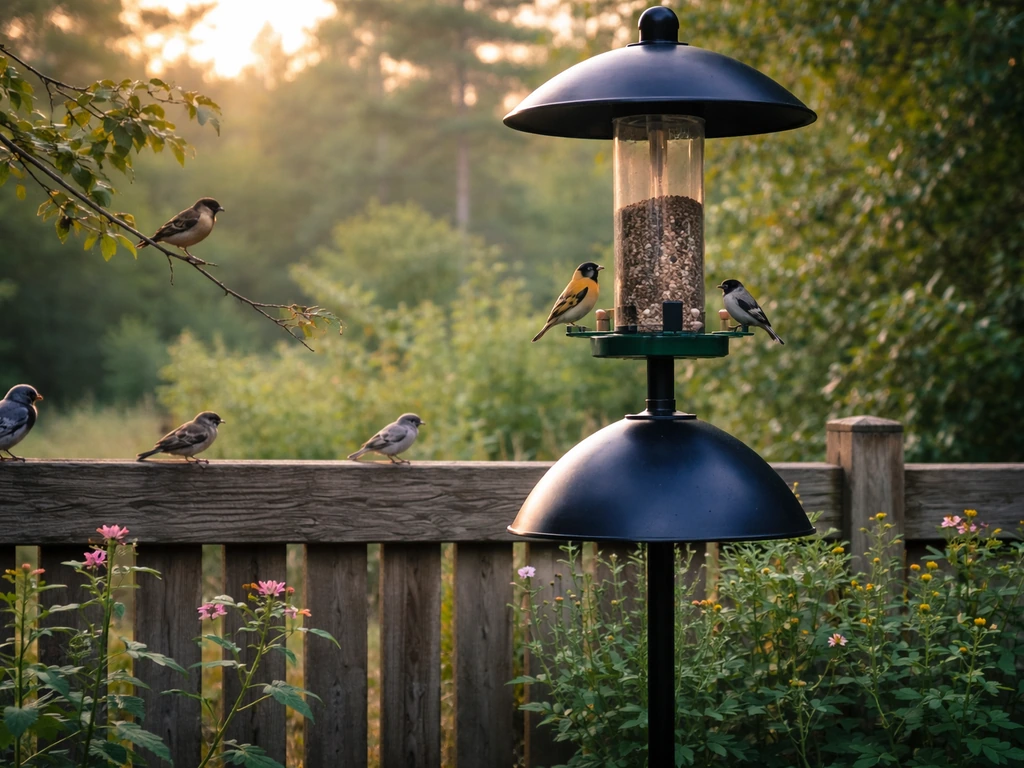
Before you compare feeders, you need to be honest about your setup. A pole-mounted tube feeder with a squirrel baffle is one of the most effective rigs you can build, but only if you have a spot at least 10 feet from the nearest fence or tree branch, since squirrels can easily jump that far. If your yard is tight or you're on a balcony, a window-mount or railing feeder is your realistic option. Audubon flags that feeders should go either within 3 feet of a window or more than 30 feet away to avoid the collision danger zone, so placement isn't just about squirrels.
Once you know where the feeder is going, think about your target birds. Finches, hummingbirds, cardinals, and woodpeckers all have different food needs and perching preferences, which is why the same feeder can't serve all of them equally. If you're not sure what's in your yard yet, a tray or hopper is the broadest starting point. If you already know you want goldfinches, skip straight to a nyjer tube feeder. Project FeederWatch's Common Feeder Birds resource is genuinely useful here for matching your target species to feeder styles before you buy anything.
The main feeder types compared
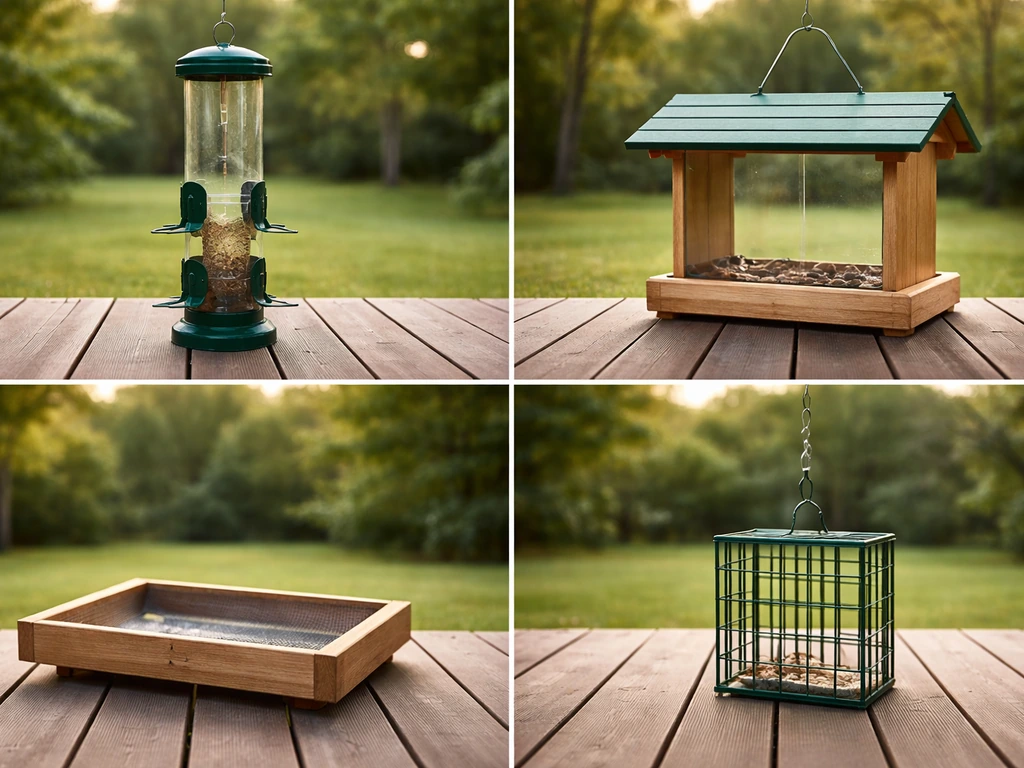
Every feeder type has a sweet spot. Here's what each one actually does well, and where it falls short.
| Feeder Type | Best For | Seed/Food | Main Drawbacks |
|---|---|---|---|
| Tube (short perches) | Finches, chickadees, nuthatches | Nyjer, sunflower chips | Harder to clean; disease risk if neglected |
| Tube (long perches) | Most small/medium birds | Black-oil sunflower, mixed seed | Jays and grackles can access |
| Hopper/House | Cardinals, jays, doves, most species | Sunflower, mixed seed | Large birds and squirrels can dominate; roof helps but doesn't seal |
| Platform/Tray | Cardinals, sparrows, doves, ground feeders | Mixed seed, peanuts, fruit | Open to weather and squirrels; needs daily checks |
| Suet Cage | Woodpeckers, nuthatches, chickadees | Suet cakes | Melts in summer heat; avoid lint/yarn fillers |
| Nyjer/Sock | Goldfinches, siskins, redpolls | Nyjer (thistle) seed | Tiny ports clog easily; needs frequent cleaning |
| Nectar/Hummingbird | Hummingbirds | 1:4 sugar-water solution | Spoils quickly in heat; must clean every 2-3 days in summer |
| Cage/Caged Tube | Small songbirds only | Sunflower, nyjer | Excludes larger desirable birds too if cage is too tight |
Tube feeders
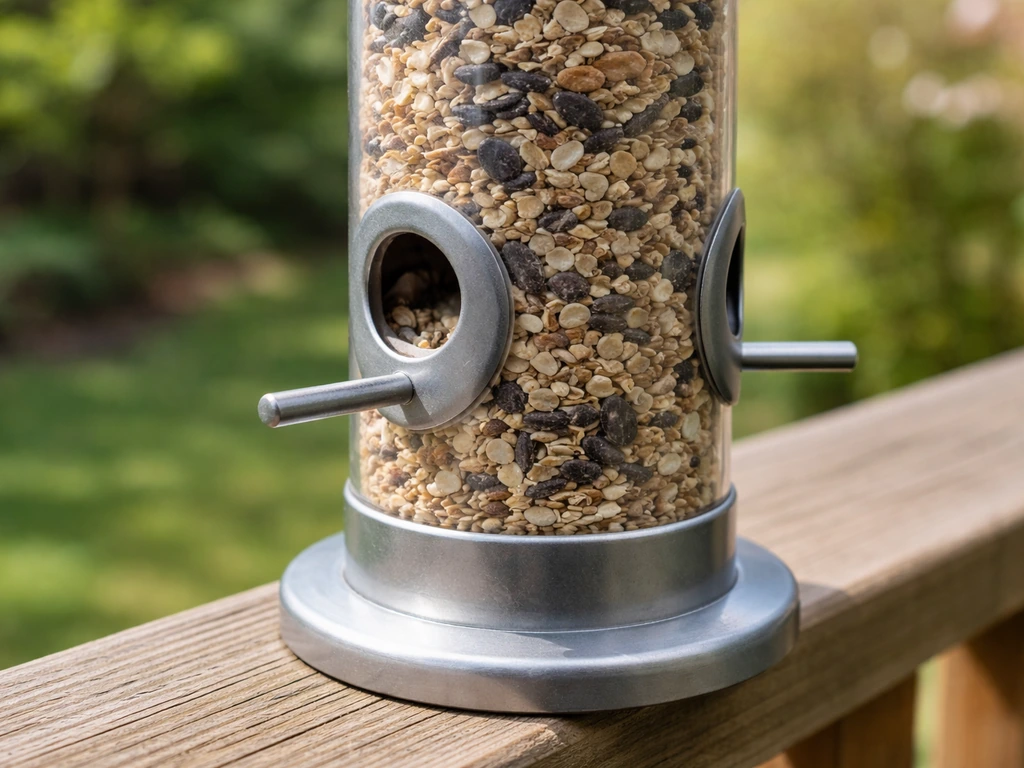
Tube feeders are hollow cylinders with multiple ports and perches. The key variable is perch length. Short perches naturally exclude larger birds like grackles, starlings, and jays because they can't balance comfortably, while finches and chickadees have no trouble. If you're specifically trying to attract goldfinches, go for a tube feeder designed for nyjer seed, which has extremely small ports to hold the tiny seeds in. A standard sunflower tube feeder won't work for nyjer at all. Tube feeders are worth the extra cleaning effort, but Project FeederWatch does flag them for higher disease transmission risk if birds are showing signs of conjunctivitis, so a two-week cleaning schedule is a minimum.
Hopper feeders
A hopper feeder has walls and a roof that protect seed from rain and sun better than any open tray. That makes it one of the most practical all-around choices for attracting a wide variety of birds including cardinals, doves, jays, and chickadees. The downside is that the same roof and wide perches that help large songbirds also welcome squirrels and grackles. If you're thinking about the best style bird feeder for sheer bird variety, a hopper on a baffled pole is hard to beat, but you'll need to address the pest issue separately. If you want a quick pick, prioritize a hopper on a baffled pole and choose the right seed for the birds you want most best style bird feeder.
Platform and tray feeders
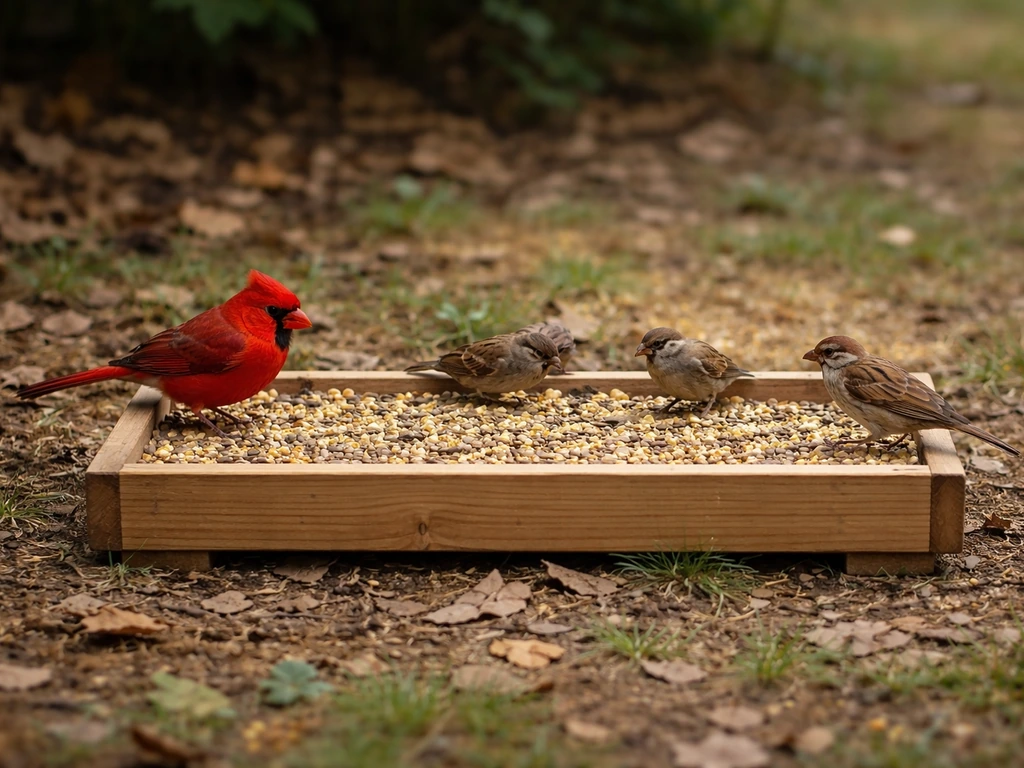
Platform feeders are about accessibility. Cardinals love them because they're ground feeders by habit, and a low or ground-level tray mimics natural feeding conditions. The problem is these are the least weather-resistant option, and open trays collect water fast. Penn State Extension recommends only putting out as much seed as birds can eat in a day, which is especially important for platform feeders where wet seed can grow mold almost overnight. If you're exploring the best type of bird feeders for easy setup and species variety, a platform is a solid second feeder to add once you have a main tube or hopper already running. If you're exploring the best type of bird feeders for easy setup and species variety, a platform is a solid second feeder to add once you have a main tube or hopper already running.
Suet feeders
Suet cages are the go-to for woodpeckers, and they're one of the simplest feeders to manage in cool weather. A standard wire cage holds a suet cake, woodpeckers cling to the side, and the setup is nearly maintenance-free in fall and winter. Summer is the problem: suet melts and goes rancid quickly in heat above about 80 degrees. Switch to no-melt suet products or take the feeder down during peak summer. One important note from the US Fish & Wildlife Service: avoid suet products or cage inserts that include lint, yarn, or similar fibrous materials, since these can harm birds.
What to buy based on the birds you want
Goldfinches and other finches
A dedicated nyjer tube feeder is the most effective choice. Nyjer (sometimes called thistle) is a tiny, oil-rich seed that goldfinches, pine siskins, and common redpolls go for aggressively. The feeder ports must be small enough to hold the seed, so you can't substitute a standard tube feeder. Nyjer sock feeders are a cheaper alternative and work fine, but they're harder to clean and tend to clog in wet weather. If you want the best song bird feeders focused on finch species specifically, a tube nyjer feeder on a hanging hook is the most direct path. If you want the best song bird feeders for your yard, start by matching the feeder type to the finches or other songbirds you’re most likely to attract.
Hummingbirds
Hummingbirds need a dedicated nectar feeder, full stop. No seed feeder will attract them. The standard nectar mix from Cornell Lab's All About Birds is 1 cup water to 1/4 cup plain white sugar (no red dye needed, it's unnecessary and potentially harmful). In cold or foggy conditions, they recommend bumping that to 1/3 cup sugar per cup of water to give birds a caloric boost. The biggest maintenance issue is spoilage: in summer heat, nectar can ferment or grow mold within 2 days. Clean the feeder and change the nectar every 2 to 3 days during warm months, or every day if temps are above 90 degrees. Look for feeders with wide bases that come apart completely for easy scrubbing.
Cardinals
Cardinals are bigger birds with a preference for perching on stable, wide surfaces. They're much more comfortable on a hopper or platform feeder than on a thin tube perch. Black-oil sunflower seed is their top choice. If you're mounting a single feeder and cardinals are your priority, a hopper feeder on a pole at 4 to 6 feet off the ground, stocked with sunflower seed, is the most reliable setup. A tray feeder at a lower height also works well and often attracts them earlier in the season.
Woodpeckers
Downy, hairy, and red-bellied woodpeckers are regular backyard visitors if you give them the right setup. Suet cages are the classic choice, and they work. For bigger species like pileated woodpeckers, a larger cage or log feeder is more appropriate since they need more room to maneuver. Woodpeckers also respond well to peanut feeders (whole or shelled), so a mesh tube or cage-style peanut feeder is worth adding if you want to see more species variety. Mount suet and peanut feeders on a tree trunk or post with a clear approach path.
Sparrows, doves, and ground feeders
These birds are comfortable at or near ground level. A low platform feeder or even seed scattered on a tray works. Mixed seed with millet is a strong choice for sparrows. The trade-off is that ground-level setups are the easiest targets for cats, squirrels, and moisture, so you need to stay on top of cleaning and seed freshness more than with any other setup.
Durability, cleaning, and keeping seed fresh
Material choice matters more than most people realize when they first start comparing feeders. To help you narrow down your options, this guide can also point you toward the best looking bird feeders based on materials and overall design. Cheap plastic cracks in UV exposure within a season or two, especially in climates with hot summers or freezing winters. Metal feeders (powder-coated steel or aluminum) and quality UV-stabilized polycarbonate hold up far longer and are easier to clean thoroughly. Wood feeders look great but require more upkeep to avoid rot and mold in the seed tray.
Cleaning is not optional. Project FeederWatch and Audubon both recommend cleaning seed feeders about every two weeks as a baseline, and more often during hot, humid weather or heavy bird traffic. The cleaning method that works: empty the feeder completely, scrub with a stiff brush, then soak or rinse with a bleach solution (roughly 1 tablespoon of household bleach per gallon of water, per CDC guidelines), rinse thoroughly, and let it dry completely before refilling. Audubon specifically emphasizes letting it dry fully before adding new seed, since moisture in the feeder is how mold gets started.
Wet seed is a real problem. Audubon warns that uneaten seed can become soggy and grow deadly mold. If you open your feeder and the seed is clumped or smells off, throw it out entirely, don't just add fresh seed on top. The Minnesota DNR also recommends cleaning up fallen seed and hulls under feeders regularly, since bacteria can build up on the ground and affect birds that feed at the base. If you're regularly dealing with soggy seed, consider a feeder with drainage holes in the base, a weather dome above it, or both.
- Clean seed feeders every 1-2 weeks; more often in summer or during high bird activity
- Use a bleach-water solution (1 tbsp bleach per gallon water), rinse well, and dry completely before refilling
- Discard wet, clumped, or foul-smelling seed immediately and clean before refilling
- Only fill platform feeders with as much seed as birds will eat in a day
- Rake up fallen seed and hulls under feeders regularly to prevent ground-level bacteria
- Use a weather dome or baffle above open feeders to reduce rain exposure
- Choose metal or quality polycarbonate over basic plastic for multi-season durability
Dealing with squirrels and grackles
Squirrels and grackles are the two problems I hear about most, and the solutions are different for each. Squirrels are a physical access problem. Grackles are a feeder design problem.
Squirrel-proofing your setup
The most reliable squirrel deterrent is a combination of mounting height and a baffle. NC State Extension recommends mounting feeders 4 to 6 feet off the ground on a smooth pole, with a squirrel baffle below (or above, for hanging feeders). Critically, the feeder needs to be at least 10 feet away from any fence, tree limb, roofline, or other launch point, since squirrels can jump surprisingly far horizontally. If your yard doesn't have a clear spot that far from structures, a caged feeder (where a wire cage surrounds the seed ports) is the next best option. The cage allows small birds through but blocks squirrels from reaching the seed.
Weight-sensitive feeders are another solid option. These close off the seed ports when something heavier than a small bird (like a squirrel or large bird) lands on the perch ring. They work well and require no special mounting, but they cost more upfront and have more mechanical parts that can wear out over time.
Grackle-resistant feeder choices
Grackles are smart, aggressive feeders that can dominate a hopper or tray and drive off everything else. The most effective design-based solution is a tube feeder with short perches, which grackles find awkward and uncomfortable. Common Grackles are large enough that short tube perches make feeding difficult for them, while finches and smaller birds handle them easily. Caged feeders (the outer cage design) also exclude grackles effectively. If you're primarily dealing with grackles at a hopper, switching the seed to straight safflower can help too since grackles tend to avoid it, while cardinals and chickadees eat it readily.
Traditional feeders vs smart bird feeder cameras
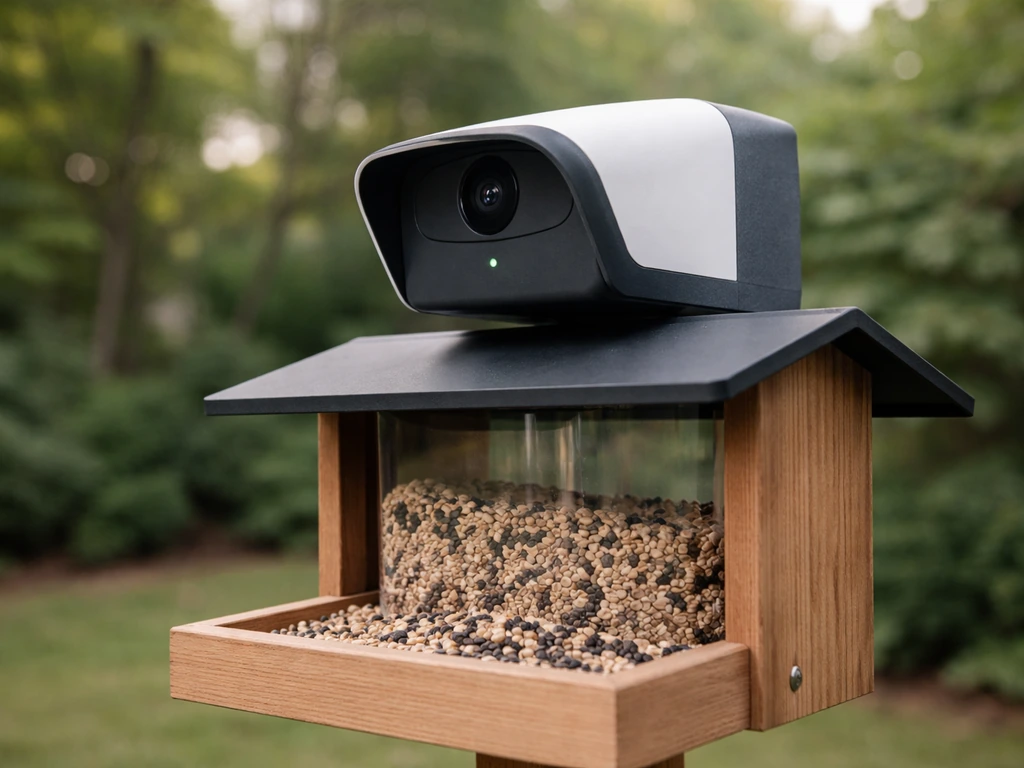
Smart feeders like Bird Buddy and Birdfy combine a standard seed feeder with a built-in camera and AI species identification. The appeal is obvious: you get photos and video of every bird that visits, plus automatic ID, without having to sit by the window all day. Birdfy claims its AI can identify over 6,000 species. Both devices trigger captures when a bird lands, similar to how a motion-activated security camera works.
The honest trade-offs are worth knowing before you spend $100 to $200 on one of these. Battery life is the most common complaint. Tom's Guide found Bird Buddy lasted about a week on a charge in real-world testing, which means weekly charging is part of your routine. Birdfy claims up to 3 months per charge under specific (likely optimal) conditions, but Reddit users report significant variation, with detection and ID issues in some locations. The AI identification, while impressive in concept, gets inconsistent reviews from users, with misidentifications reported, especially for less common regional species.
Privacy is worth a quick mention too. Smart feeders connect to your home network and use cloud-based AI processing, which means photos of your backyard (and whatever else is in frame) are being uploaded to a company's servers. Bird Buddy's support documentation covers device permissions and privacy topics specifically, so it's worth reading before setup if that matters to you.
My take: if your primary goal is attracting and feeding specific bird species, a traditional feeder done right will outperform a smart feeder every time. Smart feeders compromise on seed capacity, weather resistance, and ease of cleaning compared to purpose-built feeders. But if you're genuinely excited about bird photography and identification and you don't mind the charging and app maintenance, a smart feeder adds real enjoyment to the hobby. The best approach for serious backyard birders is often a dedicated functional feeder as the main setup, with a smart feeder added as a second unit positioned where you'll actually see it from inside.
| Factor | Traditional Feeder | Smart/AI Camera Feeder |
|---|---|---|
| Cost | $15-$80 typically | $100-$200+ |
| Bird variety attracted | Depends on design; very flexible | Limited by single-feeder format |
| Species ID | Manual (you look it up) | AI-powered, but inconsistent for rare species |
| Photo/video capture | None built in | Auto-triggered camera, app gallery |
| Battery/power needs | None | Weekly to monthly charging (varies) |
| Cleaning ease | Usually straightforward | Camera module complicates disassembly |
| Weather resistance | Many options, including very durable | Varies; IP ratings listed but verify |
| Setup complexity | Simple | Requires WiFi, app, account setup |
| Best for | Any birder focused on feeding and attracting birds | Birders who want photography and ID without effort |
Your next steps: what to measure, what to buy first, and how to mount it
Here's how to turn this comparison into an actual decision. Start by identifying the one or two bird species you most want to see, then pick the feeder type that matches from the species section above. Don't try to buy five feeders at once. One well-chosen, properly mounted feeder will perform better than a cluster of cheap ones.
- Pick your target bird(s) and match to feeder type: nyjer tube for finches, nectar feeder for hummingbirds, hopper or platform for cardinals, suet cage for woodpeckers
- Measure your mounting spot: if you have a clear open area 10+ feet from trees and fences, go with a pole-mounted feeder at 4-6 feet height with a squirrel baffle; if not, plan for a caged or weight-sensitive feeder
- Check the distance from your windows: put the feeder within 3 feet of a window or more than 30 feet away to reduce collision risk
- Choose metal or UV-stabilized polycarbonate over basic plastic, especially if you're in a region with harsh summers or winters
- Set a cleaning reminder for every two weeks (more often in summer), and buy a stiff feeder brush at the same time as your feeder
- If you want photos and AI ID, add a smart feeder as a second unit once your main feeder is established and working
The best looking bird feeders and the most decorative designs are tempting, but function and durability should drive the first purchase. A feeder that's easy to clean, holds seed dry, and is mounted in a way that blocks squirrels will attract more birds and cause fewer headaches than any stylish but flimsy option. Get the foundation right, then build from there. If you're still sorting out which feeder style fits your specific yard situation, the comparisons in our best bird feeder designs and good bird feeders guides go deeper on individual product picks within each category. If you're looking for more guidance, check our good bird feeders picks for specific product ideas by category.
FAQ
How do I choose the right seed if I am not sure which birds will visit my feeder?
If you do not already have a seed mix that matches your target birds, start with the feeder type rather than the brand. Use the nyjer or nectar sections as a hard rule (nyjer only for finch-family tube feeders, nectar only for hummingbird feeders), and for general seed feeders choose black-oil sunflower for many common species. Then adjust based on what actually shows up over 3 to 7 days, not based on what you expected.
How much seed should I put out to avoid soggy seed and waste?
Put out smaller batches at first, and increase only after you see a steady daily pattern. A platform feeder in particular should be stocked with the amount birds can finish in a day, wet seed is a mold risk. If you are unsure, refill every 24 hours during warm weather until you can estimate consumption.
How often should I clean a feeder, and what are the triggers to clean sooner?
Tube and hopper feeders should be cleaned on a schedule, but also immediately after any visible illness signs (runny eyes, crusting, lethargy) or whenever the seed turns clumpy or smells off. In that case, empty, scrub, disinfect, rinse, and let fully dry before refilling. For hummingbird feeders, do not wait for a calendar, replace nectar after 2 to 3 days in heat, or daily above about 90°F.
Can I run multiple feeder types in the same spot without attracting the wrong birds or causing contamination?
Yes, and mixing feeder types helps. The easiest way to prevent cross-contamination is to keep different feeders for different foods and use dedicated tools (or at least rinse tools thoroughly) between seed types. Also do not place a hopper or platform directly under a tube feeder if it can drip wet seed onto seed that is meant to stay dry.
What is the fastest way to reduce grackles taking over a hopper or platform feeder?
If grackles or starlings are bullying other birds, fix the feeder design first (short-perch tube for small birds, or a caged feeder style), then adjust the seed choice. Straight safflower can reduce grackles at hopper or tray setups, but it will not pull finches like nyjer. In practice, pick one target species, then use the seed that supports it rather than chasing every visitor.
What should I change first if squirrels still get to the seed even with a baffle?
For squirrels, the most reliable improvements are distance and access control, not just baffle type. Make sure the feeder is mounted with enough clearance from launch points, and use the appropriate baffle position for the feeder style. If your yard cannot support the needed distance from fences or branches, switch to a caged feeder so small birds can reach seed through openings while squirrels are physically blocked.
Can I use sunflower seed in a nyjer tube feeder, or nyjer seed in a regular sunflower tube?
Skip “multi-purpose” seed substitutions. Nyjer ports require the exact small-seed size, so a standard sunflower tube cannot be used for nyjer. If you want finches, use the dedicated nyjer tube feeder designed for thistle, or switch to a nyjer sock option if cleaning is acceptable and weather is not very wet.
Where should I mount a window feeder to lower bird-glass collision risk?
Most collision risk can be reduced with window placement and speed of resolution. Do not rely on random spacing, use the “either very close or far away” rule to keep birds from flying into glass at line-of-sight distances. If your yard only allows a window feeder, choose a location within a few feet of the glass to shorten the approach path.
If I want a smart feeder, where should I place it and what should I watch out for in day-to-day use?
Smart feeders can work as a second unit, but be careful about where you place them. If the goal is species ID, place it where you get clear views of the bird on the perch, avoid glare-heavy angles, and ensure the device can be reached for frequent charging or battery swaps. Also consider privacy, since images may be uploaded for processing depending on the model.
What should I do if I already have moldy or clumped seed in the feeder?
In warm weather, stop topping off. If seed is clumped or smells sour, remove it completely, clean the feeder, and replace with fresh dry seed. For the ground beneath, rake up hulls and spilled seed because bacteria can build up where birds feed at the base, and that can keep a “bad cycle” going even if you clean the feeder.
How should I adjust feeder choice and maintenance as seasons change?
Yes, but plan for seasonal changes in feeder maintenance. Suet is easy in cold weather, but above about 80°F it can melt and become rancid, so either switch to no-melt suet or take the feeder down during peak heat. Nectar has the opposite pattern, it spoils faster in heat, so you will need tighter refill intervals in summer than in cold weather.
Next Articles
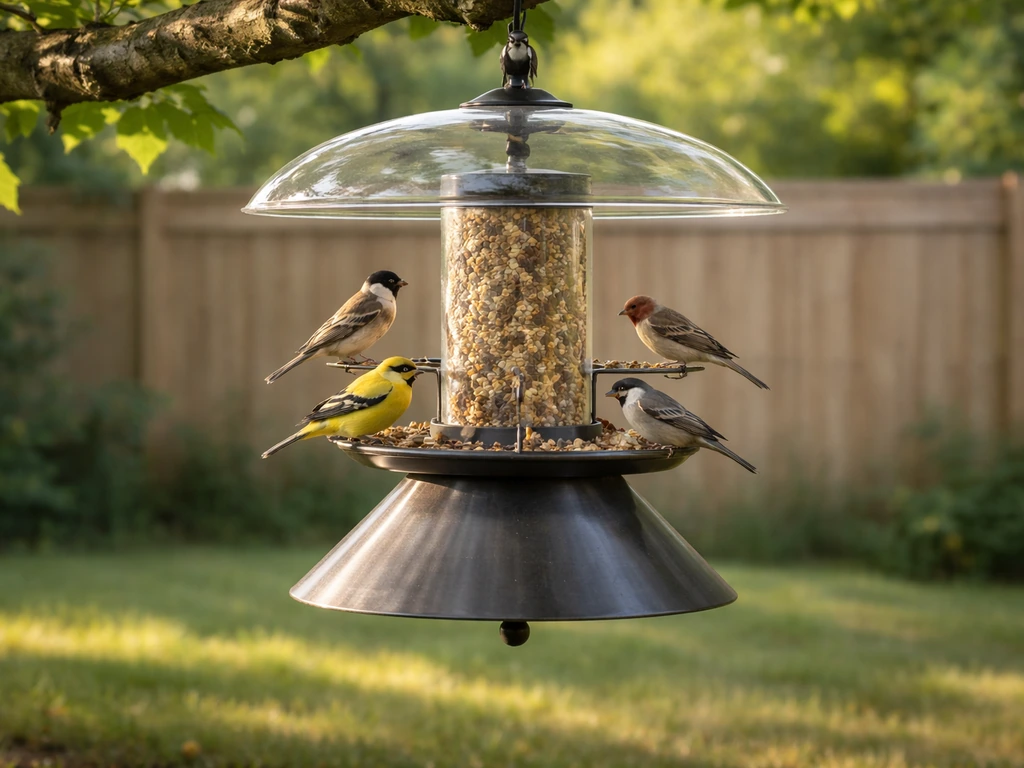
Best Style Bird Feeder: Choose by Species, Weather, and Yard
Pick the best style bird feeder by species, weather, and yard setup, with squirrel-proof and smart options.
What Are Two Types of Bird Feeders? A Beginner Guide
Discover two main bird feeder types, what birds they attract, and how to choose durable, squirrel resistant setups.
Best Looking Bird Feeders: Style, Placement, and Species Picks
Choose the best-looking bird feeders by style, finish, size and placement, plus species picks and pest-proof tips.